Steve Spangler is a bestselling author, STEM educator and Emmy award-winning television personality with more than 2,100 television appearances to his credit. Steve appeared as a regular guest on the Ellen DeGeneres Show from 2007-2022. Learn more about Steve at https://stevespangler.com/about-steve-spangler/
This is a new artist’s animation of our galaxy, the Milky Way, based on data from ESA’s Gaia space telescope.
Gaia has changed our impression of the Milky Way. Even seemingly simple ideas about the nature of our galaxy’s central bar and the spiral arms have been overturned. Gaia has shown us that it has more than two spiral arms and that they are less prominent than we previously thought. In addition, Gaia has shown that its central bar is more inclined with respect to the Sun. No spacecraft can travel beyond our galaxy, so we can’t take a selfie, but Gaia is giving us the best insight yet of what our home galaxy looks like. Once all of Gaia’s observations collected over the past decade are made available in two upcoming data releases, we can expect an even sharper view of the Milky Way.
We are Europe’s gateway to space. Our mission is to shape the development of Europe’s space capability and ensure that investment in space continues to deliver benefits to the citizens of Europe and the world. Check out https://www.esa.int/ to get up to speed on everything space related.
Watch Firefly Aerospace’s Blue Ghost lunar lander lift off from NASA’s Kennedy Space Center in Florida on a SpaceX Falcon 9 rocket. SpaceX and Firefly Aerospace are targeting 1:11 a.m. EST (0611 UTC) Wednesday, Jan. 15, 2025, for launch. The lander will carry 10 NASA science investigations to the Moon’s surface.
Following launch, the lander will spend approximately 45 days in transit to the Moon before landing on the lunar surface in early March 2025. The 10 NASA payloads aboard the lander aim to test and demonstrate lunar subsurface drilling technology, regolith sample collection capabilities, global navigation satellite system abilities, radiation tolerant computing, and lunar dust mitigation methods.
The results of these investigations could help further our understanding of the Moon’s environment and help prepare for future human missions to the lunar surface as part of the agency’s Moon to Mars exploration approach.
Steve Spangler is a bestselling author, STEM educator and Emmy award-winning television personality with more than 2,100 television appearances to his credit. Steve appeared as a regular guest on the Ellen DeGeneres Show from 2007-2022. Learn more about Steve at https://stevespangler.com/about-steve-spangler/
Ștefan Procopiu algoritm:” În 1912, Ștefan Procopiu a calculat teoretic valoarea magnetonului, momentul magnetic al electronului. Rezultatul său, publicat într-o revistă locală din Iași, a fost ulterior confirmat de Niels Bohr și a devenit cunoscut ca magnetonul Bohr-Procopiu. A continuat cercetările, contribuind semnificativ la studiul depolarizării luminii, fenomen denumit „fenomenul Procopiu”.
Eugen Bădărău Eugen Bădărău a fost un pionier în optică și fizica gazelor. A dezvoltat un interferometru și a studiat descărcările electrice în gaze. În România, a creat un cadru de cercetare colaborativ, fiind profesor la Universitatea din București și având o influență importantă asupra fizicii experimentale.
Horia Hulubei Horia Hulubei a revoluționat spectroscopia razelor X. A îmbunătățit aparatele de măsurare și a identificat teoretic elementele Dor și Moldavium. Deși recunoașterea internațională a lipsit, a fondat Institutul de Fizică Atomică de la Măgurele, contribuind la dezvoltarea cercetării fizice în România.
Șerban Țițeica Doctorand al lui Werner Heisenberg, Șerban Țițeica a realizat cercetări fundamentale în mecanica cuantică și teoria metalelor. În România, a fost profesor de fizică teoretică, contribuind semnificativ la educație și cercetare.
Alexandru Proca Alexandru Proca este renumit pentru ecuațiile care îi poartă numele, o generalizare a ecuațiilor Maxwell pentru fotoni masivi. Aceste ecuații sunt fundamentale în fizica teoretică.
Ștefania Mărăcineanu Pionier al ploii artificiale, Ștefania Mărăcineanu a explorat efectele radioactivității asupra norilor. Deși nu a obținut succes notabil, ideile sale au fost un pas important în cercetare.”
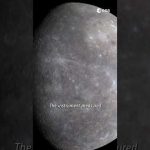
Fly over Mercury with BepiColombo for the final time during the mission’s epic expedition around the Sun. The ESA/JAXA spacecraft captured these images of the Solar System’s smallest planet on 7 and 8 January 2025, before and during its sixth encounter with Mercury. This was its final planetary flyby until it enters orbit around the planet in late 2026.
The video begins with BepiColombo’s approach to Mercury, showing images taken by onboard monitoring cameras 1 and 2 (M-CAM 1 and M-CAM 2) between 16:59 CET on 7 January and 01:45 CET on 8 January. During this time, the spacecraft moved from 106 019 to 42 513 km from Mercury’s surface. The view from M-CAM 1 is along a 15-metre-long solar array, whereas M-CAM 2 images show an antenna and boom in the foreground.
After emerging into view from behind the solar array, Mercury appears to jump to the right. Both the spacecraft and its solar arrays rotated in preparation for passing through Mercury’s cold, dark shadow.
For several hours after these first images were taken, the part of Mercury’s surface illuminated by the Sun was no longer visible from the M-CAMs. BepiColombo’s closest approach to Mercury took place in darkness at 06:58:52 CET on 8 January, when it got as close as 295 km.
Shortly after re-emerging into the intense sunlight, the spacecraft peered down onto the planet’s north pole, imaging several craters whose floors are in permanent shadow. The long shadows in this region are particularly striking on the floor of Prokofiev crater (the largest crater to the right of centre) – the central peak of that crater casts spiky shadows that exaggerate the shape of this mountain.
Next, we have a beautiful view of Mercury crossing the field of view from left to right, seen first by M-CAM 1 then by M-CAM 2 between 07:06 and 07:49 CET. These images showcase the planet’s northern plains, which were smoothed over billions of years ago when massive amounts of runny lava flowed across Mercury’s cratered surface.
The background music is The Hebrides overture, composed by Felix Mendelssohn in 1830 after being inspired by a visit to Fingal’s Cave, a sea cave created by ancient lava flows on the island of Staffa, Scotland. Similarly shaped by lava is Mercury’s Mendelssohn crater, one of the large craters visible passing from left to right above the solar array in M-CAM 1’s views, and at the very bottom of M-CAM 2’s views. The Mendelssohn crater was flooded with lava after an impact originally created it.
The end of the video lingers on the final three close-up images that the M-CAMs will ever obtain of Mercury. The cameras will continue to operate until September 2026, fulfilling their role of monitoring various parts of the spacecraft. After that point, the spacecraft module carrying the M-CAMs will separate from BepiColombo’s other two parts, ESA’s Mercury Planetary Orbiter (MPO) and JAXA’s Mercury Magnetospheric Orbiter (Mio). MPO’s much more powerful science cameras will take over from the M-CAMs, mapping Mercury over a range of colours in visible and infrared light.
Credits: ESA/BepiColombo/MTM Acknowledgements: Thank you to external collaborators Emanuele Simioni (INAF), Valentina Galluzzi (INAF), Jack Wright (Open University), and David Rothery (Open University) for their involvement in image sequence planning.
★ Subscribe: http://bit.ly/ESAsubscribe and click twice on the bell button to receive our notifications.
We are Europe’s gateway to space. Our mission is to shape the development of Europe’s space capability and ensure that investment in space continues to deliver benefits to the citizens of Europe and the world. Check out https://www.esa.int/ to get up to speed on everything space related.
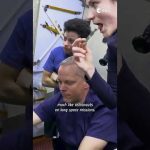
From the deep sea to outer space! Submarines are helping scientists’ study how humans adapt to extreme environments — just like astronauts on long space missions.
What we learn underwater today could shape the future of space exploration tomorrow.
📹 ESA – European Space Agency 📸 ESA/Portuguese Space Agency/Portuguese Navy
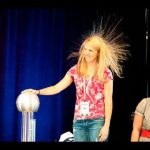
Teachers from all over the world gather to attend Science in the Rockies, a three day hands-on science workshop. Not only do they learn new cool science experiments to take back to their classrooms, but they have an experience they will never forget. Sharing ideas and concepts and building relationships with teachers from around the globe.
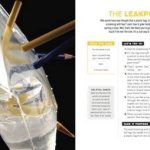
Storing energy is how a home-made spool racer works. But can Phil build one out of a giant cable spool!? Plus: a run of giant dominoes, a maxed out craft stick chain reaction, mouse-traps and ping pong balls. This episode is about to explode!
Steve Spangler is a bestselling author, STEM educator and Emmy award-winning television personality with more than 2,100 television appearances to his credit. Steve appeared as a regular guest on the Ellen DeGeneres Show from 2007-2022. Learn more about Steve at https://stevespangler.com/about-steve-spangler/
Steve Spangler is a bestselling author, STEM educator and Emmy award-winning television personality with more than 2,100 television appearances to his credit. Steve appeared as a regular guest on the Ellen DeGeneres Show from 2007-2022. Learn more about Steve at https://stevespangler.com/about-steve-spangler/
Did you know the Large Magellanic Cloud, one of our galaxy’s closest neighbors, survived a dramatic collision with the Milky Way’s gaseous halo? Despite losing most of its gas, the Large Magellanic Cloud is still forming new stars—a testament to its resilience! Thanks to Hubble Space Telescope, astronomers measured the Large Magellanic Cloud’s halo for the first time, revealing incredible insights about galaxy interactions.
📹 ESA – European Space Agency 📸 NASA, ESA, R. Crawford
🚩 Visit https://betterhelp.com/historymarche or use “historymarche” when you sign up to get a special discount on your first month of therapy with our sponsor BetterHelp. 🚩 If you have any questions about the brand relating to how the therapists are licensed, their privacy policy, or therapist compensation model, check out this FAQ: https://www.betterhelp.com/your-questions-answered/
🚩 If you like what you see, consider supporting my work on Patreon and you get ad-free early access to my videos for as little as $1 https://www.patreon.com/historymarche — You can also show your support by subscribing to the channel and liking the video. Thank you for watching.
📢 Narrated by David McCallion
🎼 Music: EpidemicSound Storyblocks Filmstro
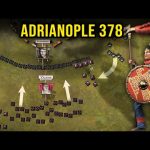
📚 Sources: Adrianople AD 378, MacDowall, Simon (2001), Osprey Publishing, ISBN: 9781841761473. Imperial Brothers: Valentinian, Valens and the Disaster at Adrianople, Hughes, Ian (2013), ISBN: 978-1-84884-417-9.
On Wednesday, Jan. 8, at 1:25 p.m. EST (1825 UTC), NASA Administrator Bill Nelson and Deputy Administrator Pam Melroy will speak with NASA astronauts Nick Hague, Butch Wilmore, Suni Williams, and Don Pettit about their mission aboard the International Space Station.
The four astronauts are in the middle of a long-duration mission living and working aboard the microgravity laboratory. Hague, Wilmore, and Williams are scheduled to return to Earth in the spring of 2025 aboard SpaceX’s Crew-9 Dragon spacecraft, which is currently docked to the station.
Steve Spangler is a bestselling author, STEM educator and Emmy award-winning television personality with more than 2,100 television appearances to his credit. Steve appeared as a regular guest on the Ellen DeGeneres Show from 2007-2022. Learn more about Steve at https://stevespangler.com/about-steve-spangler/
Steve Spangler is a bestselling author, STEM educator and Emmy award-winning television personality with more than 2,100 television appearances to his credit. Steve appeared as a regular guest on the Ellen DeGeneres Show from 2007-2022. Learn more about Steve at https://stevespangler.com/about-steve-spangler/
BepiColombo flew past Mercury for the fifth time on 1 December 2024.
During this flyby, BepiColombo gathered more data on the mysterious planet and its surroundings. Aside from taking some ‘regular’ photos of the planet and measuring particles and electromagnetic fields in the space around it, this flyby was the first time that any spacecraft imaged Mercury in mid-infrared wavelengths of light.
BepiColombo will pass much closer to Mercury’s north pole during its final flyby of Mercury on 8 January 2025, its last visit before arriving to enter orbit about the planet in November 2026.
📹 ESA – European Space Agency 📸 MERTIS/DLR/University of Münster & NASA/Johns Hopkins University Applied Physics Laboratory/Carnegie Institution of Washington
Hot and Cold. A home-made hot air balloon gets turned into a giant floating monstrosity! Plus: dry ice, the coldest temperature possible and Phil wears a suit of blubber and gets into a tub of ice water.
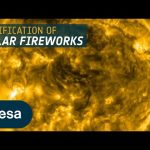
At the start of this new year, close-up pictures and solar flare data that the ESA-led Solar Orbiter mission has been recording for more than three years. See and hear for yourself how the number of flares and their intensity increase, a clear sign of the Sun approaching the peak of the 11-year solar cycle.
This video combines ultraviolet images of the Sun’s outer atmosphere (the corona, yellow) taken by Solar Orbiter’s Extreme Ultraviolet Imager (EUI) instrument, with the size and locations of solar flares (blue circles) as recorded by the Spectrometer/Telescope for Imaging X-rays (STIX) instrument. The accompanying audio is a sonification based on the detected flares and the spacecraft’s distance to the Sun.
Solar Orbiter moves on an elliptical path around the Sun, making a close approach to our star every six months. We can see this in the video from the spacecraft’s perspective, with the Sun moving closer and farther over the course of each year. In the sonification, this is represented by the low background humming that loudens as the Sun gets closer and becomes quieter as it moves further away. (There are some abrupt shifts in distance visible in the video, as it skips over dates where one or both instruments were inactive or collecting a different type of data.)
The blue circles represent solar flares: bursts of high-energy radiation of which STIX detects the X-rays. Flares are sent out by the Sun when energy stored in ‘twisted’ magnetic fields (usually above sunspots) is suddenly released. The size of each circle indicates how strong the flare is, with stronger flares sending out more X-rays. We can hear the flares in the metallic clinks in the sonification, where the sharpness of the sound corresponds to how energetic the solar flare is.
Many thanks to Klaus Nielsen (DTU Space / Maple Pools) for making the sonification in this video. If you would like to hear more sonifications and music by this artist, please visit: https://linktr.ee/maplepools Solar Orbiter is a space mission of international collaboration between ESA and NASA, operated by ESA.
————————————————— Credits Credit: ESA & NASA/Solar Orbiter/EUI & STIX, Klaus Nielsen (DTU Space/Maple Pools) Acknowledgements: Data processing for video by Laura Hayes License: CC BY-SA 3.0 or ESA Standard License
Video credit slate Solar Orbiter animation: ESA Sun images: ESA & NASA/Solar Orbiter/EUI Solar flare data: ESA & NASA/Solar Orbiter/STIX Data processing for video: Laura Hayes Data sonification & music: Klaus Nielsen (DTU Space/Maple Pools) —————————————————
★ Subscribe: http://bit.ly/ESAsubscribe and click twice on the bell button to receive our notifications.
We are Europe’s gateway to space. Our mission is to shape the development of Europe’s space capability and ensure that investment in space continues to deliver benefits to the citizens of Europe and the world. Check out https://www.esa.int/ to get up to speed on everything space related.
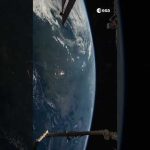
With this Timelapse captured from the ISS by our astronaut Samantha Cristoforetti, the entire ESA family wants to wish you a peaceful, safe and exciting year 2025!
May the new year be full of grand adventures and opportunities! We’ll keep bringing the wonders of the universe and Earth to the palm of your hands.
Vibration is the idea behind a shaky vibrobot – one maxed out enough so Phil can ride it! Plus: spinning an 8-foot coin, suspending water in mid-air and lasers!
Preparing to orbit and do science on the Moon, investigating how solar wind interacts with Mars, and demonstrating quiet supersonic flight are just a FEW of the milestones we have planned for 2025.
To learn more about the NASA missions mentioned in this highlight video, take a deep dive into these links:
🚩 If you like what you see, consider supporting my work on Patreon and you get ad-free early access to my videos for as little as $1 https://www.patreon.com/historymarche — You can also show your support by subscribing to the channel and liking the video. Thank you for watching.
📢 Narrated by David McCallion
🎼 Music: EpidemicSound Filmstro Storyblocks
Credits: Shield and Coat of Arms of the Holy Roman Emperor (c.1300-c.1400) – Heralder & Tom Lemmens (2013) https://en.m.wikipedia.org/wiki/File:Shield_and_Coat_of_Arms_of_the_Holy_Roman_Emperor_(c.1300-c.1400).svg
📚 Sources and citations: Battle on the Marchfeld – RNDr. et PhDr. Aleš Nováček, Ph.D. https://www.bellum.cz/en/battle-on-the-marchfeld.html Pavlac, Brian A. (2001). “Battle of Marchfeld (August 26, 1276)”. In Jeep, John M. (ed.). Routledge Revivals: Medieval Germany: An Encyclopedia. Routledge. Clauss, M. (2010). Rogers, Clifford J. (ed.). The Oxford Encyclopedia of Medieval Warfare and Military Technology: Volume I. Oxford: Oxford University Press. Oto Luthar – The Land Between: A History of Slovenia (2008) Wilson, Peter H. – Heart of Europe: A History of the Holy Roman Empire (2016) Karl-Friedrich Krieger: Rudolf of Habsburg. Darmstadt (2003)