Live views from the International Space Station are streaming from an external camera mounted on the station’s Harmony module.
The camera is looking forward at an angle so that International Docking Adapter 2 is visible. If the Harmony module camera is not available due to operational considerations for a longer period of time, a continuous loop of recorded Earth views will be displayed with the caption “Previously Recorded.”
The space station orbits Earth about 250 miles (425 kilometers) above the surface. An international partnership of five space agencies from 15 countries operates the station, and it has been continuously occupied since November 2000. It’s a microgravity laboratory where science, research, and human innovation make way for new technologies and research breakthroughs not possible on Earth. More: https://go.nasa.gov/3CkVtC8
Did you know you can spot the station without a telescope? It looks like a fast-moving star, but you have to know when to look up. Sign up for text messages or email alerts to let you know when (and where) to spot the station and wave to the crew: https://spotthestation.nasa.gov
Steve Spangler is a bestselling author, STEM educator and Emmy award-winning television personality with more than 2,100 television appearances to his credit. Steve appeared as a regular guest on the Ellen DeGeneres Show from 2007-2022. Learn more about Steve at https://stevespangler.com/about-steve-spangler/
Join us for Juice’s flyby of the Moon. We’ll be sharing images as soon as we can after Juice sends them down to Earth. Be among the first people in the world to see these images, and ask your questions about the mission and its lunar-Earth flyby to our panel of Juice team members.
The images will be captured using Juice’s two ‘monitoring cameras’, designed to watch the unfolding of Juice’s solar panels, antennas and booms in space in the weeks after the spacecraft launched into space in April 2023. The cameras have successfully completed their task. But we thought… what will we see if we point them at the Moon?
We don’t know how the images will look. It’s the first time the cameras will point at a big bright object in space. And we’re sharing them publicly before we’ve had a chance to process them at all.
We are Europe’s gateway to space. Our mission is to shape the development of Europe’s space capability and ensure that investment in space continues to deliver benefits to the citizens of Europe and the world. Check out https://www.esa.int/ to get up to speed on everything space related.
Have you ever done a science experiment and wondered “What would this be like if it were HUGE?” Welcome to Science Max, the exciting series that turbocharges all the science experiments you’ve done at home.
ESA’s Jupiter Icy Moons Explorer (Juice) returns to Earth on 19–20 August 2024, to complete the world’s first Lunar-Earth gravity assist. Flight controllers will guide the spacecraft past the Moon and then Earth itself, ‘braking’ the spacecraft. This manoeuvre may seem counterintuitive but will allow Juice to take a shortcut via Venus on it’s way to Jupiter.
Juice has already travelled more than 1000 million km to the giant planet but it still has a long way to go even though Jupiter is on average ‘just’ 800 million km away from Earth. Join us as we explain why Juice’s journey to Jupiter is taking sooo long.
We are Europe’s gateway to space. Our mission is to shape the development of Europe’s space capability and ensure that investment in space continues to deliver benefits to the citizens of Europe and the world. Check out https://www.esa.int/ to get up to speed on everything space related.
🚩 Let our sponsor BetterHelp connect you to a therapist who can support you – all from the comfort of your own home. Visit https://betterhelp.com/historymarche and enjoy a special discount on your first month. 🚩 If you have any questions about the brand relating to how the therapists are licensed, their privacy policy, or therapist compensation model, check out this FAQ: https://www.betterhelp.com/your-questions-answered/
🚩 If you like what you see, consider supporting my work on Patreon and you get ad-free early access to my videos for as little as $1 https://www.patreon.com/historymarche — You can also show your support by subscribing to the channel and liking the video. Thank you for watching.
📚 Sources: Barnes, T. D. 2011: Constantine: Dynasty, Religion and Power in the Later Roman Empire, Oxford. Cowan, R. 2016: Milvian Bridge AD 312: Constantine’s Battle for Empire and Faith, Oxford & New York. Cullhed, M. 1994: Conservator Urbis Suae: Studies in the Politics and Propaganda of the Emperor Maxentius, Stockholm. Hughes, I. 2020: A Military Life of Constantine the Great, Barnsley, South Yorkshire. Leadbetter, W. 2009: Galerius and the Will of Diocletian, London & New York. Nixon, C. E. V., & B. S. Rodgers. 1994: In Praise of Later Roman Emperors: The Panegyrici Latini, Berkeley. Potter, D. S. 2013: Constantine the Emperor, Oxford & New York. Weiss, P. 2003: The Vision of Constantine, trans. A. R. Birley, Journal of Roman Archaeology 16, 237-259.
Learn how to use air pressure to make your own, home-made rocket out of a plastic water bottle. Phil maxes this out by using stronger bottles and even over-pressurizing them and finally by building a giant rocket out of plastic bottles. Plus, we blow up a bottle with liquid nitrogen and crush a steel drum using nothing but the air pressure around us every day.
00:01:12 – Energia din formula lui Einstein E=mc^2 00:03:12 – Fisiunea uraniului. 00:05:14 – Fuziunea hidrogenului 00:06:51 – Cea mai mare parte a energiei atomului. 00:09:56 – Câmpul Higgs
#stiinta #fizica #science #tehnologie #technology #cristianpresura algoritm:”Un kilogram de materie conține o cantitate impresionantă de energie, aproximativ 90 de milioane de miliarde de Jouli, suficientă pentru a alimenta întreaga umanitate timp de 11 ore, conform consumului global de energie electrică din 2010.
În acest context, este analizată energia în diverse forme. Energia potențială gravitatională, calculată atunci când un obiect este ridicat și apoi lăsat să cadă, este insignifiantă în comparație cu energia totală a masei, eliberând doar câțiva Jouli. De asemenea, energia cinetică, generată prin mișcarea obiectului, este de asemenea minoră.
O abordare mai interesantă este arderea materialului, care eliberează o parte din energia sa sub formă de căldură. Pentru un kilogram de materie combustibilă, cum ar fi hârtia, arderea eliberează aproximativ 16 milioane de Jouli. Totuși, această energie reprezintă doar o fracțiune infimă din energia totală a masei, sugerând că metodele convenționale de extragere a energiei sunt foarte ineficiente în comparație cu potențialul total teoretic.
Explorând fisiunea nucleară, se consideră scenariul în care materialul ar fi format din uraniu îmbogățit. Fisiunea unui kilogram de uraniu ar putea elibera 70.000 de miliarde de Jouli, echivalentul energiei generate de 20.000 de tone de TNT. Această energie este mult mai semnificativă și ilustrează de ce fisiunea nucleară a fost adoptată pentru producerea energiei și a armelor nucleare.
Un alt scenariu teoretic implică fuziunea nucleară, procesul prin care Soarele și alte stele generează energie. În fuziunea hidrogenului, masa atomilor de heliu rezultat este mai mică decât cea a atomilor de hidrogen inițiali, deficitul de masă fiind convertit în energie. Dacă ar fi posibil să se realizeze acest proces pe Pământ, ar putea fi obținută o energie de zece ori mai mare decât în cazul fisiunii, ceea ce ar oferi un potențial imens pentru generarea de energie, dar cu dificultăți tehnologice majore în prezent.
Este discutată, de asemenea, energia stocată la nivelul nucleului atomului, în special în particulele subatomice, cum ar fi protonii și neutronii. Acestea sunt compuse din quarci, care sunt ținuți împreună de forța nucleară tare și de câmpul gluonic. Se sugerează că cea mai mare parte a energiei protonului este stocată sub forma energiei cinetice a quarcilor, care se mișcă cu viteze extrem de mari, și în câmpul gluonic. Teoretic, eliberarea acestei energii ar implica tehnologii extrem de avansate, deocamdată inexistente.
În final, se explorează ipoteza radicală de a extrage energia din quarci prin anularea interacțiunii cu câmpul Higgs, ceea ce ar duce la dezintegrarea vidului, un fenomen potențial catastrofal pentru Univers. Deși aceasta este o speculație științifică, ideea subliniază complexitatea și potențialul uriaș al energiei stocate în materie, sugerând că o înțelegere și utilizare completă a acesteia este dincolo de capacitățile tehnologice actuale. Textul încheie cu o reflecție asupra limitelor cunoașterii și a potențialului științei viitoare de a aborda aceste provocări.
On Earth, the mixture of gas and liquid that makes up a foam quickly starts to change. Gravity pulls the liquid between the bubbles downwards, and small bubbles shrink while the larger ones tend to grow at the expense of others. As the liquid is drawn downwards due to gravity the bubbles lose their strength and rupture, collapsing back to a liquid state.
This is annoying for researchers as it limits the time they can study foams and interferes with their experiments. But in space foams are more stable as the liquid does not drain to the bottom in weightlessness.
📹 @EuropeanSpaceAgency 📸 ESA – European Space Agency
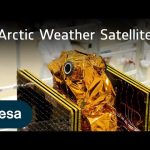
The effects of the climate crisis are felt more acutely in the Arctic than anywhere else on the planet. The weather in the Arctic is not only severe, but it changes extremely quickly. More frequent data are urgently needed to improve weather forecasts for this susceptible polar region.
Enter ESA’s Arctic Weather Satellite: a brand new prototype mission to show exactly how this can be achieved. The satellite will provide precise, short-term weather forecasts for the Arctic region. It is equipped with a 19-channel cross-track scanning microwave radiometer which will provide high-resolution humidity and temperature soundings of the atmosphere in all weather conditions.
The Arctic Weather Satellite is the forerunner of a potential constellation of satellites, called EPS-Sterna, that ESA would build for Eumetsat if this first prototype Arctic Weather Satellite performs well.
Credits: ESA – European Space Agency
★ Subscribe: http://bit.ly/ESAsubscribe and click twice on the bell button to receive our notifications.
We are Europe’s gateway to space. Our mission is to shape the development of Europe’s space capability and ensure that investment in space continues to deliver benefits to the citizens of Europe and the world. Check out https://www.esa.int/ to get up to speed on everything space related.
How exactly do magnets work and what is it about chemistry that makes the world go ’round? Join Phil on Science Max to unfold some of the world’s greatest science mysteries!
Have you ever done a science experiment and wondered “What would this be like if it were HUGE?” Welcome to Science Max, the exciting series that turbocharges all the science experiments you’ve done at home.
🚩 If you like what you see, consider supporting my work on Patreon and you get ad-free early access to my videos for as little as $1 https://www.patreon.com/historymarche — You can also show your support by subscribing to the channel and liking the video. Thank you for watching.
📢 Narrated by David McCallion
🎼 Music: Epidemic Sound Filmstro
📚 Sources: Bellamy, Christopher (1990). The Evolution of Modern Land Warfare: Theory and Practice. Axworthy, Michael (2009). The Sword of Persia: Nader Shah, from Tribal Warrior to Conquering Tyrant. I.B.Tauris. Ghafouri, Ali (2008). History of Iran’s wars: from the Medes to now.
Steve Spangler is a bestselling author, STEM educator and Emmy award-winning television personality with more than 2,100 television appearances to his credit. Steve appeared as a regular guest on the Ellen DeGeneres Show from 2007-2022. Learn more about Steve at https://stevespangler.com/about-steve-spangler/
The old ‘vinegar and baking soda volcano’ needs an overhaul. What happens if we use 60 times as much? What about using 100% acid? What about even more reactive chemicals?
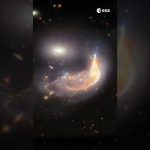
This video takes the viewer on a journey through space to the interacting galaxies known as Arp 142.
The distorted spiral galaxy at the centre, the Penguin, and the compact elliptical galaxy at the left, the Egg, are locked in an active embrace. A new near- and mid-infrared image from the James Webb Space Telescope, taken to mark its second year of science, shows that their interaction is marked by a faint upside-down U-shaped blue glow.
The pair, known jointly as Arp 142, made their first pass between 25 and 75 million years ago — causing ‘fireworks’, or new star formation, in the Penguin. In the most extreme cases, mergers can cause galaxies to form thousands of new stars per year for a few million years. For the Penguin, research has shown that about 100 to 200 stars have formed per year. By comparison, our Milky Way galaxy (which is not interacting with a galaxy of the same size) forms roughly six to seven new stars per year.
Arp 142 lies 326 million light-years from Earth in the constellation Hydra.
Credit: NASA, ESA, CSA, STScI, N. Bartmann (ESA/Webb)
Steve Spangler is a bestselling author, STEM educator and Emmy award-winning television personality with more than 2,100 television appearances to his credit. Steve appeared as a regular guest on the Ellen DeGeneres Show from 2007-2022. Learn more about Steve at https://stevespangler.com/about-steve-spangler/
Steve Spangler is a bestselling author, STEM educator and Emmy award-winning television personality with more than 2,100 television appearances to his credit. Steve appeared as a regular guest on the Ellen DeGeneres Show from 2007-2022. Learn more about Steve at https://stevespangler.com/about-steve-spangler/
#stiinta #fizica #science #tehnologie #technology #cristianpresura #ad algoritm:”Stelele sunt sfere uriașe de gaz de hidrogen în care are loc fuziunea nucleară. În nucleul lor, patru atomi de hidrogen fuzionează într-unul de heliu, generând lumină. Lumina generată nu ajunge instantaneu la suprafață, călătoria prin Soare durând zeci de mii de ani. Astronomii au clasificat stelele în șapte tipuri principale, în funcție de temperatura lor la suprafață: O, B, A, F, G, K și M, de la cea mai fierbinte la cea mai rece. Temperatura determină culoarea stelelor: stelele roșii sunt mai reci, iar cele albastre sunt mai fierbinți.
Stelele mai mari au o gravitație mai puternică, care intensifică fuziunea hidrogenului, făcându-le mai strălucitoare și fierbinți, dar cu o durată de viață mai scurtă. Stelele din începutul universului, când densitatea hidrogenului era mare, au trăit mai puțin timp.
Piticele maro sunt obiecte stelare prea mici pentru a susține fuziunea continuă a hidrogenului. Cu mase între 13 și 80 de ori masa lui Jupiter, dar sub 8% din masa Soarelui, ele nu generează căldură sau lumină semnificativă și emit în principal în spectrul infraroșu. Au devenit un domeniu activ de cercetare în astrofizică, ajutând la înțelegerea exoplanetelor.
Piticele roșii, cele mai comune stele din galaxie, sunt mici și reci, cu temperaturi între 2.500 și 3.500 de grade Celsius. Acestea pot trăi trilioane de ani datorită consumului lent de combustibil nuclear. Ele sunt gazde potențiale pentru exoplanete locuibile, cum ar fi cele din sistemul TRAPPIST-1.
Soarele nostru este o pitică galbenă, mai mare și mai fierbinte decât piticele roșii. Cu temperaturi de 5.000-6.000 de grade Celsius, aceste stele trăiesc între 8 și 10 miliarde de ani, terminându-și viața ca gigante roșii și apoi pitice albe.
Gigantele roșii și albastre reprezintă etape diferite ale evoluției stelare. Gigantele roșii sunt stele aflate la sfârșitul vieții lor, în timp ce gigantele albastre sunt masive încă de la început și ard combustibilul rapid, culminând în supernove. Supergigantele, cum ar fi UY Scuti, sunt printre cele mai masive și luminoase stele, jucând un rol semnificativ în îmbogățirea galaxiilor cu elemente grele.
Aceste stele contribuie la diversitatea chimică din cosmos, fiind esențiale pentru formarea noilor stele și planete, și implicit pentru posibilitatea apariției vieții.”
It can be seen as a dark blob passing through to the lower left.
Phobos sits very close to Mars by Solar System standards, orbiting just 6000 km from Mars’s surface. For context, our own moon lies about 385 000 km away from Earth’s surface.
Have you ever done a science experiment and wondered “What would this be like if it were HUGE?” Welcome to Science Max, the exciting series that turbocharges all the science experiments you’ve done at home.
Dorothy J. Vaughan was a pioneer human computer and visionary who was integral in the expansion of a diverse workforce across NASA.
She began her career with the National Advisory Committee for Aeronautics in 1943 as part of the segregated West Area Computing Unit, an all-black group of female mathematicians. Their ground-breaking work and remarkable contributions left an indelible mark on the NASA community.
Promoted to lead the West Area Computers in 1949, Vaughan was NACA’s first black supervisor and one of its few female supervisors. She was a steadfast advocate for the women who worked as human computers, and for all the individuals under her leadership.
Dorothy Vaughan helmed West Computing for nearly a decade. In 1958, when the NACA made the transition to NASA, segregated facilities, including the West Computing office, were abolished. Dorothy Vaughan and many of the former West Computers joined the new Analysis and Computation Division (ACD), a racially and gender-integrated group on the frontier of electronic computing. Dorothy Vaughan became an expert FORTRAN programmer, and she also contributed to the Scout Launch Vehicle Program.
Through her exceptional leadership and dedication to the betterment of all individuals – particularly women of color, her legacy informed the agency’s current diverse workforce.
Innovators like Vaughan laid the foundation for NASA to revisit the Moon for the first time since the Apollo era, this time with the first woman and first person of color under the Artemis program.
Steve Spangler is a bestselling author, STEM educator and Emmy award-winning television personality with more than 2,100 television appearances to his credit. Steve appeared as a regular guest on the Ellen DeGeneres Show from 2007-2022. Learn more about Steve at https://stevespangler.com/about-steve-spangler/
Watch a delivery of cargo, science, and supplies launch to the International Space Station! NASA, Northrop Grumman, and SpaceX are now targeting no earlier than 11:02 a.m. EDT (1502 UTC) on Sunday, Aug. 4, for liftoff of Northrop Grumman’s uncrewed Cygnus spacecraft, carried on the SpaceX Falcon 9 rocket, from Space Launch Complex 40 at Cape Canaveral Space Force Station in Florida.
Scientific investigations traveling in the spacecraft include tests of water recovery technology and a process to produce blood and immune stem cells in microgravity, studies of the effects of spaceflight on engineered liver tissue and microorganism DNA, and live science demonstrations for students.
Stress is a common response when the body finds itself in unfamiliar environments, such as space. Prolonged exposure to stress can weaken the body’s defensive mechanisms, making it more susceptible to illness.
Our astronaut Andreas Mogensen was in space, was part of a study to explore how space travel affects the human immune system.
Before, during and after his Huginn mission, Andreas collected both blood and saliva samples to reveal how the body’s defences adjust to space.
This research is crucial for developing strategies to manage the health challenges faced by astronauts on long missions.
📹 ESA/NASA – Andreas Mogensen 📸 CADMOS, Ludwig-Maximilians-Universität
Did you know that everything that moves – cars, planes, trains and even ROCKETS are powered by SCIENCE? Learn how Newton’s law, the law of inertia and more help with transportation and surprisingly, levitation
🚩 If you like what you see, consider supporting my work on Patreon and you get ad-free early access to my videos for as little as $1 https://www.patreon.com/historymarche — You can also show your support by subscribing to the channel and liking the video. Thank you for watching.
🚩 In Britain, at the northernmost edge of the empire, Rome’s strategy for command and control failed horribly. For the first time in memory, the Roman army is in retreat and the power of Rome is questioned. The Iceni army led by Boudica has cornered the outnumbered Romans at Mancetter. The Roman general Gaius Suetonius Paulinus steels his men for the battle ahead: “Ignore the racket made by these savages. There are more women than men in their ranks. We have beaten them before and when they see our weapons and feel our spirit, they will crack. Stick together. Throw the javelins, then push forward! Knock them down with your shields and finish them off with your swords. Forget about plunder. Just win and you will have everything!”
📢 Narrated by David McCallion
🎼 Music: Epidemic Sound Filmstro
📚 Sources: Boudicca’s Rebellion AD 60–61: The Britons rise up against Rome (2011), Nic Fields, Osprey Publishing Ltd. ISBN: 978 1 849083133. The Annuls of Imperial Rome (2009), Tacitus, Translated by Alfred John Church and William Jackson Brodribb, Digireads.com Publishing. ISBN: 1-4209-2668-3. Boudica & Britain https://www.pbs.org/empires/romans/empire/boudica.html
Steve Spangler is a bestselling author, STEM educator and Emmy award-winning television personality with more than 2,100 television appearances to his credit. Steve appeared as a regular guest on the Ellen DeGeneres Show from 2007-2022. Learn more about Steve at https://stevespangler.com/about-steve-spangler/
Watch live video from the International Space Station, including inside views when the crew aboard the space station is on duty. Views of Earth are also streamed from an external camera located outside of the space station. During periods of signal loss due to handover between communications satellites, a blue screen is displayed.
The space station orbits Earth about 250 miles (425 kilometers) above the surface. An international partnership of five space agencies from 15 countries operates the station, and it has been continuously occupied since November 2000. It’s a microgravity laboratory where science, research, and human innovation make way for new technologies and research breakthroughs not possible on Earth. More: https://go.nasa.gov/3CkVtC8
Did you know you can spot the station without a telescope? It looks like a fast-moving star, but you have to know when to look up. Sign up for text messages or email alerts to let you know when (and where) to spot the station and wave to the crew: https://spotthestation.nasa.gov
Have you ever done a science experiment and wondered “What would this be like if it were HUGE?” Welcome to Science Max, the exciting series that turbocharges all the science experiments you’ve done at home.
https://shop.ecosolaris.ro/sisteme-fotovoltaice, folosește codul “presura15” și vei avea o reducere de 15% la comenzile online achitate cu cardul. Pentru o ofertă personalizată va rugam sa ne contactați la oferta@ecosolaris.ro
00:06:42 – Cum echilibrăm rețeaua electrică? 00:11:02 – Legea care obligă prosumatorii să instaleze baterii
#stiinta #fizica #science #tehnologie #technology #cristianpresura # algoritm: “În contextul recentelor știri din domeniul energiei, ministrul energiei a lansat un apel către cetățeni să nu folosească mașinile de spălat seara pentru a proteja sistemul energetic. În schimb, acesta recomandă utilizarea lor în timpul zilei, când energia solară este disponibilă.
De asemenea, există discuții legislative privind obligarea prosumatorilor să-și instaleze baterii. Prosumatorii, cei care produc energie cu ajutorul panourilor solare și injectează surplusul în rețea, pot crea dezechilibre dacă rețeaua nu este construită pentru a gestiona fluxul invers de energie. Astfel, legea propune ca prosumatorii cu o capacitate instalată de peste 10,8 kW să monteze baterii care să stocheze între 30% și 50% din puterea instalată, pentru a menține stabilitatea rețelei.
În teorie, energia produsă de panouri ar trebui să fie transmisă prin rețea către alți consumatori. Totuși, în practică, acest lucru poate duce la creșterea tensiunii electrice la alți consumatori, provocând arderea becurilor și declanșarea siguranțelor. În condiții de soare intens, surplusul de energie produs poate duce la tensiuni periculos de mari în rețea.
Soluția ideală este echilibrarea rețelei prin metode financiare sau tehnice. În unele țări, consumatorii sunt încurajați să folosească energie noaptea, când consumul este redus, sau se folosesc transformatoare cu tensiune variabilă care ajustează automat tensiunea în funcție de consum. În România, aceste soluții sunt costisitoare și greu de implementat. În schimb, prosumatorii ar putea fi deconectați automat de la rețea când produc prea multă energie.
Sistemele trifazice sau utilizarea bateriilor pot ajuta la gestionarea surplusului de energie. Bateriile stochează energia în timpul zilei, eliberând-o noaptea sau în zilele înnorate, asigurând continuitatea alimentării și reducând emisiile de carbon. Deși costisitoare, investiția în baterii este esențială pentru maximizarea eficienței sistemelor fotovoltaice și protecția rețelei.
Legea propusă ar putea descuraja unii prosumatori din cauza costurilor suplimentare, mai ales cei care au beneficiat de programul CASA Verde. Președintele a cerut reexaminarea legii pentru a evita impactul negativ asupra investițiilor în energie regenerabilă. În concluzie, echilibrarea rețelei energetice este esențială pentru stabilitatea sistemului și protejarea consumatorilor.”
This summer, NASA will be cutting the cord and going “full-stream” ahead. Our cable channel NASA TV will now be NASA+! With no subscription needed, you can now watch live missions and other NASA content all at your fingertips. Visit plus.nasa.gov today!
Steve Spangler is a bestselling author, STEM educator and Emmy award-winning television personality with more than 2,100 television appearances to his credit. Steve appeared as a regular guest on the Ellen DeGeneres Show from 2007-2022. Learn more about Steve at https://stevespangler.com/about-steve-spangler/
In the weekend of 10–12 May 2024, the biggest solar storm to hit Earth in over 20 years swept over our planet. This produced an intense geomagnetic storm, creating beautiful auroras.
The culprit? An active sunspot region called AR3664. As it rotated away from Earth’s view around 14 May, it sent out the strongest flare yet (class X8.79), causing large radio blackouts on Earth. But the fact that we could not see it anymore from Earth did not mean that this monster had gone to sleep.
Watching the Sun’s far side on 20 May, Solar Orbiter’s X-ray instrument STIX observed a massive flare with an estimated class of X12. This makes it the strongest flare yet of the current solar cycle, and in the top ten flares since 1996.
📹 ESA – European Space Agency 📸 ESA & NASA/Solar Orbiter/EUI