After the successful Artemis I uncrewed flight around the Moon in 2022, Artemis II is the next step in our journey from the Moon to Mars. This mission will be the Artemis program’s first crewed mission, with four astronauts flying around the Moon in 10 days. This flight will confirm the systems and hardware necessary for human deep space travel. Artemis II is scheduled for no later than April 2026.
In this news conference, leaders in the Artemis program will discuss the mission and answer questions from the media. The participants include: – Lakiesha Hawkins, acting deputy associate administrator, Exploration Systems Development Mission Directorate, NASA Headquarters – Charlie Blackwell-Thompson, Artemis launch director, NASA’s Kennedy Space Center – Judd Frieling, lead Artemis II ascent flight director, NASA Johnson – Jeff Radigan, lead Artemis II flight director, NASA Johnson – Rick Henfling, lead Artemis II entry flight director, NASA Johnson – Daniel Florez, test director, Exploration Ground Systems, NASA Kennedy
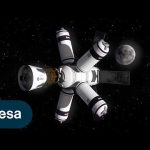
ESA’s future launcher preparatory programme is crafting a space transportation ecosystem, guiding the companies and engineers of today to develop and test the technologies required to meet future needs.
Space transportation will be moving towards frequent reusable launchers supporting a complete industrial ecosystem around Earth. In the coming decades, the European Space Agency (ESA) foresees transportation hubs in orbit around our planet providing logistic services much like airports or train stations on Earth. These hubs will offer refilling and maintenance services for spacecraft and provide platforms for manufacturing and assembly and in space transportation to other destinations.
To create this new transportation ecosystem, new technology developments are needed, such as automatic rendezvous and capturing of spacecraft, transfer of fuel and payloads between spacecraft, tugging spacecraft to other orbits around Earth or destinations in space.
The end goal for companies working on a proof of concept is to fly a demonstrator mission in space. Together with ESA, industry will get to this point through a process that starts with discussing needs and proposing solutions, and is followed by proving their use-case and collaborating on standards and regulations. Developing and demonstrating these new technologies is also expected to open commercial opportunities for European space transportation companies.
Finally, the Odyssey project proposes to put all these key technologies together into one package by providing a dedicated service for transport vehicles and spacecraft in orbit: an uncrewed propellant depot offering refilling services. Called Odyssey (a loose abbreviation for Orbital Depot for Your Sustained Space Exploration & beYond) this depot would store propellant brought from visiting supply rockets and distribute it as needed to spacecraft on a stopover to destinations farther away such as the Moon or Mars, or to Earth-orbiting navigation satellites that have used all their propellant and need a refill to extend their working life.
The Odyssey concept, if it can be demonstrated to be viable, would also be a contribution to a more sustainable use of space, by providing important elements of a future circular space economy.
We are Europe’s gateway to space. Our mission is to shape the development of Europe’s space capability and ensure that investment in space continues to deliver benefits to the citizens of Europe and the world. Check out https://www.esa.int/ to get up to speed on everything space related.
Experts from NASA, NOAA, and the Space Force will discuss three new missions to study space weather and its impacts on the solar system.
IMAP (Interstellar Mapping and Acceleration Probe), NASA’s Carruthers Geocorona Observatory, and the National Oceanic and Atmospheric Administration’s (NOAA) Space Weather Follow On-Lagrange 1 (SWFO-L1) are targeted to launch aboard a SpaceX Falcon 9 rocket at 7:32 a.m. EDT (1132 UTC), Tuesday, Sept. 23.
The participants in the news conference are: – Nicky Fox, associate administrator, Science Mission Directorate, NASA Headquarters – Brad Williams, IMAP program executive, NASA Headquarters – Irene Parker, deputy assistant administrator for Systems at NOAA’s National Environmental Satellite, Data, and Information Service – Denton Gibson, launch director, NASA’s Launch Services Program, NASA Kennedy – Julianna Scheiman, director, NASA Science Missions, SpaceX – Arlena Moses, launch weather officer, 45th Weather Squadron, U.S. Space Force
Scientists created the most accurate three-dimensional map of star-formation regions in our Milky Way galaxy, based on data from the European Space Agency’s Gaia space telescope. This map will teach us more about these obscure cloudy areas, and the hot young stars that shape them.
It is notoriously difficult to map and study regions in space where stars form because they are usually hidden from view by thick clouds of gas and dust, whose distances cannot be directly measured.
Gaia can’t see these clouds directly, but it can measure stellar positions and the so-called ‘extinction’ of stars. This means it can see how much light from stars is blocked by dust. From this, scientists can create 3D maps showing where the dust is, and use those maps to figure out how much ionised hydrogen gas is present – a telltale sign of star formation.
The new 3D map of star-forming regions in the Milky Way is based on Gaia observations of 44 million ‘ordinary’ stars and 87 O-type stars. The map extends to a distance of 4000 light-years from us, with the Sun at the centre.
Credit: European Space Agency (ESA) Animation: ESA/Gaia/DPAC, S. Payne-Wardenaar, L. McCallum et al (2025), CC BY-SA 3.0 IGO Music: My Story – Echoes Of The Heart
We are Europe’s gateway to space. Our mission is to shape the development of Europe’s space capability and ensure that investment in space continues to deliver benefits to the citizens of Europe and the world. Check out https://www.esa.int/ to get up to speed on everything space related.
After lifting off from Baikonur Cosmodrome in Kazakhstan on Thursday, Sept. 11, a Roscosmos cargo spacecraft, delivering approximately three tons of food, fuel, and supplies, is scheduled to arrive at the International Space Station on Saturday, Sept. 13.
The unpiloted spacecraft will dock autonomously to the aft port of the orbiting laboratory’s Zvezda module at 1:27 p.m. EDT (1727 UTC) on Saturday, Sept. 13.
The Progress 93 spacecraft will remain docked to the space station for approximately six months. Then, it will depart for re-entry into Earth’s atmosphere, disposing of trash loaded by the crew.
We’re about to launch three new observatories that will study the Sun—and help us protect Earth. Come watch with us!
NASA’s IMAP (Interstellar Mapping and Acceleration Probe) mission, the Carruthers Geocorona Observatory, and NOAA’s Space Weather Follow On–Lagrange 1 (SWFO-L1) observatory are scheduled to lift off from Kennedy Space Center aboard a SpaceX Falcon 9 rocket at 7:32 a.m. EDT (1132 UTC) on Tuesday, Sept. 23.
The IMAP mission will map the boundaries of our heliosphere, the vast bubble created by the Sun’s wind that covers our entire solar system. NASA’s Carruthers Geocorona Observatory will study the ultraviolet glow of Earth’s exosphere, the outermost region of our planet’s atmosphere — helping scientists understand how space weather from the Sun affects our planet.
The SWFO-L1 mission, managed by NOAA and developed with NASA’s Goddard Space Flight Center and commercial partners, will use a suite of instruments to provide real-time measurements of solar wind, along with a compact coronagraph to detect coronal mass ejections from the Sun.
Live from NASA’s Johnson Space Center, we’re introducing our 2025 class of astronaut candidates to the public for the first time. Chosen from over 8,000 applicants, these candidates will undergo nearly two years of training before they graduate as astronauts, eligible for missions to the Moon and beyond.
Our astronaut corps is pushing the boundaries of exploration—from conducting scientific research on the International Space Station, to preparing for our Artemis missions to the Moon, to inspiring the next generation of explorers and innovators. Learn more about our active astronauts: https://www.nasa.gov/astronauts/
NASA Acting Administrator Sean Duffy speaks on America’s mission to lead in space travel:
“We’re going back to the Moon. And this time, when we plant our flag, we stay!”
Through the Artemis campaign, NASA is returning astronauts to the lunar surface – advancing science, testing new technology, and learning how to live and work on another world. These missions prepare us for our next giant leap: sending humans to Mars.
Live views from the International Space Station are streaming from an external camera mounted on the station’s Harmony module.
The camera is looking forward at an angle so that International Docking Adapter 2 is visible. If the Harmony module camera is not available due to operational considerations for a longer period of time, a continuous loop of recorded Earth views will be displayed with the caption “Previously Recorded.”
The space station orbits Earth about 250 miles (425 kilometers) above the surface. An international partnership of five space agencies from 15 countries operates the station, and it has been continuously occupied since November 2000. It’s a microgravity laboratory where science, research, and human innovation make way for new technologies and research breakthroughs not possible on Earth. More: https://go.nasa.gov/3CkVtC8
Did you know you can spot the station without a telescope? It looks like a fast-moving star, but you have to know when to look up. Download our mobile app for alerts to let you know when (and where) to spot the station and wave to the crew: https://www.nasa.gov/spot-the-station/
Watch live video from the International Space Station, including inside views when the crew aboard the space station is on duty. Views of Earth are also streamed from an external camera located outside of the space station. During periods of signal loss due to handover between communications satellites, a blue screen is displayed.
The space station orbits Earth about 250 miles (425 kilometers) above the surface. An international partnership of five space agencies from 15 countries operates the station, and it has been continuously occupied since November 2000. It’s a microgravity laboratory where science, research, and human innovation make way for new technologies and research breakthroughs not possible on Earth. More: https://go.nasa.gov/3CkVtC8
Did you know you can spot the station without a telescope? It looks like a fast-moving star, but you have to know when to look up. Download our mobile app for alerts to let you know when (and where) to spot the station and wave to the crew: https://www.nasa.gov/spot-the-station/
Watch a SpaceX Dragon spacecraft dock to the International Space Station after a successful liftoff on Aug. 24. The spacecraft is carrying supplies – including food and essential equipment for the crew – as well as a variety of science experiments.
The Dragon spacecraft is scheduled to remain at the space station until December, when it will depart and return to Earth with research and cargo, splashing down off the coast of California.
The 33rd SpaceX commercial resupply mission to the International Space Station is set to lift off at 2:45 a.m. EDT (0645 UTC) on Sunday, Aug. 24, from Space Launch Complex 40 at Cape Canaveral Space Force Station in Florida, atop a Falcon 9 rocket.
Dragon is scheduled to dock autonomously to the station at around 7:30 a.m. EDT (1130 UTC) on Monday, Aug. 25. Read the full timeline and learn more about the mission: https://go.nasa.gov/4lHGTaX
Europe’s first MetOp Second Generation, MetOp-SG-A1, weather satellite – which hosts the Copernicus Sentinel-5 mission – has launched aboard an Ariane 6 rocket from Europe’s Spaceport in French Guiana. The rocket lifted off on 13 August at 02:37 CEST (12 August 21:37 Kourou time).
MetOp-SG-A1 is the first in a series of three successive pairs of satellites. The mission as a whole not only ensures the continued delivery of global observations from polar orbit for weather forecasting and climate analysis for more than 20 years, but also offers enhanced accuracy and resolution compared to the original MetOp mission – along with new measurement capabilities to expand its scientific reach.
This new weather satellite also carries the Copernicus Sentinel-5 mission to deliver daily global data on air pollutants and atmospheric trace gases as well as aerosols and ultraviolet radiation.
We are Europe’s gateway to space. Our mission is to shape the development of Europe’s space capability and ensure that investment in space continues to deliver benefits to the citizens of Europe and the world. Check out https://www.esa.int/ to get up to speed on everything space related.
The four members of NASA’s SpaceX Crew-10 mission — NASA astronauts Anne McClain and Nichole Ayers, JAXA (Japan Aerospace Exploration Agency) astronaut Takuya Onishi, and Roscosmos cosmonaut Kirill Peskov — prepare to head to Earth as the hatches are closed on their spacecraft. Undocking is scheduled for Friday, Aug. 8, at 6:05 p.m. ET (2205 UTC).
During their nearly five months on the space station, Crew-10 contributed to the more than 200 scientific demonstrations and experiments taking place in orbit. These included physiological and psychological studies, material flammability tests for future spacecraft designs, and testing a backup lunar navigation solution.
We are saddened by the passing of Apollo astronaut Jim Lovell at the age of 97.
Jim Lovell was a veteran of the Gemini VII and Gemini XII missions before becoming command module pilot and navigator for Apollo 8, the first crewed spacecraft to be lifted into near-Earth orbit by the Saturn V launch vehicle. He became the first man to orbit the Moon on two separate missions when he served as the commander of Apollo 13.
Unfortunately, the mission to explore the Fra Mauro region of the Moon did not go as planned. What many viewed as a “routine” mission soon had millions around the globe glued to television sets watching and hoping for a positive outcome to one of the most intense episodes in the history of space exploration.
The four members of NASA’s SpaceX Crew-10 mission — NASA astronauts Anne McClain and Nichole Ayers, JAXA (Japan Aerospace Exploration Agency) astronaut Takuya Onishi, and Roscosmos cosmonaut Kirill Peskov — undock from the space station, setting off to return to Earth. Splashdown will occur off the coast of California on Saturday, Aug. 9, at approximately 11:33 a.m. ET (1533 UTC).
During their nearly five months on the space station, Crew-10 contributed to the more than 200 scientific demonstrations and experiments taking place in orbit. These included physiological and psychological studies, material flammability tests for future spacecraft designs, and testing a backup lunar navigation solution.
After nearly five months aboard the International Space Station, the four members of NASA’s SpaceX Crew-10 mission — NASA astronauts Anne McClain and Nichole Ayers, JAXA (Japan Aerospace Exploration Agency) astronaut Takuya Onishi, and Roscosmos cosmonaut Kirill Peskov — are sharing their farewell remarks from space as they prepare to return home, followed by a change of command ceremony aboard the station.
As part of her Summer Reading Challenge, Second Lady Usha Vance will host an event for children in grades K-8 on Monday, Aug. 4, at NASA’s Johnson Space Center in Houston.
NASA astronaut Suni Williams will join Ms. Vance to read a space-related book to children and participate in other space-related activities.
After lifting off from NASA’s Kennedy Space Center on Thursday, July 31, the crew members of NASA’s SpaceX Crew-11 mission are arriving at the International Space Station.
NASA astronauts Zena Cardman and Mike Fincke, JAXA (Japan Aerospace Exploration Agency) astronaut Kimiya Yui, and Roscosmos cosmonaut Oleg Platonov are scheduled to dock in their SpaceX Dragon spacecraft at approximately 2:30 a.m. EDT (0630 UTC) on Saturday, Aug. 2. Station crew will then open the hatches between Dragon and the station, to be followed by a welcome ceremony.
Cardman, Fincke, Yui, and Platonov will spend several months on the station, conducting research to help humans learn how to live in space while making life better on Earth. After Crew-11 arrives at the station, the four members of Crew-10 will depart the station following a brief handover period.
Following the successful launch of NASA’s SpaceX Crew-11 mission on Thursday, July 31, experts from NASA and our mission partners share updates and answer media questions in a postlaunch news conference.
Participants include: – Ken Bowersox, associate administrator, NASA’s Space Operations Mission Directorate – Steve Stich, manager, NASA’s Commercial Crew Program – Dana Weigel, manager, NASA’s International Space Station Program – Kazuyoshi Kawasaki, associate director general, Space Exploration Center/Space Exploration Innovation Hub Center, JAXA – Sarah Walker, director, Dragon Mission Management, SpaceX
NASA astronauts Zena Cardman and Mike Fincke, JAXA (Japan Aerospace Exploration Agency) astronaut Kimiya Yui, and Roscosmos cosmonaut Oleg Platonov lifted off from NASA’s Kennedy Space Center at 12:09 p.m. EDT (1609 UTC) for a long-term science mission aboard the International Space Station. Crew-11 is scheduled to dock with the station on Saturday, Aug. 2.
We’re sending a new crew to the International Space Station!
Watch with us as the four members of NASA’s SpaceX Crew-11 mission launch to the station from NASA’s Kennedy Space Center in Florida. Liftoff is targeted for 12:09 p.m. EDT (1609 UTC) on Thursday, July 31.
SpaceX’s Dragon spacecraft will carry NASA astronauts Zena Cardman and Mike Fincke, JAXA (Japan Aerospace Exploration Agency) astronaut Kimiya Yui, and Roscosmos cosmonaut Oleg Platonov to the orbiting laboratory for a science mission. This is the 11th crew rotation mission and the 12th human spaceflight mission for NASA to the space station supported by the Dragon spacecraft since 2020 as part of the agency’s Commercial Crew Program.
Crew-11 is scheduled to arrive at the station on Saturday, Aug. 2. After a brief handover period, NASA astronauts Anne McClain and Nichole Ayers, along with JAXA (Japan Aerospace Exploration Agency) astronaut Takuya Onishi and Roscosmos cosmonaut Kirill Peskov, will depart the station for a splashdown off the coast of California.
NASA and the agency’s partners preview the launch of NASA’s SpaceX Crew-11 mission. Participants include:
Ken Bowersox, associate administrator, NASA’s Space Operations Mission Directorate Steve Stich, manager, NASA’s Commercial Crew Program Dana Weigel, manager, NASA’s International Space Station Program William Gerstenmaier, vice president, Build and Flight Reliability, SpaceX Sergey Krikalev, executive director, Human Space Flight Program, Roscosmos Naoki Nagai, Program Manager of International Space Station, Human Spaceflight Technology Directorate, JAXA
NASA astronauts Zena Cardman and Mike Fincke, Roscosmos cosmonaut Oleg Platonov, and JAXA astronaut Kimiya Yui will launch to the International Space Station on the Dragon spacecraft powered by a Falcon 9 rocket no earlier than July 31.
Join NASA and ISRO (the Indian Space Research Organisation) for the launch of our most advanced Earth-observing radar satellite, which will provide 3D views of land and ice surfaces in unprecedented detail.
The spacecraft is scheduled to launch at 8:10 a.m. EDT (1210 UTC) on Wednesday, July 30, aboard an ISRO Geosynchronous Launch Vehicle Mark II rocket from the Satish Dhawan Space Centre on India’s southeastern coast.
From orbit, the NISAR (NASA-ISRO Synthetic Aperture Radar) satellite will enable scientists to measure small shifts in Earth’s glaciers, volcanoes, forests, and other land and ice surfaces – all down to a fraction of an inch. This data will help communities prepare for natural hazards like landslides and earthquakes, plus respond to them more effectively. With NISAR’s global view, researchers will better understand what’s changing, where, and why.
NISAR’s radar will measure surfaces by transmitting a specific microwave signal to Earth and then detecting characteristics of the return signal. The instrument can “see” through clouds and light rain, both day and night, and will scan a given spot twice every 12 days.
Four crew members are preparing to launch to the International Space Station as part of NASA’s SpaceX Crew-11 mission to perform research, technology demonstrations, and maintenance activities aboard the orbiting laboratory.
NASA astronauts Zena Cardman and Mike Fincke, JAXA (Japan Aerospace Exploration Agency) astronaut Kimiya Yui, and Roscosmos cosmonaut Oleg Platonov will lift off no earlier than 12:09 p.m. EDT (1609 UTC) on Thursday, July 31, from Launch Complex 39A at NASA’s Kennedy Space Center in Florida.
This video takes the viewer on a journey through space to the Sombrero Galaxy, also known as Messier 104 (M104).
The NASA/ESA/CSA James Webb Space Telescope recently imaged the Sombrero galaxy with its MIRI (Mid-InfraRed Instrument), resolving the clumpy nature of the dust along the galaxy’s outer ring.
The mid-infrared light highlights the gas and dust that are a feature of the star formation taking place among the Sombrero galaxy’s outer disc. The rings of the Sombrero galaxy produce less than one solar mass of stars per year, in comparison to the Milky Way’s roughly two solar masses a year. It’s not a particular hotbed of star formation.
The Sombrero galaxy is around 30 million light-years from Earth in the constellation Virgo.
📹 European Space Agency (ESA) 📸 NASA, ESA, CSA, STScI, ESO/IDA/Danish 1.5 m, DSS 2, The Hubble Heritage Team (STScI/AURA), N. Bartmann (ESA/Webb), R. Gendler and J.-E. Ovaldsen, E. Slawik, N. Risinger & M. Zamani (ESA/Webb)
Satellites like Copernicus Sentinel-3 measure land surface temperature — that’s the heat coming directly from the ground, not the air above it. And yes, it’s often hotter in the summer than what your app tells you.
📹 European Space Agency (ESA) 📸 Contains modified Copernicus Sentinel data (2025), processed by ESA
A powerful new satellite will soon provide insights into natural hazards, ecosystems, agriculture, and other fields of study that affect communities around the globe. The NISAR mission is a collaboration between NASA and ISRO (Indian Space Research Organisation) and will use radar to track Earth’s changing surface in fine detail.
Short for NASA-ISRO Synthetic Aperture Radar, NISAR features an advanced radar system with two instruments: one from ISRO and one built at NASA’s Jet Propulsion Laboratory in Southern California. Using radar enables NISAR to map Earth’s land and ice surfaces day or night, regardless of whether skies are cloudy or clear.
NISAR will launch from ISRO’s Satish Dhawan Space Centre in Sriharikota, India. Launch is targeted for July 2025. Follow https://science.nasa.gov/blogs/nisar for the latest updates.
View of Earth as seen by ESA project astronaut Sławosz Uznański-Wiśniewski inside the seven-windowed cupola, the International Space Station’s “window to the world”.
The European Space Agency-built Cupola is the favourite place of many astronauts on the International Space Station. It serves not only as a unique photo spot, but also for observing robotic activities of the Canadian Space Agency’s robotic arm Canadarm2, arriving spacecraft and spacewalks.
Sławosz was launched to the International Space Station on the Dragon spacecraft as part of Axiom Mission 4 on 25 June 2025. The 20-day mission on board is known as Ignis.
During the Ignis mission, Sławosz conducted 13 experiments proposed by Polish companies and institutions and developed in collaboration with ESA, along with three additional ESA-led experiments. These covered a broad range of areas including human research, materials science, biology, biotechnology and technology demonstrations.
The Ax-4 mission marks the second commercial human spaceflight for an ESA project astronaut. Ignis was sponsored by the Polish government and supported by ESA, the Polish Ministry of Economic Development and Technology (MRiT) and the Polish Space Agency (POLSA).
📹 European Space Agency (ESA) 📸 ESA – Sławosz Uznański-Wiśniewski
Want to do real NASA science? You can. Right now, dozens of NASA projects need your help. From spotting asteroids to searching for planets beyond our solar system, and so much more, there are projects for everyone. And you don’t need a PhD to get involved, just your curiosity!
For years, astronomers believed the Milky Way and Andromeda were on a direct collision course in about 4.5 billion years. But new research using data from our Gaia mission and Hubble Space Telescope suggests the story isn’t so simple.
After running 100 000 simulations with the most precise data available, scientists now say there’s only a 50% chance the two galaxies will collide in the next 10 billion years.
The Large Magellanic Cloud, one of our satellite galaxies, could be tugging the Milky Way just enough to steer it away from Andromeda. Instead of crashing, the two galaxies might simply orbit each other in a slow cosmic dance.
So the fate of the Milky Way remains uncertain. And with the Sun expected to make Earth uninhabitable in about a billion years, a galaxy collision is low on our list of concerns.
📹 European Space Agency (ESA) 📸 NASA, ESA, STScI, Till Sawala (University of Helsinki), DSS, J. DePasquale (STScI)
After 20 days in space, ESA project astronaut Sławosz Uznański-Wiśniewski and his Axiom Mission 4 crewmates returned safely to Earth on 15 July 2025.
#Ignis mission highlights:
🌍 230 orbits around Earth 📏 + 13 million km travelled 🧪+ 20 science experiments (13 led by Poland) 💯 All mission objectives fulfilled ⏰ 105 hours of orbital work 📈 + 25% extra activities completed
📹 European Space Agency (ESA) 📸 Axiom Space/SpaceX
Tune in on Tuesday, 15 July, from 09:30 BST (10:30 CEST), to watch ESA project astronaut Sławosz Uznański-Wiśniewski and crew splash down off the coast of California, USA at 10:31 BST (11:31 CEST).
During the Ignis mission, Sławosz conducted 13 experiments proposed by Polish companies and institutions and developed in collaboration with ESA, along with three additional ESA-led experiments. These covered a broad range of areas including human research, materials science, biology, biotechnology and technology demonstrations.
Ax-4 marks the second commercial human spaceflight mission for an ESA project astronaut. Sponsored by the Polish government and supported by ESA, the Polish Ministry of Economic Development and Technology (MRiT) and the Polish Space Agency (POLSA), the mission featured an ambitious programme of technological and scientific research.
We are Europe’s gateway to space. Our mission is to shape the development of Europe’s space capability and ensure that investment in space continues to deliver benefits to the citizens of Europe and the world. Check out https://www.esa.int/ to get up to speed on everything space related.
Tune in on Monday, 14 July, from 11:45 BST (12:45 CEST), to watch ESA project astronaut Sławosz Uznański-Wiśniewski depart from the International Space Station, bringing the Ignis mission to a close after nearly three weeks in orbit.
During the Ignis mission, Sławosz conducted 13 experiments proposed by Polish companies and institutions and developed in collaboration with ESA, along with three additional ESA-led experiments. These covered a broad range of areas including human research, materials science, biology, biotechnology and technology demonstrations.
Ax-4 marks the second commercial human spaceflight mission for an ESA project astronaut. Sponsored by the Polish government and supported by ESA, the Polish Ministry of Economic Development and Technology (MRiT) and the Polish Space Agency (POLSA), the mission featured an ambitious programme of technological and scientific research.
We are Europe’s gateway to space. Our mission is to shape the development of Europe’s space capability and ensure that investment in space continues to deliver benefits to the citizens of Europe and the world. Check out https://www.esa.int/ to get up to speed on everything space related.
Watch as the Axiom Mission 4 crew – Peggy Whitson, former NASA astronaut and director of human spaceflight at Axiom Space, ISRO (Indian Space Research Organisation) astronaut Shubhanshu Shukla, ESA (European Space Agency) project astronaut Sławosz Uznański-Wiśniewski of Poland, and HUNOR (Hungarian to Orbit) astronaut Tibor Kapu of Hungary – begin final preparations for their return to Earth aboard the SpaceX Dragon spacecraft, currently targeted for Monday, July 14.
After the four-member astronaut crew enters the SpaceX Dragon spacecraft, the hatch will close at 4:55 a.m. EDT (0855 UTC). The spacecraft is scheduled to undock at 7:05 a.m. EDT (1105 UTC).
Jupiter has super strong winds and massive storms, including the iconic Great Red Spot, a storm bigger than Earth! At the poles, winds can reach up to 1440 km/h.
Saturn is even windier! It has some of the fastest, but not the fastest winds in our Solar System blow. Winds here can reach 1800 km/h.
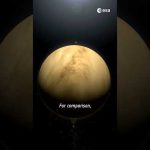
Venus has super-rotating winds that race around the planet up to 60x faster than Venus itself spins. That’s way faster than Earth’s winds, which top out at 10–20% of our planet’s rotation speed.
Mars has a thin atmosphere, so winds are usually gentle. But during dust storms, they can kick up to around 100 km/h.
Neptune holds the record for the fastest winds in the Solar System, blowing at over 2000 km/h!
For context: the fastest wind ever recorded on Earth? 408 km/h—during a massive tornado in Australia.
📹 European Space Agency (ESA) 📸 ESA/Voyager 2, NASA, NSSDC Photo Gallery ID P-34709C
Watch Axiom Mission 4 begin the journey home from the International Space Station. Peggy Whitson, former NASA astronaut and director of human spaceflight at Axiom Space, ISRO (Indian Space Research Organisation) astronaut Shubhanshu Shukla, ESA (European Space Agency) project astronaut Sławosz Uznański-Wiśniewski of Poland, and HUNOR (Hungarian to Orbit) astronaut Tibor Kapu of Hungary return to Earth aboard their SpaceX Dragon spacecraft. Undocking is scheduled at 7:05 a.m. EDT (1105 UTC).
John McFall is part of our astronaut reserve. Following a motorcycle accident that resulted in the amputation of his right leg at the age of 19, John learnt to run again. He became a professional track and field athlete in 2005, going on to represent Great Britain and Northern Ireland as a @paralympics sprinter.
In November 2022, John was selected as a member of the ESA astronaut reserve and to take part in ESA’s feasibility study “Fly!” to improve our understanding of, and overcome, the barriers space flight presents for astronauts with a physical disability.
📹 European Space Agency (ESA) 📸 Novespace/N. Courtioux
Space is huge and essential to humankind, fuelling knowledge, supporting our economies and driving global prosperity. None of this would be possible without reliable access to space.
Since 1979, Europe has relied on the Ariane rockets and Vega series to launch its missions. Today, with Ariane 6 and Vega-C, ESA ensures Europe’s autonomous and independent access to space. But we are also looking ahead. With the Ariane Smart Transfer and Release In-orbit Ship (ASTRIS), Phoebus, P160C boosters, the MR-10 engine and more, ESA is enhancing its rockets with new innovations that improve cost, performance, capability and sustainability.
ESA is also leading the way in developing new propulsion systems to power the European launchers of the future. In collaboration with industry, ESA is supporting the development of new technologies to be used on rocket, boosters, upper stages, landers and spacecraft.
Initiates like Boosters for European Space Transportation (BEST!), Technologies for High-thrust Re-Usable Space Transportation (THRUST!) and Future Innovation and Research in Space Transportation programme (FIRST!), are advancing key technologies for reusable boosters, engines and other innovations crucial for the future of space exploration. ESA’s Space Rider is a reusable spacecraft and robotic laboratory, designed to stay in low Earth-orbit for two months and return payloads to Earth. Themis is a prototype for testing reusable rocket technologies, including vertical takeoff, landing and reuse, powered by the Prometheus engine.
The future of space transport extends beyond Earth launches, with in-orbit operations, transportation systems to support satellite servicing, orbital refuelling, and payload transfers between orbits.
To support all of this, ESA is upgrading its ground support and Europe’s Spaceport in French Guiana, to accommodate more launches.
Through programmes like ‘Boost!’ ESA is empowering the European Space Industry, supporting innovative companies which are creating new launch services. The European Launcher Challenge is shaping a competitive European launch sector for the future, strengthening Europe’s autonomous access to space.
We are Europe’s gateway to space. Our mission is to shape the development of Europe’s space capability and ensure that investment in space continues to deliver benefits to the citizens of Europe and the world. Check out https://www.esa.int/ to get up to speed on everything space related.
After lifting off from Baikonur Cosmodrome in Kazakhstan on Thursday, July 3, a Roscosmos cargo spacecraft, delivering approximately three tons of food, fuel, and supplies, is scheduled to arrive at the International Space Station on Saturday, June 5.
The unpiloted spacecraft will dock autonomously to the space-facing port of the orbiting laboratory’s Poisk module at 5:27 p.m. EDT (2127 UTC) on Saturday, July 5.
The Progress 92 spacecraft will remain docked to the space station for approximately six months before departing for re-entry into Earth’s atmosphere to dispose of trash loaded by the crew.
A Roscosmos cargo spacecraft, delivering approximately three tons of food, fuel, and supplies to the Expedition 73 crew aboard the International Space Station, is launching on a Soyuz rocket from the Baikonur Cosmodrome in Kazakhstan on Thursday, July 3. Liftoff is scheduled for 3:32 p.m. EDT (1932 UTC).
After a two-day journey to the station, the unpiloted spacecraft will dock autonomously to the space-facing port of the orbiting laboratory’s Poisk module at 5:27 p.m. EDT (2127 UTC) on Saturday, July 5.
The Progress 92 spacecraft will remain docked to the space station for approximately six months before departing for re-entry into Earth’s atmosphere to dispose of trash loaded by the crew.