Category: Astronomie

  • Graduation ceremony of ESA astronaut class of 2022

    Graduation ceremony of ESA astronaut class of 2022

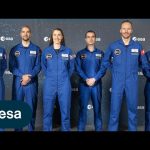
    Watch the replay as ESA astronaut candidates Sophie Adenot, Rosemary Coogan, Pablo Álvarez Fernández, Raphaël Liégeois, Marco Sieber and Australian Space Agency astronaut candidate Katherine Bennell-Pegg receive astronaut certification at ESA’s European Astronaut Centre. This officially marks their transition into fully-fledged astronauts, ready and eligible for spaceflight.

    The group was selected in November 2022 and began their year-long basic astronaut training in April 2023.

    Basic astronaut training provides the candidates with an overall familiarisation and training in various areas, such as spacecraft systems, spacewalking, flight engineering, robotics and life support systems, as well as survival and medical training.

    Following certification, the new astronauts will move on to the next phases of pre-assignment and mission-specific training, paving the way for future missions to the International Space Station and beyond.

    Chapters:
    00:00 – 05:14 – Stay tuned
    05:15 – 07:05 – Event
    07:06 – 16:46 – Statement from Josef Aschbacher, ESA Director General
    16:47 – 21:35 – Statement from Daniel Neuenschwander, Director of Human and Robotic Exploration
    21:36 – 24:40 – Statement from Frank De Winne, Head of ESA’s European Astronaut Centre
    24:41 – 31:35 – Event
    31:36 – 36:35 – ESA astronaut class of 2022 graduation ceremony
    36:36 – 40:10 – Statement from Enrico Palermo, Head of the Australian Space Agency
    40:11 – 41:03 – Katherine Bennell-Pegg graduation ceremony
    41:04 – 44:40 – Statement from Thomas Dermine, State Secretary for Economic Recovery and Strategic Investments
    44:41 – 56:20 – Live Q&A
    56:21 – 57:15 End of event

    Credits: ESA – European Space Agency

    ★ Subscribe: http://bit.ly/ESAsubscribe and click twice on the bell button to receive our notifications.

    Check out our full video catalog: http://bit.ly/SpaceInVideos
    Follow us on Twitter: http://bit.ly/ESAonTwitter
    On Facebook: http://bit.ly/ESAonFacebook
    On Instagram: http://bit.ly/ESAonInstagram
    On LinkedIn: https://bit.ly/ESAonLinkedIn
    On Pinterest: https://bit.ly/ESAonPinterest
    On Flickr: http://bit.ly/ESAonFlickr

    We are Europe’s gateway to space. Our mission is to shape the development of Europe’s space capability and ensure that investment in space continues to deliver benefits to the citizens of Europe and the world. Check out https://www.esa.int/ to get up to speed on everything space related.

    Copyright information about our videos is available here: https://www.esa.int/ESA_Multimedia/Terms_and_Conditions

    #ESA #Astronaut #GraduationCeremony
  • NASA Welcomes New Partners to the Artemis Accords … This Week @NASA – April 19

    NASA Welcomes New Partners to the Artemis Accords … This Week @NASA – April 19

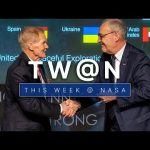
    More partners in space exploration, new data measuring ocean health, air quality and our climate, and an upgrade to testing facilities for Artemis II … a few of the stories to tell you about – This Week at NASA!

    Link to download this video:

    https://images.nasa.gov/details/NASA%20Welcomes%20New%20Partners%20to%20the%20Artemis%20Accords%20%E2%80%A6%20This%20Week%20@NASA%20%E2%80%93%20April%2019

    Video Producer: Haley Reed
    Video Editor: Sonnet Apple
    Narrator: Emanuel Cooper
    Music: Universal Production Music
    Credit: NASA

  • Earth Day Media Briefing: NASA Unveils New Elements of Climate Research

    Earth Day Media Briefing: NASA Unveils New Elements of Climate Research

    Live from our Headquarters in Washington, we’re hosting a media briefing ahead of Earth Day 2024 to share information about NASA’s climate research.

    We’ll discuss new airborne science flights, our latest Earth science strategy, and to share data from our newest Earth-observing satellite, PACE, which stands for Plankton, Aerosol, Cloud, and Ocean Ecosystem.

    Participants
    • Bill Nelson, NASA Administrator https://www.nasa.gov/people/nasa-administrator-bill-nelson/
    • Dr. Karen St. Germain, division director, NASA Earth Sciences Division https://science.nasa.gov/people/karen-st-germain/
    • Tom Wagner, associate director for Earth Action https://appliedsciences.nasa.gov/about/our-team/thomas-wagner

    Credit: NASA

    #EarthDay #NASA

  • Integrating mini satellites for Ariane 6 first launch 🚀 #shorts

    Integrating mini satellites for Ariane 6 first launch 🚀 #shorts

    There’s a key milestone in the development of a satellite: integration. 🛰✅

    🎓 Join ISTSat-1 and ³Cat-4 #student teams as they integrate their satellites with the deployer in preparation for launch this summer!

    🚀 This exciting experience is part of our Fly Your Satellite! programme, which gives tertiary education students the chance to design, build, test and launch a #satellite.

    Credits: ESA – European Space Agency

    #ESA #CubeSat #Rocket

  • The Missing Puzzle Piece | The Incredible Adventures of the Hera mission

    The Missing Puzzle Piece | The Incredible Adventures of the Hera mission

    Meet Hera, our very own asteroid detective. Together with two CubeSats – Milani the rock decoder and Juventas the radar visionary – Hera is off on an adventure to explore Didymos, a double asteroid system that is typical of the thousands that pose an impact risk to planet Earth.

    In September 2022 NASA’s DART spacecraft tested if it was possible to divert an asteroid by giving it a shove – and found out that it was! Important knowledge, should we wish to avoid going the same way as the dinosaurs. Astronomers can observe from afar how the smaller asteroid’s orbit has shifted since DART’s impact, but there is still a missing piece of the puzzle if we want to fully understand how ‘kinetic impacting’ works in practice. Suitable for kids and adults alike, this episode of ‘The Incredible Adventures of Hera’ explains why ESA’s asteroid detective and its CubeSat assistants need to get up close and personal to shine light on this cosmic mystery.

    Watch the other episodes of The Incredible Adventures of the Hera Mission:

    English: https://www.youtube.com/playlist?list=PLbyvawxScNbtO4aVLVx1SrsRT6yw8gahK />
    French:
    https://www.youtube.com/playlist?list=PLbyvawxScNbveV6nHUZQMlM76h5_XLtG8 />
    Spanish:
    https://www.youtube.com/playlist?list=PLbyvawxScNbtoQmV_KXc0uE9hww2zwSMX />
    Italian:
    https://www.youtube.com/playlist?list=PLbyvawxScNbtoQmV_KXc0uE9hww2zwSMX />
    German:
    https://www.youtube.com/playlist?list=PLbyvawxScNbusb32V5-i0HdymYKanXH3C />
    Credit: ESA-Science Office

    ★ Subscribe: http://bit.ly/ESAsubscribe and click twice on the bell button to receive our notifications.

    Check out our full video catalog: http://bit.ly/SpaceInVideos
    Follow us on Twitter: http://bit.ly/ESAonTwitter
    On Facebook: http://bit.ly/ESAonFacebook
    On Instagram: http://bit.ly/ESAonInstagram
    On LinkedIn: https://bit.ly/ESAonLinkedIn
    On Pinterest: https://bit.ly/ESAonPinterest
    On Flickr: http://bit.ly/ESAonFlickr

    We are Europe’s gateway to space. Our mission is to shape the development of Europe’s space capability and ensure that investment in space continues to deliver benefits to the citizens of Europe and the world. Check out https://www.esa.int/ to get up to speed on everything space related.

    Copyright information about our videos is available here: https://www.esa.int/ESA_Multimedia/Terms_and_Conditions

    #ESA #HeraMission #Animation

  • Following the Shadow of the Total Solar Eclipse on This Week @NASA – April 12, 2024

    Following the Shadow of the Total Solar Eclipse on This Week @NASA – April 12, 2024

    Following the shadow of the total solar eclipse, a NASA astronaut returns safely from the space station, and our lunar-roving robot gets some new hardware … a few of the stories to tell you about – This Week at NASA!

    Link to download this video:

    https://images.nasa.gov/details/Following%20the%20Shadow%20of%20the%20Total%20Solar%20Eclipse%20on%20This%20Week%20@NASA%20%E2%80%93%20April%2012,%202024

    Video Producer: Andre Valentine
    Video Editor: Andre Valentine
    Narrator: Emanuel Cooper
    Music: Universal Production Music
    Credit: NASA

  • A tour of the International Space Station with Andreas Mogensen

    A tour of the International Space Station with Andreas Mogensen

    On the last day of his Huginn mission, ESA astronaut Andreas Mogensen takes us on a tour of the place he called home for 6 months: the International Space Station. From the beautiful views of Cupola to the kitchen in Node 1 filled with food and friends and all the way to the science of Columbus, the Space Station is the work and living place for astronauts as they help push science forward.

    Credits: ESA – European Space Agency

    ★ Subscribe: http://bit.ly/ESAsubscribe and click twice on the bell button to receive our notifications.

    Check out our full video catalog: http://bit.ly/SpaceInVideos
    Follow us on Twitter: http://bit.ly/ESAonTwitter
    On Facebook: http://bit.ly/ESAonFacebook
    On Instagram: http://bit.ly/ESAonInstagram
    On LinkedIn: https://bit.ly/ESAonLinkedIn
    On Pinterest: https://bit.ly/ESAonPinterest
    On Flickr: http://bit.ly/ESAonFlickr

    We are Europe’s gateway to space. Our mission is to shape the development of Europe’s space capability and ensure that investment in space continues to deliver benefits to the citizens of Europe and the world. Check out https://www.esa.int/ to get up to speed on everything space related.

    Copyright information about our videos is available here: https://www.esa.int/ESA_Multimedia/Terms_and_Conditions

    #ESA #Huginn #AndreasMogensen

  • Rainbow on a hellish distant world? 🌈 #shorts

    Rainbow on a hellish distant world? 🌈 #shorts

    Scientists might have just found the first glory on a world outside our Solar System! “Glory” are colourful concentric rings of light that occur only under peculiar conditions. If confirmed, this finding could shed light on the mysterious atmosphere of the scorching hot gas giant WASP-76b.

    Credit: ESA, ESO/M. Kornmesser/L. Calçada

    #ESA #Exoplanets #SpaceScience

  • Space Symposium Panel Led by NASA Associate Administrator Jim Free (April 10, 2024)

    Space Symposium Panel Led by NASA Associate Administrator Jim Free (April 10, 2024)

    NASA Associate Administrator Jim Free moderates a panel at the 39th Space Symposium in Colorado Springs, Colorado. The discussion will center on how mission success depends on teamwork. Participants include:

    • Kenneth Bowersox, associate administrator, Space Operations at NASA Headquarters in Washington
    • Dr. Nicola Fox, associate administrator, Science Mission Directorate, NASA Headquarters
    • Robert Gibbs, associate administrator, Mission Support Directorate, NASA Headquarters
    • Catherine Koerner, associate administrator, Exploration Systems Development, NASA Headquarters
    • Dr. Kurt Vogel, associate administrator, Space Technology Mission Directorate, NASA Headquarters

    The Space Symposium is the premier U.S. space policy and program forum for all sectors of the space industry. Hosted by the Space Foundation, the event welcomes more than 10,000 people from around the world, including speakers, attendees, exhibitors, media, volunteers, educators, and students.

    Credit: NASA

  • Space Symposium Keynote by NASA Deputy Administrator Pam Melroy (April 9, 2024)

    Space Symposium Keynote by NASA Deputy Administrator Pam Melroy (April 9, 2024)

    NASA Deputy Administrator Pam Melroy delivers the keynote address at the 39th Space Symposium in Colorado Springs, Colorado. During the keynote, Melroy will reinforce our commitment to responsible exploration of the solar system for future generations.

    The Space Symposium is the premier U.S. space policy and program forum for all sectors of the space industry. Hosted by the Space Foundation, the event welcomes more than 10,000 people from around the world, including speakers, attendees, exhibitors, media, volunteers, educators, and students.

    Credit: NASA

    #39Space #SpaceSymposium

  • Advancing Moon Mobility for Artemis Astronauts on This Week @NASA – April 5, 2024

    Advancing Moon Mobility for Artemis Astronauts on This Week @NASA – April 5, 2024

    Advancing Moon mobility for Artemis astronauts, getting ready for the total solar eclipse, and a milestone engine test for our Artemis Moon rocket … a few of the stories to tell you about – This Week at NASA!

    Link to download this video: https://images.nasa.gov/details/Advancing%20Moon%20Mobility%20for%20Artemis%20Astronauts%20on%20This%20Week%20@NASA%20%E2%80%93%20April%205,%202024

    Video Producer: Andre Valentine
    Video Editor: Andre Valentine
    Narrator: Emanuel Cooper
    Music: Universal Production Music
    Credit: NASA

  • 2024 Total Solar Eclipse: Through the Eyes of NASA (Highlights)

    2024 Total Solar Eclipse: Through the Eyes of NASA (Highlights)

    On April 8, 2024, North America’s last total solar eclipse until 2045 moved across the continent. It made landfall in Mexico, crossed the United States from Texas to Maine, and departed across Canada’s Atlantic coast.

    This video offers viewers highlights of the eclipse from NASA’s live commentary. Different vantage points include the International Space Station, WB-57 aircraft, and 12 telescopes stationed across North America.

    A total solar eclipse occurs when the Moon passes between the Sun and the Earth, completely blocking the face of the Sun. The sky darkens as if it were dawn or dusk.

    Learn more about this total solar eclipse: https://go.nasa.gov/Eclipse2024

    Track this eclipse path: https://go.nasa.gov/eclipseexplorer

    Editor: Phil Sexton
    Credit: NASA
    #nasa #Eclipse #TotalSolarEclipse

  • Proba-2 sees the Moon eclipse the Sun ☀️ #shorts

    Proba-2 sees the Moon eclipse the Sun ☀️ #shorts

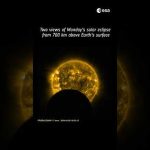
    ESA’s Proba-2 captured two partial solar eclipses on 8 April 2024.

    A solar eclipse occurs when the Moon passes between Earth and the Sun, totally or partially blocking the Sun from Earth’s point of view. On 8 April, lucky viewers across North America witnessed the Moon blocking out the Sun in its entirety for a few minutes, while those north and south of the ‘total eclipse path’ witnessed a partial eclipse.

    Throughout the eclipse period, the Moon crossed Proba-2’s field of view twice, appearing as a partial solar eclipse. The satellite flies around 700 km above Earth’s surface in what is called a Sun-synchronous orbit, each orbit lasting around 100 minutes.

    The video was produced from images taken by Proba-2’s SWAP telescope, which observes the Sun in extreme ultraviolet light. At these wavelengths, the turbulent nature of the Sun’s surface and corona – the Sun’s extended atmosphere – become visible. These measurements have to be made from space, because Earth’s atmosphere doesn’t allow such short wavelengths of light to pass through.

    A total solar eclipse provides a unique opportunity to see the Sun’s corona from Earth’s surface, using visible light. As the Moon blocks most of the Sun’s bright light, the faint corona can be discerned. By comparing the SWAP ultraviolet images to what is seen by (visible light) telescopes on Earth, we can learn about the temperature and behaviour of different structures in the corona.

    Other solar missions also made the most of the unique measurement opportunities provided by the eclipse. For example, ESA’s Solar Orbiter was positioned close to the Sun and at a 90-degree angle from Earth’s view throughout the eclipse. This allowed it to complement Earth-based observations by monitoring the Sun’s corona side-on, including any solar eruptions pointing in Earth’s direction.

    Credit: ESA/Royal Observatory of Belgium

    #ESA #Eclipse #Proba-2

  • Total solar eclipse seen from space 🌚 #shorts

    Total solar eclipse seen from space 🌚 #shorts

    A total solar eclipse swept across North America yesterday, blocking out the Sun momentarily with parts of the continent plunged into darkness. Geostationary satellites orbiting 36 000 km away captured images of the rare celestial event.

    These images, captured by the Geostationary Operational Environmental Satellite (GOES-16), captured the moon’s shadow moving across North America from approximately 16:00 to 23:00 CEST (15:00 to 22:00 BST.)

    A total solar eclipse occurs when the Moon passes between the Sun and Earth and, for a short period, blocks the face of the Sun, save for a visible ring of light, known as the Sun’s corona.

    The track of the moon’s shadow across Earth’s surface, called the path of totality, spanned across the North American continent – from Mexico to the very eastern tip of Canada.

    The GOES series is a collaborative development and acquisition effort between National Oceanic and Atmospheric Administration (NOAA) and NASA. The GOES-16 (GOES-East) satellite, the first of the series, provides continuous imagery and atmospheric measurements of Earth’s western hemisphere and monitors space weather.

    The Copernicus Sentinel-3 mission also captured images of the eclipse with its Sea and Land Surface Temperature Radiometer (SLSTR).

    The eclipse also acts as a laboratory for researching what happens to weather when the Moon’s shadow passes over. The shadow makes air temperatures drop and can cause clouds to evolve in different ways. Data from GOES, Sentinel-3 and other satellites are now being used to explore these effects.

    Credits: ESA (Data: NOAA)

    #ESA #SolarEclipse #EarthObservation

  • Mimicking a Solar Eclipse in space

    Mimicking a Solar Eclipse in space

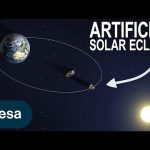
    During a solar eclipse the Earth is plunged into darkness and the Sun’s ghostly atmosphere becomes visible. Scientists travel the globe to experience total solar eclipses, which occur for just a few minutes at a time every 18 months or so. But what exactly causes solar eclipses, and how do scientists try to make their own, including with ESA’s new Proba-3 mission?

    Timestaps of the video:
    00:00 – 00:32 – Intro
    00:33 – 01:45 – How do solar eclipses happen?
    01:46 – 02:45 – How do we know anything about the solar corona given that eclipses occur so rarely?
    02:46 – 04:00 – How can we create a perfect artificial solar eclipse in space?

    Credits: ESA – European Space Agency
    Videos: ESA, NASA, Solar Orbiter/EUI (ESA/NASA), SOHO/LASCO (ESA/NASA), ESA-Magic Fennec, Getty Images

    ★ Subscribe: http://bit.ly/ESAsubscribe and click twice on the bell button to receive our notifications.

    Check out our full video catalog: http://bit.ly/SpaceInVideos
    Follow us on Twitter: http://bit.ly/ESAonTwitter
    On Facebook: http://bit.ly/ESAonFacebook
    On Instagram: http://bit.ly/ESAonInstagram
    On LinkedIn: https://bit.ly/ESAonLinkedIn
    On Pinterest: https://bit.ly/ESAonPinterest
    On Flickr: http://bit.ly/ESAonFlickr

    We are Europe’s gateway to space. Our mission is to shape the development of Europe’s space capability and ensure that investment in space continues to deliver benefits to the citizens of Europe and the world. Check out https://www.esa.int/ to get up to speed on everything space related.

    Copyright information about our videos is available here: https://www.esa.int/ESA_Multimedia/Terms_and_Conditions

    #ESA #SolarEclipse #Proba-3

  • How Euclid team overcame this problem 🔧 #shorts

    How Euclid team overcame this problem 🔧 #shorts

    Euclid, our dark Universe detective was struggling to see the faint light from distant galaxies thanks to a tiny villain: ice! Building up on its mirrors, it was blocking the crucial light Euclid needs to unlock some of the Universe’s biggest mysteries – dark matter and dark energy.

    But fear not! Across Europe, a team of brilliant scientists and engineers joined forces. Months of research led to a delicate de-icing procedure, and with a touch of targeted warmth, they were able to restore Euclid’s sight.

    This icy situation turned into a shining example of international collaboration and innovative thinking. And who knows what cosmic secrets Euclid will uncover now that its vision is restored.

    📹 ESA – European Space Agency

    #ESA #Euclid #SpaceTelescope

  • NASA Astronaut Loral O’Hara Returns Home to Earth

    NASA Astronaut Loral O’Hara Returns Home to Earth

    Watch live as NASA astronaut Loral O’Hara, Roscosmos cosmonaut Oleg Novitskiy, and spaceflight participant Marina Vasilevskaya of Belarus return home from the International Space Station. Their Soyuz MS-24 spacecraft will head for a parachute-assisted landing on the steppe of Kazakhstan at 3:17 a.m. EDT Saturday, April 6 (0717 UTC).

    O’Hara is completing a mission spanning 204 days in space that covered 3,264 orbits of the Earth and 86.5 million miles.

    About the science highlights of her mission: https://www.nasa.gov/missions/station/iss-research/nasa-astronaut-loral-ohara-expedition-70-science-highlights/

    Credit: NASA

    #NASA #Astronaut #SpaceStation #ISS

  • Scouting the Red Planet with ExoMars

    Scouting the Red Planet with ExoMars

    Watch the first episode of the ExoMars Rosalind Franklin rover mission – Europe’s ambitious exploration journey to search for past and present signs of life on Mars.

    This episode starts after a successful descent and landing on the Red Planet in 2030.

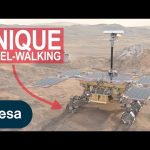
    Rovers on Mars have previously been caught in loose soils, and turning the wheels dug them deeper, just like a car stuck in sand. To avoid this, Rosalind Franklin has a unique wheel-walking locomotion mode to overcome difficult terrains, as well as autonomous navigation software.

    A major goal of the mission is to understand the geological context and identify minerals formed in the presence of water that could be good targets for drilling into and collecting samples for analysis.

    The scientific eyes of the rover are set atop the mast on the Panoramic Camera suite, known as PanCam. From its vantage point about two metres above the ground, PanCam cameras come into play to get a whole picture of the site with high resolution imaging.

    Enfys, meaning rainbow in Welsh, is an infrared spectrometer to study mineral composition. Enfys and PanCam work in synergy. PanCam is used to obtain colour, visual information of what lies around the rover. Enfys’ job is to inform scientists what the minerals are.

    Rosalind Franklin will be the first rover to reach a depth of up to two metres deep below the surface, acquiring samples that have been protected from surface radiation and extreme temperatures.

    The mission will serve to demonstrate key technologies that Europe needs to master for future planetary exploration missions.

    This episode shows the spacecraft, the rover and martian landscapes are as true to reality as possible for a simulation.

    Check ESA’s ExoMars website and our frequently asked questions for the latest updates.

    Credits:
    Production: Mlabspace for ESA

    3D animation: ESA/Mlabspace

    Video footage: ESA/NASA, Shutterstock

    Music composed by Valentin Joudrier

    ★ Subscribe: http://bit.ly/ESAsubscribe and click twice on the bell button to receive our notifications.

    Check out our full video catalog: http://bit.ly/SpaceInVideos
    Follow us on Twitter: http://bit.ly/ESAonTwitter
    On Facebook: http://bit.ly/ESAonFacebook
    On Instagram: http://bit.ly/ESAonInstagram
    On LinkedIn: https://bit.ly/ESAonLinkedIn
    On Pinterest: https://bit.ly/ESAonPinterest
    On Flickr: http://bit.ly/ESAonFlickr

    We are Europe’s gateway to space. Our mission is to shape the development of Europe’s space capability and ensure that investment in space continues to deliver benefits to the citizens of Europe and the world. Check out https://www.esa.int/ to get up to speed on everything space related.

    Copyright information about our videos is available here: https://www.esa.int/ESA_Multimedia/Terms_and_Conditions

    #ESA #ExoMars #Mars

  • NASA News Conference on Lunar Terrain Vehicle for Artemis Missions

    NASA News Conference on Lunar Terrain Vehicle for Artemis Missions

    Live from Johnson Space Center in Houston, we’ll announce the company, or companies, selected to move forward in developing the LTV (Lunar Terrain Vehicle).

    The LTV will help future Artemis astronauts search for water, ice, and other resources on the lunar surface, helping humanity establish a long-term presence on another planetary body for the first time.

    Hear from:

    • Vanessa Wyche, director, NASA Johnson
    • Jacob Bleacher, chief exploration scientist, NASA Headquarters
    • Lara Kearney, manager, Extravehicular Activity and Human Surface Mobility Program, NASA Johnson

    For more information about the LTV, visit: https://www.nasa.gov/news-release/nasa-to-select-lunar-terrain-vehicle-for-artemis-missions/

    #NASA #Artemis #Moon

  • NASA Artemis Lunar Terrain Vehicle (Official NASA Trailer)

    NASA Artemis Lunar Terrain Vehicle (Official NASA Trailer)

    NASA hosted a news conference from the Johnson Space Center in Houston April 3, 2024, to announce the companies selected to move forward in the development of the Lunar Terrain Vehicle under the LTVS (Lunar Terrain Vehicle Services) contract. The award leverages NASA’s expertise in developing and operating these next generation “Moon buggies” to build commercial capabilities that support scientific discovery and long-term human exploration on the Moon. NASA intends to begin using the LTV for crewed operations during the Artemis V mission on the surface of the Moon.

    Link to download this video:
    https://images.nasa.gov/details/jsc2024m000101-NASA_News_Conference_on_Lunar_Terrain_Vehicle_for_Artemis_Missions

    Producer: NASA/Jamie Quinn
    Credit: NASA

    #MoonBuggy #NASA #Artemis

  • This won’t happen again for another 71 years! ☄️ #shorts

    This won’t happen again for another 71 years! ☄️ #shorts

    For a limited time, you can catch a glimpse of Comet 12P/Pons-Brooks, a celestial wonder with a fiery reputation, much like our favorite Khaleesi’s dragons.

    This “horned comet,” visible in the Northern Hemisphere until early April, is like a Dothraki khalasar – magnificent, unpredictable, and best seen at dusk.

    While you won’t need a Valyrian steel sword, a pair of binoculars or a small telescope will help you see this cosmic marvel in all its glory.

    Don’t miss this rare chance to witness a piece of history – Comet 12P/Pons-Brooks won’t return for another 71 years, longer than a lifetime in Westeros!

    📹 ESA – European Space Agency
    📸 Nielander via Wikimedia Commons

  • The Space Station’s Newest Residents on This Week @NASA – March 29, 2024

    The Space Station’s Newest Residents on This Week @NASA – March 29, 2024

    A NASA astronaut is one of the space station’s newest residents, planning for the upcoming total solar eclipse, and a notable award for an historic asteroid sample return mission … a few of the stories to tell you about – This Week at NASA!

    Video Producer: Andre Valentine
    Video Editor: Andre Valentine
    Narrator: Emanuel Cooper
    Music: Universal Production Music
    Credit: NASA

  • A bold new approach to Mars orbit 🔴 #shorts

    A bold new approach to Mars orbit 🔴 #shorts

    ESA is venturing towards putting a spacecraft into orbit around Mars using a technique that engineers have studied for over half a century but never dared to attempt.

    📹 ESA – European Space Agency

    #ESA #Science #Mars

  • Webb shed new light on a decade-long mystery ✨ #shorts

    Webb shed new light on a decade-long mystery ✨ #shorts

    At present it’s as though the distance ladder observed by Hubble and Webb has firmly set an anchor point on one shoreline of a river, and the afterglow of the Big Bang observed by our Planck mission from the beginning of the Universe is set firmly on the other side. How the Universe’s expansion was changing in the billions of years between these two endpoints has yet to be directly observed.

    📹 ESA – European Space Agency
    📸 NASA, ESA, CSA, Space Telescope Science Inst., A. Riess (JHU/STScI)

    #ESA #Webb #Hubble

  • 2024 Total Solar Eclipse News Conference

    2024 Total Solar Eclipse News Conference

    Join us for a news conference on Tuesday, March 26, as NASA and other agencies discuss the 2024 total solar eclipse. On Monday, April 8, millions of people across North America will experience the eclipse. During this event, representatives will engage the public, share safety information, and discuss other eclipse updates.

    Briefing participants include:
    • NASA Administrator Bill Nelson
    • NASA Deputy Administrator Pam Melroy
    • NASA Associate Administrator Jim Free
    • Kelly Korreck, eclipse program manager, NASA Headquarters
    • Elsayed Talaat, director, National Oceanic and Atmospheric Administration’s Office of Space Weather Observations

    Learn more about the total solar eclipse at https://science.nasa.gov/eclipses/future-eclipses/eclipse-2024/
    Safety: https://science.nasa.gov/eclipses/future-eclipses/eclipse-2024/safety/
    Eclipse Live Coverage: https://science.nasa.gov/eclipses/future-eclipses/eclipse-2024/live/

    Credit: NASA

    #NASA #Eclipse #SolarEclipse

  • NASA, Health and Human Services Highlight Cancer Moonshot Progress

    NASA, Health and Human Services Highlight Cancer Moonshot Progress

    During an event at NASA Headquarters in Washington Thursday, NASA Administrator Bill Nelson and U.S. Department of Health and Human Services (HHS) Secretary Xavier Becerra united to note progress their respective agencies are making in space and on Earth toward President Biden and First Lady Jill Biden’s Cancer Moonshot initiative.

    Also participating in the event was Dr. W. Kimryn Rathmell, director of the National Cancer Institute, as well as NASA astronauts Stephen Bowen and Frank Rubio, both of whom each recently served extended science missions 250 miles off Earth aboard the International Space Station where they conducted cancer-related research.

    Learn more about the Cancer Moonshot at: https://www.whitehouse.gov/cancermoonshot/

    Credit: NASA

  • NASA Astronaut Tracy Dyson Launch to the Space Station

    NASA Astronaut Tracy Dyson Launch to the Space Station

    Astronaut Tracy C. Dyson, a spaceflight veteran who has logged over 188 days in orbit, is set to launch on her next mission to the International Space Station.

    Dyson, cosmonaut Oleg Novitskiy, and spaceflight participant Marina Vasilevskaya of Belarus is set to lift off at 8:36 a.m. EDT (1236 UTC) from the Baikonur Cosmodrome in Kazakhstan aboard their Soyuz MS-25 spacecraft. This will be Dyson’s third spaceflight.

    After two days in orbit, the Soyuz will arrive at the International Space Station’s Prichal module for a scheduled docking at 11:09 a.m. EDT (1509 UTC) Monday, March 25. Dyson is scheduled to spend six months aboard the station, conducting research to help us learn how to live in space while making life better back on Earth.

    Learn more about Saturday’s launch: https://go.nasa.gov/3IMDTZy

    Credit: NASA/Tracy C. Dyson

    #NASA #Astronaut #SpaceStation

  • NASA’s SpaceX 30th Commercial Resupply Services Launch

    NASA’s SpaceX 30th Commercial Resupply Services Launch

    SpaceX’s 30th cargo resupply mission to the International Space Station is scheduled to lift off at 4:55 p.m. EDT (2055 UTC) from Cape Canaveral Space Force Station in Florida.

    This uncrewed launch of SpaceX’s Dragon spacecraft will carry tech that monitors sea ice, research into off-planet photosynthesis, studies to improve nanoparticle solar cells, and essential supplies for our astronauts living and working aboard the orbiting laboratory.

    Learn more about the science we’re sending up on CRS-30: https://go.nasa.gov/3SS9mhA

    Follow live mission updates on our NASA blogs: https://www.nasa.gov/blogs/

    Image credit: SpaceX

    #NASA #SpaceX #SpaceStation

  • Toward the next generation of air quality monitoring

    Toward the next generation of air quality monitoring

    Air pollution is the largest environmental health risk in Europe and significantly impacts the health of the European population, particularly in urban areas.

    Following on from the Sentinel-5P satellite – the first Copernicus mission dedicated to monitoring our atmosphere – the Sentinel-4 and Sentinel-5 missions will take current air quality measuring capabilities to the next level.

    Together, the Sentinel-4 and -5 missions will provide information on atmospheric variables in support of European policies. This will include the monitoring of air quality, stratospheric ozone and solar radiation, and climate monitoring.

    This video features interviews with Giorgio Bagnasco, Sentinel-4 Mission Project Manager, Ben Veilhelmann, Sentinel-4&5 Mission Scientist and Didier Martin, Sentinel-5 Mission Project Manager.

    Credits: ESA – European Space Agency

    ★ Subscribe: http://bit.ly/ESAsubscribe and click twice on the bell button to receive our notifications.

    Check out our full video catalog: http://bit.ly/SpaceInVideos
    Follow us on Twitter: http://bit.ly/ESAonTwitter
    On Facebook: http://bit.ly/ESAonFacebook
    On Instagram: http://bit.ly/ESAonInstagram
    On LinkedIn: https://bit.ly/ESAonLinkedIn
    On Pinterest: https://bit.ly/ESAonPinterest
    On Flickr: http://bit.ly/ESAonFlickr

    We are Europe’s gateway to space. Our mission is to shape the development of Europe’s space capability and ensure that investment in space continues to deliver benefits to the citizens of Europe and the world. Check out https://www.esa.int/ to get up to speed on everything space related.

    Copyright information about our videos is available here: https://www.esa.int/ESA_Multimedia/Terms_and_Conditions

    #ESA #Satellite #Sentinels

  • NASA Astronaut Tracy Dyson Launch to the Space Station, March 21, 2024 Launch Attempt

    NASA Astronaut Tracy Dyson Launch to the Space Station, March 21, 2024 Launch Attempt

    The March 21 launch of the crewed Soyuz-25 spacecraft to the International Space Station with NASA astronaut Tracy C. Dyson, Roscosmos cosmonaut Oleg Novitskiy, and spaceflight participant Marina Vasilevskaya of Belarus was scrubbed, and rescheduled for Saturday, March 23. Learn more: https://go.nasa.gov/3IMDTZy

    Astronaut Tracy C. Dyson, a spaceflight veteran who has logged over 188 days in orbit, is set to launch on her next mission to the International Space Station.

    Dyson, cosmonaut Oleg Novitskiy, and spaceflight participant Marina Vasilevskaya of Belarus is set to lift off at 9:21 a.m. EDT (1321 UTC) from the Baikonur Cosmodrome in Kazakhstan aboard their Soyuz MS-25 spacecraft. This will be Dyson’s third spaceflight.

    After a two-orbit, three-hour journey, the Soyuz will arrive at the International Space Station’s Prichal module for a scheduled docking at 12:39 p.m. EDT (1639 UTC). Dyson is scheduled to spend six months aboard the station, conducting research to help us learn how to live in space while making life better back on Earth.

    Credit: NASA/Tracy C. Dyson

    #NASA #Astronaut #SpaceStation

  • NASA Science Live: How to Prepare for the April 8 Total Solar Eclipse

    NASA Science Live: How to Prepare for the April 8 Total Solar Eclipse

    A total solar eclipse will cross North America on Monday, April 8, 2024, and we want to help you prepare! Find out when and where to look up, learn how to safely view an eclipse and discover ways you can get involved with NASA during this celestial event! Join us live on Wednesday, March 20, at 3 p.m. EDT (1900 UTC) as we help you get ready for the last total solar eclipse to cross the contiguous United States for the next 20 years. Have questions? Submit them during our live chat.

    Set a reminder to watch our April 8, 2024, eclipse broadcast: https://www.youtube.com/watch?v=2MJY_ptQW1o />
    Thumbnail image credit: NASA/Aubrey Gemignani

    Credit: NASA

  • Asteroid mission is getting ready ☄️ #shorts

    Asteroid mission is getting ready ☄️ #shorts

    In its latest test of readiness for space, ESA’s Hera spacecraft for planetary defence is being operated for around three weeks in hard vacuum, while being subjected to the same temperature profiles it will experience during its journey to the Didymos binary asteroid system.

    The 1.6 × 1.6 × 1.7 m spacecraft was slid inside the 4.5-m diameter, 11.8-m long Phenix thermal vacuum chamber at ESA’s ESTEC Test Centre in the Netherlands.

    “You’re always a bit nervous when your baby gets moved about,” remarks Ian Carnelli, overseeing Hera for ESA. “Right now it’s being shut into a dark airless box for weeks on end, but we have confidence it will perform well.”

    Hera can be seen receded into the rectangular ‘thermal tent’ within Phenix. The six copper walls of this internal box can be heated up to 100°C or cooled via piped liquid nitrogen down to –190°C, all independently from each other.

    Then, after the main door of the stainless steel Phenix chamber was slid shut, the air within the chamber was pumped out during a lengthy 20 hours process down to approximately one billionth of outside atmospheric pressure. This will allow the Hera team from ESA, European Test Services operating the Test Centre and Hera manufacturer OHB to test the spacecraft’s thermal behaviour as the temperature changes around it.

    Space is a place where it is possible to be hot and cold at the same time if one part of your spacecraft is in sunlight and another is in shade. And because there is no air, there is no conduction or convection to lose heat from your spacecraft. Instead thermal experts employ insulation and radiators to keep the body of a spacecraft within carefully chosen temperature limits. In general spacecraft electronics – just like their human makers – work best at room temperature.

    “We already have detailed models of the spacecraft’s thermal behaviour, and this spacecraft-level thermal vacuum test lets us correlate these models with reality,” explains Hera’s Product Assurance and Safety manager, Heli Greus.

    “More than 400 thermal sensors have been placed in and around Hera to give us precise knowledge of what is going on, and the test is being supervised on a 24/7 basis in case anything anomalous occurs. The spacecraft is now being put through a series of ‘cold plateaus’ and ‘hot plateaus’ representative of its mission, which will allow us to test the thermal limits of each specific unit aboard.”

    Hera is Europe’s contribution to an international planetary defence experiment. Following the DART mission’s impact with the Dimorphos asteroid in 2022 – modifying its orbit and sending a plume of debris thousands of kilometres out into space – Hera will return to Dimorphos to perform a close-up survey of the crater left by DART. The mission will also measure Dimorphos’ mass and make-up, along with that of the larger Didymos asteroid that Dimorphos orbits around. Hera is due for launch in October 2024.

    The ESTEC Test Centre in the Netherlands is the largest facility of its kind in Europe, providing a complete suite of equipment for all aspects of satellite testing under a single roof.

    Credits: ESA – European Space Agency

    #ESA #Hera #Asteroid

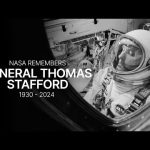
  • NASA Remembers Legendary Astronaut Thomas Stafford

    NASA Remembers Legendary Astronaut Thomas Stafford

    Today we mourn the passing of Thomas P. Stafford at the age of 93.

    In December 1965, Stafford piloted Gemini VI, the first rendezvous in space, and helped develop techniques to prove the basic theory and practicality of space rendezvous.

    Later he commanded Gemini IX and performed a demonstration of an early rendezvous that would be used in the Apollo lunar missions, the first optical rendezvous, and a lunar orbit abort rendezvous.

    He served as the commander of the Apollo 10 ‘dress rehearsal’ mission preparing for the first Moon landing and as Apollo commander of the Apollo-Soyuz Test Project (ASTP) mission, a joint space flight culminating in the historic first meeting in space between American Astronauts and Soviet Cosmonauts, which ended the International space race.

    Throughout his career, Stafford helped us push the boundaries of what’s possible in air and space, flying more than 100 different types of aircraft.

    Credit: NASA
    Music: Universal Production Music
    Producer: Sonnet Apple

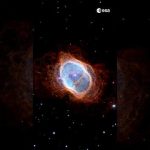
  • Zoom Into the Southern Ring Nebula ✨ #shorts

    Zoom Into the Southern Ring Nebula ✨ #shorts

    This video zooms through space to reveal Webb’s Near-Infrared Camera (NIRCam) image of the Southern Ring Nebula.

    The bright star at the centre of NGC 3132, while prominent when viewed by the NASA/ESA/CSA James Webb Telescope in near-infrared light, plays a supporting role in sculpting the surrounding nebula. A second star, barely visible at lower left along one of the bright star’s diffraction spikes, is the nebula’s source. It has ejected at least eight layers of gas and dust over thousands of years.

    Data from Webb’s Near-Infrared Camera (NIRCam) were used to make this extremely detailed image. It is teeming with scientific information — and research will begin following its release.

    Credit: NASA, ESA, CSA, STScI, and the Webb ERO Production Team
    Music: Tonelabs – Happy Hubble

    #ESA #Webb #Space

  • Discussing the Strong State of NASA on This Week @NASA – March 15, 2024

    Discussing the Strong State of NASA on This Week @NASA – March 15, 2024

    Discussing the strong state of NASA, a safe return from the space station, and testing critical hardware for a future mission … a few of the stories to tell you about – This Week at NASA!

    Video Producer: Andre Valentine
    Video Editor: Andre Valentine
    Narrator: Emanuel Cooper
    Music: Universal Production Music
    Credit: NASA

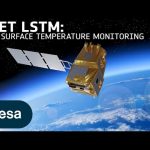
  • Taking Earth’s temperature from space

    Taking Earth’s temperature from space

    Climate change exacerbates droughts by making them more frequent, longer, and more severe. This can have a wide range of impacts on the environment, agriculture, ecosystems and communities including water scarcity, crop failure and food shortages.

    The upcoming Copernicus Land Surface Temperature Monitoring, LSTM, mission will improve sustainable agricultural productivity in a world of increasing water scarcity and variability.

    The mission will carry a high spatial-temporal resolution thermal infrared sensor to provide observations of land-surface temperature.

    These data are key to understand and respond to climate variability, manage water resources for agricultural production, predict droughts and also to address land degradation.

    LSTM is one of six Copernicus Sentinel Expansion missions that ESA is developing on behalf of the EU. The missions will expand the current capabilities of the Copernicus Space Component – the world’s biggest supplier of Earth observation data.

    This video features interviews with Ana Bolea Alamanac, LSTM Mission Project Manager, Ilias Manolis, LSTM Mission Payload Manager and Itziar Barat, LSTM Mission System and Operations Manager.

    Credits: ESA – European Space Agency

    ★ Subscribe: http://bit.ly/ESAsubscribe and click twice on the bell button to receive our notifications.

    Check out our full video catalog: http://bit.ly/SpaceInVideos
    Follow us on Twitter: http://bit.ly/ESAonTwitter
    On Facebook: http://bit.ly/ESAonFacebook
    On Instagram: http://bit.ly/ESAonInstagram
    On LinkedIn: https://bit.ly/ESAonLinkedIn
    On Pinterest: https://bit.ly/ESAonPinterest
    On Flickr: http://bit.ly/ESAonFlickr

    We are Europe’s gateway to space. Our mission is to shape the development of Europe’s space capability and ensure that investment in space continues to deliver benefits to the citizens of Europe and the world. Check out https://www.esa.int/ to get up to speed on everything space related.

    Copyright information about our videos is available here: https://www.esa.int/ESA_Multimedia/Terms_and_Conditions

    #ESA #Satellite #LSTM

  • SXSW 2024: NASA Astronauts & Your Work in Orbit

    SXSW 2024: NASA Astronauts & Your Work in Orbit

    Live from the International Space Station, NASA astronauts Jeanette Epps and Loral O’Hara are joined by NASA experts live at the South by Southwest conference in Austin, Texas. The panel of explorers in orbit and on Earth talk about how you can get involved with space station research and technology.

    Find out how to fly a scientific experiment, move your business forward, or find inspiration from the explorers living and working in space, as well as how to spot the station when it flies over your part of the globe. Whether you’re an entrepreneur, a professional researcher, or just plain curious, this session is for you.

    For more information about the resources presented during this panel, visit: https://go.nasa.gov/3IwiDqR

  • How to drink orange juice in space (Fun way)🧃 #shorts

    How to drink orange juice in space (Fun way)🧃 #shorts

    European Space Agency astronaut Andreas Mogensen shared this video on social media with the caption:

    “On the weekends, we have time off and and while I like to call my friends and family or sit in the Cupola and take pictures of Earth, I sometimes like to play around a bit. I recorded this video a few weeks ago and finally got around to sharing it with you.

    The way a liquid, in this case orange juice, moves around on the Space Station is fascinating, rippling when I blow on it and how sticks to me as I drink it.”

    Credits: ESA / NASA

    #ESA #AndreasMogensen #Space

  • The return of Andreas Mogensen | Huginn Mission

    The return of Andreas Mogensen | Huginn Mission

    After more than 6 months on the International Space Station, ESA astronaut Andreas Mogensen returned to Earth, marking the end of his Huginn mission. It was his second mission to the Space Station and his first long-duration, where he was the pilot of Crew-7, which consisted of Jasmin Moghbeli (NASA), Satoshi Furukawa (JAXA), and Konstantin Borisov (Roscosmos).

    Credits: ESA/NASA/SpaceX

    ★ Subscribe: http://bit.ly/ESAsubscribe and click twice on the bell button to receive our notifications.

    Check out our full video catalog: http://bit.ly/SpaceInVideos
    Follow us on Twitter: http://bit.ly/ESAonTwitter
    On Facebook: http://bit.ly/ESAonFacebook
    On Instagram: http://bit.ly/ESAonInstagram
    On LinkedIn: https://bit.ly/ESAonLinkedIn
    On Pinterest: https://bit.ly/ESAonPinterest
    On Flickr: http://bit.ly/ESAonFlickr

    We are Europe’s gateway to space. Our mission is to shape the development of Europe’s space capability and ensure that investment in space continues to deliver benefits to the citizens of Europe and the world. Check out https://www.esa.int/ to get up to speed on everything space related.

    Copyright information about our videos is available here: https://www.esa.int/ESA_Multimedia/Terms_and_Conditions

    #ESA #Huginn #AndreasMogensen

  • NASA’s SpaceX Crew-7 Re-entry and Splashdown

    NASA’s SpaceX Crew-7 Re-entry and Splashdown

    After six months in orbit, the four members of NASA’s SpaceX Crew-7 mission—NASA astronaut Jasmin Moghbeli, ESA (European Space Agency) astronaut Andreas Mogensen, JAXA (Japan Aerospace Exploration Agency) astronaut Satoshi Furukawa, and Roscosmos cosmonaut Konstantin Borisov—are heading home.

    Crew-7 is scheduled to splash down off the coast of Florida at approximately 5:50 a.m. EDT (0950 UTC) on Tuesday, March 12, after undocking from the International Space Station on Monday, March 11. While aboard the orbiting laboratory, Crew-7 contributed to a number of studies to help us learn how to live in space while making life better back on Earth: https://go.nasa.gov/3UWWIAF

    Follow the latest mission updates on our NASA blogs: https://blogs.nasa.gov/

    Credit: NASA