Category: Astronomie

  • The Value of NASA (2024 State of NASA Highlights)

    The Value of NASA (2024 State of NASA Highlights)

    At NASA, we do what is hard to achieve what is great for the benefit of all humanity.

    To learn more about some of the NASA missions featured in this video, take a deep dive into these links:

    [0:35] Commercial Lunar Payload Services (CLPS): https://www.nasa.gov/commercial-lunar-payload-services/
    [0:38] OSIRIS-REx samples returned to Earth https://science.nasa.gov/mission/osiris-rex/
    [0:43]International Space Station (ISS) science: https://www.nasa.gov/international-space-station/space-station-research-and-technology/
    [0:57] White House’s Cancer Moonshot Initiative: https://www.nasa.gov/humans-in-space/nasa-scientists-join-white-house-cancer-initiative/
    [1:06] Artemis missions to the Moon: https://www.nasa.gov/specials/artemis/
    [1:34] Experimental aircraft (X-Planes): https://www.nasa.gov/armstrong/capabilities-facilities/aircraft-at-armstrong/x-planes-at-armstrong/
    [1:55] Earth Science: https://science.nasa.gov/earth/
    [2:17] Earth Information Center: https://gis.earthdata.nasa.gov/portal/apps/sites/#/earth-information-center
    [2:23] Solar System Exploration: https://science.nasa.gov/solar-system/
    [2:41] Learning Resources: https://www.nasa.gov/learning-resources/

    News Release: https://www.nasa.gov/news-release/presidents-nasa-fy-2025-funding-supports-us-space-climate-leadership/
    Link to download this video: https://images.nasa.gov/details/The%20Value%20of%20NASA%20%282024%20State%20of%20NASA%20Highlights%29

    Credit: NASA
    Music: Universal Production Music
    Video Producer: Sonnet Apple

  • 2024 State of NASA Address from Administrator Bill Nelson

    2024 State of NASA Address from Administrator Bill Nelson

    NASA Administrator Bill Nelson discusses the agency’s goals for the benefit of humanity during the annual State of NASA address on Monday, March 11. Learn about our plans for promoting U.S. leadership in space exploration, improving life on Earth through innovation, humanity’s return to the Moon under the Artemis campaign, and more. Senior leaders from each of NASA’s mission directorates also will discuss advancements in their areas ranging from aeronautics and science research to space operations.

    Read more: https://www.nasa.gov/news-release/nasa-to-highlight-artemis-us-space-leadership-during-annual-address/

    Credit: NASA

  • EarthCARE bids adieu to Europe

    EarthCARE bids adieu to Europe

    After years of development and a rigorous testing programme, ESA’s EarthCARE satellite has left Munich, Germany, and is now on its away to SpaceX’s launch site in Vandenberg, California. Once it arrives, it will be put into storage for a few weeks until it is time to ready the satellite for liftoff – which is scheduled to launch in May on a Falcon 9 rocket.

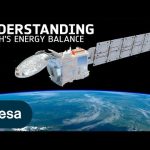
    The Earth Cloud Aerosol and Radiation Explorer, or EarthCARE for short, is the most complex Earth Explorer mission to date. The new satellite will look at the role that clouds and aerosols play in heating and cooling Earth’s atmosphere – contributing to our understanding of climate change.

    With its unique set of four instruments, EarthCARE will examine the role clouds and aerosols play in reflecting solar radiation back into space and also in trapping infrared radiation emitted from Earth’s surface.

    EarthCARE is a joint venture between ESA and JAXA, the Japan Aerospace Exploration Agency.

    This video features interviews with Simonetta Cheli, Director of Earth Observation Programmes at ESA, Thorsten Fehr, ESA’s EarthCARE Mission Scientist, Dirk Bernaerts, ESA’s EarthCARE Project Manager and Eiichi Tomita, JAXA’s EarthCARE/CPR Project Manager.

    Credits: ESA – European Space Agency

    ★ Subscribe: http://bit.ly/ESAsubscribe and click twice on the bell button to receive our notifications.

    Check out our full video catalog: http://bit.ly/SpaceInVideos
    Follow us on Twitter: http://bit.ly/ESAonTwitter
    On Facebook: http://bit.ly/ESAonFacebook
    On Instagram: http://bit.ly/ESAonInstagram
    On LinkedIn: https://bit.ly/ESAonLinkedIn
    On Pinterest: https://bit.ly/ESAonPinterest
    On Flickr: http://bit.ly/ESAonFlickr

    We are Europe’s gateway to space. Our mission is to shape the development of Europe’s space capability and ensure that investment in space continues to deliver benefits to the citizens of Europe and the world. Check out https://www.esa.int/ to get up to speed on everything space related.

    Copyright information about our videos is available here: https://www.esa.int/ESA_Multimedia/Terms_and_Conditions

    #ESA #EarthObservation #Satellite

  • A New Crew Launches to the Space Station on This Week @NASA – March 8, 2024

    A New Crew Launches to the Space Station on This Week @NASA – March 8, 2024

    A new crew launches to the space station, graduating a new class of Artemis astronauts, and a group of tiny lunar-roving robots are ready to roll … a few of the stories to tell you about – This Week at NASA!

    Link to download this video:
    https://images.nasa.gov/details/A%20New%20Crew%20Launches%20to%20the%20Space%20Station%20on%20This%20Week%20@NASA%20%E2%80%93%20March%208,%202024

    Video Producer: Andre Valentine
    Video Editor: Andre Valentine
    Narrator: Emanuel Cooper
    Music: Universal Production Music
    Credit: NASA

  • 2024 Astronaut Graduating Class, “The Flies,” Superlatives

    2024 Astronaut Graduating Class, “The Flies,” Superlatives

    The 2024 astronaut graduating class gives you an insider’s look at not only the who’s who of their graduating class, but it allows you to get a glimpse of the accomplished astronauts’ personalities.

    To see them together as a group, connecting through laughter helps to illustrate how much they value team care. These classic superlatives give the scoop on which astronaut is the best dancer, the funniest, and more. Enjoy seeing a lighter side of “The Flies” in this fun and upbeat montage of the 2024 astronaut graduating class.

    Credit: NASA

    #Astronauts #NASA

  • NASA’s Europa Clipper SXSW 2024 Opening Session

    NASA’s Europa Clipper SXSW 2024 Opening Session

    Live from the South by Southwest conference in Austin, Texas, U.S. Poet Laureate Ada Limón and NASA’s Dr. Lori Glaze engage in a compelling discussion about NASA’s tradition of sending inspirational messages into space. They delve into Ada Limón’s poetic contributions to the NASA Europa Clipper mission, exploring the intersection of curiosity and exploration in both the arts and sciences.

    The conversation highlights the upcoming 2024 launch of the Europa Clipper and the unique blend of science and art that it represents. Dr. Glaze unveils the design of the Europa Clipper’s vault plate—a triangular metal piece engraved with Ada Limón’s poem, the waveforms of more than 100 human voices, and other markings that celebrate our shared human connections.

    Learn more about Europa Clipper and the vault plate at go.nasa.gov/MakeWaves.

    Participants:
    Ada Limón, U.S. Poet Laureate
    Dr. Lori Glaze, Director of NASA’s Science Mission Directorate’s Planetary Science Division

  • Why do astronauts have to quarantine before flying to space? 😷 #shorts

    Why do astronauts have to quarantine before flying to space? 😷 #shorts

    All astronauts go through a quarantine period before flying to space.

    This period of isolation keeps them away from any germs or viruses that might make them sick. Quarantine is also important to minimise the risk of bringing an infectious disease with them to space.

    Marcus Wandt entered quarantine two weeks ahead of his launch in Florida, USA, just a few kilometres away from the rocket that took him to the ISS as part of Axiom Mission 3.

    Quarantine for astronauts does not mean a holiday – it is a busy period. Marcus spent around twelve hours a day preparing for the mission ahead. His schedule included physical exercise, refreshers of flight operations, the review of science and outreach activities, and even virtual reality simulations of the job awaiting him on the Space Station.

    📹 ESA – European Space Agency
    📸 Axiom Space

    #ESA #ISS #Astronaut

  • Andreas Mogensen returns to Earth | Huginn Mission

    Andreas Mogensen returns to Earth | Huginn Mission

    Andreas Mogensen launched on his Huginn mission in August 2023 to the International Space Station, becoming the first non-US astronaut to pilot SpaceX’s Crew Dragon spacecraft. Andreas became commander of the International Space Station in September 2023, becoming the longest serving European commander in January 2024. His mission was spent on more than 30 European experiments and plenty of international ones as well, ranging from water purification to studies of human physiology and thunderclouds. After 6 months on the International Space Station, Andreas will come down to Earth together with his Crew-7 crewmates Jasmin Moghbeli (NASA), Satoshi Furukawa (JAXA), and Konstantin Borisov (Roscosmos).

    ★ Subscribe: http://bit.ly/ESAsubscribe and click twice on the bell button to receive our notifications.

    Check out our full video catalog: http://bit.ly/SpaceInVideos
    Follow us on Twitter: http://bit.ly/ESAonTwitter
    On Facebook: http://bit.ly/ESAonFacebook
    On Instagram: http://bit.ly/ESAonInstagram
    On LinkedIn: https://bit.ly/ESAonLinkedIn
    On Pinterest: https://bit.ly/ESAonPinterest
    On Flickr: http://bit.ly/ESAonFlickr

    We are Europe’s gateway to space. Our mission is to shape the development of Europe’s space capability and ensure that investment in space continues to deliver benefits to the citizens of Europe and the world. Check out https://www.esa.int/ to get up to speed on everything space related.

    Copyright information about our videos is available here: https://www.esa.int/ESA_Multimedia/Terms_and_Conditions

    #ESA #Huginn #AndreasMogensen

  • NASA Science Live: Juno Spacecraft Makes Historic Flybys of Jupiter’s Moons

    NASA Science Live: Juno Spacecraft Makes Historic Flybys of Jupiter’s Moons

    NASA’s Juno spacecraft has been in orbit around Jupiter for almost eight years, offering it the unique opportunity to make close flybys of two of the planet’s intriguing moons, volcanic Io and icy Europa.

    Join NASA experts Thursday, March 7, as we delve into these enigmatic worlds to learn how scientists are unraveling their secrets. From Io’s tumultuous volcanic activity to Europa’s ice-covered ocean depths, discover the latest findings from the Juno spacecraft.

    Have questions? Submit them in our live chat.

  • New radar mission for Europe

    New radar mission for Europe

    The upcoming Copernicus Radar Observation System for Europe in L-band (ROSE-L) will provide continuous day-and-night all-weather monitoring of Earth’s land, oceans and ice, and offer frequent images at a high spatial resolution.

    ROSE-L will carry an active phased array synthetic aperture radar instrument. The radar antenna will be the largest planar antenna ever built measuring an impressive 40 sq m – roughly the size of 10 ping-pong tables.

    ROSE-L will deliver essential information on forests and land cover, leading to improved monitoring of the terrestrial carbon cycle and carbon accounting.

    The mission will also greatly extend our ability to monitor minute surface displacements and helping detect geohazards. It will automatically map surface soil moisture conditions and monitor sea and land ice – greatly helping climate change research and mitigation.

    ROSE-L is one of six Copernicus Sentinel Expansion missions that ESA is developing on behalf of the EU. The missions will expand the current capabilities of the Copernicus Space Component – the world’s biggest supplier of Earth observation data.

    This video features interviews with Malcolm Davidson, ROSE-L Mission Scientist, Nico Gebert, ROSE-L Payload Manager and Gianluigi Di Cosimo, ROSE-L Project Manager.

    Credits: ESA – European Space Agency

    ★ Subscribe: http://bit.ly/ESAsubscribe and click twice on the bell button to receive our notifications.

    Check out our full video catalog: http://bit.ly/SpaceInVideos
    Follow us on Twitter: http://bit.ly/ESAonTwitter
    On Facebook: http://bit.ly/ESAonFacebook
    On Instagram: http://bit.ly/ESAonInstagram
    On LinkedIn: https://bit.ly/ESAonLinkedIn
    On Pinterest: https://bit.ly/ESAonPinterest
    On Flickr: http://bit.ly/ESAonFlickr

    We are Europe’s gateway to space. Our mission is to shape the development of Europe’s space capability and ensure that investment in space continues to deliver benefits to the citizens of Europe and the world. Check out https://www.esa.int/ to get up to speed on everything space related.

    Copyright information about our videos is available here: https://www.esa.int/ESA_Multimedia/Terms_and_Conditions

    #ESA #Satellite #ROSE-L

  • Ariane 6 arrives at the launcher assembly building 🚀 #shorts

    Ariane 6 arrives at the launcher assembly building 🚀 #shorts

    The two central stages for Ariane 6’s first flight are being assembled in the launcher assembly building (BAL) at Europe’s Spaceport. The core stage and the upper stage for Europe’s new rocket Ariane 6 are set to fly in the Summer of 2024. Once assembled, the stages will be transferred to the launch pad.

    On the launch pad, the two stages will be raised into their vertical launch position inside the mobile assembly building. Here the two boosters for Ariane 6’s first flight will be added and then the payloads will be placed on top and be covered by the fairing – Ariane 6’s nose cone that splits vertically in two.

    The stages arrived at Europe’s Spaceport on novel hybrid sail ship Canopée on 21 February after a two-week transatlantic crossing from mainland Europe.

    Ariane 6 is an all-new design, created to succeed Ariane 5 as Europe’s heavy-lift launch system. With Ariane 6’s upper stage restart capability, Europe’s launch capability will be tailored to the needs of multiple payload missions, for example to orbit satellite constellations. This autonomous capability to reach Earth orbit and deep space supports Europe’s navigation, Earth observation, scientific and security programmes. Ongoing development of Europe’s space transportation capabilities is made possible by the sustained dedication of thousands of talented people working in ESA’s 22 Member States.

    Credits: ESA/CNES/Arianespace/Arianegroup

    #ESA #Rocket #Ariane6

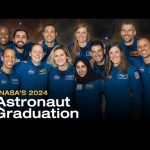
  • NASA’s 2024 Astronaut Graduation

    NASA’s 2024 Astronaut Graduation

    It’s graduation day for NASA’s newest astronauts!

    Join us on Tuesday, March 5, as we honor our latest astronaut candidates on the completion of their training. Ten NASA candidates and two candidates from the United Arab Emirates (UAE) will earn their wings in a ceremony at NASA’s Johnson Space Center, becoming eligible for future assignments to the International Space Station, the Moon—and, eventually, missions to Mars.

    After the graduation ceremony, the astronauts will take questions from media and the public starting at 11:45 a.m. EST (1645 UTC).

    Learn more about our newest class of Artemis astronauts: https://go.nasa.gov/3Uz8QrC
    Lee esta nota de prensa en español aquí: https://go.nasa.gov/3I4yxsC

    Thumbnail credit: NASA

    #NASA #Space #Astronauts

  • The Universe is Calling: Apply to Be a NASA Astronaut (Official NASA Video feat. Morgan Freeman)

    The Universe is Calling: Apply to Be a NASA Astronaut (Official NASA Video feat. Morgan Freeman)

    We’re recruiting for our next class of NASA astronauts. Selected candidates could fly on Artemis missions to the Moon and, eventually, Mars. Will you be one of them?

    Applications are open from March 5 through April 2, 2024. Read the requirements and start your application by visiting https://go.nasa.gov/astro2024.

    Don’t think you have what it takes? There’s no such thing as a typical astronaut. We’re seeking out team players, passionate people, candidates who thrive under pressure and excel in what they do.

    The universe is calling. Explore with us.

    Link to download this video:
    https://images.nasa.gov/details/NHQ_2024_0305_The%20Universe%20is%20Calling%20Apply%20to%20Be%20a%20NASA%20Astronaut

    Video Producer: Daniel Lauchu
    Executive Producer: Rebecca Sirmons
    Editors: Shane Apple and Daniel Lauchu
    Narrator: Morgan Freeman
    Music: Universal Production Music

    Credit: NASA

    #BeAnAstronaut #Jobs #NASA

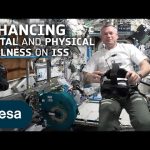
  • Virtual Reality for body and mind

    Virtual Reality for body and mind

    ESA astronaut Andreas Mogensen explains how two experiments involving virtual reality makes on International Space Station. The first is Virtual Assistance Mental Balance (VAMB) where Andreas gets to enjoy a calm setting in nature that helps him relax. The second one is VR for Exercise, where he cycles on the Space Station’s exercise bike and through different bike routes in Denmark on the VR headset, which has quickly become a favourite for Andreas.

    Timestaps of the video:
    00:00 – 00:09 Intro
    00:10 – 02:13 First experiment
    02:14 – 04:48 Second experiment
    04:49 – 05:09 Outro

    Credits: ESA/NASA

    ★ Subscribe: http://bit.ly/ESAsubscribe and click twice on the bell button to receive our notifications.

    Check out our full video catalog: http://bit.ly/SpaceInVideos
    Follow us on Twitter: http://bit.ly/ESAonTwitter
    On Facebook: http://bit.ly/ESAonFacebook
    On Instagram: http://bit.ly/ESAonInstagram
    On LinkedIn: https://bit.ly/ESAonLinkedIn
    On Pinterest: https://bit.ly/ESAonPinterest
    On Flickr: http://bit.ly/ESAonFlickr

    We are Europe’s gateway to space. Our mission is to shape the development of Europe’s space capability and ensure that investment in space continues to deliver benefits to the citizens of Europe and the world. Check out https://www.esa.int/ to get up to speed on everything space related.

    Copyright information about our videos is available here: https://www.esa.int/ESA_Multimedia/Terms_and_Conditions

    #ESA #AndreasMogensen #Huginn

  • NASA’s SpaceX Crew-8 Launch (Official NASA Broadcast)

    NASA’s SpaceX Crew-8 Launch (Official NASA Broadcast)

    Watch live with us as a crew of four launch on NASA’s SpaceX Crew-8 mission to the International Space Station. Liftoff is targeted at 10:53 p.m. EST (0353 UTC), Sunday, March 3.

    The launch attempt March 2 was postponed due to unfavorable conditions in the flight path of the SpaceX Falcon 9 rocket and Dragon spacecraft.

    The crew will lift off in their SpaceX Dragon spacecraft, powered by a Falcon 9 rocket, from Launch Complex 39A at NASA’s Kennedy Space Center in Florida. Members include:
    • NASA astronaut Matthew Dominick, commander
    • NASA astronaut Michael Barratt, pilot
    • NASA astronaut Jeanette Epps, mission specialist
    • Roscosmos cosmonaut Aleksandr Grebenkin, mission specialist

    Visit our Crew-8 blog for the latest mission news: https://blogs.nasa.gov/crew-8

    Over 200 science experiments and technology demonstrations will take place during Crew-8’s mission of approximately six months in space. Experiments will include using stem cells to create organoid models to study degenerative diseases, studying the effects of microgravity and UV radiation on plants at a cellular level, and testing whether wearing pressure cuffs on the legs could prevent fluid shifts and reduce health problems in astronauts. Learn more about the mission and science at: https://www.nasa.gov/missions/station/commercial-crew/what-you-need-to-know-about-nasas-spacex-crew-8-mission/

    Thumbnail credit: SpaceX

    Credit: NASA

    #NASA #Crew8

  • A game show with satellite images? Yes, please! 🙋‍♀️🙋 #shorts

    A game show with satellite images? Yes, please! 🙋‍♀️🙋 #shorts

    Chiara’s favourite satellite image is a rare (and almost cloud-free) view of the remote Elephant Island, in Antarctica.

    This Copernicus Sentinel-2 image was captured a year ago and the full image has a 10 m resolution!

    Do you agree with Chiara’s choice?

    📸 Italy, South Georgia Island, Elephant Island: contains modified Copernicus Sentinel data (2016, 2018, 2023), processed by ESA, Creative Commons BY-SA 3.0 IGO.

    📸Namib Desert, Taranaki: KARI / ESA

    #ESA #Satellite #EarthFromSpace

  • NASA’s SpaceX Crew-8 March 2, 2024, Launch Attempt (Official NASA Broadcast in 4K)

    NASA’s SpaceX Crew-8 March 2, 2024, Launch Attempt (Official NASA Broadcast in 4K)

    Watch live with us as a crew of four launch on NASA’s SpaceX Crew-8 mission to the International Space Station. Liftoff is targeted at 11:16 p.m. EST (0416 UTC), Saturday, March 2.

    Teams selected the new launch opportunity due to unfavorable weather conditions forecast for Friday, March 1, in offshore areas along the flight path of the Dragon spacecraft.

    The crew will lift off in their SpaceX Dragon spacecraft, powered by a Falcon 9 rocket, from Launch Complex 39A at NASA’s Kennedy Space Center in Florida. Members include:
    • NASA astronaut Matthew Dominick, commander
    • NASA astronaut Michael Barratt, pilot
    • NASA astronaut Jeanette Epps, mission specialist
    • Roscosmos cosmonaut Aleksandr Grebenkin, mission specialist

    Visit our Crew-8 blog for the latest mission news: https://blogs.nasa.gov/crew-8

    Over 200 science experiments and technology demonstrations will take place during Crew-8’s mission of approximately six months in space. Experiments will include using stem cells to create organoid models to study degenerative diseases, studying the effects of microgravity and UV radiation on plants at a cellular level, and testing whether wearing pressure cuffs on the legs could prevent fluid shifts and reduce health problems in astronauts. Learn more about the mission and science at: https://www.nasa.gov/missions/station/commercial-crew/what-you-need-to-know-about-nasas-spacex-crew-8-mission/

    Thumbnail credit: SpaceX

    Credit: NASA

    #NASA #Crew8

  • An Historic Delivery to the Moon’s South Pole on This Week @NASA – March 1, 2024

    An Historic Delivery to the Moon’s South Pole on This Week @NASA – March 1, 2024

    An historic delivery to the Moon’s South Pole, a record-breaking scientific balloon flight, and an asteroid mission’s close pass of the Sun … a few of the stories to tell you about – This Week at NASA!

    Link to download this video:

    https://images.nasa.gov/details/An%20Historic%20Delivery%20to%20the%20Moon%E2%80%99s%20South%20Pole%20on%20
    This%20Week%20@NASA%20%E2%80%93%20March%201,%202024

    Video Producer: Andre Valentine
    Video Editor: Andre Valentine
    Narrator: Emanuel Cooper
    Music: Universal Production Music
    Credit: NASA

  • NASA’s 2024 Astronaut Graduation (Official NASA Trailer)

    NASA’s 2024 Astronaut Graduation (Official NASA Trailer)

    NASA will honor the next generation of Artemis astronaut candidates to graduate at 10:30 a.m. EST (1530 UTC) Tuesday, March 5, at the agency’s Johnson Space Center in Houston.

    After completing more than two years of basic training, these candidates will earn their wings and become eligible for spaceflight, including assignments to the International Space Station, future commercial destinations, missions to the Moon, and eventually, missions to Mars.

    Both the ceremony and Q&A session will stream live on NASA YouTube: https://youtu.be/FIwG9b1z4C8

    Credit: NASA
    Producer/Editor: Dexter Herbert
    Producer: Gary Jordan
    Audio Post Production: Greg Wiseman
    Videographers: Charles Clendaniel and Chase Gibson
    Executive Producer: Sami Aziz

    #BeAnAstronaut #NASA #Space

  • NASA Remembers Astronaut Richard Truly

    NASA Remembers Astronaut Richard Truly

    We’re saddened by the passing of Astronaut Richard Truly at the age of 86.

    In 1965, Truly became one of the first military astronauts selected to the Air Force’s Manned Orbiting Laboratory program and transferred to NASA as an astronaut in August 1969. He served as capsule communicator for all three Skylab missions in 1973 and the Apollo-Soyuz mission in 1975. He was pilot for one of the two-astronaut crews that flew the 747/Space Shuttle Enterprise approach and landing test flights during 1977. He then was backup pilot for STS-1, the first orbital test of the Shuttle. His first space flight was as pilot of Space Shuttle Columbia (STS-2), significant as the first piloted spacecraft to be reflown in space. His second flight (STS-8) was as commander of Space Shuttle Challenger, the first night launch and landing in the Shuttle program.

    The former Shuttle astronaut served as the first commander of the Naval Space Command in Dahlgren, Virginia, established Oct. 1, 1983.

    Vice Admiral Richard H. Truly returned to NASA to become NASA’s Associate Administrator for Space Flight on February 20, 1986. In this position, he led the painstaking rebuilding of the Space Shuttle program. This was highlighted by NASA’s celebrated “return to flight” on September 29, 1988, when Discovery lifted off from Kennedy Space Center, Florida, on the first Shuttle mission in almost 3 years.
    He served as NASA’s eighth Administrator from February 1989 to 1992.

    Credit: NASA
    Music: Universal Production Music
    Video Producer: Sonnet Apple
  • How will space transform the global food system?

    How will space transform the global food system?

    According to the Food and Agriculture Organization (FAO), global agricultural production will need to increase by 60% by 2050 to meet the food demands of the growing global population.

    A new satellite called Copernicus Hyperspectral Imaging Mission for the Environment, or CHIME, is being developed to support EU policies on the management of natural resources – ultimately helping to address the global issue of food security.

    CHIME will carry a unique visible to shortwave infrared spectrometer to provide routine hyperspectral observations to support new and enhanced services for sustainable agricultural and biodiversity management, as well as soil property characterisation.

    CHIME is one of six Copernicus Sentinel Expansion missions that ESA is developing on behalf of the EU. The missions will expand the current capabilities of the Copernicus Space Component – the world’s biggest supplier of Earth observation data.

    This video features interviews with Marco Celesti, CHIME Mission Scientist and Jens Nieke, CHIME Project Manager.

    Credits: ESA – European Space Agency

    ★ Subscribe: http://bit.ly/ESAsubscribe and click twice on the bell button to receive our notifications.

    Check out our full video catalog: http://bit.ly/SpaceInVideos
    Follow us on Twitter: http://bit.ly/ESAonTwitter
    On Facebook: http://bit.ly/ESAonFacebook
    On Instagram: http://bit.ly/ESAonInstagram
    On LinkedIn: https://bit.ly/ESAonLinkedIn
    On Pinterest: https://bit.ly/ESAonPinterest
    On Flickr: http://bit.ly/ESAonFlickr

    We are Europe’s gateway to space. Our mission is to shape the development of Europe’s space capability and ensure that investment in space continues to deliver benefits to the citizens of Europe and the world. Check out https://www.esa.int/ to get up to speed on everything space related.

    Copyright information about our videos is available here: https://www.esa.int/ESA_Multimedia/Terms_and_Conditions

    #ESA #Satellite #CHIME

  • The Science of NASA’s SpaceX Crew-7 Mission

    The Science of NASA’s SpaceX Crew-7 Mission

    During their time on the International Space Station, Crew-7 grew space tomatoes, took part in medical studies, and conducted many other science experiments and technology demonstrations to benefit people on Earth and prepare humans for future space missions.

    Here’s a look at some scientific milestones our crew accomplished during their mission: https://go.nasa.gov/3UWWIAF

    Link to download: https://images.nasa.gov/details/SpaceX_Crew-7_Science-MP4

    Producer: Nicole Rose
    Credit: NASA

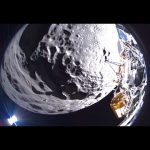
  • NASA, Intuitive Machines Moon Mission Update

    NASA, Intuitive Machines Moon Mission Update

    NASA and Intuitive Machines give an update from Johnson Space Center in Houston to highlight the company’s first mission, known as IM-1.

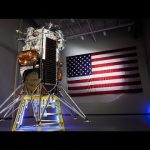
    The lander, called Odysseus, carried six NASA science instruments to the South Pole region of the Moon as part of the agency’s Commercial Lunar Payload Services (CLPS) initiative, and Artemis campaign. The IM-1 mission is the first U.S. soft landing on the Moon in more than 50 years, successfully landing on Feb. 22, 2024.

    Participants in the news conference include:

    • Joel Kearns, deputy associate administrator, Exploration, Science Mission Directorate, NASA Headquarters in Washington
    • Sue Lederer, CLPS project scientist, NASA Johnson
    • Steve Altemus, chief executive officer and co-founder, Intuitive Machines
    • Tim Crain, chief technology officer and co-founder, Intuitive Machines

    Credit: NASA

  • This beautiful image of South America’s largest lake hides a dark secret… 🤫 #shorts

    This beautiful image of South America’s largest lake hides a dark secret… 🤫 #shorts

    This is Lake Maracaibo, in Venezuela.

    Although nice to see from space, the emerald-green swirls in the lake waters, visible in this image captured in August 2023, denote runaway blooms of toxic cyanobacteria, or blue–green algae, which pose a serious threat to ecology and human health.

    With an area of over 13,000 sq km, Lake Maracaibo is generally considered the largest lake in South America, although by some estimates it should be considered an inlet of the Caribbean Sea since much of its water is brought in by its direct connection to the ocean.

    📹 @EuropeanSpaceAgency

    📸 contains modified Copernicus Sentinel data (2016), processed by ESA, Creative Commons CC BY-SA 3.0 IGO

    #ESA #EarthFromSpace #Maracaibo

  • Ariane 6 arrives at Europe’s Spaceport

    Ariane 6 arrives at Europe’s Spaceport

    The largest components for the first flight model of Europe’s new rocket Ariane 6 arrived at the port of Pariacabo in Kourou, French Guiana on 21 February 2024 via the novel ship, Canopée (canopy in French).

    The Ariane 6 stages and components are all manufactured across Europe. On this trip, Canopée brought the central core for Ariane 6’s first flight. The main engine and the main stage were integrated in Les Mureaux, France, while the upper stage and insulation for the rocket’s exterior were built up in Bremen, Germany.

    The various Ariane 6 components are then offloaded and transported by road to the new Ariane 6 launch vehicle assembly building just a few kilometres away. Here, the launcher stages are unpacked and installed on the assembly line for integration, and finally, liftoff.

    The Ariane 6 boosters are already in Europe’s Spaceport after their production in Italy, they are the same P120C solid propulsion boosters as used for Europe’s Vega-C rocket.

    First the central core will be assembled horizontally after which it is transported to the launchpad. Here it will be lifted into the upright position after which Boosters and the upper stage will be added inside the mobile gantry.

    This summer Flight Model-1 will be ready to let its engine rumble and fly.

    Credits: ESA/CNES/Arianespace/Arianegroup

    ★ Subscribe: http://bit.ly/ESAsubscribe and click twice on the bell button to receive our notifications.

    Check out our full video catalog: http://bit.ly/SpaceInVideos
    Follow us on Twitter: http://bit.ly/ESAonTwitter
    On Facebook: http://bit.ly/ESAonFacebook
    On Instagram: http://bit.ly/ESAonInstagram
    On LinkedIn: https://bit.ly/ESAonLinkedIn
    On Pinterest: https://bit.ly/ESAonPinterest
    On Flickr: http://bit.ly/ESAonFlickr

    We are Europe’s gateway to space. Our mission is to shape the development of Europe’s space capability and ensure that investment in space continues to deliver benefits to the citizens of Europe and the world. Check out https://www.esa.int/ to get up to speed on everything space related.

    Copyright information about our videos is available here: https://www.esa.int/ESA_Multimedia/Terms_and_Conditions

    #ESA #Rocket #Ariane6

  • NASA Administrator Bill Nelson Congratulates Intuitive Machines on First Lunar Landing

    NASA Administrator Bill Nelson Congratulates Intuitive Machines on First Lunar Landing

    Intuitive Machines’ IM-1 mission made history on Feb. 22, with the first successful Moon landing by a company. NASA Administrator, Bill Nelson congratulates everyone involved in this great and daring quest.

    NASA science and technology demonstrations now are gathering data on the lunar surface. The mission is expected to continue through the end of the month.

    NASA innovates for the benefit of humanity, and with its Artemis CLPS (Commercial Lunar Payload Services) initiative, the agency is working with commercial companies to achieve rapid flights to the Moon. By sending research that advances capabilities for science, exploration, and commercial development of the Moon, CLPS is another example of how NASA is supporting long-term lunar exploration by enabling commercial services on the Moon.

    Here is more information about the CLPS missions: https://www.nasa.gov/clps

  • ESA satellite returns to Earth

    ESA satellite returns to Earth

    Mission complete. ESA’s second European Remote Sensing (ERS-2) satellite has reentered Earth’s atmosphere over the North Pacific Ocean. The satellite returned at 18:17 CET (17:17 UTC) between Alaska and Hawaii.

    ERS-2 was launched almost 30 years ago, on 21 April 1995. Together with ERS-1, it provided invaluable long-term data on Earth’s land surfaces, ocean temperatures, ozone layer and polar ice extent that revolutionised our understanding of the Earth system.

    ERS-2’s reentry was ‘natural’. ESA used the last of its fuel, emptied its batteries and lowered the satellite from its altitude of 785 km to 573 km. This reduced the risk of collision with other satellites and space debris. As a result, it was not possible to control ERS-2 at any point during its reentry and the only force driving its descent was unpredictable atmospheric drag.
    As well as leaving a remarkable legacy of data that still continue to advance science, this outstanding mission set the stage for many of today’s satellites and ESA’s position at the forefront of Earth observation.

    The ERS-2 reentry is part of ESA’s wider efforts to ensure the long-term sustainability of space activities. These include ESA’s Clean Space initiative which promotes the development of new technologies for more sustainable space missions in collaboration with the wider European space community, as well as the Zero Debris Approach, which will even further reduce the debris left in both Earth and lunar orbits by future missions.

    Credits: ESA – European Space Agency

    ★ Subscribe: http://bit.ly/ESAsubscribe and click twice on the bell button to receive our notifications.

    Check out our full video catalog: http://bit.ly/SpaceInVideos
    Follow us on Twitter: http://bit.ly/ESAonTwitter
    On Facebook: http://bit.ly/ESAonFacebook
    On Instagram: http://bit.ly/ESAonInstagram
    On LinkedIn: https://bit.ly/ESAonLinkedIn
    On Pinterest: https://bit.ly/ESAonPinterest
    On Flickr: http://bit.ly/ESAonFlickr

    We are Europe’s gateway to space. Our mission is to shape the development of Europe’s space capability and ensure that investment in space continues to deliver benefits to the citizens of Europe and the world. Check out https://www.esa.int/ to get up to speed on everything space related.

    Copyright information about our videos is available here: https://www.esa.int/ESA_Multimedia/Terms_and_Conditions

    #ESA #ERS-2 #Satellite

  • Have you heard that a messy space equals a messy mind? 🧠🧹 #shorts

    Have you heard that a messy space equals a messy mind? 🧠🧹 #shorts

    The design of buildings and spaces can greatly affect how people feel and perform. Windows, wall colours and even plants in a room can improve your productivity and mood. In extreme environments, the layout of a habitat becomes even more important.

    📹 ESA – European Space Agency

    #ESA #ISS #Astronaut

  • A Commercial Lander Touches Down on the Moon on This Week @NASA – February 23, 2024

    A Commercial Lander Touches Down on the Moon on This Week @NASA – February 23, 2024

    A commercial lander touches down on the Moon, discussing the science on the space station, and preparing for the next space station crew rotation mission … a few of the stories to tell you about – This Week at NASA!

    Link to download this video: https://images.nasa.gov/details/NHQ_2024_0223_A%20Commercial%20Lander%20Touches%20Down%20on%20the%20Moon%20on%20This%20Week%20@NASA%20%E2%80%93%20February%2023,%202024

    Video Producer: Andre Valentine
    Video Editor: Andre Valentine
    Narrator: Emanuel Cooper
    Music: Universal Production Music
    Credit: NASA

  • NASA News Conference on Intuitive Machines’ First Lunar Landing

    NASA News Conference on Intuitive Machines’ First Lunar Landing

    Intuitive Machines’ IM-1 mission made history on Feb. 22, with the first successful Moon landing by a company. This televised news conference will discuss details of Odysseus’ landing as part of NASA’s CLPS (Commercial Lunar Payload Services) initiative and Artemis campaign.

    Participants from NASA and Intuitive Machines will discuss next steps for NASA science instruments aboard, as well as details of the landing, which made last-minute use of NASA’s precision landing technology demonstration, NDL, or Navigation Doppler Lidar.

    Participants in the news conference include:
    • Joel Kearns, deputy associate administrator for Exploration, Science Mission Directorate, NASA Headquarters in Washington
    • Prasan Desai, deputy associate administrator, Space Technology Mission Directorate at NASA Headquarters
    • Steve Altemus, chief executive officer and co-founder, Intuitive Machines
    • Tim Crain, chief technology officer and co-founder, Intuitive Machines

    Credit: NASA

    #NASA #Moon #Artemis #IM1

  • Intuitive Machines-1 Lunar Landing (Official NASA Broadcast)

    Intuitive Machines-1 Lunar Landing (Official NASA Broadcast)

    NASA science is set to land on the Moon aboard Odysseus, Intuitive Machines’ uncrewed autonomous lander. Touchdown is now targeted for 6:24 p.m. EST (2324 UTC) Thursday, Feb. 22, 2024. The NASA payloads aboard the lander aim to help us learn more about terrain and communications near the lunar South Pole.

    For more information about our Commercial Lunar Payload Services initiative, visit: https://go.nasa.gov/3RFR0A5

    Credit: NASA

    #NASA #Moon #Artemis #MoonDelivery

  • New mission to track changes in the cryosphere

    New mission to track changes in the cryosphere

    Tracking ice lost from the world’s glaciers, ice sheets and frozen land shows that Earth is losing ice at an accelerating rate. Monitoring the cryosphere is crucial for assessing, predicting and adapting to climate change.

    The Copernicus Polar Ice and Snow Topography Altimeter (CRISTAL) mission will provide a full picture of the changes taking place in some of the most inhospitable regions of the world. It will carry – for the first time – a dual-frequency radar altimeter, and microwave radiometer, that will measure and monitor sea-ice thickness, overlying snow depth and ice-sheet elevations.

    These data will support maritime operations in the polar oceans and contribute to a better understanding of climate processes. CRISTAL will also support applications related to coastal and inland waters, as well as providing observations of ocean topography.

    CRISTAL is one of six Copernicus Sentinel Expansion missions that ESA is developing on behalf of the EU. The missions will expand the current capabilities of the Copernicus Space Component – the world’s biggest supplier of Earth observation data.

    This video features interviews with Kristof Gantois, CRISTAL Project Manager and Paolo Cipollini, CRISTAL Mission Scientist.

    Credits: ESA – European Space Agency

    ★ Subscribe: http://bit.ly/ESAsubscribe and click twice on the bell button to receive our notifications.

    Check out our full video catalog: http://bit.ly/SpaceInVideos
    Follow us on Twitter: http://bit.ly/ESAonTwitter
    On Facebook: http://bit.ly/ESAonFacebook
    On Instagram: http://bit.ly/ESAonInstagram
    On LinkedIn: https://bit.ly/ESAonLinkedIn
    On Pinterest: https://bit.ly/ESAonPinterest
    On Flickr: http://bit.ly/ESAonFlickr

    We are Europe’s gateway to space. Our mission is to shape the development of Europe’s space capability and ensure that investment in space continues to deliver benefits to the citizens of Europe and the world. Check out https://www.esa.int/ to get up to speed on everything space related.

    Copyright information about our videos is available here: https://www.esa.int/ESA_Multimedia/Terms_and_Conditions

    #ESA #Satellite #Cryosphere

  • Planet Hunting with NASA’s Curious Universe Podcast Host Padi Boyd

    Planet Hunting with NASA’s Curious Universe Podcast Host Padi Boyd

    In this special episode of our Curious Universe podcast, we turn the tables and put host Padi Boyd in the interview seat. Padi shares stories from her time with NASA’s groundbreaking Kepler mission, which showed us many more exoplanets—planets orbiting other stars—than we had previously discovered. She also tells us about her dream astronomical dinner companion and her go-to karaoke song.

    Watch the full episode: https://youtu.be/h0wLZJeYGxw

    NASA’s Curious Universe is an official NASA podcast. Discover more adventures with NASA experts at nasa.gov/curiousuniverse

  • Planet Hunting with NASA’s Curious Universe Podcast Host Padi Boyd

    Planet Hunting with NASA’s Curious Universe Podcast Host Padi Boyd

    In this special episode of our Curious Universe podcast, we turn the tables and put host Padi Boyd in the interview seat. Padi shares stories from her time with NASA’s groundbreaking Kepler mission, which showed us many more exoplanets—planets orbiting other stars—than we had previously discovered.

    She also tells us about her dream astronomical dinner companion and her go-to karaoke song. Plus, we’ll wrap up another season of wild and wonderful adventures by answering questions from listeners like you and sharing behind-the-scenes tidbits from Season 6. For the first time, this episode of Curious Universe is also available as a video podcast.

    NASA’s Curious Universe is an official NASA podcast. Discover more adventures with NASA experts at https://nasa.gov/curiousuniverse

  • Axiom 3 departing the International Space Station 👋 #shorts

    Axiom 3 departing the International Space Station 👋 #shorts

    European Space Agency astronaut Andreas Mogensen shared this video on social media with the caption:

    “After almost six months on the International Space Station, it is time to go home. We have gotten the date for our return: No earlier than 8 March 2024 will Jasmin, Satoshi, Konstantin, and I enter our Crew Dragon “Endurance” and undock from the Space Station and splash down near the coast of Florida. The return is dependent on Crew 8’s launch on the 1 March and weather at the landing site off the coast of Florida.

    It has been a fantastic mission, where I became the commander of the crew on Expedition 70, a fantastic international crew where we have explored new science and worked together to make it a great expedition. Unfortunately, the spacewalk I was planned to go out on will not be performed this time, but maybe in the future by another crew.

    My Huginn mission has been a dream come true, where I got to live and work on International Space Station once more, this time for a little bit longer than in 2015 😉 I will do my best to make the most of these last few weeks, and at the same time, I look forward to coming home to my family.”

    Credits: ESA / NASA

    #ESA #Crew7 #ReturnToEarth

  • A Commercial Mission Heads to the Moon with NASA Science on This Week @NASA – February 16, 2024

    A Commercial Mission Heads to the Moon with NASA Science on This Week @NASA – February 16, 2024

    A commercial mission heads to the Moon with NASA science, our Artemis II crew conducts some preflight training, and a major milestone for a planetary science mission … a few of the stories to tell you about – This Week at NASA!

    Link to download this video: https://images.nasa.gov/details/NHQ_2024_0216_A%20Commercial%20Mission%20Heads%20to%20the%20Moon%20With%20NASA%20Science%20on%20This%20Week%20@NASA%20%E2%80%93%20February%2016,%202024

    Video Producer: Andre Valentine
    Video Editor: Andre Valentine
    Narrator: Emanuel Cooper
    Music: Universal Production Music
    Credit: NASA

  • What does a warming Arctic mean for the future?

    What does a warming Arctic mean for the future?

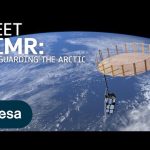
    The Arctic is experiencing disproportionately higher temperature increases compared to the rest of the planet, triggering a series of cascading effects. This rapid warming has profound implications for global climate patterns, human populations and wildlife.

    The Copernicus Imaging Microwave Radiometer mission (CIMR) will provide measurements to decision makers with evidence of change and impact in the polar regions – with a focus on the Arctic.

    The mission has the largest radiometer developed by ESA and will provide high-resolution measurements related to sea ice, the ocean, snow and ice-sheet surfaces. This will be crucial in understanding the evolution of the climate in the polar region.

    CIMR is one of six Copernicus Sentinel Expansion missions that ESA is developing on behalf of the EU. The missions will expand the current capabilities of the Copernicus Space Component – the world’s biggest supplier of Earth observation data.

    This video features interviews with Craig Donlon, CIMR Mission Scientist, Rolv Midthassel, CIMR Payload Manager, Claudio Galeazzi, CIMR Project Manager, Mariel Triggianese, CIMR Satellite Engineering and AIV Manager, and Marcello Sallusti, CIMR System Performance and Operations Manager.

    In the meantime Craig has changed his role but will retain his position as Mission Scientist.

    Credits: ESA – European Space Agency

    ★ Subscribe: http://bit.ly/ESAsubscribe and click twice on the bell button to receive our notifications.

    Check out our full video catalog: http://bit.ly/SpaceInVideos
    Follow us on Twitter: http://bit.ly/ESAonTwitter
    On Facebook: http://bit.ly/ESAonFacebook
    On Instagram: http://bit.ly/ESAonInstagram
    On LinkedIn: https://bit.ly/ESAonLinkedIn
    On Pinterest: https://bit.ly/ESAonPinterest
    On Flickr: http://bit.ly/ESAonFlickr

    We are Europe’s gateway to space. Our mission is to shape the development of Europe’s space capability and ensure that investment in space continues to deliver benefits to the citizens of Europe and the world. Check out https://www.esa.int/ to get up to speed on everything space related.

    Copyright information about our videos is available here: https://www.esa.int/ESA_Multimedia/Terms_and_Conditions

    #ESA #Satellite #EarthObservation

  • Intuitive Machines-1 Launch to the Moon (Official NASA Broadcast)

    Intuitive Machines-1 Launch to the Moon (Official NASA Broadcast)

    Watch Intuitive Machines’ Nova-C lunar lander lift off from NASA’s Kennedy Space Center in Florida on a SpaceX Falcon 9 rocket. Intuitive Machines and SpaceX are now targeting 1:05 a.m. EST (0605 UTC) Thursday, Feb. 15, 2024, for launch. The NASA payloads aboard the lander aim to help us learn more about terrain and communications near the lunar South Pole.

    For more information about our Commercial Lunar Payload Services initiative, visit: https://go.nasa.gov/3RFR0A5

    Link to download this video: https://images.nasa.gov/details/KSC-20240215-VP-CDC01-0001-SpaceX_CLPS_IM1_Live_Launch_Coverage-4K-M4208

    Credit: NASA

    #NASA #Moon #Artemis #IM1

  • NASA Astronauts Aboard Space Station Huddle Up for Super Bowl

    NASA Astronauts Aboard Space Station Huddle Up for Super Bowl

    NASA astronauts Jasmin Moghbeli and Loral O’Hara, currently aboard the International Space Station, talk about the similarities between training for space travel and training for the Big Game. Spoiler: It’s all about teamwork.

    The crew aboard the orbiting laboratory are studying a variety of microgravity experiments that benefit people on Earth, including research in human heart health, cancer therapies, space manufacturing techniques, and technology demonstrations.

    Here’s more information about some of the research happening every day in low Earth orbit: https://go.nasa.gov/3SQdDDF

    Learn more on the connections between space exploration and football: https://go.nasa.gov/42zm7lO

    Video Producer: Shane Apple
    Animation: Mark Hailey
    Music: Universal Production Music

    Credit: NASA

  • Zoom Into Pandora’s Cluster ✨ #shorts

    Zoom Into Pandora’s Cluster ✨ #shorts

    Astronomers estimate 50 000 sources of near-infrared light are represented in this image from the NASA/ESA/CSA James Webb Space Telescope. Their light has travelled through various distances to reach the telescope’s detectors, representing the vastness of space in a single image. A foreground star in our own galaxy, to the right of the image centre, displays Webb’s distinctive diffraction spikes. Bright white sources surrounded by a hazy glow are the galaxies of Pandora’s Cluster, a conglomeration of already-massive clusters of galaxies coming together to form a mega cluster. The concentration of mass is so great that the fabric of spacetime is warped by gravity, creating a natural, super-magnifying glass called a ‘gravitational lens’ that astronomers can use to see very distant sources of light beyond the cluster that would otherwise be undetectable, even to Webb.


    Credit: ESA/Webb, NASA & CSA, P. Kelly, Dark Energy NASA, ESA, CSA, I. Labbe (Swinburne University of Technology), R. Bezanson (University of Pittsburgh), A. Pagan (STScI). Dark Energy Survey/DOE/FNAL/NOIRLab/NSF/AURA, DSS, N. Bartmann, E. Slawik, N. Risinger, D. de Martin, M. Zamani
    Music: Tonelabs – The Red North

    #ESA #Webb #Space