Studying the health of our oceans and climate, a private astronaut crew heads home from the space station, and some mission milestones for our Lucy spacecraft … a few of the stories to tell you about – This Week at NASA!
On April 8, 2024, a total solar eclipse will travel through Mexico, cross the United States from Texas to Maine, and exit North America along Canada’s Atlantic coast.
A total solar eclipse occurs when the Moon passes between the Sun and Earth and briefly covers the full disk of the Sun. This reveals the Sun’s wispy, white outer atmosphere, called the corona.
Not in the path of the eclipse? Watch with NASA from anywhere in the world. We will provide live broadcast coverage on April 8 from 1:00 p.m. to 4:00 p.m. EDT (1700 to 2000 UTC) on NASA TV, NASA.gov, the NASA app, and right here on YouTube: go.nasa.gov/3OI7nLF
Weather permitting, people throughout most of North and Central America, including all of the contiguous United States, will be able to view at least a partial solar eclipse. A partial solar eclipse is when the Moon only covers part of the Sun. People in Hawaii and parts of Alaska will also experience a partial solar eclipse. Click here to learn more about when and where the solar eclipse will be visible: go.nasa.gov/Eclipse2024Map
WARNING: Except during the brief total phase of a total solar eclipse, when the Moon completely blocks the Sun’s bright face, it is not safe to look directly at the Sun without specialized eye protection for solar viewing. Indirect viewing methods, such as pinhole projectors, can also be used to experience an eclipse. For more on how to safely view this eclipse: go.nasa.gov/Eclipse2024Safety
Learn more about the upcoming total solar eclipse: go.nasa.gov/Eclipse2024
After almost 20 days on the International Space Station, ESA project astronaut Marcus Wandt is coming home.
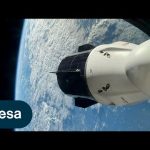
The trip back to Earth will take the Axiom Mission 3 crew around 47 hours. Marcus will serve as a mission specialist during the journey, sharing the ride with Walter Villadei from Italy, Alper Gezeravcı from Türkiye and Michael López-Alegría, a dual US-Spanish citizen.
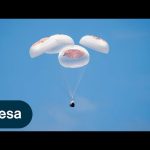
After a series of burns to lower its orbit, the spacecraft will enter Earth’s atmosphere and deploy its parachutes for a water-landing. Marcus and crew are expected to splash down off the coast of Florida, USA, on 9 February 2024 at 13:30 GMT/14:30 CET. This will mark the end of Marcus’s mission, called Muninn.
We are Europe’s gateway to space. Our mission is to shape the development of Europe’s space capability and ensure that investment in space continues to deliver benefits to the citizens of Europe and the world. Check out https://www.esa.int/ to get up to speed on everything space related.
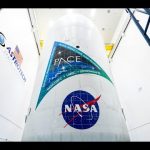
Our Plankton, Aerosol, Cloud ocean Ecosystem (PACE) mission will study what makes Earth so different from every other planet we study: life itself.
Three-quarters of our home planet is covered by water, and PACE’s advanced instruments will provide new ways to measure the distributions of microscopic algae known as phytoplankton near the ocean’s surface. Those observations will enhance our understanding of the crucial exchange of CO2 between the ocean and atmosphere.
At the same time, PACE will help reveal how aerosols – microscopic particles in the atmosphere – and clouds control the amount of the Sun’s energy that is absorbed by Earth. Novel uses of PACE data will benefit our economy and society, and will extend and expand NASA’s long-term observations of our living planet.
PACE is scheduled to lift off at 1:33 a.m. EST (0633 UTC) Thursday, Feb. 8, on a SpaceX Falcon 9 rocket from Space Launch Complex 40 at Cape Canaveral Space Force Station in Florida. NASA’s live launch coverage begins at 12:45 a.m. EST (0545 UTC).
Watch a clean telescope feed of a total solar eclipse moving across North America on April 8, 2024, traveling through Mexico, across the United States from Texas to Maine, and exiting North America along Canada’s coast. Weather permitting, we will provide live views of the eclipse from several locations across the eclipse path, including showing the partially eclipsed Sun in different wavelengths of light.
A total solar eclipse occurs when the Moon passes between the Sun and Earth and briefly covers the full disk of the Sun. This reveals the Sun’s wispy, white outer atmosphere, called the corona. Weather permitting, people throughout most of North and Central America, including all of the contiguous United States, will be able to view at least a partial solar eclipse.
These telescope feeds are provided courtesy of our partners and collaborators. A full list of the telescope locations and providers is coming soon.
Review our total solar eclipse safety guidelines: go.nasa.gov/Eclipse2024Safety
Watch live with us as a total solar eclipse moves across North America on April 8, 2024, traveling through Mexico, across the United States from Texas to Maine, and out across Canada’s Atlantic coast.
A total solar eclipse occurs when the Moon passes between the Sun and the Earth, completely blocking the face of the Sun. The sky will darken as if it were dawn or dusk.
From 1 to 4 p.m. EDT (1700 to 2000 UTC) on April 8, we’ll share conversations with experts and provide telescope views of the eclipse from several sites along the eclipse path. Throughout the broadcast, send us your questions in the chat using #askNASA for a chance to have them answered live.
WARNING: Except during the brief total phase of a total solar eclipse, when the Moon completely blocks the Sun’s bright face, it is not safe to look directly at the Sun without specialized eye protection for solar viewing. Indirect viewing methods, such as pinhole projectors, can also be used to experience an eclipse. For more on how to safely view this eclipse: go.nasa.gov/Eclipse2024Safety
Review our eclipse safety guidelines: go.nasa.gov/Eclipse2024Safety Learn more about the total solar eclipse: go.nasa.gov/Eclipse2024 Track the eclipse path: go.nasa.gov/eclipseexplorer
After almost 20 days on the International Space Station, ESA project astronaut Marcus Wandt is coming home.
The trip back to Earth will take the Axiom Mission 3 crew around 47 hours. Marcus will serve as a mission specialist during the journey, sharing the ride with Walter Villadei from Italy, Alper Gezeravcı from Türkiye and Michael López-Alegría, a dual US-Spanish citizen.
We are Europe’s gateway to space. Our mission is to shape the development of Europe’s space capability and ensure that investment in space continues to deliver benefits to the citizens of Europe and the world. Check out https://www.esa.int/ to get up to speed on everything space related.
Targeted to launch on Tuesday, Feb. 6, NASA’s Plankton, Aerosol, Cloud, ocean Ecosystem (PACE) satellite mission will study how our oceans and atmosphere interact in a changing climate. Prelaunch activities include a news conference on Monday, Feb. 5 at 9 a.m. EST (1400 UTC) with the following participants:
NASA Associate Administrator Jim Free Karen St. Germain, director, Earth Science Division, NASA Tim Dunn, senior launch director, Launch Services Program, NASA Julianna Scheiman, director, Civil Satellite Missions, SpaceX Brian Cizek, launch weather officer, 45th Weather Squadron, U.S. Space Force
Targeted to launch on Tuesday, Feb. 6, NASA’s Plankton, Aerosol, Cloud, ocean Ecosystem (PACE) satellite mission will study how our oceans and atmosphere interact in a changing climate. Prelaunch activities include a briefing on the mission science on Sunday, Feb. 4 at 11 a.m. EST (1600 UTC) with the following NASA participants:
Kate Calvin, chief scientist and senior climate advisor Karen St. Germain, director, Earth Science Division Jeremy Werdell, PACE project scientist Andy Sayer, PACE atmospheric scientist Natasha Sadoff, Satellite Needs Program Manager
A commercial resupply mission to the space station, preparing to make a delivery to the Moon, and monitoring our changing Earth from space … a few of the stories to tell you about – This Week at NASA!
Link to download this video: https://images.nasa.gov/details/A%20Commercial%20Resupply%20Mission%20to%20the%20Space%20Station%20on%20This%20Week%20@NASA%20%E2%80%93%20February%202,%202024
Video Producer: Andre Valentine Video Editor: Andre Valentine Narrator: Emanuel Cooper Music: Universal Production Music Credit: NASA
In April 2021, NASA’s Ingenuity Mars Helicopter became the first spacecraft to achieve powered, controlled flight on another world. With 72 successful flights, Ingenuity has far surpassed its originally planned technology demonstration of up to five flights. On Jan. 18, Ingenuity flew for the final time on the Red Planet.
Join Tiffany Morgan, NASA’s Mars Exploration Program Deputy Director, and Teddy Tzanetos, Ingenuity Project Manager, as they discuss these historic flights and what they could mean for future extraterrestrial aerial exploration. Have questions? Submit them in our live chat for the chance to have them answered during the show.
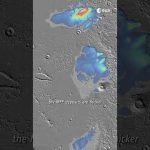
Our Mars Express has revisited one of Mars’s most intriguing features the Medusae Fossae, revealing what seems to be layers of water ice below the dusty surface.
If melted, this potential water would be enough to fill Earth’s Red Sea, or cover Mars in a layer of water up to 2.7 m deep!
📸 Planetary Science Institute/Smithsonian Institution 📸 European Space Agency / DLR / FU Berlin 📸 CReSIS/KU/Smithsonian Institution
Northrop Grumman’s 20th cargo resupply mission launches to the International Space Station, powered by a SpaceX Falcon 9 rocket. Liftoff on Tuesday, Jan. 30 is set for 12:07 p.m. EST (1707 UTC). The Cygnus capsule carries over 8,200 pounds (3,700 kg) of cargo, including space station hardware, crew supplies, and research that can only be done in microgravity. Science and technology experiments aboard include a robotic surgery tech demonstration, and tests of a 3D metal printer, semiconductor manufacturing, and thermal protection systems for re-entry.
Deep beneath the crust of Jupiter’s frozen moon Europa lies a massive liquid water ocean. Exploring this ocean world with our Europa Clipper spacecraft could provide new clues in our search for life beyond Earth.
Scheduled to launch in October 2024, Europa Clipper’s main science goal is to determine whether there are places below the icy moon’s surface that could be habitable.
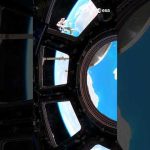
Join ESA project astronaut Marcus Wandt inside the seven-windowed cupola, the International Space Station’s “window to the world”.
The ESA – European Space Agency-built Cupola is the favourite place of many astronauts on the International Space Station. It serves not only as a unique photo spot, but also for observing robotic activities of the Canadian Space Agency’s robotic arm Canadarm2, arriving spacecraft and spacewalks.
Marcus was launched to the International Space Station on the Dragon spacecraft as part of Axiom Mission 3 on 18 January 2024. His two-week mission on board is known as Muninn.
Remembering our fallen heroes, an agency town hall to talk safety, and the end of an historic mission on Mars … a few of the stories to tell you about – This Week at NASA!
Satellite communication underpins everyday life, enabling fundamental improvements not just in communication, but also in transport, healthcare, safety and security, environmental services and many other industries.
The Advanced Research in Telecommunications Systems (ARTES) 4.0 programme enables European and Canadian industry to explore, through research and development, innovative concepts that stimulates the wider economy, creating new business and jobs across almost every industry. ARTES 4.0 supports the production of market-leading and cutting-edge products and services within a fiercely competitive global satellite communications market.
We are Europe’s gateway to space. Our mission is to shape the development of Europe’s space capability and ensure that investment in space continues to deliver benefits to the citizens of Europe and the world. Check out https://www.esa.int/ to get up to speed on everything space related.
NASA Administrator Bill Nelson has announced that the Ingenuity Mars Helicopter has come to an end. The Ingenuity Mars Helicopter made history by achieving the first powered, controlled flight on another planet on April 19, 2021. Despite initial plans for up to five flights, the helicopter has exceeded expectations and executed an impressive 72 flights on the Red Planet. NASA pays tribute to its accomplishments, which have far exceeded what was thought possible and have paved the way for future flights in our solar system.
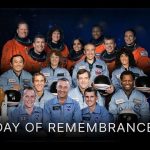
NASA remembers the crews of Apollo 1, Challenger STS-51L, and Columbia STS-107 during the agency’s Day of Remembrance on Jan. 25, 2024.
Our annual Day of Remembrance honors all members of the NASA family who lost their lives while furthering the cause of exploration and discovery. We pause to honor them and reflect on maintaining a strong safety culture.
Safety is a key NASA core value. NASA’s constant attention to safety is the cornerstone upon which we build mission success.
Every year, NASA holds a Day of Remembrance to commemorate those we have lost, reflect on why we explore, and commit to our safety practices.
In 2024, NASA Day of Remembrance falls on Thursday, Jan. 25. #NASARemembers the crews of Apollo 1, space shuttles Challenger and Columbia, and all members of the NASA family who lost their lives while furthering the cause of exploration and discovery.
ESA uses terrestrial rocks to recreate the Moon’s surface!
Two state-of-the-art ESA facilities are working closely to develop a simulated lunar environment that will serve as a proving ground for future exploration technologies.
Watch as Marcus Wandt and his crewmates arrived to the Space Station around 36 hours after liftoff.
Marcus is the first of a new generation of European astronauts to fly on a commercial human spaceflight opportunity with Axiom Space. His mission is supported by ESA and the Swedish National Space Agency (SNSA). Marcus’s mission is called Muninn.
During his two-week mission, Marcus will devote much of his time to scientific activities and technology demonstrations that could shape the way we live and work on Earth. In total, he will run around 20 experiments.
Marcus Wandt was selected in November 2022 as a member of the ESA astronaut reserve after a year-long selection process. The 2022 ESA recruitment campaign received over 22 5000 applications from across its Member States.
Timestaps of the video: 00:00:00 – 01:55:44 – Pre-Docking programme 01:55:45 – 03:14:29 – Complete docking to the Space Station 03:14:30 – 03:16:00 – Hatching opening 03:16:01 – 03:37:24 – Axiom 3 Mission crew entering the Space Station 03:37:25 – 03:49:00 – Welcoming ceremony
Follow Marcus’s journey on the Muninn website, check our launch kit and connect with him on his Instagram and X accounts.
We are Europe’s gateway to space. Our mission is to shape the development of Europe’s space capability and ensure that investment in space continues to deliver benefits to the citizens of Europe and the world. Check out https://www.esa.int/ to get up to speed on everything space related.
ESA project astronaut Marcus Wandt took off on 18 January 2024 as part of the Axiom-3 crew for a 14-day mission to the International Space Station. After 36 hours catching up to the Space Station, the Dragon docked to the Space Station, the seal between the two tested and finally Marcus started his Muninn mission as he entered the International Space Station. ESA astronaut Andreas Mogensen along with the rest of the crew of Expedition 70 was waiting to welcome them to space!
Follow Marcus’s journey on the Muninn website, check our launch kit and connect with him on his Instagram and X accounts.
We are Europe’s gateway to space. Our mission is to shape the development of Europe’s space capability and ensure that investment in space continues to deliver benefits to the citizens of Europe and the world. Check out https://www.esa.int/ to get up to speed on everything space related.
ESA project astronaut Marcus Wandt launched together with the rest of the Axiom-3 crew at 23:11 CET on 17 January 2024, from launch pad 39A, NASA’s Kennedy Space Center, Florida, USA.
Marcus will start his Muninn mission when he enters the International Space Station on Saturday 20 January, where he will spend up to 14 days conducting science and testing technology that can one day help people on Earth.
Follow Marcus’s journey on the Muninn website, check our launch kit and connect with him on his Instagram and X accounts.
We are Europe’s gateway to space. Our mission is to shape the development of Europe’s space capability and ensure that investment in space continues to deliver benefits to the citizens of Europe and the world. Check out https://www.esa.int/ to get up to speed on everything space related.
Axiom Mission 3, set to lift off at 4:49 p.m. EST (2149 UTC) on Thursday, Jan. 18, is Axiom’s third private astronaut mission to the International Space Station. Ax-3 is launching from NASA’s Kennedy Space Center aboard SpaceX’s Dragon Freedom spacecraft.
During their two-week stay aboard the orbiting laboratory, the crew of Ax-3—commander Michael López-Alegría, pilot Walter Villadei of Italy, mission specialist Alper Gezeravcı of Turkey, and ESA (European Space Agency) project astronaut Marcus Wandt of Sweden—will engage in technology demonstrations, student outreach, and experiments ranging from medical research to materials science.
Launch coverage is led by Axiom Space, with support from NASA and SpaceX; NASA’s primary mission responsibilities begin during Freedom’s approach to the International Space Station, the start of Ax-3 integrated operations. Learn more about NASA’s role in Ax-3 and how we’re working with our industry partners to open low Earth orbit to more people, more science, and more opportunities: https://go.nasa.gov/3Se0bsN
Stream highlights: 2:10 — Meet the Ax-3 Crew 30:04 — Ax-3 Crew Training 34:14 — Ax-3 Science & Research 48:42 — Interview with NASA Administrator Bill Nelson 1:03:48 — Liftoff! 1:16:04 — Dragon flies free
The launch of ESA project astronaut Marcus Wandt to the International Space Station on Axiom Mission 3 (Ax-3). Marcus’s mission is called Muninn.
A SpaceX Falcon 9 rocket will lift off from launch pad 39A at NASA’s Kennedy Space Center in Florida, USA, on 18 January 2024. Marcus will fly as a mission specialist on the Dragon spacecraft. The other Axiom 3 crew members are Walter Villadei from Italy and Alper Gezeravcı from Türkiye. They will fly under the command of Michael López-Alegría, representing both USA and Spain as a dual-citizen.
Marcus is the first of a new generation of European astronauts to fly on a commercial human spaceflight opportunity with Axiom Space. His mission is supported by ESA and the Swedish National Space Agency (SNSA).
During his two-week mission, Marcus will devote much of his time to scientific activities and technology demonstrations that could shape the way we live and work on Earth. In total, he will run around 20 experiments.
Marcus Wandt was selected in November 2022 as a member of the ESA astronaut reserve after a year-long selection process. The 2022 ESA recruitment campaign received over 22 5000 applications from across its Member States.
Timestaps of the video: 00:00:00 – 02:10:44 – Pre-Launch programme 02:10:45 – 02:35:38 – Liftoff
Follow Marcus’s journey on the Muninn website, check our launch kit and connect with him on his Instagram and X accounts.
We are Europe’s gateway to space. Our mission is to shape the development of Europe’s space capability and ensure that investment in space continues to deliver benefits to the citizens of Europe and the world. Check out https://www.esa.int/ to get up to speed on everything space related.
Tests of a 3D metal printer and thermal protection systems for reentry to Earth’s atmosphere are among the scientific investigations that NASA and international partners are launching to the International Space Station on Northrop Grumman’s 20th commercial resupply services mission. The company’s Cygnus cargo spacecraft is scheduled to launch on a SpaceX Falcon 9 rocket from Cape Canaveral Space Force Station in Florida no earlier than late January.
From the International Space Station to Earth, ESA astronaut Andreas Mogensen talks about what kind of person his fellow Scandinavian and ESA project astronaut Marcus Wandt is. The Axiom-3 mission with Marcus onboard is planned to launch in mid-January 2024 to the International Space Station for a 14-day mission, where Marcus will join Andreas, marking the first time two Scandinavians are in space together.
Credits: ESA – European Space Agency
★ Subscribe: http://bit.ly/ESAsubscribe and click twice on the bell button to receive our notifications.
We are Europe’s gateway to space. Our mission is to shape the development of Europe’s space capability and ensure that investment in space continues to deliver benefits to the citizens of Europe and the world. Check out https://www.esa.int/ to get up to speed on everything space related.
19 years ago, on 25 December 2004, ESA’s Huygens probe was released from the Cassini spacecraft. Huygens continued on to Titan, Saturn’s largest and most interesting moon, descending via parachute and touching-down at 11:30 UTC, 14 January 2005. The descent phase lasted around 2 hours, 27 minutes, with a further 1 hour and 10 minutes of operation on the surface.
This video has been accelerated to 200% speed, showing the descent from an altitude of 62 km at 9:41 UTC to the touchdown.
Rollout of our experimental supersonic X-plane, schedule updates for future Artemis missions, and another year of global record heat … a few of the stories to tell you about – This Week at NASA!
Video Producer: Andre Valentine Video Editor: Andre Valentine Narrator: Emanuel Cooper Music: Universal Production Music Credit: NASA
Watch the rollout of NASA’s newly painted X-59 Quesst supersonic aircraft live from Lockheed Martin’s Skunk Works facility in Palmdale, California.
Quesst is NASA’s mission to demonstrate how the X-59 can fly supersonic without generating loud sonic booms, and then survey what people hear when it flies overhead. Reaction to the quieter sonic “thumps” will be shared with regulators who will then consider writing new sound-based rules to lift the ban on faster-than-sound flight over land.
NASA and Lockheed Martin Skunk Works recently unveiled the X-59 experimental aircraft, designed and built to reduce a loud sonic boom, associated with faster-than-sound flight, to a quiet sonic thump. The X-59 now moves closer to its first flight — – a step toward making commercial supersonic flight over land a reality for everyone. Researchers on NASA’s Quesst mission will work to understand people’s reactions to the X-59’s thump and give that data to regulators, who will then consider writing new sound-based rules to lift the ban on commercial supersonic flight over land.
With Artemis missions, NASA will land the first woman and first person of color on the Moon, using innovative technologies to explore more of the lunar surface than ever before. We will collaborate with commercial and international partners and establish the first long-term presence on the Moon. Then, we will use what we learn on and around the Moon to take the next giant leap: sending the first astronauts to Mars.
Credit: NASA Music: Universal Production Music Video Producer: Sonnet Apple
This video from the NASA/ESA/CSA James Webb Space Telescope takes the viewer on a journey through space to the location of the massive galaxy cluster RX J2129. Due to Gravitational lensing, this observation contains three different images of the same supernova-hosting galaxy. Gravitational lensing occurs when a massive celestial body causes a sufficient curvature of spacetime to bend the path of light travelling past or through it, almost like a vast lens. In this case, the lens is the galaxy cluster RX J2129, located around 3.2 billion light-years from Earth in the constellation Aquarius.
Credit: ESA/Webb, NASA & CSA, P. Kelly, Dark Energy Survey/DOE/FNAL/NOIRLab/NSF/AURA, DSS, N. Bartmann (ESA/Webb), E. Slawik, N. Risinger, D. de Martin (ESA/Webb), M. Zamani (ESA/Webb) Music: Tonelabs – The Red North
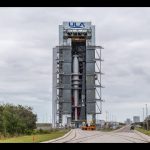
Watch Astrobotic’s Peregrine lunar lander lift off from NASA’s Kennedy Space Center in Florida on a United Launch Alliance (ULA) Vulcan rocket. ULA and Astrobotic are targeting 2:18 a.m. EST (0718 UTC) Monday, Jan. 8, 2024, for the first US commercial robotic launch to the Moon’s surface. The NASA payloads aboard the lander aim to help us develop capabilities needed to explore the Moon under Artemis and in advance of human missions on the lunar surface.
For more information about our Commercial Lunar Payload Services initiative, visit: https://go.nasa.gov/3RFR0A5
The first Artemis robotic launch to the Moon, an Artemis lunar robotic rover is halfway built, and an up-close look at a volcanic moon … a few of the stories to tell you about – This Week at NASA!
Link to download this video: https://images.nasa.gov/details/The%20First%20Artemis%20Robotic%20Launch%20to%20the%20Moon%20on%20This%20Week%20@NASA%20%E2%80%93%20January%205,%202024
Video Producer: Andre Valentine Video Editor: Andre Valentine Narrator: Andre Valentine Music: Universal Production Music Credit: NASA
As 2024 kicks into gear, we invite you to look ahead with ESA and see what awaits us in the coming 12 months.
After Ariane 5’s retirement in 2023, Europe’s new and versatile heavy-duty launcher Ariane 6 will continue the Ariane legacy of excellence and reliability. After years of development and construction, Ariane 6 will be ready for its first flight from Europe’s Spaceport in Kourou.
In 2024, we’ll see a return-to-flight for Vega-C. Vega-C will continue to provide Europe with its own affordable lightweight launcher. Together both projects guarantee Europe’s independent access to space.
We also continue to collaborate internationally with NASA on the Artemis lunar programme. This Spring, another European Service Module, ESM-3, for the third Artemis mission will be shipped to the United States for mating with its Orion capsule.
In 2024, Proba-3 will be launched, the first precision formation-flying mission. The Coronagraph and Occulter spacecraft will fly together forming a 144 m coronagraph studying the Sun’s corona closer to the solar rim than ever before.
At the beginning of the year, the first scientific data gathered by our latest space telescope, Euclid, will be revealed. Euclid was designed to explore the composition and evolution of dark matter and dark energy.
Another exciting mission that will launch later in 2024 is the Hera mission. This mission will fly to the binary asteroid system of Dimorphos and Didymos to observe the aftermath of the impact made by NASA’s Dart mission.
In Earth observation, there are several satellites ready to be launched: the ESA/JAXA mission EarthCARE mission, the Arctic Weather Satellite mission and the European Union’s Copernicus Sentinel-1C and Sentinel-2C satellites.
2024 will bring new developments as well for Galileo: two more first-generation satellites are to be launched in April, followed by two more later in the year. These will expand the constellation and help guarantee Galileo’s optimal performance. Meanwhile, the first hardware deliveries will take place for the second-generation Galileo satellites.
The five career astronauts from the 2022 astronaut class will finish their basic training this year and then be ready for mission assignments.
For Swedish project astronaut Marcus Wandt, there is no such wait. In January, he will be launched to the Space Station as a mission specialist on the Axiom-3 commercial mission – just time to catch up in space with his Danish colleague, ESA astronaut Andreas Mogensen, who is scheduled to return to Earth after a six-month stay on the Space Station in February.
Credits: ESA – European Space Agency
★ Subscribe: http://bit.ly/ESAsubscribe and click twice on the bell button to receive our notifications.
We are Europe’s gateway to space. Our mission is to shape the development of Europe’s space capability and ensure that investment in space continues to deliver benefits to the citizens of Europe and the world. Check out https://www.esa.int/ to get up to speed on everything space related.
For 40 years, ESA has been shaping the future in space, while delivering crucial access to space for Europe. That work continues, as brand-new rockets are set to take flight: some reusable, some carbon-neutral, with hybrid propulsion, two and three stages, small, large, crewed and uncrewed, to Earth orbit and deep space, the journey continues.
All of these missions are currently in development in Europe and will ensure our continued ability to explore beyond our own home, while looking back to learn more about it.
This, is the future of space exploration.
★ Subscribe: http://bit.ly/ESAsubscribe and click twice on the bell button to receive our notifications.
We are Europe’s gateway to space. Our mission is to shape the development of Europe’s space capability and ensure that investment in space continues to deliver benefits to the citizens of Europe and the world. Check out https://www.esa.int/ to get up to speed on everything space related.
Landing science on the Moon, demonstrating quiet supersonic aircraft, and launching two new Earth climate satellites, plus a mission to Europa, one of Jupiter’s icy moons, are just a FEW of the milestones we have planned for 2024.
To learn more about the missions mentioned in this video, take a deep dive into these links:
Embark on a cosmic journey with ESA as we explore the universe through the lens of ‘One Million’. From the scorching temperatures of the Sun’s corona to the cosmic gaze of the NASA/ESA/CSA James Webb Space Telescope — discover the astronomical wonders that surround us. 🚀
🎉 Join our space community in celebrating a momentous occasion — 1 MILLION subscribers on YouTube! 🌟 Thank you for your enthusiasm and support. ✨
★ Subscribe: http://bit.ly/ESAsubscribe and click twice on the bell button to receive our notifications.
We are Europe’s gateway to space. Our mission is to shape the development of Europe’s space capability and ensure that investment in space continues to deliver benefits to the citizens of Europe and the world. Check out https://www.esa.int/ to get up to speed on everything space related.