Having a nice cup of coffee looks slightly different in space… 😉
ESA astronaut Samantha Cristoforetti demonstrates how she has her morning coffee in space. ☕
Credits: ESA – European Space Agency
#ESA
#Coffee
#SamanthaCristoforetti

Having a nice cup of coffee looks slightly different in space… 😉
ESA astronaut Samantha Cristoforetti demonstrates how she has her morning coffee in space. ☕
Credits: ESA – European Space Agency
#ESA
#Coffee
#SamanthaCristoforetti
Our first asteroid sample return mission is back on Earth, a record ride in space for a NASA astronaut, and our Artemis II mission is making prelaunch progress … a few of the stories to tell you about – This Week at NASA!
Link to download this video:
https://images.nasa.gov/details/Our%20First%20Asteroid%20Sample%20Return%20Mission%20is%20Back%20on%20Earth%20on%20This%20Week%20@NASA%20%E2%80%93%20September%2029,%202023
Video Producer: Andre Valentine
Video Editor: Andre Valentine
Narrator: Andre Valentine
Music: Universal Production Music
Credit: NASA
There are millions of asteroids in our solar system, so why is NASA going to the asteroid Psyche? Scientists think this particular asteroid, which orbits the Sun between Mars and Jupiter, could be part of the metal-rich interior of a planetesimal, a building block of the rocky planets in our solar system. Visiting Psyche and studying it up close could help us understand how planets like Mercury, Venus, Earth, and Mars came to be.
Join us on the journey to the first metal-rich asteroid humankind has ever visited. The Psyche mission is set to launch as early as Oct. 12, 2023. Watch live launch commentary at https://www.youtube.com/nasa.
Learn more about this first-of-its-kind mission at: https://www.nasa.gov/psyche/.
Credit: NASA/JPL-Caltech/ASU
Produced by: True Story Films

1. Mars has two moons, Phobos and Deimos. They are both too light for gravity to make them spherical.
2. It has the highest volcano in the Solar System, the Olympus Mons. It rises 25 kilometres above the surrounding plain: Mount Everest is only one third as high.
3. The air is 100 times thinner than on Earth, and mostly made up of carbon dioxide. Human explorers will have to wear oxygen masks and special suits every time they step outside their sealed homes.
4. Like Earth, the Red Planet has two large ice caps at its north and south poles.
Credits: ESA – European Space Agency
#ESA
#Mars
#SpaceFacts
Watch the Psyche spacecraft launch from NASA’s Kennedy Space Center in Florida on a SpaceX Falcon Heavy rocket. Targeted to launch on Oct. 12, 2023, at 10:16 a.m. EDT. The mission to Psyche will take us on a journey to a metal-rich asteroid.
During this mission we will be researching the largest metallic object in the solar system, how planets form and testing high-speed laser communications with Deep Space Optical Communications (DSOC) technology.
For more information about Psyche, visit: https://www.jpl.nasa.gov/missions/psyche
Credit: NASA
#NASA #Asteroid #Psyche #MissionToPsyche
Watch live as NASA astronaut Frank Rubio, the new record holder for the longest single U.S. spaceflight, returns home from the International Space Station. The Soyuz MS-23 spacecraft with Rubio and Roscosmos cosmonauts Sergey Prokopyev and Dmitri Petelin aboard is scheduled to land on the steppe of Kazakhstan on Wednesday, Sept. 27 at 7:17 a.m. EDT (1117 UTC).
The trio will return after 371 days in space and a mission spanning 157.4 million miles (253.3 million km) and 5,963 orbits of the Earth. Rubio became the new record holder for the longest single United States spaceflight on Sept. 11, after he surpassed the former record of 355 days held by NASA astronaut Mark Vande Hei.
Learn about the highlights of Rubio’s year in space: https://www.nasa.gov/mission_pages/station/research/news/frank-rubio-year-in-space/
Credit: NASA
#NASA #Astronaut #SpaceStation #ISS
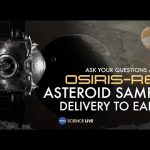
On Sunday, Sept. 24, 2023, NASA’s OSIRIS-REx spacecraft safely delivered an estimated 8.8 ounces of rocky material collected from the surface of asteroid Bennu to Earth. The sample will be transported to NASA’s Johnson Space Center where it will be opened and studied.
Join us live on Tuesday, Sept. 26, as OSIRIS-REx mission experts recap the sample landing, preview what’s to come and answer your questions about the mission. Submit questions in the live chat.
More: https://blogs.nasa.gov/osiris-rex
Credit: NASA
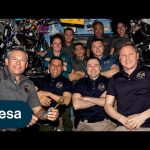
ESA astronaut Andreas Mogensen became commander of the International Space Station (ISS) on September 26, 2023, in a traditional ceremony in which the departing commander, Sergey Prokopyev, handed over the symbolic key of the Space Station. Mogensen is the sixth European to take on the role of ISS commander.
Mogensen will serve as commander for the rest of his Huginn mission until early 2024. During his command, he will be responsible for overseeing the crew’s activities and ensuring the safety and operation of the Space Station.
Credits: ESA/NASA
★ Subscribe: http://bit.ly/ESAsubscribe and click twice on the bell button to receive our notifications.
Check out our full video catalog: http://bit.ly/SpaceInVideos
Follow us on Twitter: http://bit.ly/ESAonTwitter
On Facebook: http://bit.ly/ESAonFacebook
On Instagram: http://bit.ly/ESAonInstagram
On LinkedIn: https://bit.ly/ESAonLinkedIn
On Pinterest: https://bit.ly/ESAonPinterest
On Flickr: http://bit.ly/ESAonFlickr
We are Europe’s gateway to space. Our mission is to shape the development of Europe’s space capability and ensure that investment in space continues to deliver benefits to the citizens of Europe and the world. Check out https://www.esa.int/ to get up to speed on everything space related.
Copyright information about our videos is available here: https://www.esa.int/ESA_Multimedia/Terms_and_Conditions
#ESA
#ISS
#AndreasMogensen
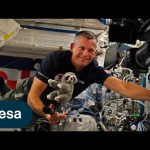
ESA astronaut Andreas Mogensen has begun his Huginn mission, turning the International Space Station into his home and workplace. After piloting on Crew Dragon Endurance as the first non-US pilot, Andreas has started performing European experiments and technology demonstrations with many more to come throughout the mission.
Credits: ESA – European Space Agency
★ Subscribe: http://bit.ly/ESAsubscribe and click twice on the bell button to receive our notifications.
Check out our full video catalog: http://bit.ly/SpaceInVideos
Follow us on Twitter: http://bit.ly/ESAonTwitter
On Facebook: http://bit.ly/ESAonFacebook
On Instagram: http://bit.ly/ESAonInstagram
On LinkedIn: https://bit.ly/ESAonLinkedIn
On Pinterest: https://bit.ly/ESAonPinterest
On Flickr: http://bit.ly/ESAonFlickr
We are Europe’s gateway to space. Our mission is to shape the development of Europe’s space capability and ensure that investment in space continues to deliver benefits to the citizens of Europe and the world. Check out https://www.esa.int/ to get up to speed on everything space related.
Copyright information about our videos is available here: https://www.esa.int/ESA_Multimedia/Terms_and_Conditions
#ESA
#ISS
#AndreasMogensen
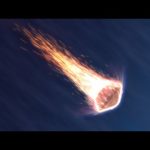
Watch a spacecraft deliver an asteroid sample to Earth! Our OSIRIS-REx (Origins, Spectral Interpretation, Resource Identification, and Security–Regolith Explorer) spacecraft is approaching Earth, and on Sept. 24, 2023, it will release its sample return capsule into the atmosphere on a path to land at the Department of Defense’s Utah Test and Training Range.
The touchdown will mark the end of a seven-year journey to explore asteroid Bennu, collect a sample from its surface, and deliver it to Earth as the U.S’s first pristine asteroid sample. Scientists around the world will study the sample over the coming decades to learn about how our planet and solar system formed, as well as the origin of organics that may have led to life on Earth.
For more information about OSIRIS-REx, visit https://solarsystem.nasa.gov/missions/osiris-rex/in-depth/
Credit: NASA
#NASA #Asteroid #Space #OSIRISREx
Tracking a mission’s historic return to Earth, a year of science onboard the space station, and the safe arrival of the station’s newest resident astronaut … a few of the stories to tell you about – This Week at NASA!
Link to download this video:
https://images.nasa.gov/details/Tracking%20a%20Mission%E2%80%99s%20Historic%20Return%20to%20Earth%20on%20This%20Week%20@NASA%20%E2%80%93%20September%2022,%202023
Video Producer: Andre Valentine
Video Editor: Andre Valentine
Narrator: Andre Valentine
Music: Universal Production Music
Credit: NASA
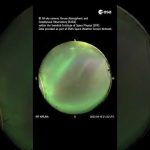
Did you know, the Northern lights or Aurora Borealis are created when the mythical Finnish ‘Firefox’ runs so quickly across the snow that its tail causes sparks to fly into the night sky? At least, that’s one of the stories that has been told in Finland about this beautiful phenomenon. Another that we love comes from the Sámi people of Finnish Lapland (among others), who describe them as plumes of water ejected by whales.
Today’s scientific explanation for the origin of the Aurora wasn’t thought up until the 20th Century, by the Norwegian scientist Kristian Birkeland. Charged particles, electrons and protons, are constantly emitted by the Sun, making up the solar wind. This wind slams into Earth’s ionosphere – sometimes sped up to vast speeds by solar storms – and the charged particles are deflected towards the poles by the magnetosphere.
Molecules in our atmosphere then absorb energy from these charged particles from the Sun, and re-release it in their own unique set of colours. Oxygen produces green, but at high altitudes can create red, nitrogen creates blues, and colours can overlap creating purple. Waves, twists and streams are caused by variations in Earth’s magnetic fields.
This striking video shows the Aurora over Kiruna, the northernmost city in Sweden. It’s composed of images taken by the Kiruna all-sky camera every minute for about ten hours over 18-19 September 2023.
The all-sky auroral camera is operated by the Kiruna Atmospheric and Geophysical Observatory (KAGO) within the Swedish Institute of Space Physics (IRF), and data from here is provided as part of ESA’s network of space weather services within the Agency’s Space Safety Programme.
A sequence of multiple coronal mass ejections – large, sudden ejections of plasma and magnetic field from the Sun – recently struck Earth, and we are still recovering from the passage of the last of them. The fastest was travelling at around 700 km/s, which is considered a small event.
Solar storms are causing an increase in geomagnetic activity; temporary disturbances in Earth’s magnetosphere, which has led to increased light shows at Earth’s poles.
Find out more about space weather: https://www.esa.int/Space_Safety/Space_weather
Sign up for free updates from ESA’s Space Weather Service Network: https://swe.ssa.esa.int/registration
Credits: All-sky camera, Kiruna Atmospheric and Geophysical Observatory (KAGO) within the Swedish Institute of Space Physics (IRF). Data provided as part of ESA’s Space Weather Service Network.
#ESA
#SpaceSafety
#SpaceWeather

Train today, perform tomorrow.
On September 20, 2023 the Artemis II astronauts practiced some of the pre-launch procedures they’ll perfect before their slated 2024 launch to the Moon.
NASA Astronauts Reid Wiseman, Victor Glover, Christina Koch along with Canadian Space Agency astronaut Jeremy Hansen awoke at their crew quarters at NASA’s Kennedy Space Center and put on test versions of the Orion Crew Survival System spacesuits they will wear on launch day. They then departed to Launch Pad 39B in NASA’s new crew transportation fleet.
Upon arrival at the pad, the crew headed onto the mobile launcher and proceeded up the tower to the white room inside the crew access arm. There was no Orion spacecraft or Space Launch System rocket on the pad today, but on launch day this is where the crew will take their final Earth-bound steps prior to their journey around the Moon.
Credit: NASA

NASA’s Innovative Advanced Concepts (NIAC) Program nurtures visionary ideas from America’s innovators and entrepreneurs that could transform future NASA missions with the creation of radically better or entirely new aerospace concepts. NIAC projects study innovative, technically credible, advanced concepts to turn science fiction to science fact.
For more information about NIAC: https://www.nasa.gov/NIAC
Apply to NIAC link: https://www.nasa.gov/content/apply-to-niac
More NIAC videos: https://www.nasa.gov/directorates/stmd/niac/videos
Link to download this video:
https://images.nasa.gov/details/NASA%20NIAC%20Turning%20Science%20Fiction%20into%20Science%20Fact
More information about concepts included in this video:
· 0:34 Lunar Crater Radio Telescope (LCRT): https://www.nasa.gov/directorates/spacetech/niac/2020_Phase_I_Phase_II/lunar_crater_radio_telescope/
· 0:58 Super Ball Bot: https://www.nasa.gov/content/super-ball-bot
· 1:00 Triton Hopper: https://www.nasa.gov/directorates/spacetech/niac/2018_Phase_I_Phase_II/Triton_Hopper/
· 1:04 Contour Crafting: https://www.nasa.gov/directorates/spacetech/home/niac_countour_crafting.html
· 1:08 Marsbee: https://www.nasa.gov/directorates/spacetech/niac/2018_Phase_I_Phase_II/Marsbee_Swarm_of_Flapping_Wing_Flyers_for_Enhanced_Mars_Exploration/
· 1:10 Diffractive Solar Sailing: https://www.nasa.gov/directorates/spacetech/niac/2022/diffractive_solar_sailing/
· 1:13 Solar Gravitational Lensing: https://www.nasa.gov/directorates/spacetech/niac/2020_Phase_I_Phase_II/Direct_Multipixel_Imaging_and_Spectroscopy_of_an_Exoplanet/
· 1:17 Fluidic Telescope (FLUTE): https://www.nasa.gov/ames/flute
· 1:30 On-demand Custom Spacesuits: https://www.nasa.gov/directorates/spacetech/niac/2022/Spacesuit_Digital_Thread/
· 1:35 CubeSat Neutrino Detector: https://www.nasa.gov/directorates/spacetech/niac/2021_Phase_I/Cube_Sat_Space_Flight_Test_of_a_Neutrino_Detector/
· 1:38 Lofted Environmental Venus Sensors (LEAVES): https://www.nasa.gov/directorates/spacetech/niac/2018_Phase_I_Phase_II/Lofted_Environmental_and_Atmospheric_Venus_Sensors/#:~:text=The%20LEAVES%20(Lofted%20Environmental%20and,planetary%20body%20with%20a%20prominent
· 1:41 Myco-Architecture: https://www.nasa.gov/directorates/spacetech/niac/2021_Phase_I/Mycotecture_Off_Planet/
· 1:44 Lunar Pit exploring Robots: https://www.nasa.gov/directorates/spacetech/niac/2019_Phase_I_Phase_II/robotic_technologies-enabling-the-exploration-of-lunar-pits/
· 1:56 Bioinspired Ray (BREEZE): https://www.nasa.gov/directorates/spacetech/niac/2019_Phase_I_Phase_II/breeze/
· 1:58 Independent Micro-swimmers (SWIM): https://www.nasa.gov/directorates/spacetech/niac/2022/SWIM/
· 1:59 Light Bender: https://www.nasa.gov/directorates/spacetech/niac/2021_Phase_I/Light_Bender/
· 2:01 Atmosphere and Cloud Sample Return: https://www.nasa.gov/directorates/spacetech/niac/2022/Venus_Atmosphere_and_Cloud_Particle_Sample_Return_for_Astrobiology/
· 2:03 Optical Mining: https://www.nasa.gov/directorates/spacetech/niac/2019_Phase_I_Phase_II/Mini_Bee_Prototype/
· 2:06 Nuclear Thermal Propulsion: https://www.nasa.gov/directorates/spacetech/niac/2023/New_Class_of_Bimodal/
Producer, Writer, Editor: Shane Apple
Narrator: Emanuel Cooper
Music: Universal Production Music
Credit: NASA

One giant planet. Three icy moons. An eight-year journey. One special spacecraft.
Building a mission to Jupiter took years of planning and thousands of people. Now that Juice is finally en route to its destination, we take a look behind the scenes to discover the story behind the making of Juice. Featuring exclusive interviews with scientists and engineers from across Europe, as well as backstage footage from the planning, testing and launch of this once-in-a-generation mission.
ESA presents ‘The making of Juice’, a documentary by Maarten Roos (Lightcurve Films), starring the Juice spacecraft and the people who made it.
Release date: Thursday 23 November.
Credit: ESA/Lightcurve Films
★ Subscribe: http://bit.ly/ESAsubscribe and click twice on the bell button to receive our notifications.
Check out our full video catalog: http://bit.ly/SpaceInVideos
Follow us on Twitter: http://bit.ly/ESAonTwitter
On Facebook: http://bit.ly/ESAonFacebook
On Instagram: http://bit.ly/ESAonInstagram
On LinkedIn: https://bit.ly/ESAonLinkedIn
On Pinterest: https://bit.ly/ESAonPinterest
On Flickr: http://bit.ly/ESAonFlickr
We are Europe’s gateway to space. Our mission is to shape the development of Europe’s space capability and ensure that investment in space continues to deliver benefits to the citizens of Europe and the world. Check out https://www.esa.int/ to get up to speed on everything space related.
Copyright information about our videos is available here: https://www.esa.int/ESA_Multimedia/Terms_and_Conditions
#ESA
#ESAJuice
#TheMakingOfJuice

NASA’s Origins, Spectral Interpretation, Resource Identification, Security-Regolith Explorer (OSIRIS-REx) is the first U.S. mission to return samples from an asteroid to Earth. When it lands, the OSIRIS-REx spacecraft will release the sample capsule for a safe landing in the Utah desert. The pristine material from Bennu – rocks and dust collected from the asteroid’s surface in 2020 – will offer generations of scientists a window into the time when the Sun and planets were forming about 4.5 billion years ago.
Watch NASA’s live broadcast on NASA TV, NASA.gov, the NASA app, or on social media (@NASA) starting at 10 a.m. ET on Sunday, Sept. 24.
Set a reminder: https://www.youtube.com/watch?v=Kdwyqctp908
Learn more about OSIRIS-REx: https://www.nasa.gov/osiris-rex
Link to download video:
https://images.nasa.gov/details/OSIRIS-REx%201st%20US%20Asteroid%20Sample%20Lands%20Soon%20%28Official%20NASA%20Trailer%29
Music Credit: Universal Production Music
Video Producer: James Tralie
Credit: NASA

NASA astronaut Frank Rubio is set to return to Earth this fall after setting the record for the longest single spaceflight by a U.S. astronaut. He arrived at the International Space Station on Sept. 21, 2022, and will return home after 371 days in space.
While on the orbiting lab, Rubio and his fellow crew members conducted dozens of scientific investigations and technology demonstrations.
Learn more about Frank Rubio’s year-long scientific journey aboard the space station: https://go.nasa.gov/3LrwS29
Credit: NASA
A new long-duration spaceflight record, our SpaceX Crew-6 mission is back home, and our asteroid sample return mission is on target … a few of the stories to tell you about – This Week at NASA!
Link to download this video: https://images.nasa.gov/details/A%20New%20Long-Duration%20Spaceflight%20Record%20on%20This%20Week%20@NASA%20%E2%80%93%20September%2015,%202023
Video Producer: Andre Valentine
Video Editor: Andre Valentine
Narrator: Andre Valentine
Music: Universal Production Music
Credit: NASA

This media briefing is a discussion about the report published by the unidentified anomalous phenomena independent study team we commissioned in 2022.
The team’s report aims to inform us on what possible data could be collected in the future to shed light on the nature and origin of UAPs. Briefing participants include:
· NASA Administrator Bill Nelson
· Nicola Fox, associate administrator, Science Mission Directorate, NASA Headquarters in Washington
· Dan Evans, assistant deputy associate administrator for research, NASA’s Science Mission Directorate
· David Spergel, president, Simons Foundation and chair of NASA’s UAP independent study team
The UAP independent study team is a council of 16 community experts across diverse areas on matters relevant to potential methods of study for UAP.
We commissioned the nine-month study to examine UAP from a scientific perspective and create a roadmap for how to use data and the tools of science to move our understanding of UAP forward. Right now, the limited high-quality observations of UAP make it impossible to draw scientific conclusions from the data about the nature of such events.
Read the report: https://go.nasa.gov/3PED0qv
More info on the independent study team, including frequently asked questions: https://science.nasa.gov/uap
Credit: NASA
#UAP
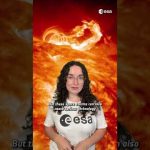
Coronal Mass Ejections or CMEs, are an eruption of around a billion tonnes of particles that comes from the solar atmosphere, the corona, and travels through the solar system. CMEs are an important part of ‘space weather’. The particles spark aurorae on planets with atmospheres, and can cause malfunctions in some technology. They can also be harmful to unprotected astronauts. So it is important to understand CMEs, and be able to track their progress.
Credits: ESA – European Space Agency
★ Subscribe: http://bit.ly/ESAsubscribe and click twice on the bell button to receive our notifications.
Check out our full video catalog: http://bit.ly/SpaceInVideos
Follow us on Twitter: http://bit.ly/ESAonTwitter
On Facebook: http://bit.ly/ESAonFacebook
On Instagram: http://bit.ly/ESAonInstagram
On LinkedIn: https://bit.ly/ESAonLinkedIn
On Pinterest: https://bit.ly/ESAonPinterest
On Flickr: http://bit.ly/ESAonFlickr
We are Europe’s gateway to space. Our mission is to shape the development of Europe’s space capability and ensure that investment in space continues to deliver benefits to the citizens of Europe and the world. Check out https://www.esa.int/ to get up to speed on everything space related.
Copyright information about our videos is available here: https://www.esa.int/ESA_Multimedia/Terms_and_Conditions
#ESA
#Sun
#CoronalMassEjections
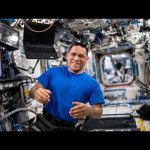
Record-breaking astronaut Frank Rubio talks with NASA Administrator Bill Nelson and Deputy Administrator Pam Melroy about his historic mission during a space-to-ground call. On Sept. 11, 2023, Rubio surpassed the U.S. record for single longest duration spaceflight, a record previously set by astronaut Mark Vande Hei in 2022.
Rubio is set to return to Earth on Sept. 27, 2023, when he will have spent 371 days in space. His extended stay aboard the orbiting laboratory helps us see how the human body reacts to microgravity and informs future missions to deep space.
Credit: NASA
Download link: https://images.nasa.gov/details-iss069m262561604_Expedition_69_NASA_Leadership_Interview_with_Astronaut_Frank_Rubio_23091

Earth-observing satellites like Landsat have documented the shrinking of chimpanzee habitat, Africa’s equatorial forest belt. The Jane Goodall Institute uses Landsat and other satellite data to empower local communities to drive conservation on their own land by creating habitat suitability maps for chimpanzees.
Mobile apps also bring in data in real-time so communities can protect their village forest reserves, and create land use plans for watersheds, people, and chimpanzees. After years of forest loss, the last few decades have seen habitats recovering.
https://www.nasa.gov/image-feature/joining-jane-goodall-in-conserving-chimpanzee-habitats
Credits:
Conservation dashboards created with support from NASA, The University of Maryland, Esri, Maxar, and the US Agency for International Development
Video footage Courtesy of Jane Goodall Institute/Lilian Pintea
#Landsat #Earth #NASA

On Oct. 14, 2023, a “ring of fire,” or annular, solar eclipse will travel from the Oregon coast to the Gulf of Mexico. Weather permitting, most of the Americas will be able to view at least a partial solar eclipse. Click here to see the NASA 2023 and 2024 Solar Eclipse Map: https://go.nasa.gov/USEclipseMaps
An annular solar eclipse occurs when the Moon passes between the Sun and the Earth, but is just far away enough in its orbit that the Sun is not completely covered—creating a large, bright ring in the sky.
WARNING: During an annular eclipse, it is never safe to look directly at the Sun without specialized eye protection designed for solar viewing. How to safely view an eclipse: https://solarsystem.nasa.gov/eclipses/2023/oct-14-annular/safety/
Not in the path of the eclipse? Watch with us from anywhere in the world. We will provide live broadcast coverage on Oct. 14 from 11:30 a.m. to 1:15 p.m. EDT (1530-1715 UTC) on NASA TV, NASA.gov, the NASA app, and right here on YouTube: https://youtube.com/live/LlY79zjud-Q
Learn more about the upcoming annular solar eclipse: https://solarsystem.nasa.gov/eclipses/2023/oct-14-annular/overview/
Download link: https://images.nasa.gov/details/Watch%20the%20Ring%20of%20Fire%20Solar%20Eclipse%20%28NASA%20Broadcast%20Trailer%29r
Credit: NASA
Producer: Sonnet Apple
Music: Universal Production Music
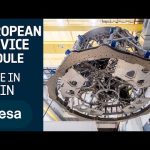
Artemis in Europe: the structure and radiators for the European Service Modules that fly NASA’s Orion spacecraft to the Moon are built in Turin, Italy.
Thales Alenia Space produces the structure that acts like a chassis on a car providing the solid foundations for all other elements to be attached to and also absorbs the forces that the Artemis spacecraft will endure during launch into Earth orbit and onto the Moon.
Technicians assemble the primary structure that is made from a core of Composite Fibre Reinforced Polymer sandwich panels and aluminium alloy elements for the secondary structures. This technology keeps the European Service Module light enough to fly farther and longer but strong enough to keep its shape.
Thales Alenia Space also supplies the radiators for the European Service Modules that consist of six elements forming two independent systems. Like a car’s radiator system the European Service Module radiators are designed to expel excess heat and keep the computers and other components inside from overheating.
The structures are trucked from Turin to Bremen, Germany, where the rest of the hardware that makes a spacecraft can be installed. The first step in their voyage to the Moon.
Credits: ESA – European Space Agency
★ Subscribe: http://bit.ly/ESAsubscribe and click twice on the bell button to receive our notifications.
Check out our full video catalog: http://bit.ly/SpaceInVideos
Follow us on Twitter: http://bit.ly/ESAonTwitter
On Facebook: http://bit.ly/ESAonFacebook
On Instagram: http://bit.ly/ESAonInstagram
On LinkedIn: https://bit.ly/ESAonLinkedIn
On Pinterest: https://bit.ly/ESAonPinterest
On Flickr: http://bit.ly/ESAonFlickr
We are Europe’s gateway to space. Our mission is to shape the development of Europe’s space capability and ensure that investment in space continues to deliver benefits to the citizens of Europe and the world. Check out https://www.esa.int/ to get up to speed on everything space related.
Copyright information about our videos is available here: https://www.esa.int/ESA_Multimedia/Terms_and_Conditions
#ESA
#Artemis
#EuropeanServiceModule

This video zooms through space to reveal Webb’s Near-Infrared Camera (NIRCam) image of the Southern Ring Nebula.
The bright star at the centre of NGC 3132, while prominent when viewed by the NASA/ESA/CSA James Webb Telescope in near-infrared light, plays a supporting role in sculpting the surrounding nebula. A second star, barely visible at lower left along one of the bright star’s diffraction spikes, is the nebula’s source. It has ejected at least eight layers of gas and dust over thousands of years.
Data from Webb’s Near-Infrared Camera (NIRCam) were used to make this extremely detailed image. It is teeming with scientific information — and research will begin following its release.
Credits: NASA, ESA, CSA, STScI, and the Webb ERO Production Team
Music: tonelabs – Happy Hubble
★ Subscribe: http://bit.ly/ESAsubscribe and click twice on the bell button to receive our notifications.
Check out our full video catalog: http://bit.ly/SpaceInVideos
Follow us on Twitter: http://bit.ly/ESAonTwitter
On Facebook: http://bit.ly/ESAonFacebook
On Instagram: http://bit.ly/ESAonInstagram
On LinkedIn: https://bit.ly/ESAonLinkedIn
On Pinterest: https://bit.ly/ESAonPinterest
On Flickr: http://bit.ly/ESAonFlickr
We are Europe’s gateway to space. Our mission is to shape the development of Europe’s space capability and ensure that investment in space continues to deliver benefits to the citizens of Europe and the world. Check out https://www.esa.int/ to get up to speed on everything space related.
Copyright information about our videos is available here: https://www.esa.int/ESA_Multimedia/Terms_and_Conditions
#ESA
#Webb
#Space
Our SpaceX Crew-6 mission safely returns to Earth, the tech demo hitching a ride on our Psyche spacecraft, and studying ancient life on Earth to better understand Mars … a few of the stories to tell you about – This Week at NASA!
Link to download this video:
https://images.nasa.gov/details/Our%20SpaceX%20Crew-6%20Mission%20Safely%20Returns%20to%20Earth%20on%20This%20Week%20@NASA%20%E2%80%93%20September%208,%202023
Video Producer: Andre Valentine
Video Editor: Andre Valentine
Narrator: Andre Valentine
Music: Universal Production Music
Credit: NASA

– Comet Nishimura: flying by Earth on its way to the Sun with its closest approach to us on 12 September.
– New Moon (15 September 2023): help Andreas Mogensen on his Earthshine project taking a #NewMoonSnap.
– Equinox (23 September 2023 at 8:49 CEST): The 6-month long night starts on the North Pole and the 6-month long day stars on the South Pole.
– Full Moon (29 September 2023): celebrate the Mid-autumn festival eating delicious mooncakes.
📹 ESA – European Space Agency
#ESA
#September
#Astronomy
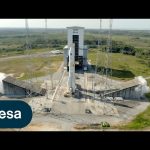
On 5 September 2023, teams from France’s space agency CNES and Arianegroup under the lead of ESA carried out a complete Ariane 6 launch sequence on its launch pad at Europe’s spaceport in French Guiana. The test ended with a hot-fire of the launcher’s core stage and startup of the Vulcain 2.1 engine.
This is a key step in the test campaign. It follows from initial integration of the Ariane 6 launcher on its launch pad, electrical and fluid system tests and the first launch sequence test run on 18 July 2023.
This test involved a launch sequence and final countdown representative of a launch, including removal of the Ariane 6 mobile gantry and filling the launcher’s upper and core stage tanks with liquid hydrogen and liquid oxygen. The test ended with the ignition and the startup of the core stage’s Vulcain 2.1 engine, followed by four seconds of firing.
The next milestone is to complete a core stage long hot-fire test, where the Vulcain 2.1 engine will operate for about 8 minutes.
Ariane 6 is an all-new design, created to succeed Ariane 5 as Europe’s heavy-lift launch system. With Ariane 6’s upper stage and its reignitable Vinci engine, Europe’s launch capability will be tailored to the needs of multiple payloads, for example to orbit satellite constellations. This autonomous capability to reach Earth orbit and deep space supports Europe’s navigation, Earth observation, scientific and security programmes. Ongoing development of Europe’s space transportation capabilities is made possible by the sustained dedication of thousands of talented people working in ESA’s 22 Member States.
www.esa.int/ariane
Credits: ESA/ARIANEGROUP/CNES – Optique vidéo du CSG
★ Subscribe: http://bit.ly/ESAsubscribe and click twice on the bell button to receive our notifications.
Check out our full video catalog: http://bit.ly/SpaceInVideos
Follow us on Twitter: http://bit.ly/ESAonTwitter
On Facebook: http://bit.ly/ESAonFacebook
On Instagram: http://bit.ly/ESAonInstagram
On LinkedIn: https://bit.ly/ESAonLinkedIn
On Pinterest: https://bit.ly/ESAonPinterest
On Flickr: http://bit.ly/ESAonFlickr
We are Europe’s gateway to space. Our mission is to shape the development of Europe’s space capability and ensure that investment in space continues to deliver benefits to the citizens of Europe and the world. Check out https://www.esa.int/ to get up to speed on everything space related.
Copyright information about our videos is available here: https://www.esa.int/ESA_Multimedia/Terms_and_Conditions
#ESA
#Ariane6
#Hot-fireTest
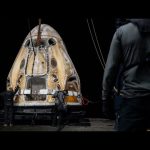
NASA astronauts Stephen Bowen and Woody Hoburg, UAE astronaut Sultan Alneyadi, and cosmonaut Andrey Fedyaev—the four members of NASA’s SpaceX Crew-6 mission—are scheduled to splash down off the coast of Florida at 12:17 a.m. EDT (0417 UTC) on Monday, Sept. 4, concluding their six-month stay in low Earth orbit.
Join NASA and SpaceX for live coverage of Crew-6 and their Dragon Endeavour spacecraft from reentry through recovery. While aboard the International Space Station, Crew-6 contributed to a number of studies to help us learn how to live in space while making life better back on Earth: https://go.nasa.gov/3OOOR3l
Follow the latest mission updates on our NASA blogs: https://blogs.nasa.gov/
Credit: NASA
Thumbnail credit: NASA/Keegan Barber
#NASA #SpaceX #Astronauts #Crew6

A new crew heads to the space station, a major storm spotted from space, and a robotic spacecraft enabling human missions to the Moon … a few of the stories to tell you about – This Week at NASA!
Link to download this video: https://images.nasa.gov/details/A%20New%20Crew%20Heads%20to%20the%20Space%20Station%20on%20This%20Week%20@NASA%20%E2%80%93%20September%201,%202023
Video Producer: Andre Valentine
Video Editor: Andre Valentine
Narrator: Andre Valentine
Music: Universal Production Music
Credit: NASA

Explore the mysteries behind the Earth-Moon system’s origin with these four intriguing theories. 🌍🌕
Which one do you think holds the key to our celestial companion’s creation?
📹 ESA – European Space Agency
🖥️ ESA / NASA
#ESA
#Moon
#SolarSystem

Space exploration presents unique health challenges for astronauts due to lack of gravity, isolation, and radiation exposure. ESA’s SciSpacE activities aim to comprehend these effects and their implications for human well-being during extended missions.
ESA collaborates with researchers to conduct experiments in microgravity and analogue environments, shedding light on the consequences of space stressors. One critical concern is muscle and bone atrophy. Despite daily exercise routines, astronauts face deterioration. ESA is investigating electrical stimulation as a potential countermeasure, with tests planned on board the International Space Station.
The “Muscle Stimulation” experiment is a centrepiece of this research. By applying controlled electric currents to leg muscles, the study aims to enhance muscle mass, strength, and recovery. Complementary assessments, including MRI scans, microcirculation analysis, and blood samples, will provide a comprehensive understanding of the efficacy.
Addressing these challenges could yield benefits on Earth too. The insights gained could translate to better healthcare for diverse populations, from the elderly to clinical patients and athletes.
ESA’s dedication to advancing space exploration while safeguarding astronauts’ physical health underscores its commitment to a sustainable and thriving space programme. Through research and innovative solutions, humanity edges closer to conquering the challenges of extended spaceflight and improving life on our home planet.
Credits: ESA – European Space Agency
★ Subscribe: http://bit.ly/ESAsubscribe and click twice on the bell button to receive our notifications.
Check out our full video catalog: http://bit.ly/SpaceInVideos
Follow us on Twitter: http://bit.ly/ESAonTwitter
On Facebook: http://bit.ly/ESAonFacebook
On Instagram: http://bit.ly/ESAonInstagram
On LinkedIn: https://bit.ly/ESAonLinkedIn
On Pinterest: https://bit.ly/ESAonPinterest
On Flickr: http://bit.ly/ESAonFlickr
We are Europe’s gateway to space. Our mission is to shape the development of Europe’s space capability and ensure that investment in space continues to deliver benefits to the citizens of Europe and the world. Check out https://www.esa.int/ to get up to speed on everything space related.
Copyright information about our videos is available here: https://www.esa.int/ESA_Multimedia/Terms_and_Conditions
#ESA
#Astronauts
#MuscleStimulation
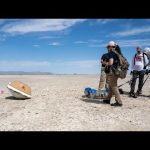
Experts from NASA’s OSIRIS-REx (Origins, Spectral Interpretation, Resource Identification, and Security–Regolith Explorer) mission give an overview on the asteroid sample capsule’s landing and recovery plans set for Sept. 24, 2023.
News conference participants are:
• Melissa Morris, OSIRIS-REx program executive, NASA Headquarters, Washington
• Dante Lauretta, OSIRIS-REx principal investigator, University of Arizona, Tucson
• Rich Burns, OSIRIS-REx project manager, NASA’s Goddard Space Flight Center, Greenbelt, Maryland
• Sandra Freund, OSIRIS-REx program manager, Lockheed Martin, Littleton, Colorado
• Kevin Righter, OSIRIS-REx deputy curation lead, NASA’s Johnson Space Center, Houston
On Sept. 24, the OSIRIS-REx spacecraft will approach Earth and release its sample return capsule into the atmosphere on a path to land at the Department of Defense’s Utah Test and Training Range. The event makes it the first U.S. asteroid sample return.
The touchdown will mark the end of a seven-year journey to explore asteroid Bennu, collect a sample from its surface, and deliver it to Earth for study. Scientists around the world will study the sample over the coming decades to learn about how our planet and solar system formed, as well as the origin of organics that may have led to life on Earth.
All about the mission: https://www.nasa.gov/osiris-rex
Credit: NASA
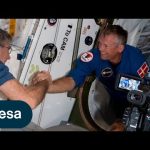
Huginn, ESA astronaut Andreas Mogensen’s second mission to the International Space Station, is now under way. Together with Crew-7, the ESA astronaut was launched on the Crew Dragon spacecraft Endurance on 26 August 2023, at 08:27 BST (09:27 CEST).
Alongside him are NASA’s Jasmin Moghbeli, Satoshi Furukawa from JAXA, and Konstantin Borisov from Roscosmos. The crew will spend approximately six months on the Space Station, 420 km above Earth.
This isn’t Andreas’s first journey into space. In 2015, he participated in the 10-day ‘iriss’ mission. However, Huginn marks his first launch from NASA’s Kennedy Space Center in Florida, USA, and his first flight with a Crew Dragon.
Watch the replay of pivotal moments such as the crew’s arrival at the Kennedy Space Center on 20 August, liftoff, as well as Andreas piloting Crew Dragon on its 11th crewed flight.
The journey also included a special passenger, who served as microgravity indicators. After approximately 30 hours, the Crew Dragon approached and docked with the Space Station, where Andreas and his colleagues were greeted by the resident astronauts.
For more about Andreas and his Huginn mission, visit the Huginn mission page: https://www.esa.int/Science_Exploration/Human_and_Robotic_Exploration/Huginn
Credits: ESA / NASA / SpaceX
★ Subscribe: http://bit.ly/ESAsubscribe and click twice on the bell button to receive our notifications.
Check out our full video catalog: http://bit.ly/SpaceInVideos
Follow us on Twitter: http://bit.ly/ESAonTwitter
On Facebook: http://bit.ly/ESAonFacebook
On Instagram: http://bit.ly/ESAonInstagram
On LinkedIn: https://bit.ly/ESAonLinkedIn
On Pinterest: https://bit.ly/ESAonPinterest
On Flickr: http://bit.ly/ESAonFlickr
We are Europe’s gateway to space. Our mission is to shape the development of Europe’s space capability and ensure that investment in space continues to deliver benefits to the citizens of Europe and the world. Check out https://www.esa.int/ to get up to speed on everything space related.
Copyright information about our videos is available here: https://www.esa.int/ESA_Multimedia/Terms_and_Conditions
#ESA
#Crew7
#AndreasMogensen
After launching to the International Space Station on March 2, 2023, NASA’s SpaceX Crew-6 mission is wrapping up its time in orbit, with a return to Earth in early September 2023.
NASA astronauts Stephen Bowen and Woody Hoburg, UAE (United Arab Emirates) astronaut Sultan Alneyadi, and Roscosmos cosmonaut Andrey Fedyaev spent their months on the orbiting lab conducting scientific investigations and technology demonstrations, including running a student robotic challenge, studying plant genetic adaptations to space, and monitoring human health in microgravity to prepare for exploration beyond low Earth orbit and to benefit life on Earth.
The astronauts also released Saskatchewan’s first satellite, which tests a new radiation detection and protection system derived from melanin.
Learn more: https://go.nasa.gov/3OOOR3l
Link to download: https://images.nasa.gov/details/SpaceX_Crew-6_Science_Mission
Credit: NASA
#Crew6 #Science #SpaceStation

Join ESA astronaut Samantha Cristoforetti for a guided tour of the International Space Station’s crew quarters – the bedroom.
After a day’s work running experiments and maintaining the weightless research centre astronauts can retreat to their private quarters that is no larger than a changing room. In this small space they can store personal items, use a laptop for internet and float to sleep in their sleeping bag.
Credits: ESA – European Space Agency
#ESA
#ISS
#Astronauts
Our Webb Space Telescope captures a cosmic ring, the team behind our upcoming Psyche mission, and the unique thing about a star that was ripped apart by a black hole … a few of the stories to tell you about – This Week at NASA!
Link to download this video: https://images.nasa.gov/details/NHQ_2023_0825_Our%20Webb%20Space%20Telescope%20Captures%20a%20Cosmic%20Ring%20on%20This%20Week%20@NASA%20%E2%80%93%20August%2025,%202023
Video Producer: Andre Valentine
Video Editor: Andre Valentine
Narrator: Andre Valentine
Music: Universal Production Music
Credit: NASA
Hera is complete. ESA’s asteroid mission for planetary defence was built and prepared in two halves, but now, through a painstaking operation, they have been mated together to make a single spacecraft, ready for full-scale testing of its readiness for space.
The mating took place at OHB Bremen in Germany, with Hera’s Core Module raised more than 3 m above its Propulsion Module then gradually and carefully slotted into place, over a three-hour period. The modules had been placed in cages to ensure their correct alignment relative to each other down to a few tenths of a millimetre.
Hera’s Propulsion Module incorporates its propellant tanks – housed within a central titanium cylinder, the ‘backbone’ of the spacecraft – along with piping and thrusters, which will have the job of hauling the mission across deep space for more than two years, then to manoeuvre around the Dimorphos and Didymos asteroids.
Meanwhile Hera’s Core Module can be thought of as the brains of the mission, hosting its onboard computer, mission systems and instruments.
Once the tip of the Propulsion Module cylinder met the top deck of the Core Module the mating was complete. Then an initial test bolt was inserted to check the alignment was entirely correct in advance of the two modules being fully bolted together.
The combined Hera spacecraft is scheduled to go through a test campaign to assess its readiness for spaceflight, along with the two CubeSats it will carry aboard, in preparation for its October 2024 lift-off.
Credits: ESA – European Space Agency
Footage: ESA / OHB
★ Subscribe: http://bit.ly/ESAsubscribe and click twice on the bell button to receive our notifications.
Check out our full video catalog: http://bit.ly/SpaceInVideos
Follow us on Twitter: http://bit.ly/ESAonTwitter
On Facebook: http://bit.ly/ESAonFacebook
On Instagram: http://bit.ly/ESAonInstagram
On LinkedIn: https://bit.ly/ESAonLinkedIn
On Pinterest: https://bit.ly/ESAonPinterest
On Flickr: http://bit.ly/ESAonFlickr
We are Europe’s gateway to space. Our mission is to shape the development of Europe’s space capability and ensure that investment in space continues to deliver benefits to the citizens of Europe and the world. Check out https://www.esa.int/ to get up to speed on everything space related.
Copyright information about our videos is available here: https://www.esa.int/ESA_Multimedia/Terms_and_Conditions
#ESA
#Hera
#PlanetaryDefence
How did rocky planets form? We’re launching a mission to find out.
NASA’s Psyche spacecraft is preparing to lift off on Oct. 5 to embark on a 2.2-billion-mile journey to a unique metal-rich asteroid named Psyche. The mission could help us understand the early formation of rocky planets in our solar system, like Earth.
Join experts on Wednesday, Aug. 23, for an opportunity to learn more about Psyche. Submit your questions in the live chat using #AskNASA for a chance to have them answered live during the show.
Get up to speed on this heavy metal mission: https://nasa.gov/psyche
Credit: NASA

Where are the Moon rocks from the Apollo missions kept? When they’re not being studied by institutions or enjoyed by museumgoers, NASA has a specialized Lunar Sample Curation Laboratory at NASA’s Johnson Space Center to store and keep these otherworldly samples safe. Studying these samples helps us learn more about the origin of not only our moon, but our planet. Deputy Apollo Sample Curator (Sept 2019 – Dec 2022) Dr. Juliane Gross explains more about lunar sample curation.
Producers: Scott Bednar, Jessica Wilde
Editor: David Shelton
Link to download this video: https://go.nasa.gov/3QK72Km
Credit: NASA