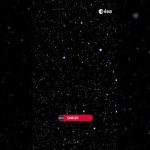
This image was captured by NIRCam, Webb’s primary near-infrared camera, and contains the lensing galaxy cluster SDSS J1226+2149. It lies at a distance of around 6.3 billion light-years from Earth, in the constellation Coma Berenices. By combining Webb’s sensitivity with the magnifying effect of gravitational lensing, astronomers were able to use this gravitational lens to explore the earliest stages of star formation in distant galaxies. To do so, they relied on earlier studies by the NASA/ESA Hubble Space Telescope, which provided the ‘prescription’ for this gravitational lens.
Credit: ESA/Webb, NASA & CSA, J. Rigby Music: Stellardrone – Twilight
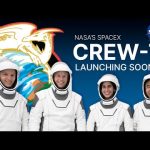
An international crew is preparing to launch to the International Space Station aboard NASA’s SpaceX Crew-7 mission.
NASA astronaut Jasmin Moghbeli, ESA (European Space Agency) astronaut Andreas Mogensen, JAXA (Japan Aerospace Exploration Agency) astronaut Satoshi Furukawa, and cosmonaut Konstantin Borisov of Roscosmos will perform research technology demonstrations, science experiments, and maintenance activities aboard the microgravity laboratory.
Crew-7 is targeted to launch no earlier than 3:27 a.m. EDT Saturday, Aug. 26 from Launch Complex 39A at Kennedy. As part of the agency’s Commercial Crew Program, Crew-7 marks the eighth human spaceflight mission supported by a SpaceX Dragon spacecraft and the seventh crew rotation mission to the space station since 2020 for NASA.
A solar eruption detected simultaneously at Earth, the Moon and Mars emphasises the need to prepare human exploration missions for the dangers of space radiation.
During Artemis I the European Service Module (ESM) surpassed expectations. Now, as we set our sights on Artemis II, the European Service Module is ready to once again serve as Orion’s primary power and propulsion component and keep the spacecraft at the right temperature and on course. And this time, with real astronauts on board.
ESM-2 stands as a testament to ESA’s contributions to NASA’s Orion spacecraft and the Artemis programme, ensuring the crew will have the essentials – from electricity to temperature control – in the vastness of space.
Next up, ESM-2 will be connected with the crew module to create the Artemis II vehicle. It will then be thoroughly tested before launch scheduled for next year.
ESA is committed to send astronauts beyond low-Earth orbit and ultimately to the surface of the Moon and beyond. ESM is a key contribution to this joint international endeavour.
This video features interviews with: – Philippe Berthe, ESA’s European Service Module Project Coordination manager – Kai Bergemann, Airbus deputy programme manager for Orion and the European Service Module – Jeremy Hansen, Canadian Space Agency Artemis II astronaut – Debbie Korth, NASA deputy programme manager for Orion
Credits: ESA – European Space Agency 📸 NASA/Kim Shiflett
★ Subscribe: http://bit.ly/ESAsubscribe and click twice on the bell button to receive our notifications.
We are Europe’s gateway to space. Our mission is to shape the development of Europe’s space capability and ensure that investment in space continues to deliver benefits to the citizens of Europe and the world. Check out https://www.esa.int/ to get up to speed on everything space related.
When it comes to space, humans and robots go way back. We rely heavily on our mechanical friends to perform tasks that are too dangerous, difficult, or out of reach for us humans. We’re even working on a new generation of robots that will help us explore in advanced and novel ways.
Learn more about the CADRE—Cooperative Autonomous Distributed Robotic Exploration—project and how this new network of mini rovers could enable future self-guided robotic exploration of the Moon, Mars, and beyond. https://go.nasa.gov/3k5EuZx
Producers: Scott Bednar, Jessica Wilde Editor: James Lucas
This summer, Earth has been experiencing some of the hottest temperatures on record and July is shaping up to follow this record-breaking trend. Join NASA climate experts on Monday, Aug. 14 as they discuss impacts of climate change, and how data can be used to mitigate its effects.
On the heels of record-breaking June temperatures, climate experts from NASA and NOAA (the National Oceanographic and Atmospheric Administration) will discuss the latest findings, and how using satellite data can help manage the effects of climate change.
Participants include:
• Bill Nelson, administrator, NASA • Kate Calvin, chief scientist and senior climate advisor, NASA Headquarters • Karen St. Germain, director, Earth Science Division, NASA Headquarters • Gavin Schmidt, director, NASA Goddard Institute for Space Studies, New York • Carlos Del Castillo, chief, Ocean Ecology Laboratory at NASA Goddard Space Flight Center in Greenbelt, Maryland • Sarah Kapnick, chief scientist, NOAA
According to the @worldmetorg, July 2023 is likely to have been the hottest month on record. While much of Europe, North America and Asia suffered the immediate consequences of these brutal temperatures, extreme events are also hitting hard far away in the icy reaches of Antarctica. In a paper published today, scientists highlight Antarctica’s vulnerability to extremes and the role that satellites play in monitoring this remote region.
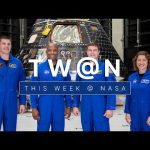
The Artemis II astronauts check out their ride to the Moon, practicing post-splashdown recovery operations for Artemis II, and the Webb Space Telescope checks out a record-breaking star … a few of the stories to tell you about – This Week at NASA!
Link to download this video: https://images.nasa.gov/details/The%20Artemis%20II%20Astronauts%20Check%20Out%20Their%20Ride%20to%20the%20Moon%20on%20This%20Week%20@NASA%20%E2%80%93%20August%2011,%202023
Video Producer: Andre Valentine Video Editor: Andre Valentine Narrator: Andre Valentine Music: Universal Production Music Credit: NASA
In the vast expanse of space, astronauts face a unique challenge – the need to share spacesuits during prolonged spacewalks. These suits, including their inner linings that come into direct contact with the astronauts’ skin, tend to accumulate bodily fluids over time. Drawing a rather relatable analogy, it’s akin to sharing underwear in space!
However, the practicality of washing these spacesuit interiors on lunar surfaces or beyond presents a significant hurdle. To counter this, a dedicated group of researchers is delving into innovative strategies to curb the growth of potentially harmful microbes within the inner layers of these suits.
Here’s where the solution gets intriguing: the world of microbiology offers a fascinating approach. Certain types of microbes possess ‘secondary metabolites’ that allow them to combat other microbes. These compounds are not only diverse in colour but also possess antibiotic properties. The ingenious idea involves integrating these microbial warriors into the very fabric of the spacesuit’s inner layer.
This pioneering research isn’t confined solely to the realm of spacesuits; its implications extend far beyond. The outcomes hold the potential to revolutionise the field of antimicrobial treatments and smart textile technologies right here on Earth. As we gear up for lunar expeditions and beyond, these microbial-fighting fabrics could play a pivotal role in ensuring astronauts’ health and well-being while opening new frontiers of innovation back home.
ESA’s Euclid mission will create a 3D-map of the Universe that scientists will use to measure the properties of dark energy and dark matter and uncover the nature of these mysterious components. The map will contain a vast amount of data, it will cover more than a third of the sky and its third dimension will represent time spanning 10 billion years of cosmic history.
But dealing with the huge and detailed set of novel data that Euclid observations will produce is not an easy task. To prepare for this, scientists in the Euclid Consortium have developed one of the most accurate and comprehensive computer simulations of the large-scale structure of the Universe ever produced. They named this the Euclid Flagship simulation.
Running on large banks of advanced processors, computer simulations provide a unique laboratory to model the formation and evolution of large-scale structures in the Universe, such as galaxies, galaxy clusters, and the filamentary cosmic web they form. These state-of-the-art computational techniques allow astrophysicists to trace the motion and behavior of an extremely large number of dark-matter particles over cosmological volumes under the influence of their own gravitational pull. They replicate how and where galaxies form and grow, and are used to predict their distribution across the celestial sphere.
Explore the Euclid Flagship simulation in this video and get a sneak preview of the structure of the dark Universe, as we currently model it. New insights will be brought to you by the Euclid mission in the coming years.
Credits: ESA/Euclid Consortium/Cacao Cinema The authors kindly acknowledge the use of the Splotch package: http://www.mpa-garching.mpg.de/~kdolag/Splotch
★ Subscribe: http://bit.ly/ESAsubscribe and click twice on the bell button to receive our notifications.
We are Europe’s gateway to space. Our mission is to shape the development of Europe’s space capability and ensure that investment in space continues to deliver benefits to the citizens of Europe and the world. Check out https://www.esa.int/ to get up to speed on everything space related.
We know the Moon contains water, but, could future astronauts access and make use of it? That’s the goal. At NASA, we’re actively trying to answer that question. Once it lands at the lunar south pole, our PRIME-1 — Polar Resources Ice Mining Experiment-1 – will robotically sample and analyze ice from beneath the lunar surface, contributing to our search for water on the Moon: https://go.nasa.gov/2QygCmF
Today, the Artemis II astronauts got their first look at the Orion spacecraft slated to fly them around the Moon in late 2024.
The Artemis II crew consists of NASA astronauts Reid Wiseman, Victor Glover, and Christina Koch, and Canadian Space Agency astronaut Jeremy Hansen. Artemis II is the first crewed mission on our path to establishing a long-term human presence on the Moon, and is the first mission with astronauts to the Moon’s orbit in more than 50 years.
The approximately 10-day flight test will launch on the powerful Space Launch System rocket, prove the Orion spacecraft’s life-support systems, and validate the capabilities and techniques needed for humans to live and work in deep space.
The fraction of light that an object reflects is called its ‘albedo’. Most planets have a low albedo, either because they have an atmosphere that absorbs a lot of light, or because their surface is dark or rough. Earth, for example, only reflects around 30% of incoming sunlight. Exceptions tend to be frozen ice-worlds, or planets like Venus which have a cloud layer (reflecting 75% of the Sun’s light in Venus’ case).
LTT9779 b’s 80% of albedo came as a surprise because the planet’s side facing its star is estimated to be around 2000 °C. Any temperature above 100 °C is too hot for clouds of water to form, but the temperature of this planet’s atmosphere should even be too hot for clouds made of metal or glass.
LTT9779 b can form metallic clouds despite being so hot because the atmosphere is oversaturated with silicate and metal vapours.
📹 ESA – European Space Agency 🖥️ Ricardo Ramírez Reyes/Universidad de Chile
★ Subscribe: http://bit.ly/ESAsubscribe and click twice on the bell button to receive our notifications.
We are Europe’s gateway to space. Our mission is to shape the development of Europe’s space capability and ensure that investment in space continues to deliver benefits to the citizens of Europe and the world. Check out https://www.esa.int/ to get up to speed on everything space related.
In July 2023 local time, the last Ariane 5 blasted off from Europe’s Spaceport in French Guiana. Relive the moment from up close in this 360° video showing the liftoff and Ariane 5 soaring to orbit.
The audio comes from the camera itself that was clamped to a steel cable on a northern ramp surrounding the Ariane 5 flame trench – about 50 m from the ZL3 launchpad. Despite being so close to the launch pad, the camera was only protected against humidity and rain. A solar panel provided extra power to the camera as it had to record for a long time to capture the liftoff as no people are allowed so close to near the launchpad during the countdown and blastoff.
Europe’s Ariane 5 rocket completed its final flight, placing two payloads – the German aerospace agency DLR’s Heinrich Hertz experimental communications satellite and the French communications satellite Syracuse 4b – into their planned geostationary transfer orbits. Total payload mass at liftoff was about 7700 kg – 7000 kg for the two satellites, and the rest for payload adapters and carrying structures.
The development of the Ariane series of launch vehicles is an expression of Europe’s position, dating to the 1960s, that participation in the new space age demanded an independent launch capability. Several European countries thus joined forces to develop a launch vehicle. This project, called Europa, was ultimately unsuccessful but in 1975 the European Launcher Development Organisation created to oversee it was merged with the European Space Research Organisation to create ESA, which initiated the Ariane programme.
That spirit of co-operation ultimately delivered Ariane 5 and the smaller Vega series of launch vehicles. ESA continues this work with its Member States and industrial partners to meet new market realities with Ariane 6, the newest launch vehicle in the Ariane family.
Credits: ESA-Manuel Pedoussaut
★ Subscribe: http://bit.ly/ESAsubscribe and click twice on the bell button to receive our notifications.
We are Europe’s gateway to space. Our mission is to shape the development of Europe’s space capability and ensure that investment in space continues to deliver benefits to the citizens of Europe and the world. Check out https://www.esa.int/ to get up to speed on everything space related.
The 117th and final launch of Europe’s Ariane 5 rocket capped a series which began in 1996. Commercial, institutional and scientific payloads included such iconic missions as Rosetta, the James Webb Space Telescope and Juice. Seen here is the launch campaign for VA261 on 5 July 2023, to close the Ariane 5 book; onboard were German aerospace agency DLR’s Heinrich Hertz experimental communications satellite and French communications satellite Syracuse 4b.
We are Europe’s gateway to space. Our mission is to shape the development of Europe’s space capability and ensure that investment in space continues to deliver benefits to the citizens of Europe and the world. Check out https://www.esa.int/ to get up to speed on everything space related.
A commercial resupply mission heads to the space station, a key piece of hardware for a future Moon mission is on the move, and another spacecraft gets ready to spread its wings in deep space … a few of the stories to tell you about – This Week at NASA!
Link to download this video: https://images.nasa.gov/details/A%20Commercial%20Resupply%20Mission%20Heads%20to%20the%20Space%20Station%20on%20This%20Week%20@NASA%20%E2%80%93%20August%204,%202023
Video Producer: Andre Valentine Video Editor: Andre Valentine Narrator: Andre Valentine Music: Universal Production Music Credit: NASA
Pearls and seashells are made from the same basic stuff as easily crushed chalk – humble calcium carbonate – so why are they so much tougher? Researchers are taking design tips from the micro-structure of these naturally formed materials to produce stronger, more fracture-resistant ceramics for future space missions.
The project began last year, with samples synthesised at Imperial College’s laboratory and tested at Azimut Space in Germany, with the Materials Testing Centre at Coventry in the UK looking into scaling up production processes.
📹 ESA – European Space Agency 📸 ESA, Dr. Erik Poloni, Airbus Defence and Space SAS 2014 A. Gilbert, University of Glasgow
★ Subscribe: http://bit.ly/ESAsubscribe and click twice on the bell button to receive our notifications.
We are Europe’s gateway to space. Our mission is to shape the development of Europe’s space capability and ensure that investment in space continues to deliver benefits to the citizens of Europe and the world. Check out https://www.esa.int/ to get up to speed on everything space related.
Is climate change the same as global warming? Not quite. The warming of Earth — or global warming — is just one factor that makes up a range of changes that are happening to our planet, which is climate change. And NASA is studying all of it: https://climate.nasa.gov/
Watch live with us as a crew of four launch on NASA’s SpaceX #Crew7 mission to the International Space Station. Liftoff is targeted at 3:49 a.m. EDT (0749 UTC), Fri., Aug. 25. Commander Jasmin Moghbeli of NASA, pilot Andreas Mogensen of the European Space Agency, and mission specialists Satoshi Furukaw of the Japan Aerospace Exploration Agency and Konstantin Borisov of Roscosmos will launch on their SpaceX Dragon spacecraft, powered by a Falcon 9 rocket, from Launch Complex 39A at NASA’s Kennedy Space Center in Florida.
Over 200 science experiments and technology demonstrations will take place during Crew-7’s mission of approximately six months in space. Experiments will include the collection of microbial samples from the exterior of the space station, the first study of human response to different spaceflight durations, and an investigation of the physiological aspects of astronauts’ sleep. Learn more about the mission and science at: https://www.nasa.gov/feature/what-you-need-to-know-about-nasa-s-spacex-crew-7-mission/
Euclid’s two instruments have captured their first test images. The mesmerising results indicate that the space telescope will achieve the scientific goals that it has been designed for – and possibly much more
Although there are months to go before Euclid delivers its true new view of the cosmos, reaching this milestone means the scientists and engineers behind the mission are confident that the telescope and instruments are working well.
📹 ESA – European Space Agency
★ Subscribe: http://bit.ly/ESAsubscribe and click twice on the bell button to receive our notifications.
We are Europe’s gateway to space. Our mission is to shape the development of Europe’s space capability and ensure that investment in space continues to deliver benefits to the citizens of Europe and the world. Check out https://www.esa.int/ to get up to speed on everything space related.
Watch live as medical studies, a new water dispenser, artwork from students around the world, and other research and supplies lift off for the International Space Station on Northrop Grumman’s next rocket launch from NASA’s Wallops Flight Facility at Wallops Island, Virginia.
The mission’s uncrewed Cygnus spacecraft (named S.S. Laurel Clark) is scheduled to blast off atop an Antares rocket no earlier than Tuesday, Aug. 1, 2023, at 8:31 p.m. EST (0031 Aug. 2 UTC), docking with the ISS on Friday, Aug. 4.
The summer fire season is well under way in Europe – countries all around the Mediterranean are experiencing record temperatures coupled with huge wildfires that have led to mass evacuations. In this enthralling new ESA documentary, explore how people on the frontline are using space to better monitor and fight the flames.
Follow the incredible stories of the firefighters who dealt with unprecedented fires in Gironde, France, and the forest officers using satellite data to plan for the forests’ recovery. Journey into the heart of Earth’s elemental might and discover how space is changing the game for monitoring volcanic eruptions too – including one of the world’s most studied volcano, Mount Etna.
FIRE is the first episode of ESA’s new series centred around the elements and showcases how Earth observation has become crucial to those fighting climate change on the ground.
Chapters: 00:00 – 11:23 Fighting wildfires in Gironde 11:23 – 24:13 The fire from volcanoes – walking up Mount Etna 24:13 – 31:45 Regenerating the burnt forests and getting ready for the next fire season in Gironde 31:45 – 33:01 Outro
Credits: ESA – European Space Agency
★ Subscribe: http://bit.ly/ESAsubscribe and click twice on the bell button to receive our notifications.
We are Europe’s gateway to space. Our mission is to shape the development of Europe’s space capability and ensure that investment in space continues to deliver benefits to the citizens of Europe and the world. Check out https://www.esa.int/ to get up to speed on everything space related.
Our next space station crew rotation flight, a launch day simulation for our upcoming Moon mission, and visiting the splashdown recovery crew for Artemis II … a few of the stories to tell you about – This Week at NASA!
Link to download this video: https://images.nasa.gov/details/Our%20Next%20Space%20Station%20Crew%20Rotation%20Flight%20on%20This%20Week%20@NASA%20%E2%80%93%20July%2028,%202023
Video Producer: Andre Valentine Video Editor: Andre Valentine Narrator: Andre Valentine Music: Universal Production Music Credit: NASA
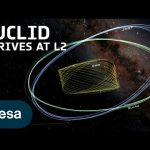
In the month after its launch on 1 July, Euclid has travelled 1.5 million kilometres from Earth towards the Sun-Earth Lagrange point L2, meaning it has ‘arrived’ at its destination orbit.
This animation showcases the orbits of Euclid (green), the James Webb Space Telescope (blue), and the Gaia mission (yellow) around this unique position in space. The positions of the spacecraft in this animation don’t correspond to their current positions in space.
Located about 1.5 million kilometres from Earth in the opposite direction from the Sun, L2 is about four times further away than our Moon. Several other space missions like Webb and Gaia also orbit L2 as it offers the perfect vantage point to study the Universe.
At L2, the spacecraft can keep the Sun, Earth and Moon behind them at all times, so they don’t interfere with observations, while at the same time getting a clear view of deep space and pointing an antenna back to Earth to remain in close communication.
Euclid and Webb’s halo orbit around L2 is big. In terms of distance, the ‘radius’ of Euclid’s orbit varies from about 400 000 kilometres at its closest to the centre, and up to 800 000 kilometres at its furthest. By the time Euclid has completed one full revolution around L2, the Moon will have circled the Earth six times. Gaia orbits L2 in a Lissajous orbit, with a maximum distance of around 350 000 km from its centre.
The region around L2 is big and even though the orbits of these spacecraft seem to cross in the animation, in reality there is plenty of space and a collision can be easily avoided. For example, Webb and Gaia are between 400 000 and 1 100 000 km apart, depending on where they are in their respective orbits.
Video credit: ESA/Gaia/DPAC; CC BY-SA 3.0 IGO
★ Subscribe: http://bit.ly/ESAsubscribe and click twice on the bell button to receive our notifications.
We are Europe’s gateway to space. Our mission is to shape the development of Europe’s space capability and ensure that investment in space continues to deliver benefits to the citizens of Europe and the world. Check out https://www.esa.int/ to get up to speed on everything space related.
Scientists are on a quest to understand how water, the foundation of life as we know it, reaches distant planets. The PDS 70 system, with its inner and outer discs hosting gas-giant planets, holds intriguing clues. Recently, MIRI, part of the James Webb Space Telescope, detected water vapor in the inner disc at distances less than 160 million km from the star – a zone where rocky, Earth-like planets may be taking shape!
This discovery is groundbreaking, as it delves into the region where terrestrial planets typically form. The PDS 70 star is relatively old, yet it surprisingly harbors water vapor, offering the raw materials needed for rocky world construction. But where did the water come from? Could it be forming in place or transported from the outer disc?
The PDS 70 system’s secrets await further exploration, and Webb’s NIRCam and NIRSpec instruments will soon dive deeper into this fascinating cosmic phenomenon. As we unlock the mysteries of water in space, we inch closer to understanding the origins of life beyond our own planet.
📹 ESA – European Space Agency
★ Subscribe: http://bit.ly/ESAsubscribe and click twice on the bell button to receive our notifications.
We are Europe’s gateway to space. Our mission is to shape the development of Europe’s space capability and ensure that investment in space continues to deliver benefits to the citizens of Europe and the world. Check out https://www.esa.int/ to get up to speed on everything space related.
How do planets get their names? With the exception of Earth, the planets in our solar system were named after Greek or Roman gods. Today, the job of naming things in space falls to the International Astronomical Union (IAU), the internationally recognized authority for naming celestial bodies and their surface features. NASA scientist Dr. Henry Throop explains more.
On May 16, 2023, NASA’s Juno spacecraft flew past Jupiter’s volcanic moon Io, and then the gas giant soon after. Io is the most volcanically active body in the solar system. Slightly larger than Earth’s moon, Io is a world in constant torment. Not only is the biggest planet in the solar system forever pulling at it gravitationally, but so are its Galilean siblings – Europa and the biggest moon in the solar system, Ganymede. The result is that Io is continuously stretched and squeezed, actions linked to the creation of the lava seen erupting from its many volcanoes.
This rendering provides a “starship captain” point of view of the flyby, using images from JunoCam. For both targets, Io and Jupiter, raw JunoCam images were reprojected into views similar to the perspective of a consumer camera. The Io flyby and the Jupiter approach movie were rendered separately and composed into a synchronous split-screen video.
Launched on Aug. 5, 2011, Juno embarked on a 5-year journey to Jupiter. Its mission: to probe beneath the planet’s dense clouds and answer questions about the origin and evolution of Jupiter, our solar system, and giant planets in general across the cosmos. Juno arrived at the gas giant on July 4, 2016, after a 1.7-billion-mile journey, and settled into a 53-day polar orbit stretching from just above Jupiter’s cloud tops to the outer reaches of the Jovian magnetosphere. Now in its extended mission, NASA’s most distant planetary orbiter continues doing flybys of Jupiter and its moons.
We are Europe’s gateway to space. Our mission is to shape the development of Europe’s space capability and ensure that investment in space continues to deliver benefits to the citizens of Europe and the world. Check out https://www.esa.int/ to get up to speed on everything space related.
Sending a swarm of small satellites into orbit, the first views from our newest storm-watching mission, and making the grade for investing in small business … a few of the stories to tell you about – This Week at NASA!
Link to download this video: https://images.nasa.gov/details/Sending%20a%20Swarm%20of%20Small%20Satellites%20Into%20Orbit%20on%20This%20Week%20@NASA%20%E2%80%93%20July%2021,%202023
Video Producer: Andre Valentine Video Editor: Andre Valentine Narrator: Andre Valentine Music: Universal Production Music Credit: NASA
On July 12, 2023, the Artemis II crew rehearsed their recovery for when they return to Earth following their upcoming mission to the Moon. The recovery training took place during the Underwater Recovery Test 10 (URT-10) Navy Diver training at the Neutral Buoyancy Laboratory (NBL) at NASA’s Johnson Space Center in Houston. The recovery training led by teams from Exploration Ground Systems and the Department of Defense demonstrate future recovery of the crew, which includes being extracted from the spacecraft after splashing down in the Pacific Ocean and being lifted via helicopter to the recovery ship where they will undergo routine medical checks before returning to shore.
The Artemis II mission will send NASA Astronauts Reid Wiseman, Victor Glover, Christina Koch, and Canadian Space Agency astronaut Jeremy Hansen on a 10-day flight test around the Moon. Their journey will be the first crewed mission on NASA’s path toward establishing a long-term presence on the Moon.
ESA’s wind mission Aeolus is coming home. After five years of improving weather forecasts, the satellite will return in a first-of-its-kind assisted reentry. At ESA’s Space Operations Centre in Germany, mission control will use the satellite’s remaining fuel to steer Aeolus during its return to Earth.
Find out more about the mission, its successes and how Aeolus is paving the way for safe reentries. 👉 https://www.esa.int/Aeolus
Credits: ESA – European Space Agency
★ Subscribe: http://bit.ly/ESAsubscribe and click twice on the bell button to receive our notifications.
We are Europe’s gateway to space. Our mission is to shape the development of Europe’s space capability and ensure that investment in space continues to deliver benefits to the citizens of Europe and the world. Check out https://www.esa.int/ to get up to speed on everything space related.
54 years ago on 20 July 1969, Apollo 11’s crew made history by being the first people to step foot on the moon.
Today, we’ll be sharing some fun facts about our celestial neighbour! 🌚🌝
1️⃣ Twelve people have walked on the Moon. Between 1969 and 1972, astronauts left scientific experiments on the lunar surface and came back to Earth with nearly 400 kg of rocks and soil. All 12 Apollo Moonwalkers reported symptoms similar to hay fever. Lunar dust is made of sharp, abrasive particles, and it is not known how toxic it is to humans.
2️⃣ You would also weigh less on the Moon! With only 1/6 the gravity, you would be able to jump higher and throw objects farther than on Earth.
3️⃣ If you look at the Moon through a telescope, you will see brilliant flashes of light. Nobody is sending you signals though – they are meteorites hitting our rocky neighbour at great speed.
4️⃣ If you were to live on the Moon, both day and night would be two weeks long! As humankind goes to the Moon, astronauts will need to work with this new day/night cycle
5️⃣ The Moon hides one ‘face’ from us, we call it the far side of the Moon, and we never get to see it from Earth. What do you think is on the far side of the Moon?
📹 ESA – European Space Agency
★ Subscribe: http://bit.ly/ESAsubscribe and click twice on the bell button to receive our notifications.
We are Europe’s gateway to space. Our mission is to shape the development of Europe’s space capability and ensure that investment in space continues to deliver benefits to the citizens of Europe and the world. Check out https://www.esa.int/ to get up to speed on everything space related.
Thanks to a global effort to regulate ozone-depleting substances, the ozone hole is showing signs of recovery and is projected to return to a healthy level by mid-century.
However, at NASA, scientists continue to monitor its progress. @NASAGoddard’s Qing Liang explains more. Keep up: https://go.nasa.gov/3DhEBvp
Join the journey as NASA’s Psyche mission team prepares for a targeted Oct. 5, 2023, launch to explore a unique metallic asteroid orbiting the sun between Mars and Jupiter. The asteroid, likely made largely of nickel-iron metal mixed with rock, could contain metal from the core of a planetesimal (the building block of an early rocky planet) and may offer a unique window into the violent history of collisions and accretion that created the terrestrial planets like Earth. Arizona State University leads the Psyche mission.
JPL, which is managed by Caltech for NASA, is responsible for the mission’s overall management, system engineering, integration and test, and mission operations. Maxar Technologies in Palo Alto, California, provided the high-power solar electric propulsion spacecraft chassis.
Scientists may have found the solution to creating oxygen in space with artificial photosynthesis!
They are creating devices that mimic plant photosynthesis, to turn sunlight and water into oxygen without the need for electricity.
These devices produce oxygen from water and sunlight using semiconductor materials coated with metallic catalysts.
Scientists believe artificial photosynthesis could even work on Mars, where sunlight is weaker, by using simple solar mirrors to concentrate sunlight and boost oxygen production.
These devices could not only help us explore space but could also bring us closer to meeting our green energy and sustainability goals here on Earth. 🌍💚
📹 ESA – European Space Agency
★ Subscribe: http://bit.ly/ESAsubscribe and click twice on the bell button to receive our notifications.
We are Europe’s gateway to space. Our mission is to shape the development of Europe’s space capability and ensure that investment in space continues to deliver benefits to the citizens of Europe and the world. Check out https://www.esa.int/ to get up to speed on everything space related.
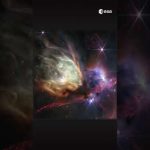
This video takes the viewer on a journey through space to the Rho Ophiuchi cloud complex.
From our cosmic backyard in the Solar System to distant galaxies near the dawn of time, the NASA/ESA/CSA James Webb Space Telescope has delivered on its promise of revealing the Universe like never before in its first year of science operations. To celebrate the completion of a successful first year, a new Webb image has been released of a small star-forming region in the Rho Ophiuchi cloud complex. While the region is relatively quiet, its proximity at 390 light-years makes for a highly detailed close-up, with no foreground stars in the intervening space.
Credits: ESA/Webb, NASA, ESA, CSA, JPL-Caltech/Harvard-Smithsonian CfA, DSS2, N. Bartmann (ESA/Webb), E. Slawik, N. Risinger, D. de Martin, M. Zamani (ESA/Webb), K. Pontoppidan (STScI), A. Pagan (STScI)
Music: Tonelabs – The Red North
★ Subscribe: http://bit.ly/ESAsubscribe and click twice on the bell button to receive our notifications.
We are Europe’s gateway to space. Our mission is to shape the development of Europe’s space capability and ensure that investment in space continues to deliver benefits to the citizens of Europe and the world. Check out https://www.esa.int/ to get up to speed on everything space related.
Celebrating the Webb Space Telescope’s first year of science, testing remote possibilities of a NASA humanoid robot, and a fleet of clean new rides for Artemis astronauts … a few of the stories to tell you about – This Week at NASA!
Link to download this video: https://images.nasa.gov/details/Celebrating%20the%20Webb%20Space%20Telescope%E2%80%99s%20First%20Year%20of%20Science%20on%20This%20Week%20@NASA%20%E2%80%93%20July%2014,%202023
Video Producer: Andre Valentine Video Editor: Andre Valentine Narrator: Andre Valentine Music: Universal Production Music Credit: NASA
ESA’s Earth Explorer Aeolus satellite was launched in August 2018 on a trailblazing mission to show how profiling Earth’s winds from space can improve weather forecasts and climate models. Data from its pioneering wind-mapping laser, which at one stage was thought a nigh-impossible feat of engineering, has been used by leading weather forecasting services throughout Europe.
Marking the end of Aeolus’ remarkable mission, ESA worked with composer Jamie Perera to create a woodwind piece from data that spans the lifetime of the satellite’s life in orbit around Earth.
In the resulting orchestral piece, every second is a day in the life of Aeolus, with data represented by the following instruments:
Piccolo: Rayleigh Top Altitude (the tops of clouds) Flute: Rayleigh Observation Type (density of clouds) Oboe: Rayleigh Reference Temperature (wind temperature) Clarinet 1: Rayleigh Wind Velocity (wind velocity) Clarinet 2: Rayleigh Wind Reference Pressure (air pressure) Bassoon/Bass Clarinet: Rayleigh Bottom Altitude (Earth’s surface) Ambient Synth: Validity Flag 0 (Aeolus downtime)
You can also hear landmark events such as volcanic eruptions represented by drums, hurricanes represented by wind sound effects, and the Coronavirus pandemic represented by a pulsing synth.
We are Europe’s gateway to space. Our mission is to shape the development of Europe’s space capability and ensure that investment in space continues to deliver benefits to the citizens of Europe and the world. Check out https://www.esa.int/ to get up to speed on everything space related.