Watch as astronaut Thomas Marshburn reads out loud from the children’s book “Goodnight Moon” by Margaret Wise Brown while floating in microgravity aboard the International Space Station. Also, Astronaut Mark Vande Hei joins Thomas to answer questions sent to them. This video was featured as a part of the Crayola and Harper Kids “Read Along, Draw Along” event to commemorate the 75th anniversary of the book’s publication. Astronauts will return to the Moon as part of the Artemis program. Artemis I will be an important step in NASA’s goal to land the first woman and the first person of color on the Moon, and establish long-term lunar exploration. This mission will be the first flight test of the integrated Orion spacecraft and Space Launch System rocket.
Watch as astronaut Thomas Marshburn reads out loud from the children’s book “Goodnight Moon” by Margaret Wise Brown while floating in microgravity aboard the International Space Station. This video was featured as a part of the Crayola and Harper Kids “Read Along, Draw Along” event to commemorate the 75th anniversary of the book’s publication. Astronauts will return to the Moon as part of the Artemis program. Artemis I will be an important step in NASA’s goal to land the first woman and the first person of color on the Moon, and establish long-term lunar exploration. This mission will be the first flight test of the integrated Orion spacecraft and Space Launch System rocket.
ESA’s Juice mission has entered its final phase of development, with the spacecraft moving to an @Airbus Defence and Space facility in Toulouse, France, for the next round of testing. The spacecraft has been fully integrated, and these tests will be done in full flight configuration, as Juice is scheduled for launch from Europe’s Spaceport in Kourou, French Guiana, in April 2023.
The Juice mission is a perfect example of collaboration between several national space agencies and European industry. Its objective is to explore the gas giant Jupiter, its environment, and three of its moons: Europa, Callisto and Ganymede. By studying this planetary system, ESA hopes to learn more about the icy worlds around Jupiter and the origins and possibility of life in our Universe
We are Europe’s gateway to space. Our mission is to shape the development of Europe’s space capability and ensure that investment in space continues to deliver benefits to the citizens of Europe and the world. Check out https://www.esa.int/ to get up to speed on everything space related.
This week’s edition of the Earth from Space programme features a Copernicus Sentinel-2 image of Bonn, one of the oldest cities in Germany, where ESA’s Living Planet Symposium 2022 (https://lps22.esa.int/frontend/index.php?folder_id=4254&page_id=) will take place on 23–27 May.
We are Europe’s gateway to space. Our mission is to shape the development of Europe’s space capability and ensure that investment in space continues to deliver benefits to the citizens of Europe and the world. Check out https://www.esa.int/ to get up to speed on everything space related.
An informative and creative trip into lunar geology using a very special cheesecake recipe in the context of ESA’s Moon Bread recipe challenge. Planetary scientist and ESA Young Graduate Trainee Xiaochen Zhang explains how the Moon formed and evolved using live baking examples.
ESA invites all bakers to try out a special banana bread recipe that contains the main chemical elements found on the Moon. The social media initiative is set to heat up ovens across Europe in the countdown to the first Artemis mission to lunar orbit – one that gets its temperature and power under control by the European Service Module.
We are Europe’s gateway to space. Our mission is to shape the development of Europe’s space capability and ensure that investment in space continues to deliver benefits to the citizens of Europe and the world. Check out https://www.esa.int/ to get up to speed on everything space related.
Solar Orbiter is a space mission of international collaboration between ESA and @NASA.
Solar Orbiter’s closest approach to the Sun, known as perihelion, took place on 26 March. The spacecraft was inside the orbit of Mercury, at about one-third the distance from the Sun to the Earth, and its heatshield was reaching around 500°C. But it dissipated that heat with its innovative technology to keep the spacecraft safe and functioning.
We reached 10 million subscribers on YouTube! NASA would like to thank all of YOU. Thank you for supporting us, subscribing and embracing your love of science.
So whether you’re interested in launches, flight innovations, climate science, investigating the wonders of the universe or sending humans to the Moon and Mars, we will continue to create the content you crave.
Join us as we explore the secrets of the universe for the benefit of ALL. https://nasa.gov
Video Producer: Sonnet Apple Music: Universal Production Music Credit: NASA
The Extreme Ultraviolet Imager (EUI) on the ESA/NASA Solar Orbiter spacecraft captured this movie on 17 March 2022. It shows the Sun’s appearance at a wavelength of 17 nanometers. This is an extreme ultraviolet wavelength of light that is emitted by the upper atmosphere of the Sun. Known as the corona, this layer of the Sun’s atmosphere exists at a temperature of around one million degrees. EUI takes both full disc images using the Full Sun Imager (FSI) telescope, as well as detailed images of a smaller region using the High Resolution Imager (HRIEUV) telescope.
On 17 March, Solar Orbiter was at roughly a third of the Earth’s distance from the Sun (0.378 AU), and heading for a close approach on 26 March, placing its payload closer to the Sun than any previous solar telescope.
This movie shows FSI’s view of the Sun before zooming in on an active region with HRIEUV. Active regions are where the Sun’s magnetic field bursts out from its interior in loops that rise into the atmosphere. As gas flows around the loops and cools back down on its way to the surface it creates the phenomenon called coronal rain.
Another intriguing feature of this image is the bright gas that makes delicate, lace-like patterns across the Sun. This is called coronal ‘moss’. It usually appears around the footprints, referred to by solar physicists as footpoints, of large coronal loops that are too hot to be seen in the EUI images.
The colour on this image has been artificially added because the original wavelength detected by the instrument is invisible to the human eye.
Credit: ESA & NASA/Solar Orbiter/EUI Team
★ Subscribe: http://bit.ly/ESAsubscribe and click twice on the bell button to receive our notifications.
We are Europe’s gateway to space. Our mission is to shape the development of Europe’s space capability and ensure that investment in space continues to deliver benefits to the citizens of Europe and the world. Check out https://www.esa.int/ to get up to speed on everything space related.
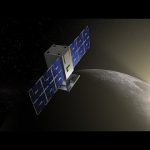
How can a satellite the size of a microwave oven help shape human missions to the Moon and beyond?
CAPSTONE will fly in a unique, halo-shaped orbit around the Moon before the orbit is used by Gateway, NASA’s future lunar outpost for our Artemis program. The CAPSTONE mission, short for Cislunar Autonomous Positioning System Technology Operations and Navigation Experiment, will validate navigation technologies and orbital dynamics for Gateway, which will one day serve as a staging area for missions to the Moon and potentially as a jumping point for missions to Mars.
The CubeSat will come within 1,000 miles of one lunar pole on its near pass and 43,500 miles from the other pole at its peak every seven days, requiring less propulsion capability for spacecraft flying to and from the Moon’s surface than other circular orbits. It’s a six-month mission that will help launch a new era of exploration.
CAPSTONE will lift off aboard a Rocket Lab Electron rocket from New Zealand. The mission is targeted to launch no earlier than June 25, 2002.
Set to lift off on May 19, 2022, Starliner will launch on NASA’s Boeing Orbital Flight Test-2 (OFT-2) headed for the International Space Station. OFT-2 will test end-to-end capabilities of the Starliner spacecraft and Atlas V rocket from launch to docking to a return to Earth in the desert of the western United States.
Starliner is expected to arrive at the space station for docking about 24 hours after launch with about 500 pounds of NASA cargo and crew supplies. After a successful docking, Starliner will spend five to 10 days aboard the orbiting laboratory before returning to Earth. The spacecraft will return with nearly 600 pounds of cargo, including reusable Nitrogen Oxygen Recharge System (NORS) tanks that provide breathable air to station crew members.
Following a successful completion of OFT-2, NASA and Boeing will determine a launch window for NASA’s Boeing Crew Flight Test, Starliner’s first flight with astronauts aboard.
This is the second uncrewed flight test of the company’s CST-100 Starliner spacecraft for NASA’s Commercial Crew Program.
ESA invites all bakers to try out a special banana bread recipe courtesy of Sens’Astro that contains the main chemical elements found on the Moon with a social media challenge inspired by World Baking Day, celebrated on 17 May.
Bakers of all ages are invited to share their results with pictures or videos on social media using the hashtag #ESABakes. The deadline for pastry chefs to submit their cakes is 24 May 2022.
Here are the ingredients: – 3 bananas – 2 eggs – 1 yoghurt (125 ml) – 80 g wheat flour – 30 g oat flour – 40 g almond powder – 100 g chocolate chips – 2 tablespoons maple syrup – 1 teaspoon vanilla extract – 1 teaspoon baking powder – 1 pinch of salt – 1 handful of nuts
We are Europe’s gateway to space. Our mission is to shape the development of Europe’s space capability and ensure that investment in space continues to deliver benefits to the citizens of Europe and the world. Check out https://www.esa.int/ to get up to speed on everything space related.
Go outside with NASA and watch the total lunar eclipse! On the evening of May 15, Earth will pass between the Sun and the Moon, blocking sunlight and casting a shadow on the lunar surface. Starting at 9:32 p.m. EDT (1:32 UTC on May 16), people with clear skies in the Americas, Europe, and parts of Africa will begin to see the Moon get bathed in the red glow of every sunrise and sunset refracted through Earth’s atmosphere. Totality will occur at 12:12 a.m. EDT on May 16 (4:12 UTC).
Join NASA experts to learn about this incredible natural phenomenon, look through telescope views across the world, and hear about plans to return humans to the lunar surface with the Artemis program. Have questions? Ask them in our live chat.
#Starliner is preparing for liftoff! At 6:54 p.m. EDT (22:54 UTC) on Thursday, May 19, Boeing’s spacecraft launches aboard a United Launch Alliance Atlas V rocket on a demonstration flight that gets it one step closer to certification to carry astronauts to and from the International Space Station.
The Orbital Flight Test-2 (OFT) launch is from Space Launch Complex-41 on Cape Canaveral Space Force Station in Florida. OFT-2 will demonstrate the end-to-end capabilities of the Starliner spacecraft and Atlas V rocket, from launch to docking to a return to Earth in the desert of the western United States. This is the second uncrewed flight test of Boeing’s CST-100 Starliner spacecraft for our Commercial Crew Program.
The Webb Telescope is closer to starting its mission of science, an historic look at the center of our galaxy, and the Crew-3 astronauts reflect on their mission … a few of the stories to tell you about – This Week at NASA!
This week’s edition of the Earth from Space programme features a striking, high-resolution image of the Arc de Triomphe, in Paris, captured by Planet SkySat – a fleet of satellites that have just joined ESA’s Third Party Mission Programme.
We are Europe’s gateway to space. Our mission is to shape the development of Europe’s space capability and ensure that investment in space continues to deliver benefits to the citizens of Europe and the world. Check out https://www.esa.int/ to get up to speed on everything space related.
This comparison between @NASA’s Spitzer Space Telescope’s Infrared Array Camera and Webb’s Mid-Infrared Instrument shows a part of the Large Magellanic Cloud. A small satellite galaxy of the Milky Way providing a dense star field to test Webb’s performance.
We are Europe’s gateway to space. Our mission is to shape the development of Europe’s space capability and ensure that investment in space continues to deliver benefits to the citizens of Europe and the world. Check out https://www.esa.int/ to get up to speed on everything space related.
How are space technologies such as earth observation, satellite communications, and navigation systems being applied to our greatest global challenges like climate change, deforestation and disaster resilience? Find out more in this Space Bites talk by David Taverner, Senior Director at Caribou Space.
David Taverner’s career has focused on using space, mobile, internet and renewable energy technology to address challenges in developing countries. Caribou Space works with governments, space agencies, development agencies and private companies – to use space technology for positive impact on society, economy and environment. David supports the UK Space Agency International Partnership Programme, a £150 million fund to use space technology to benefit developing countries. David has also supported ESA’s Earth Observation for Sustainable Development programme, helping define its future strategy and plan.
Space Bites is a series of lectures about space exploration promoted by the ESA Directorate of Human and Robotic Exploration in order to increase the awareness of the importance of space exploration.
Due to Covid-19 restrictions, the lecture was hosted online via video conference.
★ Subscribe: http://bit.ly/ESAsubscribe and click twice on the bell button to receive our notifications.
We are Europe’s gateway to space. Our mission is to shape the development of Europe’s space capability and ensure that investment in space continues to deliver benefits to the citizens of Europe and the world. Check out https://www.esa.int/ to get up to speed on everything space related.
The Crew-3 astronauts return from the space station, the spacecraft for another commercial crew mission is on the move, and discussing NASA’s budget … a few of the stories to tell you about – This Week at NASA!
The Crew Dragon capsule carrying ESA astronaut Matthias Maurer and @NASA astronauts Raja Chari, Thomas Marshburn and Kayla Barron home from the International Space Station splashed down off the coast of Florida, USA, on Friday 6 May 2022 at 05:43 BST/06:43 CEST.
Its return marks the end of Crew-3’s almost six-month stay in orbit and the end of Matthias’s first mission, known as Cosmic Kiss.
Crew-3 undocked from the International Space Station in Crew Dragon spacecraft Endurance at 06:20 BST/07:20 CEST Thursday 5 May.
When a Crew capsule splashes down, it is met by nearby ships with experts ready to bring it on board, open the hatch, and welcome the astronauts home. After initial medical checks, the crew is transported by helicopter to shore.
Now that his mission has come to an end, Matthias will return to ESA’s European Astronaut Centre in Cologne, Germany, where he will participate in post-flight debriefings, provide samples for scientific evaluation and readapt to Earth’s gravity with the support of ESA experts.
We are Europe’s gateway to space. Our mission is to shape the development of Europe’s space capability and ensure that investment in space continues to deliver benefits to the citizens of Europe and the world. Check out https://www.esa.int/ to get up to speed on everything space related.
The four astronauts of Crew-3 are on the way home to Earth. Watch live as they reenter the atmosphere and splash down off the coast of Florida. Splashdown is targeted for 12:37 a.m. EDT (4:37 UTC), Friday, May 6.
NASA astronauts Raja Chari, Tom Marshburn, and Kayla Barron, and ESA (European Space Agency) astronaut Matthias Maurer spent six months living and working on the International Space Station. During their stay, they contributed to experiments to benefit life on Earth: https://go.nasa.gov/3vQmSXL
Dive into our navigation activities and hear about the projects, goals, challenges and work environment from ESA staff working in the Navigation Directorate and the Directorate for Technology, Engineering and Quality.
We are Europe’s gateway to space. Our mission is to shape the development of Europe’s space capability and ensure that investment in space continues to deliver benefits to the citizens of Europe and the world. Check out https://www.esa.int/ to get up to speed on everything space related.
Join the journey as NASA’s Psyche mission team launches in 2022 to explore a unique metallic asteroid orbiting the sun between Mars and Jupiter. The asteroid, likely made largely of nickel-iron metal mixed with rock, could contain metal from the core of a planetesimal (the building block of an early rocky planet) and may offer a unique window into the violent history of collisions and accretion that created the terrestrial planets like Earth.
Arizona State University leads the Psyche mission. JPL, which is managed by Caltech for NASA, is responsible for the mission’s overall management, system engineering, integration and test, and mission operations. Maxar Technologies in Palo Alto, California, provided the high-power solar electric propulsion spacecraft chassis.
For more info about NASA’s #MissionToPsyche, go to:
Crew Dragon capsule Endurance, carrying ESA astronaut Matthias Maurer and @NASA astronauts Raja Chari, Thomas Marshburn and Kayla Barron, undocked from the International Space Station at 06:20 BST/07:20 CEST Thursday 5 May. The autonomous undocking marked the start of Crew-3’s return to Earth after almost six months in orbit.
Crew-3’s return will take approximately 23.5 hours. Their spacecraft will splash down off the coast of Florida, USA, where ships will be waiting to bring it aboard and welcome the astronauts home.
This return also marks the end of Matthias’s first space mission, Cosmic Kiss. During his time on Station, Matthias supported over 35 European and many more international experiments in microgravity. He also supported International Space Station operations and maintenance and performed a spacewalk with NASA astronaut Raja Chari on 23 March 2022.
After initial medical checks, Crew-3 crew members will be transported by helicopter to shore where a plane will be waiting to bring Matthias back to ESA’s European Astronaut Centre in Cologne, Germany, for his post-flight debriefings and rehabilitation.
We are Europe’s gateway to space. Our mission is to shape the development of Europe’s space capability and ensure that investment in space continues to deliver benefits to the citizens of Europe and the world. Check out https://www.esa.int/ to get up to speed on everything space related.
This live broadcast has now completed. Watch continuous coverage of #Crew3’s return to Earth on https://nasa.gov/live. Don’t miss splashdown, targeted for 12:43am ET (4:43 UTC).
—————————————————
Join us to watch the Crew Dragon Endurance undock live from space with the four crew members of NASA’s SpaceX Crew-3 aboard: NASA astronauts Raja Chari, Tom Marshburn, and Kayla Barron, as well as ESA (European Space Agency) astronaut Matthias Maurer.
Undocking from the International Space Station (ISS) is targeted to begin at 1:05 a.m. EDT (5:00 UTC), on Thursday, May 5.
For the first time since mid 2011, ESA has two astronauts living and working together aboard the International Space Station. Watch a conversation between Samantha Cristoforetti and Matthias Maurer in this rare moment for Europe in space.
The astronauts’ meeting marks a brief crossover between the start of Samantha’s second space mission, Minerva, and Matthias’s final days in orbit for his first mission, Cosmic Kiss.
Samantha arrived with Crew-4 on 28 April in @SpaceX Crew Dragon Freedom, while Matthias will depart with Crew-3 in SpaceX Crew Dragon Endurance in May after almost six months on the Station.
In this video Matthias is impressed by Samantha’s floating ability and says it’s like she never left. Samantha confirms weightless was the thing she missed the most on Earth and talks about the differences on Station since her Italian Space Agency ASI-sponsored Futura mission in 2014-15.
Matthias is pleased with what he’s achieved in his time on Station, including the science he’s supported and the spacewalk he performed. He wishes Samantha all the best for her mission as she wishes him a safe return to Earth.
We are Europe’s gateway to space. Our mission is to shape the development of Europe’s space capability and ensure that investment in space continues to deliver benefits to the citizens of Europe and the world. Check out https://www.esa.int/ to get up to speed on everything space related.
ESA Academy is ESA’s overarching programme for undergraduate to PhD level students. Through a tailored transfer of space know-how and interaction with space professionals, ESA Academy takes students through a learning path that enriches and complements their academic education. In this session, participants will be informed on the different opportunities, ranging from training courses to the manufacturing of satellites, and what it takes to participate in them. Finally, the presenters will provide some insight into the evolving, future, ESA Academy programme.
We are Europe’s gateway to space. Our mission is to shape the development of Europe’s space capability and ensure that investment in space continues to deliver benefits to the citizens of Europe and the world. Check out https://www.esa.int/ to get up to speed on everything space related.
ESA has a number of programmes open to young professionals who are either still studying or have little to no work experience. Join this session to hear about what ESA has to offer. The programmes coordinator together with a few colleagues will share their insight and let you discover which path could lead to your future career!
We are Europe’s gateway to space. Our mission is to shape the development of Europe’s space capability and ensure that investment in space continues to deliver benefits to the citizens of Europe and the world. Check out https://www.esa.int/ to get up to speed on everything space related.
We asked our followers on social media to send in questions they would like to ask the ESA HR Department. This is your opportunity to hear the answers first hand. Have fun learning more about careers and recruitment here at ESA!
0:00-0:21 Introduction 0:21-1:08 What does a typical job interview at ESA look like? 1:08-2:00 How many careers paths can one start at ESA? 2:00- 3:02 I’m a girl and my dream is to become an astronaut. Is this possible? 3:02- 3:27 Do you respond to all applications? 3:27-4:02 How long does an application usually take to process? 4:02-4:26 Any jobs for space enthusiasts over the age of 40? 4:26-5:33 Do you really accept all ages? 5:33-6:52 Can I get into ESA without a background in space? 6:52-8:12 I’m puzzled by the ESA pay scale, are salaries negotiable? 8:12-9:16 What skillset and qualifications does a successful ESA applicant possess? 9:16-10:08 What is your funniest interview experience? 10:08- 10:54 is it hard to get a job at ESA? 10:54-12:11 What kind of benefits do ESA staff get? 12:11-12:58 Anything like free massages? 12:58- 14:06 Why is a masters degree required? 14:06- 15:01 How do you filter candidates? 15:01- 16:17 Do unsuccessful applicants go into a careers black hole? 16:17-16:52 Join us at ESA!
We are Europe’s gateway to space. Our mission is to shape the development of Europe’s space capability and ensure that investment in space continues to deliver benefits to the citizens of Europe and the world. Check out https://www.esa.int/ to get up to speed on everything space related.
After more than six months aboard the International Space Station, the astronauts of NASA’s SpaceX Crew-3 mission are returning home. The four crew members — NASA astronauts Kayla Barron, Raja Chari, and Tom Marshburn, and ESA (European Space Agency) astronaut Matthias Maurer — will travel back to Earth inside a SpaceX Crew Dragon capsule. These crew members contributed to hundreds of scientific investigations and technology demonstrations while aboard the orbiting laboratory. This valuable research helps to prepare humans for future space exploration missions while generating numerous innovations and benefits for humanity on Earth.
Once the preparatory work has been completed, and the satellite developed and manufactured, the next step is launch and operations with a view to ensuring that it fulfils its original mission objectives. The post-launch phase can span many years, often as long or longer than the developmental phase. Some ESA scientific satellites even continue to operate beyond their original planned lifespan.
Join ESA experts working in launchers, operations, mission management and scientific data processing to find out what happens in the final phases of the mission when all the planning and development comes to fruition.
We are Europe’s gateway to space. Our mission is to shape the development of Europe’s space capability and ensure that investment in space continues to deliver benefits to the citizens of Europe and the world. Check out https://www.esa.int/ to get up to speed on everything space related.
R&D plays a key role as part of ESA’s mission to share the development of Europe’s space capability and to keep European industry at the leading edge of technology development. Not only are new and innovative technologies constantly being developed and tested to pave the way for future satellite projects, but ESA is also facilitating their application to scientific and commercial products and services. And well before an individual satellite project can be started, ESA and its experts are hard at work preparing the way through feasibility studies and assessments.
Join ESA experts working in the Concurrent Design Facility, Phi-Lab and the ARTES Programme to hear about their contributions to the overall ESA mission.
We are Europe’s gateway to space. Our mission is to shape the development of Europe’s space capability and ensure that investment in space continues to deliver benefits to the citizens of Europe and the world. Check out https://www.esa.int/ to get up to speed on everything space related.
We are Europe’s gateway to space. Our mission is to shape the development of Europe’s space capability and ensure that investment in space continues to deliver benefits to the citizens of Europe and the world. Check out https://www.esa.int/ to get up to speed on everything space related.
We are Europe’s gateway to space. Our mission is to shape the development of Europe’s space capability and ensure that investment in space continues to deliver benefits to the citizens of Europe and the world. Check out https://www.esa.int/ to get up to speed on everything space related.
Have you ever wondered what it was like to work in a satellite development project at the European Space Agency? Learn from the experts working in the Ariel satellite project team.
Fiona Walsh from ESA Human Resources moderates a panel with Jean-Christophe Salvignol, ESA’s Ariel Project Manager and a couple of his managers. They explain the incredible team effort required to bring this complex project from early inception, manufacturing of the satellite, accommodating its payloads and ensuring a successful launch to pave the way for exciting scientific discoveries. Ariel is one ESA’s science missions that will be launched in 2029 and will discover the composition of exoplanets by examining their atmospheres.
They explain how the project team is structured and a bit about the international collaboration involved. They also touch on the importance of building the right team and creating a great team spirit.
We are Europe’s gateway to space. Our mission is to shape the development of Europe’s space capability and ensure that investment in space continues to deliver benefits to the citizens of Europe and the world. Check out https://www.esa.int/ to get up to speed on everything space related.
Since 2020, ESA has been riding a recruitment wave stemming from the fact that, between 2020 and 2030, 44% of the ESA workforce will retire. This, combined with the impact of the Covid-19 pandemic on the way we work, forms a major catalyst for change. ESA is evolving, and will continue to evolve for the foreseeable future.
Join a roundtable discussion with the ESA Head of Human Resources, the ESA Chief Diversity Officer, and the ESA Head of Talent Acquisition to hear how they see the future of careers at ESA and who they expect their new colleagues to be.
We are Europe’s gateway to space. Our mission is to shape the development of Europe’s space capability and ensure that investment in space continues to deliver benefits to the citizens of Europe and the world. Check out https://www.esa.int/ to get up to speed on everything space related.
In honor of Asian American and Native Hawaiian Pacific Islander Heritage Month, learn about the intersection of food and culture in space from NASA astronaut Sunita “Suni” Williams, whose father immigrated to the U.S. from India, and International Space Station (ISS) food scientist/system manager Xulei Wu, a first-generation Asian American born in China.
Hear their stories about cultural representation in space, the importance of food in Indian and Chinese cultures, and the inclusive standard menu aboard the ISS. What’s one dish you would like to see aboard? Drop your suggestion in the comments below!
Producer/Editor: Lacey Young Art Director: Mark Hailey Music: Universal Production Music
Get in line with ESA astronaut Matthias Maurer and his Expedition 66 crew mates to experience a reboost of the International Space Station from the inside. This video is sped up 8 times fast.
The International Space Station flies around Earth at around 400 km. It is reboosted periodically to maintain its orbit and overcome the effects of atmospheric drag created by molecules of the atmosphere, which causes the Station to lose about 100 m of altitude per day.
A Space Station reboost maneuver also optimizes phasing for future visiting vehicles arriving at the station. In March 2022 the ISS performed a reboost using Russia’s ISS Progress 79 cargo craft. By firing its engines for several minutes, the station was put at the proper altitude for a crew ship orbit rendezvous and landing operations.
During the manoeuvre, the astronauts inside the station keep flying at the same speed and direction. While it seems like the astronauts are moving inside the station, it is in fact the ISS that gets the boost and is moving around them.
We are Europe’s gateway to space. Our mission is to shape the development of Europe’s space capability and ensure that investment in space continues to deliver benefits to the citizens of Europe and the world. Check out https://www.esa.int/ to get up to speed on everything space related.
A new crew launches to the space station, another crew wraps up an historic mission to the station, and more time to explore for some planetary science missions … a few of the stories to tell you about – This Week at NASA!
We are Europe’s gateway to space. Our mission is to shape the development of Europe’s space capability and ensure that investment in space continues to deliver benefits to the citizens of Europe and the world. Check out https://www.esa.int/ to get up to speed on everything space related.
NASA astronaut Victor Glover served as the pilot on NASA’s SpaceX Crew-1 mission and spent six months on the International Space Station, where he worked on scientific investigations, technology demonstrations, and completed four spacewalks. He’ll speak live from the Smithsonian National Museum of African American History and Culture about preparing to be an astronaut, his recent mission, and the future of space travel including Artemis missions to the Moon.