Our Proba-3 mission recently pulled off its first-ever autonomous formation flight — aligning with the Sun and holding position for hours, all on its own.
This is precision. This is the future. And it’s just the beginning.
NASA astronaut Don Pettit is scheduled to return home in mid-April 2025 after a seven-month mission aboard the International Space Station as part of Expedition 72. Throughout his stay, Pettit contributed to research that benefits humanity and future space missions, and delighted photography enthusiasts around the world with his unique point of view.
Pettit also shared what he calls his “science of opportunity” to demonstrate how experimenting with our surroundings can help gain a better understanding of how things work. This understanding is enhanced when art, science, and microgravity come together.
This video shows the precise and delicate process of loading the Biomass satellite with 132 kg of highly volatile fuel. This fuel will power the satellite so that it can carry out the complex manoeuvres that are needed during its mission.
📹 European Space Agency (ESA) 📸 ESA/CNES/Arianespace/Optique vidéo du CSG–T. Leduc
On 12 March 2025, ESA’s Hera spacecraft soared just 5000 km above Mars and passed within 300 km of its distant moon, Deimos. Captured by Hera’s 1020×1020 pixel Asteroid Framing Camera, this video sequence offers a rare view of the red planet and its enigmatic moon. The original greyscale images have been colour-enhanced based on known surface features.
We are Europe’s gateway to space. Our mission is to shape the development of Europe’s space capability and ensure that investment in space continues to deliver benefits to the citizens of Europe and the world. Check out https://www.esa.int/ to get up to speed on everything space related.
Plants are more than just greenery, they’re key to helping astronauts survive and thrive off Earth. They provide food and oxygen, recycle water and waste, and even offer psychological benefits.
But the positives don’t stop there. Growing plants in the International Space Station also helps scientists develop new technologies for agriculture in extreme environments, a skill that could benefit future explorers on the Moon and Mars but also agriculture right here on Earth, especially in places where growing food is a challenge.
The 32nd SpaceX commercial resupply mission to the International Space Station is set to lift off on a Falcon 9 rocket from our Kennedy Space Center in Florida at 4:15 a.m. EDT (0815 UTC), Monday, April 21, delivering science investigations and supplies to the orbiting lab.
SpaceX’s Dragon spacecraft is carrying several new research projects to the station, including experiments focused on vision-based navigation, spacecraft air quality, materials for drug and product manufacturing, and advancing plant growth with less reliance on photosynthesis.
Experiments focused on vision-based navigation, spacecraft air quality, materials for drug and product manufacturing, and advancing plant growth with less reliance on photosynthesis are bound for the International Space Station via the NASA and SpaceX 32nd commercial resupply services mission.
Have We Ever Been to Uranus? In 1986, NASA’s Voyager 2 gave us our first and only close-up look at this ice giant. What it found was a bizarre, tilted world with extreme seasons, swirling methane clouds, narrow dusty rings and icy moons that could even hide oceans beneath their crusts.
Not only could Uranus hold clues about our own solar system but also the many similar-sized planets found throughout the galaxy.
Jared Isaacman is set to participate in his confirmation hearing to become the next NASA administrator. The hearing will take place before Sen. Ted Cruz, and the U.S. Senate Committee on Commerce, Science, and Transportation in the Russell Building in Washington. President Trump formally nominated Isaacman for NASA administrator on Jan. 20, 2025.
After lifting off from the Baikonur Cosmodrome in Kazakhstan and docking with the International Space Station, the Soyuz MS-27 mission to the station is scheduled to open its hatches at approximately 7:20 a.m. EDT (1120 UTC) on Tuesday, April 8.
NASA astronaut Jonny Kim, accompanied by cosmonauts Sergey Ryzhikov and Alexey Zubritsky, will spend approximately eight months on the International Space Station before returning to Earth in December.
Kim was selected to become a NASA astronaut in 2017; before joining NASA’s astronaut corps, Kim completed more than 100 combat operations as a Navy SEAL. A dual-designated naval aviator and flight surgeon, Kim received his doctorate in medicine from Harvard Medical School. This is Kim’s first mission to the station.
After lifting off from the Baikonur Cosmodrome in Kazakhstan, NASA astronaut Jonny Kim is scheduled to dock with the International Space Station at 5:03 a.m. EST (0903 UTC) on Tuesday, April 8.
Kim was selected to become a NASA astronaut in 2017; before joining NASA’s astronaut corps, Kim completed more than 100 combat operations as a Navy SEAL. A dual-designated naval aviator and flight surgeon, Kim received his doctorate in medicine from Harvard Medical School.
Accompanied by cosmonauts Sergey Ryzhikov and Alexey Zubritsky, Kim will spend approximately eight months on the International Space Station before returning to Earth in December. This is Kim’s first mission to the station.
NASA astronaut Jonny Kim is set to lift off on his first mission to the International Space Station on Tuesday, April 8. Launch is scheduled for 1:47 a.m. EDT (0547 UTC) from the Baikonur Cosmodrome in Kazakhstan.
Kim was selected to become a NASA astronaut in 2017; before joining NASA’s astronaut corps, Kim completed more than 100 combat operations as a Navy SEAL. A dual-designated naval aviator and flight surgeon, Kim received his doctorate in medicine from Harvard Medical School.
Kim will launch aboard the Roscosmos Soyuz MS-27 spacecraft, accompanied by cosmonauts Sergey Ryzhikov and Alexey Zubritsky, where they will spend approximately eight months on the International Space Station before returning to Earth in December. Kim will serve as a flight engineer and member of the Expedition 72/73 crew, supporting scientific research to help us learn how to live in space while making life better back on Earth.
After liftoff, MS-27 is scheduled to dock with the station at 5:03 a.m. EDT (0903 UTC), with hatch opening at approximately 7:20 a.m. EDT (1120 UTC).
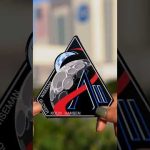
The Artemis II mission will embark on its journey around the Moon early 2026 with four astronauts onboard. Now we’ve got the mission patch to mark the occasion.
Take a look at Sophie Adenot’s journey over the past year and a half as she prepares for her mission to the International Space Station, currently planned for spring 2026.
What are the dangers of going to space? Space might look peaceful from afar but it’s a harsh environment, especially for humans. From DNA damage to bone loss to making sure there’s enough food for long missions—space is tough. But NASA is working hard to keep our astronauts safe on every step of the journey.
After completing a long-duration stay aboard the International Space Station, NASA’s SpaceX Crew-9 astronauts — Nick Hague, Suni Williams, and Butch Wilmore — are discussing their scientific mission to space.
The three NASA crew members and Roscosmos cosmonaut Aleksandr Gorbunov returned to Earth on March 18. Gorbunov will not participate in the news conference because of his travel schedule.
Hague, Williams, and Wilmore completed over 900 hours of research while in orbit, conducting more than 150 unique experiments. The crew studied plant growth and development, tested stem cell technology to help patients on Earth, and went on a spacewalk to collect samples from the station’s exterior, studying the survivability of microorganisms in space. Additionally, the crew supported 30 ham radio events with students worldwide and conducted a student-led genetic experiment, helping to inspire the next generation of explorers.
For over a decade, ESA’s Gaia mission has mapped our galaxy with stunning precision—rewriting the story of the Milky Way. As its mission enters a new phase, we look back at its most groundbreaking discoveries.
Credit: ESA – European Space Agency
Chapters: 00:23 – Mapping the Milky Way and beyond 00:58 – Structure of the Milky Way 01:40 – Galactic family tree 02:27 – Mapping star-forming regions 03:00 – Ancient star streams 03:19 – Cosmic encounters 04:07 – Black holes and hidden giants
★ Subscribe: http://bit.ly/ESAsubscribe and click twice on the bell button to receive our notifications.
We are Europe’s gateway to space. Our mission is to shape the development of Europe’s space capability and ensure that investment in space continues to deliver benefits to the citizens of Europe and the world. Check out https://www.esa.int/ to get up to speed on everything space related.
On 19 March 2025, our Euclid mission released its first batch of survey data, including a preview of its deep fields. Here, hundreds of thousands of galaxies in different shapes and sizes take centre stage and show a glimpse of their large-scale organisation in the cosmic web.
📹 ESA – European Space Agency 📸 ESA /Euclid/Euclid Consortium/@NASA, image processing by J.-C. Cuillandre, E. Bertin, G. Anselmi Euclid Deep Field South, 70x zoom: ESA/Euclid/Euclid Consortium/NASA, image processing by J.-C. Cuillandre, E. Bertin, G. Anselmi
From 25 July 2014 to 15 January 2025, the Gaia space observatory performed high-precision measurements of nearly two billion stars from its Lissajous orbit around the L2 Lagrange point, 1.5 million km from Earth.
After 10.5 years of groundbreaking observations, Gaia’s cold gas supply for attitude control has been depleted. On 27 March 2025, Gaia will leave its Lissajous orbit and transition into a stable heliocentric orbit. Soon after, the spacecraft will be passivated, with its instruments and transmitters switched off.
While Gaia will no longer collect new data, its scientific mission is far from over! The team continues working on Gaia Data Release 4 (expected 2026) and the final legacy catalogue (to be published not before the end of 2030), ensuring that Gaia’s discoveries will shape astronomy for decades to come.
This video visualises how Gaia leaves its Lissajous orbit and enters its final heliocentric orbit.
This video was made with Gaia Sky (https://gaiasky.space) by Tiago Nogueira, Toni Sagristà, and Stefan Jordan.
Text: Stefan Jordan, Tiago Nogueira, Tineke Roegiers
The creators would like to thank Alessandro Masat and Ander Martinez from ESA for providing Gaia’s orbit and attitude data.
Credit: ESA/Gaia/DPAC, CC BY-SA 3.0 IGO
★ Subscribe: http://bit.ly/ESAsubscribe and click twice on the bell button to receive our notifications.
We are Europe’s gateway to space. Our mission is to shape the development of Europe’s space capability and ensure that investment in space continues to deliver benefits to the citizens of Europe and the world. Check out https://www.esa.int/ to get up to speed on everything space related.
Want to catch a glimpse of the northern lights? You’ll need dark skies, the right location, good space weather and a little patience!
Auroras happen when charged particles from the Sun interact with Earth’s magnetic field, creating dazzling light shows in the sky. A NASA scientist shares tips on where, when and how to see these stunning displays.
Join NASA experts to talk about EZIE, a trio of just-launched NASA spacecraft that will study powerful electric currents in the sky. When colorful auroras glow, intense currents called “electrojets” flow. EZIE will help us better understand these electric currents by looking at the invisible magnetic fingerprints they leave in Earth’s upper atmosphere.
Knowing more about electrojets helps improve models for predicting the effects of space weather, which is important for protecting the power grid, GPS and communications systems on Earth, as well as satellites and astronauts in space.
Join the live chat or submit your questions via social media with the hashtag #AskNASA.
On 19 March 2025, our Euclid mission released its first batch of survey data, revealing an astonishing view of the cosmic web.
With just one scan of its deep fields, Euclid has already detected 26 million galaxies, some as far as 10.5 billion light-years away! This is just a preview of what’s to come, as Euclid will continue mapping the Universe in unprecedented detail.
What’s in this first release? – Three vast mosaics covering 63 square degrees of the sky – A catalogue of 380 000 galaxies, classified with AI + citizen scientists – 500 new gravitational lens candidates, almost all never seen before – The first hints of Euclid’s full cosmic atlas, which will eventually cover one-third of the sky
This data is a huge leap forward in understanding how galaxies are distributed across the Universe and how dark matter and dark energy shape the cosmos.
Over the next six years, Euclid will revisit these deep fields 30 to 52 times, uncovering billions of galaxies and pushing the astrophysics’ boundaries.
📹 @europeanspaceagency 📸 ESA /Euclid/Euclid Consortium/@NASA, image processing by J.-C. Cuillandre, E. Bertin, G. Anselmi Euclid Deep Field South, 70x zoom: ESA/Euclid/Euclid Consortium/NASA, image processing by J.-C. Cuillandre, E. Bertin, G. Anselmi
NASA astronauts Nick Hague, Suni Williams, Butch Wilmore, and cosmonaut Aleksandr Gorbunov splashed down off the coast of Florida on March 18, concluding NASA’s SpaceX Crew-9 mission to the International Space Station.
The European Space Agency’s Euclid space telescope mission has scouted out the three areas in the sky where it will eventually provide the deepest observations of its mission.
In just one week of observations, with one scan of each region so far, Euclid already spotted 26 million galaxies. The farthest of those are up to 10.5 billion light-years away.
In the coming years, Euclid will pass over these three regions tens of times, capturing many more faraway galaxies, making these fields truly ‘deep’ by the end of the nominal mission in 2030.
The first glimpse of 63 square degrees of the sky, the equivalent area of more than 300 times the full Moon, already gives an impressive preview of the scale of Euclid’s grand cosmic atlas when the mission is complete. This atlas will cover one-third of the entire sky – 14 000 square degrees – in this high-quality detail.
————————————————— Credits: ESA/Euclid/Euclid Consortium/NASA, image processing by J.-C. Cuillandre, E. Bertin, G. Anselmi, M. Walmsley, M. Huertas-Company; ESA/Gaia/DPAC; ESA/Planck Collaboration —————————————————
★ Subscribe: http://bit.ly/ESAsubscribe and click twice on the bell button to receive our notifications.
We are Europe’s gateway to space. Our mission is to shape the development of Europe’s space capability and ensure that investment in space continues to deliver benefits to the citizens of Europe and the world. Check out https://www.esa.int/ to get up to speed on everything space related.
Following the return of NASA’s SpaceX Crew-9 mission, NASA and SpaceX will hold a news conference to discuss the crew’s return and take media questions. The participants include:
• Joel Montalbano, deputy associate administrator, NASA’s Space Operations Mission Directorate • Steve Stich, manager, NASA’s Commercial Crew Program • Bill Spetch, operations integration manager, NASA’s International Space Station Program • Sarah Walker, director, Dragon Mission Management, SpaceX
NASA’s SpaceX Crew-9 mission returned to Earth on Tuesday, March 18, carrying NASA astronauts Nick Hague, Suni Williams, and Butch Wilmore, as well as Roscosmos cosmonaut Aleksandr Gorbunov, after completing a long-duration science expedition aboard the orbiting laboratory.
Watch with us as the four members of NASA’s SpaceX Crew-9 mission—NASA astronauts Nick Hague, Suni Williams, Butch Wilmore, and cosmonaut Aleksandr Gorbunov—return to Earth.
Suni Williams and Butch Wilmore began their mission at the International Space Station on June 6, 2024, arriving aboard Boeing’s Starliner spacecraft. Nick Hague and Aleksandr Gorbunov arrived at the station on Sept. 29, 2024. Hague and Gorbunov launched to space aboard SpaceX’s Dragon Freedom spacecraft, which was docked to the station since its arrival in September, and has since brought Crew-9 back home.
2:24 Return coverage begins 6:41 Meet the crew 28:14 Deorbit burn start 1:05:20 First views from WB-57 aircraft 1:09:37 Drogue chutes deploy 1:10:31 Main chutes deploy 1:12:00 Splashdown 1:33:56 Dolphins 1:38:33 Hoist 1:53:45 Hatch open 1:57:09 Crew egress
Watch as the four members of NASA’s SpaceX Crew-9 mission—NASA astronauts Nick Hague, Suni Williams, Butch Wilmore, and cosmonaut Aleksandr Gorbunov—undock from the International Space Station and begin their journey home to Earth.
Crew-9’s SpaceX Dragon spacecraft is scheduled to undock from the International Space Station at 1:05 a.m. EST (0505 UTC). After undocking from the station, Crew-9 is scheduled to splash down off the coast of Florida at 5:57 p.m. EDT (2157 UTC), ending their multi-month mission in low Earth orbit.
Watch as the four members of NASA’s SpaceX Crew-9 mission—NASA astronauts Nick Hague, Suni Williams, Butch Wilmore, and cosmonaut Aleksandr Gorbunov—begin the final preparations for their return to Earth, currently targeted for Tuesday, March 18.
After entering their SpaceX Dragon spacecraft, the spacecraft’s hatch will be closed on the Crew-9 explorers. After hatch closure, Crew-9 is scheduled to undock from the International Space Station at 1:05 a.m. EDT (0505 UTC) on Tuesday, March 18.
Timelapse of the International Space Station flying into a stunning aurora borealis. Shared by ESA astronaut Samantha Cristoforetti on her TikTok on 18 September 2022.
Watch with us as the four members of NASA’s SpaceX Crew-10 mission launch to the space station from Launch Complex 39A at NASA’s Kennedy Space Center in Florida.
Liftoff is targeted for 7:03 p.m. EDT (2303 UTC) on Friday, March 14. Wednesday’s launch attempt was scrubbed due to a hydraulic system issue with a ground support clamp arm.
SpaceX’s Dragon spacecraft will carry NASA astronauts Anne McClain, commander; and Nichole Ayers, pilot; along with mission specialists JAXA (Japan Aerospace Exploration Agency) astronaut Takuya Onishi, and Roscosmos cosmonaut Kirill Peskov to the orbiting laboratory for a long-duration science mission. This is the 10th crew rotation mission and the 11th human spaceflight mission for NASA to the space station supported by the Dragon spacecraft since 2020 as part of the agency’s Commercial Crew Program.
Following the launch of Crew-10, NASA astronauts Nick Hague, Suni Williams, and Butch Wilmore, along with Roscosmos cosmonaut Aleksandr Gorbunov, will depart the station for a splashdown off the coast of Florida.
Meet Sara García Alonso — biotechnologist, cancer researcher, passionate science communicator and member of ESA’s Astronaut Reserve. She’s our first guest in this miniseries, where we dive into the journey of the ESA Astronaut Reserve and explore the first part of their Astronaut Reserve Training (ART) at the European Astronaut Centre (EAC). Here, our “ARTists” are learning all about ESA and the International Space Station programme, the European space industry and institutions, and gaining hands-on experience in technical skills like spacecraft systems and robotics, as well as human behaviour, scientific lessons, scuba diving, and survival skills.
We are Europe’s gateway to space. Our mission is to shape the development of Europe’s space capability and ensure that investment in space continues to deliver benefits to the citizens of Europe and the world. Check out https://www.esa.int/ to get up to speed on everything space related.
Join us live for a star-studded event this Thursday, as scientists working on ESA’s Hera mission for planetary defence release the mission’s first scientific observations beyond the Earth-Moon system, following its imminent flyby of Mars.
On 12 March 2025 ESA’s Hera mission comes to within 5000 km of the surface of the red planet and 300 km of Mars’s more distant and enigmatic moon Deimos. During this flyby Hera is performing observations of both Mars and the city-sized Deimos.
Hera then needs to swing its High Gain Antenna back to Earth to transmit its data home. The next day, on Thursday 13 March, these images will be premiered by Hera’s science team from ESA’s ESOC mission control centre in Darmstadt, Germany, explaining what they reveal, during our public webcast starting at 11:50 CET.
The team are being joined by ESA astronaut Alexander Gerst and renowned science fiction writer Andy Weir, author of The Martian and Project Hail Mary, as well as a surprise special guest!
Chapters: 00:00 Introduction 07:00 Image 1: AFC’s view of Mars and Deimos 18:20 Image 2: HyperScout’s view of colourful Mars 25:40 Audience questions 32:25 The Author and the Astronaut 50:55 Image 3: TIRI’s view of hot Mars, cold Mars 55:10 Ramses, Planetary Defence and asteroid deflection 1:00:25 The Hera AI companion – more than sci-fi! 1:05:30 What’s next for Hera?
★ Subscribe: http://bit.ly/ESAsubscribe and click twice on the bell button to receive our notifications.
We are Europe’s gateway to space. Our mission is to shape the development of Europe’s space capability and ensure that investment in space continues to deliver benefits to the citizens of Europe and the world. Check out https://www.esa.int/ to get up to speed on everything space related.
Watch with us as the four members of NASA’s SpaceX Crew-10 mission launch to the space station from Launch Complex 39A at NASA’s Kennedy Space Center in Florida. Liftoff is targeted for 7:48 p.m. EDT (2348 UTC) on Wednesday, March 12.
SpaceX’s Dragon spacecraft will carry NASA astronauts Anne McClain, commander; and Nichole Ayers, pilot; along with mission specialists JAXA (Japan Aerospace Exploration Agency) astronaut Takuya Onishi, and Roscosmos cosmonaut Kirill Peskov to the orbiting laboratory for a long-duration science mission. This is the 10th crew rotation mission and the 11th human spaceflight mission for NASA to the space station supported by the Dragon spacecraft since 2020 as part of the agency’s Commercial Crew Program.
Following the launch of Crew-10, NASA astronauts Nick Hague, Suni Williams, and Butch Wilmore, along with Roscosmos cosmonaut Aleksandr Gorbunov, will depart the station for a splashdown off the coast of Florida.
Watch the launch of a NASA space telescope that will create a 3D all-sky map in 102 colors, with a constellation of solar-observing satellites along for the ride. Our SPHEREx observatory and PUNCH mission will lift off on a SpaceX Falcon 9 rocket.
SPHEREx will survey the sky in optical and infrared light, gathering data on more than 450 million galaxies, and 100 million stars in our own galaxy. PUNCH will use four suitcase-sized satellites in low Earth orbit to observe the Sun, and tell us more about the space weather that can impact communications on Earth.
How do we know the Earth isn’t flat? For thousands of years people have known the Earth is round. Ancient civilizations used the stars and shadows to figure it out. Mariners confirmed it by sailing around the globe. And when the space age began, we saw it with our own eyes — the Earth is round!
A NASA scientist explains how we’ve known for centuries that our planet is a sphere.
SpaceX and NASA teams stood down on the March 10, 2025, launch attempt for SPHEREx and PUNCH. We will create a new YouTube live event when the updated date and time when they are available.
Watch the launch of a NASA space telescope that will create a 3D all-sky map in 102 colors, with a constellation of solar-observing satellites along for the ride. Our SPHEREx observatory and PUNCH mission will lift off on a SpaceX Falcon 9 rocket.
SPHEREx will survey the sky in optical and infrared light, gathering data on more than 450 million galaxies, and 100 million stars in our own galaxy. PUNCH will use four suitcase-sized satellites in low Earth orbit to observe the Sun, and tell us more about the space weather that can impact communications on Earth.
Ever wondered how astronauts prepare for the weightlessness of space? In Bordeaux, France, our astronauts train for microgravity using parabolic flights! These special flights create brief periods of zero gravity, mimicking the conditions of space.
By performing a series of steep climbs and descents, the plane allows astronauts to experience intense 2G forces before entering a 22-second weightless phase! This crucial training helps future astronauts adapt to moving, working, and even jumping in zero gravity.
Join us as we follow Rosemary Coogan, Sławosz Uznański-Wiśniewski, and John McFall on their parabolic flight training.
Credits: ESA – European Space Agency Footage: ESA/Novaspace
★ Subscribe: http://bit.ly/ESAsubscribe and click twice on the bell button to receive our notifications.
We are Europe’s gateway to space. Our mission is to shape the development of Europe’s space capability and ensure that investment in space continues to deliver benefits to the citizens of Europe and the world. Check out https://www.esa.int/ to get up to speed on everything space related.
Inside is the very first metal 3D-printed object made aboard the International Space Station!
Scientists will now compare the object with reference prints made on Earth to study how microgravity affects 3D metal printing.
One of our goals for future space development is to create a circular space economy, recycling materials in orbit for better resource use. In the future, we could repurpose old satellite parts into new tools and structures, reducing the need to launch everything from Earth.
A 3D printer in space would let astronauts print what they need, when they need it.
Our metal 3D printer was developed by @airbus_space and its partners.
📹 @europeanspaceagency 📸 ESA/Airbus Space and Defence SAS