Embark on a mission with ESA astronomers Mark McCaughrean and Giovanna Giardino to learn more about the James Webb Space Telescope and the early Universe. This programme is suitable for primary and secondary students. Join the quest!
We are Europe’s gateway to space. Our mission is to shape the development of Europe’s space capability and ensure that investment in space continues to deliver benefits to the citizens of Europe and the world. Check out https://www.esa.int/ to get up to speed on everything space related.
Er zijn veel oude satellieten en gebroken stukken ervan, ruimtepuin genoemd, die in een baan om de aarde draaien en actieve ruimtevaartuigen kunnen schaden. Ga met Paxi mee op het nieuwste avontuur om de ruimte schoon te houden!
★ Subscribe: http://bit.ly/ESAsubscribe and click twice on the bell button to receive our notifications.
We are Europe’s gateway to space. Our mission is to shape the development of Europe’s space capability and ensure that investment in space continues to deliver benefits to the citizens of Europe and the world. Check out https://www.esa.int/ to get up to speed on everything space related.
Maata kiertävällä radalla on paljon vanhoja satelliitteja ja niiden särkyneitä palasia eli avaruusromua, joka voi olla haitallista toimiville avaruusaluksille. Lähde Paxin mukaan uusimpaan seikkailuun pitämään avaruutta puhtaana!
★ Subscribe: http://bit.ly/ESAsubscribe and click twice on the bell button to receive our notifications.
We are Europe’s gateway to space. Our mission is to shape the development of Europe’s space capability and ensure that investment in space continues to deliver benefits to the citizens of Europe and the world. Check out https://www.esa.int/ to get up to speed on everything space related.
De nombreux débris spatiaux, composés d’anciens satellites et de leurs composants désagrégés, sont actuellement en orbite autour de la Terre. Ces débris risquent d’endommager les engins que nous envoyons dans l’espace. Rejoignez Paxi dans sa nouvelle aventure pour nettoyer l’espace !
★ Subscribe: http://bit.ly/ESAsubscribe and click twice on the bell button to receive our notifications.
We are Europe’s gateway to space. Our mission is to shape the development of Europe’s space capability and ensure that investment in space continues to deliver benefits to the citizens of Europe and the world. Check out https://www.esa.int/ to get up to speed on everything space related.
Ci sono molti vecchi satelliti e rottami, chiamati detriti spaziali, che orbitano intorno alla Terra e che possono danneggiare i veicoli spaziali ancora operativi. Unisciti a Paxi nella sua nuova avventura e aiutalo a tenere pulito lo spazio!
★ Subscribe: http://bit.ly/ESAsubscribe and click twice on the bell button to receive our notifications.
We are Europe’s gateway to space. Our mission is to shape the development of Europe’s space capability and ensure that investment in space continues to deliver benefits to the citizens of Europe and the world. Check out https://www.esa.int/ to get up to speed on everything space related.
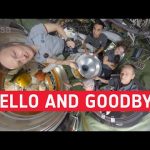
Spaceflight participants Yusaku Maezawa and Yozo Hirano and Russian cosmonaut Alexander Misurkin were welcomed to the International Space Station on 8 December 2021 for a 12 day stay in space. Experience their arrival and farewell in 360° as captured by ESA astronaut Matthias Maurer from within the Russian segment.
Also seen in this video are Expedition 66 Commander Anton Shkaplerov, @Roscosmos Mediacosmonaut Pyotr Dubrov and @NASA astronauts Mark Vande Hei, Raja Chari, Tom Marshburn, and Kayla Barron.
Matthias was launched to the International Space Station for his six-month ESA mission known as Cosmic Kiss on 11 November 2021. During his time on board, he will support around 35 European and many more international experiments in orbit.
We are Europe’s gateway to space. Our mission is to shape the development of Europe’s space capability and ensure that investment in space continues to deliver benefits to the citizens of Europe and the world. Check out https://www.esa.int/ to get up to speed on everything space related.
The Webb Space Telescope reaches its new home, remembering our fallen heroes, and testing a VIPER in the sand … a few of the stories to tell you about – This Week at NASA!
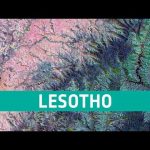
In this week’s edition of the Earth from Space programme, the Copernicus Sentinel-2 mission takes us over northwest Lesotho – a small, land-locked country surrounded entirely by South Africa.
We are Europe’s gateway to space. Our mission is to shape the development of Europe’s space capability and ensure that investment in space continues to deliver benefits to the citizens of Europe and the world. Check out https://www.esa.int/ to get up to speed on everything space related.
NASA honors members of the NASA family who lost their lives while furthering the cause of exploration and discovery, including the crews of Apollo 1, Challenger STS-51L, and Columbia STS-107 during the agency’s annual Day of Remembrance on Thursday, Jan. 27. This year’s NASA Day of Remembrance marks 55 years since the Apollo 1 tragedy.
Live from NASA Headquarters in Washington, NASA Administrator Bill Nelson will join NASA Deputy Administrator Pam Melroy and Associate Administrator Bob Cabana for a panel discussion about safety and lessons learned from the agency’s tragedies.
NASA remembers the crews of Apollo 1, space shuttles Challenger and Columbia during the agency’s Day of Remembrance on Jan. 27, 2022, the 55th anniversary of the Apollo 1 tragedy.
NASA’s Day of Remembrance honors members of the NASA family who lost their lives while furthering the cause of exploration and discovery.
#NASARemembers
Producer Credit: Sonnet Apple Music: Universal Production Music
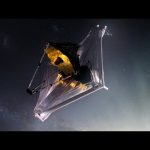
The past month has been an exciting one for NASA’s James Webb Space Telescope — from launch in tropical French Guiana, to the two-week unfolding of this intricately-packed telescope, the observatory has gone through a huge transformation in space. What’s next for Webb as it cools down over the next five months and looks to #UnfoldTheUniverse? Join mission experts and submit your questions on social media using #UnfoldTheUniverse.
Meet the experts:
Dr. Amber Straughn is Deputy Project Scientist for Webb Science Communications at NASA’s Goddard Space Flight Center in Maryland. She has been working on this mission for over 13 years and is most looking forward to the unexpected discoveries we’ll make with the telescope; the things that may completely surprise us. In her spare time, she loves hiking, yoga, flying, live music, and doing what she can to make her corner of the world a better place.
Miss Scarlin Hernandez is Webb Flight Systems Engineer at the Space Telescope Science Institute in Maryland. With the Webb mission, she is most looking forward to learning more about the origin of life and discovering things we didn’t know were out there. In her free time, she enjoys meditating, empowering others, listening to music and spending time with family and friends.
Miss Tahira Allen is Communication Strategist for the NASA Headquarters digital media team in Washington. Completion of Webb’s major deployments in space was one of the most exciting moments for her during this mission. In her own words: “Talk about human ingenuity at its finest!” In Tahira’s spare time she enjoys cooking, exercising, spending time with family and friends, mentoring University of Georgia students, and learning about world history.
The James Webb Space Telescope lifted off on an Ariane 5 rocket from Europe’s Spaceport in French Guiana, at 13:20 CET on 25 December 2021 on its exciting mission to unlock the secrets of the Universe.
This timelapse shows highlights of the launch campaign from the arrival of Webb in French Guiana through to liftoff.
Every launch requires meticulous planning and preparation. For Webb, this process began about 15 years ago. Webb arrived from California on board the MN Colibri which sailed the Panama Canal to Pariacabo harbour in French Guiana. The shallow Kourou river was specially dredged to ensure a clear passage and the vessel followed high tide to safely reach port on 12 October 2021.
Though the telescope weighs only six tonnes, it was more than 10.5 m high and almost 4.5 m wide when folded. At Europe’s Spaceport it was unpacked inside a dedicated spacecraft preparation facility fitted with walls of air filters to protect the telescope from contamination during preparations for launch.
After its arrival in the final assembly building, Webb was lifted slowly about 40 m high and then carefully manoeuvred on top of Ariane 5 – one of the most delicate operations during the entire launch campaign. A ‘shower curtain’ about 12 m high and 8 m in diameter was installed in between two platforms, to create a closed-off space around Webb to avoid any contamination.
On the day of encapsulation, the fairing was lowered over the observatory and locked in place for liftoff. A laser guiding system assisted this particularly delicate operation for a perfect fit inside Ariane 5’s fairing.
Ariane 5 with Webb was rolled out from the final assembly building to the launch pad on 22 December. On 25 December, Ariane 5 performed the flawless launch of this once in a generation mission. Ariane 5’s highly precise launch meant that Webb saved its own fuel which can be used to significantly extend its expected lifetime of 10 years.
Webb is the largest, most powerful telescope ever launched into space. As part of an international collaboration agreement, ESA has provided the telescope’s launch service using the Ariane 5 launch vehicle. Working with partners, ESA was responsible for the development and qualification of Ariane 5 adaptations for the Webb mission and for the procurement of the launch service by @arianespace. ESA has also provided the workhorse spectrograph NIRSpec and 50% of the mid-infrared instrument MIRI, in collaboration with the University of Arizona. Webb is an international partnership between @NASA, ESA and the @Canadian Space Agency.
We are Europe’s gateway to space. Our mission is to shape the development of Europe’s space capability and ensure that investment in space continues to deliver benefits to the citizens of Europe and the world. Check out https://www.esa.int/ to get up to speed on everything space related.
A commercial mission returning cargo from the space station, the first space station spacewalk of the year, and observing a massive volcanic eruption from space… a few of the stories to tell you about – This Week at NASA!
In this week’s edition of the Earth from Space programme, the Copernicus Sentinel-2 mission takes us over part of Mecklenburg–West Pomerania in northeast Germany and a portion of the northwest coast of Poland.
We are Europe’s gateway to space. Our mission is to shape the development of Europe’s space capability and ensure that investment in space continues to deliver benefits to the citizens of Europe and the world. Check out https://www.esa.int/ to get up to speed on everything space related.
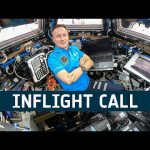
Join ESA astronaut Matthias Maurer live from the International Space Station, along with prominent experts and industry leaders, to explore how space research can improve life on our planet. ESA Director General Josef Aschbacher will take part in a panel discussion with Al Gore, Vice-President of the United States (1993-2001); Chris Kemp, CEO of Astra and Sarah bint Yousif Al-Amiri, Minister of State for Advanced Technology, Ministry of Industry and Advanced Technology of the United Arab Emirates. The panel discussion will be followed by a one-on-one conversation between ESA astronaut Matthias Maurer and Rebecca Blumenstein, deputy managing editor of @The New York Times. Event organised in partnership with the @World Economic Forum.
Jump to a specific moment in the replay: 00:00 – 20:19 – Stay tuned 20:19 – 54:42 – Conference 54:42 – 1:14:09 – Inflight call 1:14:09 – 1:21:22 – Final thoughts
★ Subscribe: http://bit.ly/ESAsubscribe and click twice on the bell button to receive our notifications.
We are Europe’s gateway to space. Our mission is to shape the development of Europe’s space capability and ensure that investment in space continues to deliver benefits to the citizens of Europe and the world. Check out https://www.esa.int/ to get up to speed on everything space related.
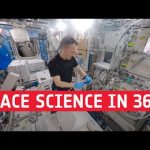
Immerse yourself in 360° of science with ESA astronaut Matthias Maurer as he prepares an experiment to examine how human cells behave in weightlessness.
The Cytoskeleton experiment is a biological study that aims to determine the changing function of RhoGTPases when in vitro cell cultures are exposed to weightlessness. It will run in the Biolab facility of Europe’s Columbus laboratory.
In this video, we see Matthias remove Cytoskeleton cell cultures from the Minus Eighty Lab Freezer ISS (MELFI) and prepare them in the Life Sciences Glovebox (LSG) before installing the experiment in Columbus’s BioLab.
Matthias was launched to the International Space Station for his current Cosmic Kiss mission on 11 November 2021. In his approximately six months on board, he will support over 35 European experiments and many more international experiments in orbit.
We are Europe’s gateway to space. Our mission is to shape the development of Europe’s space capability and ensure that investment in space continues to deliver benefits to the citizens of Europe and the world. Check out https://www.esa.int/ to get up to speed on everything space related.
A major milestone for the James Webb Space Telescope, what astronomers could learn from a “mini” monster black hole, and the latest assessment of our planet’s global surface temperature … a few of the stories to tell you about – This Week at NASA!
NASA announced the Biden-Harris Administration’s commitment to extend International Space Station (ISS) operations through 2030.
Over the past two decades, the United States has maintained a continuous human presence in orbit around the Earth to test technologies, conduct scientific research, and develop skills needed to explore farther than ever before. The unique microgravity laboratory has hosted more than 3,000 research investigations from over 4,200 researchers across the world and is returning enormous scientific, educational, and technological developments to benefit people on Earth. Nearly 110 countries and areas have participated in activities aboard the station, including more than 1,500,000 students per year in STEM activities.
Extending operations through 2030 will continue another productive decade of research advancement and enable a seamless transition of capabilities in low-Earth orbit to one or more commercially owned and operated destinations in the late 2020s.
As always, a new year brings new and exciting missions and launches for ESA. In science the world looks forward to the first image releases of the recently launched James Webb Space Telescope and the third data release for Gaia, both teaching us more about our galaxy and Universe. ESA’s new Mars rover will be launched with the ExoMars mission, and we will also see the maiden flights of Vega-C, Ariane 6 and the Artemis I flight. Astronaut Samantha Cristoforetti will return to the ISS for her second mission and a new class of astronauts will be presented to the world. After the groundwork has been laid in 2021 a new Ministerial Council Meeting will gather to look at the future of ESA, and the need for ESA and Europe to accelerate space and integrated space technology into the fabric of our lives.
★ Subscribe: http://bit.ly/ESAsubscribe and click twice on the bell button to receive our notifications.
We are Europe’s gateway to space. Our mission is to shape the development of Europe’s space capability and ensure that investment in space continues to deliver benefits to the citizens of Europe and the world. Check out https://www.esa.int/ to get up to speed on everything space related.
Join ESA astronaut Matthias Maurer inside Kibo, the Japanese laboratory module of the International Space Station in 360°, setting up Astrobee robotic free-flyers for the ReSWARM experiment. Short for RElative Satellite sWArming and Robotic Maneuvering, this robotics demonstration tests autonomous microgravity motion planning and control for on-orbit assembly and coordinated motion.
This investigation aims to test coordination between multiple robots, robots and cargo, and robots and their operating environment as developers envision the future of autonomous robot operations in space.
Matthias was launched to the International Space Station on Crew Dragon Endurance as part of Crew-3 at 02:03 GMT/03:03 CET Thursday 11 November 2021. His ESA mission on board is known as Cosmic Kiss and will see him live and work for approximately six months in orbit.
We are Europe’s gateway to space. Our mission is to shape the development of Europe’s space capability and ensure that investment in space continues to deliver benefits to the citizens of Europe and the world. Check out https://www.esa.int/ to get up to speed on everything space related.
Experts from the James Webb Space Telescope team discuss the successful completion of the final stage of all major spacecraft deployments to prepare for science operations.
On Sat., Jan. 8, Mission Operations Center ground control at the Space Telescope Science Institute in Baltimore began deploying the second side panel of the primary mirror at 8:53 a.m. EST. Once it extended and latched into position at 1:17 p.m. EST, the team declared all major deployments completed.
A week of deployments for the James Webb Space Telescope, another remarkable achievement for Hubble, and helping to improve launch safety … a few of the stories to tell you about – This Week at NASA!
James Webb Space Telescope experts give real-time updates on deployment of the telescope’s secondary mirror. The secondary mirror is one of the most important pieces of equipment on the telescope, and is essential to the success of the mission.
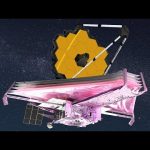
When deployed, this mirror will sit out in front of Webb’s hexagonal primary mirrors, which form an iconic honeycomb-like shape. This smaller circular mirror serves an important role in collecting light from Webb’s 18 primary mirrors into a focused beam. That beam is then sent down into the tertiary and fine steering mirrors, and finally to Webb’s four powerful scientific instruments.
James Webb Space Telescope experts give real-time updates in the final stages of the telescope’s sunshield deployment. A major milestone, the successful shield tensioning will ensure Webb’s mirrors stay cold enough to #UnfoldTheUniverse.
The five-layer, tennis court-sized sunshield is a critical part of the telescope because the infrared cameras and instruments aboard must be kept very cold and out of the Sun’s heat and light to function properly.
You’ve got questions, we’ve got answers! Is Mars habitable? Do aliens exist? Are there oceans on other worlds? Our “We Asked a NASA Expert” video series answers all of these questions and more. Tune in to our playlist to learn all about this solar system we call home: https://go.nasa.gov/32MVcs3
Producers: Jessica Wilde & Scott Bednar Editor: Matthew Schara
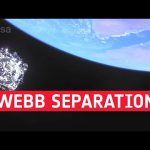
This real-time video shows the separation of the James Webb Space Telescope from the Ariane 5 launch vehicle and the subsequent solar array deployment.
Webb’s launch on an ESA-provided Ariane 5 rocket was performed by @arianespace on behalf of ESA from Europe’s Spaceport in French Guiana, at 12:20:07 GMT (13:20:07 CET) on 25 December 2021.
Webb separation from the Ariane 5 occurred at 12:47:14 GMT (13:47:14 CET) with solar array deployment starting 69 seconds later.
Thanks to Ariane 5’s highly precise launch trajectory Webb’s solar array was able to deploy soon after separation from the Ariane 5, capturing sunlight to power the observatory.
This video shows the view from Ariane 5’s upper stage, taken by a camera manufactured by Irish company Réaltra Space Systems Engineering.
Webb is the next great space science observatory following Hubble, designed to answer outstanding questions about the Universe and to make breakthrough discoveries in all fields of astronomy. Webb will see farther into our origins: from the formation of stars and planets, to the birth of the first galaxies in the early Universe. Webb is an international partnership between @NASA, ESA and the @Canadian Space Agency.
We are Europe’s gateway to space. Our mission is to shape the development of Europe’s space capability and ensure that investment in space continues to deliver benefits to the citizens of Europe and the world. Check out https://www.esa.int/ to get up to speed on everything space related.
Are there rainbows on Mars? Sadly, no. But there are a whole lot of other conditions on Mars that we have right here on Earth! NASA scientist Mark Lemmon explains why the Red Planet is a rainbowless world. Get more Martian science: www.nasa.gov/mars
Producers: Jessica Wilde & Scott Bednar Editor: Matthew Schara
Highlights of the launch campaign for the James Webb Space Telescope, from its arrival at Europe’s Spaceport in Kourou, French Guiana, weeks of launch preparations, to launch on board an Ariane 5, and separation of the spacecraft and solar panel deployment.
Now in space and on its way to L2, Webb will undergo a complex unfolding sequence. In the months after, the instruments will be turned on and their capabilities tested. After half a year in space, Webb will start its routine science observations.
Webb will see farther into our origins: from the Universe’s first galaxies, to the birth of stars and planets, to exoplanets with the potential for life, and our own Solar System.
We are Europe’s gateway to space. Our mission is to shape the development of Europe’s space capability and ensure that investment in space continues to deliver benefits to the citizens of Europe and the world. Check out https://www.esa.int/ to get up to speed on everything space related.
From one space flier to another, ESA astronaut Matthias Maurer shares a message of support for the James Webb Space Telescope (Webb) launch, from ESA’s Columbus science laboratory on the International Space Station.
Matthias is currently living and working in space for his first mission known as Cosmic Kiss. He describes the mission of Webb as part of humankind’s biggest adventure, as we explore the cosmos to understand our place within it.
Webb is the next great space science observatory following Hubble, designed to answer outstanding questions about the Universe and to make breakthrough discoveries in all fields of astronomy. It is an international partnership between the European Space Agency ESA, US space agency @NASA, and the @Canadian Space Agency, and will be launched on an Ariane 5 rocket from Europe’s Spaceport in French Guiana.
Webb is designed to see farther into our origins: from the formation of stars and planets to the birth of the first galaxies in the early Universe, just as the International Space Station enables us to learn more about our home planet.
We are Europe’s gateway to space. Our mission is to shape the development of Europe’s space capability and ensure that investment in space continues to deliver benefits to the citizens of Europe and the world. Check out https://www.esa.int/ to get up to speed on everything space related.
Feel like a guest and join ESA astronaut Matthias Maurer and his Expedition 66 crew mates enjoying a festive Thanksgiving meal on board the International Space Station in 360°. Explore the space station’s dining area and see what’s on the menu for this year’s orbital Thanksgiving.
Matthias says: “One of the best things about international collaboration, beyond our daily work on science and operations, is sharing international celebrations and culture. I’m thankful for all my crew mates up here on the International Space Station and everyone supporting our mission from Earth”.
Matthias was launched to the International Space Station on Crew Dragon Endurance as part of Crew-3 at 02:03 GMT/03:03 CET Thursday 11 November 2021. His ESA mission is known as Cosmic Kiss and will see him live and work in orbit for approximately six months.
We are Europe’s gateway to space. Our mission is to shape the development of Europe’s space capability and ensure that investment in space continues to deliver benefits to the citizens of Europe and the world. Check out https://www.esa.int/ to get up to speed on everything space related.
We’re almost ready to say goodbye to 2021, a year in which ESA once more succeeded in continuing operations in a challenging global situation, and creating some important milestones in the field of European spaceflight. As always, ESA has been at the forefront of science, with several science missions en route to their destinations or being prepared for flight, such as BepiColombo, Solar Orbiter, JUICE and ExoMars, and not least rounding off the year with the impending launch of the James Webb Space Telescope. Europe’s Copernicus programme continues to be the largest Earth observation system in the world, and ESA is even preparing more Earth observation missions. In 2021, ESA astronaut Thomas Pesquet carried out his Alpha mission to the Space Station, and Matthias Maurer began his Cosmic Kiss mission, continuing into 2022. As we said farewell to Prof. Jan Wörner, a new Director General took the helm of ESA and we welcomed Dr Josef Aschbacher with his ambition to accelerate the use of space in Europe. Meanwhile, the latest Vega rocket flight has paved the way for the transition to Vega-C, and the new Ariane 6 launchpad was inaugurated.
★ Subscribe: http://bit.ly/ESAsubscribe and click twice on the bell button to receive our notifications.
We are Europe’s gateway to space. Our mission is to shape the development of Europe’s space capability and ensure that investment in space continues to deliver benefits to the citizens of Europe and the world. Check out https://www.esa.int/ to get up to speed on everything space related.
Why can you see the Moon during the day? Easy, because it’s there! It may seem odd to look up at the daytime sky and see the Moon but it’s perfectly natural. Planetary geologist Sarah Noble breaks it down so you know when to look up. Follow more Moon science: http://www.nasa.gov/moon
Producers: Jessica Wilde & Scott Bednar Editor: Seth Robinson
2021 was the busiest year yet for NASA in low-Earth orbit, we also made progress preparing for a flight test around the Moon, and had a very active year exploring space, studying Earth, testing technologies for next generation aircraft, and much more. Here’s a look back at those and other things we did this year at NASA.
Producer/Writer: Andre Valentine Editors: Sonnet Apple Shane Apple Music: Universal Production Music
0:00 Introduction 0:27 SOLAR SYSTEM AND BEYOND 1:53 NEW LEADERSHIP 2:13 EARTH 3:51 HUMANS IN SPACE 5:32 MOON TO MARS 7:02 SPACE TECH 7:47 FLIGHT 9:04 DIVERSITY, EQUALITY, INCLUSION, AND ACCESSIBILITY 9:40 STEM ENGAGEMENT 10:38 BENEFITS TO YOU
We don’t yet know what the James Webb Space Telescope will uncover. Will we get answers? Will we have more questions? One thing’s certain: The story of us is a never-ending quest for knowledge.
As Carl Sagan said: “We can’t help it.” #UnfoldTheUniverse
Produced by Lindeman & Associates Voice of Carl Sagan courtesy of Druyan-Sagan Associates, Inc., used with permission Imagery courtesy of NASA and ESA, with Druyan-Sagan Associates, Inc., used with permission
Watch the 24th SpaceX cargo resupply mission to the International Space Station lift off from NASA’s Kennedy Space Center.
Launch is targeted for 5:07 a.m. (10:07 UTC). On board are a variety of scientific investigations, including a protein crystal growth study that could improve how cancer treatment drugs are delivered to patients and a handheld bioprinter that could one day be used to print tissue directly onto wounds for faster healing.
There are also experiments from students at several universities as part of the Student Payload Opportunity with Citizen Science (SPOCS) program and an investigation that examines using clothes detergent in microgravity. Dragon will arrive to the space station the following day at about 4:30 a.m. (09:30 EST).
Did you know that in microgravity you can better study liquid metals and how they solidify?
Research in space on metallurgy helps improving production processes while enhancing properties for stronger, lighter and durable materials.
The step to space research is closer than you might think. Get involved with spaceflight research via https://www.esa.int/spaceflightAO. Find out about our commercial partnerships and opportunities in human and robotic exploration via https://www.esa.int/explorationpartners to run your research in microgravity as well.
★ Subscribe: http://bit.ly/ESAsubscribe and click twice on the bell button to receive our notifications.
We are Europe’s gateway to space. Our mission is to shape the development of Europe’s space capability and ensure that investment in space continues to deliver benefits to the citizens of Europe and the world. Check out https://www.esa.int/ to get up to speed on everything space related.
Join ESA astronaut Matthias Maurer inside the seven-windowed cupola, the International Space Station’s “window to the world” and pan around to enjoy the view.
The ESA – European Space Agency-built Cupola is the favourite place of many astronauts on the International Space Station.
It serves not only as a unique photo spot, but also for observing robotic activities of the Canadian Space Agency’s robotic arm Canadarm2, arriving spacecraft and spacewalks.
Just outside the cupola and behind Matthias is a portion of the Soyuz MS-19 crew ship docked to the Rassvet module and the Prichal docking module attached to the Nauka multipurpose laboratory service module.
Matthias was launched to the International Space Station on Crew Dragon Endurance as part of Crew-3 at 02:03 GMT/03:03 CET Thursday 11 November. His ESA mission on board is known as Cosmic Kiss and will see him live and work for approximately six months in orbit.
We are Europe’s gateway to space. Our mission is to shape the development of Europe’s space capability and ensure that investment in space continues to deliver benefits to the citizens of Europe and the world. Check out https://www.esa.int/ to get up to speed on everything space related.
The Copernicus Sentinel-2 takes us over Kourou – home to Europe’s Spaceport in French Guiana, where the James Webb Space Telescope is being prepared for its upcoming launch – in this edition of the Earth from Space programme.
We are Europe’s gateway to space. Our mission is to shape the development of Europe’s space capability and ensure that investment in space continues to deliver benefits to the citizens of Europe and the world. Check out https://www.esa.int/ to get up to speed on everything space related.