NASA’s SpaceX Crew-9 mission with astronauts Nick Hague, Butch Wilmore, and Suni Williams, and Roscosmos cosmonaut Aleksandr Gorbunov, is preparing to return to Earth following their science mission aboard the International Space Station.
Hague, Williams, and Wilmore completed more than 900 hours of research between over 150 unique scientific experiments and technology demonstrations during their stay aboard the orbiting laboratory.
Have you ever wanted to design something that could fly around the Moon? This is your opportunity. The Artemis II astronauts will use a zero gravity indicator during their mission to demonstrate when their Orion spacecraft has reached microgravity. This plushie needs to be soft, small, and importantly, remind us of home.
The Moon Mascot contest challenges people of all ages from all over the world to submit a design to be made by NASA’s Thermal Blanket Lab and flown aboard Artemis II.
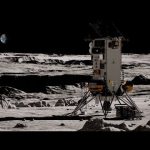
Watch Intuitive Machines’ Nova-C lunar lander, Athena, touch down on the Moon. Athena will land at Mons Mouton, a lunar plateau near the Moon’s South Pole, delivering NASA science and technology to the Moon’s surface. Landing is slated for no earlier than 12:30 p.m. EST (1730 UTC).
The NASA tech aboard the lander will demonstrate resource utilization on the Moon by measuring the possible presence of volatiles or gases from lunar soil and give future spacecraft a permanent reference point on the lunar surface.
This is Intuitive Machines’ second Moon landing as part of NASA’s Commercial Lunar Payload Services (CLPS) initiative. To learn more about CLPS, visit https://go.nasa.gov/3RFR0A5.
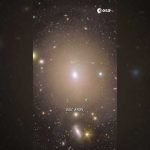
This video takes you on a breathtaking zoom-in journey to the spiral galaxy LEDA 2046648, located over a billion light-years away in the constellation Hercules. Captured by the NASA/ESA/CSA James Webb Space Telescope’s NIRCam instrument, this image reveals a stunning array of distant galaxies and bright stars, crowned with Webb’s signature six-pointed diffraction spikes.
Webb’s mission is to explore the universe’s earliest galaxies, unveiling their formation, evolution, and chemical composition through its powerful infrared vision. This observation was part of the telescope’s calibration process, ensuring its instruments were fine-tuned for groundbreaking discoveries. As the camera zooms in, witness the incredible detail Webb can capture, showcasing the vast and intricate tapestry of the cosmos.
Credit: ESA/Webb, NASA & CSA, A. Martel, Dark Energy Survey/DOE/FNAL/NOIRLab/NSF/AURA, DSS, E. Slawik, N. Risinger, D. de Martin, N. Bartmann, M. Zamani
Smile is a brand-new space mission currently in the making. It will study space weather and the interaction between the solar wind and Earth’s magnetic environment.
At the European Space Agency’s technical heart in the Netherlands, engineers have spent the last five months unboxing and testing different elements of the spacecraft, and joining the two main parts together. Due to launch by the end of 2025, Smile is now well on its way to being ready for space.
This video provides a glimpse into what we’ve been up to recently. It is the second episode in a series of short videos, and includes interviews with Adriana González Castro (ESA Smile Project Controller), Walfried Raab (ESA Smile Lead Payload Engineer), Sylvain Vey (ESA Smile Instrument and Operations Interface Engineer), Li Jing (CAS Smile Project Manager), Benjamin Vanoutryve (Smile AIT/AIV and Launcher Interface Principal Engineer), and José Ignacio Maestra Onteniente (Airbus Smile AIT Manager).
Credit: ESA/Lightcurve Films
Acknowledgment: Direction, main camera, sound, editing, post-production by Lightcurve Films. Original music by William Zeitler. Drone footage is by The Postboat Dronedepartment.
★ Subscribe: http://bit.ly/ESAsubscribe and click twice on the bell button to receive our notifications.
We are Europe’s gateway to space. Our mission is to shape the development of Europe’s space capability and ensure that investment in space continues to deliver benefits to the citizens of Europe and the world. Check out https://www.esa.int/ to get up to speed on everything space related.
Did you know that NASA technology is all around you? From the camera in your phone to lifesaving medical devices — and so much more — innovations developed for space often come back to improve life on Earth.
Through NASA spinoffs, space technology fuels advancements in healthcare, transportation, agriculture and more. Our expert explains how NASA is part of your everyday life!
It turns out water is great at blocking radiation. But using water as a protection system has its challenges.
A team from the Polymer Chemistry and Biomaterials Group (PBM) at Ghent University in Belgium is looking into a new option: superabsorbent polymers (SAPs).
These materials might be safer and more effective than water alone.
SAPs can soak up hundreds of times their weight in liquid, similar to those “grow monster” toys that expand in water. When swollen with liquid, they’re called “hydrogels.”
📹 ESA – European Space Agency 📸 Lenny Van Daele/Johan Dubruel
Watch live with NASA as Firefly Aerospace prepares to land their Blue Ghost craft on the Moon for the first time.
Firefly’s Blue Ghost lunar lander is slated to touch down near Mare Crisium, on the near side of the Moon, no earlier than 3:45 a.m. EST (0845 UTC) on Sunday, March 2. Live coverage, jointly hosted by NASA and Firefly, begins at 2:20 a.m. EST (0720 UTC).
Blue Ghost Mission 1 is part of NASA’s Commercial Lunar Payload Services (CLPS) initiative, which is sending science and technology to the lunar surface in preparation for NASA’s Artemis campaign, which will establish a long-term presence at the Moon. Blue Ghost is sending10 experiments and demonstrations to provide insights into the Moon’s environment and support future astronauts on the Moon and Mars.
For years, scientists believed Mars got its red color from hematite, a type of rust that forms in dry conditions. But a new study suggests something surprising—ferrihydrite, a different kind of rust that forms in cool liquid water!
This discovery could mean Mars was once much wetter than we thought—maybe even habitable. And the best part? Our Rosalind Franklin rover will soon analyse Martian soil up close to uncover even more secrets.
Watch live video from the International Space Station, including inside views when the crew aboard the space station is on duty. Views of Earth are also streamed from an external camera located outside of the space station. During periods of signal loss due to handover between communications satellites, a blue screen is displayed.
The space station orbits Earth about 250 miles (425 kilometers) above the surface. An international partnership of five space agencies from 15 countries operates the station, and it has been continuously occupied since November 2000. It’s a microgravity laboratory where science, research, and human innovation make way for new technologies and research breakthroughs not possible on Earth. More: https://go.nasa.gov/3CkVtC8
Did you know you can spot the station without a telescope? It looks like a fast-moving star, but you have to know when to look up. Sign up for text messages or email alerts to let you know when (and where) to spot the station and wave to the crew: https://spotthestation.nasa.gov
Live views from the International Space Station are streaming from an external camera mounted on the station’s Harmony module.
The camera is looking forward at an angle so that International Docking Adapter 2 is visible. If the Harmony module camera is not available due to operational considerations for a longer period of time, a continuous loop of recorded Earth views will be displayed with the caption “Previously Recorded.”
The space station orbits Earth about 250 miles (425 kilometers) above the surface. An international partnership of five space agencies from 15 countries operates the station, and it has been continuously occupied since November 2000. It’s a microgravity laboratory where science, research, and human innovation make way for new technologies and research breakthroughs not possible on Earth. More: https://go.nasa.gov/3CkVtC8
Did you know you can spot the station without a telescope? It looks like a fast-moving star, but you have to know when to look up. Sign up for text messages or email alerts to let you know when (and where) to spot the station and wave to the crew: https://spotthestation.nasa.gov
How did asteroid 2024 YR4 go from being the riskiest asteroid ever detected to posing no real threat? 🌍 ☄️
First spotted in December 2024, its impact risk initially soared to 2.8%, surpassing previous record-holder Apophis. But thanks to refined observations from our Near-Earth Object Coordination Centre and other institutions, its risk quickly dropped to just 0.001% within days.
This dramatic shift follows a well-known pattern—asteroid impact probabilities often rise before plummeting as more data becomes available. Now, nearly all possible impact scenarios have been ruled out, and 2024 YR4 has been safely removed from our risk list.
Watch Intuitive Machines’ Nova-C Moon lander and NASA’s Lunar Trailblazer lift off on a SpaceX Falcon 9 rocket from NASA’s Kennedy Space Center in Florida. IM-2 is scheduled to launch at 7:16 p.m. EST (0016 UTC Feb. 27).
The lander, named Athena, will carry NASA science and technology to the Moon’s surface. Athena will orbit the Moon for approximately three days before landing at Mons Mouton, a lunar plateau near the Moon’s South Pole.
The NASA tech aboard the lander will demonstrate resource utilization on the Moon by measuring the possible presence of volatiles or gases from lunar soil and give future spacecraft a permanent reference point on the lunar surface.
Launching as a rideshare with the IM-2 delivery, NASA’s Lunar Trailblazer spacecraft also will begin its journey to lunar orbit, where it will map the distribution of the different forms of water on the Moon.
This is Intuitive Machines’ second launch to the Moon as part of NASA’s Commercial Lunar Payload Services (CLPS) initiative. To learn more about CLPS, visit https://go.nasa.gov/3RFR0A5.
The Intuitive Machines-2 mission is set to launch the company’s lunar lander, Athena, to the Moon. Athena will carry NASA science experiments and technology demonstrations to help us understand the Moon’s environment, and prepare for future human missions to the lunar surface.
One piece of tech aboard, the Polar Resources Ice Mining Experiment 1 (PRIME-1), is one of the first on-site demonstrations of resource use on the Moon. PRIME-1 will take a lunar soil sample and analyze it to see if it contains water ice.
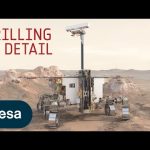
The ExoMars Rosalind Franklin rover will drill deeper than any other mission has ever attempted on the Red Planet.
The third episode in the series shows how the rover will extract, collect and analyse martian samples in a high-fidelity simulation.
Rosalind Franklin will be the first rover to reach a depth of up to two metres deep below the surface, acquiring samples that have been protected from harsh surface radiation and extreme temperatures.
The drill system combines multiple precission mechanisms in an intricate automated sequence. It uses three extension rods that connect tor form a two-metre “drill string”.
As the rover drills, it will simultaneously investigate the borehole using infrared spectroscopy to study mineral composition.
The ExoMars Rosalind Franklin mission is part of Europe’s ambitious exploration journey to search for past and present signs of life on Mars.
Credits: ESA – European Space Agency Production: Mlabspace for ESA 3D animation: ESA/Mlabspace Music composed by Valentin Joudrier
★ Subscribe: http://bit.ly/ESAsubscribe and click twice on the bell button to receive our notifications.
We are Europe’s gateway to space. Our mission is to shape the development of Europe’s space capability and ensure that investment in space continues to deliver benefits to the citizens of Europe and the world. Check out https://www.esa.int/ to get up to speed on everything space related.
Is there potential for life on Europa? This icy moon of Jupiter has a massive ocean hidden beneath its icy crust — one that might have the right ingredients for life. Currently en route, our upcoming Europa Clipper mission will explore this mysterious world, searching for clues about its potential habitability. Watch as a NASA scientist explains more.
Live views from the International Space Station are streaming from an external camera mounted on the station’s Harmony module.
The camera is looking forward at an angle so that International Docking Adapter 2 is visible. If the Harmony module camera is not available due to operational considerations for a longer period of time, a continuous loop of recorded Earth views will be displayed with the caption “Previously Recorded.”
The space station orbits Earth about 250 miles (425 kilometers) above the surface. An international partnership of five space agencies from 15 countries operates the station, and it has been continuously occupied since November 2000. It’s a microgravity laboratory where science, research, and human innovation make way for new technologies and research breakthroughs not possible on Earth. More: https://go.nasa.gov/3CkVtC8
Did you know you can spot the station without a telescope? It looks like a fast-moving star, but you have to know when to look up. Sign up for text messages or email alerts to let you know when (and where) to spot the station and wave to the crew: https://spotthestation.nasa.gov
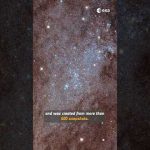
Witness the breathtaking beauty of our cosmic neighbor—the Andromeda galaxy—located 2.5 million light-years away. This spiral disk galaxy appears elliptical from Earth due to its tilted orientation. In this panoramic view, young blue stars shimmer along the galaxy’s outer rim, while older yellowish stars cluster toward the bright central hub, resembling the yolk of a cosmic fried egg. 🍳💫
This vibrant portrait is the result of over 10 years of observations and more than 600 snapshots captured by the Hubble Space Telescope. Altogether, it reveals the mesmerizing glow of 200 million stars scattered across the galaxy’s immense 200,000-light-year-wide disk. As the camera zooms into the central region, a dense sea of ancient stars comes into view. Panning across the galaxy’s expanse, we see intricate patterns of dark dust clouds weaving through space, while vibrant blue star clusters stand out along the edges, signaling regions of ongoing star formation. 🌌✨
Prepare to be amazed as we explore one of the largest and most detailed galactic images ever captured—offering a glimpse into the heart of a distant galaxy, yet eerily similar to our own Milky Way.
📸 NASA, ESA, B. Williams (University of Washington), G. Bacon (STScI) 🎶 Rain Clouds – Beautiful Visions
You’ve heard about asteroid 2024 YR4 and we’ve heard your questions — so let’s talk about it. What are the chances it’ll hit Earth? Why do those odds keep changing? And should you be worried? (Spoiler alert: No). Get the facts from a NASA expert and learn how we track asteroids, update predictions, and keep an eye on the skies.
Coming April 2025, NASA’s Planetary Defenders documentary will showcase the international collaboration and dedicated team of astronomers and scientists working tirelessly to track and monitor near-Earth asteroids, aiming to protect our planet from potential impacts: https://go.nasa.gov/NASAPlanetaryDefenders
NASA’s SPHEREx and PUNCH missions are set to launch together, with one mission aiming to answer big-picture questions about our universe and the other seeking a better understanding of our Sun.
SPHEREx (Spectro-Photometer for the History of the Universe, Epoch of Reionization and Ices Explorer) is an infrared space telescope designed to map the entire sky like none before it. SPHEREx will study the origins of the universe, galaxies, and the ingredients for life in our galaxy.
PUNCH (Polarimeter to Unify the Corona and Heliosphere) is a constellation of four small satellites dedicated to studying the Sun’s outer atmosphere, the solar corona, and how it extends into space to form the solar wind. Understanding these processes is critical to predicting space weather and its impact on Earth’s magnetic field.
Together, SPHEREx and PUNCH demonstrate NASA’s commitment to uncovering the fundamental forces that shape our universe and our own star.
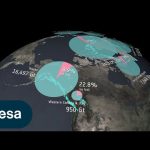
As part of a community effort, the Glacier Mass Balance Intercomparison Exercise, Glambie, has compiled all major studies using observations from a wealth of different techniques to provide an estimate of the world’s glacier mass change over the last two decades. The results, published in the journal Nature, show that ice melting from glaciers around the world is depleting regional freshwater resources and driving global sea levels to rise at ever-faster rates. The animation here illustrates the different observation methods used in the research, and Vatnajökull in Iceland as an example.
We are Europe’s gateway to space. Our mission is to shape the development of Europe’s space capability and ensure that investment in space continues to deliver benefits to the citizens of Europe and the world. Check out https://www.esa.int/ to get up to speed on everything space related.
How long does it take to get to the Moon? Mars? Jupiter? The answer is: it depends — and speed is only one factor. Travel times also depend on distance, fuel, physics and clever trajectory planning. From quick trips to the Moon to years-long voyages to the outer planets, every mission follows a unique path. Watch as a NASA scientist breaks down what it really takes to travel through space.
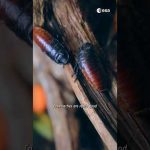
Waste management is a critical challenge for spaceflight. But what if the waste produced by astronauts could be sustainably transformed into something valuable in space? A Polish company thought about that and has come up an innovative solution: an insect bioreactor powered by Madagascar cockroaches.
Astronika, with support from ESA, has developed an innovative insect bioreactor that could revolutionize waste management on long-duration space missions. Currently, astronauts on the ISS rely on high-temperature reactors to process small amounts of waste, but much of it is still sent back to Earth. This method is unsustainable for deep-space missions. The insect bioreactor offers a closed-loop solution by converting organic waste into valuable resources, helping to create a more self-sufficient space ecosystem.
The system relies on Madagascar cockroaches, chosen for their resilience and efficiency in breaking down waste. The bioreactor can process up to 3.6 kg of waste per week, producing over 100 grams of protein-rich biomass—equivalent to more than 20 eggs. It also aids in water recovery and reduces waste volume, making it a highly sustainable option for future missions. By optimizing the bioreactor’s environment—controlling temperature, humidity, and waste conditions—the insects’ metabolism and reproduction can be accelerated, improving efficiency.
While still in early development, the next step is to send a prototype to space to observe how cockroaches behave and reproduce in microgravity. Understanding their adaptation to space conditions will provide valuable insights for further development. In the future, this technology could be a key component of long-term missions to the Moon or Mars, not only for waste recycling but also for plant cultivation and food production, helping astronauts sustain themselves far from Earth.
Euclid, the European Space Agency’s dark Universe detective, has made an astonishing discovery – right in our cosmic backyard.
An Einstein Ring, an extremely rare phenomenon, has been found hiding in plain sight in a galaxy not so far away. 🤩
During early testing in September 2023, the team spotted something special in one of Euclid’s first images—an Einstein Ring! This rare phenomenon, caused by gravitational lensing, was found around the well-known galaxy NGC 6505, just 590 million light-years away. The light from a much more distant galaxy (4.42 billion light-years away) is bending around it, creating a stunning cosmic ring.
This discovery shows just how powerful Euclid is. With its mission now in full swing, we can expect many more hidden cosmic wonders to be revealed!
📹 ESA – European Space Agency 📸 ESA/Euclid/Euclid Consortium/NASA, image processing by J.-C. Cuillandre, G. Anselmi, T. Li
Let’s celebrate International Day of Women in Science 👩🔬 by showcasing the incredible work these 9 women are doing across the fields of science, technology, engineering, and mathematics (STEM).
Kenza Battaglia is a thermal engineer working at the European Space Agency who performs vacuum thermal testing and verification.
At @ESOobservatory Eleonora Sani combines her astronomical background with strategic planning to shape the operations of the next generation of astronomical observatories.
Ivette Bermudez Macias works at the @EuropeanXFEL. She helps scientists deal with huge amounts of data of Nobel-Prize-winning research.
Anna Radoslavova is a PhD student at @CERN who tackles challenges like noise studies and intra-beam scattering at the Large Hadron Collider (LHD).
Elena Fernandez Cano is a Structural Engineer working at @fusionforenergy. She’s helping Europe deliver fusion energy, replicating the process that powers the sun.
Marta Mirolo, a Junior Scientist working at the @ESRFsynchrotron shows how X-rays can help scientists to better understand their processes and materials.
Pilar Cano Megias is a post doctoral researcher. She works at the SMART tokamak project and she is a beneficiary of the @Euro-fusionOrg Researcher Grant.
Diënty Hazenbrink is a scientific officer working at @EMBLorg. She specialises in developing innovative high-throughput workflows to advance microbiological research.
Martina Sandroni, a Chemistry Laboratories Manager working at ILL Neutrons for Society, supports researchers in laboratories, even when handling toxic and delicate substances.
📸 ESA/Webb, NASA & CSA, J. Lee and the PHANGS-JWST and PHANGS-HST Teams, A. Scholz, K. Muzic, A. Langeveld, R. Jayawardhana, A. Adamo (Stockholm University) and the FEAST JWST team, STScI, A. Riess (JHU/STScI), Euclid/Euclid Consortium
Using data from the European Space Agency’s Gaia mission, scientists have found a huge exoplanet and a brown dwarf. This is the first time a planet has been uniquely discovered by Gaia’s ability to sense the gravitational tug or ‘wobble’ the planet induces on a star. Both the planet and brown dwarf are orbiting low-mass stars, a scenario thought to be extremely rare.
📹 ESA – European Space Agency 📸 ESA/Gaia/DPAC/M. Marcussen
A group of volunteers is spending two months lying in bed—with their feet up and one shoulder always touching the mattress—even while eating, showering, and using the toilet. But why? This extreme bedrest study is helping scientists understand how space travel affects the human body and how to keep astronauts healthy on long missions.
Microgravity causes muscle and bone loss, fluid shifts, and other physiological changes similar to those experienced by bedridden patients on Earth. By studying volunteers here on Earth, researchers can develop better countermeasures for astronauts and even improve treatments for medical conditions like osteoporosis.
In this study, participants are divided into three groups: one stays in bed with no exercise, another cycles in bed to mimic astronaut workouts, and a third cycles while being spun in a centrifuge to simulate artificial gravity. Scientists hope artificial gravity could become a key tool in protecting astronauts during deep-space missions.
Could you handle 60 days in bed for the sake of space exploration? Let us know in the comments!
Credits: ESA – European Space Agency
★ Subscribe: http://bit.ly/ESAsubscribe and click twice on the bell button to receive our notifications.
We are Europe’s gateway to space. Our mission is to shape the development of Europe’s space capability and ensure that investment in space continues to deliver benefits to the citizens of Europe and the world. Check out https://www.esa.int/ to get up to speed on everything space related.
The AI-powered innovation transforming space medicine. Astronauts can now perform expert-level ultrasounds without Earth-based guidance—keeping them healthy on deep-space missions while paving the way for smarter, more accessible healthcare on Earth.
The future of exploration starts here!
📸 ESA/NASA – Alexander Gerst 📹 ESA – European Space Agency
Air Zero G’s parabolic flights create a weightless environment by flying along a curved path called a parabola. This short period of weightlessness lasts about 22 seconds, during which people and experiments on board the parabolic flight can experience the same weightlessness as astronauts in orbit on the International Space Station.
The price to pay for this free-floating freedom is two short periods of hypergravity, during which everything weighs almost double for 20 seconds: first when the aircraft pulls up sharply and then again when it pulls out sharply afterwards to return to a normal flight path.
Each parabola takes about one minute to complete and is repeated 31 times in one flight, providing a total of about ten minutes of zero-gravity.
The flights provide European scientists with access to a repeatable, low-gravity research environment. Hundreds of experiments have flown over thousands of parabolas, enabling extensive scientific endeavours across many disciplines and resulting in a huge legacy of publications.
Material from the asteroid Bennu is revealing that a lost world fostered the building blocks of life… with an unexpected twist.
Join experts on Thursday, January 30, at 3:00 p.m. EST (2000 UTC) as they dive into the recent findings from the asteroid sample NASA’s OSIRIS-REx spacecraft brought to Earth in September 2023.
Have questions? Share them in chat and we’ll answer a few live!
NASA astronauts Butch Wilmore and Suni Williams are taking a spacewalk outside the International Space Station on Thursday, Jan. 30, 2025, to maintain station hardware and collect samples of surface material for analysis from the Destiny laboratory and the Quest airlock. The spacewalk is expected to begin at approximately 8 a.m. EST (1300 UTC) and last for around six and a half hours.
Williams (wearing the suit with red stripes) and Wilmore (wearing the unmarked suit) arrived at the ISS last year and are both crew members of Expedition 72, which began on Sept. 23, 2024. This is Wilmore’s fifth spacewalk and the ninth for Williams.
Our engineers have analysed the first-ever autonomous weld performed in orbit—a game-changer for sustainable space exploration. Discover how this breakthrough is paving the way for in-space manufacturing and construction, bringing us closer to building habitats and infrastructure beyond Earth.
Listen to the ESA/JAXA BepiColombo spacecraft as it flew past Mercury on 8 January 2025. This sixth and final flyby used the little planet’s gravity to steer the spacecraft on course for entering orbit around Mercury in 2026.
What you can hear in the sonification soundtrack of this video are real spacecraft vibrations measured by the Italian Spring Accelerometer (ISA) instrument. The accelerometer data have been shifted in frequency to make them audible to human ears – one hour of measurements have been sped up to one minute of sound.
BepiColombo is always shaking ever so slightly: fuel is slightly sloshing, the solar panels are vibrating at their natural frequency, heat pipes are pushing vapour through small tubes, and so forth. This creates the eerie underlying hum throughout the video.
But as BepiColombo gets closer to Mercury, ISA detects other forces acting on the spacecraft. Most scientifically interesting are the audible shocks that sound like short, soft bongs. These are caused by the spacecraft responding to entering and exiting Mercury’s shadow, where the Sun’s intense radiation is suddenly blocked. One of ISA’s scientific goals is to monitor the changes in the ‘solar radiation pressure’ – a force caused by sunlight striking BepiColombo as it orbits the Sun and, eventually, Mercury.
The loudest noises – an ominous ‘rumbling’ – are caused by the spacecraft’s large solar panels rotating. The first rotation occurs in shadow at 00:17 in the video, while the second adjustment at 00:51 was also captured by one of the spacecraft’s monitoring cameras.
Faint sounds like wind being picked up in a phone call, which grow more audible around 30 seconds into the video, are caused by Mercury’s gravitational field pulling the nearest and furthest parts of the spacecraft by different amounts. As the planet’s gravity stretches the spacecraft ever so slightly, the spacecraft responds structurally. At the same time, the onboard reaction wheels change their speed to maintain the spacecraft’s orientation, which you can hear as a frequency shift in the background.
This is the last time that many of these effects can be measured with BepiColombo’s largest solar panels, which make the spacecraft more susceptible to vibrations. The spacecraft module carrying these panels will not enter orbit around Mercury with the mission’s two orbiter spacecraft.
The video shows an accurate simulation of the spacecraft and its route past Mercury during the flyby, made with the SPICE-enhanced Cosmographia spacecraft visualisation tool. The inset that appears 38 seconds into the video shows real photographs taken by one of BepiColombo’s monitoring cameras.
We are Europe’s gateway to space. Our mission is to shape the development of Europe’s space capability and ensure that investment in space continues to deliver benefits to the citizens of Europe and the world. Check out https://www.esa.int/ to get up to speed on everything space related.
NASA’s annual Day of Remembrance pays tribute to all members of the NASA family who lost their lives in the pursuit of exploration and discovery, including test pilots, the Apollo 1 crew, and the crews of space shuttles Challenger and Columbia.
On Jan. 23, 2025, we pause to honor their memory and reflect on the importance of maintaining a strong safety culture.
We know how microgravity impacts the brain thanks to astronauts on the ISS, but what about life on the Moon or Mars? Future explorers will also face hypoxia—low oxygen levels—which could affect their brain function and decision-making.
A team of students is tackling this challenge by conducting zero-gravity flight experiments to study how the brain responds to both microgravity and hypoxia. Their research could help improve astronaut safety for future lunar and Martian missions, ensuring they can explore safely beyond their spacecraft.
Could this be a key step in preparing humans for deep space exploration? Let us know your thoughts in the comments!
📹 ESA – European Space Agency 📸 ESA – European Space Agency
How would humanity respond if we discovered an asteroid headed for Earth? NASA’s upcoming documentary, “Planetary Defenders,” takes you inside the high-stakes world of asteroid hunting and planetary defense. Follow dedicated scientists and astronomers as they work to protect Earth from potential impacts. With stunning visuals and compelling stories, this gripping documentary reveals the human spirit behind the quest to safeguard our planet.
Coming soon to NASA+ in spring 2025. No subscription required. https://plus.nasa.gov
This stunning artist’s animation of the Milky Way is based on data from ESA’s Gaia space telescope. Gaia has completely reshaped our understanding of our home galaxy—revealing unexpected details about its spiral arms, central bar, and overall structure.
We can’t take a selfie of the Milky Way, but thanks to Gaia, we’re seeing it clearer than ever! And with more data releases on the way, our view will only get sharper.
Administrator Bill Nelson and Deputy Administrator Pam Melroy share a farewell message to the extraordinary NASA workforce.
Sen. Nelson was sworn in as the 14th NASA Administrator on May 3, 2021, and Col. Melroy as Deputy Administrator on June 21, 2021. Under Nelson and Melroy’s leadership, the agency made leap after giant leap to explore, discover, and inspire – leading the world into a golden age of space-driven exploration, innovation, and collaboration – all while bringing real, tangible, and substantial benefits to the American people and to all of humanity.