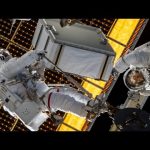
On Monday, Jan. 20 starting at 6:50 a.m. EST, NASA astronauts Jessica Meir and Christina Koch will step outside of the International Space Station into the vacuum of space together. The duo will wrap up the work of installing new lithium-ion batteries to upgrade the orbiting lab’s power systems. The spacewalk is scheduled to last about six-and-a-half hours.
Category: Astronomie
-

SpaceX Crew Dragon In-Flight Abort Test
NASA and SpaceX are targeting 10:30 a.m. EST, Sun., Jan. 19 for the In-Flight Abort Test. The launch window is six hours. This uncrewed test will demonstrate the Crew Dragon spacecraft’s escape capabilities, showing that it can protect astronauts even in the unlikely event of an emergency during launch. Crew Dragon will lift off from Launch Complex 39A aboard a Falcon 9 rocket, then separate from the rocket after an intentionally triggered launch escape. Dragon’s drogue and main parachutes will sequence to provide for a soft landing in the Atlantic Ocean.
-
Battery Upgrades Resume Aboard the Space Station on This Week @NASA – January 18, 2020
Spacewalkers resume battery upgrades aboard the space station, a post-flight visit from a couple of recently returned space station astronauts, and a key piece of SLS hardware moves closer to a critical test series … a few of the stories to tell you about – This Week at NASA!
This video is available for download from NASA’s Image and Video Library: https://images.nasa.gov/details-NHQ_2019_0118_Battery%20Upgrades%20Resume%20Aboard%20the%20Space%20Station%20on%20This%20Week%20@NASA%20%E2%80%93%20January%2018,%202020
-

Earth from Space: Japanese archipelago
The Copernicus Sentinel-3 mission takes us over Japan’s four main islands, in this week’s edition of the Earth from Space programme.
Download the image: https://www.esa.int/ESA_Multimedia/Images/2020/01/Japanese_archipelago
★ Subscribe: http://bit.ly/ESAsubscribe and click twice on the bell button to receive our notifications.
Check out our full video catalog: http://bit.ly/SpaceInVideos
Follow us on Twitter: http://bit.ly/ESAonTwitter
On Facebook: http://bit.ly/ESAonFacebook
On Instagram: http://bit.ly/ESAonInstagram
On Flickr: http://bit.ly/ESAonFlickrWe are Europe’s gateway to space. Our mission is to shape the development of Europe’s space capability and ensure that investment in space continues to deliver benefits to the citizens of Europe and the world. Check out http://www.esa.int/ESA to get up to speed on everything space related.
Copyright information about our videos is available here: http://www.esa.int/spaceinvideos/Terms_and_Conditions
#ESA
#EarthFromSpace
#Japan -

NASA Live: Earth Views from the Space Station
The High Definition Earth-Viewing (HDEV) experiment on the International Space Station has experienced a loss of data, and ground computers are no longer receiving communications from the payload. A team of engineers are reviewing the available health and status information from HDEV to identify what may have occurred. Additional updates will be published as they become available.
-

Episode 01: The Orbital Test Flight of Boeing’s Starliner
On December 20th 2019 Boeing conducted the first test flight ever of their new spacecraft Starliner. Together, NASA and Boeing made history in the face of challenges. This test flight was another step toward returning American space launch capability to American shores.
This video is available for download from NASA’s Image and Video Library: https://images.nasa.gov/details-Episode%2001%20-%20The%20Orbital%20Test%20Flight%20of%20Boeing%E2%80%99s%20Starliner
-

ESA Director General’s press briefing
Recording of the ESA Director General’s start-of-the-year press briefing, held at ESA headquarters in Paris, France, on 15 January 2020.
This briefing, with DG Jan Wörner and ESA Directors, lays out plans for the new budget committed to by Member States at Space19+ and looks ahead to activities in 2020.
★ Subscribe: http://bit.ly/ESAsubscribe and click twice on the bell button to receive our notifications.
Check out our full video catalog: http://bit.ly/SpaceInVideos
Follow us on Twitter: http://bit.ly/ESAonTwitter
On Facebook: http://bit.ly/ESAonFacebook
On Instagram: http://bit.ly/ESAonInstagram
On Flickr: http://bit.ly/ESAonFlickrWe are Europe’s gateway to space. Our mission is to shape the development of Europe’s space capability and ensure that investment in space continues to deliver benefits to the citizens of Europe and the world. Check out http://www.esa.int/ESA to get up to speed on everything space related.
Copyright information about our videos is available here: http://www.esa.int/spaceinvideos/Terms_and_Conditions
#ESA
#PressBriefing
#SpacePolicy -
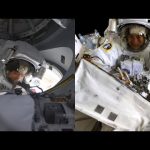
NASA Astronauts Spacewalk Outside the International Space Station on Jan. 15, 2020
On Wednesday, Jan. 15, NASA astronauts Jessica Meir and Christina Koch will step outside of the International Space Station into the vacuum of space together. The duo will replace old nickel-hydrogen batteries with newer, more powerful lithium-ion batteries to continue upgrading station power systems on the Port-6 truss structure. The spacewalk is scheduled to begin at 6:50 a.m. EST and last about six-and-a-half hours.
-
Forward to the Moon with ESA
The first flight of the Artemis programme, which will see humans return to the Moon, is scheduled to begin soon. The lunar spacecraft consists of NASA’s Orion crew module and the European Service Module, or ESM. Developed by ESA and building on technology from its Automated Transfer Vehicle (ATV), the ESM will provide propulsion, life support, environmental control and electrical power to Orion. The Artemis 1 spacecraft modules are undergoing thermal vacuum and electromagnetic interference tests in the world’s largest space simulation vacuum chamber at the Glenn Research Centre’s Plum Brook Station in Sandusky, Ohio, USA.
Learn more about Orion: http://bit.ly/ESAOrion
★ Subscribe: http://bit.ly/ESAsubscribe and click twice on the bell button to receive our notifications.
Check out our full video catalog: http://bit.ly/SpaceInVideos
Follow us on Twitter: http://bit.ly/ESAonTwitter
On Facebook: http://bit.ly/ESAonFacebook
On Instagram: http://bit.ly/ESAonInstagram
On Flickr: http://bit.ly/ESAonFlickrWe are Europe’s gateway to space. Our mission is to shape the development of Europe’s space capability and ensure that investment in space continues to deliver benefits to the citizens of Europe and the world. Check out http://www.esa.int/ESA to get up to speed on everything space related.
Copyright information about our videos is available here: http://www.esa.int/spaceinvideos/Terms_and_Conditions
#ESA
#Artemis
#Orion -

Artemis Generation: Astronaut Graduation Day
The first class of astronauts in the Artemis Generation have graduated after two years of astronaut training. These 13 men and women from both the U.S. and Canada are now ready to travel to the International Space Station, the Moon and beyond.
-

The First Graduating Class of Artemis Astronauts on This Week @NASA – January 10, 2020
The first graduating class of Artemis astronauts, getting ready to Green Run our SLS rocket, and intriguing discoveries in our solar system – and beyond … a few of the stories to tell you about – This Week at NASA!
This video is available for download from NASA’s Image and Video Library: https://images.nasa.gov/details-NHQ_2019_0110_The%20First%20Graduating%20Class%20of%20Artemis%20Astronauts%20on%20This%20Week%20@NASA%20%E2%80%93%20January%2010,%202020
-

Newest Astronauts Graduate with Eye on Artemis Missions
It’s graduation season for our #NewAstronauts! 👩🚀🎓👨🚀
An class of 11 Americans and two Canadians became astronauts on Friday, increasing the number of those eligible for spaceflight assignments that will expand humanity’s horizons in space for generations to come. The new astronauts successfully completed more than two years of required basic training and are the first to graduate since the agency announced its Artemis program.
www.nasa.gov/newastronauts/
-

Dreamed Of This
The next frontier isn’t just for the next generation – it’s for this generation.
With our Artemis program, we will land the first woman and next man on the Moon by 2024. Then, we will use what we learn on and around the Moon to take the next giant leap – sending astronauts to Mars. We go, as Artemis.
Learn more here: https://www.nasa.gov/artemis/
-

300 Days in Space for Christina Koch
January 9th, 2020 marks 300 days aboard the International Space Station for NASA Astronaut Christina Koch.
In December, Christina Koch set a record for the longest single spaceflight by a woman, eclipsing the record of 288 days set by former NASA astronaut Peggy Whitson in 2016-17. Koch will have been part of three expeditions – 59, 60 and 61 – during her first spaceflight. Her mission is planned to be just shy of the longest spaceflight by a NASA astronaut – 340 days, set by former NASA astronaut Scot Kelly during his one-year mission in 2015-16.
NASA has gathered vast amounts of data on astronaut health and performance over the past 50 years and has focused recently on extended durations up to one year with the dedicated mission of Scott Kelly and extended mission of Peggy Whitson. These opportunities have also demonstrated that there is a significant degree of variability in human response to spaceflight and it’s important to determine the acceptable degree of change for both men and women.
-
Meet NASA’s 2020 Earth Expeditions
Did you know NASA studies snowstorms, sinking coastlines, wildfires and many other processes affecting life on Earth? Join our experts live as we preview five new airborne science campaigns taking to the field in 2020 to explore questions critical to understanding our home planet. Tune in for the live broadcast from Hangar 703 at our Armstrong Flight Research Center on Tuesday, Jan. 7, from 11 a.m. to noon EST.
-
ESA Preview 2020
The year 2020 will see new and exciting European space missions, from journeys to the Sun and back to Mars, and from innovative telecommunications satellites to the continuing operation of Copernicus Earth observation satellites. The second ExoMars mission will see a European rover on the ‘Red Planet’ and the ESA/NASA Solar Orbiter mission will be launched around the Sun. This year marks probably the last time an ESA astronaut flies on a Russian Soyuz spacecraft – future European astronaut flights are likely to be on the new US spacecraft, in particular the NASA Orion vehicles, which feature European-built Service Modules, now being prepared for flights to the Moon and beyond. The year also sees the first flight of ESA’s new Vega-C launcher from Europe’s Spaceport in French Guiana, where Ariane 6 operations are also taking shape for its first flight.
★ Subscribe: http://bit.ly/ESAsubscribe and click twice on the bell button to receive our notifications.
Check out our full video catalog: http://bit.ly/SpaceInVideos
Follow us on Twitter: http://bit.ly/ESAonTwitter
On Facebook: http://bit.ly/ESAonFacebook
On Instagram: http://bit.ly/ESAonInstagram
On Flickr: http://bit.ly/ESAonFlickrWe are Europe’s gateway to space. Our mission is to shape the development of Europe’s space capability and ensure that investment in space continues to deliver benefits to the citizens of Europe and the world. Check out http://www.esa.int/ESA to get up to speed on everything space related.
Copyright information about our videos is available here: http://www.esa.int/spaceinvideos/Terms_and_Conditions
#ESA
#HappyNewYear
#2020Preview -

Paxi utforsker eksoplaneter!
Bli med Paxi på en reise utenfor solsystemet vårt. I denne videoen, som er beregnet på barn mellom 6–12 år, utforsker Paxu ekstrasolare planeter.
★ Subscribe: http://bit.ly/ESAsubscribe and click twice on the bell button to receive our notifications.
Check out our full video catalog: http://bit.ly/SpaceInVideos
Follow us on Twitter: http://bit.ly/ESAonTwitter
On Facebook: http://bit.ly/ESAonFacebook
On Instagram: http://bit.ly/ESAonInstagram
On Flickr: http://bit.ly/ESAonFlickrWe are Europe’s gateway to space. Our mission is to shape the development of Europe’s space capability and ensure that investment in space continues to deliver benefits to the citizens of Europe and the world. Check out http://www.esa.int/ESA to get up to speed on everything space related.
Copyright information about our videos is available here: http://www.esa.int/spaceinvideos/Terms_and_Conditions
#Paxi
#ESAkids
#Cheops -
#AskNASA┃ Is the Sun a ball of fire?
Is the Sun a ball of fire? And why does NASA send missions to the Sun? NASA’s Heliophysics Director Nicky Fox explains NASA’s latest solar science findings. The Parker Solar Probe mission is revolutionizing our understanding of the Sun, where changing conditions can propagate out into the solar system, affecting Earth and other worlds. It will travel through the Sun’s atmosphere, closer to the surface than any spacecraft before it, facing brutal heat and radiation conditions — and ultimately providing humanity with the closest-ever observations of a star.
Comment with your #AskNASA question and subscribe to learn more from our experts!
This video is available for download from NASA’s Image and Video Library: https://images.nasa.gov/details-NHQ_2020_0106_AskNASA
-
NASA 2020: Are You Ready?
Launching Americans from U.S. soil, sending a new rover to Mars and continuing to prepare for human missions to the Moon are just a few of the things NASA has planned for 2020.
This video is available for download from NASA’s Image and Video Library: https://images.nasa.gov/details-NHQ_2019_1231_2020_Look_Ahead
-
ESA highlights 2019
As the year comes to a close, it is once again time to look back and reflect on some of the achievements and highlights of European spaceflight. The new Gaia star catalogue and the launch of Cheops are keeping ESA at the forefront of space science, as will Solar Orbiter, being prepared for launch next year. The Copernicus programme continues to be the largest Earth observation programme in the world, with ESA preparing even more missions. On the Space Station, Luca Parmitano became the third European to command an ISS expedition. During his second mission, he made some of the space programme’s most complex and demanding spacewalks. At the end of 2019, the ESA Space19+ ministerial conference agreed to give ESA its largest budget ever and expressed continued support for Europe’s independent access to space with Ariane 6 and Vega-C.
★ Subscribe: http://bit.ly/ESAsubscribe and click twice on the bell button to receive our notifications.
Check out our full video catalog: http://bit.ly/SpaceInVideos
Follow us on Twitter: http://bit.ly/ESAonTwitter
On Facebook: http://bit.ly/ESAonFacebook
On Instagram: http://bit.ly/ESAonInstagram
On Flickr: http://bit.ly/ESAonFlickrWe are Europe’s gateway to space. Our mission is to shape the development of Europe’s space capability and ensure that investment in space continues to deliver benefits to the citizens of Europe and the world. Check out http://www.esa.int/ESA to get up to speed on everything space related.
Copyright information about our videos is available here: http://www.esa.int/spaceinvideos/Terms_and_Conditions
#ESA
#2019Highlights
#Space -
Season’s Greetings from NASA
The holiday season is a magical time, especially in a very special Toy Shop.
At night, when everyone is gone, little toys spring into action.
Astronauts from Mercury, Gemini, Apollo, Space Shuttle, International Space Station, and now Artemis all come out to fulfill their missions of exploration and discovery.
If you would like to learn more about these missions, and become part of the Artemis Generation visit www.nasa.gov
From all of us at NASA, Season’s Greetings!
-

NASA’s Moon to Mars Plans, Artemis Lunar Program Gets Fast Tracked in 2019
Setting a bold goal in human space exploration with the Artemis program while celebrating Apollo’s historic first steps onto the Moon, and kicking off the 20th year of humans continuously living and working in space. Here’s a look back at those things and plenty more awesomeness that happened this year at NASA. News release: https://www.nasa.gov/2019
This video is available for download from NASA’s Image and Video Library: https://images.nasa.gov/details-NHQ_2019_1223_NASA%E2%80%99s%20Moon%20to%20Mars%20Plans,%20Artemis%20Lunar%20Program%20Gets%20Fast%20Tracked%20in%202019
-

NASA Live: Official Stream of NASA TV
Direct from America’s space program to YouTube, watch NASA TV live streaming here to get the latest from our exploration of the universe and learn how we discover our home planet.
NASA TV airs a variety of regularly scheduled, pre-recorded educational and public relations programming 24 hours a day on its various channels. The network also provides an array of live programming, such as coverage of missions, events (spacewalks, media interviews, educational broadcasts), press conferences and rocket launches.
In the United States, NASA Television’s Public and Media channels are MPEG-2 digital C-band signals carried by QPSK/DVB-S modulation on satellite AMC-3, transponder 15C, at 87 degrees west longitude. Downlink frequency is 4000 MHz, horizontal polarization, with a data rate of 38.86 Mhz, symbol rate of 28.1115 Ms/s, and ¾ FEC. A Digital Video Broadcast (DVB) compliant Integrated Receiver Decoder (IRD) is needed for reception.
-
NASA Live: Earth Views from the Space Station
The High Definition Earth-Viewing (HDEV) experiment on the International Space Station has experienced a loss of data, and ground computers are no longer receiving communications from the payload. A team of engineers are reviewing the available health and status information from HDEV to identify what may have occurred. Additional updates will be published as they become available.
-
NASA 2019: Keeping the Promise
In 2019, NASA is once again preparing for human missions to the Moon. We’re keeping the promise by developing new systems and spacecraft, making innovations in flight and technology, living and doing science on the International Space Station, and delivering images and discoveries from our home planet, our solar system and beyond.
This video is available for download from NASA’s Image and Video Library: https://images.nasa.gov/details-NHQ_2019_0201_NASA_2019_-_Keeping_the_Promise.html
-
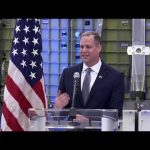
NASA’s #Moon2Mars Update
In an address from Kennedy Space Center on March 11, 2019, NASA Administrator Jim Bridenstine shares the work underway to return astronauts to the Moon and onward to Mars. #Moon2Mars
More: https://www.nasa.gov/moontomars -
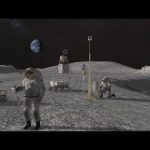
Building the International Effort for the Moon and Mars This Week @NASA – June 21, 2019
Building the international effort to go forward to the Moon, selecting new missions, and dropping a plane for safety … a few of the stories to tell you about – This Week at NASA!
This video is available for download from NASA’s Image and Video Library: https://images.nasa.gov/details-NHQ_2019_0621_Building%20International%20Effort%20for%20the%20Moon%20and%20Mars%20This%20Week%20@NASA%20%E2%80%93%20June%2021,%202019.html
-
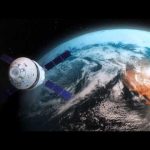
NASA’s Path to Mars
Get an inside look at NASA’s next steps in deep space exploration — from the space station, to an asteroid and on to the human exploration of Mars.
-
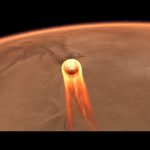
InSight Mission Lands Safely on Mars on This Week @NASA – November 30, 2018
Our InSight mission arrives at Mars, announcing the companies that will help us get to the Moon, and the space station’s next crew wraps up prelaunch activities … a few of the stories to tell you about – This Week at NASA!
This video is available for download from NASA’s Image and Video Library: https://images.nasa.gov/details-NHQ_2018_1130_InSight%20Mission%20Lands%20Safely%20on%20Mars%20on%20This%20Week%20@NASA%20%E2%80%93%20November%2030,%202018.html
-
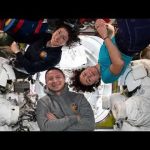
Thanksgiving Video Message from NASA Astronauts in Space
Right now, half of the crew members on board the International Space Station are American astronauts who are getting ready to celebrate Thanksgiving and they have a message for us. Check in with NASA’s Christina Koch, Jessica Meir and Andrew Morgan to learn more about what the holiday means to them – and get a look at what Thanksgiving in space will be like in 2019.
-
NASA’s ICON: Countdown to T-Zero for a Mission to Study Space Weather
Where does Earth’s atmosphere end and space begin? This and other questions soon will be answered by NASA’s Ionospheric Connection Explorer, or ICON, satellite. Get ready to watch as the Pegasus countdown reaches T-Zero from its carrier aircraft flying near the Kennedy Space Center.
Learn more about this mission that launched on Oct. 10, 2019: https://www.nasa.gov/icon
-
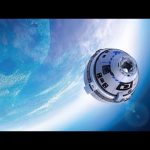
Boeing Starliner Orbital Flight Test Landing
Tune in as Boeing’s uncrewed Starliner spacecraft lands at White Sands, New Mexico. Landing is scheduled at 7:57 a.m. EST on Sunday, Dec. 22. After its launch on Dec. 20, the Starliner did not reach the planned orbit and will not dock to the International Space Station. Teams worked quickly to ensure the spacecraft was in a stable orbit and preserved enough fuel for a landing opportunity.
-
NASA 60th: Humans in Space
It is part of the human spirit to explore. During 60 years, we have selected 350 people as astronauts to lead the way. For nearly two decades, humans have been living and working aboard the International Space Station in low-Earth orbit to enable future missions forward to the Moon and on to Mars while also leading discoveries that improve life on Earth. Congress passed the National Aeronautics and Space Act on July 16, and President Eisenhower signed it into law on July 29, 1958. NASA opened for business on Oct. 1, 1958. Our history tells a story of exploration, innovation and discoveries. That story continues in the next 60 years. Learn more: https://www.nasa.gov/60
This video is available for download from NASA’s Image and Video Library: https://images.nasa.gov/details-NHQ_2018_0926_NASA%2060_Humans%20in%20Space%20FINAL.html
-
NASA TV Video File 2015 Year in Review
In 2015, NASA explored the expanse of our solar system and beyond, and the complex processes of our home planet, while also advancing the technologies for our journey to Mars, and new aviation systems as the agency reached new milestones aboard the International Space Station.
“It was a fantastic year that brought us even closer to Mars,” said NASA Administrator Charles Bolden. “Our space program welcomed advances from commercial partners who will soon launch astronauts from the United States to the International Space Station, and progress on new technologies and missions to take us into deep space, improve aviation and explore our universe and home planet.”
-

NASA’s Giant Leaps, Past and Future: Saluting Apollo Heroes and Looking Forward to Artemis Missions
Fifty years ago, humans took their first steps on the Moon and the world watched as we made history. On July 19, 2019, we broadcast this live salute to our #Apollo50th heroes and looked forward to our next giant leap for future #Artemis missions to the Moon and Mars.
-
NASA 2014
As 2014 comes to a close we look back on a few of the events that took place this year at NASA.
-
NASA Space Missions Possible Because of Small Businesses
NASA Deputy Associate Administrator recognizes the 2018 National Small Business Week; a time to celebrate the critical contributions of America’s entrepreneurs and small business owners. NASA honors its 2017 Agency Small Business Advocate Award winners and acknowledges the contributions made by NASA civil servant personnel throughout the Agency. The Agency 2017 Small Industry Award winners are also highlighted and they recognize the outstanding Small Business Prime Contractor, Small Business Subcontractor, Large Business Prime Contractor, and Mentor-Protégé Agreement that support NASA in achieving its mission.
You can learn more about our fast and future work with small businesses at https://www.osbp.nasa.gov/.
-
Announcing a New Mission to Saturn’s Largest Moon on This Week @NASA – June 28, 2019
The latest about our new mission to Saturn’s largest Moon, Launching new missions and landing astronauts … on the same night! And …restoring the glory to the Apollo Mission Control Room … a few of the stories to tell you about – This Week at NASA!
This video is available for download from NASA’s Image and Video Library: https://images.nasa.gov/details-NHQ_2019_0628_Announcing%20a%20New%20Mission%20to%20Saturn%E2%80%99s%20Largest%20Moon%20on%20This%20Week%20@NASA%20%E2%80%93%20June%2028,%202019.html
-
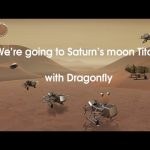
Dragonfly: NASA’s New Mission to Explore Saturn’s Moon Titan
Introducing Dragonfly: our next New Frontiers Mission! Making multiple flights, the Dragonfly dual-quadcopter will explore a variety of locations on Saturn’s moon Titan. Titan is an analog to the very early Earth, and can provide clues to how life may have arisen on our planet.
In under an hour, Dragonfly will cover tens of miles or kilometers, farther than any planetary rover has traveled. With one hop per full Titan day (16 Earth days), the rotorcraft will travel from its initial landing site to cover areas several hundred kilometers away during the planned two-year mission. Despite its unique ability to fly, Dragonfly would spend most of its time on Titan’s surface making science measurements.
For more information, check out: http://dragonfly.jhuapl.edu/
-
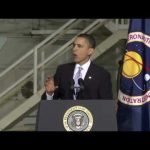
President Obama Pledges Total Commitment to NASA
President Obama says his new budget request to increase NASA’s funding by $6 billion over the next five years is an investment in America’s future, and a challenge to the agency to build on its legacy of innovation and discovery.
“What we’re looking for is not just to continue on the same path”, said the President. “We want to leap into the future. We want major breakthroughs, transformative for NASA.”
Making his remarks to an audience of several hundred at the Kennedy Space Center in Florida prior to the start of a one-day “Conference on the American Space Program” for the 21st Century”, President Obama reassured those in attendance about his support for NASA.
“The bottom line is, nobody is more committed to manned spaceflight, the human exploration of space, than I am. But we cant do it the same old way, but in the smart way to get where we want to go.”
The space conference of senior officials, space and industry leaders, academic experts and others focuses the different aspects of the President’s new direction for the agency. President Obama was introduced by NASA Administrator Charles Bolden. (Details at: www.nasa.gov)