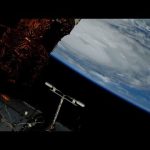
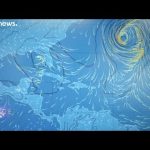
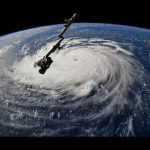
Cameras outside the International Space Station captured views of Hurricane Michael at 12:13 p.m. and 12:50 p.m. EDT Oct. 9 from an altitude of 255 miles as the storm churned over the Gulf of Mexico moving northwest at 12 miles an hour. More: https://go.nasa.gov/2NxKdp4
Michael is expected to make landfall Wednesday, Oct. 10 as a category 3 hurricane over the Florida panhandle.
BepiColombo is scheduled for launch at 01:45 GMT (03:45 CEST) on 20 October on an Ariane 5 from Europe’s Spaceport in Kourou.
Final assembly of the two orbiters and transfer module has taken place, ready for the spacecraft to be integrated into its Ariane 5 launcher.
BepiColombo is Europe’s first mission to Mercury, the smallest and least explored planet in the inner Solar System. It is a joint endeavour between ESA and the Japan Aerospace Exploration Agency, JAXA, and consists of two scientific orbiters: ESA’s Mercury Planetary Orbiter (MPO) and JAXA’s Mercury Magnetospheric Orbiter (MMO). The mission will study all aspects of Mercury, from the structure and dynamics of its magnetosphere and how it interacts with the solar wind, to its internal structure with its large iron core, and the origin of the planet’s magnetic field.
ESA is Europe’s gateway to space. Our mission is to shape the development of Europe’s space capability and ensure that investment in space continues to deliver benefits to the citizens of Europe and the world. Check out http://www.esa.int/ESA to get up to speed on everything space related.
Celebrating sixty years of NASA, space station crew makes a safe return to Earth , and evidence of a possible discovery outside our solar system … a few of the stories to tell you about – This Week at NASA!
This video is available for download from NASA’s Image and Video Library: https://images.nasa.gov/details-NHQ_2018_1005_Sixty%20Years%20of%20NASA%20and%20Counting,%20on%20This%20Week%20@NASA%20%E2%80%93%20October%205,%202018.html
ESA is Europe’s gateway to space. Our mission is to shape the development of Europe’s space capability and ensure that investment in space continues to deliver benefits to the citizens of Europe and the world. Check out http://www.esa.int/ESA to get up to speed on everything space related.
ESA is Europe’s gateway to space. Our mission is to shape the development of Europe’s space capability and ensure that investment in space continues to deliver benefits to the citizens of Europe and the world. Check out http://www.esa.int/ESA to get up to speed on everything space related.
ESA is Europe’s gateway to space. Our mission is to shape the development of Europe’s space capability and ensure that investment in space continues to deliver benefits to the citizens of Europe and the world. Check out http://www.esa.int/ESA to get up to speed on everything space related.
Ontdek de maan samen met Paxi. In deze video, bedoeld voor kinderen tussen de zes en twaalf jaar, legt Paxi uit hoe de fasen en verduisteringen tot stand komen.
ESA is Europe’s gateway to space. Our mission is to shape the development of Europe’s space capability and ensure that investment in space continues to deliver benefits to the citizens of Europe and the world. Check out http://www.esa.int/ESA to get up to speed on everything space related.
ESA is Europe’s gateway to space. Our mission is to shape the development of Europe’s space capability and ensure that investment in space continues to deliver benefits to the citizens of Europe and the world. Check out http://www.esa.int/ESA to get up to speed on everything space related.
Unisciti a Paxi mentre esplora la Luna. In questo video, indirizzato ai bambini di etá compresa tra 6 e 12 anni, Paxi spiegherá le fasi e le eclissi lunari.
L’ESA è il portale dell’Europa verso lo spazio. La nostra missione modellare lo sviluppo delle capacità dell’Europa nello spazio ed assicura che gli investimenti nello spazio continuino a dare beneficiai cittadini dell’Europa e del mondo.
Controlla il sito http://www.esa.int/ESA per restare aggiornato riguardo agli argomenti relativi allo spazio.
Begleite Paxi wenn er den Mond erforscht. In diesem Video, das sich an Kinder zwischen 6 und 12 Jahre richtet, erklärt Paxi Mondphasen und –finsternisse.
ESA is Europe’s gateway to space. Our mission is to shape the development of Europe’s space capability and ensure that investment in space continues to deliver benefits to the citizens of Europe and the world. Check out http://www.esa.int/ESA to get up to speed on everything space related.
Rejoins Paxi dans son exploration de la Lune! Dans cette vidéo pour les enfants entre 6 et 12 ans, Paxi explique les phases et les éclipses de la Lune.
ESA is Europe’s gateway to space. Our mission is to shape the development of Europe’s space capability and ensure that investment in space continues to deliver benefits to the citizens of Europe and the world. Check out http://www.esa.int/ESA to get up to speed on everything space related.
ESA is Europe’s gateway to space. Our mission is to shape the development of Europe’s space capability and ensure that investment in space continues to deliver benefits to the citizens of Europe and the world. Check out http://www.esa.int/ESA to get up to speed on everything space related.
ESA is Europe’s gateway to space. Our mission is to shape the development of Europe’s space capability and ensure that investment in space continues to deliver benefits to the citizens of Europe and the world. Check out http://www.esa.int/ESA to get up to speed on everything space related.
ESA is Europe’s gateway to space. Our mission is to shape the development of Europe’s space capability and ensure that investment in space continues to deliver benefits to the citizens of Europe and the world. Check out http://www.esa.int/ESA to get up to speed on everything space related.
ESA is Europe’s gateway to space. Our mission is to shape the development of Europe’s space capability and ensure that investment in space continues to deliver benefits to the citizens of Europe and the world. Check out http://www.esa.int/ESA to get up to speed on everything space related.
ESA is Europe’s gateway to space. Our mission is to shape the development of Europe’s space capability and ensure that investment in space continues to deliver benefits to the citizens of Europe and the world. Check out http://www.esa.int/ESA to get up to speed on everything space related.
Följ med Paxi då han utforskar månen. I den här filmen förklarar Paxi månens faser och månförmörkelser. Filmen vänder sig till barn i åldern sex till tolv år.
ESA is Europe’s gateway to space. Our mission is to shape the development of Europe’s space capability and ensure that investment in space continues to deliver benefits to the citizens of Europe and the world. Check out http://www.esa.int/ESA to get up to speed on everything space related.
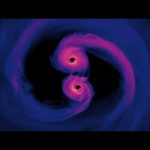
A new supercomputer model could help astronomers find spiraling, merging systems of two supermassive black holes. These mergers happen often in the universe, but are hard to see. Watch as the simulation reveals the merger’s brighter, more variable X-rays. https://go.nasa.gov/2OsaMAs
Credit: NASA’s Goddard Space Flight Center
Music: “Games Show Sphere 01” from Killer Tracks
This video is public domain and along with other supporting visualizations can be downloaded from the Scientific Visualization Studio at: http://svs.gsfc.nasa.gov/13043
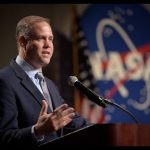
NASA Administrator Jim Bridenstine’s message to the NASA workforce on the agency’s accomplishments over six incredible decades, and future plans including missions to the Moon and on to Mars. For more, visit: https://www.nasa.gov/60
Congress passed the National Aeronautics and Space Act, on July 16 and President Eisenhower signed it into law on July 29, 1958. NASA opened for business on Oct. 1, 1958, with T. Keith Glennan as our first administrator. Our history tells a story of exploration, innovation and discoveries. The next 60 years, that story continues. Learn more: https://www.nasa.gov/60
This video is available for download from NASA’s Image and Video Library: https://images.nasa.gov/details-NASA%2060%20Years%20in%2060%20Seconds.html
This short movie shares an impression of some of the scientific highlights from Rosetta’s mission at Comet 67P/Churyumov–Gerasimenko, as told through the voices of scientists working with Rosetta’s vast dataset, two years after the mission ended.
Rosetta launched in 2004 and travelled for ten years to its destination before deploying the lander Philae to the comet’s surface. Following the comet along its orbit around the Sun, Rosetta studied the comet’s surface changes, its dusty, gassy environment and its interaction with the solar wind. Even though scientific operations concluded in September 2016 with Rosetta’s own descent to the comet’s surface, analysis of the mission’s data will continue for decades.
Credits: This is an ESA Web TV production. The video contains artist impressions of the spacecraft (credit: ESA/ATG medialab) and animations/infographics by ESA. Images of the comet are from Rosetta’s OSIRIS and NAVCAM cameras, as well as Philae’s CIVA camera (credits: ESA/Rosetta/MPS for OSIRIS Team MPS/UPD/LAM/IAA/SSO/INTA/UPM/DASP/IDA – CC BY SA 4.0; ESA/Rosetta/NavCam – CC BY-SA IGO 3.0; ESA/Rosetta/Philae/CIVA). Ground-based images were provided by Colin Snodgrass/Alan Fitzsimmons/Liverpool Telescope. The plasma visualisation is based on modelling and simulation by Technische Universität Braunschweig and Deutsches Zentrum für Luft- und Raumfahrt, and visualised by Zuse-Institut Berlin. The animation of Philae’s flight across the surface is based on data from Philae’s ROMAP, RPC-MAG, OSIRIS, ROLIS, CIVA CONSERT, SESAME and MUPUS instrument teams, the Lander Control Centre at DLR and the Science Operation and Navigation Center at CNES.
ESA is Europe’s gateway to space. Our mission is to shape the development of Europe’s space capability and ensure that investment in space continues to deliver benefits to the citizens of Europe and the world. Check out http://www.esa.int/ESA to get up to speed on everything space related.
NASA astronaut Drew Feustel recorded this music video from space. Feustel launched to the International Space Station in March 2018 and is currently serving as Expedition 56 Commander. Drew thanks all who helped bring this to life, including his friend, Gord Sinclair, for giving him permission to use the song, and the crew of Expeditions 55 and 56 for their support and participation in NASA’s human space exploration mission.
ESRIN, ESA’s centre for Earth observation in Frascati, near Rome, is one of the agency’s main specialised centres in Europe, and its founding ceremony took place 50 years ago on 27 September 1968.
Today, ESRIN manages the exploitation phase of the Earth Observation satellites and the ground segment for ESA and third-party Earth observation satellites, maintaining the largest archive of environmental data in Europe and coordinating over 20 ground stations and ground segment facilities in Europe. It also hosts the project team managing the Vega small-launcher programme.
ESA is Europe’s gateway to space. Our mission is to shape the development of Europe’s space capability and ensure that investment in space continues to deliver benefits to the citizens of Europe and the world. Check out http://www.esa.int/ESA to get up to speed on everything space related.
German citizen, Matthias Maurer, officially graduated as an ESA astronaut on Tuesday 25 September 2018 at the European Astronaut Centre in Cologne, Germany. Having completed basic and pre-assignment training, he is now qualified to go to space.
From in the classroom to underwater, across Europe, China and beyond, this clip showcases a few highlights from a challenging and rewarding three-year programme.
Send your congratulatory messages to Matthias in the comment section below.
ESA is Europe’s gateway to space. Our mission is to shape the development of Europe’s space capability and ensure that investment in space continues to deliver benefits to the citizens of Europe and the world. Check out http://www.esa.int/ESA to get up to speed on everything space related.
Revisit the April 18, 2018, launch of NASA’s Transiting Exoplanet Survey Satellite (TESS) aboard a SpaceX Falcon 9 rocket. TESS is already scanning the skies, identifying planet candidates that may be orbiting distant stars. https://go.nasa.gov/2Q3J9ei
TESS is NASA’s next step in the search for planets outside of our solar system, including those that could support life. The mission will find exoplanets that periodically block part of the light from their host stars, events called transits. TESS will survey 200,000 of the brightest stars near the sun to search for transiting exoplanets.
Although it may not be immediately obvious when we visit the beach, sea-level rise is affecting coastlines all over the world. For low-lying countries such as the Netherlands, sea-level rise and tidal surges are a constant threat. Our oceans are rising as a consequence of climate change. As the temperature of seawater increases it expands and the ice melting from ice sheets and glaciers adds more water to the global ocean. We know this because satellites high above our heads measure the temperature of the sea surface and of our changing ice.
While the global averaged trend is towards rising levels, there are many regional differences so that in some places it is rising and in other places it is falling. Satellites carrying altimeter instruments systematically measure the height of the sea surface so that sea-level rise can be closely monitored. Altimetry measurements over the last 25 years show that on average sea-level is rising about 3 mm a year and this rise is accelerating.
ESA is Europe’s gateway to space. Our mission is to shape the development of Europe’s space capability and ensure that investment in space continues to deliver benefits to the citizens of Europe and the world. Check out http://www.esa.int/ESA to get up to speed on everything space related.
Several NASA instruments see their first light, another active week for our administrator, and discover just how much space is in our daily lives … a few of the stories to tell you about – This Week at NASA!
This video is available for download from NASA’s Image and Video Library: https://images.nasa.gov/details-A%20Festival%20of%20%E2%80%9CFirst%20Lights%E2%80%9D%20on%20This%20Week%20@NASA%20%E2%80%93%20September%2021,%202018.html
This edition of #Space comes from the coast of northern Norway, where we’ve come to the Andøya Space Centre to meet scientists working on a new satellite called Aeolus. This mission carries revolutionary laser technology to measure the wind around the entire globe. Lofted into orbit in August 2018 on a Vega rocket from French Guiana, Aeolus has only just begun its life in space. Engineers are now busy commissioning the mission to ensure that it will soon be ready to deliver novel data on winds. This will be used to improve our understanding of the atmosphere and to improve weather forecasts.
ESA is Europe’s gateway to space. Our mission is to shape the development of Europe’s space capability and ensure that investment in space continues to deliver benefits to the citizens of Europe and the world. Check out http://www.esa.int/ESA to get up to speed on everything space related.
Ένας ευρωπαϊκός δορυφόρος που ονομάζεται Αίολος θα μετρήσει για πρώτη φορά τους ανέμους από το διαστημα, υποσχόμενος να βελτιώσει σημαντικά την πρόβλεψη του καιρού.Η εκπομπή #Space και ο Τζέρεμι Γουίλκς βρέθηκε στην ακτή της βόρειας Νορβηγίας,στο διαστημικό κέντρο Andøya για να συναντήσει επιστήμονες που εργάζονται σε ένα νέο δορυφόρο με το όνομα Αίολος, ο οποίος μετράει τον άνεμο γύρω από τον πλανήτη μας για πρώτη φορά. Οι ερευνητές ειναι στο στάδιο της επικύρωσης και αξιολόγησης όλων των μετρήσεων που λαμβάνουν από το δορυφόρο σε τροχιά. Με την εκτόξευση του πυραύλου Vega ξεκινά μια πρωτοποριακή αποστολή για τις καιρικές συνθήκες.
Στα τέλη Αυγούστου του τρέχοντος έτους, ο πολυαναμενόμενος δορυφόρος Αίολος του Ευρωπαϊκού Οργανισμού Διαστήματος εκτοξεύτηκε στο διάστημα, ταξιδεύοντας γρήγορα και χαμηλά, μόλις 320 χιλιόμετρα πάνω από τα κεφάλια μας.
ESA is Europe’s gateway to space. Our mission is to shape the development of Europe’s space capability and ensure that investment in space continues to deliver benefits to the citizens of Europe and the world. Check out http://www.esa.int/ESA to get up to speed on everything space related.
#Space című műsorunkban ezúttal Észak-Norvégiából jelentkezünk, ahol az Andøya űrközpontban tudósokkal találkoztunk, akik egy új műholdon, az Aeolus-on dolgoznak. Ez egyedülálló módon az űrből méri a Föld szeleit. A tudósok jelenleg azon dolgoznak, hogy kalibrálják és érvényesítsék a méréseket, amelyeket a föld körüli pályáról kapnak. A Vega-rakéta robajával úttörő időjárási küldetés kezdődik: az Európai Űrügynökség régóta várt Aeolus-műholdját augusztus végén kilőtték az űrbe. A műhold gyorsan és alacsonyan repül, mindössze 320 kilométeres magasságban.
ESA is Europe’s gateway to space. Our mission is to shape the development of Europe’s space capability and ensure that investment in space continues to deliver benefits to the citizens of Europe and the world. Check out http://www.esa.int/ESA to get up to speed on everything space related.
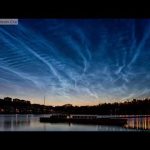
On the cusp of our atmosphere live a thin group of seasonal electric blue clouds. Read the story: https://go.nasa.gov/2QPcrOD
Forming fifty miles above the poles in summer, these clouds are known as noctilucent clouds or polar mesospheric clouds — PMCs. A recent NASA long-duration balloon mission observed these clouds over the course of five days at their home in the mesosphere. The resulting photos, which scientists have just begun to analyze, will help us better understand turbulence in the atmosphere, as well as in oceans, lakes, and other planetary atmospheres, and may even improve weather forecasting.
Music credit: “In The End” By Andrew John Skeet [PRS], Andrew Michael Britton [PRS], David Stephen Goldsmith [PRS] from Killer Tracks
Credits: David Fritts (GATS): Scientist
Joy Ng (USRA): Producer
Mara Johnson-Groh (Wyle Information Systems): Writer Tom Bridgman (GST): Data Visualizer
William Putman (NASA/GSFC): Data Visualizer
This video is public domain and along with other supporting visualizations can be downloaded from the Scientific Visualization Studio at: http://svs.gsfc.nasa.gov/13073
Visit the site: https://go.nasa.gov/2NQHhba
There’s more space in your life than you think! NASA studies our planet, Sun, solar system & beyond, but you can find thousands of NASA-influenced technologies right in your backyard.
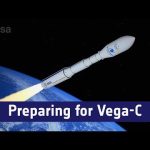
At the end of 2019 Vega-C will be launched from Europe’s Spaceport in French Guiana increasing performance from Vega’s current 1.5 t to about 2.2 t in its reference 700 km polar orbit, with no increase in launch costs.
Vega-C’s first stage is based on the P120, the largest single segment carbon fibre solid-propellant rocket motor ever built. It was successfully tested in July 2018. Its development relies on new technologies derived from Vega’s current first stage P80 motor. Two or four P120C motors will also be used for the liftoff boosters on Ariane 6.
Vega-C’s 3.3 m diameter fairing will accommodate larger payloads such as Earth observation satellites of more than two tonnes, and ESA’s Space Rider reentry vehicle.
The Vega launch pad and mobile gantry are being modified to accommodate Vega-C leading into a period when launch facilities will accommodate both vehicles.
ESA is Europe’s gateway to space. Our mission is to shape the development of Europe’s space capability and ensure that investment in space continues to deliver benefits to the citizens of Europe and the world. Check out http://www.esa.int/ESA to get up to speed on everything space related.
Earth is a complex, dynamic system. For 60 years, we have studied our changing planet, and our understanding continues to expand with the use of new technologies. With data from satellites, instruments on the International Space Station, airborne missions, balloons, and observations from ships and on land, we track changes to land, water, ice, and the atmosphere. Application of our Earth observations help improve life now and for future generations.
Congress passed the National Aeronautics and Space Act, on July 16 and President Eisenhower signed it into law on July 29, 1958. NASA opened for business on Oct. 1, 1958. Our history tells a story of exploration, innovation and discoveries. The next 60 years, that story continues. Learn more: https://www.nasa.gov/60
Major hurricane Florence, seen from space, our mission to size up land and sea ice on Earth, and “catching big air” … another successful test for our Orion spacecraft … a few of the stories to tell you about – This Week at NASA!
This video is available for download from NASA’s image and Video Library: https://images.nasa.gov/details-Watching Hurricane Florence from Space on This Week @NASA – September 15, 2018.html
Italian ESA astronaut Samantha Cristoforetti, speaking from the European Astronaut Centre near Cologne in Germany, has a message of thanks to all those who’ve entered our Lunar 3D printing competition so far. A new lunar analogue test facility, called Luna for short, is currently being set up at EAC to test the technologies and techniques needed for any future Moon base – with 3D printing high on the list. And a team ESA’s technical centre in Noordwijk, the Netherlands, is overseeing a project to research in detail how 3D printing could be used in such a Moon base. We’re also interested in the human factor: what would you 3D print to make the Moon feel like home? That’s why we’re crowdsourcing your ideas through this competition. The closing date is 23 September 2018.
ESA is Europe’s gateway to space. Our mission is to shape the development of Europe’s space capability and ensure that investment in space continues to deliver benefits to the citizens of Europe and the world. Check out http://www.esa.int/ESA to get up to speed on everything space related.
A high definition camera outside the International Space Station captured a stark and sobering view of Hurricane Florence at 7:50 a.m. EDT on Sept. 12. NASA satellites track the storm: https://go.nasa.gov/2CEmDGQ
This video was taken as Florence churned across the Atlantic in a west-northwesterly direction with winds of 130 miles an hour. The National Hurricane Center forecasts additional strengthening for Florence before it reaches the coastline of North Carolina and South Carolina early Friday, Sept. 14.
ESA astronaut Alexander Gerst launches the 2018/19 European Astro Pi Challenge; an ESA Education project run in collaboration with the Raspberry Pi Foundation. He invites students and young people to conduct their own scientific investigations in space, by writing computer programs that run on Raspberry Pi computers on board the International Space Station.
ESA is Europe’s gateway to space. Our mission is to shape the development of Europe’s space capability and ensure that investment in space continues to deliver benefits to the citizens of Europe and the world. Check out http://www.esa.int/ESA to get up to speed on everything space related.
At 8:10 a.m. Eastern time, Sept. 10, cameras on the International Space Station captured views of Hurricane Florence. NASA satellites track the storm: https://go.nasa.gov/2CEmDGQ | Download video: https://go.nasa.gov/2Ql555y
Florence is moving in a westerly direction across the Atlantic, headed for a likely landfall along the eastern seaboard of the U.S. late Thursday or early Friday. Now a major hurricane with winds of 115 miles an hour and increasing, the National Hurricane Center says Florence’s forecast track will take the system over the southwestern Atlantic Ocean between Bermuda and the Bahamas Tuesday and Wednesday, and Florence will approach the coast of South Carolina or North Carolina on Thursday. The station was flying 255 miles over the storm at the time this video was captured.
Technology drives exploration. For 60 years, we have advanced technology to meet the rigorous needs of our missions. From GPS navigation to water filtration systems, our technologies developed for space improve your daily life on Earth. We continue to innovate and explore.
Congress passed the National Aeronautics and Space Act, on July 16 and President Eisenhower signed it into law on July 29, 1958. NASA opened for business on Oct. 1, 1958. Our history tells a story of exploration, innovation and discoveries. The next 60 years, that story continues. Learn more: https://www.nasa.gov/60