Watch the amazing cartoon adventures of Rosetta and Philae, now back-to-back in one special feature-length production.
Find out how Rosetta and Philae first got inspired to visit a comet, and follow them on their incredible ten-year journey through the Solar System to their destination, flying around planets and past asteroids along the way. Watch as Philae tries to land on the comet and deals with some unexpected challenges!
Learn about the fascinating observations that Rosetta made as she watched the comet change before her eyes as they got closer to the Sun and then further away again. Finally, wish Rosetta farewell, as she, too, finishes her amazing adventure on the surface of the comet. Keep watching for one last surprise!
Watch the amazing cartoon adventures of Rosetta and Philae, now back-to-back in one special feature-length production.
Find out how Rosetta and Philae first got inspired to visit a comet, and follow them on their incredible ten-year journey through the Solar System to their destination, flying around planets and past asteroids along the way. Watch as Philae tries to land on the comet and deals with some unexpected challenges!
Learn about the fascinating observations that Rosetta made as she watched the comet change before her eyes as they got closer to the Sun and then further away again. Finally, wish Rosetta farewell, as she, too, finishes her amazing adventure on the surface of the comet. Keep watching for one last surprise!
Earth from Space is presented by Kelsea Brennan-Wessels from the ESA Web-TVvirtual studios. Take a tour with Sentinel-2 to the Tian Shan mountains inChina in the 211th edition.
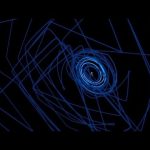
Animation visualising Rosetta’s trajectory around Comet 67P/Churyumov–Gerasimenko, from arrival to mission end.
The animation begins on 31 July 2014, during Rosetta’s final approach to the comet after its ten-year journey through space. The spacecraft arrived at a distance of 100 km on 6 August, from where it gradually approached the comet and entered initial mapping orbits that were needed to select a landing site for Philae. These observations also enabled the first comet science of the mission.The manoeuvres in the lead up to, during and after Philae’s release on 12 November are seen, before Rosetta settled into longer-term science orbits.
In February and March 2015 the spacecraft made several flybys. One of the closest triggered a ‘safe mode’ that forced it to retreat temporarily until it was safe to draw gradually closer again.
The comet’s increased activity in the lead up to and after perihelion in August 2015 meant that Rosetta remained well beyond 100 km for several months.In June 2015, contact was restored with Philae again – albeit temporary, with no permanent link able to be maintained, despite a series of dedicated trajectories flown by Rosetta for several weeks.
Following the closest approach to the Sun, Rosetta made a dayside far excursion some 1500 km from the comet, before re-approaching to closer orbits again, enabled by the reduction in the comet’s activity.
In March–April 2016 Rosetta went on another far excursion, this time on the night side, followed by a close flyby and orbits dedicated to a range of science observations.
In early August the spacecraft started flying elliptical orbits that brought it progressively closer to the comet. On 24 September Rosetta left its close, flyover orbits and switched into the start of a 16 x 23 km orbit that was used to prepare and line up for the final descent.
On the evening of 29 September Rosetta manoeuvred onto a collision course with the comet, beginning the final, slow descent from an altitude of 19 km. It collected scientific data throughout the descent and gently struck the surface at 10:39 GMT on 30 September in the Ma’at region on the comet’s ‘head’, concluding the mission.
The trajectory shown in this animation is created from real data, but the comet rotation is not. Distances are given with respect to the comet centre (except for the zero at the end to indicate completion), but may not necessarily follow the exact comet distance because of natural deviations from the comet’s gravity and outgassing. An arrow indicates the direction to the Sun as the camera viewpoint changes during the animation.
NASA Scientist Tiffany Kataria drops in on Jennifer Lawrence, Chris Pratt and Michael Sheen for a fun, not so serious chat about science fiction, other worlds and time travel???
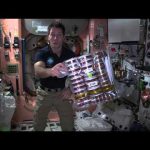
ESA astronaut Thomas Pesquet gives a tour of the International Space Station’s kitchen and the special food will share with his crewmates in space.
Astronauts get so-called “bonus food” for special occasions such as Christmas and New Year’s dinner. Thomas’ bonus food was prepared by ESA and France’s space agency CNES together with French chefs Thierry Marx and Alain Ducasse.
ESA astronaut Thomas Pesquet shares his Christmas plans and wishes on the International Space Station.
Flying 400 km above Earth, astronauts on the International Space Station have a unique experience and vision of our planet that they share in this video. Thomas recounts his memories growing up in Normany, France, and explains what Christmas means to him.
His end-of-year meal was prepared by French chefs – canned of course, there is no way to cook food on the Space Station and includes ox-tongue from his home-region prepared by Thierry Marx, chicken-supreme and for desert, apple gingerbread.
ESA astronaut Thomas Pesquet shares his Christmas plans and wishes on the International Space Station with Expedition 50 crewmates Shane Kimbrough and Peggy Whitson.
Flying 400 km above Earth, astronauts on the International Space Station have a unique experience and vision of our planet that they share in this video. Thomas recounts his memories growing up in Normany, France, and explains what Christmas means to him.
His end-of-year meal was prepared by French chefs – canned of course, there is no way to cook food on the Space Station and includes ox-tongue from his home-region prepared by Thierry Marx, chicken-supreme and for desert, apple gingerbread.
2016 marked record-breaking progress in NASA’s exploration objectives. The agency advanced the capabilities needed to travel farther into the solar system while increasing observations of our home and the universe, learning more about how to continuously live and work in space and, of course, inspiring the next generation of leaders to take up our Journey to Mars and make their own discoveries.
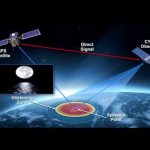
NASA successfully launched eight small satellites that will provide scientists with advanced technology to see inside tropical storms and hurricanes like never before. Called the Cyclone Global Navigation Satellite System (CYGNSS), the constellation of eight microsatellite observatories launched Dec. 12 aboard an Orbital ATK air-launched Pegasus XL launch vehicle from Cape Canaveral Air Force Station in Florida. The rocket was dropped and launched from Orbital’s Stargazer L-1011 aircraft over the Atlantic Ocean off the coast of central Florida.
Europe’s Galileo satellite navigation system has entered its initial operational phase, offering positioning, velocity and timing services to suitably equipped users worldwide. It takes a minimum of four Galileo satellites to be visible in the local sky to fix a receiver’s position. This animation shows how service availability increases as the overall number of satellites in the Galileo constellation goes up.
NASA researchers are presenting new findings on a wide range of Earth and space science topics at the annual meeting of the American Geophysical Union this week in San Francisco. With about 24,000 attendees, the meeting is the largest gathering of Earth and space scientists in the world. The full range of NASA’s innovative science and technology is on display. Key findings include new evidence from NASA’s Curiosity rover of how ancient lakes and wet underground environments on Mars changed billions of years ago affecting their favorability for microbial life. A new Earth-observing satellite data set and imagery was released providing a near-real-time view of every large glacier and ice sheet on Earth. The meeting continues through Dec. 16.
ESA astronaut Thomas Pesquet gives a guided tour of the International Space Station’s crew quarters – the bedrooms and only private areas for the six astronauts in the outpost.
After a day’s work running experiments and maintaining the weightless research centre astronauts can retreat to their private quarters that is no larger than a changing room. In this small space they can store personal items, use a laptop for internet and float to sleep in their sleeping bag.
2016 has been an eventful and promising year for ESA’s ExoMars mission. After successfully placing the Trace Gas Orbiter into Mars’ orbit on 19 October, the orbiter has sent back its first images, tested its instruments and performed in orbit calibration measurements and health checks.
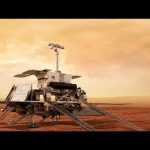
The Schiaparelli lander collected almost all of its expected data before its unexpected crash landing on the Martian surface. Crucial lessons will be learnt from this for the recently approved 2020 ExoMars mission, which will put Europe’s first rover on Mars.
The precise cause of the lander loss is still being investigated but preliminary technical investigations have found that the atmospheric entry and slowing down in the early phases went exactly as planned.
In all, since its launch in March 2016, the ExoMars mission has been a mixture of successes and one unexpected set back. Looking ahead, the Trace Gas Orbiter will start aerobraking in March 2017 to gradually slow down over the following months. By the end of 2017, the orbiter will be in a lower, near circular orbit of 400 kms and ExoMars’ primary science mission can begin.
Members of the media were invited to NASA’s Kennedy Space Center in Florida to participate in a news conference Dec. 12 with cast members from the 20th Century Fox motion picture Hidden Figures.
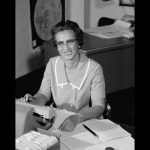
The film is based on the book of the same title, by Margot Lee Shetterly, and chronicles the lives of Katherine Johnson, Dorothy Vaughan and Mary Jackson — African-American women working at NASA as “human computers,” who were critical to the success of John Glenn’s Friendship 7 mission in 1962.
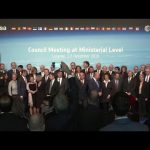
Lucerne offered a scenic backdrop to ESA’s space summit – the crucial ministerial meeting held every two years when the agency’s 22 member states spend 48 hours debating one subject – Europe’s future in space.
After posing for the family photo, the leaders of the European space sector closed the doors to begin debating the big questions – ExoMars and the International Space Station.
Europas Raumfahrtminister haben sich für ein Gipfeltreffen in Luzern getroffen, um über die Zukunft einiger der wichtigsten Missionen wie die Internationale Raumstation (ISS) und die ExoMars-Mission zu sprechen.
Luzern bot eine malerische Kulisse für den Weltraumgipfel der ESA – das wichtige Ministertreffen, das alle zwei Jahre stattfindet, und die 22-EU-Mitgliedstaaten, die 48 Stunden über ein Thema reden: Europas Zukunft im Weltraum.
Nach dem Gruppenfoto wurden die Türen geschlossen, um über die großen Themen zu diskutieren: die Zukunft der ExoMars-Mission und der ISS.
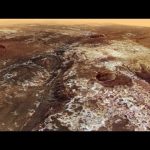
This movie, based on images taken by ESA’s Mars Express, highlights Mawrth Vallis, a 600 km-long, 2 km-deep outflow channel at the boundary of the southern highlands and the northern lowlands of Mars.
The movie begins at the mouth of the channel in Chryse Planitia, and heads towards the apparent source region in the Arabia Terra highlands.
The 4 billion year-old plateau is characterised by many impact craters, indicative of its great age.
Zooming in, patches of light and dark deposits are revealed. The light-toned layered sediments are among the largest outcrops of clay minerals – phyllosilicates – on Mars. Their presence indicates the presence of liquid water in the past.
The variety of water-bearing minerals and the possibility that they might contain a record of an ancient, habitable environment on Mars led scientists to propose Mawrth Vallis as a candidate landing site for the ExoMars 2020 mission.
The animation is based on a colour mosaic and digital terrain model derived from data collected by the high-resolution stereo camera on Mars Express and released earlier this year.
Ministers from ESA’s 22 member states plus Canada and Slovenia have agreed a €10.3 billion package ofspace programme funding. At the two-day council meeting at ministerial level in Lucerne, Switzerland, subscriptions were agreed for a future Marsrovermission,continued funding of missions tothe International Space Station, new elements of ESA’s launcher programme as well as developments in telecommunications, Earth observation and technology.
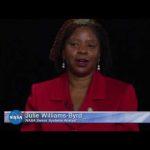
On Dec. 1, NASA Administrator Charlie Bolden helped kick off a yearlong centennial celebration for the agency’s Langley Research Center in Hampton, Virginia with several events highlighting the work of the African American women of Langley’s West Computing Unit. These mathematicians performed critical calculations for several historic NASA space missions in the early days of America’s space program, and their story is told in the book, “Hidden Figures,” by author Margot Lee Shetterly and the upcoming 20th Century Fox movie of the same name. It was also discussed during a NASA education event at Langley featuring Bolden, the film’s director Ted Melfi, NASA’s Chief Historian Bill Barry, and Langley electro-optics engineer Julie Williams-Byrd – a modern-day NASA figure using science, technology, engineering and mathematics, or STEM — skills to make an impact. Later that evening, a VIP social and screenings of the film took place at nearby Virginia Air & Space Center. The women featured in Hidden Figures – Katherine Johnson, Mary Jackson and Dorothy Vaughan – known as “human computers,” helped put John Glenn in orbit, and helped Neil Armstrong and other astronauts land on the moon. Also, Cassini’s Ring-Grazing Orbit around Saturn, Next Space Station Crew Previews Mission, and Russian Cargo Ship Experiences Anomaly after Launch!
NASA celebrates the lives and careers of the Langley West Computing Unit who helped America win the space race of the 1950s and 60s. The lives of these unsung heroines is captured in the book and film “Hidden Figures”.
NASA kicked off a yearlong centennial celebration for its Langley Research Center in Hampton, Virginia, with events Dec. 1 highlighting the critical work done by the African American women of Langley’s West Computing Unit, a story told in the book and upcoming movie “Hidden Figures”. During a NASA education event that was streamed to schools across the country, NASA Administrator Charles Bolden, Film director Ted Melfi, NASA Chief Historian Bill Barry, who consulted on the film, and NASA Modern Figure Julie Williams-Byrd, an electro-optics engineer for the Space Mission Analysis Branch at Langley, discussed the work of past and present NASA figures benefits humanity and enable future long-duration human and robotic exploration into deep space, including the agency’s Journey to Mars.
NASA Administrator Charles Bolden and Associate Administrator for Diversity and Equal Opportunity Brenda Manuel welcome you to NASA’s Modern Figures Website: https://www.nasa.gov/modernfigures
Scenes from the opening day of the ESA Ministerial Council 2016 in Lucerne, Switzerland. Ministers in charge of space activities from the 22 ESA Member States, Slovenia and Canada met on 1 and 2 December to decide on future space activities for Europe.
In the edition of Space, Euronews correspondent Jeremy Wilks reports from the Observatory of the Côte d’Azur in the south of France on a unique mission to deflect an asteroid.
Asteroids have the potential to cause a catastrophe – a small asteroid could wipe out an entire city, while a large one could mean the end for us all.
It’s a threat we’re aware of, and which scientists and engineers are working to overcome.
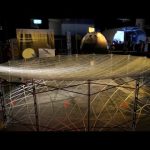
A 5 m-diameter antenna reflector, designed for orbital operations, seen during a test deployment during ESA’s latest Large Deployable Antenna Workshop.
Large-scale antenna reflectors are increasingly required for telecommunications, science and Earth observation missions.
This metal mesh reflector has a ‘double pantograph’ design to form a deployable ring. Once deployed it tensions two opposing, but connected, parabolic shaped nets, one on the top and one on the bottom.
European spirit, identity and cohesion are the overarching aspects for Europe to achieve the best of outcomes for its states and citizens in space and for a globally successful European space sector.
United Space in Europe describes the intensive cooperation of different European entities for the sake of a strengthening of Europe. With this strengthened European cooperation in space, the 2016 Ministerial Council will further ESA’s breadth and strength of action to cover its mandate as laid out in the ESA Convention through enhanced partnership with its Member States, with other institutional actors and with space actors worldwide.
The conference takes place in the advent of the Space 4.0 era, a time when space is evolving from being the preserve of the governments of a few spacefaring nations to a situation in which there is the increased number of diverse space actors around the world, including the emergence of private companies, participation with academia, industry and citizens, digitalisation and global interaction.
Space 4.0 represents the evolution of the space sector into a new era, characterised by a new playing field. This era is unfolding through interaction between governments, private sector, society and politics. Space 4.0 is analogous to, and is intertwined with, Industry 4.0, which is considered as the unfolding fourth industrial revolution of manufacturing and services.
To meet the challenges and to proactively develop the different aspects of Space 4.0, the European space sector can become globally competitive only by fully integrating into European society and economy. This requires a sustainable space sector closely connected with the fabric of society and economy. For this to happen, space must be safe, secure and easily and readily accessible, and built on a foundation of excellence in science and technology – broadly and continuously over time.
ESA will table proposals at the meeting to meet the common European goals for space in this exciting and challenging new era.
[Spanish version] European spirit, identity and cohesion are the overarching aspects for Europe to achieve the best of outcomes for its states and citizens in space and for a globally successful European space sector.
United Space in Europe describes the intensive cooperation of different European entities for the sake of a strengthening of Europe. With this strengthened European cooperation in space, the 2016 Ministerial Council will further ESA’s breadth and strength of action to cover its mandate as laid out in the ESA Convention through enhanced partnership with its Member States, with other institutional actors and with space actors worldwide.
The conference takes place in the advent of the Space 4.0 era, a time when space is evolving from being the preserve of the governments of a few spacefaring nations to a situation in which there is the increased number of diverse space actors around the world, including the emergence of private companies, participation with academia, industry and citizens, digitalisation and global interaction.
Space 4.0 represents the evolution of the space sector into a new era, characterised by a new playing field. This era is unfolding through interaction between governments, private sector, society and politics. Space 4.0 is analogous to, and is intertwined with, Industry 4.0, which is considered as the unfolding fourth industrial revolution of manufacturing and services.
To meet the challenges and to proactively develop the different aspects of Space 4.0, the European space sector can become globally competitive only by fully integrating into European society and economy. This requires a sustainable space sector closely connected with the fabric of society and economy. For this to happen, space must be safe, secure and easily and readily accessible, and built on a foundation of excellence in science and technology – broadly and continuously over time.
ESA will table proposals at the meeting to meet the common European goals for space in this exciting and challenging new era.
[French version] European spirit, identity and cohesion are the overarching aspects for Europe to achieve the best of outcomes for its states and citizens in space and for a globally successful European space sector.
United Space in Europe describes the intensive cooperation of different European entities for the sake of a strengthening of Europe. With this strengthened European cooperation in space, the 2016 Ministerial Council will further ESA’s breadth and strength of action to cover its mandate as laid out in the ESA Convention through enhanced partnership with its Member States, with other institutional actors and with space actors worldwide.
The conference takes place in the advent of the Space 4.0 era, a time when space is evolving from being the preserve of the governments of a few spacefaring nations to a situation in which there is the increased number of diverse space actors around the world, including the emergence of private companies, participation with academia, industry and citizens, digitalisation and global interaction.
Space 4.0 represents the evolution of the space sector into a new era, characterised by a new playing field. This era is unfolding through interaction between governments, private sector, society and politics. Space 4.0 is analogous to, and is intertwined with, Industry 4.0, which is considered as the unfolding fourth industrial revolution of manufacturing and services.
To meet the challenges and to proactively develop the different aspects of Space 4.0, the European space sector can become globally competitive only by fully integrating into European society and economy. This requires a sustainable space sector closely connected with the fabric of society and economy. For this to happen, space must be safe, secure and easily and readily accessible, and built on a foundation of excellence in science and technology – broadly and continuously over time.
ESA will table proposals at the meeting to meet the common European goals for space in this exciting and challenging new era.
The first spacecraft in a new series of NASA-built advanced geostationary weather satellites launched into orbit aboard a United Launch Alliance Atlas V rocket Nov. 19 from Cape Canaveral Air Force Station in Florida. Once in geostationary orbit, GOES-R will be known as GOES-16 and will provide images of weather patterns and severe storms as regularly as every five minutes or as frequently as every 30 seconds. These images can be used to aid in weather forecasts, severe weather outlooks, watches and warnings, lightning conditions, maritime forecasts and aviation forecasts.
Astronauts on Chinese space station Tiangong-2 greet ESA and Thomas Pesquet. This video was recorded inside the Chinese space station Tiangong-2 by astronauts Jing Haipeng and Chen Dong. The duo landed safely on Earth on 18 November after spending a month orbiting Earth. A few hours before their descent, ESA astronaut Thomas Pesquet was launched aboard a Soyuz spacecraft to the International Space Station.
ESA’s Director of Human Spaceflight, David Parker, noted, “Human spaceflight provides many opportunities to increase international cooperation, and the interaction between the Astronaut Centre of China and the European Astronaut Centre is already creating positive experiences on which to build for the future.”
A cheesecake created by French chef Alain Ducasse for Thomas Pesquet’s six-month mission on the International Space Station was sent to the Chinese astronauts.
Chinese astronaut Ye Guangfu, who trained with the astronauts in this video, took part in ESA’s underground course this summer.
The Expedition 50/51 crew, including NASA astronaut Peggy Whitson, launched aboard a Soyuz spacecraft from the Baikonur Cosmodrome in Kazakhstan Nov. 17 eastern time, to begin a two-day flight to the International Space Station. Whitson, Oleg Novitskiy of the Russian space agency Roscosmos and Thomas Pesquet of ESA (European Space Agency) are scheduled to join Expedition 50 commander Shane Kimbrough of NASA and Roscosmos cosmonauts Sergey Ryzhikov and Andrey Borisenko, who all have been aboard the orbiting laboratory since October. Whitson will assume command of the station in February – making her the first woman to command the space station twice. Whitson and her Expedition 50 crewmates are scheduled to return to Earth next spring. Also, Supermoon Shines Bright, Newman Participates in Operation IceBridge, and Advanced Weather Satellite Mission Previewed!
ESA astronaut Thomas Pesquet, NASA astronaut Peggy Whitson and Roscosmos commander Oleg Novitsky were launched to the International Space Station on 17 November from Baikonur cosmodrome in Kazakhstan on their Soyuz MS-03 spacecraft.
Thomas, Peggy and Oleg will spend six months in space working and living on the International Space Station.
The Proxima mission is the ninth long-duration mission for an ESA astronaut. It is named after the closest star to the Sun, continuing a tradition of naming missions with French astronauts after stars and constellations.
During Proxima, Thomas will perform around 50 scientific experiments for ESA and France’s space agency CNES as well as take part in many research activities for the other Station partners. The mission is part of ESA’s vision to use Earth-orbiting spacecraft as a place to live and work for the benefit of European society while using the experience to prepare for future voyages of exploration further into the Solar System.
NASA held a media briefing on Nov. 10 at the agency’s headquarters to discuss the upcoming Cyclone Global Navigation Satellite System (CYGNSS) mission. GYGNSS is a constellation of eight microsatellites that will gather never-before-seen details on the formation and intensity of tropical cyclones and hurricanes.
CYGNSS, targeted for a Dec. 12 launch from Cape Canaveral Air Force Station in Florida, is the first mission competitively selected by NASA’s Earth Venture program. This program focuses on low-cost, science-driven missions to enhance our understanding of the current state of Earth and its complex, dynamic system and enable continual improvement in the prediction of future changes.
During a Nov. 2 media event at NASA’s Goddard Space Flight Center, Administrator Charlie Bolden was joined by Goddard Center Director Chris Scolese and Senior Project Scientist, Dr. John Mather for an update on the James Webb Space Telescope, including a rare glimpse at the telescope’s primary mirror. Engineers and technicians recently completed a “Center of Curvature” test on the mirror, which measures the shape of the mirror. This is the first important optical measurement before the mirror goes into the testing chambers. Meanwhile, the telescope’s sunshield layers also have been finished. This will protect Webb’s sensitive instruments from the sun when the telescope is in space. The Webb Telescope, which is targeted for launch in 2018, will study every phase in the history of our universe, including the cosmos’ first luminous glows, the formation of planetary systems capable of supporting life, and the evolution of our own solar system. Also, Expedition 49 Returns Safely from the International Space Station, Next Space Station Crew Travels to Launch Site, Agency Innovation Mission Day, SDO Captures Lunar Transit, and World Altitude Record for MMS!