Steve Spangler is a bestselling author, STEM educator and Emmy award-winning television personality with more than 2,100 television appearances to his credit. Steve appeared as a regular guest on the Ellen DeGeneres Show from 2007-2022 (27 appearances).
Join us live for a star-studded event this Thursday, as scientists working on ESA’s Hera mission for planetary defence release the mission’s first scientific observations beyond the Earth-Moon system, following its imminent flyby of Mars.
On 12 March 2025 ESA’s Hera mission comes to within 5000 km of the surface of the red planet and 300 km of Mars’s more distant and enigmatic moon Deimos. During this flyby Hera is performing observations of both Mars and the city-sized Deimos.
Hera then needs to swing its High Gain Antenna back to Earth to transmit its data home. The next day, on Thursday 13 March, these images will be premiered by Hera’s science team from ESA’s ESOC mission control centre in Darmstadt, Germany, explaining what they reveal, during our public webcast starting at 11:50 CET.
The team are being joined by ESA astronaut Alexander Gerst and renowned science fiction writer Andy Weir, author of The Martian and Project Hail Mary, as well as a surprise special guest!
Chapters: 00:00 Introduction 07:00 Image 1: AFC’s view of Mars and Deimos 18:20 Image 2: HyperScout’s view of colourful Mars 25:40 Audience questions 32:25 The Author and the Astronaut 50:55 Image 3: TIRI’s view of hot Mars, cold Mars 55:10 Ramses, Planetary Defence and asteroid deflection 1:00:25 The Hera AI companion – more than sci-fi! 1:05:30 What’s next for Hera?
★ Subscribe: http://bit.ly/ESAsubscribe and click twice on the bell button to receive our notifications.
We are Europe’s gateway to space. Our mission is to shape the development of Europe’s space capability and ensure that investment in space continues to deliver benefits to the citizens of Europe and the world. Check out https://www.esa.int/ to get up to speed on everything space related.
Watch with us as the four members of NASA’s SpaceX Crew-10 mission launch to the space station from Launch Complex 39A at NASA’s Kennedy Space Center in Florida. Liftoff is targeted for 7:48 p.m. EDT (2348 UTC) on Wednesday, March 12.
SpaceX’s Dragon spacecraft will carry NASA astronauts Anne McClain, commander; and Nichole Ayers, pilot; along with mission specialists JAXA (Japan Aerospace Exploration Agency) astronaut Takuya Onishi, and Roscosmos cosmonaut Kirill Peskov to the orbiting laboratory for a long-duration science mission. This is the 10th crew rotation mission and the 11th human spaceflight mission for NASA to the space station supported by the Dragon spacecraft since 2020 as part of the agency’s Commercial Crew Program.
Following the launch of Crew-10, NASA astronauts Nick Hague, Suni Williams, and Butch Wilmore, along with Roscosmos cosmonaut Aleksandr Gorbunov, will depart the station for a splashdown off the coast of Florida.
Steve Spangler is a bestselling author, STEM educator and Emmy award-winning television personality with more than 2,100 television appearances to his credit. Steve appeared as a regular guest on the Ellen DeGeneres Show from 2007-2022 (27 appearances).
Steve Spangler is a bestselling author, STEM educator and Emmy award-winning television personality with more than 2,100 television appearances to his credit. Steve appeared as a regular guest on the Ellen DeGeneres Show from 2007-2022 (27 appearances).
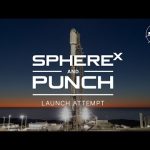
Watch the launch of a NASA space telescope that will create a 3D all-sky map in 102 colors, with a constellation of solar-observing satellites along for the ride. Our SPHEREx observatory and PUNCH mission will lift off on a SpaceX Falcon 9 rocket.
SPHEREx will survey the sky in optical and infrared light, gathering data on more than 450 million galaxies, and 100 million stars in our own galaxy. PUNCH will use four suitcase-sized satellites in low Earth orbit to observe the Sun, and tell us more about the space weather that can impact communications on Earth.
Accesați https://surfshark.com/presura pentru 4 luni suplimentare de Surfshark. 00:00:00 – Incredibil! 00:01:38 – Noi utilizări ale telescopuluii JAMES Webb!! 00:03:17 – James Webb ne uimește!! 00:05:48 – Touchdown! 00:07:00 – NASA caută extratereştri! 00:08:40 – Alinierea Planetelor. 00:09:23 – Cum se topește zăpada.
Ai întrebări de știință și vrei răspunsuri personale? Intră acum pe Patreon și eu își voi răspunde direct pe whatsapp ►https://patreon.com/cristianpresura
Telescopul spațial James Webb are alte obiective importante: descoperirea de asteroizi periculoși, așa cum a fost cel din Chelyabinsk (2013), care a provocat daune mari deși avea doar câțiva zeci de metri. Webb a identificat recent peste 100 de asteroizi noi cu diametrul sub 100 m, contribuind astfel la monitorizarea obiectelor spațiale riscante.
Tot James Webb a captat recent un fenomen astronomic unic: un quasar îndepărtat (11 miliarde de ani-lumină) a cărui lumină trece pe lângă două galaxii intermediare, fenomen numit „zigzag-ul lui Einstein”. Analizând acest fenomen, cercetătorii speră să înțeleagă mai bine energia întunecată și expansiunea universului.
Separat de James Webb, NASA investighează posibilitatea vieții extraterestre pe satelitul Europa al lui Jupiter. Europa are un ocean uriaș sub gheață, unde izvoarele hidrotermale ar putea susține forme primitive de viață bacteriană. Cercetările viitoare ale NASA vor analiza aceste coloane de apă pentru eventuale semne ale vieții microbiene.”
How do we know the Earth isn’t flat? For thousands of years people have known the Earth is round. Ancient civilizations used the stars and shadows to figure it out. Mariners confirmed it by sailing around the globe. And when the space age began, we saw it with our own eyes — the Earth is round!
A NASA scientist explains how we’ve known for centuries that our planet is a sphere.
SpaceX and NASA teams stood down on the March 10, 2025, launch attempt for SPHEREx and PUNCH. We will create a new YouTube live event when the updated date and time when they are available.
Watch the launch of a NASA space telescope that will create a 3D all-sky map in 102 colors, with a constellation of solar-observing satellites along for the ride. Our SPHEREx observatory and PUNCH mission will lift off on a SpaceX Falcon 9 rocket.
SPHEREx will survey the sky in optical and infrared light, gathering data on more than 450 million galaxies, and 100 million stars in our own galaxy. PUNCH will use four suitcase-sized satellites in low Earth orbit to observe the Sun, and tell us more about the space weather that can impact communications on Earth.
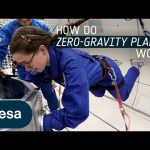
Ever wondered how astronauts prepare for the weightlessness of space? In Bordeaux, France, our astronauts train for microgravity using parabolic flights! These special flights create brief periods of zero gravity, mimicking the conditions of space.
By performing a series of steep climbs and descents, the plane allows astronauts to experience intense 2G forces before entering a 22-second weightless phase! This crucial training helps future astronauts adapt to moving, working, and even jumping in zero gravity.
Join us as we follow Rosemary Coogan, Sławosz Uznański-Wiśniewski, and John McFall on their parabolic flight training.
Credits: ESA – European Space Agency Footage: ESA/Novaspace
★ Subscribe: http://bit.ly/ESAsubscribe and click twice on the bell button to receive our notifications.
We are Europe’s gateway to space. Our mission is to shape the development of Europe’s space capability and ensure that investment in space continues to deliver benefits to the citizens of Europe and the world. Check out https://www.esa.int/ to get up to speed on everything space related.
Inside is the very first metal 3D-printed object made aboard the International Space Station!
Scientists will now compare the object with reference prints made on Earth to study how microgravity affects 3D metal printing.
One of our goals for future space development is to create a circular space economy, recycling materials in orbit for better resource use. In the future, we could repurpose old satellite parts into new tools and structures, reducing the need to launch everything from Earth.
A 3D printer in space would let astronauts print what they need, when they need it.
Our metal 3D printer was developed by @airbus_space and its partners.
📹 @europeanspaceagency 📸 ESA/Airbus Space and Defence SAS
Ai întrebări de știință și vrei răspunsuri personale? Intră acum pe Patreon și eu își voi răspunde direct pe whatsapp ►https://patreon.com/cristianpresura
Phil starts with a balloon powered hover disc, then tries to make a maxed out version big enough to ride. In fact, why not make two and then race them! Phil also tries to use the power of friction to climb the walls and even to fly!
NASA’s SpaceX Crew-9 mission with astronauts Nick Hague, Butch Wilmore, and Suni Williams, and Roscosmos cosmonaut Aleksandr Gorbunov, is preparing to return to Earth following their science mission aboard the International Space Station.
Hague, Williams, and Wilmore completed more than 900 hours of research between over 150 unique scientific experiments and technology demonstrations during their stay aboard the orbiting laboratory.
Have you ever wanted to design something that could fly around the Moon? This is your opportunity. The Artemis II astronauts will use a zero gravity indicator during their mission to demonstrate when their Orion spacecraft has reached microgravity. This plushie needs to be soft, small, and importantly, remind us of home.
The Moon Mascot contest challenges people of all ages from all over the world to submit a design to be made by NASA’s Thermal Blanket Lab and flown aboard Artemis II.
Let’s learn something EPIC today! Join Phil as he shares some of the best kept science secrets. Nothing better than having fun while learning about how things work!
Have you ever done a science experiment and wondered “What would this be like if it were HUGE?” Welcome to Science Max, the exciting series that turbocharges all the science experiments you’ve done at home.
Steve Spangler is a bestselling author, STEM educator and Emmy award-winning television personality with more than 2,100 television appearances to his credit. Steve appeared as a regular guest on the Ellen DeGeneres Show from 2007-2022 (27 appearances).
Steve Spangler is a bestselling author, STEM educator and Emmy award-winning television personality with more than 2,100 television appearances to his credit. Steve appeared as a regular guest on the Ellen DeGeneres Show from 2007-2022 (27 appearances).
Watch Intuitive Machines’ Nova-C lunar lander, Athena, touch down on the Moon. Athena will land at Mons Mouton, a lunar plateau near the Moon’s South Pole, delivering NASA science and technology to the Moon’s surface. Landing is slated for no earlier than 12:30 p.m. EST (1730 UTC).
The NASA tech aboard the lander will demonstrate resource utilization on the Moon by measuring the possible presence of volatiles or gases from lunar soil and give future spacecraft a permanent reference point on the lunar surface.
This is Intuitive Machines’ second Moon landing as part of NASA’s Commercial Lunar Payload Services (CLPS) initiative. To learn more about CLPS, visit https://go.nasa.gov/3RFR0A5.
This video takes you on a breathtaking zoom-in journey to the spiral galaxy LEDA 2046648, located over a billion light-years away in the constellation Hercules. Captured by the NASA/ESA/CSA James Webb Space Telescope’s NIRCam instrument, this image reveals a stunning array of distant galaxies and bright stars, crowned with Webb’s signature six-pointed diffraction spikes.
Webb’s mission is to explore the universe’s earliest galaxies, unveiling their formation, evolution, and chemical composition through its powerful infrared vision. This observation was part of the telescope’s calibration process, ensuring its instruments were fine-tuned for groundbreaking discoveries. As the camera zooms in, witness the incredible detail Webb can capture, showcasing the vast and intricate tapestry of the cosmos.
Credit: ESA/Webb, NASA & CSA, A. Martel, Dark Energy Survey/DOE/FNAL/NOIRLab/NSF/AURA, DSS, E. Slawik, N. Risinger, D. de Martin, N. Bartmann, M. Zamani
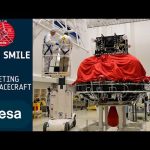
Smile is a brand-new space mission currently in the making. It will study space weather and the interaction between the solar wind and Earth’s magnetic environment.
At the European Space Agency’s technical heart in the Netherlands, engineers have spent the last five months unboxing and testing different elements of the spacecraft, and joining the two main parts together. Due to launch by the end of 2025, Smile is now well on its way to being ready for space.
This video provides a glimpse into what we’ve been up to recently. It is the second episode in a series of short videos, and includes interviews with Adriana González Castro (ESA Smile Project Controller), Walfried Raab (ESA Smile Lead Payload Engineer), Sylvain Vey (ESA Smile Instrument and Operations Interface Engineer), Li Jing (CAS Smile Project Manager), Benjamin Vanoutryve (Smile AIT/AIV and Launcher Interface Principal Engineer), and José Ignacio Maestra Onteniente (Airbus Smile AIT Manager).
Credit: ESA/Lightcurve Films
Acknowledgment: Direction, main camera, sound, editing, post-production by Lightcurve Films. Original music by William Zeitler. Drone footage is by The Postboat Dronedepartment.
★ Subscribe: http://bit.ly/ESAsubscribe and click twice on the bell button to receive our notifications.
We are Europe’s gateway to space. Our mission is to shape the development of Europe’s space capability and ensure that investment in space continues to deliver benefits to the citizens of Europe and the world. Check out https://www.esa.int/ to get up to speed on everything space related.
Ai întrebări de știință și vrei răspunsuri personale? Intră acum pe Patreon și eu își voi răspunde direct pe whatsapp ►https://patreon.com/cristianpresura
Did you know that NASA technology is all around you? From the camera in your phone to lifesaving medical devices — and so much more — innovations developed for space often come back to improve life on Earth.
Through NASA spinoffs, space technology fuels advancements in healthcare, transportation, agriculture and more. Our expert explains how NASA is part of your everyday life!
Steve Spangler is a bestselling author, STEM educator and Emmy award-winning television personality with more than 2,100 television appearances to his credit. Steve appeared as a regular guest on the Ellen DeGeneres Show from 2007-2022 (27 appearances).
Steve Spangler is a bestselling author, STEM educator and Emmy award-winning television personality with more than 2,100 television appearances to his credit. Steve appeared as a regular guest on the Ellen DeGeneres Show from 2007-2022 (27 appearances).
00:00:00 – Apa ar avea informație? Un mit sau realitate? 00:00:55 – ADN-ul diluat și presupusa lui memorie 00:01:53 – Cercetătorul Luc Montagnier și ipoteza sa 00:02:50 – Dilutii succesive și agitația în homeopatie 00:03:47 – Doar apă, dar cu informație? Experimentul ciudat 00:04:45 – Molecula de apă și structura sa reală 00:05:45 – Organizarea apei și efectele posibile 00:06:41 – Argumentele pro și contra memoriei apei 00:07:39 – Transferul informației genetice prin apă? 00:08:36 – Poezie sau știință? Ipoteza fascinantă 00:09:38 – Dilutii extreme și efectele asupra ADN-ului 00:10:38 – Inducția magnetică și curenții electrici 00:11:35 – Interacțiunea moleculelor de apă și ADN 00:12:33 – Persistența informației după eliminarea ADN-ului 00:13:27 – Variabilele experimentului și măsurătorile 00:14:24 – PCR-ul și reconstruirea ADN-ului diluat 00:15:23 – Informația genetică transmisă prin apă? 00:16:21 – Conexiuni între experimente și laboratoare 00:17:22 – Ce demonstrează rezultatele experimentului? 00:18:18 – Concluzii: există sau nu memoria apei?
algoritm:”Memoria apei reprezintă o ipoteză controversată, potrivit căreia apa, chiar și după diluții extreme, ar reține o amprentă electromagnetică a substanțelor dizolvate. Această apă informată a fost susținută inițial de Jacques Benveniste, care a observat reacții alergice la anticorpi într-o soluție unde, statistic, nu mai exista substanța inițială. Ulterior, Luc Montagnier, laureat Nobel pentru descoperirea virusului HIV, a realizat un experimentul apei, încercând să demonstreze că, după ce ADN în apă este scos, ar rămâne totuși informație genetică transmisibilă la distanță printr-un câmp magnetic variabil. Astfel, PCR ar produce un cod genetic complet, în absența fizică a segmentelor ADN, dacă enzima polimerază ar fi influențată de o memorie spirituală a apei.
Conform susținătorilor, această amprentă energetică s-ar păstra prin agitare, transformând structura moleculară a apei și capacitatea ei de a înmagazina date. Ei compară procedura cu scufundarea unui obiect, după care apa pură ar reține urmele sale, precum mii de nucleotide ce compun un cod genetic invizibil. În homeopatie, ideea că apa memoriei ar putea explica efectele remediilor ultradiluate a generat numeroase dezbateri, mulți considerând-o doar pseudoștiință, lipsită de mecanisme fizice cuantificabile. Totuși, unii cercetători explorează posibilitatea ca apa să funcționeze ca suport pentru informație, evocând analogii cu fenomene cuantice greu de măsurat.
În concluzie, memorie apei rămâne un subiect aprig disputat, care provoacă întrebări despre limitele cunoașterii și deschiderea către idei noi. Deși conceptul de apă informată pare fascinant, el nu se bucură de recunoaștere generală. De la primele experiențe ale lui Jacques Benveniste până la eforturile lui Montagnier, niciun studiu nu a convins comunitatea științifică de existența reală a acestei proprietăți. Rămâne de văzut dacă viitoarele cercetări vor oferi indicii concludente, ori dacă fenomenul va fi respins definitiv drept pseudoștiință. Pentru moment, apa pură își păstrează misterele, iar ipoteza unei amprente genetice active, detectabile prin instrumente obișnuite, continuă să fascineze, dar și să stârnească numeroase semne de întrebare.”
Ai întrebări de știință și vrei răspunsuri personale? Intră acum pe Patreon și eu își voi răspunde direct pe whatsapp ►https://patreon.com/cristianpresura
It turns out water is great at blocking radiation. But using water as a protection system has its challenges.
A team from the Polymer Chemistry and Biomaterials Group (PBM) at Ghent University in Belgium is looking into a new option: superabsorbent polymers (SAPs).
These materials might be safer and more effective than water alone.
SAPs can soak up hundreds of times their weight in liquid, similar to those “grow monster” toys that expand in water. When swollen with liquid, they’re called “hydrogels.”
📹 ESA – European Space Agency 📸 Lenny Van Daele/Johan Dubruel
Ai întrebări de știință și vrei răspunsuri personale? Intră acum pe Patreon și eu își voi răspunde direct pe whatsapp ►https://patreon.com/cristianpresura
Ai întrebări de știință și vrei răspunsuri personale? Intră acum pe Patreon și eu își voi răspunde direct pe whatsapp ►https://patreon.com/cristianpresura
Watch live with NASA as Firefly Aerospace prepares to land their Blue Ghost craft on the Moon for the first time.
Firefly’s Blue Ghost lunar lander is slated to touch down near Mare Crisium, on the near side of the Moon, no earlier than 3:45 a.m. EST (0845 UTC) on Sunday, March 2. Live coverage, jointly hosted by NASA and Firefly, begins at 2:20 a.m. EST (0720 UTC).
Blue Ghost Mission 1 is part of NASA’s Commercial Lunar Payload Services (CLPS) initiative, which is sending science and technology to the lunar surface in preparation for NASA’s Artemis campaign, which will establish a long-term presence at the Moon. Blue Ghost is sending10 experiments and demonstrations to provide insights into the Moon’s environment and support future astronauts on the Moon and Mars.
Ai întrebări de știință și vrei răspunsuri personale? Intră acum pe Patreon și eu își voi răspunde direct pe whatsapp ►https://patreon.com/cristianpresura
For years, scientists believed Mars got its red color from hematite, a type of rust that forms in dry conditions. But a new study suggests something surprising—ferrihydrite, a different kind of rust that forms in cool liquid water!
This discovery could mean Mars was once much wetter than we thought—maybe even habitable. And the best part? Our Rosalind Franklin rover will soon analyse Martian soil up close to uncover even more secrets.
Phil starts with a Popsicle stick catapult. Then he uses everything he knows about elastic energy to build a full-size catapult that hurls pumpkins! Plus, a maxed out paddle wheel boat and a historical re-enactment (sort of) of how catapults were used in medieval days.
Steve Spangler is a bestselling author, STEM educator and Emmy award-winning television personality with more than 2,100 television appearances to his credit. Steve appeared as a regular guest on the Ellen DeGeneres Show from 2007-2022 (27 appearances).
Steve Spangler is a bestselling author, STEM educator and Emmy award-winning television personality with more than 2,100 television appearances to his credit. Steve appeared as a regular guest on the Ellen DeGeneres Show from 2007-2022 (27 appearances).