Fire. It’s one of the things that makes Earth so unusual. This season has been one of extremes, with large fires burning from the tropical rainforest to north of the Arctic circle. NASA Explorers have been there every step of the way, investigating the fires as they burn and tracking their effects down the line. From satellites, airplanes, on the ground and in the lab, NASA Explorers are working to understand our home planet and how it burns.
Join us this October as we take a closer look at fire and the people who study it. #S3E0
Have you ever done a science experiment and wondered “What would this be like if it were HUGE?” Welcome to Science Max, the exciting new series that turbocharges all the science experiments you’ve done at home.
The ESA Shop has it all!
Our classic logo and collectable designs printed on apparel, as well as publications, patches and gadgets. You can also explore themed designs that capture our activities of the moment.
See if something catches your eye, to ‘space up’ your life, or for the special space explorer in your life.
We are Europe’s gateway to space. Our mission is to shape the development of Europe’s space capability and ensure that investment in space continues to deliver benefits to the citizens of Europe and the world. Check out http://www.esa.int/ESA to get up to speed on everything space related.
Things are shaping up at Europe’s Spaceport in French Guiana in preparation for Ariane 6. Take a tour of the launch complex and its various facilities.
Recent tests have used mock-ups of the P120C boosters to trial how they will be transported. See them on the launch pad, and get a sense of scale for Ariane 6.
We are Europe’s gateway to space. Our mission is to shape the development of Europe’s space capability and ensure that investment in space continues to deliver benefits to the citizens of Europe and the world. Check out http://www.esa.int/ESA to get up to speed on everything space related.
Three space travelers, including NASA astronaut Jessica Meir, Oleg Skripochka of the Russian space agency Roscosmos and spaceflight participant Hazzaa Ali Almansoori from the United Arab Emirates, launched to space at 9:57 a.m. EDT on Wednesday, Sept. 24, 2019, for a nearly six-hour ride to the International Space Station.
NASA astronaut Serena M. Auñón-Chancellor answers the question ‘What is Artemis?’ Comment on this video using #AskNASA with your questions for upcoming episodes!
Dr. Auñón-Chancellor reveals more about the program to land American astronauts, including the first woman and the next man, on the Moon by 2024. She also shares her experience in long-duration spaceflight aboard the International Space Station on the Expedition 56/57 missions.
Featuring ECOPOTENTIAL, a European funded project that focuses on a set of internationally recognised protected areas, this video describes how the unprecedented availability of satellite data allow scientists to understand large scale changes in our environment and how best to protect it.
★ Subscribe: http://bit.ly/ESAsubscribe and click twice on the bell button to receive our notifications.
We are Europe’s gateway to space. Our mission is to shape the development of Europe’s space capability and ensure that investment in space continues to deliver benefits to the citizens of Europe and the world. Check out http://www.esa.int/ESA to get up to speed on everything space related.
Highlighting Artemis with help from Hollywood, preparing to launch to the only laboratory in microgravity, and testing new lunar landing technology … a few of the stories to tell you about – This Week at NASA!
This video is available for download from NASA’s Image and Video Library: https://images.nasa.gov/details-NHQ_2019_0920_Highlighting%20Artemis%20with%20Help%20from%20Hollywood%20on%20This%20Week%20@NASA%20%E2%80%93%20September%2020,%202019.html
Subscribe so you don’t miss any episodes of our #AskNASA series where NASA experts will answer your questions about space exploration!
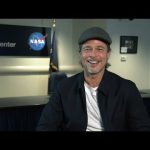
Actor Brad Pitt, who plays an astronaut in his latest film, “Ad Astra,” joins NASA to kick off a new series where NASA experts take your questions. Tune in for our full episode with Brad Pitt on Friday, Sept. 20, and more episodes with our subject matter experts starting Monday, Sept. 23.
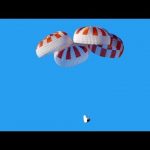
The SpaceX #CrewDragon spacecraft parachutes successfully deploy during the latest development test. This test simulated a pad abort, where the vehicle is tumbling at low altitude before parachute deploy, validating SpaceX’s parachute models and margins. As a part of NASA’s Commercial Crew Program, SpaceX has been developing and testing the Crew Dragon parachute system, which is comprised of two drogue parachutes and four main ring-sail parachutes—the same type of parachutes that have been commonly and successfully used for human spaceflight in the past.
Have you ever done a science experiment and wondered “What would this be like if it were HUGE?” Welcome to Science Max, the exciting new series that turbocharges all the science experiments you’ve done at home.
Scientists at the Geneva Observatory in Switzerland will be processing data from Cheops, ESA’s Characterising Exoplanet Satellite, scheduled to launch soon to study planets orbiting stars outside our Solar System.
The Observatory has a rich history studying exoplanets. In 1995, Michel Mayor and Didier Queloz discovered the first exoplanet orbiting a Sun-like star. Now, over 4000 planets are known around stars other than the Sun.
By observing stars that are already known to host exoplanets, Cheops will make measure very precisely the sizes of planets in the super-Earth to Neptune size range. Combined with existing measurements of planet masses, the Cheops data will make it possible to determine the density of these planets, giving us vital clues about its composition and structure, indicating for example if it is predominantly rocky or gassy, or perhaps harbours significant oceans.
The Cheops mission is a partnership between ESA and Switzerland with important contributions from Austria, Belgium, France, Germany, Hungary, Italy, Portugal, Spain, Sweden, and the United Kingdom. The Cheops launch slot is scheduled for the last quarter of 2019. This film contains contributions from Didier Queloz, Chair of the Cheops Science Team (University of Geneva); Willy Benz, the Cheops Principal Investigator (University of Bern); and the Cheops Ground Segment Manager, Matthias Beck (University of Geneva).
We are Europe’s gateway to space. Our mission is to shape the development of Europe’s space capability and ensure that investment in space continues to deliver benefits to the citizens of Europe and the world. Check out http://www.esa.int/ESA to get up to speed on everything space related.
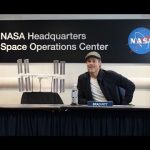
“What’s a spacewalk like? What do you feel?” As NASA prepares to send the first woman and next man to the Moon by 2024 under the #Artemis program, Brad Pitt is playing an astronaut in his latest film, Ad Astra. On Sept. 16 from NASA Headquarters in Washington, the actor spoke to astronaut Nick Hague about what it’s truly like to live and work in space.
Here are the questions that Brad Pitt asked Nick Hague?
0:59 How did we do [in the movie]? How was our Zero-G?
1:33 Do you know what everything is on the wall behind you?
2:33 What are the repercussions on your body in Zero-G?
2:38 How do you gauge your waking hours if you see 16 sunrises and sunsets each day?
3:50 Is there a night shift?
4:45 Could you see the Chandrayaan-2 Moon mission from the International Space Station?
6:15 What are your current missions?
8:02 What does spaceflight affect your mental state? How do you keep it at peace?
9:25 What is your experience like as you look back on Earth?
10:57 Who controls the jam box?
11:49 How are you able to stay in a single space?
12:53 How are you using 3D printing in space?
14:33 What is a spacewalk like?
16:18 Who is more believable playing an astronaut (George Clooney or Brad Pitt)?
For those looking for ideas for Mission Space Lab, this video offers some tips on how to come up with experiments by taking into account the AstroPi sensors available as well as some practical constraints.
We are Europe’s gateway to space. Our mission is to shape the development of Europe’s space capability and ensure that investment in space continues to deliver benefits to the citizens of Europe and the world. Check out http://www.esa.int/ESA to get up to speed on everything space related.
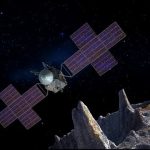
One of the first steps in understanding the geology of Psyche is for the Psyche science team to find out more about collisions and crater formation on metallic asteroids. Join Psyche Mission Science Team Co-Investigator Simone Marchi of the Southwest Research Institute as he explains how impact experiments are conducted at NASA’s Ames Vertical Gun Range and what we can learn about the cratering process to further understand and interpret the geology of Psyche.
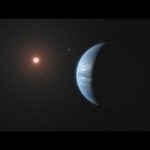
Hubble makes an exoplanet discovery, the next space station crew gets ready to launch, and back to work in Florida after weathering the storm … a few of the stories to tell you about – This Week at NASA!
This video is available for download from NASA’s Image and Video Library: https://images.nasa.gov/details-NHQ_2019_0913_An%20Exoplanet%20Discovery%20from%20Hubble%20on%20This%20Week%20@NASA%20%E2%80%93%20September%2013,%202019.html
Space was the theme of the 2019 Stockholm Culture Festival, a mass event that took over central Stockholm, Sweden, from 13 to 17 August.
Art, music, films and science activities for all ages took to the streets to satisfy the audience’s curiosity about space.
At the festival’s interactive planet exhibition, the whole family could feel and learn more about our galaxy and how space can improve our lives on Earth. Iconic images of the Moon and some rare shots of the preparations behind the scenes were on display in the exhibition ‘A Swedish camera on the Moon’ at Brunkebergstorg Square in Stockholm.
ESA’s astrophysicist Matt Taylor shared the fascinating space adventure of Rosetta, the first ever mission to land on a comet. ESA astronaut Luca Parmitano talked to thousands of festival-goers on 13 August to share his experiences in orbit, less than a month into his mission Beyond. Fellow astronauts Tim Peake and Thomas Reiter were on stage to host the event and bring the audience closer to space.
A stunning new film, called ‘Space Station Earth’, featuring images from space set to music by composer Ilan Eshkeri, made its world premiere on the opening night of the festival supported by a large orchestra, a choir and electronic instruments.
Combining images taken by ESA astronauts aboard the International Space Station with new footage created with the latest video techniques, the whole multimedia experience allowed the audience to see through astronauts’ eyes.
★ Subscribe: http://bit.ly/ESAsubscribe and click twice on the bell button to receive our notifications.
We are Europe’s gateway to space. Our mission is to shape the development of Europe’s space capability and ensure that investment in space continues to deliver benefits to the citizens of Europe and the world. Check out http://www.esa.int/ESA to get up to speed on everything space related.
David Icke is the English writer and public speaker, known since the 1990s as a professional conspiracy theorist, calling himself a “full-time investigator into WHO and WHAT is really controlling the world.”
David is the author of over 21 books, 10 DVDs and has lectured in over 25 countries, speaking live for up to 10 HOURS to huge audiences, filling stadiums like Wembley Arena.
David Icke joined us to discuss his new book THE TRIGGER – THE LIE THAT CHANGED THE WORLD – WHO REALLY DID IT AND WHY, which explores your alternative theories on who orchestrated the 9/11
attacks.
ESA astronaut Luca Parmitano is this year’s ambassador of the European Astro Pi Challenge. In this video, he welcomes students to the challenge and gives an overview of the project.
We are Europe’s gateway to space. Our mission is to shape the development of Europe’s space capability and ensure that investment in space continues to deliver benefits to the citizens of Europe and the world. Check out http://www.esa.int/ESA to get up to speed on everything space related.
Have you ever done a science experiment and wondered “What would this be like if it were HUGE?” Welcome to Science Max, the exciting new series that turbocharges all the science experiments you’ve done at home.
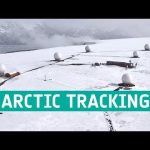
Many of the satellites that gather information on the health of our planet pass over the polar regions pass above the North and South Poles. Satellite ground stations located in these remote areas are best positioned to collect the data and talk to the missions passing above them. This video presents the most northern ground station ESA is using – SvalSat, located within the Arctic Circle – where contact is made with many of ESA’s Earth observation missions. The Svalsat station contributes to ESA’s global tracking station network, Estrack.
★ Subscribe: http://bit.ly/ESAsubscribe and click twice on the bell button to receive our notifications.
We are Europe’s gateway to space. Our mission is to shape the development of Europe’s space capability and ensure that investment in space continues to deliver benefits to the citizens of Europe and the world. Check out http://www.esa.int/ESA to get up to speed on everything space related.
Josef Aschbacher, Director of Earth Observation Programmes at ESA, reflects on last year’s ɸ-week, and discusses progress made so far. As this year’s ɸ-week kicks off, he looks to the next steps of how Earth observation and the digital revolution can work together. He also mentions a new AI special interest group on space, and an exciting new challenge for the next ɸ-sat.
We are Europe’s gateway to space. Our mission is to shape the development of Europe’s space capability and ensure that investment in space continues to deliver benefits to the citizens of Europe and the world. Check out http://www.esa.int/ESA to get up to speed on everything space related.
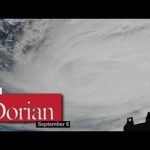
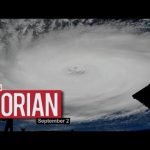
Cameras outside the International Space Station captured views at 8:10 a.m. Eastern time September 6 of a weakening Hurricane Dorian from 260 miles in altitude as it churned just off the outer banks of North Carolina. In its 8 a.m. EDT advisory, the National Hurricane Center said category 1 Hurricane Dorian is moving toward the northeast near 14 mph with maximum sustained winds of 90 miles an hour. The general motion of Dorian, with an increase in forward speed, is expected through Saturday. On the forecast track, the center of Dorian will move near or over the coast of North Carolina during the next several hours. The center should move to the southeast of extreme southeastern New England tonight and Saturday morning, and then across Nova Scotia late Saturday or Saturday night.
Dorian should remain a potent hurricane as it moves near or along the coast of North Carolina during the next several hours. Dorian is forecast to become a post-tropical cyclone with hurricane-force winds by Saturday night as it approaches Nova Scotia. Hurricane-force winds extend outward up to 45 miles from the center of the system and tropical-storm-force winds extend outward up to 220 miles.
Keeping an eye on Hurricane Dorian, the next crew headed to the International Space Station, and a better understanding of Sun-driven space weather … a few of the stories to tell you about – This Week at NASA!
This video is available for download from NASA’s Image and Video Library: https://images.nasa.gov/details-NHQ_2019_0906_Keeping%20an%20eye%20on%20Hurricane%20Dorian%20from%20Space%20on%20This%20Week%20@NASA%20%E2%80%93%20September%206,%202019.html
Earth from Space is back after the summer break! Copernicus Sentinel-2 takes us over a set of small towns, located around 20 km southeast of Rome, Italy and known collectively as Castelli Romani, in this week’s edition of the Earth from Space programme.
We are Europe’s gateway to space. Our mission is to shape the development of Europe’s space capability and ensure that investment in space continues to deliver benefits to the citizens of Europe and the world. Check out http://www.esa.int/ESA to get up to speed on everything space related.
Have you ever done a science experiment and wondered “What would this be like if it were HUGE?” Welcome to Science Max, the exciting new series that turbocharges all the science experiments you’ve done at home.
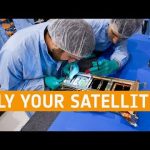
Fly Your Satellite! is an educational programme for university students, created by ESA after the launch of seven university CubeSats on the 2012 Vega maiden flight. Six teams participated in the first edition of the programme, which concluded in 2016 with the launch of three satellites, while in parallel a pilot edition was undertaken to deploy a satellite from the International Space Station. The second edition of Fly Your Satellite! is currently ongoing since 2017, and participating university teams are advancing closer towards testing and launch. The call for proposals for the third edition is now open.
We are Europe’s gateway to space. Our mission is to shape the development of Europe’s space capability and ensure that investment in space continues to deliver benefits to the citizens of Europe and the world. Check out http://www.esa.int/ESA to get up to speed on everything space related.
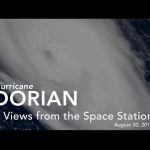
Cameras outside the International Space Station captured views at 11:27 a.m. EDT on Sept. 2 of Hurricane Dorian from 260 miles in altitude as it churned over northwestern Bahamas. In its 11:00 a.m. EDT advisory, the National Hurricane Center said Dorian was almost stationary, moving toward the west at just 1 mile an hour just over 100 miles east of West Palm Beach, Florida, packing catastrophic sustained winds of 155 miles an hour. A slow westward to west-northwestward motion is forecast during the next day or so, followed by a gradual turn toward the northwest and north. On this track, the core of extremely dangerous Hurricane Dorian will continue to pound Grand Bahama Island through much of today and tonight. The hurricane will move dangerously close to the east coast of Florida tonight through Wednesday evening and dangerously close to the Georgia and South Carolina coasts Wednesday night and Thursday. Currently, Dorian is a category 4 hurricane on the Saffir-Simpson Hurricane Wind Scale. Although gradual weakening is forecast, Dorian is expected to remain a powerful hurricane during the next couple of days while moving on a possible track up the southeastern U.S. seaboard.
Givemefive.in is a new generation AI and programming learning platform for kids through videos and hands an activities . In this video kids will understand what is intelligence , human intelligence and artificial intelligence.
If you want to learn more about AI , and get access to hands on experiment AI kits write to us at support@givemefive.in
Cameras outside the International Space Station captured views September 1 of Hurricane Dorian from 260 miles in altitude at 12:16 p.m. Eastern time as it churned over the Atlantic Ocean over the northern Bahamas. The storm, which is moving in a westerly direction with sustained winds of 180 miles an hour, is a dangerous Category 5 hurricane, carrying the strongest winds in recorded history for the northwestern Bahamas. The National Hurricane Center said in its 11 a.m. EDT advisory that Dorian is inflicting catastrophic damage to the Abacos and Grand Bahama Islands. Dorian is forecast to approach the east coast of Florida before taking a possible track up the southeastern U.S. seaboard later this week.
Cameras outside the International Space Station captured views August 30 of rapidly intensifying Hurricane Dorian at 12:18 p.m. Eastern time as it churned over the Atlantic Ocean. The storm, which is moving to the northwest, is forecast by the National Hurricane Center to approach the east coast of Florida Monday evening as a likely category 4 hurricane.
Celebrating contributions by women to space exploration, a spotlight on the leading role of women in our Artemis program, and views from the space station of Hurricane Dorian … a few of the stories to tell you about – This Week at NASA!
This video is available for download from NASA’s Image and Video Library: https://images.nasa.gov/details-NHQ_2019_0830_Celebrating%20Contributions%20by%20Women%20to%20Space%20Exploration%20on%20This%20Week%20@NASA%20%E2%80%93%20August%2030,%202019.html
Robots + astronauts = a match made in space exploration 🤖👩🚀! Join us at 7 p.m. EDT for a new episode of NASA in Silicon Valley Live to hear our experts explain how we design & build robots to work with humans in space:
We are training astronauts to explore the lunar surface, collect samples, perform experiments and create an outpost in order to live and work on the Moon. But how will future lunar exploration differ from how Apollo astronauts explored and worked on the Moon?
Our astronaut Matthias Maurer talks of the challenging training he went through during the new episode of Space Bites.
Space Bites hosts the best talks on space exploration from the most inspiring and knowledgeable speakers from the field. Held at the technical heart of the European Space Agency in The Netherlands, the lectures illustrate the challenges of space.
We are Europe’s gateway to space. Our mission is to shape the development of Europe’s space capability and ensure that investment in space continues to deliver benefits to the citizens of Europe and the world. Check out http://www.esa.int/ESA to get up to speed on everything space related.
Have you ever done a science experiment and wondered “What would this be like if it were HUGE?” Welcome to Science Max, the exciting new series that turbocharges all the science experiments you’ve done at home.
The ExoMars mission foresees Rosalind Franklin the rover and its surface platform Kazachok landing on the Red Planet in 2021. The rover will move across many types of terrain, collect samples with a 2 m-long drill and analyse them with instruments in its onboard laboratory.
This episode about ExoMars shows the integration of the locomotion system and the science payload to the rover in a specially designed, fit-for-purpose cleanroom at Airbus Defence and Space in Stevenage, United Kingdom.
Mars is a primary target in the search for evidence of extraterrestrial life, past or present. There are stringent planetary protection requirements in place to make sure that ExoMars does not introduce terrestrial biological contamination to the Red Planet. ESA ensures planetary protection according to the legal obligations of the United Nations Outer Space Treaty.
Microbiological contamination is strictly controlled during the assembly of the rover. The cleanroom is amongst the cleanest places on Earth, cleaner than a standard hospital operating theatre thanks to filtered air, application of rigorous cleanliness procedures and workers who remain fully shrouded within ‘bunny suits’.
The rover spent 18 months at Stevenage before departing for Airbus Toulouse, France at the end of August, for four months of environmental testing to confirm it is ready for the conditions on Mars.
More information on ExoMars: http://www.esa.int/exomars
Credits: ESA, Airbus Defence and Space UK, ESA/DLR/FU Berlin (CC BY-SA 3.0 IGO)
★ Subscribe: http://bit.ly/ESAsubscribe and click twice on the bell button to receive our notifications.
We are Europe’s gateway to space. Our mission is to shape the development of Europe’s space capability and ensure that investment in space continues to deliver benefits to the citizens of Europe and the world. Check out http://www.esa.int/ESA to get up to speed on everything space related.