🚩 Visit https://betterhelp.com/historymarche or use “historymarche” when you sign up to get a special discount on your first month of therapy with our sponsor BetterHelp. 🚩 If you have any questions about the brand relating to how the therapists are licensed, their privacy policy, or therapist compensation model, check out this FAQ: https://www.betterhelp.com/your-questions-answered/
🚩 If you like what you see, consider supporting my work on Patreon and you get ad-free early access to my videos for as little as $1 https://www.patreon.com/historymarche — You can also show your support by subscribing to the channel and liking the video. Thank you for watching.
🚩 In early 13th century, crusade was a new concept in Iberia, just beginning to take hold and influence their approach to the regular warfare with their Muslim neighbors. However, the clash at Las Navas helped to solidify and expand the acceptance of crusade ideology in the minds of the Iberian Christians in the ensuing years. This was a turning point in the age of Reconquista…
📢 Narrated by David McCallion
🎼 Music: EpidemicSound Filmstro
📚 Sources Joseph F. O’Callaghan – A History of Medieval Spain Joseph F. O’Callaghan – Reconquest and Crusade in Medieval Spain George F. Nafziger, Mark W. Walton – Islam at War: A History Kenneth M. Setton et. al. – A History of the Crusades Vol. II: The Later Crusades
Watch live video from the International Space Station, including inside views when the crew aboard the space station is on duty. Views of Earth are also streamed from an external camera located outside of the space station. During periods of signal loss due to handover between communications satellites, a blue screen is displayed.
The space station orbits Earth about 250 miles (425 kilometers) above the surface. An international partnership of five space agencies from 15 countries operates the station, and it has been continuously occupied since November 2000. It’s a microgravity laboratory where science, research, and human innovation make way for new technologies and research breakthroughs not possible on Earth. More: https://go.nasa.gov/3CkVtC8
Did you know you can spot the station without a telescope? It looks like a fast-moving star, but you have to know when to look up. Sign up for text messages or email alerts to let you know when (and where) to spot the station and wave to the crew: https://spotthestation.nasa.gov
Live views from the International Space Station are streaming from an external camera mounted on the station’s Harmony module.
The camera is looking forward at an angle so that International Docking Adapter 2 is visible. If the Harmony module camera is not available due to operational considerations for a longer period of time, a continuous loop of recorded Earth views will be displayed with the caption “Previously Recorded.”
The space station orbits Earth about 250 miles (425 kilometers) above the surface. An international partnership of five space agencies from 15 countries operates the station, and it has been continuously occupied since November 2000. It’s a microgravity laboratory where science, research, and human innovation make way for new technologies and research breakthroughs not possible on Earth. More: https://go.nasa.gov/3CkVtC8
Did you know you can spot the station without a telescope? It looks like a fast-moving star, but you have to know when to look up. Sign up for text messages or email alerts to let you know when (and where) to spot the station and wave to the crew: https://spotthestation.nasa.gov
How did asteroid 2024 YR4 go from being the riskiest asteroid ever detected to posing no real threat? 🌍 ☄️
First spotted in December 2024, its impact risk initially soared to 2.8%, surpassing previous record-holder Apophis. But thanks to refined observations from our Near-Earth Object Coordination Centre and other institutions, its risk quickly dropped to just 0.001% within days.
This dramatic shift follows a well-known pattern—asteroid impact probabilities often rise before plummeting as more data becomes available. Now, nearly all possible impact scenarios have been ruled out, and 2024 YR4 has been safely removed from our risk list.
Ai întrebări de știință și vrei răspunsuri personale? Intră acum pe Patreon și eu își voi răspunde direct pe whatsapp ►https://patreon.com/cristianpresura
algoritm:”În contextul recentelor discuții mediatică privind presupusa aliniere perfectă a planetelor, prezentul articol își propune să clarifice realitatea astronomică a acestor evenimente și să evidențieze diferența fundamentală dintre percepția vizuală și configurația spațială a sistemului solar.
Metodologie și observații Analiza se bazează pe compararea imaginilor populare cu datele reale obținute din simulări digitale (ex. Stellarium). Studiul evidențiază două perspective de observare: direcția 1, orientată spre răsărit, unde se regăsesc Marte, Jupiter și Uranus, și direcția 2, către apus, unde sunt vizibile Mercur, Venus, Saturn și Neptun. Deși aceste planete se află în aceeași jumătate a sistemului solar, ele nu formează o linie perfectă, ci sunt dispuse conform pozițiilor lor orbitale. Proiecția boltei cerești asupra unui suport bidimensional conduce la apariția unui arc de cerc, iluzie rezultată din metoda de reprezentare a planurilor tridimensionale pe suprafețe plane.
Discuții Rezultatele simulărilor indică faptul că, din perspectiva unui observator de pe Pământ, planetele par a fi aliniate doar parțial. Imaginea populară a unei aliniamente perfecte este, de fapt, o interpretare eronată a proiecției optice, dat fiind că planul ecliptic intersectează sfera cerească într-o curbă, nu într-o linie dreaptă. Această constatare contrazice reprezentările simplificate adesea promovate de mass-media.
În a doua parte a analizei, se compară efectele gravitaționale exercitate de Lună și Jupiter asupra obiectelor de pe Pământ, utilizând un model simplificat pentru un obiect de 1 kg. Calculul indică că diferența de forță mareică generată de Lună este de ordinul 10⁻⁶ newtoni, în timp ce efectul lui Jupiter, din cauza distanței mari, se reduce la aproximativ 10⁻¹¹ newtoni. Această discrepanță subliniază faptul că influențele gravitaționale ale planetelor asupra Pământului sunt nesemnificative din punct de vedere al efectelor dinamice majore, infirmând astfel predicțiile catastrofale din literatura de specialitate, precum cele din „The Jupiter Effect”.
Concluzii Studiul evidențiază că, deși planetele se află în aceeași jumătate a sistemului solar și pot fi observate simultan pe cer, nu există o aliniere perfectă în spațiu. Percepția unui arc de cerc este rezultatul proiecției bolții cerești pe o suprafață plană. Astfel, explicațiile astronomice riguroase se distanțează de interpretările astrologice, demonstrând importanța abordării științifice în analiza fenomenelor cosmice.”
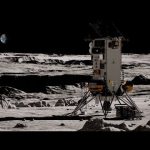
Watch Intuitive Machines’ Nova-C Moon lander and NASA’s Lunar Trailblazer lift off on a SpaceX Falcon 9 rocket from NASA’s Kennedy Space Center in Florida. IM-2 is scheduled to launch at 7:16 p.m. EST (0016 UTC Feb. 27).
The lander, named Athena, will carry NASA science and technology to the Moon’s surface. Athena will orbit the Moon for approximately three days before landing at Mons Mouton, a lunar plateau near the Moon’s South Pole.
The NASA tech aboard the lander will demonstrate resource utilization on the Moon by measuring the possible presence of volatiles or gases from lunar soil and give future spacecraft a permanent reference point on the lunar surface.
Launching as a rideshare with the IM-2 delivery, NASA’s Lunar Trailblazer spacecraft also will begin its journey to lunar orbit, where it will map the distribution of the different forms of water on the Moon.
This is Intuitive Machines’ second launch to the Moon as part of NASA’s Commercial Lunar Payload Services (CLPS) initiative. To learn more about CLPS, visit https://go.nasa.gov/3RFR0A5.
Steve Spangler is a bestselling author, STEM educator and Emmy award-winning television personality with more than 2,100 television appearances to his credit. Steve appeared as a regular guest on the Ellen DeGeneres Show from 2007-2022 (27 appearances).
Steve Spangler is a bestselling author, STEM educator and Emmy award-winning television personality with more than 2,100 television appearances to his credit. Steve appeared as a regular guest on the Ellen DeGeneres Show from 2007-2022 (27 appearances).
The Intuitive Machines-2 mission is set to launch the company’s lunar lander, Athena, to the Moon. Athena will carry NASA science experiments and technology demonstrations to help us understand the Moon’s environment, and prepare for future human missions to the lunar surface.
One piece of tech aboard, the Polar Resources Ice Mining Experiment 1 (PRIME-1), is one of the first on-site demonstrations of resource use on the Moon. PRIME-1 will take a lunar soil sample and analyze it to see if it contains water ice.
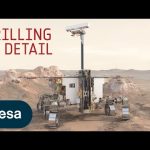
The ExoMars Rosalind Franklin rover will drill deeper than any other mission has ever attempted on the Red Planet.
The third episode in the series shows how the rover will extract, collect and analyse martian samples in a high-fidelity simulation.
Rosalind Franklin will be the first rover to reach a depth of up to two metres deep below the surface, acquiring samples that have been protected from harsh surface radiation and extreme temperatures.
The drill system combines multiple precission mechanisms in an intricate automated sequence. It uses three extension rods that connect tor form a two-metre “drill string”.
As the rover drills, it will simultaneously investigate the borehole using infrared spectroscopy to study mineral composition.
The ExoMars Rosalind Franklin mission is part of Europe’s ambitious exploration journey to search for past and present signs of life on Mars.
Credits: ESA – European Space Agency Production: Mlabspace for ESA 3D animation: ESA/Mlabspace Music composed by Valentin Joudrier
★ Subscribe: http://bit.ly/ESAsubscribe and click twice on the bell button to receive our notifications.
We are Europe’s gateway to space. Our mission is to shape the development of Europe’s space capability and ensure that investment in space continues to deliver benefits to the citizens of Europe and the world. Check out https://www.esa.int/ to get up to speed on everything space related.
Let’s learn something EPIC today! Join Phil as he shares some of the best kept science secrets. Nothing better than having fun while learning about how things work!
Have you ever done a science experiment and wondered “What would this be like if it were HUGE?” Welcome to Science Max, the exciting series that turbocharges all the science experiments you’ve done at home.
Let’s learn something EPIC today! Join Phil as he shares some of the best kept science secrets. Nothing better than having fun while learning about how things work!
Have you ever done a science experiment and wondered “What would this be like if it were HUGE?” Welcome to Science Max, the exciting series that turbocharges all the science experiments you’ve done at home.
https://shop.ecosolaris.ro/sisteme-fotovoltaice, folosește codul “presura15” și vei avea o reducere de 15% la comenzile online achitate cu cardul. Pentru o ofertă personalizată va rugam sa ne contactați la oferta@ecosolaris.ro
00:01:07 – Recapitulare pompe de căldură 00:02:57 – Care pompă de căldură este mai bună, aer-apă sau sol-apă? 00:06:10 – Cum funcţionează compresorul? 00:12:20 – Efectul Joule-Thomson
Iniţial, agentul frigorific circulă printr-un sistem ce realizează evaporare la o temperatură scăzută. Acesta preia căldura din aerul rece, urmat de trecerea printr-un compresor. În urma compresiei, se obţine o temperatură ridicată necesară pentru a transfera căldura către mediul interior, prin intermediul unui condensator. Această etapă este esenţială în procesul de transfer termic, unde căldura este cedată în mod eficient.
După ce agentul îşi cedează energia termică, trece printr-o valvă de expansiune. Aici intervine crucial efectul Joule-Thomson, ce determină scăderea temperaturii printr-un fenomen bazat pe fizică aplicată. Acest efect explică modul în care agentul îşi schimbă starea termică, contribuind la optimizarea randamentului sistemului.
Există două tipuri majore de sisteme: aer-apă și sol-apă. Sistemul aer-apă extrage căldura din aerul exterior, fiind popular datorită simplităţii instalaţiei și a costurilor mai reduse. Totuşi, eficienţa acestuia depinde de condiţiile externe. În schimb, sistemul sol-apă utilizează foraje și sonde pentru a capta căldura din pământ, unde temperatura este mai constantă, chiar şi în timpul iernii. Metoda geotermală asigură astfel o eficiență energetică sporită şi o mai bună economisire energie.
Pentru cei interesaţi de tehnologie termică modernă, există numeroase tutoriale şi video explicative care prezintă în detaliu concepte științifice complexe, precum compresia şi efectul Joule-Thomson. Un experiment simplu poate fi realizat chiar acasă pentru a observa efectele acestor fenomene.
Companiile inovatoare, cum este EcoSolaris, oferă soluţii integrate, inclusiv panouri fotovoltaice, care reduc costuri și transformă locuința într-o sursă autonomă de energie. Această inovare în domeniul instalaţiei energetice reprezintă un pas important spre un viitor sustenabil, în care tehnologia contribuie la eficienţa şi confortul locuințelor.”
Is there potential for life on Europa? This icy moon of Jupiter has a massive ocean hidden beneath its icy crust — one that might have the right ingredients for life. Currently en route, our upcoming Europa Clipper mission will explore this mysterious world, searching for clues about its potential habitability. Watch as a NASA scientist explains more.
Live views from the International Space Station are streaming from an external camera mounted on the station’s Harmony module.
The camera is looking forward at an angle so that International Docking Adapter 2 is visible. If the Harmony module camera is not available due to operational considerations for a longer period of time, a continuous loop of recorded Earth views will be displayed with the caption “Previously Recorded.”
The space station orbits Earth about 250 miles (425 kilometers) above the surface. An international partnership of five space agencies from 15 countries operates the station, and it has been continuously occupied since November 2000. It’s a microgravity laboratory where science, research, and human innovation make way for new technologies and research breakthroughs not possible on Earth. More: https://go.nasa.gov/3CkVtC8
Did you know you can spot the station without a telescope? It looks like a fast-moving star, but you have to know when to look up. Sign up for text messages or email alerts to let you know when (and where) to spot the station and wave to the crew: https://spotthestation.nasa.gov
Witness the breathtaking beauty of our cosmic neighbor—the Andromeda galaxy—located 2.5 million light-years away. This spiral disk galaxy appears elliptical from Earth due to its tilted orientation. In this panoramic view, young blue stars shimmer along the galaxy’s outer rim, while older yellowish stars cluster toward the bright central hub, resembling the yolk of a cosmic fried egg. 🍳💫
This vibrant portrait is the result of over 10 years of observations and more than 600 snapshots captured by the Hubble Space Telescope. Altogether, it reveals the mesmerizing glow of 200 million stars scattered across the galaxy’s immense 200,000-light-year-wide disk. As the camera zooms into the central region, a dense sea of ancient stars comes into view. Panning across the galaxy’s expanse, we see intricate patterns of dark dust clouds weaving through space, while vibrant blue star clusters stand out along the edges, signaling regions of ongoing star formation. 🌌✨
Prepare to be amazed as we explore one of the largest and most detailed galactic images ever captured—offering a glimpse into the heart of a distant galaxy, yet eerily similar to our own Milky Way.
📸 NASA, ESA, B. Williams (University of Washington), G. Bacon (STScI) 🎶 Rain Clouds – Beautiful Visions
Phil builds a balloon powered car in the lab. Then he tries to make one big enough to ride. Can the Science Max build team find a big enough balloon? Or are balloons the way to go? Plus, Newton’s Cradle out of bowling balls, how Guinea Pigs got their name and Newton’s 3rd Law.
You’ve heard about asteroid 2024 YR4 and we’ve heard your questions — so let’s talk about it. What are the chances it’ll hit Earth? Why do those odds keep changing? And should you be worried? (Spoiler alert: No). Get the facts from a NASA expert and learn how we track asteroids, update predictions, and keep an eye on the skies.
Coming April 2025, NASA’s Planetary Defenders documentary will showcase the international collaboration and dedicated team of astronomers and scientists working tirelessly to track and monitor near-Earth asteroids, aiming to protect our planet from potential impacts: https://go.nasa.gov/NASAPlanetaryDefenders
#stiinta #fizica #science #tehnologie #technology #cristianpresura algoritm:”Microsoft a anunțat lansarea Majorana 1, primul cip de calcul cuantic bazat pe qubiți topologici, o inovație obținută după ani de cercetare intensivă. Spre deosebire de biții tradiționali, qubiții topologici sunt mai stabili și mai puțin predispuși la erori datorită arhitecturii lor speciale, ce implică materiale precum arseniura de indiu și aluminiul. Cipul utilizează opt qubiți și demonstrează potențialul de a fi scalat la până la un milion de qubiți, ceea ce ar putea revoluționa domenii precum inteligența artificială, simulările moleculare și securitatea datelor. Susținut de DARPA, proiectul vizează construirea unor computere cuantice rezistente la interferențele externe, ce pot efectua calcule complexe în timp record. Prin această tehnologie, Microsoft deschide calea către dezvoltarea de sisteme cuantice fiabile și eficiente, transformând modul în care se procesează informațiile și abordând provocările critice ale viitorului tehnologic.”
NASA’s SPHEREx and PUNCH missions are set to launch together, with one mission aiming to answer big-picture questions about our universe and the other seeking a better understanding of our Sun.
SPHEREx (Spectro-Photometer for the History of the Universe, Epoch of Reionization and Ices Explorer) is an infrared space telescope designed to map the entire sky like none before it. SPHEREx will study the origins of the universe, galaxies, and the ingredients for life in our galaxy.
PUNCH (Polarimeter to Unify the Corona and Heliosphere) is a constellation of four small satellites dedicated to studying the Sun’s outer atmosphere, the solar corona, and how it extends into space to form the solar wind. Understanding these processes is critical to predicting space weather and its impact on Earth’s magnetic field.
Together, SPHEREx and PUNCH demonstrate NASA’s commitment to uncovering the fundamental forces that shape our universe and our own star.
Steve Spangler is a bestselling author, STEM educator and Emmy award-winning television personality with more than 2,100 television appearances to his credit. Steve appeared as a regular guest on the Ellen DeGeneres Show from 2007-2022 (27 appearances).
Steve Spangler is a bestselling author, STEM educator and Emmy award-winning television personality with more than 2,100 television appearances to his credit. Steve appeared as a regular guest on the Ellen DeGeneres Show from 2007-2022 (27 appearances).
🚩 If you like what you see, consider supporting my work on Patreon and you get ad-free early access to my videos for as little as $1 https://www.patreon.com/historymarche — You can also show your support by subscribing to the channel and liking the video. Thank you for watching.
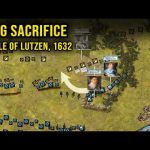
In 1632, the Thirty Years War took another turn. In the wake of his brilliant victory at Breitenfeld, Gustavus Adolphus’s triumphal campaign in the Holy Roman Empire was halted at Ingolstadt, Bavaria, where the Imperial-Leaguist Generalleutnant Tilly died of wounds received in the battle Rain am Lech. The former commander of the Imperial army, Generalleutnant Wallenstein, who had lost command in 1630 due to political intrigue at the court of Vienna, was re-instated as Generalissimus.
Wallenstein refused an initial battle on open ground against the Swedish King by entrenching his army at Nürnberg and then forced Gustavus Adolphus to retreat by cutting his supply lines. With winter near, Wallenstein deployed his regiments into garrisons throughout Saxony, like Nürnberg a Swedish ally. During this maneuvering, the Swedish King almost took Wallenstein’s rear guard by surprise at the town of Lützen.
During this battle, two of the most famous and brilliant commanders of the Thirty Years War tried to end the war with one fierce battle. At the end, one lost his life and the other lost his will to fight on.
📢 Narrated by David McCallion
🎼 Music: EpidemicSound Filmstro
📚 Sources Lützen 1632 : climax of the Thirty Years war – Richard Brzezinski (2001) The Battle of Lützen 1632: A Reassessment – Andre Schurger (2023) Richard Brzezinski – The Army of Gustavus Adolphus Volume 1: Infantry Richard Brzezinski – The Army of Gustavus Adolphus Volume 2: Cavalry Henrik O. Lunde – The Rise and Fall of Sweden as a Military Superpower, 1611-1721 Lars Erikson Wolke – Gustavus Adolphus, Sweden, and the Thirty Years War, 1630-1632 Russell Frank Wreighley – The Age of Battles: The Quest for Decisive Warfare from Breitenfeld to Waterloo
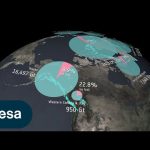
As part of a community effort, the Glacier Mass Balance Intercomparison Exercise, Glambie, has compiled all major studies using observations from a wealth of different techniques to provide an estimate of the world’s glacier mass change over the last two decades. The results, published in the journal Nature, show that ice melting from glaciers around the world is depleting regional freshwater resources and driving global sea levels to rise at ever-faster rates. The animation here illustrates the different observation methods used in the research, and Vatnajökull in Iceland as an example.
We are Europe’s gateway to space. Our mission is to shape the development of Europe’s space capability and ensure that investment in space continues to deliver benefits to the citizens of Europe and the world. Check out https://www.esa.int/ to get up to speed on everything space related.
How long does it take to get to the Moon? Mars? Jupiter? The answer is: it depends — and speed is only one factor. Travel times also depend on distance, fuel, physics and clever trajectory planning. From quick trips to the Moon to years-long voyages to the outer planets, every mission follows a unique path. Watch as a NASA scientist breaks down what it really takes to travel through space.
Steve Spangler is a bestselling author, STEM educator and Emmy award-winning television personality with more than 2,100 television appearances to his credit. Steve appeared as a regular guest on the Ellen DeGeneres Show from 2007-2022 (27 appearances).
Steve Spangler is a bestselling author, STEM educator and Emmy award-winning television personality with more than 2,100 television appearances to his credit. Steve appeared as a regular guest on the Ellen DeGeneres Show from 2007-2022 (27 appearances).
Accesează https://surfshark.com/presura sau folosește codul PRESURA la finalizarea comenzii pentru a primi 4 luni extra de Surfshark VPN!
00:00:00 – Asteroidul 2024 YR4 00:01:47 -” Soarele made în China” 00:03:30 – Descoperiri noi James Webb 00:05:46 – Sunetul unui meteorit 00:07:34 – Galaxia noastră este specială! 00:09:05 – Cine controlează Inteligența artificială?
Asteroidul 2024 YR4 Asteroidul 2024 YR4, cu un diametru între 50 și 100 de metri, reprezintă o amenințare majoră pentru Pământ, având o probabilitate de impact estimată de 1,9% pentru 22 decembrie 2032. Comparabil cu evenimentele de la Chelyabinsk (2013) și Tunguska (1908), impactul său ar putea degaja energie echivalentă cu 8 megatone de TNT. Traiectoria sa este monitorizată cu atenție, iar ajustările viitoare vor clarifica dacă Pământul este în pericol sau nu.
Fuziune Nucleară și Reactorul Chinezesc În domeniul fuziunii nucleare, reactorul chinezesc, care imită procesul din Soare, a atins un record de 20 de minute de stabilitate. La temperaturi de zeci de milioane de grade Celsius, plasma de hidrogen este menținută în vid cu ajutorul câmpurilor magnetice și magneților supraconductori. Sistemul a consumat energie echivalentă cu mii de cuptoare cu microunde, demonstrând că un Soare artificial este posibil, iar rezultatele pot fi integrate în proiectul ITER din Franţa.
Descoperiri cu James Webb Telescopul spaţial James Webb a fotografiat puncte mici roşii care, deși au dimensiuni reduse, deschid perspective noi asupra Cosmosului. Aceste galaxii mici roşii, cu nuclee active și găuri negre supermasive, se formează la câteva sute de milioane de ani după Big Bang. Culoarea roşiatică provine din discul de acreţie al găurilor negre, iar studiile sugerează că aceste structuri ar putea explica modul în care galaxiile au crescut rapid în universul timpuriu.
Meteorit și Sunetul Impactului Un meteorit care s-a prăbușit pe solul din Canada a fost filmat cu sunetul impactului, oferind o perspectivă unică asupra coliziunii cu suprafața Pământului. Sunetul înregistrat reflectă energia eliberată la momentul impactului, similar cu efectele coliziunilor majore. Aceste date sunt esențiale pentru înțelegerea fenomenelor de impact și pentru îmbunătățirea sistemelor de alertă și studiu ale meteoritelor care zboară prin atmosferă.
Galaxia Noastră și Sateliții Săi Calea Lactee, galaxia noastră, este înconjurată de sateliți precum Norii lui Magellan, activi în generarea de noi stele. Studiile recente arată că alte galaxii similare au multe galaxii satelit mult mai active, posibil datorită materiei întunecate care influențează formarea stelelor. Această diversitate ridică întrebări despre evoluția și interacțiunile cosmice, sugerând că Calea Lactee poate fi o excepție în univers.
Controlul Inteligenței Artificiale Dezbaterea privind controlul inteligenței artificiale este intensă, cu experți precum Roman Yampolskiy avertizând asupra riscurilor sistemelor autonome. Algoritmii funcționează ca o „cutie neagră”, iar deciziile AI pot deveni misterioase și greu de interpretat. Nevoia de a alinia valorile umane cu deciziile AI este critică, însă autonomia tot mai mare a sistemelor reduce capacitatea noastră de control, generând dileme etice și de securitate.”