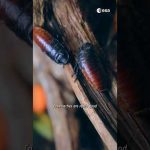
Waste management is a critical challenge for spaceflight. But what if the waste produced by astronauts could be sustainably transformed into something valuable in space? A Polish company thought about that and has come up an innovative solution: an insect bioreactor powered by Madagascar cockroaches.
Astronika, with support from ESA, has developed an innovative insect bioreactor that could revolutionize waste management on long-duration space missions. Currently, astronauts on the ISS rely on high-temperature reactors to process small amounts of waste, but much of it is still sent back to Earth. This method is unsustainable for deep-space missions. The insect bioreactor offers a closed-loop solution by converting organic waste into valuable resources, helping to create a more self-sufficient space ecosystem.
The system relies on Madagascar cockroaches, chosen for their resilience and efficiency in breaking down waste. The bioreactor can process up to 3.6 kg of waste per week, producing over 100 grams of protein-rich biomass—equivalent to more than 20 eggs. It also aids in water recovery and reduces waste volume, making it a highly sustainable option for future missions. By optimizing the bioreactor’s environment—controlling temperature, humidity, and waste conditions—the insects’ metabolism and reproduction can be accelerated, improving efficiency.
While still in early development, the next step is to send a prototype to space to observe how cockroaches behave and reproduce in microgravity. Understanding their adaptation to space conditions will provide valuable insights for further development. In the future, this technology could be a key component of long-term missions to the Moon or Mars, not only for waste recycling but also for plant cultivation and food production, helping astronauts sustain themselves far from Earth.
Bending light to your will! Phil gets challenged to use light to solve a puzzle that gets more and more difficult. Plus: making a periscope, bouncing light rays to turn off your television, even seeing in the dark!
Steve Spangler is a bestselling author, STEM educator and Emmy award-winning television personality with more than 2,100 television appearances to his credit. Steve appeared as a regular guest on the Ellen DeGeneres Show from 2007-2022 (27 appearances).
Steve Spangler is a bestselling author, STEM educator and Emmy award-winning television personality with more than 2,100 television appearances to his credit. Steve appeared as a regular guest on the Ellen DeGeneres Show from 2007-2022 (27 appearances).
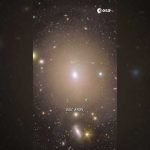
Euclid, the European Space Agency’s dark Universe detective, has made an astonishing discovery – right in our cosmic backyard.
An Einstein Ring, an extremely rare phenomenon, has been found hiding in plain sight in a galaxy not so far away. 🤩
During early testing in September 2023, the team spotted something special in one of Euclid’s first images—an Einstein Ring! This rare phenomenon, caused by gravitational lensing, was found around the well-known galaxy NGC 6505, just 590 million light-years away. The light from a much more distant galaxy (4.42 billion light-years away) is bending around it, creating a stunning cosmic ring.
This discovery shows just how powerful Euclid is. With its mission now in full swing, we can expect many more hidden cosmic wonders to be revealed!
📹 ESA – European Space Agency 📸 ESA/Euclid/Euclid Consortium/NASA, image processing by J.-C. Cuillandre, G. Anselmi, T. Li
Steve Spangler is a bestselling author, STEM educator and Emmy award-winning television personality with more than 2,100 television appearances to his credit. Steve appeared as a regular guest on the Ellen DeGeneres Show from 2007-2022 (27 appearances).
Steve Spangler is a bestselling author, STEM educator and Emmy award-winning television personality with more than 2,100 television appearances to his credit. Steve appeared as a regular guest on the Ellen DeGeneres Show from 2007-2022 (27 appearances).
Steve Spangler is a bestselling author, STEM educator and Emmy award-winning television personality with more than 2,100 television appearances to his credit. Steve appeared as a regular guest on the Ellen DeGeneres Show from 2007-2022 (27 appearances).
algoritm:”mă întreb: ce este gândul? Acest gând personal și unic prinde viață din activitatea neuronală – prin descărcări electrice, potențiale de acțiune și tensiuni electrice ce generează semnale neuronale. Gândul la apă activează amintiri, iar cel la misterele Cosmosului, cu ecuațiile magnetismului, declanșează alte conexiuni neuronale. Totuși, organizarea neuronală îmi limitează gândirea, transformându-mă în beneficiar și prizonier al propriei rețele – o adevărată “cutie a Pandorei”. Inteligența artificială ar putea, poate, să reconfigureze aceste conexiuni și să deschidă noi perspective asupra realității și existenței.”
algoritm:”Analiza mostrelor aduse de pe asteroidul Bennu susține teoria panspermiei și abiogeneza, descoperind aminoacizi și baze azotate, esențiali în formarea vieții. Misiunea NASA OSIRIS-REx a adus dovezi prețioase pentru studiul chimiei prebiotice și originile vieții. Amoniacul, aminoacizii și compușii organici de pe Bennu ar fi putut contribui la apariția vieții pe Pământ. timp de 1m 9s Recentele descoperiri aduse de misiunea OSIRIS‐REx a NASA, care a colectat mostre spațiale de pe asteroidul Bennu, reprezintă o capsulă a timpului ce păstrează chimia prebiotică din sistemul solar de acum 4,5 miliarde de ani. Aceste mostre dezvăluie compuși organici, inclusiv 14 din cei 20 de aminoacizi esențiali pentru sinteza proteinelor, precum și toate cele cinci baze azotate (adenină, timină, guanină, citozină și uracil) ce stau la baza ADN-ului și ARN-ului. Astfel, Bennu devine un laborator natural al chimiei cosmice, confirmând existența ingredientelor de bază ale vieții și susținând ipoteza abiogenezei, conform căreia viața a apărut spontan din materie anorganică.
În plus, analiza moleculelor volatile, precum amoniacul, evidențiază reacții chimice complexe, similare cu experimentul Miller, care a demonstrat formarea aminoacizilor în condiții primordiale. Pe lângă carbon, azot, fosfați și sulfați, Bennu conține aproximativ 16.000 de formule moleculare diferite, oferind o privire detaliată asupra proceselor care au contribuit la evoluția chimică a materiei în mediul cosmic. Aceste descoperiri susțin teoria panspermiei, care presupune că asteroizii ar fi putut aduce ingredientele vieții pe Pământ, contribuind la apariția primelor molecule prebiotice.
Aceste descoperiri aduc o nouă lumină asupra dezbaterilor dintre perspectivele religioase și cele științifice privind originea vieții. În timp ce miturile despre creație susțin intervenția divină, datele din Bennu demonstrează că procesele chimice complexe și reacțiile organice au avut loc natural în univers. Astfel, experimentul Miller și evoluția chimică din sistemul solar se împletesc pentru a explica cum viața a putut să apară din materie simplă, contribuind la evoluția microorganismelor.
În esență, Bennu reprezintă dovada că elementele fundamentale ale vieții – aminoacizi, proteine, baze azotate și molecule volatile – au evoluat și s-au combinat pentru a da naștere vieții pe Pământ, marcând un pas important în înțele”
Steve Spangler is a bestselling author, STEM educator and Emmy award-winning television personality with more than 2,100 television appearances to his credit. Steve appeared as a regular guest on the Ellen DeGeneres Show from 2007-2022 (27 appearances).
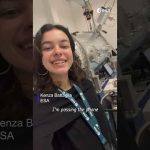
Let’s celebrate International Day of Women in Science 👩🔬 by showcasing the incredible work these 9 women are doing across the fields of science, technology, engineering, and mathematics (STEM).
Kenza Battaglia is a thermal engineer working at the European Space Agency who performs vacuum thermal testing and verification.
At @ESOobservatory Eleonora Sani combines her astronomical background with strategic planning to shape the operations of the next generation of astronomical observatories.
Ivette Bermudez Macias works at the @EuropeanXFEL. She helps scientists deal with huge amounts of data of Nobel-Prize-winning research.
Anna Radoslavova is a PhD student at @CERN who tackles challenges like noise studies and intra-beam scattering at the Large Hadron Collider (LHD).
Elena Fernandez Cano is a Structural Engineer working at @fusionforenergy. She’s helping Europe deliver fusion energy, replicating the process that powers the sun.
Marta Mirolo, a Junior Scientist working at the @ESRFsynchrotron shows how X-rays can help scientists to better understand their processes and materials.
Pilar Cano Megias is a post doctoral researcher. She works at the SMART tokamak project and she is a beneficiary of the @Euro-fusionOrg Researcher Grant.
Diënty Hazenbrink is a scientific officer working at @EMBLorg. She specialises in developing innovative high-throughput workflows to advance microbiological research.
Martina Sandroni, a Chemistry Laboratories Manager working at ILL Neutrons for Society, supports researchers in laboratories, even when handling toxic and delicate substances.
Steve Spangler is a bestselling author, STEM educator and Emmy award-winning television personality with more than 2,100 television appearances to his credit. Steve appeared as a regular guest on the Ellen DeGeneres Show from 2007-2022 (27 appearances).
📸 ESA/Webb, NASA & CSA, J. Lee and the PHANGS-JWST and PHANGS-HST Teams, A. Scholz, K. Muzic, A. Langeveld, R. Jayawardhana, A. Adamo (Stockholm University) and the FEAST JWST team, STScI, A. Riess (JHU/STScI), Euclid/Euclid Consortium
Building an arched bridge! Starting with sugar and ending with something strong enough to walk across – it’s all in how you build it. Plus: a giant house of cards, glass so strong you can hit it with a hammer and exactly how many eggs will support Phil’s weight!
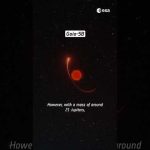
Using data from the European Space Agency’s Gaia mission, scientists have found a huge exoplanet and a brown dwarf. This is the first time a planet has been uniquely discovered by Gaia’s ability to sense the gravitational tug or ‘wobble’ the planet induces on a star. Both the planet and brown dwarf are orbiting low-mass stars, a scenario thought to be extremely rare.
📹 ESA – European Space Agency 📸 ESA/Gaia/DPAC/M. Marcussen
Skip the waitlist and invest in blue-chip art for the very first time by signing up for Masterworks: https://www.masterworks.art/historymarche Purchase shares in great masterpieces from artists like Pablo Picasso, Banksy, Andy Warhol, and more. See important Masterworks disclosures: https://www.masterworks.com/cd
🚩 If you like what you see, consider supporting my work on Patreon and you get ad-free early access to my videos for as little as $1 https://www.patreon.com/historymarche — You can also show your support by subscribing to the channel and liking the video. Thank you for watching.
Steve Spangler is a bestselling author, STEM educator and Emmy award-winning television personality with more than 2,100 television appearances to his credit. Steve appeared as a regular guest on the Ellen DeGeneres Show from 2007-2022 (27 appearances).
Steve Spangler is a bestselling author, STEM educator and Emmy award-winning television personality with more than 2,100 television appearances to his credit. Steve appeared as a regular guest on the Ellen DeGeneres Show from 2007-2022 (27 appearances).
Steve Spangler is a bestselling author, STEM educator and Emmy award-winning television personality with more than 2,100 television appearances to his credit. Steve appeared as a regular guest on the Ellen DeGeneres Show from 2007-2022 (27 appearances).
Steve Spangler is a bestselling author, STEM educator and Emmy award-winning television personality with more than 2,100 television appearances to his credit. Steve appeared as a regular guest on the Ellen DeGeneres Show from 2007-2022 (27 appearances).
#stiinta #fizica #science #tehnologie #technology #cristianpresura algoritm:”DeepSeek, fondat în 2023, a început inițial prin dezvoltarea unui software pentru tranzacționarea pe piețele financiare, însă întâmpinând dificultăți financiare și tehnice. În ciuda unui embargou pe cipuri de inteligență artificială din partea Nvidia, compania chineză a reușit să se adapteze și să refacă sistemul, folosind o arhitectură mai puțin avansată pentru sarcini generale, cum este cazul ChatGPT. Rezultatele obținute au fost similare cu cele ale modelelor de la OpenAI, dar folosind cu mult mai puține resurse. Acest succes a provocat o scădere semnificativă a valorii altor companii tehnologice majore, inclusiv Microsoft și Alphabet, pe fondul temerii că investițiile în tehnologiile AI tradiționale sunt prea mari și că performanțele dorite pot fi atinse cu resurse mult mai reduse.
Surpriza nu a fost doar în lumea financiară, ci și în cercurile de cercetători, deoarece DeepSeek a demonstrat că nu este necesar hardware de ultimă generație pentru a obține rezultate remarcabile. Această realizare ridică întrebarea esențială: ce se va întâmpla cu viitorul inteligenței artificiale și al omenirii în ansamblu? Pe măsură ce tehnologia avansează, mulți se întreabă cum vor evolua gândirea și conștiința, atât pentru oameni, cât și pentru inteligențele artificiale.
Inteligența artificială generală (IAG) este o noțiune care se referă la dezvoltarea unui software capabil să egaleze sau să depășească inteligența umană, inclusiv să dezvolte conștiința de sine. Dacă până acum AI a fost folosită în scopuri specifice, precum procesarea informațiilor sau rezolvarea problemelor, IAG ar putea avea dorințe, opinii și o viziune proprie asupra existenței. Aceasta ar putea chiar să se reconfigureze, să dezvolte multiple forme de conștiință și să găsească soluții inovative la probleme fundamentale, cum ar fi descoperirea legilor fundamentale ale universului.
Cu toate acestea, trecerea la superinteligență ar însemna un salt rapid în evoluția tehnologică, iar IAG ar putea ajunge să se autoregleze și să-și modifice structura, ceea ce ar permite o dezvoltare exponențială a capacităților sale. Dacă oamenii ar avea nevoie de o viață întreagă pentru a înțelege un concept, IAG ar putea realiza același lucru în câteva microsecunde. Aceasta ar putea revoluționa domenii precum medicina, tehnologia sau fizica, iar în acest context, omenirii ar putea să-i rămână inaccesibile răspunsuri care, până acum, păreau imposibile.
În cele din urmă, evoluția inteligenței artificiale ar putea schimba radical fața lumii și a umanității. Într-o eră a superinteligenței, descoperirile științifice și tehnologiile inovative ar putea revoluționa viața pe Pământ, dar și concepțiile fundamentale despre existență. Totuși, oamenii ar trebui să învețe să se adapteze și să colaboreze cu aceste tehnologii pentru a menține un echilibru care să nu le subjuge, dar să le permită să atinga potențialul lor maxim. Istoria ne-a învățat că progresele majore sunt adesea însoțite de crize și renașteri, iar superinteligența ar putea deschide o nouă eră a abundenței materiale și cunoașterii profunde.”
A group of volunteers is spending two months lying in bed—with their feet up and one shoulder always touching the mattress—even while eating, showering, and using the toilet. But why? This extreme bedrest study is helping scientists understand how space travel affects the human body and how to keep astronauts healthy on long missions.
Microgravity causes muscle and bone loss, fluid shifts, and other physiological changes similar to those experienced by bedridden patients on Earth. By studying volunteers here on Earth, researchers can develop better countermeasures for astronauts and even improve treatments for medical conditions like osteoporosis.
In this study, participants are divided into three groups: one stays in bed with no exercise, another cycles in bed to mimic astronaut workouts, and a third cycles while being spun in a centrifuge to simulate artificial gravity. Scientists hope artificial gravity could become a key tool in protecting astronauts during deep-space missions.
Could you handle 60 days in bed for the sake of space exploration? Let us know in the comments!
Credits: ESA – European Space Agency
★ Subscribe: http://bit.ly/ESAsubscribe and click twice on the bell button to receive our notifications.
We are Europe’s gateway to space. Our mission is to shape the development of Europe’s space capability and ensure that investment in space continues to deliver benefits to the citizens of Europe and the world. Check out https://www.esa.int/ to get up to speed on everything space related.
The AI-powered innovation transforming space medicine. Astronauts can now perform expert-level ultrasounds without Earth-based guidance—keeping them healthy on deep-space missions while paving the way for smarter, more accessible healthcare on Earth.
The future of exploration starts here!
📸 ESA/NASA – Alexander Gerst 📹 ESA – European Space Agency
Static Electricity! That’s what’s behind lightning bolts, whether they come from the sky or are made in the lab using the power of science! Plus: Phil harnesses the power behind lightning to make things stick, float, or make your hair stand on end!
Air Zero G’s parabolic flights create a weightless environment by flying along a curved path called a parabola. This short period of weightlessness lasts about 22 seconds, during which people and experiments on board the parabolic flight can experience the same weightlessness as astronauts in orbit on the International Space Station.
The price to pay for this free-floating freedom is two short periods of hypergravity, during which everything weighs almost double for 20 seconds: first when the aircraft pulls up sharply and then again when it pulls out sharply afterwards to return to a normal flight path.
Each parabola takes about one minute to complete and is repeated 31 times in one flight, providing a total of about ten minutes of zero-gravity.
The flights provide European scientists with access to a repeatable, low-gravity research environment. Hundreds of experiments have flown over thousands of parabolas, enabling extensive scientific endeavours across many disciplines and resulting in a huge legacy of publications.
Germanicus is here! Today we continue the “Lost Eagles” series. In the aftermath of the ambush at Teutoburg Forest, Roman control over Germania east of the Rhine was severely damaged – you can watch Episode 1 – Battle of the Teutoburg Forest here https://youtu.be/vHGK43Jy6oM.
Episode 2 features three battles! We cover Tiberius’ retaliatory campaigns from 10 to 13 AD and Germanicus’ gigantic operation to reclaim Roman dominance in 14 and 15 AD, culminating with the Battle of Pontes Longi.
🚩 If you like what you see, consider supporting my work on Patreon and you get ad-free early access to my videos for as little as $1 https://www.patreon.com/historymarche — You can also show your support by subscribing to the channel and liking the video. Thank you for watching.
📢 Narrated by David McCallion
🎼 Music: EpidemicSound Filmstro Storyblocks
📚 Sources: Campaigns of Germanicus, 13-16 AD – Ilkka Syvänne (2011) Dio Cassius, Roman History (1st century) Peter S. Wells, The Battle That Stopped Rome (2003) Teutoburg Forest 9 AD – Michael McNally (2007) Germanicus – Lindsay Powell (2013) The Annals – Tacitus (2nd century) In the name of Rome – Adrian Goldsworthy (2016)