Material from the asteroid Bennu is revealing that a lost world fostered the building blocks of life… with an unexpected twist.
Join experts on Thursday, January 30, at 3:00 p.m. EST (2000 UTC) as they dive into the recent findings from the asteroid sample NASA’s OSIRIS-REx spacecraft brought to Earth in September 2023.
Have questions? Share them in chat and we’ll answer a few live!
Steve Spangler is a bestselling author, STEM educator and Emmy award-winning television personality with more than 2,100 television appearances to his credit. Steve appeared as a regular guest on the Ellen DeGeneres Show from 2007-2022 (27 appearances).
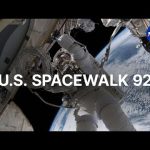
NASA astronauts Butch Wilmore and Suni Williams are taking a spacewalk outside the International Space Station on Thursday, Jan. 30, 2025, to maintain station hardware and collect samples of surface material for analysis from the Destiny laboratory and the Quest airlock. The spacewalk is expected to begin at approximately 8 a.m. EST (1300 UTC) and last for around six and a half hours.
Williams (wearing the suit with red stripes) and Wilmore (wearing the unmarked suit) arrived at the ISS last year and are both crew members of Expedition 72, which began on Sept. 23, 2024. This is Wilmore’s fifth spacewalk and the ninth for Williams.
Steve Spangler is a bestselling author, STEM educator and Emmy award-winning television personality with more than 2,100 television appearances to his credit. Steve appeared as a regular guest on the Ellen DeGeneres Show from 2007-2022 (27 appearances).
Steve Spangler is a bestselling author, STEM educator and Emmy award-winning television personality with more than 2,100 television appearances to his credit. Steve appeared as a regular guest on the Ellen DeGeneres Show from 2007-2022 (27 appearances).
Our engineers have analysed the first-ever autonomous weld performed in orbit—a game-changer for sustainable space exploration. Discover how this breakthrough is paving the way for in-space manufacturing and construction, bringing us closer to building habitats and infrastructure beyond Earth.
Water power! A home-made water-powered car gets maxed out to a 500 litre version. Plus: Phil flies on jets of water, and shows how to carve a pumpkin in 15 seconds with a pressure washer!
Steve Spangler is a bestselling author, STEM educator and Emmy award-winning television personality with more than 2,100 television appearances to his credit. Steve appeared as a regular guest on the Ellen DeGeneres Show from 2007-2022 (27 appearances).
Steve Spangler is a bestselling author, STEM educator and Emmy award-winning television personality with more than 2,100 television appearances to his credit. Steve appeared as a regular guest on the Ellen DeGeneres Show from 2007-2022 (27 appearances).
Listen to the ESA/JAXA BepiColombo spacecraft as it flew past Mercury on 8 January 2025. This sixth and final flyby used the little planet’s gravity to steer the spacecraft on course for entering orbit around Mercury in 2026.
What you can hear in the sonification soundtrack of this video are real spacecraft vibrations measured by the Italian Spring Accelerometer (ISA) instrument. The accelerometer data have been shifted in frequency to make them audible to human ears – one hour of measurements have been sped up to one minute of sound.
BepiColombo is always shaking ever so slightly: fuel is slightly sloshing, the solar panels are vibrating at their natural frequency, heat pipes are pushing vapour through small tubes, and so forth. This creates the eerie underlying hum throughout the video.
But as BepiColombo gets closer to Mercury, ISA detects other forces acting on the spacecraft. Most scientifically interesting are the audible shocks that sound like short, soft bongs. These are caused by the spacecraft responding to entering and exiting Mercury’s shadow, where the Sun’s intense radiation is suddenly blocked. One of ISA’s scientific goals is to monitor the changes in the ‘solar radiation pressure’ – a force caused by sunlight striking BepiColombo as it orbits the Sun and, eventually, Mercury.
The loudest noises – an ominous ‘rumbling’ – are caused by the spacecraft’s large solar panels rotating. The first rotation occurs in shadow at 00:17 in the video, while the second adjustment at 00:51 was also captured by one of the spacecraft’s monitoring cameras.
Faint sounds like wind being picked up in a phone call, which grow more audible around 30 seconds into the video, are caused by Mercury’s gravitational field pulling the nearest and furthest parts of the spacecraft by different amounts. As the planet’s gravity stretches the spacecraft ever so slightly, the spacecraft responds structurally. At the same time, the onboard reaction wheels change their speed to maintain the spacecraft’s orientation, which you can hear as a frequency shift in the background.
This is the last time that many of these effects can be measured with BepiColombo’s largest solar panels, which make the spacecraft more susceptible to vibrations. The spacecraft module carrying these panels will not enter orbit around Mercury with the mission’s two orbiter spacecraft.
The video shows an accurate simulation of the spacecraft and its route past Mercury during the flyby, made with the SPICE-enhanced Cosmographia spacecraft visualisation tool. The inset that appears 38 seconds into the video shows real photographs taken by one of BepiColombo’s monitoring cameras.
We are Europe’s gateway to space. Our mission is to shape the development of Europe’s space capability and ensure that investment in space continues to deliver benefits to the citizens of Europe and the world. Check out https://www.esa.int/ to get up to speed on everything space related.
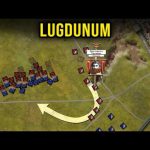
🚩 I merged the episodes of the 2nd Persian Invasion series into one video, for easier viewing. The Second Persian Invasion was a pivotal moment in Ancient Greek history. Xerxes I, seeking revenge for his father’s defeat at Marathon, led a massive army to conquer Greece. The Greeks, led by Athens and Sparta, united to face this existential threat.
🚩 If you like what you see, consider supporting my work on Patreon and you get ad-free early access to my videos for as little as $1 https://www.patreon.com/historymarche — You can also show your support by subscribing to the channel and liking the video. Thank you for watching.
📚 Sources: Thermopylae 480 BC, Last Stand of the 300, (2007) Nic Fields (Osprey Publishing). ISBN: 978 184176 180 0 Thermopylae: The Battle That Changed The World (2013) Paul Cartledge (Pan Books). ISBN: 978-0-330-47562-4 Salamis: the naval campaign that saved Greece (2010), by William Shepherd. Osprey Publishing Ltd. ISBN: 978-1-84603-684-2. Herodotus: the Histories (2003), Translated by Aubrey de Sélincourt, revised by John Marincola. Published by the Penguin Group. Three Epic Battles That Saved Democracy: Marathon, Thermopylae and Salamis (2022), by Stephen P. Kershaw. Published by Robinson. ISBN: 978-1-47214-564-2. Plataea 479 BC: The most glorious victory ever seen (2012), by William Shepherd. Published by Osprey Publishing Ltd.
Steve Spangler is a bestselling author, STEM educator and Emmy award-winning television personality with more than 2,100 television appearances to his credit. Steve appeared as a regular guest on the Ellen DeGeneres Show from 2007-2022 (27 appearances).
NASA’s annual Day of Remembrance pays tribute to all members of the NASA family who lost their lives in the pursuit of exploration and discovery, including test pilots, the Apollo 1 crew, and the crews of space shuttles Challenger and Columbia.
On Jan. 23, 2025, we pause to honor their memory and reflect on the importance of maintaining a strong safety culture.
Steve Spangler is a bestselling author, STEM educator and Emmy award-winning television personality with more than 2,100 television appearances to his credit. Steve appeared as a regular guest on the Ellen DeGeneres Show from 2007-2022 (27 appearances).
Steve Spangler is a bestselling author, STEM educator and Emmy award-winning television personality with more than 2,100 television appearances to his credit. Steve appeared as a regular guest on the Ellen DeGeneres Show from 2007-2022 (27 appearances).
We know how microgravity impacts the brain thanks to astronauts on the ISS, but what about life on the Moon or Mars? Future explorers will also face hypoxia—low oxygen levels—which could affect their brain function and decision-making.
A team of students is tackling this challenge by conducting zero-gravity flight experiments to study how the brain responds to both microgravity and hypoxia. Their research could help improve astronaut safety for future lunar and Martian missions, ensuring they can explore safely beyond their spacecraft.
Could this be a key step in preparing humans for deep space exploration? Let us know your thoughts in the comments!
📹 ESA – European Space Agency 📸 ESA – European Space Agency
🔸 Ştiai că cele mai “fantomatice” particule elementare sunt neutrinii? Asta deoarece interacționează foarte slab cu materia. Neutrinii pot trece prin întregi planete fără să fie absorbiţi sau deviaţi.
Neutrinii (numite şi particule neutrino) sunt produşi în diverse reacții nucleare, inclusiv cele din Soare, sau din reactoare nucleare și prin interacțiuni ale razelor cosmice în atmosfera Pământului. Neutrinii sunt, de asemenea, produşi în număr mare în timpul exploziilor de supernove.
Particulele neutrino sunt “rude” cu electronii, atâta doar că au masa de repaus aproape nulă. De fapt, la începutul universului ele erau acelaşi tip de particulă. La câteva fracţiuni de secundă după Big Bang, a avut loc o rupere de simetrie a forţelor din natură şi cele două particule s-au separat. Neutrinii au rămas fideli forţelor de interacţiune nucleară slabă.
Neutrinii vin în trei “arome”, ca şi electronii: neutrinul electronic, neutrinul muonic și neutrinul tau. Interesant este că neutrinul poate să oscileze între aceste arome pe măsură ce călătoreşte prin spațiu.
Acest fenomen a fost observat pentru prima dată în experimente care studiau neutrinii produşi de Soare și ulterior confirmat în experimente cu particule neutrino provenite din interacțiuni cu raze cosmice.
Particulele neutrino călătoresc cu viteze apropiate de cea a luminii. Această viteză mare le permite să ajungă pe Pământ din surse astrofizice îndepărtate relativ rapid, oferind informații valoroase despre evenimente cosmice.
Ştiai că un glonţ se învârte în jurul axei proprii în timpul mişcării? Asta pentru ca să îşi păstreze direcţia către ţintă. El se poate învârti atât într-un sens cât şi în celălalt.
La fel şi particulele elementare au o proprietate similară, numită spin. Neutrinii sunt speciali: în sens clasic, ei s-ar învârti doar într-un sens faţă de direcţia de mişcare, nu în celălalt!
Natura are preferinţe! De ce nu în celălalt sens? Nu ştim!
Ştiai că cele mai “fantomatice” particule elementare sunt neutrinii? Asta deoarece interacționează foarte slab cu materia. Neutrinii pot trece prin întregi planete fără să fie absorbiţi sau deviaţi.
Neutrinii (numite şi particule neutrino) sunt produşi în diverse reacții nucleare, inclusiv cele din Soare, sau din reactoare nucleare și prin interacțiuni ale razelor cosmice în atmosfera Pământului. Neutrinii sunt, de asemenea, produşi în număr mare în timpul exploziilor de supernove.
Particulele neutrino sunt “rude” cu electronii, atâta doar că au masa de repaus aproape nulă. De fapt, la începutul universului ele erau acelaşi tip de particulă. La câteva fracţiuni de secundă după Big Bang, a avut loc o rupere de simetrie a forţelor din natură şi cele două particule s-au separat. Neutrinii au rămas fideli forţelor de interacţiune nucleară slabă.
Neutrinii vin în trei “arome”, ca şi electronii: neutrinul electronic, neutrinul muonic și neutrinul tau. Interesant este că neutrinul poate să oscileze între aceste arome pe măsură ce călătoreşte prin spațiu.
Acest fenomen a fost observat pentru prima dată în experimente care studiau neutrinii produşi de Soare și ulterior confirmat în experimente cu particule neutrino provenite din interacțiuni cu raze cosmice.
Particulele neutrino călătoresc cu viteze apropiate de cea a luminii. Această viteză mare le permite să ajungă pe Pământ din surse astrofizice îndepărtate relativ rapid, oferind informații valoroase despre evenimente cosmice.
Ştiai că un glonţ se învârte în jurul axei proprii în timpul mişcării? Asta pentru ca să îşi păstreze direcţia către ţintă. El se poate învârti atât într-un sens cât şi în celălalt.
La fel şi particulele elementare au o proprietate similară, numită spin. Neutrinii sunt speciali: în sens clasic, ei s-ar învârti doar într-un sens faţă de direcţia de mişcare, nu în celălalt!
Natura are preferinţe! De ce nu în celălalt sens? Nu ştim!
Moving Air! A home-made stomp rocket gets maxed out into a giant version. Plus: Phil uses air pressure to break a piece of wood, makes a vortex cannon and vacuum-seals himself to the wall!
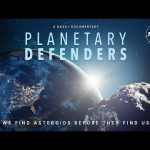
How would humanity respond if we discovered an asteroid headed for Earth? NASA’s upcoming documentary, “Planetary Defenders,” takes you inside the high-stakes world of asteroid hunting and planetary defense. Follow dedicated scientists and astronomers as they work to protect Earth from potential impacts. With stunning visuals and compelling stories, this gripping documentary reveals the human spirit behind the quest to safeguard our planet.
Coming soon to NASA+ in spring 2025. No subscription required. https://plus.nasa.gov
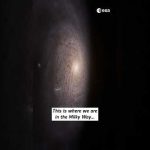
This stunning artist’s animation of the Milky Way is based on data from ESA’s Gaia space telescope. Gaia has completely reshaped our understanding of our home galaxy—revealing unexpected details about its spiral arms, central bar, and overall structure.
We can’t take a selfie of the Milky Way, but thanks to Gaia, we’re seeing it clearer than ever! And with more data releases on the way, our view will only get sharper.
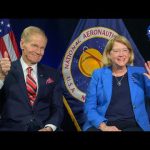
Administrator Bill Nelson and Deputy Administrator Pam Melroy share a farewell message to the extraordinary NASA workforce.
Sen. Nelson was sworn in as the 14th NASA Administrator on May 3, 2021, and Col. Melroy as Deputy Administrator on June 21, 2021. Under Nelson and Melroy’s leadership, the agency made leap after giant leap to explore, discover, and inspire – leading the world into a golden age of space-driven exploration, innovation, and collaboration – all while bringing real, tangible, and substantial benefits to the American people and to all of humanity.
🚩 If you like what you see, consider supporting my work on Patreon and you get ad-free early access to my videos for as little as $1 https://www.patreon.com/historymarche — You can also show your support by subscribing to the channel and liking the video. Thank you for watching.
📢 Narrated by David McCallion
🎼 Music: EpidemicSound Storyblocks Filmstro Scary demon by https://www.youtube.com/@neededsoundeffects6988
📚 Sources and citations: Septimius Severus The African Emperor – Anthony Richard Birley (1999) Roman Battle Tactics 109 BC – AD 313 – Ross Cowan (2007) Pax Romana: War, Peace and Conquest in the Roman World – Adrian Goldsworthy (2016)
Steve Spangler is a bestselling author, STEM educator and Emmy award-winning television personality with more than 2,100 television appearances to his credit. Steve appeared as a regular guest on the Ellen DeGeneres Show from 2007-2022 (27 appearances).
NASA astronauts Nick Hague and Suni Williams are taking a spacewalk outside the International Space Station on Thursday, Jan. 16, 2025, to replace station hardware and repair the station’s NICER (Neutron star Interior Composition ExploreR) X-ray telescope. The spacewalk is expected to begin at approximately 8 a.m. EST (1300 UTC) and last for around six and a half hours.
Hague (wearing the suit with red stripes) and Williams (wearing the unmarked suit) arrived at the ISS last year and are both crew members of Expedition 72, which began on Sept. 23, 2024. This is Hague’s fourth spacewalk and the eighth for Williams.
Steve Spangler is a bestselling author, STEM educator and Emmy award-winning television personality with more than 2,100 television appearances to his credit. Steve appeared as a regular guest on the Ellen DeGeneres Show from 2007-2022. Learn more about Steve at https://stevespangler.com/about-steve-spangler/