In 1975, 10 European countries came together with a vision to collaborate on key space activities: science and astronomy, launch capabilities and space applications: the European Space Agency, ESA, was born.
In 2025, we mark half a century of joint European achievement – filled with firsts and breakthroughs in science, exploration and technology, and the space infrastructure and economy that power Europe today.
During the past five decades ESA has grown, developing ever bolder and bigger projects and adding more Member States, with Slovenia joining as the latest full Member State in January.
We’ll also celebrate the 50th anniversary of ESA’s Estrack network, 30 years of satellite navigation in Europe and 20 years since ESA launched the first demonstration satellite Giove-A which laid the foundation for the EU’s own satnav constellation Galileo. Other notable celebrations are the 20th anniversary of ESA’s Business Incubation Centres, or BICs, and the 30th year in space for SOHO, the joint ESA and NASA Solar and Heliospheric Observatory.
Sadly though, 2025 will mean end of science operations for Integral and Gaia. Integral, ESA’s gamma-ray observatory has exotic objects in space since 2002 and Gaia concludes a decade of mapping the stars. But as some space telescopes retire, another one provides its first full data release. Launched in 2023, we expect Euclid’s data release early in the new year.
Launch-wise, we’re looking forward to Copernicus Sentinel-4 and -5 (Sentinel-4 will fly on an MTG-sounder satellite and Sentinel-5 on the MetOp-SG-A1 satellite), Copernicus Sentinel-1D, Sentinel-6B and Biomass. We’ll also launch the SMILE mission, or Solar wind Magnetosphere Ionosphere Link Explorer, a joint mission with the Chinese academy of science.
The most powerful version of Europe’s new heavy-lift rocket, Ariane 6, is set to fly operationally for the first time in 2025. With several European commercial launcher companies planning to conduct their first orbital launches in 2025 too, ESA is kicking off the European Launcher Challenge to support the further development of European space transportation industry.
In human spaceflight, Polish ESA project astronaut Sławosz Uznański will fly to the ISS on the commercial Axiom-4 mission. Artemis II will be launched with the second European Service Module, on the first crewed mission around the Moon since 1972.
The year that ESA looks back on a half century of European achievement will also be one of key decisions on our future. At the Ministerial Council towards the end of 2025, our Member States will convene to ensure that Europe’s crucial needs, ambitions and the dreams that unite us in space become reality.
So, in 2025, we’ll celebrate the legacy of those who came before but also help establish a foundation for the next 50 years. Join us as we look forward to a year that honours ESA’s legacy and promises new milestones in space.
Credits: ESA – European Space Agency
★ Subscribe: http://bit.ly/ESAsubscribe and click twice on the bell button to receive our notifications.
We are Europe’s gateway to space. Our mission is to shape the development of Europe’s space capability and ensure that investment in space continues to deliver benefits to the citizens of Europe and the world. Check out https://www.esa.int/ to get up to speed on everything space related.
Aboard the International Space Station, NASA astronauts Suni Williams, Nick Hague, Butch Wilmore, and Don Pettit wish a merry Christmas and a happy holiday season to Earth in a message recorded on Dec. 23, 2024.
The four astronauts are in the middle of a long-duration mission living and working aboard the microgravity laboratory. The goal of their mission is to advance scientific knowledge and demonstrate new technologies for future human and robotic exploration missions as part of NASA’s Moon and Mars exploration approach, including lunar missions through NASA’s Artemis program.
Slime is made of polymers, which are long chains of molecules that explain how many things are made. From plastics, to fabrics to our own DNA, polymers are everywhere. And we have a lot of them contained in a maxxed out tub of slime.
Steve Spangler is a bestselling author, STEM educator and Emmy award-winning television personality with more than 2,100 television appearances to his credit. Steve appeared as a regular guest on the Ellen DeGeneres Show from 2007-2022. Learn more about Steve at https://stevespangler.com/about-steve-spangler/
Steve Spangler is a bestselling author, STEM educator and Emmy award-winning television personality with more than 2,100 television appearances to his credit. Steve appeared as a regular guest on the Ellen DeGeneres Show from 2007-2022. Learn more about Steve at https://stevespangler.com/about-steve-spangler/
An ethereal dance of misty clouds of interstellar dust with a myriad of distant stars and galaxies speckled like paint drops over a black canvas. This is a sonification of a breathtaking image taken by ESA’s Euclid space telescope of the young star-forming region Messier 78.
The sonification offers a different representation of the data collected by Euclid, and lets us explore the stellar nurseries in M78 through sound. Close your eyes and listen to let the cosmic image be drawn by your mind’s eye, or watch as the traceback line in this video follows the sounds to colour the image from left to right.
The twinkling sounds of various pitches and volumes represent the galaxies and stars in the frame. The pitch of the sound points towards where we see the dot of light in the image. Higher pitches tell us that a star or galaxy appears further at the top in the image along the traceback line.
The brightness of these objects in and around M78 are represented by the volume of the twinkles. Whenever we hear a particularly loud clink, the star or galaxy that Euclid observed appears particularly bright in the image.
Underlying these jingling sounds, we can hear a steady undertone, made up of two chords which represent different regions in Messier 78. This sound intensifies as the traceback line approaches first the brightest, and later the densest regions in the nebula.
The first two deeper crescendos in this undertone indicate two patches in the image where the most intense colour is blue/purple. These appear as two ‘cavities’ in M78, where newly forming stars carve out and illuminate the dust and gas in which they were born.
The chords intensify a third time at a slightly higher pitch corresponding to the red-orange colours in the image, as the sound draws over the densest star-forming region of the frame. This stellar nursery is hidden by a layer of dust and gas that is so thick that it obscures almost all the light of the young stars within it.
Many thanks to Klaus Nielsen (DTU Space / Maple Pools) for making the sonification in this video. If you would like to hear more sonifications and music by this artist, please visit: https://linktr.ee/maplepools
————————————————— Credits Credit: ESA/Euclid/Euclid Consortium/NASA, image processing by J.-C. Cuillandre (CEA Paris-Saclay) and G. Anselmi, sonification by K. Nielsen (DTU Space/Maple Pools) License: CC BY-SA 3.0 or ESA Standard License
Video credit slate ESA/Euclid/Euclid Consortium/NASA Image processing: J.-C. Cuillandre (CEA Paris-Saclay), G. Anselmi Data sonification & music: Klaus Nielsen (DTU Space/Maple Pools) —————————————————
★ Subscribe: http://bit.ly/ESAsubscribe and click twice on the bell button to receive our notifications.
We are Europe’s gateway to space. Our mission is to shape the development of Europe’s space capability and ensure that investment in space continues to deliver benefits to the citizens of Europe and the world. Check out https://www.esa.int/ to get up to speed on everything space related.
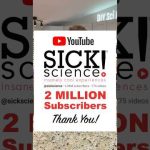
THANK YOU for helping us reach the 2 MILLION subscribers mileston earlier this month on our YouTube channel called SICK Science. Thanks to new additions to our team, we are adding new content on a weekly basis. If you have not yet subscribed, I invite you to check us out at youtube.com/sickscience
About the channel… YouTube was only 3 months old (September 2006) when we posted the first ever Mentos and Diet Coke experiment. The flood of “response” videos with new twists on the theme of making soda explode helped to launch YouTube’s first wave of viral videos in the genre of science experiments. Okay, the platform was in its infancy, but it’s kind of fun to be on the ground floor of somethig this cool. That was the start of our “sick science” channel.
What’s with the name SICK Science? I have to credit a class of 4th graders who yelled out, “That’s SICK!” during a fun experiment using 50,000 volts of electricity. I soon learned “sick” was a term for something that was insanely cool… and the name stuck. SICK Science not only became the name of one of our YouTube channels but also served as the name of an entire line of educational science toys and kits sold in retail stores throughout the U.S.
Say hello to the fastest-moving human-made object, NASA’s Parker Solar Probe. On a mission to “touch the Sun,” this spacecraft is set to make history on Dec. 24 by making its closest dive through the Sun’s corona, or upper atmosphere.
Join NASA experts on Tuesday, December 17 at 3:00 p.m. EST as they take your questions about the mission, the currently high-activity phase of the Sun and more. Share your questions in the chat!
Steve Spangler is a bestselling author, STEM educator and Emmy award-winning television personality with more than 2,100 television appearances to his credit. Steve appeared as a regular guest on the Ellen DeGeneres Show from 2007-2022. Learn more about Steve at https://stevespangler.com/about-steve-spangler/
Steve Spangler is a bestselling author, STEM educator and Emmy award-winning television personality with more than 2,100 television appearances to his credit. Steve appeared as a regular guest on the Ellen DeGeneres Show from 2007-2022. Learn more about Steve at https://stevespangler.com/about-steve-spangler/
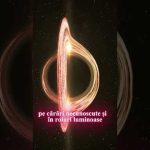
#stiinta #fizica #science #tehnologie #technology #cristianpresura algoritm:”Spațiu-timpul este scena Universului, cu patru dimensiuni și o curbură integrată prin teoria relativității, unde spațiul și timpul sunt unificate. Mișcarea corpurilor libere și traiectoriile razelor de lumină sunt determinate de metrica spațiu-timpului, care descrie curbura acestuia, și nu de forțe clasice, precum în teoria lui Newton.
Principiul echivalenței afirmă că mișcarea unui corp liber într-un câmp gravitațional nu depinde de masa sau compoziția sa, ci doar de spațiul vid din imediata sa proximitate. Generalizarea liniilor drepte din spațiul euclidian într-un spațiu curb este dată de geodezice, traiectorii care minimizează sau maximizează distanța. Obiectele libere se mișcă pe geodezice temporale, iar lumina pe geodezice nule.
Această abordare explică sincronizarea mișcării corpurilor adiacente și descrie cum obiectele se deplasează pe linia de univers determinată de spațiu-timpul curb. De exemplu, Stația Spațială Internațională “cade liber” în jurul Pământului, urmând o geodezică.
Geodezicele sunt definite prin ecuații complexe ce implică simbolurile Christoffel, derivate din metrica spațiu-timpului. Mișcarea liberă în câmp gravitațional este o cădere pe aceste geodezice. În spațiu-timpul Minkowskian, traiectoriile liniilor universului sunt rectilinii și uniforme. Dilatarea timpului în câmp gravitațional influențează măsurătorile, cum ar fi timpul propriu al unui ceas.
Această viziune modernă asupra mișcării exclude interacțiunile clasice între corpuri și reinterpretează Universul ca un spațiu-timp curbat în care corpurile și lumina urmează geodezicele generate de condițiile inițiale. Astfel, fiecare obiect “alege” traiectoria care maximizează timpul propriu, conform legilor relativității generale.”
In 2024, ESA continued to drive Europe’s innovation and excellence in space, equipping the continent with advanced tools and knowledge to address global and local challenges. The year saw pioneering missions, cutting-edge satellites and the pivotal restoration of Europe’s independent access to space.
The first Ariane 6 launch was perhaps ‘the’ highlight of the year but it was only one of many achievements. We saw the last Vega launch and then the return to flight of Vega-C, the more powerful, upgraded version carrying Sentinel-1C.
Far away in our Solar System, the ESA/JAXA BepiColombo spacecraft performed two Mercury flybys in 2024, needed so that it can enter orbit around Mercury in 2026. Juice also performed a crucial gravity assist, this time becoming the first spacecraft to conduct a Moon-Earth double flyby on its way to Jupiter.
Twenty years after ESA’s Rosetta was launched and 10 years since its historic arrival at the comet 67P/Churyumov-Gerasimenko, we launched another spacecraft to a small body, the Hera planetary defence mission to investigate asteroid Dimorphos.
2024 was an important year for Europe’s Galileo constellation which continued to expand with the launch of four new satellites and an updated Galileo ground system. The year also saw the launch of ESA’s Proba-3 mission: two precision formation-flying satellites forming a solar coronagraph to study the Sun’s faint corona.
In human spaceflight, Europe continues to contribute to science from the ISS as Andreas Mogensen’s Huginn mission continued into 2024. Andreas even met up in space with ESA project astronaut Marcus Wandt who was launched on his Muninn mission, making it the first time two Scandinavians were in space together.
Meanwhile the latest class of ESA astronauts completed basic training and graduated in April. Two of them, Sophie and Raphaël, were then assigned to long-duration missions to the ISS in 2026.
We made crucial steps for Europe in gaining access to the Moon: the inauguration of our LUNA facility with DLR, and the delivery of a third European Service Module for NASA’s Orion spacecraft as part of the Artemis programme.
Europe is also contributing to the international Lunar Gateway and developing and ESA lunar lander called Argonaut. These landers will rely on ESA Moonlight, the programme to establish Europe’s first dedicated satellite constellation for lunar communication and navigation.
As 2024 draws to a close, ESA’s achievements this year have reinforced Europe’s role in space. ESA’s journey continues to explore new frontiers, shaping the space landscape for generations to come.
Credits: ESA – European Space Agency
★ Subscribe: http://bit.ly/ESAsubscribe and click twice on the bell button to receive our notifications.
We are Europe’s gateway to space. Our mission is to shape the development of Europe’s space capability and ensure that investment in space continues to deliver benefits to the citizens of Europe and the world. Check out https://www.esa.int/ to get up to speed on everything space related.
Phil tries to make the strongest electromagnet he can. Plus: playing with ferro-fluid. Wizards! And Phil tries to make it to the North Pole using a compass.
Steve Spangler is a bestselling author, STEM educator and Emmy award-winning television personality with more than 2,100 television appearances to his credit. Steve appeared as a regular guest on the Ellen DeGeneres Show from 2007-2022. Learn more about Steve at https://stevespangler.com/about-steve-spangler/
Steve Spangler is a bestselling author, STEM educator and Emmy award-winning television personality with more than 2,100 television appearances to his credit. Steve appeared as a regular guest on the Ellen DeGeneres Show from 2007-2022. Learn more about Steve at https://stevespangler.com/about-steve-spangler/
The third Copernicus Sentinel-1 satellite, Sentinel-1C, has launched aboard a Vega-C rocket, flight VV25, from Europe’s Spaceport in French Guiana. The rocket lifted off on 5 December 2024 at 22:20 CET (18:20 local time).
Sentinel-1C extends the legacy of its predecessors, delivering high-resolution radar imagery to monitor Earth’s changing environment, supporting a diverse range of applications and advance scientific research. Additionally, Sentinel-1C introduces new capabilities for detecting and monitoring maritime traffic.
The launch also marks Vega-C’s ‘return to flight’, a key step in restoring Europe’s independent access to space. Vega-C is the evolution of the Vega family of rockets and delivers increased performance, greater payload volume and improved competitiveness.
📹 ESA – European Space Agency 📸 ESA/CNES/Arianespace/Arianegroup
🚩 If you like what you see, consider supporting my work on Patreon and you get ad-free early access to my videos for as little as $1 https://www.patreon.com/historymarche — You can also show your support by subscribing to the channel and liking the video. Thank you for watching.
📢 Narrated by David McCallion
🎼 Music: EpidemicSound Filmstro Storyblocks
📚 Sources: Plataea 479 BC: The most glorious victory ever seen (2012), by William Shepherd. Published by Osprey Publishing Ltd. Herodotus: the Histories (2003), Translated by Aubrey de Sélincourt, revised by John Marincola. Published by the Penguin Group. Three Epic Battles That Saved Democracy: Marathon, Thermopylae and Salamis (2022), by Stephen P. Kershaw. Published by Robinson. ISBN: 978-1-47214-564-2.
On Dec. 11, 2024, Panama and Austria became the 49th and 50th signatories of the Artemis Accords.
The United States, led by NASA with the U.S. Department of State, and seven other founding nations established the Artemis Accords in 2020, a common set of principles designed to guide civil exploration and use of outer space for the benefit of all.
By signing the Artemis Accords, these 50 nations come together in the name of safe and responsible space exploration. Any nation that wants to commit to the principles is welcome to sign.
The full list of Artemis Accords nations now includes: Angola, Argentina, Armenia, Australia, Austria, Bahrain, Belgium, Brazil, Bulgaria, Canada, Chile, Colombia, Cyprus, Czech Republic, Denmark, Dominican Republic, Ecuador, Estonia, France, Germany, Greece, Iceland, India, Israel, Italy, Japan, Lithuania, Luxembourg, Mexico, Netherlands, New Zealand, Nigeria, Panama, Peru, Poland, Republic of Korea, Romania, Rwanda, Saudi Arabia, Singapore, Slovakia, Slovenia, Spain, Sweden, Switzerland, Ukraine, United Arab Emirates, United Kingdom, United States of America, and Uruguay.
Steve Spangler is a bestselling author, STEM educator and Emmy award-winning television personality with more than 2,100 television appearances to his credit. Steve appeared as a regular guest on the Ellen DeGeneres Show from 2007-2022. Learn more about Steve at https://stevespangler.com/about-steve-spangler/
Steve Spangler is a bestselling author, STEM educator and Emmy award-winning television personality with more than 2,100 television appearances to his credit. Steve appeared as a regular guest on the Ellen DeGeneres Show from 2007-2022. Learn more about Steve at https://stevespangler.com/about-steve-spangler/