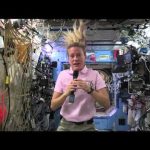
Aboard the International Space Station, Expedition 36 Flight Engineer Karen Nyberg, a native of Vining, Minn., discussed life and research on the orbital laboratory with KMSP-TV in Minneapolis during an in-flight interview on July 3. Nyberg arrived on the station in late May and will remain in orbit until mid-November.
Blog
-

Flame Test Colorful Elements – Sick Science! #146
Find out the mystery powder HERE: http://www.stevespanglerscience.com/lab/experiments/flame-test
Have you ever seen a blue flame? What about green or purple? When you’re expecting a regular flame, these colorful changes can be an incredible surprise! What you may not know is these spectacular colors result from the presence of specific metals. We’re going to show you a couple of household materials that contain metals that are easily identifiable during a Flame Test!
Want more experiments like this? Check out http://www.stevespanglerscience.com/product/naked-eggs-and-flying-potatoes
Sick Science™ is a trademark of Steve Spangler, inc.
© 2013 Steve Spangler Science all rights reserved
-

Homemade Geyser Tube – Sick Science #145
To find out why this happens click here http://www.stevespanglerscience.com/lab/experiments/homemade-geyser-tube
We’ve been performing the Mentos Soda Geyser here at Steve Spangler Science for years. We’ve launched so many geysers, in fact, that we created a tool to help streamline the process of creating the eruption. While the Geyser Tube is, hands-down, the best way to create a soda geyser that can be 30 feet tall, you might not be able to get your hands on one right away. So we’re going to teach you how to create a Homemade Geyser Tube with stuff you have at home.
Want more experiments like this? Check out http://www.stevespanglerscience.com/product/naked-eggs-and-flying-potatoes
Sick Science™ is a trademark of Steve Spangler, inc.
© 2013 Steve Spangler Science all rights reserved
-
ESA Euronews: Los detectives de Marte
Marte sigue intrigando a los científicos. Hay robots que se han enviado para que vuelen sobre Marte, para que se desplacen por el planeta e incluso para perforen y recojan muestras. Todo, para buscar señales y saber si alguna vez, quizá hace mucho tiempo, hubo algún tipo de vida. Encontrar cualquier evidencia equiere la habilidad de los mejores detectives: científicos, robots y satélites que estudian el planeta con todo detalle.
“Si ha habido vida más allá de la Tierra el destino ideal sería Marte”, dice el cientifico de la ESA Olivier Witasse. Un destino ideal pero también un rompecabezas que los investigadores están empezando a reconstruir.
Las primeras fotos de Marte las tomó la sonda Mariner 4 en 1965. Estas imágenes alimentaron las especulaciones sobre la existencia de agua y vida. En los años 70 se continuó investigando el planeta con las misiones Viking. Luego llegaron los vehículos exploradores. El año pasado aterrizó el robot Curiosity de la Nasa. Pesa 900 kilos y es capaz de recoger rocas y analizarlas. Curiosty no busca restos de vida, sino signos de habitabilidad. El robot tiene un potente láser diseñado por ingenieros estadounidenses y franceses. Su potente luz es capaz de convertir una roca o partes de una roca en una bola de fuego para analizar los elementos de los que está compuesta.
La búsqueda que ha hecho Curiosity ha tenido éxito. De hecho, en el lugar donde aterrizó hubo alguna vez agua a una temperatura adecuada, con niveles de acidez apropiados para la formación de la vida. Pero hace unos tres mil millones de años todo cambió, porque el campo magnético de Marte se desvaneció y gran parte de la atmófera se perdió.
La sonda Mars Express también ha encontrado depósitos de hielo debajo de la superficie del planeta, que están ocultos por el polvo. Y también descubrió algo más misterioso e intrigante: metano. El programa europeo ExoMars lanzará en 2016 un satélite para examinar este gas. Y dos años después un robot recorrerá el planeta rojo. Será la primera misión que busque directamente señales de vida ahora y en el pasado. Todavía no se sabe dónde aterrizará el robot ExoMars porque los científicos no se han puesto de acuerdo, de momento. Se cree que pudo existir algún tipo de vida hace unos 4.000 millones de años. Y las mejores localizaciones son los valles antiguos donde había agua.
Los secretos de Marte se esconden a menudo debajo del polvo del planeta. Sin embargo, se están haciendo progresos de forma muy rápida para unir las piezas del rompecabezas. Y puede que tambien estos descubrimientos den alguna respuesta sobre nuestro origen en la Tierra.
-
ESA Euronews: Vida em Marte: Segredos do Planeta Vermelho
Criámos missões científicas para percorrerem Marte e, dentro em breve, explorarem o subsolo, de forma a suplantar vários desafios. Mas a pergunta maior para a qual procuramos uma resposta é a seguinte: alguma vez houve vida neste planeta? “Se já existiu vida fora da Terra, então Marte é a hipótese mais óbvia”, afirma Olivier Witasse, da Agência Espacial Europeia (ESA).
A Mars Express tem-nos ajudado a avançar consideravelmente no conhecimento deste planeta. A sonda acaba de celebrar dez anos em órbita – a missão inicial da ESA estava programada para dois. Os dados que tem recolhido permitem criar mapas a 3 dimensões da superfície marciana e sinalizar locais onde podem existir minerais. Segundo Witasse, “houve muitas descobertas nestes últimos dez anos: a deteção dos minerais hidratados, por exemplo, que foram formados na presença de água, diz-nos que existiu realmente água em Marte durante vários milhões de anos.”
Já as primeiras fotografias de Marte a partir da sonda Mariner 4, em 1965, começaram a alimentar as especulações prolongadas na década seguinte com as missões Viking. O ano passado, a NASA fez aterrar o robô Curiosity no Planeta Vermelho. Um verdadeiro laboratório científico capaz de efetuar recolhas e análises. O objetivo anunciado não é tanto procurar sinais de vida, mas sim condições de habitabilidade.
A cabeça do robô integra um laser conhecido por ChemCam, que foi concebido e desenvolvido por um grupo de engenheiros em Toulouse, em França. A sua função é disparar sobre rochas, fragmentando-as, para depois as analisar e revelar a sua composição. No local onde o Curiosity aterrou já terá havido água a uma temperatura adequada para a habitabilidade, com a acidez apropriada e durante um longo período de tempo. Mas, há 3 mil milhões de anos, tudo isso mudou: a alteração do campo magnético do planeta parece ter dissipado a atmosfera. Anouck Ody, investigadora da Universidade de Lyon, realça que “a atmosfera de Marte tem uma pressão demasiada fraca para que a água líquida se estabilize à superfície. No entanto, é possível encontrar água na atmosfera e, em forma de gelo, nas calotas polares, tanto a norte, como a sul.”
A Mars Express revelou enormes depósitos de gelo debaixo da superfície. E descobriu outra coisa ainda mais intrigante: a existência de metano. “Em 2004, logo no início da missão, a Mars Express encontrou pequenas quantidades de metano na atmosfera. É uma descoberta cuja autenticidade ainda é motivo de debate. No entanto, se houver mesmo metano, é preciso explicar como é que ele se dissolve na atmosfera, e o que é que o está constantemente a gerar. Há muitas discussões sobre o assunto. Pode tratar-se de atividade geológica – uma reação entre as rochas do subsolo e a água líquida, o que significaria que Marte é um planeta ativo geologicamente. Ou então, o metano está a ser produzido por uma atividade biológica,” aponta Olivier Witasse.
A missão europeia Exomars promete esclarecer grande parte destes mistérios. A partir de 2016, uma sonda vai começar a monitorizar a órbita marciana; dois anos mais tarde, um novo veículo robotizado irá percorrer o planeta com uma importante inovação: será capaz de recolher amostras a dois metros de profundidade.
-
ESA Euronews: Υπάρχει ζωή στον Άρη; Έρχεται η οριστική απάντηση
Είναι ο άνθρωπος μόνος του στο σύμπαν; Στο υπαρξιακό αυτό ερώτημα προσπαθεί να απαντήσει η διαστημική τεχνολογία. Ρομποτικά οχήματα έχουν αποσταλεί εδώ και πολλά χρόνια στον Άρη, για να αναζητήσουν αποδείξεις ύπαρξης ζωής στον κόκκινο πλανήτη.
Σύμφωνα με τους επιστήμονες, αν υπήρχε ζωή μακριά από τη Γη, ο Άρης θα ήταν η πιο προφανής επιλογή. Η στοιχειοθέτηση ωστόσο των αποδείξεων είναι μια υπόθεση εξαιρετικά δύσκολη. Μοιάζει με ένα παζλ, που μόλις ολοκληρωθεί θα μας δώσει μια πλήρη εικόνα αυτού που ονομάζουμε «ζωή στο σύμπαν». Τα κομμάτια του μόλις έχουν αρχίσει να τοποθετούνται.
Η ανακάλυψη στοιχείων που αποδεικνύουν την ύπαρξη ζωής στον Άρη απαιτεί την αξιοποίηση της τελευταίας τεχνολογίας και τη στενή συνεργασία των κορυφαίων επιστημόνων.
Η αποστολή Mars Express της Ευρωπαϊκής Υπηρεσίας Διαστήματος συνέβαλε τα μέγιστα στην αλματώδη πρόοδο της εξερεύνησης του Άρη. Ο δορυφόρος παραμένει εδώ και σχεδόν μια δεκαετία σε τροχιά γύρω από τον κόκκινο πλανήτη. Συλλέγει στοιχεία που επιτρέπουν στους επιστήμονες να δημιουργήσουν τρισδιάστατους χάρτες της επιφάνειας και να εντοπίσουν που βρίσκονται ακριβώς βασικά μέταλλα και άλλα στοιχεία, πολύτιμα για την έρευνα.
«Η σπουδαιότερη ανακάλυψη είναι η ανίχνευση των λεγόμενων ένυδρων ορυκτών. Πρόκειται για ορυκτά που σχηματίστηκαν με την παρουσία νερού και αποδεικνύουν την ύπαρξη νερού στην επιφάνεια του Άρη για αρκετά εκατομμύρια χρόνια», αναφέρει ο Ολιβιέ Βιτάς, επιστήμονας του προγράμματος ExoMars.Η ανακάλυψη ένυδρων ορυκτών σε διάφορες περιοχές στον Άρη, έχει προκαλέσει το ενδιαφέρον των επιστημόνων. Τώρα προσπαθούν να εντοπίσουν τα σημεία όπου υπάρχουν υπολείμματα αργίλου ή θειικών αλάτων. Αν τα καταφέρουν θα ξέρουν πού ακριβώς υπήρχε κάποτε νερό.
«Ο άργιλος ή πηλός προέρχεται απο μια ένωση που απαιτεί την παρουσία νερού . Χρειάζεται αρκετός χρόνος για να μετατραπεί ένα πέτρωμα σε άργιλο. Τα θειικά άλατα σχηματίζονται ταχύτερα και είναι παρόμοια με αυτά που υπάρχουν σε λίμνες με αλμυρό νερό στη Γη. Εκεί βρίσκουμε μεταλλικό νερό. Όταν αυτό εξατμίζεται, τα μέταλλα μένουν στην επιφάνεια των ιζημάτων» υποστηρίζει ο Νταμιέν Λοιζό, ερευνητής του πανεπιστημίου της Λιόν.
Οι πρώτες εικόνες του κόκκινου πλανήτη από το διαστημόπλοιο Μάρινερ 5, τροφοδότησαν μια έντονη συζήτηση για την ύπαρξη νερού και άρα ζωής στον Άρη. Ακολούθησαν οι αποστολές του Βίκινγκ, τη δεκαετία του ’70 και ύστερα μια σειρά μικρών οχημάτων που πάτησαν το έδαφος του Άρη.
Πέρυσι, η ΝΑΣΑ κατάφερε να προσεδαφίσει το ρομποτικό όχημα Curiosity στον κόκκινο πλανήτη. Πρόκειται για ένα κινητό επιστημονικό εργαστήριο, βάρους 900 κιλών, με δυνατότητα να συλλέγει και να αναλύει πετρώματα.
-
ESA Euronews: C’è vita su Marte? Nuove apparecchiature sono pronte a scoprirlo
Esattamente dieci anni fa cominciava l’avventura di Mars Express, la missione dell’Agenzia Spaziale Europea (ESA) sull’enigmatico pianeta rosso.
Marte è l’ultima frontiera dell’esplorazione spaziale. La comunità scientifica è a caccia di prove dell’esistenza di vita — presente o passata — tra le speranze di molti che vorrebbero che questo fosse un pianeta abitabile.
Ma trovare vita su Marte è come mettere insieme i pezzi di un puzzle, un’avventura affascinante che abbiamo appena cominciato.Le sfide sono molte. “La cosa più frustrante è la quantità di polveri in certe regioni, che non ci permettono di avere accesso alla superficie sottostante, sia con una rover che dall’orbita.” dice Anouck Ody, Ricercatrice dell’Università di Lione.
Le nostre conoscenze sul pianeta Marte hanno fatto grossi balzi negli ultimi dieci anni, grazie alla missione Mars Express. Il satellite ha raccolto dati che hanno permesso agli scienziati di creare mappe in 3D della superficie del pianeta rosso, studiare i minerali che la compongono e la sua atmosfera. “In dieci anni abbiamo fatto molte scoperte. Se dovessi evidenziarne alcune comincerei con l’individuazione di quelli che chiamiamo “minerali idrati”, che si sono formati in presenza di acqua e che quindi ci mostrano che su Marte per milioni di anni c’è stata acqua” spiega Olivier Witasse, scienziato di Mars Express, ESA.
Le prime foto di Marte, scattate dalla sonda americana Mariner 4 nel 1965 mostrarono un pianeta arido ed inospitale, ma le ricerche di acqua — e di vita — continuarono negli anni Settanta con il programma Viking della Nasa ed il primo atterraggio morbido delle sue due sonde su terra rossa. Da allora ad aprirsi strada sul pianeta sono state le rover, ultimo l’atterraggio spettacolare dello scorso anno di Curiosity ( Mars Science Laboratory) il laboratorio scientifico da 900 kg della Nasa in grado di scavare ed analizzare rocce, per studiare non solo le possibilili tracce di vita, ma anche dell’abilitabilità del pianeta.
La testa di Curiosity è il ChemCam, un laser infrarosso, che ha il compito di sparare raggi sulle rocce marziane e poi analizzare il plasma incandescente e lo spettro di luce emessa per capirne la composizione.
ChemCam può sparare raggi laser e colpire bersagli ad una distanza di 6 metri. Se dalle analisi questi risultano interessanti dal punto di vista scientifico, la rover si avvicina e perfora la superficie per raccogliere un piccolo campione da analizzare. “Siamo andati in un bacino che assomiglia ad un antico lago. Questo ci ha permesso di porci la domanda sull’abilitabilità di quest’area. Se le condizioni che un giorno hanno portato alla formazione di vita sulla terra, si ricreassero in un altro posto, potrebbe sorgervi vita?” si chiede Olivier Gasnault, ChemCam Co-ricercatore, CNRS.
Curiosity ha portato ad un’importante scoperta. I ciottoli levigati vicino al sito in cui la sonda è atterrata sarebbero la prova che sulla superficie del pianeta sia scorsa acqua, per molti anni, alla temperatura e acidità giuste da renderlo un pianeta abitabile. Circa 3 miliardi di anni fa però i campi magnetici si affievolirono e l’atmosfera divenne rarefatta.
“Marte oggi ha un’atmosfera troppo rarefatta e una pressione troppo bassa perchè sulla superficie possa esserci acqua in forma liquida. Ma è stata trovata nell’atmosfera e in forma di ghiaccio, principalmente nelle calotte polari” ci mostra Anouck Ody, dell’Università di Lione
Mars Express ha mostrato che ci sono depositi di ghiaccio sotto la superficie del pianeta, nascosti dalle polveri. Ma ha fatto anche un’altra scoperta, forse ancora più misteriosa ed intrigante: il metano. “Mars Express nel 2004, appena all’inizio della sua missione ha rivelato la presenza di metano nell’atmosfera in quantità molto piccole. — Olivier Witasse, scienziato di Mars Express, ESA — Ci sono ancora dibattiti sulla veridicità di questa osservazione ma se il metano fosse davvero presente servirebbe una spiegazione: Questo gas si distrugge nell’atmosfera, dunque dovrebbe esserci una fonte che continua ad emetterlo. Ci sono molte discussioni su quale possa essere questa fonte, potrebbe essere prodotto da attività geologica, dalla reazione tra rocce sotterranee e acqua liquida. Per generare metano Marte dovrebbe essere geologicamente attivo o potrebbe essere attività biologica a produrre il gas”.
-
ESA Euronews: The Mars detectives
Europe’s off to Mars. Again. We have sent robots to fly over Mars, crawl over Mars and soon to dig down into Mars – searching for signs that once, perhaps deep in the past, this planet may have been home to life. It might be an obvious choice, but still a puzzle, and one that we’re only just beginning to piece together. And finding evidence of life will require the skill of the finest detectives.
This is a mystery that Europe’s ExoMars mission is ready to solve. In 2016 it will have a satellite in orbit around Mars, designed to test for methane, and by 2018 this rover will be rolling around the Red Planet. The mission will be the first to set out with the direct intention of finding signs of life, now, and in the past.
-

What will future jobs look like? | Andrew McAfee
Economist Andrew McAfee suggests that, yes, probably, droids will take our jobs — or at least the kinds of jobs we know now. In this far-seeing talk, he thinks through what future jobs might look like, and how to educate coming generations to hold them.
TEDTalks is a daily video podcast of the best talks and performances from the TED Conference, where the world’s leading thinkers and doers give the talk of their lives in 18 minutes (or less). Look for talks on Technology, Entertainment and Design — plus science, business, global issues, the arts and much more.
Find closed captions and translated subtitles in many languages at http://www.ted.com/translateFollow TED news on Twitter: http://www.twitter.com/tednews
Like TED on Facebook: https://www.facebook.com/TEDSubscribe to our channel: http://www.youtube.com/user/TEDtalksDirector
-
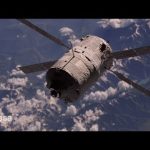
ATV-4’s 6 million km voyage to the International Space Station
ATV Albert Einstein ESA’s automated support and supply ferry for the International Space Station was launched by an Ariane 5 launcher on 6 June 2013. After travelling over 6 million kms over the course of ten days it caught up with the International Space Station on 15 June and docked with the orbital outpost only 11 mm of absolute centre.
ESA astronaut Luca Parmitano oversaw docking and unloading of Albert Einstein’s cargo as part of his six-month Volare mission on the International Space Station. -

Visit ESA’s Pavilion at the Paris Air and Space Show 2013
The 50th International Paris Air & Space Show at Le Bourget opened its doors on Monday 17 June.
The Agency’s pavilion, situated between the full-size models of the Ariane 1 and Ariane 5 launchers, features the wealth of ESA programmes across all space domains, and focus on recent and upcoming launches and their results. This year, the emphasis is on space as a driver of competitiveness and growth. -
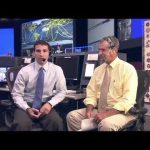
Aerospace Adventures Students Talk Space Technology with NASA
Ken Neiss, Communication Radio Frequency Onboard Network Utilization Specialist (CRONUS) ISS Flight Controller from Johnson Space Center in Houston Texas hosts Cloverdale Aerospace Technology Middle School from Little Rock Arkansas. NASA DLN broadcasts are connecting students around the country with the live mission operations being done by the International Space Station Flight Control Team. ISS flight controllers, astronauts and scientists often answer student’s questions about living and working in space, how the Houston mission control center operates, and a wealth of other topics related to Science, Technology, Engineering, and Mathematics.
-
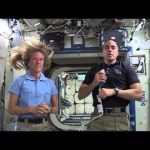
Kansas Students Speak Live with Space Station NASA Astronauts
Expedition 36 crew members and NASA astronauts Chris Cassidy and Karen Nyberg, currently orbiting aboard the International Space Station, spoke with students gathered at the Kansas Cosmosphere and Space Center on Wednesday, June 19. Students were able to ask the astronauts questions about life, work and research aboard the orbiting space station. NASA activities have been incorporated into Cosmosphere summer programs and local Boys and Girls Club in preparation for the conversation with the space station astronauts. Linking students directly to the astronauts aboard the space station provides them with an authentic, live experience of space exploration, space study, the scientific components of space travel and possibilities of life in space.
-
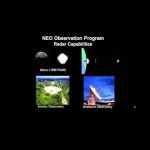
NASA Announces Asteroid Grand Challenge
NASA announced Tuesday a Grand Challenge focused on finding all asteroid threats to human populations and knowing what to do about them.
The challenge, which was announced at an asteroid initiative industry and partner day at NASA Headquarters in Washington, is a large-scale effort that will use multi-disciplinary collaborations and a variety of partnerships with other government agencies, international partners, industry, academia, and citizen scientists. It complements NASA’s recently announced mission to redirect an asteroid and send humans to study it.
-

Popsicle Stick Chain Reaction – Sick Science! #144
Click here to find out why this reaction happens: http://www.stevespanglerscience.com/lab/experiments/popsicle-stick-chain-reaction
Popsicle sticks are great for holding frozen treats and reading the occasional joke off of, but did you know they’re excellent for demonstrating potential and kinetic energy? It’s true! If you weave popsicle sticks together just right, you can create a chain reaction that will create a dazzling display of flying popsicle sticks!
Want more experiments like this? Check out http://www.stevespanglerscience.com/product/naked-eggs-and-flying-potatoes
Sick Science™ is a trademark of Steve Spangler, inc.
© 2013 Steve Spangler Science all rights reserved
-
2013 Astronaut Class on This Week @NASA
During a Google+ Hangout NASA announced its newest class of astronaut trainees. The eight candidates selected to the 2013 astronaut class were chosen from a pool of 63-hundred applications — the second largest NASA has ever received. In August, the group will begin a wide array of technical training at Johnson Space Center, other NASA centers and space agencies around the world.
Also, Science Day on The Hill, Technology Day, Dry Ice Movement on Mars, Sample Return Robot Challenge, Engineering Leaders Graduate, I’m an Engineer! and more!
-

ATV vs. UD: DJ Young Einstein vs. ATV Albert Einstein
For the 2013 Automated Transfer Vehicle docking day music video, ESA teamed up with California hip hop group Ugly Duckling (http://www.uglyduckling.us), who have produced a super space remix of Elevation (http://www.youtube.com/watch?v=zcbSiqhJHcc).
Rock along to the beats of DJ Young Einstein and the visuals of ATV Albert Einstein!Follow the ATV mission to the ISS via http://blogs.esa.int/atv
Music, lyrics and original video animation Copyright (C) Ugly Duckling (http://www.uglyduckling.us) 2012-13.
ESA remix video credit ESA/European Space Agency, used with permission. -

Science of Slime – Cool Science Experiment
Our science guy, Steve Spangler, is an expert at making science fun, but you get an extra dose of fun when the science is ooey, gooey and slimy. Steve is with Kim today to uncover the real science behind making the perfect batch of slime.
Want more experiments like this? Check out http://www.stevespanglerscience.com/experiments
© 2013 Steve Spangler, Inc. all rights reserved About Steve Spangler Science…
Steve Spangler is a celebrity teacher, science toy designer, speaker, author and an Emmy award-winning television personality. Spangler is probably best known for his Mentos and Diet Coke geyser experiment that went viral in. Spangler is the founder of www.SteveSpanglerScience.com, a Denver-based company specializing in the creation of science toys, classroom science demonstrations, teacher resources and home for Spangler’s popular science experiment archive and video collection. Spangler is a frequent guest on the Ellen DeGeneres Show and Denver 9 News where he takes classroom science experiments to the extreme. For teachers, parents or DIY Science ideas – check out other sources of learning:
Join the Science Club and check out other cool science experiments at – http://www.SteveSpanglerScience.com
Sign up to receive a FREE Experiment of the Week- http://www.stevespanglerscience.com/experiment-of-the-week
Attend a Spangler Hands-on Science Workshop for Teachers – http://www.stevespanglerscience.com/training
Watch Steve on Local and National Media Appearances on YouTube at: https://www.youtube.com/user/SpanglerScienceTV
-

Bubble Snakes – Sick Science! #143
Read the full experiment HERE: http://www.stevespanglerscience.com/lab/experiments/bubble-snakes
Bubbles usually only come as individual spheres of soap and water. Sometimes, if you’re lucky, you can get a whole bunch of bubbles in one cluster… but it always seems random. Luckily, we’ve found a spectacular way to create entires snakes made of bubbles and teach you how to make them in all the colors of the rainbow!
Want more experiments like this? Check out http://www.stevespanglerscience.com/product/naked-eggs-and-flying-potatoes
Sick Science™ is a trademark of Steve Spangler, inc.
© 2013 Steve Spangler Science all rights reserved
-
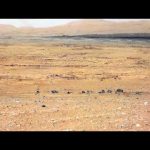
NASA Mars Curiosity Rover Report — June 7, 2013
A NASA Mars Curiosity rover team member gives an update on developments and status of the planetary exploration mission. The Mars Science Laboratory spacecraft delivered Curiosity to its target area on Mars at 1:31:45 a.m. EDT on Aug. 6, 2012 which includes the 13.8 minutes needed for confirmation of the touchdown to be radioed to Earth at the speed of light. The rover will conduct a nearly two-year prime mission to investigate whether the Gale Crater region of Mars ever offered conditions favorable for microbial life.
Curiosity carries 10 science instruments with a total mass 15 times as large as the science payloads on NASA’s Mars rovers Spirit and Opportunity. Some of the tools, such as a laser-firing instrument for checking rocks’ elemental composition from a distance, are the first of their kind on Mars. Curiosity will use a drill and scoop, which are located at the end of its robotic arm, to gather soil and powdered samples of rock interiors, then sieve and parcel out these samples into the rover’s analytical laboratory instruments.
-

Steven Spielberg’s A.I.-ARTIFICIAL INTELLIGENCE (2001) – The Flesh Fair
As a “celebration of life,” future mankind makes symbolic spectacle of the destruction of artificiality.
Copyright 2002 Dreamworks and Warner Bros. All rights reserved.
-
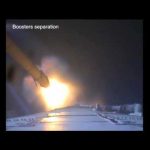
Sterex images of ATV-4 launch
ESA’s ATV-4 launch images taken by the Sterex experiment. These images provide a stunning vision of the Ariane 5 launch, including liftoff, boosters separation and ATV-4 release. The video system was developed by Kayser-Threde GmbH for ESA and DLR and integrated on Ariane by Astrium GmbH. Usage for ATV-4 was financed by DLR and ESA and supported by Arianespace and CNES.
© ESA /DLR-BMWi 2013
-

NASA’s Newest View of the Sun
NASA hosts a news update about the June 26 launch of the Interface Region Imaging Spectrograph (IRIS) mission from Vandenberg Air Force Base in California.
IRIS is a NASA Small Explorer Mission to observe how solar material moves in a dynamic million-degree atmosphere that drives the solar wind around the Sun’s atmosphere. The region is the origin of most of the ultraviolet solar emission that impacts the near-Earth space environment and Earth’s climate.
-
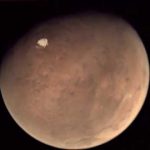
Mars Express Full Orbit Video 2.0
In celebration of the 10th anniversary of Mars Express: a new and enhanced Full Orbit Video generated by multiple images acquired by the VMC camera – the Mars Webcam – on board ESA’s Mars Express
This version is a special ‘MEX birthday preview’. We’ll post a somewhat extended version late next week, to coincide with the next expected VMC image set arriving from Mars (for news, follow the VMC blog http://blogs.esa.int/vmc)
Thanks to the Mars Express Science & operations teams for generating a fabulous, unique-in-our-Solar-System view of the Red planet. And happy Birthday, Mars Express!
Credit: ESA – European Space Agency, CC BY-SA 3.0 IGO
Copyright Notice:
This work is licenced under the Creative Commons Attribution-ShareAlike 3.0 IGO (CC BY-SA 3.0 IGO) licence. The user is allowed to reproduce, distribute, adapt, translate and publicly perform this publication, without explicit permission, provided that the content is accompanied by an acknowledgement that the source is credited as ‘ESA/DLR/FU Berlin’, a direct link to the licence text is provided and that it is clearly indicated if changes were made to the original content. Adaptation/translation/derivatives must be distributed under the same licence terms as this publication. To view a copy of this license, please visit http://creativecommons.org/licenses/by-sa/3.0/igo/
-

Soda Can Shake Up – Sick Science! #142
Find out what’s happening inside the can HERE: http://www.stevespanglerscience.com/experiment/soda-can-shake-up-experiment
Have you ever wondered why shaking a soda results in a great explosion when it’s opened? What causes a 2-liter bottle of soda to go flat? Is there anything that can be done to keep fizz in a bottle of soda? Get ready to uncover some amazing soda secrets that will change your soda drinking habits.
Want more experiments like this? Check out http://www.stevespanglerscience.com/product/naked-eggs-and-flying-potatoes
Sick Science™ is a trademark of Steve Spangler, inc.
© 2013 Steve Spangler Science all rights reserved
-
Mars Express ten year highlights
The journey of Mars Express, from drawing board through launch, to its key science highlights during ten years of operations. With its suite of seven instruments, Mars Express has studied the subsurface of the Red Planet to the upper atmosphere and beyond to the two tiny moons Phobos and Deimos, providing an in depth analysis of the planet’s history and returning stunning 3D images.
-
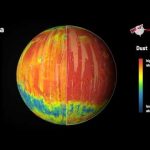
Mars mineral globe
This unique atlas comprises a series of maps showing the distribution and abundance of minerals formed in water, by volcanic activity, and by weathering to create the dust that makes Mars red.
Together the maps provide a global context for the dominant geological processes that have defined the planet’s history.The maps were built from ten years of data collected by the OMEGA visible and infrared mineralogical mapping spectrometer on Mars Express.
The animation cycles through maps showing: individual sites where a range of minerals that can only be formed in the presence of water were detected; maps of olivine and pyroxene, minerals that tell the story of volcanism and the evolution of the planet’s interior; and ferric oxide and dust. Ferric oxide is a mineral phase of iron, and is present everywhere on the planet: within the bulk crust, lava outflows and the dust oxidised by chemical reactions with the martian atmosphere, causing the surface to ‘rust’ slowly over billions of years, giving Mars its distinctive red hue.
The map showing hydrated minerals includes detections made by both ESA’s Mars Express and by NASA’s Mars Reconnaissance Orbiter.
Copyright: Hydrated mineral map: ESA/CNES/CNRS/IAS/Université Paris-Sud, Orsay; NASA/JPL/JHUAPL; Olivine, pyroxone, ferric dust & dust maps: ESA/CNES/CNRS/IAS/Université Paris-Sud, Orsay Orsay; Video production: ESA.
-

Earth from Space: Crete
Earth from Space is presented by Kelsea Brennan-Wessels from the ESA Web-TV virtual studios.
Greece’s largest and most populous island is featured in the sixty-seventh edition.See also the following link to download the image:
http://www.esa.int/Our_Activities/Observing_the_Earth/Earth_from_Space_Crete -
NASA Aerospace Engineer Talks Space with Students
NASA Johnson Space Center Aerospace Engineer Jason Barbour answers questions from 5th grade students at Public School 174 Queens in Queens, New York during a NASA Digital Learning Network (DLN) interactive broadcast.
NASA DLN broadcasts are connecting students around the country with the live mission operations being done by the International Space Station Flight Control Team. ISS flight controllers, astronauts and scientists answer student’s questions about living and working in space, how the Houston mission control center operates, and a wealth of other topics related to Science, Technology, Engineering, and Mathematics.
-
Actor Jaden Smith Highlights NASA Earth Science
Jaden Smith, star of Columbia Pictures’ movie “After Earth,” describes the contributions of the agency’s Earth science program to environmental awareness and exploration of our home planet.
-

NASA Television Covers the Launch of the Next ISS Crew
Expedition 36/37 Soyuz Commander Fyodor Yurchikhin of the Russian Federal Space Agency (Roscosmos), NASA Flight Engineer Karen Nyberg and Flight Engineer Luca Parmitano of the European Space Agency launched on the Russian Soyuz TMA-09M spacecraft on May 29, Kazakh time (May 28, U.S. time) from the Baikonur Cosmodrome in Kazakhstan to begin an accelerated six-hour journey to the International Space Station. Once aboard, the trio will start a five and a half month mission, joining station Commander Pavel Vinogradov of Roscosmos, Flight Engineer Chris Cassidy of NASA and Russian Flight Engineer Alexander Misurkin, who have been on the station since late March. The footage includes the crew’s pre-launch ceremonial activities at their Cosmonaut Hotel crew quarters, their departure from the Cosmonaut Hotel to their suit up facility in the Cosmodrome, the
-

Marshmallow Masher – Sick Science! #141
Find out the secret HERE: http://www.stevespanglerscience.com/experiment/marshmallow-masher
Marshmallows are a delicious, fluffy staple of summer, campouts, and barbecues. Did you know that there isn’t really much to them? It’s true. The best way to see what really comprises a marshmallow is to put it to the Marshmallow Masher pressure test. You’ll use the power of air to demonstrate what you’re really eating when you roasting ‘mallows this summer.
Want more experiments like this? Check out http://www.stevespanglerscience.com/product/naked-eggs-and-flying-potatoes
Sick Science™ is a trademark of Steve Spangler, inc.
© 2013 Steve Spangler Science all rights reserved
-

The Oklahoma Storms As Seen From Space on This Week @NASA
Also, NASA Administrator Charlie Bolden received updates on the important work being on done at the agency’s California centers, , a New Crew Prepares for Launch to the International Space Station, and a look at Dream Chaser Flight Simulations. These and other stories on This Week @NASA
-
NASA Astronaut Talks Space with Students
NASA Astronaut Mario Runco answers questions from 9-12th grade students at Deptford High School in Deptford, NJ during a NASA Digital Learning Network (DLN) interactive broadcast.
NASA DLN broadcasts are connecting students around the country with the live mission operations being done by the International Space Station Flight Control Team. ISS flight controllers, astronauts and scientists answer student’s questions about living and working in space, how the Houston mission control center operates, and a wealth of other topics related to Science, Technology, Engineering, and Mathematics.
-
![A.I. Artificial Intelligence – Official® Trailer [HD]](https://video.kidibot.ro/wp-content/uploads/2020/01/3179/ai-artificial-intelligence-official-trailer-hd-150x150.jpg)
A.I. Artificial Intelligence – Official® Trailer [HD]
Release Date: June 29, 2001
It’s the mid-21st century and man has developed a new type of computer that is aware of its own existence. This computer has been utilized to help man cope with the melting of the polar ice caps and the submerging of many of its coastal cities. This form of artificial intelligence has been used in robots, and one such android, a young boy (Haley Joel Osment) is about to take an emotional journey to find out if he can ever be anything more than a machine.
Cast: Haley Joel Osment, Jude Law, Frances O’Connor, Sam Robards, Jake Thomas, Brendan Gleeson, William Hurt, Jack Angel, Ben Kingsley, Robin Williams
Studio: Warner Bros. Pictures
Director: Steven Spielberg
Screenwriter: Steven Spielberg, Ian Watson
Genre: Adventure, Drama, Sci-FiOfficial Website: http://www.aimovie.com
-

Salt Water Density Straw – Sick Science! #140
GET THE KIT HERE: http://www.stevespanglerscience.com/collections/sick-science.html
Click here to get the secret: http://www.stevespanglerscience.com/experiment/density-straw
Density can be a difficult scientific property to grasp, that’s why we like making it colorful, fun, and (most importantly) simple! The Salt Water Density Straw is the epitome of kitchen science. You’ll use materials are right in your house, and with just a bit of salt, you’ll create a colorful experience that will have young scientists understanding density in moments.
Want more experiments like this? Check out http://www.stevespanglerscience.com/product/naked-eggs-and-flying-potatoes
Sick Science™ is a trademark of Steve Spangler, inc.
© 2013 Steve Spangler Science all rights reserved
-
NASA Mars Curiosity Rover Report – May 16, 2013
A NASA Mars Curiosity rover team member gives an update on developments and status of the planetary exploration mission. The Mars Science Laboratory spacecraft delivered Curiosity to its target area on Mars at 1:31:45 a.m. EDT on Aug. 6, 2012 which includes the 13.8 minutes needed for confirmation of the touchdown to be radioed to Earth at the speed of light. The rover will conduct a nearly two-year prime mission to investigate whether the Gale Crater region of Mars ever offered conditions favorable for microbial life.
Curiosity carries 10 science instruments with a total mass 15 times as large as the science payloads on NASA’s Mars rovers Spirit and Opportunity. Some of the tools, such as a laser-firing instrument for checking rocks’ elemental composition from a distance, are the first of their kind on Mars. Curiosity will use a drill and scoop, which are located at the end of its robotic arm, to gather soil and powdered samples of rock interiors, then sieve and parcel out these samples into the rover’s analytical laboratory instruments.
-

NASA Connects Space Station and “Star Trek Into Darkness” Crews in a Google+ Hangout
Astronaut Chris Cassidy, from aboard the International Space Station participated in a Google+ hangout with fellow astronauts at Johnson Space Center and cast members of the new film, “Star Trek Into Darkness” to discuss how work aboard the ISS is turning science fiction into reality. The astronauts and Star Trek cast asked questions of each other and fielded questions from social media followers at several locations, including the Intrepid Museum in New York City (home of the space shuttle Enterprise) and the Smithsonian’s National Air and Space Museum in Washington, DC.