https://surfshark.com/presura. De sărbători obține 4 luni adiționale pentru abonamentul Surfshark, la un preț de neegalat! 00:00:00 – Ştefan Micle 00:01:36 – Emanoil Bacaloglu 00:03:58 – Dimitrie Negreanu 00:06:14 – Constantin Miculescu 00:07:35 – Dimitrie Bungețianu 00:08:41 – Dragomir Hurmuzescu
#stiinta #fizica #science #tehnologie #technology #cristianpresura #adam algoritm: “Ștefan Micle Ștefan Micle, un ardelean sărac din Feleac, a participat la Revoluția din 1848 alături de Avram Iancu. Absolvent al Politehnicii din Viena, a devenit profesor și rector la Universitatea din Iași, unde a susținut primele lecții publice despre electricitate și optică. S-a căsătorit cu Veronica Micle într-un aranjament, ignorând zvonurile despre legătura ei cu Mihai Eminescu.
Emanoil Bacaloglu Emanoil Bacaloglu, provenit dintr-o familie de origine greco-turcă, a studiat fizica la Leipzig și Paris, sub îndrumarea unor savanți renumiți. Întors în țară, a devenit profesor la Universitatea din București, publicând primul manual de fizică în Țara Românească. A fost pionier în cercetarea fenomenelor capilare și a insistat pe aplicabilitatea practică a științei, utilizând concepte noi precum electromotoarele.
Dimitrie Negreanu Dimitrie Negreanu, primul român cu doctorat în fizică, obținut în 1889 la Sorbona, a studiat sub îndrumarea lui Gabriel Lippmann. Cercetările sale s-au axat pe conductivitatea electrică și constantele dielectrice ale lichidelor. A fost profesor la Universitatea din București, autor de manuale școlare și cursuri universitare.
Constantin Miculescu Constantin Miculescu, susținut de profesorul Bacaloglu, a studiat la Sorbona, obținând doctoratul în 1891 pentru cercetări despre echivalentul mecanic al caloriei. Aparatul său inovator pentru măsurarea temperaturii a îmbunătățit metodele lui Joule. Revenit în România, a predat la Universitatea din București, dedicându-se cercetărilor în optică.
Dimitrie Bungețianu Primul doctor în fizică din România, Dimitrie Bungețianu, a obținut titlul în 1912 cu o teză despre viteza sunetului și rezonanța acustică a lichidelor. Este considerat părintele acusticii românești datorită experimentelor sale și formulelor empirice dezvoltate.
Dragomir Hurmuzescu Dragomir Hurmuzescu, un mare fizician experimentalist, a studiat la Paris, demonstrând pentru prima dată că radiațiile X ionizează aerul. Întors în țară, a înființat Institutul Electrotehnic și primul post de radiodifuziune din România. Contribuțiile sale la electrotehnică și comunicații au avut aplicații practice remarcabile.
Concluzie Fizicienii români din secolul XIX și începutul secolului XX au avut contribuții semnificative în educație, cercetare și aplicarea științei, punând bazele fizicii moderne în România.”
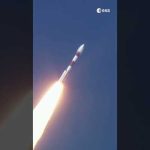
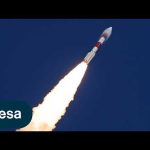
The third Copernicus Sentinel-1 satellite, Sentinel-1C, has launched aboard a Vega-C rocket, flight VV25, from Europe’s Spaceport in French Guiana. The rocket lifted off on 5 December 2024 at 22:20 CET (18:20 local time).
Sentinel-1C extends the legacy of its predecessors, delivering high-resolution radar imagery to monitor Earth’s changing environment, supporting a diverse range of applications and advance scientific research. Additionally, Sentinel-1C introduces new capabilities for detecting and monitoring maritime traffic.
The launch also marks Vega-C’s ‘return to flight’, a key step in restoring Europe’s independent access to space. Vega-C is the evolution of the Vega family of rockets and delivers increased performance, greater payload volume and improved competitiveness.
Credits: ESA/CNES/Arianespace
★ Subscribe: http://bit.ly/ESAsubscribe and click twice on the bell button to receive our notifications.
We are Europe’s gateway to space. Our mission is to shape the development of Europe’s space capability and ensure that investment in space continues to deliver benefits to the citizens of Europe and the world. Check out https://www.esa.int/ to get up to speed on everything space related.
Just how much power can be generated by one human being? Phil tries to find out. Plus: How a generator works, make your own wind turbine and a solar panel described with a bathtub and ping-pong balls!
Skip the waitlist and invest in blue-chip art for the very first time by signing up for Masterworks: https://www.masterworks.art/historymarche Purchase shares in great masterpieces from artists like Pablo Picasso, Banksy, Andy Warhol, and more. See important Masterworks disclosures: https://www.masterworks.com/cd
🚩 If you like what you see, consider supporting my work on Patreon and you get ad-free early access to my videos for as little as $1 https://www.patreon.com/historymarche — You can also show your support by subscribing to the channel and liking the video. Thank you for watching.
📢 Narrated by David McCallion
🎼 Music: EpidemicSound Filmstro Storyblocks
📚 Sources: Salamis: the naval campaign that saved Greece (2010), by William Shepherd. Osprey Publishing Ltd. ISBN: 978-1-84603-684-2. Herodotus: the Histories (2003), Translated by Aubrey de Sélincourt, revised by John Marincola. Published by the Penguin Group. Three Epic Battles That Saved Democracy: Marathon, Thermopylae and Salamis (2022), by Stephen P. Kershaw. Published by Robinson. ISBN: 978-1-47214-564-2.
Disclosures: This is not an offer of a security or investment advice. See important disclosures at masterworks.com/cd. Past performance is not indicative of future returns. View all past offerings here. No money is being solicited or will be accepted until the offering statement for a particular offering has been qualified by the SEC. Offers may be revoked at any time. Contacting Masterworks involves no commitment or obligation. Price appreciation data based on repeat-sales index of historical Post-War & Contemporary Art market prices from 1995 to 2023, developed by Masterworks. There are significant limitations to comparative asset class data. Indices are unmanaged and a Masterworks investor cannot invest directly in an index. Aggregate net investor proceeds represents the total liquidation proceeds distributed back to investors, net of all fees, expenses and proceeds reinvested in Masterworks offerings, of all works Masterworks has exited to date. This metric is not considered a presentation of performance but rather a mathematical figure that displays a platform metric on size, scale, and operation of the platform. Art sales price data is comparative only. Each painting is unique and historical data is not a direct proxy for any specific painting or investment. Data represents whole art not an investment into our offerings which includes fees and expenses. Past sales are not indicative of future results.
The third Copernicus Sentinel-1 satellite, Sentinel-1C, has launched aboard a Vega-C rocket, flight VV25, from Europe’s Spaceport in French Guiana. The rocket lifted off on 5 December 2024 at 22:20 CET (18:20 local time).
Sentinel-1C extends the legacy of its predecessors, delivering high-resolution radar imagery to monitor Earth’s changing environment, supporting a diverse range of applications and advance scientific research. Additionally, Sentinel-1C introduces new capabilities for detecting and monitoring maritime traffic.
The launch also marks Vega-C’s ‘return to flight’, a key step in restoring Europe’s independent access to space. Vega-C is the evolution of the Vega family of rockets and delivers increased performance, greater payload volume and improved competitiveness.
Credits: Arianespace
★ Subscribe: http://bit.ly/ESAsubscribe and click twice on the bell button to receive our notifications.
We are Europe’s gateway to space. Our mission is to shape the development of Europe’s space capability and ensure that investment in space continues to deliver benefits to the citizens of Europe and the world. Check out https://www.esa.int/ to get up to speed on everything space related.
Steve Spangler is a bestselling author, STEM educator and Emmy award-winning television personality with more than 2,100 television appearances to his credit. Steve appeared as a regular guest on the Ellen DeGeneres Show from 2007-2022. Learn more about Steve at https://stevespangler.com/about-steve-spangler/
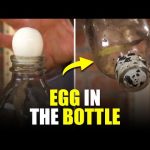
Steve Spangler shows experiments you can do at home that prove the power of air pressure. This time, he gets an egg into, and out of a bottle with… fire?
Steve Spangler is a bestselling author, STEM educator and Emmy award-winning television personality with more than 2,100 television appearances to his credit. Steve appeared as a regular guest on the Ellen DeGeneres Show from 2007-2022. Learn more about Steve at https://stevespangler.com/about-steve-spangler/
NASA will hold a media event on Dec. 5 to provide an update on the agency’s Artemis campaign.
Participants:
-NASA Administrator Bill Nelson -NASA Deputy Administrator Pam Melroy -NASA Associate Administrator Jim Free -Catherine Koerner, associate administrator, Exploration Systems Development Mission Directorate, NASA Headquarters -Amit Kshatriya, deputy associate administrator, Moon to Mars Program Office, Exploration Systems Development Mission Directorate -Reid Wiseman, NASA astronaut and Artemis II commander
Through the Artemis campaign, the agency will establish a long-term presence at the Moon for scientific exploration with our commercial and international partners, learn how to live and work away from home, and prepare for future human exploration of Mars.
NASA’s SLS (Space Launch System) rocket, exploration ground systems, and Orion spacecraft, along with the human landing system, next-generation spacesuits, the lunar space station, Gateway, and future rovers are NASA’s foundation for deep space exploration.
Proba-3 lifted off on its PSLV-XL rocket from Satish Dhawan Space Centre in Sriharikota, India, on Thursday, 5 December, at 11:34 CET (10:34 GMT, 16:04 local time). The mission was launched using this Indian launcher because it needed to be placed in a highly elliptical orbit extending more than 60 500 km from the ground.
After integration and testing was completed at Redwire Space in Belgium, Proba-3 was transported to India to be prepared for launch. The latest member of ESA’s family of in-orbit demonstration missions, Proba-3 is in fact two spacecraft being launched together, which will separate in orbit to begin performing precise formation flying, precise to a single millimetre, about the thickness of an average fingernail. To prove their performance, Proba-3 has been devoted to an ambitious scientific goal. The pair will line up precisely with the Sun 150 m apart so that one casts a precisely controlled shadow onto the other.
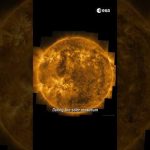
By blocking out the fiery disc of the Sun, Proba-3’s ‘Occulter’ spacecraft will mimic a terrestrial total solar eclipse, to open up views of the Sun’s faint surrounding atmosphere, or ‘corona’, which is a million times fainter than its parent star. Proba-3’s second ‘Coronagraph’ spacecraft hosts the optical instrument that will observe the solar corona. If Proba-3’s initial commissioning phase goes to plan then the spacecraft pair will be separated early in the new year to begin their individual check-outs. The operational phase of the mission, including the first observations of the corona through active formation flying, should begin in about four months.
Proba-3 was led for ESA by Sener in Spain, overseeing a consortium of 14 ESA Member States and Canada including Airbus Defence and Space in Spain manufacturing the spacecraft and Redwire Space in Belgium responsible for the spacecraft avionics, assembly and operations. CSL in Belgium produced Proba-3’s ASPIICS coronagraph Spacebel in Belgium developed the onboard and ground segment software with GMV responsible for the formation flying system and flight dynamics.
Credits: ESA/ISRO – NSIL
★ Subscribe: http://bit.ly/ESAsubscribe and click twice on the bell button to receive our notifications.
We are Europe’s gateway to space. Our mission is to shape the development of Europe’s space capability and ensure that investment in space continues to deliver benefits to the citizens of Europe and the world. Check out https://www.esa.int/ to get up to speed on everything space related.
ESA’s Proba-3 mission lifted off on its PSLV-XL rocket from Satish Dhawan Space Centre in Sriharikota, India, on Thursday, 5 December, at 11:34 CET (10:34 GMT, 16:04 local time).
ESA’s Proba-3 mission lifted off on its PSLV-XL rocket from Satish Dhawan Space Centre in Sriharikota, India, on Thursday, 5 December, at 11:34 CET (10:34 GMT, 16:04 local time).
Credits: ISRO – NSIL
★ Subscribe: http://bit.ly/ESAsubscribe and click twice on the bell button to receive our notifications.
We are Europe’s gateway to space. Our mission is to shape the development of Europe’s space capability and ensure that investment in space continues to deliver benefits to the citizens of Europe and the world. Check out https://www.esa.int/ to get up to speed on everything space related.
Meet Esther, our System Engineer currently working on the Proba-3 mission.
Proba-3 is scheduled to liftoff on Wednesday, 4 December, at 11:38 CET from the Satish Dhawan Space Centre in India, Proba-3 will use two satellites to create the perfect conditions for observing the Sun’s corona.
One satellite features a telescope, kept in the centre of the shadow cast by the other satellite around 150 m away, thanks to an occulter disc. Maintaining the correct position in the shadow requires a precise formation flying capability, down to a single millimetre of precision.
Steve Spangler is a bestselling author, STEM educator and Emmy award-winning television personality with more than 2,100 television appearances to his credit. Steve appeared as a regular guest on the Ellen DeGeneres Show from 2007-2022. Learn more about Steve at https://stevespangler.com/about-steve-spangler/
Defying gravity is Phil’s mission, but maxing out a hoop glider proves to be harder than it seems. Plus: an egg drop with a pumpkin, hovering helium balloons and more anti-gravity fun!
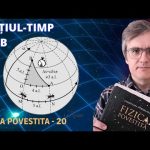
#stiinta #fizica #science #tehnologie #technology #cristianpresura #ad algoritm:”În teoria relativității generale, spațiu-timpul, descoperit în relativitatea restrânsă, este considerat curb. Această curbură poate fi înțeleasă prin analogii precum suprafețele curbe sau un inel închis, care devine universul unei furnici unidimensionale. În acest model, spațiul este reprezentat de perimetrul inelului, iar timpul – de dimensiunea verticală a sferei formate din expansiunea inelului.
Metrica spațiu-timpului descrie structura acestuia, fiind reprezentată prin tensorul metric 𝑔 g, care diferă în fiecare punct. Aceasta determină distanțele dintre evenimente în spațiu-timp, măsurate prin formula relativistă. Spre exemplu, lungimea unei traiectorii între două evenimente reflectă timpul propriu al unui ceas care parcurge această traiectorie.
În universul nostru, spațiul-timpul are patru dimensiuni (o dimensiune temporală și trei spațiale), fiind descris printr-o metrică ce poate fi o matrice 4 × 4 4×4. Dacă spațiu-timpul nu este curb, această metrică se reduce la cea minkowskiană. În modele cosmologice, expansiunea sau contracția spațiu-timpului, cum ar fi Big Bang-ul sau Big Crunch-ul, este ilustrată prin analogii precum inelul furnicii, care poate dispărea la un punct, sugerând sfârșitul timpului.
De asemenea, două întrebări fundamentale rămân deschise: Cum se mișcă obiectele într-un spațiu-timp curb? Cine determină structura acestui spațiu-timp? Dacă în modelul furnicii, noi am stabilit structura, în cazul universului nostru, întrebarea despre un potențial Creator sau un alt factor rămâne fără un răspuns clar.”
The double-satellite Proba-3 is the most ambitious member yet of ESA’s Proba family of experimental missions. Two spacecraft will fly together as one, maintaining precise formation down to a single millimetre. One will block out the fiery disc of the Sun for the other, to enable prolonged observations of the Sun’s surrounding atmosphere, or ‘corona’, the source of the solar wind and space weather. Usually, the corona can only be glimpsed for a few minutes during terrestrial total solar eclipses.
Proba-3 aims to reproduce such eclipses for up to six hours at a time, in a highly elliptical orbit taking it more than 60 000 km from Earth. The two spacecraft are being launched together by India’s PSLV-XL launcher from the Satish Dhawan Space Centre.
Radar allows us to see through what would otherwise be invisible. By sending out radio waves that bounce off objects and return as echoes, radar creates a detailed picture of our surrounding world.
This technology is everywhere: from guiding air traffic and enabling self-driving cars to tracking the movements of athletes. But its reach doesn’t stop there—radar is also transforming how we observe our Earth from space.
Satellites like the Copernicus Sentinel-1 mission use radar to see through clouds, darkness and any weather conditions. This capability is invaluable for detecting subtle changes on Earth’s surface—changes that are often hidden from the human eye. Discover how radar technology is helping us unlock these hidden insights about our planet.
Credit: ESA – European Space Agency
★ Subscribe: http://bit.ly/ESAsubscribe and click twice on the bell button to receive our notifications.
We are Europe’s gateway to space. Our mission is to shape the development of Europe’s space capability and ensure that investment in space continues to deliver benefits to the citizens of Europe and the world. Check out https://www.esa.int/ to get up to speed on everything space related.
Steve Spangler is a bestselling author, STEM educator and Emmy award-winning television personality with more than 2,100 television appearances to his credit. Steve appeared as a regular guest on the Ellen DeGeneres Show from 2007-2022. Learn more about Steve at https://stevespangler.com/about-steve-spangler/
Steve Spangler is a bestselling author, STEM educator and Emmy award-winning television personality with more than 2,100 television appearances to his credit. Steve appeared as a regular guest on the Ellen DeGeneres Show from 2007-2022. Learn more about Steve at https://stevespangler.com/about-steve-spangler/
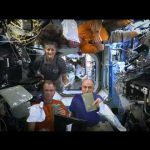
Aboard the International Space Station, NASA Expedition 72 crew members Suni Williams, Nick Hague, Butch Wilmore, and Don Pettit wish a happy Thanksgiving to Earth. The crew shared their thoughts on the holiday, as well as their plans for their Thanksgiving meal.
The four astronauts are in the middle of a long-duration mission living and working aboard the microgravity laboratory. The goal of their mission is to advance scientific knowledge and demonstrate new technologies for future human and robotic exploration missions as part of NASA’s Moon and Mars exploration approach, including lunar missions through NASA’s Artemis program.
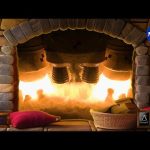
Just what you need for the holidays… the coziness of a crackling and roaring rocket engine!
Technically, this fireplace packs the heat of the SLS rocket’s four RS-25 engines and a pair of solid rocket boosters – just enough to get you to the Moon! (And get through the holidays with your in-laws.)
This glowing mood-setter is brought to you by the SLS (Space Launch System) rocket that launched Artemis I on its mission around the Moon and back on Nov. 16, 2022. 8.8 million pounds of total thrust – and a couple glasses of eggnog – might just be enough to make your holidays merry.
Video description: A stock fireplace illustration frames looping archival video of the blasting RS-25 engines that launched the Artemis I rocket to the Moon on Nov. 16, 2022 (source: https://go.nasa.gov/4g6LnWc ). The illustration includes stone tiling, a pillow, a basket of firewood, and contains elements generated with AI. NASA added two framed pictures to the illustration. One shows an archival image of the Orion capsule flying through space. The other shows the Artemis logo. The audio features the roar of the rockets at a low level, with the addition of the sounds of a crackling wood fire.
Credit: NASA Producers: Sami Aziz, John Sackman Designer: Chris Chamberland
În ce fel ne pregătește școala românească pentru viață? Este capabil sistemul de educație din România să formeze cetățeni responsabili și autonomi, înzestrați cu gândire critică? Ce șanse au copiii din mediile defavorizate de a deveni adulți integrați în societate? Ce fel de profesori pregătim pentru a pregăti un viitor mai bun și mai drept?
Vor participa: Ioana Grindean, Ciprian Mihali, Emil Moise, Cristian Presură, Florina Russu, Cătălin Teniță
Steve Spangler is a bestselling author, STEM educator and Emmy award-winning television personality with more than 2,100 television appearances to his credit. Steve appeared as a regular guest on the Ellen DeGeneres Show from 2007-2022. Learn more about Steve at https://stevespangler.com/about-steve-spangler/
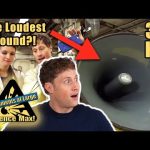
Phil tries to bend the power of sound to his will by making the loudest sound he can. Plus: make cornstarch mud dance, shatter a wine glass and make patterns with sand – all with the power of sound!
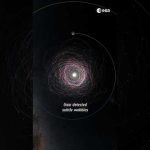
Thanks to the incredible precision of our Gaia mission, scientists have discovered potential moons orbiting over 350 asteroids! This nearly doubles the known number of ‘binary asteroids,’ revealing a whole new layer of complexity in our Solar System.
Steve Spangler is a bestselling author, STEM educator and Emmy award-winning television personality with more than 2,100 television appearances to his credit. Steve appeared as a regular guest on the Ellen DeGeneres Show from 2007-2022. Learn more about Steve at https://stevespangler.com/about-steve-spangler/
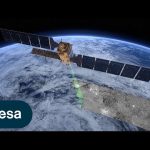
Meet Copernicus Sentinel-1 – this ground-breaking mission delivers continuous, all-weather, day-and-night imaging for land, ice and maritime monitoring.
Equipped with state-of-the-art C-band synthetic aperture radar (SAR), Sentinel-1 captures high-resolution data around the clock, in any weather, making it indispensable for detecting the subtle changes on Earth’s surface that remain hidden from the human eye.
Sentinel-1 data serves a multitude of critical applications: from ensuring the safety and efficiency of maritime traffic, tracking sea ice and icebergs, to monitoring structural integrity and natural hazards, such as earthquakes, landslides and volcanic activity.
Its enhanced radar technology provides precises precise information on ground movement, which is critical for urban planning, infrastructure resilience, subsidence risk assessment and geohazard monitoring.
Through consistent, long-term data collection, Sentinel-1 serves as a global asset, essential for environmental and safety monitoring worldwide. The mission is a beacon of innovation, advancing our understanding of our planet’s dynamic landscape.
This video features interviews with Mark Drinkwater, Head of Mission Sciences Division at ESA, Ramon Torres Cuesta, Sentinel-1 Project Manager at ESA and Julia Kubanek, Sentinel-1 Mission Scientist at ESA.
Credit: ESA – European Space Agency
★ Subscribe: http://bit.ly/ESAsubscribe and click twice on the bell button to receive our notifications.
We are Europe’s gateway to space. Our mission is to shape the development of Europe’s space capability and ensure that investment in space continues to deliver benefits to the citizens of Europe and the world. Check out https://www.esa.int/ to get up to speed on everything space related.