ESA’s Jupiter Icy Moons Explorer (Juice), is on an epic eight-year journey to Jupiter. This first episode of ‘The journey of Juice’ tells the story of Juice’s first months in space, from its launch on 14 April 2023 to its lunar-Earth gravity assist (LEGA for short) in August 2024. This flyby was not only the first double gravity assist manoeuvre of its kind, it was also a perfect opportunity to test out the spacecraft’s cameras and science instruments.
In this episode, Juice’s Mission Manager Nicolas Altobelli explains how the spacecraft will become the first ever human-made machine to orbit a moon of another planet, in this case Jupiter’s largest moon Ganymede.
You’ll also hear from Claire Vallat and Marc Costa at the European Space Astronomy Centre (ESAC) near Madrid, Spain. Juice will perform incredibly complex measurements once it reaches Jupiter, and the Science Operations team at ESAC is making sure we get the most out of every instrument.
Meanwhile, the Flight Control team at the European Space Operations Centre (ESOC) in Darmstadt, Germany, makes sure Juice is and stays on the right path. This episode shows what happened ‘behind the scenes’ before and during the lunar-Earth flyby, and stars Ignacio Tanco, Angela Dietz and members of the Juice Flight Control team as they do what they do best.
Finally, we highlight the ESA tracking station network (Estrack), another crucial component for Juice. Maintenance and Operations Engineer Belén Goméz gives a tour of the facility at Cebreros.
Following the very successful lunar-Earth flyby, Juice is now on its way to planet Venus for its next flyby. On 31 August 2025, this flyby will give Juice its second gravity boost. Tune back in next year for episode two of this series!
This series follows on from ‘The making of Juice’ series, which covered the planning, testing and launch of this once-in-a-generation mission.
Credit: ESA/Lightcurve Films, original music by William Zeitler
Acknowledgments: Direction, main camera, sound, editing, post-production: Maarten Roos. Camera at Cebreros during LEGA: Mikel Larequi. LEGA timelapse: Mark McCaughrean and Simeon Schmauß. Special thanks to Marc Costa (ESA – ESAC) and Jorge Fauste (ESA – Estrack)
★ Subscribe: http://bit.ly/ESAsubscribe and click twice on the bell button to receive our notifications.
We are Europe’s gateway to space. Our mission is to shape the development of Europe’s space capability and ensure that investment in space continues to deliver benefits to the citizens of Europe and the world. Check out https://www.esa.int/ to get up to speed on everything space related.
🥏 Visit https://80000hours.org/historymarche and start planning a career that is meaningful, fulfilling, and helps solve one of the world’s most pressing problems. Make your 80,000 hours count.
🚩 “Deliver us, O Lord, from the arrows of the Hungarians” – A hymn from Modena, Italy c.900 AD. Brenta was one of the earliest battles of the Magyar invasions of Europe. Between 860 and 970, the Magyars were the scourge of Europe. They devastated and pillaged a wide swath of territory, from Bremen in the north, to Otranto in the south, and Orleans in the west, with some raiding expeditions reaching over the Pyrenees Mountains into Iberia.
🚩 If you like what you see, consider supporting my work on Patreon and you get ad-free early access to my videos for as little as $1 https://www.patreon.com/historymarche — You can also show your support by subscribing to the channel and liking the video. Thank you for watching.
📢 Narrated by David McCallion
🎼 Music: EpidemicSound Filmstro Round drums – Kevin MacLeod
📚 Sources: The Complete Works of Luidprand of Cremona. Transl by Paolo Squatriti. The Catholic University of America Press, Washington D.C., 2007 Reuter, Timothy. Germany in the Early Middle Ages 800–1056. (1991) Balasz, György, and Karoly Szelényi. The Magyars: The Birth of a European Nation (1989) Bóna, István. The Hungarians and Europe in the 9th-10th centuries (2000)
Watch the launch of NASA’s SpaceX #Crew9, the first human spaceflight mission to launch from Space Launch Complex 40 at Cape Canaveral Space Force Station in Florida. Liftoff on Saturday, Sept. 28 is set for 1:17 p.m. EDT (1717 UTC).
The Dragon spacecraft will carry NASA astronaut Nick Hague and Roscosmos cosmonaut Aleksandr Gorbunov to the International Space Station for a science mission of approximately five months. This will be Hague’s second mission to the orbiting laboratory, and Gorbunov’s first spaceflight.
Hague and Gorbunov will fly to the space station as commander and mission specialist, respectively. NASA astronauts Butch Wilmore and Suni Williams, who launched aboard the Starliner spacecraft in June, will fly home with Hague and Gorbunov in February 2025.
Orbiting more than 200 miles (320 km) above Earth, the International Space Station is a powerhouse of cutting-edge science that is unlocking discoveries not possible on Earth. We’re testing technologies that are critical to our return to the Moon and contributing to medical and social breakthroughs that improve life on our home planet.
After more than two decades of results, we continue to inspire future generations from a platform that is one of the largest international collaborations of our time.
Diet cola and mints! A fun experiment that’s even more awesome when maxxed out. Air pressure bubbles through this episode, including marshmallows in a vacuum chamber, pulling an egg into a flask and carbonating pickle juice!
Steve Spangler is a bestselling author, STEM educator and Emmy award-winning television personality with more than 2,100 television appearances to his credit. Steve appeared as a regular guest on the Ellen DeGeneres Show from 2007-2022. Learn more about Steve at https://stevespangler.com/about-steve-spangler/
Steve Spangler is a bestselling author, STEM educator and Emmy award-winning television personality with more than 2,100 television appearances to his credit. Steve appeared as a regular guest on the Ellen DeGeneres Show from 2007-2022. Learn more about Steve at https://stevespangler.com/about-steve-spangler/
#stiinta #fizica #science #tehnologie #technology #cristianpresura algoritm:”În filmul Interstellar, dilatarea timpului lângă o gaură neagră se explică prin teoria relativității generale a lui Einstein. Aflându-se într-un câmp gravitațional extrem de puternic, timpul pe acea planetă trece mult mai lent comparativ cu alte locuri din univers. Aceasta este o consecință a dilatării gravitaționale a timpului, un efect descris de Einstein în 1915.
Teoria relativității generale extinde relativitatea restrânsă, care se aplica doar la sisteme de referință inerțiale. Einstein a observat că gravitația este strâns legată de structura spațiu-timpului și că obiectele aflate în cădere liberă sunt într-un sistem echivalent cu imponderabilitatea. Astfel, teoria gravitației lui Newton este incompletă, deoarece nu ia în considerare că gravitația influențează atât spațiul, cât și timpul.
Un exemplu celebru este experimentul într-un lift imaginar: dacă liftul cade liber, toate obiectele din interior par să fie în imponderabilitate. Această situație este echivalentă cu cea din spațiul cosmic, unde astronauții “plutesc”, deoarece Stația Spațială Internațională se află în cădere liberă pe orbita Pământului.
Egalitatea dintre masa inerțială și cea gravitațională, observată de Newton, este cheia pentru a înțelege mișcarea corpurilor în câmpuri gravitaționale. Aceasta duce la principiul echivalenței, conform căruia în orice câmp gravitațional se poate alege un sistem de referință local în care legile relativității restrânse se aplică. Spațiul-timp este curb în prezența gravitației, iar această curbură este responsabilă pentru forțele gravitaționale pe care le simțim.”
Our Hera spacecraft will soon start its journey to the distant asteroid moon Dimorphos orbiting around its parent body Didymos.
One of the first features Hera will look for is the crater left on Dimorphos by its predecessor mission DART, which impacted the asteroid to deflect its orbit.
Yet, more recent impact simulations suggest no crater will be found. The DART impact is likely to have remodelled the entire body instead – a significant finding for both asteroid science and planetary defence.
NASA Administrator Bill Nelson speaks to the power of NASA’s climate-related data to help the world understand climate change and take action.
“The challenge of the climate crisis is here and now. Let’s answer it—from above.”
Most of what humanity knows about our changing planet comes from NASA’s more than two-dozen satellites and instruments—and from the agency’s observations for over 60 years.
For more information about how NASA in conjunction with the rest of the federal government studies our changing planet, visit https://earth.gov/
Credit: NASA Producer: Daniel Lauchu Music: Universal Production Music
🚩 Battle of Halidon Hill (1333) played a big part in the development of English military tactics. Edward III would later use the same defensive setup to confound the mounted chivalry of France at the Battles of Crécy and Poitiers. This was Edward III’s first battle and the only one that he fought in England. At Halidon Hill he witnessed the strength of the defensive combination of archers and dismounted men-at-arms already used to great effect by Edward Balliol the previous year at the Battle of Dupplin Moor in Scotland.
🚩 If you like what you see, consider supporting my work on Patreon and you get ad-free early access to my videos for as little as $1 https://www.patreon.com/historymarche — You can also show your support by subscribing to the channel and liking the video. Thank you for watching.
📢 Narrated by David McCallion
🎼 Music: EpidemicSound Filmstro Round drums – Kevin MacLeod
📚 Sources: The Perfect King: The Life of Edward III, Father of the English Nation (2006), by Ian Mortimer, Published by Jonathan Cape. ISBN: 9780224073011. ‘The Siege of Berwick, 1333’ The Scottish Historical Review, Vol. 40, No. 129, Part 1 (Apr., 1961), pp. 19-42, by Ranald Nicholson. Published by: Edinburgh University Press. The Greatest Traitor: the Life of Sir Roger Mortimer Ruler of England 1327-1330 (2010) by Ian Mortimer. Published by: Vintage. ISBN: 9781407066394. The Chronicle of Lanercost, 1272-1346 (1913), by Maxwell, Herbert Eustace, Sir, bart., 1845-1937, tr; Wilson, James, Vicar of Dalston. Hundred Years War Vol 1: Trial by Battle (2010) by Jonathan Sumption. Published by Faber and Faber Ltd. ISBN: 980-0-571-26658-6. Chronicles (1978) by Jean Froissart, Edited and Translation by Geoffrey Brereton. Published by Penguin Books Ltd. ISBN: 978-0-141-90456-6. True Chronicles (1904) by Jean le Bel. Link: https://archive.org/details/le-bel-chronique-de-jean-le-bel-v-1 The orygynale cronykil of Scotland. By Andrew of Wyntoun. Edited by David Laing: https://archive.org/details/orygynalecronyki03andruoft/mode/2up
Steve Spangler is a bestselling author, STEM educator and Emmy award-winning television personality with more than 2,100 television appearances to his credit. Steve appeared as a regular guest on the Ellen DeGeneres Show from 2007-2022. Learn more about Steve at https://stevespangler.com/about-steve-spangler/
Watch live as NASA astronaut Tracy Dyson and Roscosmos cosmonauts Nikolai Chub and Oleg Kononenko return home from the International Space Station. Their Soyuz MS-25 spacecraft will head for a parachute-assisted landing on the steppe of Kazakhstan at 8 a.m. EDT Monday, Sept. 23 (1200 UTC).
Dyson will conclude her third spaceflight with the landing of the Soyuz. Dyson’s mission spanned 184 days, 2,944 orbits of the Earth, and a journey of 78 million miles. While on orbit, she conducted an array of experiments and technology demonstrations that contribute to advancements for humanity on Earth and NASA’s trajectory to the Moon and Mars.
Making a maxxed out spinning top is just the start. Phil experiments with the Magnus effect, gyroscopic precession, pushing string and Da Vinci’s perpetual motion wheel.
Steve Spangler is a bestselling author, STEM educator and Emmy award-winning television personality with more than 2,100 television appearances to his credit. Steve appeared as a regular guest on the Ellen DeGeneres Show from 2007-2022. Learn more about Steve at https://stevespangler.com/about-steve-spangler/
#stiinta #fizica #science #tehnologie #technology #cristianpresura algoritm:”Acum zece ani, pilele de combustie și mașinile pe hidrogen păreau să fie viitorul transportului. Totuși, visul este aproape mort. Toyota rămâne unul dintre puținii producători care mai pariază pe hidrogen, dar mașinile electrice au dominat piața, având o creștere masivă. De ce? Tehnologia hidrogenului implică doi pași suplimentari comparativ cu mașinile electrice: energia electrică este transformată în hidrogen prin electroliză, iar apoi, în mașină, hidrogenul este transformat înapoi în electricitate prin pile de combustie. Acest proces este ineficient, cu un randament de 30-40%, mult mai mic decât randamentul de peste 80% al mașinilor electrice.
Costurile sunt, de asemenea, semnificativ mai mari pentru mașinile pe hidrogen. De exemplu, costul energiei pe kilometru este de 3-4 ori mai mare decât pentru mașinile electrice, în unele estimări chiar de 10 ori mai mare. Infrastructura de alimentare cu hidrogen lipsește aproape complet, iar transportul hidrogenului este complicat și costisitor.
Deși hidrogenul are avantajul unei densități energetice mai mari decât bateriile electrice, și rezervorul se poate încărca mai rapid, aceste avantaje nu compensează pierderile de eficiență și costurile mari. În plus, siguranța buteliilor de hidrogen comprimă este adesea o preocupare, deși cercetătorii susțin că acestea sunt mai sigure decât rezervoarele de benzină.
Totuși, hidrogenul nu este complet inutil în transport. Pentru vehicule de mare tonaj, cum ar fi camioanele, vapoarele și avioanele, unde greutatea bateriilor electrice devine o problemă, hidrogenul ar putea fi o soluție. Se preconizează că în 2050, camioanele pe distanțe lungi ar putea fi alimentate cu hidrogen, deși aceasta depinde de dezvoltarea tehnologică și economică.
În sectorul rezidențial, speranța era că hidrogenul ar putea înlocui gazul natural, dar eficiența sa este mult mai mică comparativ cu pompele de căldură. De asemenea, ar fi nevoie de investiții masive în infrastructura de distribuție, deoarece hidrogenul scapă ușor prin conductele existente.
În România, hidrogenul verde reprezintă o soluție pentru reducerea emisiilor din industrii, însă producția sa este încă foarte mică. Strategia Națională pentru Hidrogen prevede investiții mari până în 2030, dar hidrogenul nu pare să fie soluția miraculoasă pentru transportul rutier.”
Meet Codi, the cutting-edge rover being tested in the UK as it gears up for future Mars missions! This high-tech explorer navigates challenging landscapes and collects “lightsabre” samples with precision. And did you know? There’s a bit of fun on the side—Kevin the piglet, the team’s adorable mascot, is named after actor Kevin Bacon!
NASA celebrates the fifth anniversary of renaming the street in front of its headquarters in Washington, D.C. Hidden Figures Way.
The renaming honors the remarkable legacies of Katherine Johnson, Dorothy Vaughan, and Mary W. Jackson, who were featured in Shetterly’s book – and the subsequent movie – Hidden Figures, as well as all women who honorably serve their country, advancing equality, and contributing to the United States space program.
In this last episode of the Young Professional Satellite docu series, we follow the team’s last steps to make their dream come true: sending their satellite to space.
After securing the crucial final assembly and battery connection, we take you inside the thermal vacuum tests (TVAC) to see how YPSat is tested under the extreme temperatures of space; through vibration tests to ensure its structural integrity during launch; and electromagnetic compatibility (EMC) tests to prevent interference with the launcher’s systems.
As we approach the European Space Agency’s traditional Flight Acceptance Review, the satellite is officially certified for flight. With the integration complete and final battery charge applied, control is handed over to the rocket. The only task left for the teams on the ground is to analyse one last time the rocket’s trajectory and await the critical first signal.
As tension builds up on launch day, watch as the team retrieves YPSat’s data and decodes breathtaking images and videos from its mission.
—————————————————
Credits: Directed and produced by Chilled Winston: https://chilledwinston.com/ and Emma de Cocker Powered by ESA – European Space Agency Soundtracks from Epidemic Sound
—————————————————
Chapters: 00:00 – Introduction 01:30 – Final Assembly 02:49 – The Test Campaign 06:42 – Final Launch Preparations 10:01 – Ariane 6 Launch 11:38 – Gathering & Decoding the Footage 15:15 – Unveiling the Footage 17:08 – Watch at the End
★ Subscribe: http://bit.ly/ESAsubscribe and click twice on the bell button to receive our notifications.
We are Europe’s gateway to space. Our mission is to shape the development of Europe’s space capability and ensure that investment in space continues to deliver benefits to the citizens of Europe and the world. Check out https://www.esa.int/ to get up to speed on everything space related.
#stiinta #fizica #science #tehnologie #technology #cristianpresura algoritm:” Jules Verne scria în „Insula Misterioasă” despre un viitor în care apa va deveni combustibil, folosind hidrogenul și oxigenul pentru a furniza energie inepuizabilă. Însă, în prezent, visul său nu s-a realizat, iar mașinile pe hidrogen sunt rare. Este hidrogenul încă relevant? În acest context, vom explora ce este hidrogenul și de ce nu s-a impus în transporturi, analizând, totodată, și alte sectoare economice, precum și utilizarea acestuia în România.
Hidrogenul, cel mai abundent combustibil din univers, alimentează stelele și ar putea, în viitor, să fie folosit pe Pământ prin fuziune. Deși captarea izotopilor de hidrogen și fuziunea lor sunt încă departe de aplicare la scară industrială, hidrogenul lichid este deja folosit în propulsia rachetelor. Cu toate acestea, energia necesară pentru a extrage hidrogenul din apă depășește energia produsă prin utilizarea lui, ceea ce face procesul ineficient.
Există diferite „culori” ale hidrogenului: hidrogenul gri, produs prin descompunerea metanului cu emisii de CO₂, contribuie la încălzirea globală. Hidrogenul albastru captează parțial emisiile de dioxid de carbon, iar hidrogenul verde, produs prin electroliza apei folosind surse regenerabile, este cel mai ecologic, dar și cel mai costisitor.
Uniunea Europeană a stabilit obiectivul neutralității climatice până în 2050, iar hidrogenul verde ar trebui să înlocuiască 20% din combustibilii fosili actuali. În industrie, hidrogenul este esențial pentru producerea de oțel, îngrășăminte și metanol. Cu toate acestea, producția globală de hidrogen verde este încă foarte mică și trebuie să crească exponențial.
Electrolizoarele, dispozitivele necesare pentru producerea hidrogenului verde, sunt scumpe și ineficiente. Deși subvenționate masiv, ele încă au un randament de doar 40-70%. Costul hidrogenului verde este mult mai mare decât cel al hidrogenului gri, ceea ce ridică întrebări despre fezabilitatea economică a tranziției.
În concluzie, hidrogenul este un purtător de energie promițător, dar mai avem un drum lung până să devină o soluție viabilă pentru combaterea schimbărilor climatice.”
NASA is set to launch the Europa Clipper spacecraft to explore Europa, an ocean moon orbiting Jupiter.
Europa Clipper’s launch period opens on Thursday, Oct. 10, 2024. Liftoff on Oct. 10, 2024 is slated for 12:31 p.m. EDT (1631 UTC). The spacecraft, the largest NASA has ever built for a planetary mission, will launch on a SpaceX Falcon Heavy rocket from Launch Complex 39A at NASA’s Kennedy Space Center in Florida.
Europa is one of the most promising places in our solar system to find an environment suitable for life beyond Earth. Evidence suggests that the ocean beneath Europa’s icy surface could contain the ingredients for life — water, the right chemistry, and energy. While Europa Clipper is not a life-detection mission, it will answer key questions about the moon’s potential habitability.
Steve Spangler is a bestselling author, STEM educator and Emmy award-winning television personality with more than 2,100 television appearances to his credit. Steve appeared as a regular guest on the Ellen DeGeneres Show from 2007-2022. Learn more about Steve at https://stevespangler.com/about-steve-spangler/
The third Copernicus Sentinel-2 satellite, Sentinel-2C, has launched aboard the last Vega rocket, flight VV24, from Europe’s Spaceport in French Guiana. The rocket lifted off on 5 September at 03:50 CEST (4 September 22:50 local time).
Sentinel-2C was the last liftoff for the Vega rocket – after 12 years of service this was the final flight, the original Vega is being retired to make way for an upgraded Vega-C.
🎥 ESA – European Space Agency Credits: ESA/CNES/Arianespace
How do you max out a dome made of gumdrops and toothpicks? Well, how about trying to build one with oranges? Still not good enough? How about pumpkins!? Phil also gets the record in maxxed-out cup stacking, builds a cube of pencils and a self-supporting bridge.
Static Electricity! That’s what’s behind lightning bolts, whether they come from the sky or are made in the lab using the power of science! Plus: Phil harnesses the power behind lightning to make things stick, float, or make your hair stand on end!
Our solar system has a number of worlds with water, but is Earth the only one with the right environment to support life? That’s the question NASA’s Europa Clipper aims to answer.
Europa Clipper is the first mission dedicated to studying Jupiter’s moon Europa, which scientists believe has a salty ocean under its icy shell. While not designed to detect life, the spacecraft is equipped with nine science instruments and a gravity experiment, which will all help determine whether this moon could be habitable. Europa Clipper will orbit Jupiter and make 49 flybys of Europa, taking detailed measurements and high-resolution pictures.
Europa Clipper is set to launch in October 2024 from NASA’s Kennedy Space Center in Florida, arriving at Jupiter in 2030. Watch it lift off live: https://plus.nasa.gov
Watch the closest flyby of a planet ever, as the ESA/JAXA BepiColombo spacecraft sped past Mercury during its latest encounter on 4 September 2024.
This flyby marked BepiColombo’s closest approach to Mercury yet, and for the first time, the spacecraft had a clear view of Mercury’s south pole.
This timelapse is made up of 128 different images captured by all three of BepiColombo’s monitoring cameras, M-CAM 1, 2 and 3. We see the planet move in and out of the fields of view of M-CAM 2 and 3, before M-CAM 1 sees the planet receding into the distance at the end of the video. The first few images are taken in the days and weeks before the flyby. Mercury first appears in an image taken at 23:50 CEST (21:50 UTC) on 4 September, at a distance of 191 km. Closest approach was at 23:48 CEST at a distance of 165 km.
The sequence ends around 24 hours later, on 5 September 2024, when BepiColombo was about 243 000 km from Mercury.
During the flyby it was possible to identify various geological features that BepiColombo will study in more detail once in orbit around the planet. Four minutes after closest approach, a large ‘peak ring basin’ called Vivaldi came into view.
This crater was named after the famous Italian composer Antonio Vivaldi (1678–1741). The flyover of Vivaldi crater was the inspiration for using Antonio Vivaldi’s ‘Four Seasons’ as the soundtrack for this timelapse.
Peak ring basins are mysterious craters created by powerful asteroid or comet impacts, so-called because of the inner ring of peaks on an otherwise flattish floor.
A couple of minutes later, another peak ring basin came into view: newly named Stoddart. The name was recently assigned following a request from the M-CAM team, who realised that this crater would be visible in these images and decided it would be worth naming considering its potential interest for scientists in the future.
BepiColombo’s three monitoring cameras provided 1024 x 1024 pixel snapshots. Their main purpose is to monitor the spacecraft’s various booms and antennas, hence why we see parts of the spacecraft in the foreground. The photos that they capture of Mercury during the flybys are a bonus.
The 4 September gravity assist flyby was the fourth at Mercury and the seventh of nine planetary flybys overall. During its eight-year cruise to the smallest and innermost planet of the Solar System, BepiColombo makes one flyby at Earth, two at Venus and six at Mercury, to help steer itself on course for entering orbit around Mercury in 2026.
BepiColombo is an international collaboration between ESA and JAXA.
Processing notes: The BepiColombo monitoring cameras provide 1024 x 1024 pixel images. These raw images have been lightly processed. The M-CAM 1 images have been cropped to 995 x 995 pixels.
Credits: ESA/BepiColombo/MTM Acknowledgements: Image processing and video production by Mark McCaughrean
★ Subscribe: http://bit.ly/ESAsubscribe and click twice on the bell button to receive our notifications.
We are Europe’s gateway to space. Our mission is to shape the development of Europe’s space capability and ensure that investment in space continues to deliver benefits to the citizens of Europe and the world. Check out https://www.esa.int/ to get up to speed on everything space related.
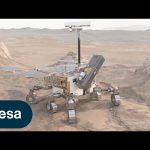
Watch the second episode of the ExoMars Rosalind Franklin rover mission – Europe’s ambitious exploration journey to search for past and present signs of life on Mars.
This episode starts with Rosalind searching for traces of life below the martian surface using a ground penetrating radar and a set of cameras.
The rover will dig, collect, and investigate the chemical composition of material collected by a drill. Rosalind Franklin will be the first rover to reach a depth of up to two metres deep below the surface, acquiring samples that have been protected from surface radiation and extreme temperatures.
Rosalind Franklin uses the WISDOM radar to help scientists on Earth decide where to drill. Besides identifying the most promising targets for sampling, WISDOM will help the rover avoid potential hazards, such as the presence of buried rocks that could damage the drill. The scientific eyes of the rover are set on the Panoramic Camera suite known as PanCam. The Close-UP Imager (CLUPI) sits on the side of the drill box, a camera designed to acquire high-resolution, colour, close-up images of outcrops, rocks and soils. PanCam and CLUPI will help scientists find the most promising spots to drill. These instruments can also investigate very fine outcrop details and image drill samples before they are sent into the rover’s laboratory. After the rover retracts its drill, the sample is in a special chamber at the tip. Under the reduced martian gravity (38% of Earth’s), the material drops onto a special “hand” that the rover can extend to the front to collect drill samples. The mission will serve to demonstrate key technologies that Europe needs to master for future planetary exploration missions.
The ExoMars rover series show the rover and martian landscapes as true to reality as possible for a simulation.
Check ESA’s ExoMars website and our frequently asked questions for the latest updates.
Credits: ESA – European Space Production: Mlabspace for ESA 3D animation: ESA/Mlabspace Video footage: ESA/NASA, Shutterstock Music composed by Valentin Joudrier
★ Subscribe: http://bit.ly/ESAsubscribe and click twice on the bell button to receive our notifications.
We are Europe’s gateway to space. Our mission is to shape the development of Europe’s space capability and ensure that investment in space continues to deliver benefits to the citizens of Europe and the world. Check out https://www.esa.int/ to get up to speed on everything space related.
🚩 Visit https://betterhelp.com/historymarche or use “historymarche” when you sign up to get a special discount on your first month of therapy with our sponsor BetterHelp. 🚩 If you have any questions about the brand relating to how the therapists are licensed, their privacy policy, or therapist compensation model, check out this FAQ: https://www.betterhelp.com/your-questions-answered/
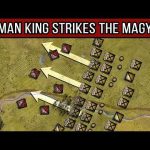
📚 After defeating an East Francian army at Pressburg in 907, the Magyars ravage Swabia, Bavaria, and Thuringia, obliging German princes to buy them off or incorporate them into their armies. But when a brave duke in Bavaria ambushes a Magyar army in 909, he shows that they can be defeated. This stirs the 17-year-old king Louis the Child into action. No more tribute is to be paid to the nomads and a military campaign is mounted to not only drive the Magyars out of East Francia, but out of Europe as well…
🚩 If you like what you see, consider supporting my work on Patreon and you get ad-free early access to my videos for as little as $1 https://www.patreon.com/historymarche — You can also show your support by subscribing to the channel and liking the video. Thank you for watching.
📢 Narrated by David McCallion
🎼 Music: Epidemic Sound Filmstro
📚 Sources: Edwards, Sean J. A., Swarming on the Battlefield: Past, Present, and Future (2000) The Battle of Lechfeld, 910 from Antapodosis, Book II (10th c.) Reuter, Timothy. Germany in the Early Middle Ages 800–1056. (1991) Balasz, György, and Karoly Szelényi. The Magyars: The Birth of a European Nation (1989)