Phil tries to bend the power of sound to his will by making the loudest sound he can. Plus: make cornstarch mud dance, shatter a wine glass and make patterns with sand – all with the power of sound! This episode is jampacked with electrifying experiments focusing on the power of sound and electricity
The 2024 Olympic Games officially began in Paris, France on July 26, with athletes coming from around the world to compete.
Meanwhile, *above* the world — on our orbiting laboratory, the International Space Station — NASA’s astronauts are getting into the Olympic spirit. Check out their training montage from space, followed by a message to Earth from astronaut Matt Dominick.
📚 Sources: Thermopylae 480 BC, Last Stand of the 300, (2007) Nic Fields (Osprey Publishing). ISBN: 978 184176 180 0 Thermopylae: The Battle That Changed The World (2013) Paul Cartledge (Pan Books). ISBN: 978-0-330-47562-4
The first half of 2024 saw hundreds of people across Europe building, cajoling, shipping, lowering, integrating, securing and protecting the precious pieces and parts that came together to create Ariane 6 – Europe’s new heavy-lift rocket.
Huge engines, boosters and outer shells met tiny screws, electrical boards and masses of supercooled fuel. All this came together at Europe’s Spaceport in French Guiana, for the spectacular first launch of Ariane 6 on 9 July 2024, restoring Europe’s access to space.
Get a glimpse at the teamwork, skill and care that went into this moment over many months, in this montage of Ariane 6 images, videos and timelapse photography spanning 30 January to 9 July 2024.
★ Subscribe: http://bit.ly/ESAsubscribe and click twice on the bell button to receive our notifications.
We are Europe’s gateway to space. Our mission is to shape the development of Europe’s space capability and ensure that investment in space continues to deliver benefits to the citizens of Europe and the world. Check out https://www.esa.int/ to get up to speed on everything space related.
Steve Spangler is a bestselling author, STEM educator and Emmy award-winning television personality with more than 2,100 television appearances to his credit. Steve appeared as a regular guest on the Ellen DeGeneres Show from 2007-2022. Learn more about Steve at https://stevespangler.com/about-steve-spangler/
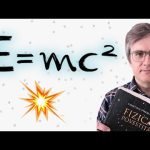
00:00:32 – INTRODUCERE 00:04:28 – Relaţia dintre energie şi masă 00:08:00 – Energia din câmpul electromagnetic 00:12:55 – Legătura dintre energie şi masă.
Einstein a intuit dependența masei unui corp de viteza sa din structura spațiu-timpului. Pe măsură ce viteza unui corp se apropie de cea a luminii, masa lui tinde la infinit, făcând imposibilă accelerarea sa peste această limită. Aceasta relație a fost confirmată experimental în 1908 de Alfred Bucherer, care a demonstrat că masa unui electron crește pe măsură ce viteza sa se apropie de viteza luminii.
Einstein a extins noțiunea de vector de viteză la un spațiu-timp patru-dimensional, demonstrând că masa unui corp în mișcare crește cu viteza. Această masă relativistă, m, este masa de repaus m0 înmulțită cu factorul gamma, legat de dilatarea timpului. Rezultatul este că impulsul unei particule devine mv, nu m0v.
Ecuația E=mc^2 implică faptul că energia unei particule este direct proporțională cu masa sa. Aceasta a fost verificată prin măsurători precise, arătând că energia necesară pentru a accelera un corp se reflectă în creșterea masei sale relativiste. Relația dintre masă și energie devine evidentă în procesul de fuziune nucleară, unde masa totală a nucleului rezultat este mai mică decât suma maselor componentelor sale inițiale, din cauza energiei eliberate în timpul fuziunii.
Experimentele au confirmat că masa unui nucleu fuzionat este mai mică decât suma maselor protonilor și neutronilor separați, demonstrând echivalența masă-energie cu o precizie foarte mare. Această echivalență a permis dezvoltarea reactorilor nucleari și a armelor nucleare, evidențiind potențialul enorm de energie stocat în materie.
Einstein a mai sugerat că energia stocată în câmpul electromagnetic al unui electron în mișcare contribuie la masa sa totală, un concept care a fost confirmat prin modele teoretice și calcule matematice. Astfel, masa unui corp nu poate fi separată de energia câmpului său electromagnetic.
În concluzie, principiul echivalenței masă-energie, enunțat de Einstein, este unul fundamental în înțelegerea fizicii moderne. Această relație nu doar explică cum masa unui corp crește odată cu viteza, dar și cum energia stocată în masă poate fi eliberată, având aplicații practice și teoretice majore în domeniul nuclear și al fizicii particulelor.”
Drones are being raced at Delft University of Technology’s ‘Cyber Zoo’ to test the performance of neural-network-based AI control systems planned for next-generation space missions.
The drones have to complete a course as fast as possible, showing how quickly and efficiently they can react, just like a spacecraft would need to in space.
Normally, spacecraft manoeuvres are planned on the ground and then uploaded to the spacecraft to be carried out. But space is full of unpredictable events! Whenever the spacecraft deviates from its planned path for whatever reason, it has to use a lot of fuel and resources to get back on track.
Instead, with this alternative AI control system that’s being tested here, the spacecraft would continuously recalculate and adjusts its path in real-time from wherever it is. This approach would be much more efficient because the spacecraft could handle unexpected changes better and use fewer resources to stay on course.
Steve Spangler is a bestselling author, STEM educator and Emmy award-winning television personality with more than 2,100 television appearances to his credit. Steve appeared as a regular guest on the Ellen DeGeneres Show from 2007-2022. Learn more about Steve at https://stevespangler.com/about-steve-spangler/
In 2016, scientists spotted Kamo’oalewa ,a 40 to 100 metre object, during a planetary defence survey to discover space rocks that could possibly hit our planet.
At first, the object appeared to orbit Earth in a similar way to our Moon. But astronomers found it was actually orbiting the Sun on a very similar path to Earth. So, Kamo’oalewa was demoted from a potential new moon to a near-Earth asteroid and a quasi-satellite to Earth.
However, the asteroid’s connection to the Moon could run deeper. The object’s Earth-like orbit and Moon-like composition may indicate that it was created when a chunk of the Moon was thrown into space by an asteroid impact.
Discover science with a 2-story wooden ramp, friction experiments, building an arched bridge, creating strong structures, a giant house of cards, and egg strength tests!
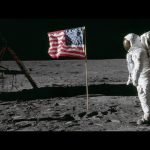
“Space can unite a troubled country in troubled times. And no moment united the country quite like when the Eagle landed, as all of planet Earth watched from below.”
For the 55th anniversary of the Apollo 11 Moon landing, and in the midst of times that recall the era when the Moon landing took place, NASA Administrator Bill Nelson shares a message on the special power of space to bring people together—and the hope that this anniversary will be a time for reflection and healing.
Steve Spangler is a bestselling author, STEM educator and Emmy award-winning television personality with more than 2,100 television appearances to his credit. Steve appeared as a regular guest on the Ellen DeGeneres Show from 2007-2022. Learn more about Steve at https://stevespangler.com/about-steve-spangler/
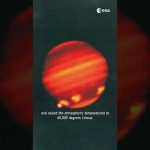
30 years ago, the comet, Shoemaker-Levy 9, pounded into the southern hemisphere of Jupiter, leaving dark scars in the planet’s atmosphere that persisted for several weeks.
The remarkable event was the first direct observation of an extraterrestrial collision in the Solar System.
Huge plumes up to 3 thousand kilometres high were created by the impact and raised the atmospheric temperatures to 40,000 degrees Celsius.
Almost 10 years after the collision, our Herschel telescope found conclusive evidence that Shoemaker-Levy 9 was the origin of water found in Jupiter’s upper atmosphere. Our Juice mission launched last year will map the distribution of Jupiter’s atmospheric ingredients in even greater detail.
This kind of collision was more frequent in the early solar system but today, something as large as Shomaker-Levy impacts Earth only once in a million years.
However, it is important we can protect ourselves from such space hazards which is why we are carrying out several projects dedicated to improving our ability to detect, track and mitigate potentially hazardous asteroids and comets, such as our Hera mission currently planned to launch later this year and our new mission, Ramses, which will to rendezvous with the asteroid Apophis.
📹 ESA – European Space Agency 📸 HA. Weaver, T. ESmith (Space Telescope Science Institute), and NASA/ESA 📸 ESA/Hubble (M. Kornmesser & L. L. Christensen) 📸 H. Hammel, MIT and NASA/ESA 📸 Calar Alto Observatory/Max Planck Institute for Astronomy, Heidelberg, Germany
Phil tries to maximize a self-propelling boat using water and gravity. This science-packed episode discusses water, fluids, heavy air, fluid sand, Archimedes, and the metric system. It also delves into polymers, explaining their presence in various materials including plastics, fabrics, and DNA, which are contained in a fully maxed out tub of slime.
Steve Spangler is a bestselling author, STEM educator and Emmy award-winning television personality with more than 2,100 television appearances to his credit. Steve appeared as a regular guest on the Ellen DeGeneres Show from 2007-2022. Learn more about Steve at https://stevespangler.com/about-steve-spangler/
Twenty years ago, astronomers discovered Apophis, an asteroid once feared to collide with Earth in 2029. Thanks to incredible advancements in science, the threat is now ruled out.
However, Apophis will still pass closer than some satellites currently orbiting Earth and will be visible with the naked eye.
This rare event is a great opportunity to study Apophis up close and prepare for future asteroid encounters.
Ever wanted to build a bridge out of pasta? It works better than you’d think. What about a pasta bridge big enough for Phil to walk across? Learn how to build a sandcastle you can stand on! Discover what makes boats float and watch as Phil figures out how to build a human-sized tin foil boat. Plus, Phil gets into a tub full of the main ingredient in diapers, all for science!
Steve Spangler is a bestselling author, STEM educator and Emmy award-winning television personality with more than 2,100 television appearances to his credit. Steve appeared as a regular guest on the Ellen DeGeneres Show from 2007-2022. Learn more about Steve at https://stevespangler.com/about-steve-spangler/
Asigură-ți confidețialitatea cu Surfshark! Introdu codul “presura” pentru 4 luni extra gratuite, de la Surfshark:👇 https://surfshark.deals/presura 00:01:08 – Pitice albe 00:03:06 – Stele neutronice 00:04:34 – Pulsari 00:05:58 – Momentul sponzorului 00:06:56 – Gauri negre 00:10:22 – Stele cuarc 🔸 SUSȚINE ȘI TU DIRECT ACTIVITATEA MEA ►https://patreon.com/cristianpresura 🔸 DEVINO YOUTUBE MEMBRU ►https://bit.ly/35Q8vXC 🔸 PAYPAL ► paypal.me/cristianpresura 🔸 DONORBOX ► https://donorbox.org/cristianpresura
#stiinta #fizica #science #tehnologie #technology #cristianpresura #adam algoritm:”Imediat după Big Bang, universul observabil era foarte dens. Hidrogenul format la câteva sute de mii de ani după acest eveniment a devenit combustibilul primelor stele, care au ars rapid și fierbinte. În miezul acestor stele s-au format atomi din ce în ce mai grei, proces care a continuat până la explozia acestora ca supernove. Aceste supernove au dus la formarea de noi generații de stele, inclusiv Soarele nostru.
Stelele s-au diferențiat în funcție de cantitatea de hidrogen disponibilă: stelele cu mai puțin hidrogen au devenit pitice roșii, care ard mocnit mii de miliarde de ani, iar cele cu mai mult hidrogen au devenit pitice galbene, ca Soarele. Când stelele masive și-au epuizat combustibilul, au explodat din nou ca supernove, lăsând în urmă nuclee dense, precum piticele albe, stelele neutronice și găurile negre stelare.
Piticele albe sunt rămășițele gigantelor roșii, extrem de dense, având o dimensiune comparabilă cu cea a Pământului, dar o masă similară cu a Soarelui. Aceste stele se răcesc treptat pe parcursul miliardelor de ani, devenind eventual pitice negre. Stelele neutronice, formate din neutroni compacți, sunt remarcabile prin densitatea lor extremă, fiecare linguriță de materie cântărind câteva miliarde de tone.
Pulsarii, o categorie specială de stele neutronice, se rotesc rapid și emit radiație electromagnetică, servind ca unelte precise pentru cercetarea fizicii universului. Găurile negre, rezultate din prăbușirea stelelor masive, au o gravitație atât de puternică încât nici lumina nu poate scăpa din ele. Limita de la care orice obiect este înghițit definitiv de o gaură neagră se numește orizontul evenimentelor. La început, existența găurilor negre a fost dedusă prin observarea efectelor lor asupra luminii și obiectelor din jur. De exemplu, când stelele din vecinătatea unei găuri negre sunt distruse de gravitația sa, praful stelar rămas formează un disc de acreție care poate fi observat.
În plus, există și stelele quarc, ipotetice, mai dense decât stelele neutronice. Dacă ar fi descoperite, acestea ar putea oferi noi perspective asupra interacțiunilor dintre particulele elementare.
Aceste diferite tipuri de stele oferă perspective fascinante asupra evoluției stelare și galactice, fiind esențiale pentru înțelegerea universului nostru.”
Two university CubeSats, 3Cat4 and ISTSat-1, are catching a ride to space on the inaugural flight of Ariane 6. Ahead of launch, the student teams traveled to Exolaunch facilities in Berlin to integrate their satellites, a crucial milestone ahead of launch.
We are Europe’s gateway to space. Our mission is to shape the development of Europe’s space capability and ensure that investment in space continues to deliver benefits to the citizens of Europe and the world. Check out https://www.esa.int/ to get up to speed on everything space related.
The source of the solar wind is no longer a mystery thanks to our trailblazing Solar Orbiter mission. This success opens a new way for solar physicists to study the source regions of the solar wind.
🎥 ESA – European Space Agency 📸 ESA & NASA /Solar Orbiter/EUI & SPICE
Join Phil on his thrilling journey to engineer the most powerful electromagnet, unravel the enigma of ferrofluids, and conquer the treacherous path to the North Pole using only a compass. Be captivated by a series of captivating engineering feats, including constructing intricate structures with gumdrops, striving for the highest cup stacking record, and crafting innovative designs with pencils.
Steve Spangler is a bestselling author, STEM educator and Emmy award-winning television personality with more than 2,100 television appearances to his credit. Steve appeared as a regular guest on the Ellen DeGeneres Show from 2007-2022. Learn more about Steve at https://stevespangler.com/about-steve-spangler/
Europe’s new rocket Ariane 6 powered into space on 9 July 2024 from a newly built dedicated launch pad in French Guiana. Liftoff occurred at 16:00 local time (20:00 BST, 21:00 CEST).
Europe’s new rocket Ariane 6 powered Europe into space taking with it a varied selection of experiments, satellites, payload deployers and reentry demonstrations that represent thousands across Europe, from students to industry and experienced space actors.
This inaugural flight, designated VA262, is a demonstration flight to show the capabilities and prowess of Ariane 6 in escaping Earth’s gravity and operating in space. Nevertheless, it had several passengers on board.
Ariane 6 was built by prime contractor and design authority ArianeGroup. In addition to the rocket, the liftoff demonstrated the functioning of the launch pad and operations on ground at Europe’s Spaceport. The new custom-built dedicated launch zone was built by France’s space agency CNES and allows for a faster turnover of Ariane launches.
Ariane 6 is Europe’s newest heavy-lift rocket, designed to provide great power and flexibility at a lower cost than its predecessors. The launcher’s configuration – with an upgraded main stage, a choice of either two or four powerful boosters and a new restartable upper stage – will provide Europe with greater efficiency and possibility as it can launch multiple missions into different orbits on a single flight, while its upper stage will deorbit itself at the end of mission.
ESA’s main roles in the Ariane 6 programme is as contracting authority – managing the budget from Member States participating in the Ariane 6 development programme; and as launch system architect – ensuring that the rocket and launch pad infrastructure work together.
Ariane 6 is the latest in Europe’s Ariane rocket series, taking over from Ariane 5 featuring a modular and versatile design that can launch missions from low-Earth orbit and farther out to deep space.
Credits: ESA – European Space Agency
★ Subscribe: http://bit.ly/ESAsubscribe and click twice on the bell button to receive our notifications.
We are Europe’s gateway to space. Our mission is to shape the development of Europe’s space capability and ensure that investment in space continues to deliver benefits to the citizens of Europe and the world. Check out https://www.esa.int/ to get up to speed on everything space related.
Liftoff is now scheduled no earlier than 16:00 local time (21:00 CEST), with the live stream starting at 15:30 local time (20:30 CEST).
This is a big moment for Europe, as the rocket will ensure our guaranteed, autonomous access to space – and all of the science, Earth observation, technology development and commercial possibilities that it entails. With many features brand new to Ariane 6, we’ll be able to carry more and take it further, while sustainably disposing of the launcher’s upper stage to prevent it becoming space debris.
Phase 1: From ground to orbit
The first phase of Ariane 6’s flight will launch the rocket off Earth and into space with the thrust from the main stage powered by the Vulcain engine together with the force from the two powerful P120C boosters. Phase 1 includes the separation of the main stage from the upper stage and the first boost of the upper stage’s Vinci engine, which inserts it and its passengers into an elliptical orbit 300 by 700 km above Earth. The first flight of Ariane 6 will have three phases, each of which will demonstrate various abilities for Europe’s newest heavy-lift rocket.
Phase 2: Upper stage reignition and satellite deployment
The next phase is when Ariane 6’s newest feature is put to the test: reignition of the upper stage. In phase 2, the Vinci engine will re-fire, changing Ariane 6’s orbit from elliptical to circular. This will be followed by the deployment of the rocket’s eight satellites and the activation of its five onboard experiments.
Phase 3 : Tech demos, deorbiting and capsule separation
The final phase in Ariane 6’s inaugural flight will be to push the cryogenic upper stage to its limits and validate its ability to perform under microgravity conditions. The final phase will initiate the controlled deorbit of the upper stage back through Earth’s atmosphere over the South Pacific ‘NEMO point’, to prevent it from becoming space debris. Moments later, the two reentry capsules onboard will separate from the upper stage, and all three will make their safe descent back home.
We are Europe’s gateway to space. Our mission is to shape the development of Europe’s space capability and ensure that investment in space continues to deliver benefits to the citizens of Europe and the world. Check out https://www.esa.int/ to get up to speed on everything space related.
Liftoff is now scheduled no earlier than 16:00 local time (21:00 CEST), with the live stream starting at 15:30 local time (20:30 CEST).
This is a big moment for Europe, as the rocket will ensure our guaranteed, autonomous access to space – and all of the science, Earth observation, technology development and commercial possibilities that it entails. With many features brand new to Ariane 6, we’ll be able to carry more and take it further, while sustainably disposing of the launcher’s upper stage to prevent it becoming space debris.
Phase 1: From ground to orbit
The first phase of Ariane 6’s flight will launch the rocket off Earth and into space with the thrust from the main stage powered by the Vulcain engine together with the force from the two powerful P120C boosters. Phase 1 includes the separation of the main stage from the upper stage and the first boost of the upper stage’s Vinci engine, which inserts it and its passengers into an elliptical orbit 300 by 700 km above Earth. The first flight of Ariane 6 will have three phases, each of which will demonstrate various abilities for Europe’s newest heavy-lift rocket.
Phase 2: Upper stage reignition and satellite deployment
The next phase is when Ariane 6’s newest feature is put to the test: reignition of the upper stage. In phase 2, the Vinci engine will re-fire, changing Ariane 6’s orbit from elliptical to circular. This will be followed by the deployment of the rocket’s eight satellites and the activation of its five onboard experiments.
Phase 3 : Tech demos, deorbiting and capsule separation
The final phase in Ariane 6’s inaugural flight will be to push the cryogenic upper stage to its limits and validate its ability to perform under microgravity conditions. The final phase will initiate the controlled deorbit of the upper stage back through Earth’s atmosphere over the South Pacific ‘NEMO point’, to prevent it from becoming space debris. Moments later, the two reentry capsules onboard will separate from the upper stage, and all three will make their safe descent back home.
We are Europe’s gateway to space. Our mission is to shape the development of Europe’s space capability and ensure that investment in space continues to deliver benefits to the citizens of Europe and the world. Check out https://www.esa.int/ to get up to speed on everything space related.
Liftoff is now scheduled no earlier than 16:00 local time (21:00 CEST), with the live stream starting at 15:30 local time (20:30 CEST).
This is a big moment for Europe, as the rocket will ensure our guaranteed, autonomous access to space – and all of the science, Earth observation, technology development and commercial possibilities that it entails. With many features brand new to Ariane 6, we’ll be able to carry more and take it further, while sustainably disposing of the launcher’s upper stage to prevent it becoming space debris.
Phase 1: From ground to orbit
The first phase of Ariane 6’s flight will launch the rocket off Earth and into space with the thrust from the main stage powered by the Vulcain engine together with the force from the two powerful P120C boosters. Phase 1 includes the separation of the main stage from the upper stage and the first boost of the upper stage’s Vinci engine, which inserts it and its passengers into an elliptical orbit 300 by 700 km above Earth. The first flight of Ariane 6 will have three phases, each of which will demonstrate various abilities for Europe’s newest heavy-lift rocket.
Phase 2: Upper stage reignition and satellite deployment
The next phase is when Ariane 6’s newest feature is put to the test: reignition of the upper stage. In phase 2, the Vinci engine will re-fire, changing Ariane 6’s orbit from elliptical to circular. This will be followed by the deployment of the rocket’s eight satellites and the activation of its five onboard experiments.
Phase 3 : Tech demos, deorbiting and capsule separation
The final phase in Ariane 6’s inaugural flight will be to push the cryogenic upper stage to its limits and validate its ability to perform under microgravity conditions. The final phase will initiate the controlled deorbit of the upper stage back through Earth’s atmosphere over the South Pacific ‘NEMO point’, to prevent it from becoming space debris. Moments later, the two reentry capsules onboard will separate from the upper stage, and all three will make their safe descent back home.
We are Europe’s gateway to space. Our mission is to shape the development of Europe’s space capability and ensure that investment in space continues to deliver benefits to the citizens of Europe and the world. Check out https://www.esa.int/ to get up to speed on everything space related.
Europe’s new rocket Ariane 6 powered Europe into space taking with it a varied selection of experiments, satellites, payload deployers and reentry demonstrations that represent thousands across Europe, from students to industry and experienced space actors.
This inaugural flight, designated VA262, is a demonstration flight to show the capabilities and prowess of Ariane 6 in escaping Earth’s gravity and operating in space. Nevertheless, it had several passengers on board.
Ariane 6 was built by prime contractor and design authority ArianeGroup. In addition to the rocket, the liftoff demonstrated the functioning of the launch pad and operations on ground at Europe’s Spaceport. The new custom-built dedicated launch zone was built by France’s space agency CNES and allows for a faster turnover of Ariane launches.
Ariane 6 is Europe’s newest heavy-lift rocket, designed to provide great power and flexibility at a lower cost than its predecessors. The launcher’s configuration – with an upgraded main stage, a choice of either two or four powerful boosters and a new restartable upper stage – will provide Europe with greater efficiency and possibility as it can launch multiple missions into different orbits on a single flight, while its upper stage will deorbit itself at the end of mission.
ESA’s main roles in the Ariane 6 programme is as contracting authority – managing the budget from Member States participating in the Ariane 6 development programme; and as launch system architect – ensuring that the rocket and launch pad infrastructure work together.
Ariane 6 is the latest in Europe’s Ariane rocket series, taking over from Ariane 5 featuring a modular and versatile design that can launch missions from low-Earth orbit and farther out to deep space.
★ Subscribe: http://bit.ly/ESAsubscribe and click twice on the bell button to receive our notifications.
We are Europe’s gateway to space. Our mission is to shape the development of Europe’s space capability and ensure that investment in space continues to deliver benefits to the citizens of Europe and the world. Check out https://www.esa.int/ to get up to speed on everything space related.
Europe’s new rocket Ariane 6 powered Europe into space taking with it a varied selection of experiments, satellites, payload deployers and reentry demonstrations that represent thousands across Europe, from students to industry and experienced space actors.
This inaugural flight, designated VA262, is a demonstration flight to show the capabilities and prowess of Ariane 6 in escaping Earth’s gravity and operating in space. Nevertheless, it had several passengers on board.
Ariane 6 was built by prime contractor and design authority ArianeGroup. In addition to the rocket, the liftoff demonstrated the functioning of the launch pad and operations on ground at Europe’s Spaceport. The new custom-built dedicated launch zone was built by France’s space agency CNES and allows for a faster turnover of Ariane launches.
Ariane 6 is Europe’s newest heavy-lift rocket, designed to provide great power and flexibility at a lower cost than its predecessors. The launcher’s configuration – with an upgraded main stage, a choice of either two or four powerful boosters and a new restartable upper stage – will provide Europe with greater efficiency and possibility as it can launch multiple missions into different orbits on a single flight, while its upper stage will deorbit itself at the end of mission.
ESA’s main roles in the Ariane 6 programme is as contracting authority – managing the budget from Member States participating in the Ariane 6 development programme; and as launch system architect – ensuring that the rocket and launch pad infrastructure work together.
Ariane 6 is the latest in Europe’s Ariane rocket series, taking over from Ariane 5 featuring a modular and versatile design that can launch missions from low-Earth orbit and farther out to deep space.
★ Subscribe: http://bit.ly/ESAsubscribe and click twice on the bell button to receive our notifications.
We are Europe’s gateway to space. Our mission is to shape the development of Europe’s space capability and ensure that investment in space continues to deliver benefits to the citizens of Europe and the world. Check out https://www.esa.int/ to get up to speed on everything space related.
Steve Spangler is a bestselling author, STEM educator and Emmy award-winning television personality with more than 2,100 television appearances to his credit. Steve appeared as a regular guest on the Ellen DeGeneres Show from 2007-2022. Learn more about Steve at https://stevespangler.com/about-steve-spangler/
Our ExoMars and Mars Express missions have spotted water frost for the first time on top of the Tharsis volcanoes: the tallest volcanoes not only on Mars but in the Solar System.
It was detected near Mars’s equator, a part of the planet where it was thought impossible for frost to exist.
The researchers propose that air circulates in a peculiar way above Tharsis; this creates a unique microclimate within the calderas of the volcanoes there that allows patches of frost to form.
🎥 ESA – European Space Agency 📸 ESA/TGO/CaSSIS 📸 ESA/DLR/FU Berlin 📸 NASA/MGS/MOLA Science Team, FU Berlin
In the second episode of this docu series, we take a closer look into what it took to build ESA’s Young Professional Satellite (YPSat). YPSat’s mission objectives are to capture the key moments of Ariane 6’s inaugural flight and take in-orbit pictures of Earth and space. To achieve this, the satellite requires the multiple sub-systems to work in harmony and adhere to a pre-defined mission sequence.
This episode zooms in four of the sub-systems: the Wake-Up System (WUS), Battery, On-Board Computer (OBC) and Telecommunications.
Running at ultra low power, the WUS circuit board was designed, tested and manufactured specifically for YPSat. Created to meet Arianespace’s requirement to be operational on the launchpad for 45 days, its function is to wake up the satellite during the launch to record the fairing separation.
Once the WUS detects the launch, it will signal to the battery to turn on the rest of the satellite. The battery has the challenge to maintain enough charge to power the remainder of the components.
The On-Board Computer (OBC) then takes the lead to orchestrate the rest of the mission. The OBC acts as the brain of the satellites; it sends commands to all the other sub-systems, including sending the commands to record the videos and pictures.
Once these are captured, the Telecommunications team takes over to coordinate with the ground stations to send the data back on Earth so it can be decoded into clear images. The challenge is to ensure enough communication between the satellite and Earth so the data is properly retrieved before the YPSat disintegrates upon re-entry.
One day prior launch, YPSat is now sitting in Ariane 6’s capsule. To get there, the satellite was subject to rigorous tests and certifications to meet the stringent standards of the European Space Agency and Arianespace. Will YPSat accomplish its mission objectives? We’ll find out in the next episode.
—————————————————
Credits: Directed and produced by Chilled Winston: https://chilledwinston.com/ and Emma de Cocker Powered by ESA – European Space Agency Music from Epidemic Sound
—————————————————
Chapters: 00:00 – Introduction 01:12 – The Wake-Up System 04:20 – The Battery 07:01 – The On-Board Computer 08:38 – Telecommunications 13:12 – Outro
★ Subscribe: http://bit.ly/ESAsubscribe and click twice on the bell button to receive our notifications.
We are Europe’s gateway to space. Our mission is to shape the development of Europe’s space capability and ensure that investment in space continues to deliver benefits to the citizens of Europe and the world. Check out https://www.esa.int/ to get up to speed on everything space related.
🥏 Visit https://80000hours.org/historymarche and start planning a career that is meaningful, fulfilling, and helps solve one of the world’s most pressing problems. Make your 80,000 hours count.
📚 Sources: “Corpus Draculianum” – by Thomas Bohn, Adrian Gheorghe, Christof Paulus, Albert Weber “Roots of Balkanization” – by Ion Grumeza “Dracula” – by Matei Cazacu “Mehmed the Conqueror and His Time” – by Franz Babinger “Vlad der Pfähler – Dracula” – by Thomas M. Bohn, Rayk Einax, Stefan Rohdewald
Join Phil as he defies gravity and takes on exciting challenges, including maxing out a hoop glider, doing an egg drop with a pumpkin, mesmerizing hovering helium balloons, and demonstrating a 500-liter water-powered car. Watch how he flies on jets of water, carves a pumpkin in just 15 seconds with a pressure washer, and hurls pumpkins using a giant trebuchet. Don’t miss out on this thrilling anti-gravity adventure!
Watch live video from the International Space Station, including inside views when the crew aboard the space station is on duty. Views of Earth are also streamed from an external camera located outside of the space station. During periods of signal loss due to handover between communications satellites, a blue screen is displayed.
The space station orbits Earth about 250 miles (425 kilometers) above the surface. An international partnership of five space agencies from 15 countries operates the station, and it has been continuously occupied since November 2000. It’s a microgravity laboratory where science, research, and human innovation make way for new technologies and research breakthroughs not possible on Earth. More: https://go.nasa.gov/3CkVtC8
Did you know you can spot the station without a telescope? It looks like a fast-moving star, but you have to know when to look up. Sign up for text messages or email alerts to let you know when (and where) to spot the station and wave to the crew: https://spotthestation.nasa.gov