Steve Spangler is a bestselling author, STEM educator and Emmy award-winning television personality with more than 2,100 television appearances to his credit. Steve appeared as a regular guest on the Ellen DeGeneres Show from 2007-2022. Learn more about Steve at https://stevespangler.com/about-steve-spangler/
🚩 Click https://betterhelp.com/historymarche for 10% off your first month of therapy with our sponsor BetterHelp. 🚩 Join over 4 million people who’ve met with a therapist on BetterHelp and started living a healthier, happier life.
📚 Big thanks to Dr.Byron Waldron and Srpske Bitke for working with me on this video.
🎼 Music: Epidemic Sound Filmstro
📚 Sources: Norman Davies – God’s Playground, Vol. 1: The Origins to 1795 Pat Engel – The Realm of St Stephen: A History of Medieval Hungary, 895-1526 Colin Imber – The Crusade of Varna, 1443-1445 (Crusade Texts in Translation) John Jefferson – The Holy Wars of King Wladislas and Sultan Murad: The Ottoman-Christian Conflict from 1438-1444 Samuel Astley Dunham – The History of Poland Camile Muresanu – John Hunyadi: Defender of Christendom
https://www.ecosolaris.ro/, folosește codul “presura15” și vei avea o reducere de 15% la comenzile online achitate cu cardul. Pentru o ofertă personalizată va rugam sa ne contactați la oferta@ecosolaris.ro 00:01:08 – Ce este HAARP? 00:03:38 – Mituri despre HAARP 00:07:34 – Momentul sponzorului 00:11:17 – HAARP în România?
#stiinta #fizica #science #tehnologie #technology #cristianpresura#ad algoritm:” “Acum avem HAARP și în România!” Recent, o postare susținea că “acum avem HAARP și în România!!!” Aceasta continua explicând că HAARP este folosit pentru manipularea vremii și declanșarea de explozii tectonice, amintind de cutremurele din Gorj. Este sugerat că HAARP ar putea cauza dezechilibre ecologice sau ar putea fi folosit ca formă de terorism ecologic.
Ce este HAARP? HAARP (High-Frequency Active Auroral Research Program) este un proiect american de cercetare a ionosferei, situat în Alaska. Sistemul constă dintr-o rețea de 180 de antene întinse pe o suprafață de 12 hectare. Ionosfera, la câteva sute de kilometri deasupra Pământului, este o regiune atmosferică cu un grad ridicat de ionizare datorită interacțiunilor cu razele cosmice. Scopul principal al HAARP este de a direcționa unde radio de câțiva megawați către ionosferă pentru a-i studia proprietățile. Energia emisă este mult mai mică decât radiația ultravioletă de la soare și căldura solară.
Mituri și realități despre HAARP HAARP este adesea subiectul teoriilor conspiraționiste, care îl acuză de diverse acțiuni periculoase.
Provocarea cutremurelor: Energia emisă de HAARP este prea mică pentru a declanșa cutremure. Undele radio nu penetrează scoarța Pământului suficient de adânc pentru a afecta zonele de focar ale cutremurelor.
Dezintegrarea obiectelor: Puterea de 3 MW a antenelor HAARP nu este concentrată ca un laser, ci disipată. La distanțe de câțiva kilometri, densitatea de putere este insuficientă pentru a încălzi chiar și o muscă.
Schimbarea tiparelor cerebrale: Undele radio emise de HAARP sunt similare cu cele ale stațiilor radio obișnuite și nu au fost dovedite a influența creierul uman.
Provocarea bolilor biologice: Fasciculul de unde radio este îndreptat spre ionosferă și nu afectează locuitorii din apropiere. Reflecția undelor la sol are o densitate de energie prea mică pentru a provoca boli.
Crearea găurilor în ionosferă: HAARP poate crește temperatura ionosferei pe o grosime de câțiva metri, dar restul stratului atmosferic rămâne neafectat. Protecția principală împotriva razelor cosmice este câmpul magnetic al Pământului, nu ionosfera.
Fulgere artificiale: Până acum, nu există dovezi că undele radio de la HAARP ar putea produce fulgere sau ploi artificiale. Pentru a genera un fulger, este necesar un nor preexistent.
Detectarea și distrugerea navelor extraterestre: Energia undelor radio emise de HAARP este mult prea mică pentru a afecta navele extraterestre.
Influențarea conștiinței umane: Undele radio de câțiva megahertzi nu pot manipula conștiința umană. În fiecare moment, corpul uman este traversat de unde radio fără a fi afectat.”
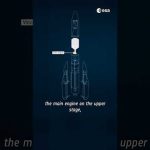
Europe’s newest rocket Ariane 6 has an upper stage engine, Vinci, that can restart up to four more times once in space!
This allows Ariane 6 to reach a larger range of orbits and deliver multiple payloads on a single launch.
Vinci does this using an auxiliary propulsion unit that heats up the same liquid oxygen and hydrogen fuel used by the main engine. It then turns it into gas that is expelled from the upper stage to provide a small amount of thrust. The effect is barely noticeable, but the forces are just enough to keep the liquid fuel at the bottom of the tank and ready for reignition.
📹 ESA – European Space Agency 📸 ESA – European Space Agency
Steve Spangler is a bestselling author, STEM educator and Emmy award-winning television personality with more than 2,100 television appearances to his credit. Steve appeared as a regular guest on the Ellen DeGeneres Show from 2007-2022. Learn more about Steve at https://stevespangler.com/about-steve-spangler/
Calling all creative scientists! Phil from Science Max is here to show you how to transform ordinary objects into extraordinary inventions. This compilation episode is bursting with mind-blowing ideas that prove science can be fun (and frugal!). First, Phil sets sail on a wild ride with a series of mousetrap-powered boats! Get ready to learn about propulsion and inertia as Phil builds a single-trap boat and then takes things to the extreme with a mousetrap armada. Next, we blast off with a fizzy take on rocketry using the surprising science behind antacids (don’t worry, these rockets are more about cool experiments than conquering space!). Finally, Phil gets architectural with a sugar cube bridge challenge! Can he build a structure strong enough to support his weight? This episode is packed with inspiration to turn your everyday trash into scientific treasures. So grab some recyclables, get creative, and get ready to be amazed!
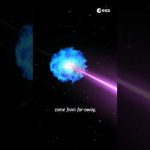
In November 2023 our Integral telescope spotted a sudden explosion from a rare object. For only a tenth of a second, a short burst of energetic gamma-rays appeared from the direction of the bright galaxy M82.
Only a few hours later, our XMM-Newton telescope searched for an afterglow from the explosion but found none. Astronomers realised that the burst must have been an extra-galactic flare from a magnetar, a young neutron star with an exceptionally strong magnetic field.
🎥 ESA – European Space Agency
📸 ESA/Integral, ESA/XMM-Newton, INAF/TNG, M. Rigoselli (INAF)
📸NASA, ESA and the Hubble Heritage Team (STScI/AURA)
Leaders from NASA and our federal partners introduce the Disaster Response Coordination System, which provides science and data to communities and organizations around the world to aid in responding to disasters.
Tune in to learn how this will connect NASA’s Earth science data, technology, and expertise with disaster response organizations in the U.S. and internationally. The goal of the new system is to reduce how disasters impact lives and livelihoods through timely, actionable, and accurate information.
The participants include: NASA Administrator Bill Nelson NASA Deputy Administrator Pam Melroy Nicky Fox, associate administrator, NASA Science Mission Directorate Karen St. Germain, division director, NASA Earth Sciences Division Jainey Bavishi, deputy administrator, NOAA (National Oceanic and Atmospheric Administration) Erik Hooks, deputy administrator, Federal Emergency Management Agency David Applegate, director, U.S. Geological Survey Dianna Darsney de Salcedo, assistant to the U.S. Agency for International Development administrator Clayton Turner, director, NASA Langley Research Center Shanna McClain, program manager, NASA Disasters Program Joshua Barnes, manager, NASA Disaster Response Coordination System Judith Mitrani-Reiser, senior scientist, National Institute of Standards and Technology
#ad #stiinta #fizica #science #tehnologie #technology #cristianpresura algoritm:”Particulele elementare sunt fundamentale în înțelegerea structurii Universului. Acestea sunt indivizibile și constituie blocurile de construcție ale materiei și energiei. Neutrinii și protonii nu sunt particule elementare deoarece sunt compuși din quarci, în timp ce electronii, neutrinii și bosonul Higgs sunt elementari.
Bosonul Higgs, adesea numit „particula lui Dumnezeu”, a fost teoretizat de Peter Higgs în anii 1960. El explică de ce particulele au masă, unificând forțele electromagnetice și nucleare slabe. Această unificare și interacțiune cu bosonii Higgs explică de ce electronii nu se deplasează cu viteza luminii, oferind stabilitatea materiei. Bosonul Higgs este efemer și se descompune rapid, detectarea sa la LHC în 2012 fiind un moment crucial în fizică.
Electronul este cea mai mică particulă elementară cunoscută, cu masă extrem de mică comparativ cu cea a atomului și joacă un rol esențial în chimie și electronica modernă. Descoperirea electronului de către J.J. Thomson a deschis calea pentru înțelegerea structurii atomice și a interacțiunilor chimice. Electronii sunt considerați fermioni și au o proprietate numită spin, ce îi face să se comporte ca niște mini magneți.
Fotonii sunt particule fără masă care transportă energia electromagnetică și se mișcă cu viteza luminii. Ei demonstrează dualitatea undă-particulă și sunt esențiali în fenomene precum efectul fotoelectric descris de Einstein, care stă la baza tehnologiilor solare și a înțelegerii lumii cuantice.
Quarci sunt constituienții protonilor și neutronilor și există în șase tipuri cu proprietăți și mase diferite. Aceștia nu sunt observați liberi în natură datorită „confinementului”, fiind legați prin forța nucleară tare mediată de gluoni. Această forță este extrem de puternică și esențială pentru stabilitatea nucleului atomic.
Muonii sunt particule similare cu electronii, dar mai masivi, și sunt produși prin interacțiuni ale razelor cosmice cu atmosfera. Aceștia validează teoria relativității datorită dilatării timpului experimentate la viteze apropiate de cea a luminii. Muonii sunt folosiți în tehnici de investigație geologică și arheologică datorită capacității lor de a penetra materiale dense.
Neutrinii sunt unele dintre cele mai greu de detectat particule datorită interacțiunii extrem de slabe cu materia. Aceștia sunt produși în cantități masive în reacții nucleare stelare și supernove și pot oscila între diferite „arome”. Studiul neutrinilor oferă informații vitale despre procesele cosmice și structura fundamentală a materiei.”
Proba-3 is ESA’s – and the world’s – first precision formation flying mission. A pair of satellites will fly together relative to the Sun so that one casts a precisely-controlled shadow onto the other, to create a prolonged solar eclipse in orbit. In the process the mission will open up the Sun’s faint surrounding coronal atmosphere for sustained study. Normally this corona is rendered invisible by the brilliant face of the Sun, like a firefly next to a bonfire.
Due for launch together this autumn, the two Proba-3 satellites will fly 144-m apart for up to six hours at a time to create these eclipses. Beside its scientific interest, this experiment will be a perfect method to demonstrate the precise positioning of the two platforms. It will be enabled using a novel combination of guidance technologies. In this video the Proba-3 team details the mission concept.
We are Europe’s gateway to space. Our mission is to shape the development of Europe’s space capability and ensure that investment in space continues to deliver benefits to the citizens of Europe and the world. Check out https://www.esa.int/ to get up to speed on everything space related.
Steve Spangler is a bestselling author, STEM educator and Emmy award-winning television personality with more than 2,100 television appearances to his credit. Steve appeared as a regular guest on the Ellen DeGeneres Show from 2007-2022. Learn more about Steve at https://stevespangler.com/about-steve-spangler/
Europe’s new rocket Ariane 6 has three main stages each with their own engines.
Ariane 6 uses one of the world’s most powerful single-piece boosters, the P120C boosters, to get off the ground.
These motors run on 142 000 kg of solid fuel, which is completely consumed in just two minutes, reaching 53 km altitude when they are eventually discarded.
We can choose to either have two or four boosters per Ariane 6 launch. For many missions two boosters is more than enough to get into space, but if you need to launch heavier satellites or want to reach destinations farther away from Earth four boosters provide the extra kick to do the trick.
We now have a target launch date! We are currently aiming to get Ariane 6 off the ground on 9th July, be sure to set your reminders and follow along for more updates.
The astronauts of Boeing’s #Starliner Crew Flight Test, Butch Wilmore and Suni Williams, will participate from the International Space Station in a Q&A moderated by Chirag Parikh, deputy assistant to President Joe Biden and executive secretary for the White House’s National Space Council.
Wilmore and Williams launched at 10:52 a.m. EDT (1452 UTC) June 5, on a United Launch Alliance Atlas V rocket, from Space Launch Complex-41 at Cape Canaveral Space Force Station in Florida for NASA’s Boeing Crew Flight Test mission. They docked to the orbiting laboratory at 1:34 p.m. EDT (1734 UTC) on June 6, and are currently in the middle of a week-long stay, testing Starliner and its subsystems as the next step in the spacecraft’s certification for rotational missions as part of the agency’s Commercial Crew Program.
Following their safe arrival at the International Space Station on Thursday, June 6, NASA astronauts Butch Wilmore and Suni Williams will speak with agency leaders about their historic mission aboard Boeing’s Starliner spacecraft on a space-to-ground call.
NASA Administrator Bill Nelson, Deputy Administrator Pam Melroy, Associate Administrator Jim Free, and Johnson Space Center Director Vanessa Wyche will participate in the call. Wilmore and Williams will speak with representatives from the White House in a second call scheduled to begin at 2:40 p.m. EDT (1840 UTC) on June 10.
Steve Spangler is a bestselling author, STEM educator and Emmy award-winning television personality with more than 2,100 television appearances to his credit. Steve appeared as a regular guest on the Ellen DeGeneres Show from 2007-2022. Learn more about Steve at https://stevespangler.com/about-steve-spangler/
Get ready to be pulled in by the force with Science Max! This gravity-defying compilation explores the mysterious power that keeps us grounded (or not so grounded!). First, Phil puts his balance to the test by attempting to walk a tightrope and then builds a crazy gyroscopic stabilization backpack (think spinning to stay upright!). Then, we delve into the world of magnetism to see if we can use magnets strong enough to make Phil levitate (spoiler alert: science is amazing, but maybe not that amazing!). Finally, Phil builds a giant Rube Goldberg machine that demonstrates all sorts of forces, including the ever-present pull of gravity. This episode is guaranteed to have you seeing the world in a whole new light (especially if you’re upside down on a tightrope!).
Live from the International Space Station: Watch a tour of the Boeing Starliner with NASA astronauts Butch Wilmore and Suni Williams, the first crew to fly on the spacecraft.
Wilmore and Williams arrived at the station aboard Starliner on Thursday, June 6, one day after the spacecraft was launched on a ULA (United Launch Alliance) Atlas V rocket from Space Launch Complex-41 at Cape Canaveral Space Force Station in Florida.
As part of NASA’s Commercial Crew Program, the Boeing Crew Flight Test will help validate the transportation system, launch pad, rocket, spacecraft, in-orbit operations capabilities, and return to Earth with astronauts aboard as the agency prepares to certify Starliner for rotational missions to the space station.
We mourn the passing of Apollo Astronaut William “Bill” Anders at the age of 90.
He was backup pilot for the Gemini XI, Apollo 11 flights, and was lunar module pilot for Apollo 8 — the first lunar orbit mission. On Christmas Eve in 1968, Anders turned his camera toward Earth and captured the legendary Earthrise photo.
Launching a pair of Earth-observing small satellites, an intriguing planet discovered outside of our solar system, and its “full cruise ahead” for our mission to a metal-rich asteroid … a few of the stories to tell you about – This Week at NASA!
Link to download this video: https://images.nasa.gov/details/Launching%20a%20Pair%20of%20Earth-Observing%20Small%20Satellites%20on%20This%20Week%20@NASA%20%E2%80%93%20May%2031,%202024
Video Producer: Andre Valentine Video Editor: Andre Valentine Narrator: Emanuel Cooper Music: Universal Production Music Credit: NASA
Watch live as a crewed Boeing Starliner spacecraft docks to the International Space Station for the first time. Starliner will autonomously dock to the forward-facing port of the station’s Harmony module at approximately 12:15 p.m. EDT (1615 UTC).
NASA astronauts Butch Wilmore and Suni Williams are aboard Starliner, which was launched on Wednesday, June 5 at 10:52 a.m. EDT (1452 UTC) on a United Launch Alliance Atlas V rocket. The Starliner and crew will remain at the space station for about a week.
As part of NASA’s Commercial Crew Program, the flight test will help validate the transportation system, launch pad, rocket, spacecraft, in-orbit operations capabilities, and return to Earth with astronauts aboard as the agency prepares to certify Starliner for rotational missions to the space station.
Steve Spangler is a bestselling author, STEM educator and Emmy award-winning television personality with more than 2,100 television appearances to his credit. Steve appeared as a regular guest on the Ellen DeGeneres Show from 2007-2022. Learn more about Steve at https://stevespangler.com/about-steve-spangler/
Watch live as two NASA astronauts launch from Boeing’s Starliner spacecraft as one of the final steps on the road to certification. Launch of the ULA (United Launch Alliance) Atlas V rocket and Starliner spacecraft is targeted for 10:52 a.m. EDT Wednesday, June 5 (1452 UTC) from Space Launch Complex-41 at Cape Canaveral Space Force Station in Florida.
The two NASA astronauts aboard, flight commander Butch Wilmore and pilot Suni Williams, will test the end-to-end capabilities of the Starliner system, including launch, docking, and return to Earth. After a one-week stay docked to the International Space Station, the Starliner and crew will land under parachutes in the western United States.
The launch attempt on May 6 was scrubbed due to a faulty oxygen relief valve observation on the United Launch Alliance Atlas V rocket Centaur second stage. The launch attempt on June 1 was scrubbed due to an observation of a ground launch sequencer.
Launch coverage on NASA+ (https://plus.nasa.gov) will end shortly after Starliner orbital insertion. NASA Television (https://nasa.gov/nasatv) will provide continuous coverage leading up to docking and through hatch opening and welcome remarks.
https://www.ecosolaris.ro/, folosește codul “presura15” și vei avea o reducere de 15% la comenzile online achitate cu cardul. Pentru o ofertă personalizată va rugam sa ne contactați la oferta@.ecosolaris.ro
#ad #stiinta #fizica #science #tehnologie #technology #cristianpresura algoritm”Potențialul panourilor solare în spațiu. Această idee, propusă inițial în anii 1960 de Dr. Peter Glaser, presupune plasarea unor panouri solare gigantice în orbita geostaționară pentru a capta energia solară neîntreruptă, fără limitările impuse de noapte sau nori. Aceste panouri ar transmite energia pe Pământ prin conversia în microunde sau raze laser, oferind o sursă curată și teoretic infinită de energie.
Până astăzi, civilizația umană consumă anual o cantitate de energie echivalentă cu 15% din energia solară primită de Pământ într-o singură zi. Utilizarea energiei solare, care nu produce dioxid de carbon, poate ajuta la ameliorarea încălzirii globale. În contextul actual, unde creșterea ordinei într-un sistem necesită energie, cum explică principiul al doilea al termodinamicii, accesul la o sursă abundentă de energie devine crucial.
Implementarea panourilor solare în spațiu ar avea avantaje evidente, cum ar fi expunerea constantă la soare și evitarea ineficiențelor climatice. Totuși, conceptul întâmpină provocări semnificative, inclusiv costurile astronomice de lansare și întreținere, estimările ajungând la zeci de miliarde de euro pentru un singur satelit. Mai mult, infrastructura necesară pe Pământ, cum ar fi antenele receptoare de mari dimensiuni, ar ocupa suprafețe extinse și ar putea crea probleme sociale și de mediu.
Pe lângă aspectele tehnice și financiare, există și preocupări legate de siguranța radiațiilor cu microunde, care, deși limitate la zone restrânse, pot depăși limitele de siguranță stabilite. Aceste riscuri, împreună cu vulnerabilitatea panourilor la deșeurile spațiale și meteoriti, adaugă straturi suplimentare de complexitate la un proiect deja ambițios.
În concluzie, în timp ce panourile solare în spațiu reprezintă o viziune atrăgătoare pentru un viitor sustenabil, multe dintre tehnologiile și infrastructurile necesare sunt încă în stadii incipiente de dezvoltare. Problemele practice și costurile asociate ar putea face această soluție inaccesibilă în timpul vieții noastre. De aceea, alternative mai pragmatice, cum ar fi extinderea utilizării panourilor solare terestre sau dezvoltarea de ferme solare pe oceane sau în regiuni însorite, rămân soluții mai fezabile și imediat aplicabile pentru majoritatea populației.”
Europe’s new rocket Ariane 6 will soon be launched from Europe’s Spaceport in French Guiana. But how does it get off the launch pad?
Ignited first at liftoff is the Vulcain 2.1, the rocket motor for the cryogenic main stage. The engine sits at the bottom end of Ariane 6 and fires for up to 8 minutes to help the rocket reach space! The boosters ignite 7 seconds after the Vulcain for liftoff thrust.
ESA supports Europe’s space transportation visionaries and entrepreneurs through Boost! This video shows just some of the companies that have received co-funding from ESA’s Boost! programme: Orbex with its Prime launcher, D-Orbit offering orbital transportation and precise payload delivery with InOrbitNow, Skyrora’s XL launcher, HyImpulse’s SL1, ForgeStar from SpaceForge preparing for manufacturing in microgravity and returning them to Earth, Isar Aerospace’s Spectrum launcher, Rocket Factory Augsburg’s RFA One and PLD Space’s Miura.
Space is open for business – space transportation gets you there! With its Boost! programme, ESA is boosting commercial initiatives that offer transportation services to space, in space, and returning from space.
To achieve this, ESA nurtures industrial entrepreneurship and stimulates growth and competitiveness within the privately led and funded space sector in Europe via Boost! – ESA’s Commercial Space Transportation Services and Support programme.
This programme also supports ESA Member States in implementing national space transportation objectives in the field of spaceports, testing facilities and associated services.
We are Europe’s gateway to space. Our mission is to shape the development of Europe’s space capability and ensure that investment in space continues to deliver benefits to the citizens of Europe and the world. Check out https://www.esa.int/ to get up to speed on everything space related.
Steve Spangler is a bestselling author, STEM educator and Emmy award-winning television personality with more than 2,100 television appearances to his credit. Steve appeared as a regular guest on the Ellen DeGeneres Show from 2007-2022. Learn more about Steve at https://stevespangler.com/about-steve-spangler/
📚 Big thanks to Dr.Byron Waldron and Srpske Bitke for working with me on this video.
🎼 Music: Epidemic Sound Filmstro
📚 Sources: Boteva, D. 2001: On the Chronology of the Gothic Invasions under Philippus and Decius (AD 248-251), Archaeologia Bulgarica 5, 37-44. Boteva, D. 2020: Some Considerations Related to the Scythica Vindobonensia, in F. Mitthof, G. Martin & J. Grusková (eds.), Empire in Crisis: Gothic Invasions and Roman Historiography, Vienna, 195-212. Bursche, A. 2013: The Battle of Abritus, the Imperial Treasury and Aurei in Barbaricum, NC 173, 151-170. Bursche, A. & K. Myzgin. 2020: The Gothic Invasions of the Mid-3rd c. A.D. and the Battle of Abritus: Coins and Archaeology in east-central Barbaricum, JRA 33, 195-229. Carter, M. L. 1985: A Numismatic Reconstruction of Kushano-Sasanian History, Museum Notes (American Numismatic Society) 30, 215-281. Davenport, C. & C. Mallan. 2013: Dexippus’ Letter of Decius: Context and Interpretation, Museum Helveticum 70.1, 57-73. De Blois, L. 2018: Image and Reality of Roman Imperial Power in the Third Century AD: The Impact of War, London. Dodgeon, M. H. & S. N. C. Lieu. 1991: The Roman Eastern Frontier and the Persian Wars AD 226-363: A Documentary History, London & New York. Grusková, J. & G. Martin. 2015: Zum Angriff der Goten unter Kniva auf eine thrakische Stadt (Scythica Vindobonensia, f. 195v), Tyche 30, 35-53. Grusková, J. & G. Martin. 2017: Neugelesener Text im Wiener Dexipp-Palimpsest (“Scythica Vindobonensia”, f. 195v, Z.6–10) mit Hilfe der Röntgenfluoreszenzanalyse, ZPE 204, 40-46. Johne, K. -P., U. Hartmann & T. Gerhardt (eds.). 2008: Die Zeit der Soldaten-Kaiser. Krise und Transformation des Römischen Reiches im 3. Jahrhundert n. Chr. (235-284), 2 Vols., Berlin. Martin, G. and J. Grusková. 2014: “Scythica Vindobonensia” by Dexippus(?): New Fragments on Decius’ Gothic Wars, GRBS 54, 728-754. Pearson, P. N. 2022: The Roman Empire in Crisis 248-260: When the Gods Abandoned Rome, Barnsley, South Yorkshire. Potter, D. S. 1990: Prophecy and History in the Crisis of the Roman Empire: A Historical Commentary on the Thirteenth Sibylline Oracle, Oxford & New York. Potter, D. S. 2020: Dexippus’ Gothic Anthropology, in F. Mitthof, G. Martin & J. Grusková (eds.), Empire in Crisis: Gothic Invasions and Roman Historiography, Vienna, 357-368. Potter, D. S. 2022: Decius and the Battle near Abritus, in R. Evans & F. Tougher (eds.), Generalship in Ancient Greece, Rome and Byzantium, Edinburgh, 139-150. Wolfram, H. 1988. History of the Goths, trans. T. J. Dunlap, Berkeley & Los Angeles.
Watch live as two NASA astronauts launch from Boeing’s Starliner spacecraft as one of the final steps on the road to certification. Launch of the ULA (United Launch Alliance) Atlas V rocket and Starliner spacecraft is targeted for 12:25 p.m. EDT Saturday, June 1 (1625 UTC) from Space Launch Complex-41 at Cape Canaveral Space Force Station in Florida.
The launch attempt on May 6 was scrubbed due to a faulty oxygen relief valve observation on the United Launch Alliance Atlas V rocket Centaur second stage.
The two NASA astronauts aboard, flight commander Butch Wilmore and pilot Suni Williams, will test the end-to-end capabilities of the Starliner system, including launch, docking, and return to Earth. After a one-week stay docked to the International Space Station, the Starliner and crew will land under parachutes in the western United States.
Launch coverage on NASA+ (https://plus.nasa.gov) will end shortly after Starliner orbital insertion. NASA Television (https://nasa.gov/nasatv) will provide continuous coverage leading up to docking and through hatch opening and welcome remarks.
Oxia Planum contains one of the largest exposures of rocks on Mars that are around 3.9 billion years old and clay-rich, indicating that water once played a role here. The site sits in a wide catchment area of valley systems with the exposed rocks exhibiting different compositions, indicating a variety of deposition and wetting environments.
A European rover, Rosalind Franklin, is part of the ExoMars programme that will explore the surface of Mars. The rover will be the first mission to combine the capability to move across the surface and to study Mars at depth.
Get ready to make a splash with Science Max! This watery compilation dives deep into the incredible power of H2O. First, Phil delves into the world of hydraulics, using water pressure to build a super-powered crushing machine (don’t worry, it’s only crushing harmless objects!). Then, he cranks things up a notch by creating a massive, 500-liter water-powered car! Buckle up for a wet and wild ride as Phil pushes the limits of water propulsion. Finally, Phil explores the science of buoyancy by building a gravity-powered boat. This episode is overflowing with fascinating facts about water, from its weight to its flow. Get ready to be amazed by the science that keeps our world running (and sometimes splashing)!
Steve Spangler is a bestselling author, STEM educator and Emmy award-winning television personality with more than 2,100 television appearances to his credit. Steve appeared as a regular guest on the Ellen DeGeneres Show from 2007-2022. Learn more about Steve at https://stevespangler.com/about-steve-spangler/
Mars’s surface is covered in all manner of scratches and scars. Its many marks include the fingernail scratches of Tantalus Fossae, the colossal canyon system of Valles Marineris, the oddly orderly ridges of Angustus Labyrinthus, and the fascinating features captured in today’s video release from Mars Express: the cat scratches of Nili Fossae.
Nili Fossae comprises parallel trenches hundreds of metres deep and several hundred kilometres long, stretching out along the eastern edge of a massive impact crater named Isidis Planitia.
This new video features observations from Mars Express’s High Resolution Stereo Camera (HRSC). It first flies northwards towards and around these large trenches, showing their fractured, uneven appearance, before turning back to head southwards. It ends by zooming out to a ‘bird’s eye’ view, with the landing site of NASA’s Perseverance rover, Jezero Crater, visible in the lower-middle part of the final scene. (You can explore this crater further via ESA’s interactive map.)
The trenches of Nili Fossae are actually features known as ‘graben’, which form when the ground sitting between two parallel faults fractures and falls away. As the graben seem to curve around Isidis Planitia, it’s likely that they formed as Mars’s crust settled following the formation of the crater by an incoming space rock hitting the surface. Similar ruptures – the counterpart to Nili Fossae – are found on the other side of the crater, and named Amenthes Fossae.
Scientists have focused on Nili Fossae in recent years due to the impressive amount and diversity of minerals found in this area, including silicates, carbonates, and clays (many of which were discovered by Mars Express’s OMEGA instrument). These minerals form in the presence of water, indicating that this region was very wet in ancient martian history. Much of the ground here formed over 3.5 billion years ago, when surface water was abundant across Mars. Scientists believe that water flowed not only across the surface here but also beneath it, forming underground hydrothermal flows that were heated by ancient volcanoes.
Because of what it could tell us about Mars’s ancient and water-rich past, Nili Fossae was considered as a possible landing site for NASA’s Curiosity rover, before the rover was ultimately sent to Gale Crater in 2012. Another mission, NASA’s Perseverance rover, was later sent to land in the nearby Jezero Crater, visible at the end of this video.
Mars Express has visited Nili Fossae before, imaging the region’s graben system back in 2014. The mission has orbited the Red Planet since 2003, imaging Mars’s surface, mapping its minerals, studying its tenuous atmosphere, probing beneath its crust, and exploring how various phenomena interact in the martian environment. For more from the orbiter and its HRSC, see ESA’s Mars Express releases.
Disclaimer: This video is not representative of how Mars Express flies over the surface of Mars. See processing notes below.
Processing notes: The video is centred at 23°N, 78°E. It was created using Mars Chart (HMC30) data, an image mosaic made from single-orbit observations from Mars Express’s HRSC. This mosaic was combined with topography derived from a digital terrain model of Mars to generate a three-dimensional landscape. For every second of the movie, 62.5 separate frames are rendered following a pre-defined camera path. The vertical exaggeration is three-fold. Atmospheric effects – clouds and haze – have been added, and start building up at a distance of 50 km.
Credit: ESA/DLR/FU Berlin & NASA/JPL-Caltech/MSSS, CC BY-SA 3.0 IGO
★ Subscribe: http://bit.ly/ESAsubscribe and click twice on the bell button to receive our notifications.
We are Europe’s gateway to space. Our mission is to shape the development of Europe’s space capability and ensure that investment in space continues to deliver benefits to the citizens of Europe and the world. Check out https://www.esa.int/ to get up to speed on everything space related.
Europe’s new rocket Ariane 6 is set to launch soon. 🚀
On its first flight to space, Ariane 6 is offering a ride to miniature satellites, known as CubeSats.
ISTSat from Portugal, and ³Cat-4 from Spain, are two of Ariane 6’s passengers.
Both satellites were developed by students participating in our Fly Your Satellite! programme, one of the several hands-on programmes for university students offered by ESA Education.
ISTSat is the first Portuguese CubeSat built by students. It will track aircraft from space using a smaller, lower power Automatic Dependent Surveillance Broadcast system, which is the technology that enables websites like Flight Radar.
³Cat-4 from the Technical University of Catalonia combines a radiometer, a reflectometer and an Automatic Identification System into one payload that will perform Earth Observation experiments.
The students visited Exolaunch’s Berlin headquarters to perform the integration of their satellites, where they installed ISTSat-1 and ³Cat-4 into their deployer.
Asigură-ți confidețialitatea cu Surfshark! Introdu codul “presura” pentru 4 luni extra gratuite, de la Surfshark:👇 https://surfshark.deals/presura 00:00:00 – Misterul construcției piramidelor egiptene. 00:01:29 – Ploaie solară! 00:02:49 – Inundațiile recente din Dubai. 00:04:17 – Publicitate 00:05:09 – Planeta Jupiter. 00:06:00 – Știai că? 00:06:49 – Peste 5 miliarde de ani. 00:07:38 – Aselenizarea sondei “Odysseus”
#ad #stiinta #fizica #science #tehnologie #technology #cristianpresura algoritm:”Începând cu Egiptul Antic, de-a lungul istoriei s-au speculat numeroase teorii despre cum au fost construite piramidele, de la teorii ale conspirației legate de extratereștri la explicații bazate pe documentații istorice precum cele ale lui Herodot. Conform acestuia, piramidele au fost construite de zeci de mii de sclavi pe parcursul a 20 de ani, folosindu-se de rampe și alte mecanisme inginerești. O întrebare persistentă a fost modul în care blocurile masive de piatră erau transportate de la cariere la locurile de construcție. Recent, arheologi americani au descoperit că un braț maritim al fluviului Nil, acum dispărut și acoperit de terenuri agricole, era folosit pentru transportul acestor blocuri masive. Descoperirea, făcută prin săpături și măsurători din satelit, oferă nu numai răspunsuri la unele întrebări vechi, dar sugerează și posibilitatea existenței altor artefacte importante îngropate de-a lungul acestui braț al Nilului.
În ceea ce privește “ploaia solară”, acest fenomen descrie procesul prin care plasma super-încălzită din corona Soarelui cade înapoi spre suprafața sa, un proces vizibil în timpul eclipselor solare. Plasma din corona are temperaturi de milioane de grade Celsius, deși suprafața Soarelui are aproximativ 6000 de grade Celsius, un paradox care continuă să provoace comunitatea științifică. Se crede că plasma se răcește și cade spre suprafața solară urmând liniile de câmp magnetic, creând un spectacol vizual impresionant. Fenomenul este important pentru înțelegerea dinamicii solare și a impactului acesteia asupra Pământului, inclusiv în ceea ce privește condițiile meteorologice spațiale.
Dubaiul, cunoscut pentru clima sa aridă, a suferit recent cele mai severe inundații din ultimul secol, provocând speculații legate de însămânțarea norilor, o tehnică de modificare a vremii. Această tehnică presupune dispersarea de iodură de argint în nori pentru a induce formarea ploii. Cu toate acestea, meteorologii au anticipat creșterea neobișnuită a densității de nori bazându-se pe modele meteorologice, iar ploile grele care au urmat au fost mai degrabă un fenomen natural decât rezultatul direct al însămânțării norilor. Acest incident subliniază importanța înțelegerii și respectării ciclurilor naturale, în timp ce ridică întrebări despre impactul uman asupra mediului.”