Steve Spangler is a bestselling author, STEM educator and Emmy award-winning television personality with more than 2,100 television appearances to his credit. Steve appeared as a regular guest on the Ellen DeGeneres Show from 2007-2022 (27 appearances).
Spool racers use potential energy to work. You provide this energy by winding up the spool racer and the energy is stored until it is released and that energy is converted into motion.
Se pare că se pregătește să creeze materie din lumină.
Ai auzit că materia și antimateria se anihilează și produc lumină.
Dar știi că se poate și invers? Când mai mulți fotoni (particule de lumină) se ciocnesc, ei pot crea din vid, în condiții potrivite, o pereche electron–pozitron (pozitronul fiind antiparticula electronului).
Totuși, unul dintre fotoni trebuie să aibă o energie foarte mare pentru ca procesul, numit Breit–Wheeler multiphoton, să aibă loc.
Chiar dacă laserul de la Măgurele are o putere instantanee record, energia unui singur foton este mică, deoarece laserul folosește lumină infraroșie.
Fotonii de înaltă energie (fotonii gamma) sunt produși, de obicei, în explozii stelare
sau în acceleratoarele moderne de particule.
Acum însă, cercetătorii care folosesc laserul Apollon (Franța) și laserul de la Măgurele au demonstrat generarea unor fascicule gamma foarte intense și de înaltă energie folosind lasere. Iată cum!
Mai întâi, laserele de mare putere au fost concentrate pe un gaz ionizat. Lumina intensă a creat o plasmă oscilatorie care, la rândul său, a generat câmpuri electrice puternice. Aceste câmpuri electrice au accelerat o parte din electroni până la energii foarte mari.
În a doua etapă, o folie de poliester a fost plasată în calea fasciculului laser. Laserul a creat o plasmă în zona de contact, care a acționat ca o oglindă și a reflectat parțial lumina laserului.
Electronii energetici din prima etapă s-au ciocnit de această lumină laser într-un proces numit efectul Compton invers. Fotonii gamma emişi în timpul acestei interacțiuni aveau energiile mari dorite.
Generarea de fotoni gamma de înaltă energie, din lumină laser, este un rezultat deosebit, dar este doar primul pas. Al doilea pas ar fi ca acești fotoni să interacționeze cu un alt fascicul laser. Doar atunci vor putea fi create perechi electron–pozitron prin această metodă Breit-Wheeler.
Meet Flyeye — the telescope that sees space like a fly! 🪰
With its very first glimpse of the sky, Flyeye is ready to begin scanning for asteroids that might one day come a little too close to Earth.
Inspired by the compound eye of a fly, it can spot a huge chunk of sky in one go — more than 200 times the area of the full Moon. And it’s designed to do it all automatically, night after night.
It hasn’t found any space rocks yet, but it’s only just opened its eye. This is the first step towards a future network of fly-eyed telescopes keeping watch over our planet.
Phil tries to make the strongest electromagnet he can. Plus: playing with ferro-fluid. Wizards! And Phil tries to make it to the North Pole using a compass.
Steve Spangler is a bestselling author, STEM educator and Emmy award-winning television personality with more than 2,100 television appearances to his credit. Steve appeared as a regular guest on the Ellen DeGeneres Show from 2007-2022 (27 appearances).
Steve Spangler is a bestselling author, STEM educator and Emmy award-winning television personality with more than 2,100 television appearances to his credit. Steve appeared as a regular guest on the Ellen DeGeneres Show from 2007-2022 (27 appearances).
With only a very thin atmosphere, and no magnetic field, the Moon can’t protect itself from the elements that come from outer space, making the outlook look bleak for our grey companion.
What the Moon does experience is solar wind, a stream of tiny particles coming from the Sun.
During some parts of the month, Earth’s own magnetic field partially shields the Moon from the stream of solar wind particles that constantly bombard it.
Privind cerul, vedem doar galaxii, fiecare aflată la miliarde de ani-lumină. Sunt fosile ale Universului timpuriu. Unele apar roșii și mici din cauza expansiunii cosmice și deplasării spre roșu a luminii. În interiorul lor, vedem contrastul dintre stelele albastre tinere din brațele spiralate și cele bătrâne, roșii, din centru. Unele galaxii propulsează jeturi de electroni la distanțe uriașe.
Galaxiile vin în multe forme: eliptice, spiralate, ciudat distorsionate de fuziuni. Unele formează clustere galactice, altele fuzionează și creează cozi stelare. De fiecare dată, gravitația este sculptorul nevăzut. Inelul lui Einstein apare când lumina unei galaxii este curbată de gravitația altei galaxii din față, creând imagini arcuit deformate.
Galaxia Sombrero, Andromeda, M87 – fiecare are propria poveste, propria structură internă. În galaxiile tinere, se formează stele din norii de gaz și praf, iar în galaxiile bătrâne, vedem doar urma trecutului.
Ne întrebăm dacă undeva, printre miliardele de stele, există viață inteligentă. Poate chiar în acele filamente roșii de gaz sau în grupuri de galaxii care ne privesc din depărtare. Unele galaxii par să-și ascundă nucleul, protejat de câmpuri magnetice puternice.
Universul este un vast spectacol de lumină, gravitație și materie. Suntem praf de stele, născuți din fuziuni nucleare. Să înțelegem toate aceste lumi poate fi misiunea inteligenței artificiale – căci mintea omului pare uneori prea mică în fața infinitului.”
Following the successful launch of Axiom Mission 4 from NASA’s Kennedy Space Center on Wednesday, June 25, its four crew members are arriving at the International Space Station.
Ax-4 is scheduled to dock with the station at 6:30 a.m. EDT (1030 UTC) on Thursday, June 26; arrival coverage will continue as the Ax-4 crew enters the station and makes welcome remarks. During their two-week stay aboard the orbiting laboratory, the crew of Ax-4 will engage in science, outreach, and commercial activities.
Peggy Whitson, former NASA astronaut and director of human spaceflight at Axiom Space, is commanding the mission, with ISRO (Indian Space Research Organisation) astronaut Shubhanshu Shukla serving as pilot. The two mission specialists are ESA (European Space Agency) project astronaut Sławosz Uznański-Wiśniewski of Poland and Tibor Kapu of Hungary. This mission is sending the first ISRO astronaut to the station as part of a joint effort between NASA and the Indian space agency. Ax-4 is also carrying the first astronauts from Poland and Hungary to stay aboard the space station.
Let’s learn something EPIC today! Join Phil as he shares some of the best kept science secrets. Nothing better than having fun while learning about how things work!
Have you ever done a science experiment and wondered “What would this be like if it were HUGE?” Welcome to Science Max, the exciting series that turbocharges all the science experiments you’ve done at home.
Steve Spangler is a bestselling author, STEM educator and Emmy award-winning television personality with more than 2,100 television appearances to his credit. Steve appeared as a regular guest on the Ellen DeGeneres Show from 2007-2022 (27 appearances).
Whether you’re marking the solstice, enjoying a yoga session for International Yoga Day or listening to your favourite tune for World Music Day, 21 June invites us all to pause, soak in the sunlight and tune in to what makes us feel alive.
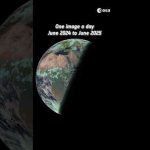
This year’s solstice happened at exactly 04:42 AM CEST, the moment the Sun reached its northernmost point in the sky. Seen from space, Earth puts on quite the show. These views capture a full year of shifting light and shadow, from one June solstice to the next.
At this point in our orbit, the day–night line (known as the terminator) is tilted at its most dramatic angle. The Northern Hemisphere gets its longest day of the year, while the Southern Hemisphere experiences its shortest. So whether you’re basking in the glow or curling up in the dusk, we wish you a happy solstice — and a moment to breathe, move and groove.
Just how much power can be generated by one human being? Phil tries to find out. Plus: How a generator works, make your own wind turbine and a solar panel described with a bathtub and ping-pong balls!
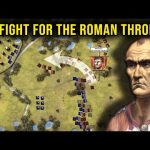
🚩 In 69 AD, the Roman Empire tore itself apart. Nero’s suicide ended the Julio-Claudian dynasty, plunging Rome into a year of chaos—the Year of the Four Emperors. Galba seized power, but his austerity bred hatred; Otho murdered him for the throne. Yet his rule was short-lived, as Vitellius, a brutish general from Germania, marched on Rome. Their clash at the First Battle of Bedriacum was decisive. Otho, defeated and despondent, took his own life.
But fate had yet another contender: Vespasian, a seasoned general commanding Roman legions in Judaea. His forces crushed Vitellius at the Second Battle of Bedriacum, dragging Rome out from the fires of civil war. Vespasian founded the Flavian dynasty, marking a clean break from the decadence of the Julio-Claudians.
This transition mattered. The Julio-Claudians ruled by birthright, often spiraling into tyranny. The Flavians rose through merit and military power, stabilizing an empire teetering on ruin. The principate was no longer the domain of emperors born into it — it was now earned by those who could hold it. Rome, bloodied but unbroken, had reinvented itself.
🚩 If you like what you see, consider supporting my work on Patreon and you get ad-free early access to my videos for as little as $1 https://www.patreon.com/historymarche — You can also show your support by subscribing to the channel and liking the video. Thank you for watching.
📢 Narrated by David McCallion
🎼 Music: EpidemicSound Filmstro
📚 Sources: The Histories – Tacitus (2009) The Encyclopedia of Military History from 3500 B.C. to the Present, 2nd Revised Edition – Richard Ernest Dupuy & Trevor N.Dupuy (1989)
Let’s learn something EPIC today! Join Phil as he shares some of the best kept science secrets. Nothing better than having fun while learning about how things work!
Have you ever done a science experiment and wondered “What would this be like if it were HUGE?” Welcome to Science Max, the exciting series that turbocharges all the science experiments you’ve done at home.
Let’s learn something EPIC today! Join Phil as he shares some of the best kept science secrets. Nothing better than having fun while learning about how things work!
Have you ever done a science experiment and wondered “What would this be like if it were HUGE?” Welcome to Science Max, the exciting series that turbocharges all the science experiments you’ve done at home.
What if satellite cloud data could become music? Meet Hakuryu — a dragon born as the European Space Agency’s EarthCARE satellite, singing a song of peace for our planet.
EarthCARE is the European Space Agency’s most advanced Earth Explorer launched to date, equipped with instruments that help us understand clouds and aerosols in new and unprecedented ways.
It is a collaboration between ESA and the Japanese Aerospace Exploration Agency, JAXA, who designed and developed the satellite’s Cloud Profiling Radar (CPR) instrument. JAXA called EarthCARE Hakuryu, which is Japanese for White Dragon.
Hakuryu now lends its name to the title of a groundbreaking immersive installation that creates an audiovisual story from EarthCARE cloud and aerosol data in a way that has never been seen or heard before.
Through data sonification, Hakuryu transforms over thirty types of data into immersive soundscapes and music. Clouds become choirs as Hakuryu sings to Earth, with voices from notable public, scientific and ESA figures joined by those needing care most – people from the frontline of climate change, displacement and conflict.
Adding to this, data from atmospheric elements such as rain, snow, dust and smoke are rendered as rich environmental sonic textures. Simultaneously the same data is transformed into clouds, creating a vibrant trail behind an animated white dragon. Viewers slowly fly with Hakuryu, in a beautiful representation of Earth as it moves from day into night on its journey around the sun.
The film you see here comprises one entire EarthCARE orbit around our planet. It is running live all week at ESA’s Living Planet Symposium in Vienna, from 23 to 27 June 2025, as an immersive installation. Following its debut, Hakuryu will travel the world in a variety of ways soon to be revealed.
We are Europe’s gateway to space. Our mission is to shape the development of Europe’s space capability and ensure that investment in space continues to deliver benefits to the citizens of Europe and the world. Check out https://www.esa.int/ to get up to speed on everything space related.
Steve Spangler is a bestselling author, STEM educator and Emmy award-winning television personality with more than 2,100 television appearances to his credit. Steve appeared as a regular guest on the Ellen DeGeneres Show from 2007-2022 (27 appearances).
Let’s learn something EPIC today! Join Phil as he shares some of the best kept science secrets. Nothing better than having fun while learning about how things work!
Have you ever done a science experiment and wondered “What would this be like if it were HUGE?” Welcome to Science Max, the exciting series that turbocharges all the science experiments you’ve done at home.
Steve Spangler is a bestselling author, STEM educator and Emmy award-winning television personality with more than 2,100 television appearances to his credit. Steve appeared as a regular guest on the Ellen DeGeneres Show from 2007-2022 (27 appearances).
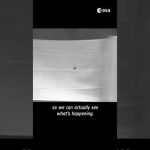
A miniature capsule shoots off at 4000 km per hour, mimicking the aerodynamics of a Mars atmospheric entry before crashing at supersonic speeds into a wall.
The tiny replica of the Entry, Descent and Landing Module (EDLM) blasts off from a smooth bore gun faster than a speeding bullet. This video has been slowed down 60 times – the actual flight lasted just half a second.
This activity is part of a series of free-flight experiments with a scaled-down version of the ExoMars landing module – measuring just 8 cm in diameter compared to the actual 3.8-metre spacecraft that will carry the Rosalind Franklin rover.
These tests provide critical data on how the spacecraft will behave during its entry into the martian atmosphere. Following a two-year journey to the Red Planet, the ExoMars descent module will approach Mars at a speed of 21 000 km per hour, relying on heat shields, parachutes and retro rockets to land safely.
The first set of tests took place in March at the French-German Research Institute of Saint-Louis(ISL), a front-line research centre with facilities for investigating the aerodynamics of vehicles like reentry capsules.
Engineers equipped the mini ExoMars landing capsule with internal electronics to monitor its 400-metre flight path. The test models were mounted in special sabots that detached from the capsules when fired from the smooth powder gun. Test speeds ranged from 1800 to 4300 kilometres per hour.
The team used 20 models during the tests. Each model carried several sensors to collect flight data. Teams used shadowgraph imaging, magnetometers, accelerometers, and radar to analyse the capsule’s movement, trajectory and stability.
📹 European Space Agency (ESA) 📸 Thales Alenia Space Italia, Ariane Group, Fluid Gravity Engineering Ltd, French-German Research Institute of Saint-Louis
Defying gravity is Phil’s mission, but maxing out a hoop glider proves to be harder than it seems. Plus: an egg drop with a pumpkin, hovering helium balloons and more anti-gravity fun!
Steve Spangler is a bestselling author, STEM educator and Emmy award-winning television personality with more than 2,100 television appearances to his credit. Steve appeared as a regular guest on the Ellen DeGeneres Show from 2007-2022 (27 appearances).
🚩 Download Star Trek Fleet Command for FREE now here: https://tinyurl.com/33fum8z4 to support my channel, and use the promo code KHANRULES until July 31st to unlock officer Kirk for FREE.
🚩 If you like what you see, consider supporting my work on Patreon and you get ad-free early access to my videos for as little as $1 https://www.patreon.com/historymarche — You can also show your support by subscribing to the channel and liking the video. Thank you for watching.
📚 Sources: Pax: War and Peace in Rome’s Golden Age – Tom Holland (2023) Campaigns of Germanicus, 13-16 AD – Ilkka Syvänne (2011) Dio Cassius, Roman History (1st century) Peter S. Wells, The Battle That Stopped Rome (2003) Teutoburg Forest 9 AD – Michael McNally (2007) Germanicus – Lindsay Powell (2013) The Annals – Tacitus (2nd century) In the name of Rome – Adrian Goldsworthy (2016) The Roman Barbarian Wars – The Era of Roman Conquest – Ludwig Heinrich Dyck (2015) Les Limites de L’Empire – Pierre Laederich (2001) The Annals – Tacitus (2nd century) Dynasty: The Rise and Fall of the House of Caesar – Tom Holland (2015) Roman Army of the Principate 27 BC – 117 AD – Nic Fields (2009) Roman Auxiliary Cavalryman AD 14 – 193 – Nic Fields (2006)
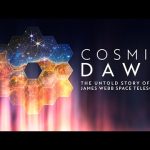
What does it take to gaze through time to our universe’s very first stars, galaxies, and light? “Cosmic Dawn: The Untold Story of the James Webb Space Telescope,” a NASA+ documentary, takes you behind the scenes of Webb’s journey, through the eyes of the dreamers who made it possible.
The documentary brings viewers on an unprecedented journey through Webb’s delicate assembly, rigorous testing, and triumphant launch, showcasing the sheer complexity and breathtaking risks involved in creating a telescope capable of peering billions of years into the past. Follow the telescope from an idea developed at NASA’s Goddard Space Flight Center all the way to the launchpad in French Guiana, with never-before-seen footage captured by the Webb film crew offering intimate access to the challenges and triumphs along the way.
Steve Spangler is a bestselling author, STEM educator and Emmy award-winning television personality with more than 2,100 television appearances to his credit. Steve appeared as a regular guest on the Ellen DeGeneres Show from 2007-2022 (27 appearances).
Let’s learn something EPIC today! Join Phil as he shares some of the best kept science secrets. Nothing better than having fun while learning about how things work!
Have you ever done a science experiment and wondered “What would this be like if it were HUGE?” Welcome to Science Max, the exciting series that turbocharges all the science experiments you’ve done at home.
În varianta religioasă, Kierkegaard propune saltul credinţei: acceptăm iraţional existenţa lui Dumnezeu pentru a găsi sens şi a domoli frica de moarte. Creştinismul pune viaţa sub semnul eternităţii şi cere responsabilitate, sacrificiu şi autenticitate. Fără Dumnezeu, însă, rămâne provocarea de a inventa sensul. Nietzsche declară „Dumnezeu a murit” şi cere reevaluarea valorilor; Ubermenschul devine figura omului care îşi asumă libertatea totală. Sartre dezvoltă ideea: existenţa precede esenţa, iar fiecare alegere construieşte identitatea. Suntem „condamnaţi la libertate”, iar responsabilitatea absolută generează anxietate, pentru că nu există criterii externe definitive de bine şi rău.
Camus împinge diagnosticul mai departe către absurd: viaţa nu oferă niciun sens obiectiv, iar mitul lui Sisif simbolizează efortul uman de a găsi fericire chiar într-o sarcină inutilă. Acceptarea absurdului devine, paradoxal, un fel de eliberare.
Dincolo de poziţia teistă sau ateistă, textul subliniază două realităţi: (1) conştiinţa, cu qualia ei – durerea, gustul, bucuria – diferă fundamental de „fiinţarea în sine” a obiectelor; (2) libertatea umană este preţioasă şi teribilă, pentru că impune alegerea continuă într-un univers al incertitudinii. Astfel, sensul nu este descoperit, ci construit, fie prin credinţă, fie prin lucrarea liberă a propriei voinţe.
Autorul pledează pentru luciditate şi modestie: ştiinţa dezvăluie legi, dar nu explică substratul ultim; cunoaşterea rămâne provizorie. În faţa necunoscutului, filozofia nu dă răspunsuri finale, ci clarifică fricile şi pregăteşte spiritul pentru inevitabil. Speranţa nu dispare: putem trăi astfel încât să „merităm” nemurirea ori, cel puţin, să onorăm raritatea conştiinţei noastre în cosmos. În final, indiferent de credinţă, responsabilitatea de a trăi autentic, cu seriozitate şi compasiune, aparţine fiecăruia.”