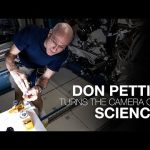
After seven months, 93 million miles, and 670,000 photos, astronaut Don Pettit has returned to Earth. Pettit is taking part in a news conference on Monday, April 28, to discuss his 220-day mission to the International Space Station.
Pettit returned to Earth on April 19 (April 20, Kazakhstan time), along with Roscosmos cosmonauts Alexey Ovchinin and Ivan Vagner. Pettit celebrated his 70th birthday on April 20. During his time in orbit, Pettit conducted hundreds of hours of scientific investigations, including research into 3D printing, water sanitization, and growing plants in space.
Have questions for Don? Join us on NASA’s Instagram account after the news conference for a live Q&A: https://www.instagram.com/nasa/
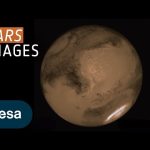
In celebration of the NASA/ESA Hubble Space Telescope’s 35 years in Earth orbit, an assortment of images that were recently taken by Hubble has been released today. This stretches from the planet Mars to images of stellar birth and death, and a magnificent neighbouring galaxy. After over three decades of scrutinising our Universe, Hubble remains a household word as the most well-recognised telescope in scientific history.
Solid, Liquid, Gas and all the things in-between. What’s in between? Cornstarch mud. Sometimes it’s a liquid, but sometimes a solid. Phil fills a giant trough with it to see if it’s solid enough to run across. Plus, giant rock candy, giant bubbles and a giant sledgehammer made out of a frozen pumpkin.
Steve Spangler is a bestselling author, STEM educator and Emmy award-winning television personality with more than 2,100 television appearances to his credit. Steve appeared as a regular guest on the Ellen DeGeneres Show from 2007-2022 (27 appearances).
🚩 If you like what you see, consider supporting my work on Patreon and you get ad-free early access to my videos for as little as $1 https://www.patreon.com/historymarche — You can also show your support by subscribing to the channel and liking the video. Thank you for watching.
In part 21 we head to Sicily. Syracuse was a thorn in Rome’s side that could not be ignored due to its strategic importance. It’s capture was a bitter blow for Hannibal, as Rome could redirect significant resources in manpower, ships, provisions, and commanders to other theaters. Hannibal would feel the brunt of this massive shift. Furthermore, the capture of Syracuse by Rome marked the end of the independence of Greek cities in southern Italy and Sicily.
🎼 Music: Peaks of Atlas – Omri Lahav EpidemicSound Filmstro
Sources and citations: Syracuse in Antiquity – Richard J. Evans (2011) Fortifications of Syracuse: Dionysius I, 405 to 396 BC – Kyle Govan (2016) Hannibal’s Summer campaign of 213 BC – David Feeney (2019) Fall of Carthage – Adrian Goldsworthy (2003) From the Founding of the City – by Livy, translated by Canon Roberts (1905) The Punic Wars – Nigel Bagnall (2008) Hannibal – G. P. Baker (1999) Hannibal’s War – John Peddie (2005) The History of Rome, Livy (2006) The Rise of the Roman Empire – Polybius (translation by Ian Scott-Kilvert) (1980) A companion to the Punic Wars – Dexter Hoyos (2015)
Steve Spangler is a bestselling author, STEM educator and Emmy award-winning television personality with more than 2,100 television appearances to his credit. Steve appeared as a regular guest on the Ellen DeGeneres Show from 2007-2022 (27 appearances).
ESA’s state-of-the-art Biomass mission is designed to provide new insights into the health and evolution of the world’s forests, helping us understand how they are changing over time and, importantly, their critical role in the global carbon cycle. Equipped with the first-ever fully polarimetric P-band synthetic aperture radar, this satellite can penetrate dense forest canopies. The long 70 cm wavelength of the radar enables it to measure ‘biomass’—the woody trunks, branches and stems—where trees store the majority of their carbon.
Credits: European Space Agency (ESA)
★ Subscribe: http://bit.ly/ESAsubscribe and click twice on the bell button to receive our notifications.
We are Europe’s gateway to space. Our mission is to shape the development of Europe’s space capability and ensure that investment in space continues to deliver benefits to the citizens of Europe and the world. Check out https://www.esa.int/ to get up to speed on everything space related.
How are we made of star stuff? Nearly all the elements in your body were forged in ancient stars long before Earth, the Sun or our galaxy even existed. When those stars exploded, they sent their material out into space, scattering elements like carbon, oxygen and iron across the universe. Billions of years later, those same ingredients came together to form everything we know — including you.
A NASA scientist explains how we really are made of star stuff and how telescopes like Hubble and Webb help us trace our cosmic origins.
algoritm:”În dialogul cu Horia, interlocutorul vorbește despre experienţa și impactul canalului său de YouTube, subliniind că platforma i-a adus un public mult mai numeros decât televiziunea sau cărţile. El explică structura fiecărui video, folosind ca exemplu seria despre Nicu Ceauşescu, realizată pe baza unui text scris de istoricul Vasilescu, care documentează viaţa din comunism şi ultimii ani ai lui Nicu (1990–1996). Fiecare episod e construit în trei faze: redactarea textului, filmarea şi înregistrarea, apoi editarea, coordonată de Dorian Istrătescu, care selectează imagini istorice şi fotografii de arhivă.
Tema centrală a filmului despre Nicu Ceauşescu este întrebarea morală „sunt copiii vinovaţi de păcatele părinţilor?”, dezbătută prin prisma compasului moral individual. Interlocutorul argumentează că prea aspră judecată îşi proiectează propriile pedepse asupra celorlalţi, pe când blândeţea reflectă un suflet iertător. El evocă contextul dramatic imediat după Revoluţie, când, la 18 ani, trăia şocul execuţiei soţilor Ceauşescu şi atmosfera de victorie unanimă, dar şi traumă personală, mărturisind că a refuzat să tragă în terorişti sub ordine militare neclare.
Discuţia explorează psihanalitic dramatismul situaţiei lui Nicu Ceauşescu: deşi avea libertăţi nelimitate, a ajuns deprimat şi dependent de alcool după asasinarea tatălui, trăind un contrast între putere şi neîncredere de sine. Se remarcă influenţa constantă a figurilor parentale: fostul dictator îi asigura un destin, iar mama şi profesorul Plăviţu îi redactau tezele de doctorat, anulându-i sentimentul de autonomie.
Pe lângă acest studiu de caz, intervievatul aduce în discuţie un experiment psihologic cu şoareci, în care controlul asupra sursei de şoc reduce semnificativ stresul, subliniind că frica nu e doar despre pericol, ci despre lipsa certitudinii.
Each year on 22 April, people across the planet join forces to raise awareness about the unequivocal effects of climate change and the importance of protecting our planet for future generations. We celebrate Earth Day every day at ESA. 💙
📹 European Space Agency (ESA) 📸 ESA/NASA 🎙️ The audio features a clip from David Attenborough
NASA missions have shared unique views of our home planet for more than 60 years. In that time, science and technology in air and space revolutionized our understanding of the Earth system.
We continue to move farther into space, documenting the universe around us. It’s when we turn our gaze back home that we are reminded of the significance of Earth.
To learn more about the NASA missions included in the video, visit:
Watch a SpaceX Dragon spacecraft dock to the International Space Station after a successful liftoff on April 21 at 4:15 a.m. EDT (0815 UTC). The spacecraft is carrying supplies – including food and essential equipment for the crew – as well as a variety of science experiments.
The Dragon spacecraft is scheduled to remain at the space station until May, when it will depart and return to Earth with research and cargo, splashing down off the coast of California.
Learn more about the science aboard, including studies to produce gold nanoparticles and to test a vision-based sensor that could improve navigation: https://youtu.be/4841piONzVk
On Thursday, May 1, NASA astronauts Anne McClain and Nichole Ayers will step outside the International Space Station to complete station upgrades. The spacewalk is scheduled to begin at 8 a.m. EDT (1200 UTC) and last about six and a half hours.
McClain and Ayers will relocate communications antenna and install a mounting bracket to prepare for the installation of a new set of International Space Station Rollout Solar Arrays, also called IROSAs, on a later spacewalk. The arrays will boost the station’s power generation capability by up to 30%.
McClain will wear a suit with red stripes; Ayers will wear an unmarked suit. This will be the third spacewalk for McClain and the first for Ayers.
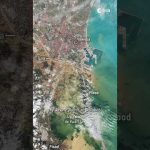
As recently reported by Copernicus ECMWF in its European State of the Climate Report, Europe experienced several climate extremes like glacier ice loss, severe floods, wildfires, and heatwaves. But the continent didn’t experience the same weather uniformly: data show a distinct east‑west contrast during 2024, with eastern areas generally sunny and warm while western areas were cloudier and wetter.
📹 European Space Agency (ESA) 📸 Contains modified CopernicusEU Sentinel data (2022 & 2024), processed by ESA CC BY-SA 3.0 IGO 📊 C3S/Copernicus ECMWF/KNMI
After 220 days and 93.3 million miles in space, astronaut Don Pettit is returning to Earth on Saturday, April 19.
After undocking from the International Space Station alongside cosmonauts Alexey Ovchinin and Ivan Vagner, Pettit’s Soyuz MS-26 spacecraft will begin its deorbit burn at 8:26 p.m. EDT (0026 UTC April 20) and touch down on the steppes of Kazakhstan around 9:20 p.m. EDT (0120 UTC April 20).
This was Pettit’s fourth spaceflight; while on the station, Pettit contributed to research that benefits humanity and delighted photography enthusiasts around the world with his unique point of view.
Watch as NASA astronaut Don Pettit, along with Roscosmos cosmonauts Alexey Ovchinin and Ivan Vagner, undock from the International Space Station and begin their voyage back to Earth.
The Soyuz MS-26 spacecraft is set to undock from the space station at 5:57 p.m. EDT (2157 UTC), heading for a parachute-assisted landing at 9:20 p.m. EDT (0120 UTC or 6:20 a.m. Kazakhstan time, Sunday, April 20) on the steppes of Kazakhstan, southeast of the town of Dzhezkazgan. Landing will occur on Pettit’s 70th birthday.
Watch as three International Space Station crew members—NASA astronaut Don Pettit, along with Roscosmos cosmonauts Alexey Ovchinin and Ivan Vagner—begin final preparations for their return to Earth aboard Soyuz MS-26, currently targeted for Saturday, April 19.
(In local time, MS-26 will touch down on Sunday, April 20: Pettit’s 70th birthday!)
After entering the Soyuz MS-26 spacecraft, the spacecraft’s hatch will close at approximately 2:25 p.m. EDT (1825 UTC); the spacecraft is scheduled to undock at 5:57 p.m. EDT (2157 UTC).
This footage is from 20 January 2014, when ESA’s Rosetta spacecraft awoke from deep space hibernation, more than 800 million kilometres from Earth. After spending 31 months in a power-saving sleep mode to conserve energy while travelling through the cold, outer regions of the Solar System, Rosetta successfully reactivated and sent a signal back to Earth — a simple “Hello, world!” that marked the beginning of one of the most ambitious space missions in history. Rosetta went on to become the first spacecraft to rendezvous with a comet (67P/Churyumov–Gerasimenko), orbit it, and deploy a lander, Philae, to its surface.
What good is Science if you can’t use it to give you super strength? Phil does just that using the power of simple machines to move, lift and roll a machine he could barely budge otherwise. Plus, lift yourself with one finger and watch cavemen discover the wheel.
Steve Spangler is a bestselling author, STEM educator and Emmy award-winning television personality with more than 2,100 television appearances to his credit. Steve appeared as a regular guest on the Ellen DeGeneres Show from 2007-2022 (27 appearances).
Steve Spangler is a bestselling author, STEM educator and Emmy award-winning television personality with more than 2,100 television appearances to his credit. Steve appeared as a regular guest on the Ellen DeGeneres Show from 2007-2022 (27 appearances).
🚩 If you like what you see, consider supporting my work on Patreon and you get ad-free early access to my videos for as little as $1 https://www.patreon.com/historymarche — You can also show your support by subscribing to the channel and liking the video. Thank you for watching.
The Battle of Ourique is a defining moment in the history of Portugal, as it was here that Afonso Henriques was on July 25, 1139, proclaimed the first King of Portugal by his troops after defeating the Moorish army. The significance of the battle of Ourique cannot be overstated for it secured the founding of the Kingdom of Portugal.
The five blue shields at the very centre of the flag of Portugal represent the five Moorish kings that were defeated by Portugal’s first King Afonso Henriques in the battle of Ourique 1139. The white central shield is the personal armor of this same King and was said to have been given to him in a vision of the crucified Christ on the eve of battle.
📢 Narrated by David McCallion
🎼 Music: EpidemicSound Filmstro
📚 Sources: The Reconquest Kings of Portugal: Political and Cultural Reorientation on the Medieval Frontier – Stephen Lay (2008) Between Silences: The Coronation of Portuguese Medieval Kings (12th–14th Centuries) – Carla Varela Fernandes (2020) The Teaching of military history at Portuguese universities: Pride and Prejudice – João Gouveia Monteiro (2021) The History of Medieval Portugal in the Deducao cronologica analitica – Filipe Alves Moreira (2022) The Kingdom of León-Castilla under King Alfonso VII, 1126–1157 – Bernard F. Reilly (1998) Between God and the King: The world of military orders – Isabel Cristina Ferreira Fernandes (2018) A History of Portugal and the Portuguese Empire, volume I, Cambridge University Press – Anthony Disney (2009) The Reconquista and Its Legacy, 1000-1348 – António Henriques (2017) Fantastic Stories of the History of Portugal – João Ferreira (2010)
Correction: 10:48 The location of the battle is heavily debated. Contemporary sources said that they do not know where the battle took place, only that it took place on “fields near Ourique”. But today many historians argue that Alfonso couldn’t lead a full military campaign in Alentejo with his limited resources, so deep in Muslim territory (he was only a count with a small realm). A more plausible location is suggested near Vila Chã de Ourique, which was closer to Portugal’s traditional lands. Nevertheless, historians are divided between Ourique in Alentejo and Vila Chã de Ourique further north – my opinion is that Vila Chã de Ourique is much more plausible.
Our Proba-3 mission recently pulled off its first-ever autonomous formation flight — aligning with the Sun and holding position for hours, all on its own.
This is precision. This is the future. And it’s just the beginning.
NASA astronaut Don Pettit is scheduled to return home in mid-April 2025 after a seven-month mission aboard the International Space Station as part of Expedition 72. Throughout his stay, Pettit contributed to research that benefits humanity and future space missions, and delighted photography enthusiasts around the world with his unique point of view.
Pettit also shared what he calls his “science of opportunity” to demonstrate how experimenting with our surroundings can help gain a better understanding of how things work. This understanding is enhanced when art, science, and microgravity come together.
Let’s learn something EPIC today! Join Phil as he shares some of the best kept science secrets. Nothing better than having fun while learning about how things work!
Have you ever done a science experiment and wondered “What would this be like if it were HUGE?” Welcome to Science Max, the exciting series that turbocharges all the science experiments you’ve done at home.
Steve Spangler is a bestselling author, STEM educator and Emmy award-winning television personality with more than 2,100 television appearances to his credit. Steve appeared as a regular guest on the Ellen DeGeneres Show from 2007-2022 (27 appearances).
Ai întrebări de știință și vrei răspunsuri personale? Intră acum pe Patreon și eu își voi răspunde direct pe whatsapp ►https://patreon.com/cristianpresura
0:00 Intro – Starship vs. China 1:00 Lansarea Starship și explozia 15:30 Probleme tehnice la Starship (analiză) 30:45 Planurile SpaceX după eșec 37:10 Programul spațial al Chinei – context 45:00 Cum vede China eșecul Starship 52:00 Concluzii și perspective
Unul dintre obiectivele majore ale Starship este implicarea în programul Artemis al NASA, în special în misiunea Artemis 3, programată teoretic pentru 2027. Această misiune presupune transportul astronauților de pe orbita lunară pe suprafața Lunii cu ajutorul unui model modificat numit Starship HLS (Human Landing System). Însă acest plan implică un proces complex de alimentare cu combustibil pe orbita Pământului, ceea ce necesită între 15 și 20 de lansări Starship de succes – un lucru care nu s-a realizat încă.
În paralel, China dezvoltă propriul program de aselenizare, mai centralizat și cu o arhitectură mai simplă, asemănătoare cu cea a programului Apollo. Dacă SUA nu reușesc să respecte calendarul actual, este posibil ca China să devanseze misiunea cu echipaj uman spre Lună până în 2030.
Podcastul subliniază dificultățile tehnice și politice cu care se confruntă programul Artemis, inclusiv incertitudinile legate de schimbările de administrație la NASA. Deși SpaceX a realizat progrese notabile, mai ales cu prima treaptă a rachetei, provocarea majoră rămâne revenirea treptei superioare de pe orbită într-o stare perfectă de reutilizare. În final, Claudiu rămâne sceptic privind respectarea termenelor și viitorul apropiat al misiunilor lunare americane.”
This video shows the precise and delicate process of loading the Biomass satellite with 132 kg of highly volatile fuel. This fuel will power the satellite so that it can carry out the complex manoeuvres that are needed during its mission.
📹 European Space Agency (ESA) 📸 ESA/CNES/Arianespace/Optique vidéo du CSG–T. Leduc
On 12 March 2025, ESA’s Hera spacecraft soared just 5000 km above Mars and passed within 300 km of its distant moon, Deimos. Captured by Hera’s 1020×1020 pixel Asteroid Framing Camera, this video sequence offers a rare view of the red planet and its enigmatic moon. The original greyscale images have been colour-enhanced based on known surface features.
We are Europe’s gateway to space. Our mission is to shape the development of Europe’s space capability and ensure that investment in space continues to deliver benefits to the citizens of Europe and the world. Check out https://www.esa.int/ to get up to speed on everything space related.
Plants are more than just greenery, they’re key to helping astronauts survive and thrive off Earth. They provide food and oxygen, recycle water and waste, and even offer psychological benefits.
But the positives don’t stop there. Growing plants in the International Space Station also helps scientists develop new technologies for agriculture in extreme environments, a skill that could benefit future explorers on the Moon and Mars but also agriculture right here on Earth, especially in places where growing food is a challenge.
Ai întrebări de știință și vrei răspunsuri personale? Intră acum pe Patreon și eu își voi răspunde direct pe whatsapp ►https://patreon.com/cristianpresura
Learn how to use air pressure to make your own, home-made rocket out of a plastic water bottle. Phil maxes this out by using stronger bottles and even over-pressurizing them and finally by building a giant rocket out of plastic bottles. Plus, we blow up a bottle with liquid nitrogen and crush a steel drum using nothing but the air pressure around us every day.
Steve Spangler is a bestselling author, STEM educator and Emmy award-winning television personality with more than 2,100 television appearances to his credit. Steve appeared as a regular guest on the Ellen DeGeneres Show from 2007-2022 (27 appearances).