Steve Spangler is a bestselling author, STEM educator and Emmy award-winning television personality with more than 2,100 television appearances to his credit. Steve appeared as a regular guest on the Ellen DeGeneres Show from 2007-2022 (27 appearances).
Download RAID today ➡️ https://t2m.io/Ap25_HistoryMarche to get exclusive bonuses in celebration of 6th anniversary 🎉 Available after downloading through this link only ✅ 1 – Epic Zargala and other goodies worth $60! ✅ 2 – Promo code for a Legendary Champion of your choice ⚡️ Available only for new players only, redeem it within 48 hours after registration ➡️ Supreme Galek – promo code SUPREME6 ➡️ Sun Wukong – MONKEYKING ➡️ Alice the Wanderer – GETALICE ➡️ Loki the Deceiver – GETLOKI ✅ 3 – Promo codes available for both new and old players. Make sure to redeem 1 promo code in 24 hours: ➡️ Gameleap, PP500, YearlyGift, 1MGIFT
In 105 BC, two Germanian tribes, the Teutones and the Cimbri, defeated a huge Roman army at Arausio – apparently, some 80,000 Roman and Italian soldiers died. In terms of losses, this battle is regarded as the worst defeat in the history of ancient Rome, surpassing the Battle of Cannae. While Arausio was a massive defeat and did result in some political upheval, it resulted in few notable long term events and the tribes we’re never able or willing to exploit the victory. In 104 BC, a new Consul will lead the recovery of Rome… Gaius Marius.
🚩 If you like what you see, consider supporting my work on Patreon and you get ad-free early access to my videos for as little as $1 https://www.patreon.com/historymarche — You can also show your support by subscribing to the channel and liking the video. Thank you for watching.
📢 Narrated by David McCallion
🎼 Music: EpidemicSound Filmstro
📚 Sources: The Cimbrian War: the Rise of Caius Marius (2023) by Nic Fields. Osprey Publishing Ltd. ISBN: (ebook) 9781472854940. Invasion: Rome Against the Cimbri (113-101 BC) (2022) by Philip Matyszak. Published by Pen and Sword Military. ISBN: 978-1-39909-731-4. Gaius Marius: the Rise and Fall of Rome’s Saviour (2017) by Marc Hyden. Published by Pen and Sword Military. ISBN: 978-1-52670-233-3. Fall of the Roman Republic (Six Lives) by Plutarch. Translated by Rex Warner. First published in 1958 by Penguin Classics. The History Of Rome – Volume 3 (1880) by Theodor Mommsen. Printed by William Clowes and Sons Ltd. The Geography of Strabo, Translated by Horace Leonard Jones. Published by G. P. Putnam’s Sons. Appian’s Roman History II (1912) Translated by Horace White. Loeb Classical Library. Periochae (66-70) by Livy: https://www.livius.org/sources/content/livy/livy-periochae-66-70/
The 32nd SpaceX commercial resupply mission to the International Space Station is set to lift off on a Falcon 9 rocket from our Kennedy Space Center in Florida at 4:15 a.m. EDT (0815 UTC), Monday, April 21, delivering science investigations and supplies to the orbiting lab.
SpaceX’s Dragon spacecraft is carrying several new research projects to the station, including experiments focused on vision-based navigation, spacecraft air quality, materials for drug and product manufacturing, and advancing plant growth with less reliance on photosynthesis.
Experiments focused on vision-based navigation, spacecraft air quality, materials for drug and product manufacturing, and advancing plant growth with less reliance on photosynthesis are bound for the International Space Station via the NASA and SpaceX 32nd commercial resupply services mission.
Have We Ever Been to Uranus? In 1986, NASA’s Voyager 2 gave us our first and only close-up look at this ice giant. What it found was a bizarre, tilted world with extreme seasons, swirling methane clouds, narrow dusty rings and icy moons that could even hide oceans beneath their crusts.
Not only could Uranus hold clues about our own solar system but also the many similar-sized planets found throughout the galaxy.
Jared Isaacman is set to participate in his confirmation hearing to become the next NASA administrator. The hearing will take place before Sen. Ted Cruz, and the U.S. Senate Committee on Commerce, Science, and Transportation in the Russell Building in Washington. President Trump formally nominated Isaacman for NASA administrator on Jan. 20, 2025.
Let’s learn something EPIC today! Join Phil as he shares some of the best kept science secrets. Nothing better than having fun while learning about how things work!
Have you ever done a science experiment and wondered “What would this be like if it were HUGE?” Welcome to Science Max, the exciting series that turbocharges all the science experiments you’ve done at home.
Steve Spangler is a bestselling author, STEM educator and Emmy award-winning television personality with more than 2,100 television appearances to his credit. Steve appeared as a regular guest on the Ellen DeGeneres Show from 2007-2022 (27 appearances).
Steve Spangler is a bestselling author, STEM educator and Emmy award-winning television personality with more than 2,100 television appearances to his credit. Steve appeared as a regular guest on the Ellen DeGeneres Show from 2007-2022 (27 appearances).
Accesează https://surfshark.com/presura sau folosește codul PRESURA la finalizarea comenzii pentru a primi 4 luni extra de Surfshark VPN!
00:00:00 – De ce nu putem atinge viteza luminii? 00:00:43 – Pisica lui Schrodinger 00:01:40 – Spațiul cosmic este întunecat, 00:02:19 – Găuri negre în sistemul solar! 00:03:28 – Călătoria înapoi în timp 00:05:32 – Vidul cuantic 00:06:41 – Soarele nostru transformat în gaură neagră!
Ai întrebări de știință și vrei răspunsuri personale? Intră acum pe Patreon și eu își voi răspunde direct pe whatsapp ►https://patreon.com/cristianpresura
Pisica lui Schrödinger Conceptul de superpoziție cuantică sugerează că particulele pot exista în mai multe stări simultan. Schrödinger a imaginat o pisică aflată într-o cutie, care este simultan vie și moartă până în momentul în care este observată. Deși pare absurd, experimentul mental reflectă comportamentul real al particulelor subatomice.
De ce este spațiul cosmic întunecat? Deși spațiul este plin de lumină, este în același timp un vid aproape perfect. Fotonii nu se reflectă sau împrăștie în vid, așa că, în lipsa unei surse directe, spațiul pare negru.
Găuri negre în sistemul solar Minigăurile negre, formate după Big Bang, ar putea intra ocazional în sistemul solar. Deși extrem de dense, ele sunt foarte mici și interacționează slab cu materia, lăsând doar urme gravitaționale minore.
Călătoria în timp Paradoxul bunicului sugerează contradicții dacă te-ai întoarce în timp și ai schimba trecutul. O soluție teoretică o reprezintă buclele spațio-temporale, în care viitorul și trecutul sunt fixe și recurente.
Vidul cuantic Chiar și spațiul aparent gol conține câmpuri cuantice care fluctuează constant. Aceste fluctuații sunt rezultatul principiului incertitudinii, care domină lumea microscopică.
Soarele devine gaură neagră Dacă Soarele s-ar transforma într-o gaură neagră, gravitația asupra Pământului nu s-ar schimba, dar lipsa luminii ar duce la înghețul planetei și la dispariția vieții în timp.”
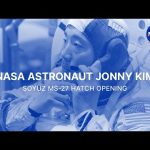
After lifting off from the Baikonur Cosmodrome in Kazakhstan and docking with the International Space Station, the Soyuz MS-27 mission to the station is scheduled to open its hatches at approximately 7:20 a.m. EDT (1120 UTC) on Tuesday, April 8.
NASA astronaut Jonny Kim, accompanied by cosmonauts Sergey Ryzhikov and Alexey Zubritsky, will spend approximately eight months on the International Space Station before returning to Earth in December.
Kim was selected to become a NASA astronaut in 2017; before joining NASA’s astronaut corps, Kim completed more than 100 combat operations as a Navy SEAL. A dual-designated naval aviator and flight surgeon, Kim received his doctorate in medicine from Harvard Medical School. This is Kim’s first mission to the station.
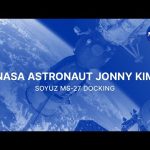
After lifting off from the Baikonur Cosmodrome in Kazakhstan, NASA astronaut Jonny Kim is scheduled to dock with the International Space Station at 5:03 a.m. EST (0903 UTC) on Tuesday, April 8.
Kim was selected to become a NASA astronaut in 2017; before joining NASA’s astronaut corps, Kim completed more than 100 combat operations as a Navy SEAL. A dual-designated naval aviator and flight surgeon, Kim received his doctorate in medicine from Harvard Medical School.
Accompanied by cosmonauts Sergey Ryzhikov and Alexey Zubritsky, Kim will spend approximately eight months on the International Space Station before returning to Earth in December. This is Kim’s first mission to the station.
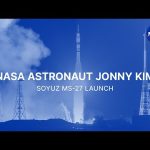
NASA astronaut Jonny Kim is set to lift off on his first mission to the International Space Station on Tuesday, April 8. Launch is scheduled for 1:47 a.m. EDT (0547 UTC) from the Baikonur Cosmodrome in Kazakhstan.
Kim was selected to become a NASA astronaut in 2017; before joining NASA’s astronaut corps, Kim completed more than 100 combat operations as a Navy SEAL. A dual-designated naval aviator and flight surgeon, Kim received his doctorate in medicine from Harvard Medical School.
Kim will launch aboard the Roscosmos Soyuz MS-27 spacecraft, accompanied by cosmonauts Sergey Ryzhikov and Alexey Zubritsky, where they will spend approximately eight months on the International Space Station before returning to Earth in December. Kim will serve as a flight engineer and member of the Expedition 72/73 crew, supporting scientific research to help us learn how to live in space while making life better back on Earth.
After liftoff, MS-27 is scheduled to dock with the station at 5:03 a.m. EDT (0903 UTC), with hatch opening at approximately 7:20 a.m. EDT (1120 UTC).
The old ‘vinegar and baking soda volcano’ needs an overhaul. What happens if we use 60 times as much? What about using 100% acid? What about even more reactive chemicals? Plus, Phil coats his whole outfit in hydrophobic spray and gets in the pool. Will he stay dry? Find out!e!
Thanks to MANSCAPED for sponsoring today’s video! Get 20% OFF + Free International Shipping + 2 Free Gifts with my promo code HISTORYMARCHE or visit https://www.manscaped.com/historymarche
🎼 Music: Peaks of Atlas – Omri Lahav EpidemicSound Filmstro
Sources and citations: Part 18 & 19: The Second Punic War: The battle of Hibera, 215 BC – David Feeney (2019) The Punic Wars, 264 – 146 BC – Nigel Bagnall (2002) Hannibal – G. P. Baker (1999) Hannibal’s War – John Peddie (2005) Hannibal: A History of the Art of War – Theodore Ayrault Dodge (2012) Fall of Carthage – Adrian Goldsworthy (2003) Cannae: Hannibal’s Greatest Victory – Adrian Goldsworthy (2019) The History of Rome, Livy (2006) Histories, Book 7 (from The Complete Histories) – Polybius (2009) The Rise of the Roman Empire – Polybius (translation by Ian Scott-Kilvert) (1980) A companion to the Punic Wars – Dexter Hoyos (2015) Problems of the Second Punic War: III. Rome and Her Italian Allies
Part 20: Sicily and the Second Punic War: The (Re)Organisation of Rome’s First Province – John Serrati Hannibal’s Summer campaign of 213 BC – David Feeney (2019) Fall of Carthage – Adrian Goldsworthy (2003) From the Founding of the City – by Livy, translated by Canon Roberts (1905) The Punic Wars – Nigel Bagnall (2008) Hannibal – G. P. Baker (1999) Hannibal’s War – John Peddie (2005) The History of Rome, Livy (2006) The Rise of the Roman Empire – Polybius (translation by Ian Scott-Kilvert) (1980) A companion to the Punic Wars – Dexter Hoyos (2015)
Steve Spangler is a bestselling author, STEM educator and Emmy award-winning television personality with more than 2,100 television appearances to his credit. Steve appeared as a regular guest on the Ellen DeGeneres Show from 2007-2022 (27 appearances).
Steve Spangler is a bestselling author, STEM educator and Emmy award-winning television personality with more than 2,100 television appearances to his credit. Steve appeared as a regular guest on the Ellen DeGeneres Show from 2007-2022 (27 appearances).
Let’s learn something EPIC today! Join Phil as he shares some of the best kept science secrets. Nothing better than having fun while learning about how things work!
Have you ever done a science experiment and wondered “What would this be like if it were HUGE?” Welcome to Science Max, the exciting series that turbocharges all the science experiments you’ve done at home.
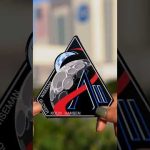
The Artemis II mission will embark on its journey around the Moon early 2026 with four astronauts onboard. Now we’ve got the mission patch to mark the occasion.
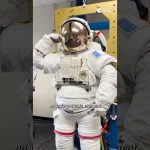
Take a look at Sophie Adenot’s journey over the past year and a half as she prepares for her mission to the International Space Station, currently planned for spring 2026.
Ai întrebări de știință și vrei răspunsuri personale? Intră acum pe Patreon și eu își voi răspunde direct pe whatsapp ►https://patreon.com/cristianpresura
What are the dangers of going to space? Space might look peaceful from afar but it’s a harsh environment, especially for humans. From DNA damage to bone loss to making sure there’s enough food for long missions—space is tough. But NASA is working hard to keep our astronauts safe on every step of the journey.
Ai întrebări de știință și vrei răspunsuri personale? Intră acum pe Patreon și eu își voi răspunde direct pe whatsapp ►https://patreon.com/cristianpresura
Ai întrebări de știință și vrei răspunsuri personale? Intră acum pe Patreon și eu își voi răspunde direct pe whatsapp ►https://patreon.com/cristianpresura
Let’s learn something EPIC today! Join Phil as he shares some of the best kept science secrets. Nothing better than having fun while learning about how things work!
Have you ever done a science experiment and wondered “What would this be like if it were HUGE?” Welcome to Science Max, the exciting series that turbocharges all the science experiments you’ve done at home.
Steve Spangler is a bestselling author, STEM educator and Emmy award-winning television personality with more than 2,100 television appearances to his credit. Steve appeared as a regular guest on the Ellen DeGeneres Show from 2007-2022 (27 appearances).
An electromagnet is a type of magnet that only works while an electric current is running through it. Here’s how you can make your very own electromagnet with household items!
After completing a long-duration stay aboard the International Space Station, NASA’s SpaceX Crew-9 astronauts — Nick Hague, Suni Williams, and Butch Wilmore — are discussing their scientific mission to space.
The three NASA crew members and Roscosmos cosmonaut Aleksandr Gorbunov returned to Earth on March 18. Gorbunov will not participate in the news conference because of his travel schedule.
Hague, Williams, and Wilmore completed over 900 hours of research while in orbit, conducting more than 150 unique experiments. The crew studied plant growth and development, tested stem cell technology to help patients on Earth, and went on a spacewalk to collect samples from the station’s exterior, studying the survivability of microorganisms in space. Additionally, the crew supported 30 ham radio events with students worldwide and conducted a student-led genetic experiment, helping to inspire the next generation of explorers.
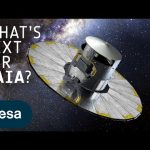
For over a decade, ESA’s Gaia mission has mapped our galaxy with stunning precision—rewriting the story of the Milky Way. As its mission enters a new phase, we look back at its most groundbreaking discoveries.
Credit: ESA – European Space Agency
Chapters: 00:23 – Mapping the Milky Way and beyond 00:58 – Structure of the Milky Way 01:40 – Galactic family tree 02:27 – Mapping star-forming regions 03:00 – Ancient star streams 03:19 – Cosmic encounters 04:07 – Black holes and hidden giants
★ Subscribe: http://bit.ly/ESAsubscribe and click twice on the bell button to receive our notifications.
We are Europe’s gateway to space. Our mission is to shape the development of Europe’s space capability and ensure that investment in space continues to deliver benefits to the citizens of Europe and the world. Check out https://www.esa.int/ to get up to speed on everything space related.
Ai întrebări de știință și vrei răspunsuri personale? Intră acum pe Patreon și eu își voi răspunde direct pe whatsapp ►https://patreon.com/cristianpresura
Ai întrebări de știință și vrei răspunsuri personale? Intră acum pe Patreon și eu își voi răspunde direct pe whatsapp ►https://patreon.com/cristianpresura
What makes boats float? Tinfoil doesn’t float, but a boat made of tinfoil does. It’s all about how you build it. Watch as Phil builds his human-sized tinfoil boat wrong several times before he figures it out. Plus, Phil gets into a tub full of the main ingredient in diapers. Why would he do such a thing? For Science!
On 19 March 2025, our Euclid mission released its first batch of survey data, including a preview of its deep fields. Here, hundreds of thousands of galaxies in different shapes and sizes take centre stage and show a glimpse of their large-scale organisation in the cosmic web.
📹 ESA – European Space Agency 📸 ESA /Euclid/Euclid Consortium/@NASA, image processing by J.-C. Cuillandre, E. Bertin, G. Anselmi Euclid Deep Field South, 70x zoom: ESA/Euclid/Euclid Consortium/NASA, image processing by J.-C. Cuillandre, E. Bertin, G. Anselmi
Ai întrebări de știință și vrei răspunsuri personale? Intră acum pe Patreon și eu își voi răspunde direct pe whatsapp ►https://patreon.com/cristianpresura
Ai întrebări de știință și vrei răspunsuri personale? Intră acum pe Patreon și eu își voi răspunde direct pe whatsapp ►https://patreon.com/cristianpresura
From 25 July 2014 to 15 January 2025, the Gaia space observatory performed high-precision measurements of nearly two billion stars from its Lissajous orbit around the L2 Lagrange point, 1.5 million km from Earth.
After 10.5 years of groundbreaking observations, Gaia’s cold gas supply for attitude control has been depleted. On 27 March 2025, Gaia will leave its Lissajous orbit and transition into a stable heliocentric orbit. Soon after, the spacecraft will be passivated, with its instruments and transmitters switched off.
While Gaia will no longer collect new data, its scientific mission is far from over! The team continues working on Gaia Data Release 4 (expected 2026) and the final legacy catalogue (to be published not before the end of 2030), ensuring that Gaia’s discoveries will shape astronomy for decades to come.
This video visualises how Gaia leaves its Lissajous orbit and enters its final heliocentric orbit.
This video was made with Gaia Sky (https://gaiasky.space) by Tiago Nogueira, Toni Sagristà, and Stefan Jordan.
Text: Stefan Jordan, Tiago Nogueira, Tineke Roegiers
The creators would like to thank Alessandro Masat and Ander Martinez from ESA for providing Gaia’s orbit and attitude data.
Credit: ESA/Gaia/DPAC, CC BY-SA 3.0 IGO
★ Subscribe: http://bit.ly/ESAsubscribe and click twice on the bell button to receive our notifications.
We are Europe’s gateway to space. Our mission is to shape the development of Europe’s space capability and ensure that investment in space continues to deliver benefits to the citizens of Europe and the world. Check out https://www.esa.int/ to get up to speed on everything space related.