🚩 Click https://betterhelp.com/historymarche for 10% off your first month of therapy with our sponsor BetterHelp. 🚩 Join over 4 million people who’ve met with a therapist on BetterHelp and started living a healthier, happier life.
📚 Big thanks to Dr.Byron Waldron and Srpske Bitke for working with me on this video.
🎼 Music: Epidemic Sound Filmstro
📚 Sources: Norman Davies – God’s Playground, Vol. 1: The Origins to 1795 Pat Engel – The Realm of St Stephen: A History of Medieval Hungary, 895-1526 Colin Imber – The Crusade of Varna, 1443-1445 (Crusade Texts in Translation) John Jefferson – The Holy Wars of King Wladislas and Sultan Murad: The Ottoman-Christian Conflict from 1438-1444 Samuel Astley Dunham – The History of Poland Camile Muresanu – John Hunyadi: Defender of Christendom
👉 Register for ChatGPT & AI workshop for FREE: https://web.growthschool.io/HIS 👉 100% Discount for first 1000 people 🔥 👉 Become the top 1% professional by learning ChatGPT and AI today 🔥 ❤️ Reshare this with your friends who will need this 😇
📚 Sources: Doukas – Historia Byzantina, Decline and Fall of Byzantium to the Ottoman Turks, trans. H.J. Magoulias (Detroit, 1975) Ahmed Ibn Arabshah – Tamerlane or Timur the Great Amir, trans J.H Sanders (London, 1936) Johann Schiltberger – The Bondage and Travels of Johann Schiltberger in Europe, Asia and Africa 1396-1427, trans. J. Buchan Telfer (London, 1879) Beatrice Forbes Manz – The Rise and Rule of Tamerlane, (Cambridge, 1989) Justin Marozzi – Tamerlane: Sword of Islam, Conqueror of the World, (Cambridge, 2006) Hilda Hookham – Tamburlaine the Conqueror, (London, 1962) Donald Nicol – The Last Centuries of Byzantium 1261 – 1453 second edition, (Cambridge, 1993) Halil Inalcik – The Ottoman Empire – The Classical Age, 1300-1600 (London, 1973) Erik Hildinger – Warriors of the Steppe: Military History of Central Asia, 500BC – 1700AD (New York, 1997)
Install Raid for Free ✅ IOS/ANDROID/PC: https://clcr.me/D22_HistoryMarche and get a special starter pack 💥 Available only for the next 30 days
🚩 Battle of Maritsa (1371) proved to be the final nail in the coffin of the Serbian Empire, built by the Nemanjic dynasty. In many ways, the Ottoman victory at Maritsa was far more important than the one at Kosovo (1389) and Nicopolis (1396), for it firmly consolidated the Sultanate’s position in Europe and acted as a springboard for future conquest.
🚩 After the Battle of Kosovo in 1389, the Christian hold over south-eastern Europe weakened greatly. The Ottoman Sultanate expanded their control and influence as far as the Danube. But now the European rulers responded. A large Christian coalition mobilized to reduce the growing Ottoman power in Europe.
🚩 I combined all parts of our Battle of Nicopolis 1396 mini-series for easier watching. This video is a great continuation on the Battle of Kosovo, 1389 video. I hope you will enjoy this one. Thank you so much for your likes and comments ❤️. If you enjoy my videos please consider subscribing.
🚩 With the decline of the Byzantine Empire, the Bulgarian and Serbian states were gradually losing their power, while the young Ottoman state began its conquest of the Balkan lands. Clashes between Ottomans and Serbs, beginning from the 1350’s, led to the gory Battle of Maritsa on 26 September 1371. Some of the powerful Serbian Principalities became vassals of the Ottoman State, while other rallied under the banner of Prince Lazar to stop the Ottomans in the battle of Kosovo…
Signup for your FREE trial to The Great Courses Plus here: http://ow.ly/sLYW30f0W34
The Great Courses Plus is currently available to watch through a web browser to almost anyone in the world and optimized for the US market. The Great Courses Plus is currently working to both optimize the product globally and accept credit card payments globally.
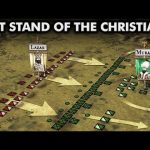
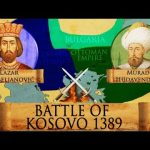
The Ottoman invasion of Europe was truly challenged for the first time during the Battle of Kosovo of 1389. The Serbs and other Balkan peoples alongside their allies from Western and Eastern Europe fought valiantly against overwhelming odds and although they lost, the foundation of the future resistance, that continued until the dissolution of the Ottoman Empire, was set. This battle was also remarkable due to the fact that leaders of both armies were killed during it. Prince Lazar Hrebeljanović died in the battle and Sultan Murad I was assassinated by the Serbian knight Miloš Obilić, who was killed shortly after. All three are considered martyrs by their people and the spirit of this battle is still part of the bitter animosity…
Sources used:
John V. A. Fine; John Van Antwerp Fine (1994). The Late Medieval Balkans: A Critical Survey from the Late Twelfth Century to the Ottoman Conquest. University of Michigan Press.
Ломоносов Матвей. Русские исторические источники Косовской битвы 1389 г.. — Пермь: Пермский госуниверситет, 2005
Inspired by: BazBattles, Invicta (THFE), Epic History TV and Historia Civilis
Songs used:
Ottoman Song – Uskudara Giderken
Dark Times – Kevin MacLeod
Magnus Ringblom – Ancient Sculptures in Church
Johannes Bornlof – Barbarians
Rannard Sillard – Deathmatch