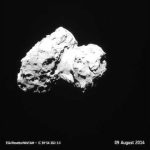
This animation of NAVCAM images follows the spacecraft’s approach to the comet from a distance of about 800 km on 1 August to a distance of about 62 km on 22 August 2014.
The movie is a showcase of over one thousand NAVCAM images released today in ESA’s Archive Image Browser: http://imagearchives.esac.esa.int/
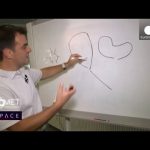
The Rosetta mission is now on a race against time to prepare maps and collect data before the Philae lander is due to be sent down to the surface of comet 67P in November. In this edition of Euronews Space, the ‘Comet Hunters’ show us how to orbit a comet, how Rosetta ‘sees’ its target, and what the mission means to the world of science, and to this team in particular.
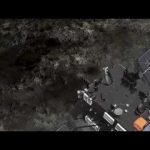
Extended version of Philae touchdown animation to include visualisations of some of the science experiments on the lander.
The animation begins with the deployment of Philae from Rosetta at comet 67P/Churyumov–Gerasimenko in November 2014. Rosetta will come to within about 10 km of the nucleus to deploy Philae, which will take several hours to reach the surface. Because of the comet’s extremely low gravity, landing gear will absorb the small forces of landing while ice screws in the probe’s feet and a harpoon system will lock the probe to the surface. At the same time a thruster on top of the lander will push it down to counteract the impulse of the harpoon imparted in the opposite direction. Once it is anchored to the comet, the lander will begin its primary science mission, based on its 64-hour initial battery lifetime. The animation then shows five of Philae’s 10 instruments in action: CIVA, ROLIS, SD2, MUPUS and APXS.
Rosetta’s Philae lander is provided by a consortium led by DLR, MPS, CNES and ASI.
Animation using a sequence of raw NAVCAM frames from 8 May to 22 June. The NAVCAM has a 5-degree field of view and takes 1024 x 1024 12-bit per pixel images.