Tag: active

  • The Sun’s active regions: coronal rain and solar moss

    The Sun’s active regions: coronal rain and solar moss

    The Extreme Ultraviolet Imager (EUI) on the ESA/NASA Solar Orbiter spacecraft captured this movie on 17 March 2022. It shows the Sun’s appearance at a wavelength of 17 nanometers. This is an extreme ultraviolet wavelength of light that is emitted by the upper atmosphere of the Sun. Known as the corona, this layer of the Sun’s atmosphere exists at a temperature of around one million degrees. EUI takes both full disc images using the Full Sun Imager (FSI) telescope, as well as detailed images of a smaller region using the High Resolution Imager (HRIEUV) telescope.

    On 17 March, Solar Orbiter was at roughly a third of the Earth’s distance from the Sun (0.378 AU), and heading for a close approach on 26 March, placing its payload closer to the Sun than any previous solar telescope.

    This movie shows FSI’s view of the Sun before zooming in on an active region with HRIEUV. Active regions are where the Sun’s magnetic field bursts out from its interior in loops that rise into the atmosphere. As gas flows around the loops and cools back down on its way to the surface it creates the phenomenon called coronal rain.

    Another intriguing feature of this image is the bright gas that makes delicate, lace-like patterns across the Sun. This is called coronal ‘moss’. It usually appears around the footprints, referred to by solar physicists as footpoints, of large coronal loops that are too hot to be seen in the EUI images.

    The colour on this image has been artificially added because the original wavelength detected by the instrument is invisible to the human eye.

    Credit: ESA & NASA/Solar Orbiter/EUI Team

    ★ Subscribe: http://bit.ly/ESAsubscribe and click twice on the bell button to receive our notifications.

    Check out our full video catalog: http://bit.ly/SpaceInVideos
    Follow us on Twitter: http://bit.ly/ESAonTwitter
    On Facebook: http://bit.ly/ESAonFacebook
    On Instagram: http://bit.ly/ESAonInstagram
    On LinkedIn: https://bit.ly/ESAonLinkedIn
    On Pinterest: https://bit.ly/ESAonPinterest
    On Flickr: http://bit.ly/ESAonFlickr

    We are Europe’s gateway to space. Our mission is to shape the development of Europe’s space capability and ensure that investment in space continues to deliver benefits to the citizens of Europe and the world. Check out https://www.esa.int/ to get up to speed on everything space related.

    Copyright information about our videos is available here: https://www.esa.int/ESA_Multimedia/Terms_and_Conditions


  • The Power of Active Allyship @ NASA

    The Power of Active Allyship @ NASA

    Join us on June 17, 2021 at 2 p.m. EDT for a conversation in honor of National LGBTQ+ Pride Month about what it means to be an ally, understanding some of the barriers faced by the lesbian, gay, bisexual, transgender, and queer community, and what you as an active ally can do to help break down those barriers. The panel discussion will be moderated by Charles Cockrell, associate director for strategy at NASA’s Glenn Research Center, and will feature:

    • Melanie Saunders, NASA deputy associate administrator
    • Sarah J. Phillips, visual information specialist for the Image Technology Center at NASA’s Glenn Research Center
    • Ron Brade, retired associate center director at NASA’s Ames Research Center
    • Donna Shafer, associate center director at NASA’s Johnson Space Center

    The event is sponsored by the LGBTQ+ Employee Alliance Group at NASA’s Langley Research Center, the LGBT Advisory Council at NASA’s Goddard Space Flight Center, Out & Allied at NASA’s Johnson Space Center; the LGBT Employee and Allies Network at NASA’s Kennedy Space Center, the LGBT Advisory Group at NASA’s Ames Research Center, the NASA HQ Pride Alliance; The Rainbow Alliance at NASA’s Glenn Research Center, Stennis Space Center, and the NASA Shared Services Center.

    Producer/Editor: David Anderson

  • ESA’s active debris removal mission: e.Deorbit (with annotations)

    ESA’s active debris removal mission: e.Deorbit (with annotations)

    ESA’s Clean Space initiative is studying an active debris removal mission called e.Deorbit, which will target an ESA-owned derelict satellite in low orbit, capture it, then safely burn it up in a controlled atmospheric reentry. e.Deorbit will be the world’s first active debris removal mission, and will provide an opportunity for European industries to showcase their technological capabilities to a global audience.

    Read more about e.Deorbit:
    http://www.esa.int/Our_Activities/Space_Engineering_Technology/Clean_Space/e.Deorbit

    A version of this video without annotations was previously published here:
    https://www.youtube.com/watch?v=R6yZLbUCU2c

  • ESA’s active debris removal mission: e.Deorbit

    ESA’s active debris removal mission: e.Deorbit

    ESA’s Clean Space initiative is studying an active debris removal mission called e.Deorbit, which will target an ESA-owned derelict satellite in low orbit, capture it, then safely burn it up in a controlled atmospheric reentry. e.Deorbit will be the world’s first active debris removal mission, and will provide an opportunity for European industries to showcase their technological capabilities to a global audience.

  • New Generation: The majestic James Webb in space

    New Generation: The majestic James Webb in space

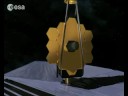
    Seen here in this short movie, the JWST is the successor to the NASA/ESA Hubble Space Telescope and, with a six-metre mirror, it will be almost three times the size of Hubble.