Embark on a cosmic journey with ESA as we explore the universe through the lens of ‘One Million’. From the scorching temperatures of the Sun’s corona to the cosmic gaze of the NASA/ESA/CSA James Webb Space Telescope — discover the astronomical wonders that surround us. 🚀
🎉 Join our space community in celebrating a momentous occasion — 1 MILLION subscribers on YouTube! 🌟 Thank you for your enthusiasm and support. ✨
★ Subscribe: http://bit.ly/ESAsubscribe and click twice on the bell button to receive our notifications.
We are Europe’s gateway to space. Our mission is to shape the development of Europe’s space capability and ensure that investment in space continues to deliver benefits to the citizens of Europe and the world. Check out https://www.esa.int/ to get up to speed on everything space related.
2023’s highlight was the highly anticipated launch of Juice, Europe’s Jupiter Icy Moon Explorer. The Juice spacecraft was placed on course to Jupiter on the second-to-last Ariane 5 launch vehicle in April. After an eight-year journey, Juice will begin observing the giant gas planet and its three large ocean-bearing moons – Ganymede, Calisto and Europa.
The Euclid space telescope was launched in July with the aim of unravelling the enigmas of ‘dark matter’ and ‘dark energy’. Euclid’s first images were released in November, revealing razor-sharp astronomical images with detail never before seen by a telescope across such a large patch of the sky.
After almost five years in space, ESA’s Aeolus wind mission was retired. This trailblazing mission was tasked with observing wind patterns from space thereby improving weather forecasts and climate models.. Aeolus data and technology will have an important role to play in the accuracy of future weather forecasting. On 28 July, it burned up in an assisted re-entry – the first assisted re-entry by a mission which was not designed to do so.
As space debris becomes an increasingly serious issue, ESA is determined to search for solutions. Together with its commercial and institutional partners, ESA has developed the ‘Zero Debris Charter’, launched this year. By signing the Charter, space entities worldwide can register their intent to work together towards the sustainable use of Earth’s orbital environment.
Earlier in in 2023, MTG-I1, the first of the Meteosat Third Generation missions, sent back its first images. The satellite was launched in 2022 and carries two instruments: a flexible combined imager and a lighting imager. Both instruments performed beyond expectation and a stunning combined image from both was revealed.
Earth observation is key to keeping our planet and the population as a whole, safe. Today, monitoring earthquakes, forest fires or flooding from space already helps to coordinate rescue response but the data can also be used to better understand phenomena such as climate change and support the IPCC climate reports.
Last year, NASA’s Dart mission impacted on a small moonlet of the asteroid Didymos, changing its course. We’ll soon be launching ESA’s Hera spacecraft to collect data on the aftermath of this collision. The Hera spacecraft was integrated and underwent testing this year in ESA ESTEC’s test centre in the Netherlands.
2023 also saw the first hardware tests for the second generation of Galileo satellites but even more importantly the Galileo High Accuracy Service was launched in January. This new service delivers centimetre accuracy from space further cementing Galileo’s reputation as the most accurate satellite navigation system in the world.
★ Subscribe: http://bit.ly/ESAsubscribe and click twice on the bell button to receive our notifications.
We are Europe’s gateway to space. Our mission is to shape the development of Europe’s space capability and ensure that investment in space continues to deliver benefits to the citizens of Europe and the world. Check out https://www.esa.int/ to get up to speed on everything space related.
ESA’s Earth Explorer Aeolus satellite was launched in August 2018 on a trailblazing mission to show how profiling Earth’s winds from space can improve weather forecasts and climate models. Data from its pioneering wind-mapping laser, which at one stage was thought a nigh-impossible feat of engineering, has been used by leading weather forecasting services throughout Europe.
Marking the end of Aeolus’ remarkable mission, ESA worked with composer Jamie Perera to create a woodwind piece from data that spans the lifetime of the satellite’s life in orbit around Earth.
In the resulting orchestral piece, every second is a day in the life of Aeolus, with data represented by the following instruments:
Piccolo: Rayleigh Top Altitude (the tops of clouds) Flute: Rayleigh Observation Type (density of clouds) Oboe: Rayleigh Reference Temperature (wind temperature) Clarinet 1: Rayleigh Wind Velocity (wind velocity) Clarinet 2: Rayleigh Wind Reference Pressure (air pressure) Bassoon/Bass Clarinet: Rayleigh Bottom Altitude (Earth’s surface) Ambient Synth: Validity Flag 0 (Aeolus downtime)
You can also hear landmark events such as volcanic eruptions represented by drums, hurricanes represented by wind sound effects, and the Coronavirus pandemic represented by a pulsing synth.
We are Europe’s gateway to space. Our mission is to shape the development of Europe’s space capability and ensure that investment in space continues to deliver benefits to the citizens of Europe and the world. Check out https://www.esa.int/ to get up to speed on everything space related.
As the year comes to a close, it is once again time to look back and reflect on some of the achievements and highlights of European spaceflight. The new Gaia star catalogue and the launch of Cheops are keeping ESA at the forefront of space science, as will Solar Orbiter, being prepared for launch next year. The Copernicus programme continues to be the largest Earth observation programme in the world, with ESA preparing even more missions. On the Space Station, Luca Parmitano became the third European to command an ISS expedition. During his second mission, he made some of the space programme’s most complex and demanding spacewalks. At the end of 2019, the ESA Space19+ ministerial conference agreed to give ESA its largest budget ever and expressed continued support for Europe’s independent access to space with Ariane 6 and Vega-C.
★ Subscribe: http://bit.ly/ESAsubscribe and click twice on the bell button to receive our notifications.
We are Europe’s gateway to space. Our mission is to shape the development of Europe’s space capability and ensure that investment in space continues to deliver benefits to the citizens of Europe and the world. Check out http://www.esa.int/ESA to get up to speed on everything space related.
Forging state-of-the-art space technologies, our Earth Explorer satellite missions continue to surpass expectations with a range of interesting and complementary results that go beyond their original goals. In this video, learn how each mission is contributing to Earth science, and changing the way we look at our beloved planet.
★ Subscribe: http://bit.ly/ESAsubscribe and click twice on the bell button to receive our notifications.
We are Europe’s gateway to space. Our mission is to shape the development of Europe’s space capability and ensure that investment in space continues to deliver benefits to the citizens of Europe and the world. Check out http://www.esa.int/ESA to get up to speed on everything space related.
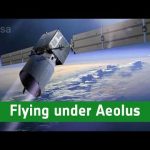
Following the launch of Aeolus on 22 August 2018, scientists have been busy fine-tuning and calibrating this latest Earth Explorer satellite. Aeolus carries a revolutionary instrument, which comprises a powerful laser, a large telescope and a very sensitive receiver. It works by emitting short, powerful pulses – 50 pulses per second – of ultraviolet light from a laser down into the atmosphere. The instrument then measures the backscattered signals from air molecules, dust particles and water droplets to provide vertical profiles that show the speed of the world’s winds in the lowermost 30 km of the atmosphere. These measurements are needed to improve weather forecasts. As part of the working being done to calibrate this novel mission, scientists have been taking similar measurements from an aircraft carrying an airborne version of Aeolus’ instrument. The pilot flies the plane under the satellite as it orbits above so that measurements of wind can be compared.
ESA is Europe’s gateway to space. Our mission is to shape the development of Europe’s space capability and ensure that investment in space continues to deliver benefits to the citizens of Europe and the world. Check out http://www.esa.int/ESA to get up to speed on everything space related.
Ένας ευρωπαϊκός δορυφόρος που ονομάζεται Αίολος θα μετρήσει για πρώτη φορά τους ανέμους από το διαστημα, υποσχόμενος να βελτιώσει σημαντικά την πρόβλεψη του καιρού.Η εκπομπή #Space και ο Τζέρεμι Γουίλκς βρέθηκε στην ακτή της βόρειας Νορβηγίας,στο διαστημικό κέντρο Andøya για να συναντήσει επιστήμονες που εργάζονται σε ένα νέο δορυφόρο με το όνομα Αίολος, ο οποίος μετράει τον άνεμο γύρω από τον πλανήτη μας για πρώτη φορά. Οι ερευνητές ειναι στο στάδιο της επικύρωσης και αξιολόγησης όλων των μετρήσεων που λαμβάνουν από το δορυφόρο σε τροχιά. Με την εκτόξευση του πυραύλου Vega ξεκινά μια πρωτοποριακή αποστολή για τις καιρικές συνθήκες.
Στα τέλη Αυγούστου του τρέχοντος έτους, ο πολυαναμενόμενος δορυφόρος Αίολος του Ευρωπαϊκού Οργανισμού Διαστήματος εκτοξεύτηκε στο διάστημα, ταξιδεύοντας γρήγορα και χαμηλά, μόλις 320 χιλιόμετρα πάνω από τα κεφάλια μας.
ESA is Europe’s gateway to space. Our mission is to shape the development of Europe’s space capability and ensure that investment in space continues to deliver benefits to the citizens of Europe and the world. Check out http://www.esa.int/ESA to get up to speed on everything space related.
#Space című műsorunkban ezúttal Észak-Norvégiából jelentkezünk, ahol az Andøya űrközpontban tudósokkal találkoztunk, akik egy új műholdon, az Aeolus-on dolgoznak. Ez egyedülálló módon az űrből méri a Föld szeleit. A tudósok jelenleg azon dolgoznak, hogy kalibrálják és érvényesítsék a méréseket, amelyeket a föld körüli pályáról kapnak. A Vega-rakéta robajával úttörő időjárási küldetés kezdődik: az Európai Űrügynökség régóta várt Aeolus-műholdját augusztus végén kilőtték az űrbe. A műhold gyorsan és alacsonyan repül, mindössze 320 kilométeres magasságban.
ESA is Europe’s gateway to space. Our mission is to shape the development of Europe’s space capability and ensure that investment in space continues to deliver benefits to the citizens of Europe and the world. Check out http://www.esa.int/ESA to get up to speed on everything space related.
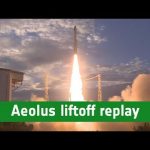
ESA’s Earth Explorer Aeolus satellite lifted off on a Vega rocket from Europe’s Spaceport in Kourou, French Guiana, at 21:20 GMT (23:20 CEST, 18:20 local time) on 22 August 2018. Aeolus carries one of the most sophisticated instruments ever to be put into orbit. The first of its kind, the Aladin instrument includes revolutionary laser technology to generate pulses of ultraviolet light that are beamed down into the atmosphere to profile the world’s winds – a completely new approach to measuring the wind from space. By profiling the lowermost 30 km of the atmosphere, Aeolus will give scientists global information on the speed of the wind in near-real time. This will improve our understanding of how wind, pressure, temperature and humidity are interlinked. This new mission will also provide insight into how the wind influences the exchange of heat and moisture between Earth’s surface and the atmosphere. These aspects are important for understanding climate change. As well as advancing science and improving weather forecasts, data from Aeolus will be used in air-quality models to improve forecasts of dust and other airborne particles that affect public health.
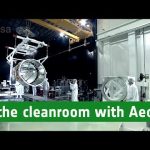
Discover more about our planet with the Earth from Space video programme. In this special edition, ESA’s Aeolus mission scientist, Anne Grete Straume, joins us in the cleanroom at Airbus Defence and Space in Toulouse, France. She explains how winds are generated, how they affect our weather, and how Aeolus will measure the wind and how this information will be used to improve weather forecasts and climate models.
At the Airbus Defence and Space facility in Toulouse, France, ESA’s Aeolus wind satellite has been prepared for its launch on top of a Vega rocket from Kourou in French Guiana. Liftoff is currently scheduled for August. The development of this latest Earth Explorer started 16 years ago and has now finished.
From orbit Aeolus will measure wind profiles on a global scale using a pioneering laser technology. These measurements will greatly benefit existing meteorological models and fill a gap in the observations of wind.
Discover more about our planet with the Earth from Space video programme. In this special edition, ESA’s Aeolus Project Manager, Anders Elfving, joins us in the cleanroom at Airbus Defence and Space in Toulouse, France, to talk about the challenges in developing the mission’s pioneering laser technology.
ESA’s Earth Explorer Aeolus satellite will be launched later this year to measure the world’s winds from space. The satellite carries one of the most sophisticated instruments ever to be put into orbit: Aladin, which includes two powerful lasers, a large telescope and very sensitive receivers. The laser generates ultraviolet light that is beamed down into the atmosphere to profile the world’s winds – a completely new approach to measuring the wind from space. These vertical slices through the atmosphere, along with information it gathers on aerosols and clouds, will improve our understanding of atmospheric dynamics and contribute to climate research. As well as advancing science, Aeolus will play an important role in improving weather forecasts. The mission will also complement information about the atmosphere being provided by the Copernicus Sentinel missions.