The Earth is seen rising from behind the shadowed surface of the Moon in this video taken on the sixth day of the Artemis I mission by a camera on the tip of one of Orion’s solar arrays. The spacecraft had just successfully executed the Outbound Powered Flyby maneuver which brought it within 80 miles of the lunar surface, the closest approach of the uncrewed Artemis I mission, before moving into a distant retrograde orbit around the Moon. The spacecraft entered the lunar sphere of influence Sunday, Nov. 20, making the Moon, instead of Earth, the main gravitational force acting on the spacecraft.
The night of 26 September 2022 will make space history – as the moment when @NASA’s DART spacecraft impacts the Dimorphos asteroid in an attempt to divert its course – humankind’s first planetary defence test. Next, in 2024, ESA launches its Hera spacecraft to investigate the post-impact asteroid. In fact, Hera is not one spacecraft but three: it carries with it ESA’s first deep-space CubeSats to make extra observations of its target.
With the Hera mission, ESA is assuming even greater responsibility for protecting our planet and ensuring that Europe plays a leading role in the common effort to tackle asteroid risks.
In this video, Ian Carnelli, Hera mission manager, and members of the Hera team, reflect on the DART impact and introduce Hera and its Milani and Juventas CubeSats.
★ Subscribe: http://bit.ly/ESAsubscribe and click twice on the bell button to receive our notifications.
We are Europe’s gateway to space. Our mission is to shape the development of Europe’s space capability and ensure that investment in space continues to deliver benefits to the citizens of Europe and the world. Check out https://www.esa.int/ to get up to speed on everything space related.
Twenty years ago, on the first of March 2002, ESA launched a new satellite to monitor our planet from space: Envisat. This research mission, which carried 10 instruments, would become a beacon for the development of future Earth observation satellites. In orbit for 10 years, double its projected lifespan, this flagship mission provided science with a wealth of data on the health of our planet and climate change – a treasure trove of data that is still used today. Thanks to the Heritage Space Programme, ESA ensures these precious data are preserved and made accessible for future generations.
We are Europe’s gateway to space. Our mission is to shape the development of Europe’s space capability and ensure that investment in space continues to deliver benefits to the citizens of Europe and the world. Check out https://www.esa.int/ to get up to speed on everything space related.
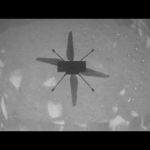
Today, the Ingenuity #MarsHelicopter became the first aircraft in history to make a powered, controlled flight on another planet.
Join us for a news briefing at 2 p.m. ET (1800 UTC) for an analysis of Ingenuity’s first flight and what this means for NASA.
The participants are: * Thomas Zurbuchen, associate administrator of NASA’s Science Mission Directorate * Michael Watkins, JPL director * MiMi Aung, Ingenuity Mars Helicopter project manager at JPL * Bob Balaram, Ingenuity Mars Helicopter chief engineer at JPL * Håvard Grip, Ingenuity Mars Helicopter chief pilot at JPL * Justin Maki, Perseverance Mars rover imaging scientist and deputy principal investigator of Mastcam-Z instrument at JPL
Now that our Perseverance Mars Rover successfully landed on the Red Planet after a nearly seven-month journey, mission experts will talk about the robotic scientist’s touchdown in the most challenging terrain on Mars ever targeted.
Perseverance, which launched July 30, 2020, will search for signs of ancient microbial life, collect carefully selected rock and regolith (broken rock and dust) samples for future return to Earth, characterize Mars’ geology and climate, and pave the way for human exploration beyond the Moon.
Tune in to watch a live broadcast from the Von Karman Auditorium at NASA’s Jet Propulsion Laboratory.
Join NASA Administrator Jim Bridenstine and officials from NASA, JAXA (Japan Aerospace Exploration Agency), the FAA (Federal Aviation Administration) and SpaceX for a live news conference starting at 9:30 p.m. EST with an update on NASA’s SpaceX Crew-1 mission. After launching at 7:27 p.m. EST from Kennedy Space Center in Florida, the SpaceX Crew Dragon ‘Resilience’ spacecraft carrying NASA astronauts Michael Hopkins, Victor Glover, and Shannon Walker, along with Soichi Noguchi of JAXA is in orbit and on the way to the International Space Station.
Today’s #LaunchAmerica mission that brought NASA astronauts Robert Behnken and Douglas Hurley back to Earth marks the first splashdown of an American crew spacecraft in 45 years. Tune in starting at 4:45 p.m. EDT to hear Administrator Jim Bridenstine and #LaunchAmerica mission experts talk about this milestone in human spaceflight.
Join Administrator Jim Bridenstine and NASA leadership for a post-launch news conference about the launch of our Perseverance rover and the Ingenuity helicopter on a United Launch Alliance Atlas V 541 rocket.
Submit your questions NOW for the broadcast! Comment using #CountdownToMars.
Liftoff! The SpaceX Falcon 9 rocket carrying NASA astronauts Robert Behnken and Douglas Hurley aboard the company’s Crew Dragon spacecraft launched from Kennedy Space Center’s historic Launch Pad 39A at 3:22 p.m. EDT on May 30, kicking off a critical final flight test of the SpaceX crew transportation system.
Following the successfully launch, NASA hosted a postlaunch news conference for officials to talk about the mission live from NASA’s Kennedy Space Center in Florida.
Participants included:
o NASA Administrator Jim Bridenstine
o Pat Forrester, NASA Chief Astronaut
o Kathy Lueders, manager, NASA Commercial Crew Program
o Elon Musk, SpaceX chief engineer
o Kirk Shireman, manager, International Space Station Program
NASA astronaut Nick Hague and Russian cosmonaut Alexey Ovchinin are in good condition following an aborted launch of their Soyuz spacecraft.
The Soyuz MS-10 spacecraft launched from the Baikonur Cosmodrome in Kazakhstan to the International Space Station at 4:40 a.m. EDT Thursday, October 11 (2:40 p.m. in Baikonur) carrying American astronaut Nick Hague and Russian cosmonaut Alexey Ovchinin. Shortly after launch, there was an anomaly with the booster and the launch ascent was aborted, resulting in a ballistic landing of the spacecraft. Search and rescue teams were deployed to the landing site. Hague and Ovchinin are out of the capsule and are reported to be in good condition.
Note: This video is edited for length, but includes the launch, the initial report of the issue, and the confirmation that the crew landed safely.
In recognition of the 50th anniversary of the Civil Rights Act of 1964, this series of short videos features NASA employees discussing their experiences and recollections related to the Civil Rights Movement, the civil rights progress of the last 50 years and the challenges that still confront us. The Civil Rights Act was signed into law July 2, 1964 by President Lyndon Baines Johnson — the namesake of NASA’s Johnson Space Center.