Tag: altimetry

  • Copernicus Sentinel-6 measuring sea levels using radar altimetry

    Copernicus Sentinel-6 measuring sea levels using radar altimetry

    This November the newest member of the EU’s Copernicus programme, Sentinel-6 Michael Freilich, will take to the heavens from Vandenberg Air Force Base in California. The satellite is named after NASA’s former Director of Earth Observation and is a radar altimetry mission to monitor sea-level rise, wave-height and windspeed.

    The mission is a collaboration between ESA, the European Commission, EUMETSAT, NASA and NOAA, with support from the French space agency CNES. It will continue a three-decade-long time-series of radar altimetry missions that started with the Topex-Poseidon mission and was then followed by the Jason missions.

    ★ Subscribe: http://bit.ly/ESAsubscribe and click twice on the bell button to receive our notifications.

    Check out our full video catalog: http://bit.ly/SpaceInVideos
    Follow us on Twitter: http://bit.ly/ESAonTwitter
    On Facebook: http://bit.ly/ESAonFacebook
    On Instagram: http://bit.ly/ESAonInstagram
    On Flickr: http://bit.ly/ESAonFlickr

    We are Europe’s gateway to space. Our mission is to shape the development of Europe’s space capability and ensure that investment in space continues to deliver benefits to the citizens of Europe and the world. Check out https://www.esa.int/ to get up to speed on everything space related.

    Copyright information about our videos is available here: https://www.esa.int/ESA_Multimedia/Terms_and_Conditions

    #ESA
    #Sentinel6
    #SeeingTheSeas
  • Sea-level rise

    Sea-level rise

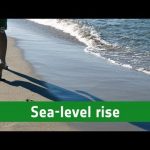
    Although it may not be immediately obvious when we visit the beach, sea-level rise is affecting coastlines all over the world. For low-lying countries such as the Netherlands, sea-level rise and tidal surges are a constant threat. Our oceans are rising as a consequence of climate change. As the temperature of seawater increases it expands and the ice melting from ice sheets and glaciers adds more water to the global ocean. We know this because satellites high above our heads measure the temperature of the sea surface and of our changing ice.

    While the global averaged trend is towards rising levels, there are many regional differences so that in some places it is rising and in other places it is falling. Satellites carrying altimeter instruments systematically measure the height of the sea surface so that sea-level rise can be closely monitored. Altimetry measurements over the last 25 years show that on average sea-level is rising about 3 mm a year and this rise is accelerating.

    ★ Subscribe: http://bit.ly/ESAsubscribe

    Check out our full video catalog: http://bit.ly/SpaceInVideos
    Follow ESA on Twitter: http://bit.ly/ESAonTwitter
    On Facebook: http://bit.ly/ESAonFacebook
    On Instagram: http://bit.ly/ESAonInstagram
    On Flickr: http://bit.ly/ESAonFlickr

    ESA is Europe’s gateway to space. Our mission is to shape the development of Europe’s space capability and ensure that investment in space continues to deliver benefits to the citizens of Europe and the world. Check out http://www.esa.int/ESA to get up to speed on everything space related.

    Copyright information about our videos is available here: http://www.esa.int/spaceinvideos/Terms_and_Conditions

  • Earth from Space: special edition

    Earth from Space: special edition

    Discover more about our planet with the Earth from Space video programme. In this special edition, senior scientist at France’s Collecte Localisation Satellites, Marie-Hélène Rio, joins the show to discuss how data on ocean surface currents by the Sentinel-3 satellite mission are used by people working at sea.

    More about Sentinel-3:
    http://www.esa.int/Our_Activities/Observing_the_Earth/Copernicus/Sentinel-3