Tag: ams

  • ESA highlights 2019

    ESA highlights 2019

    As the year comes to a close, it is once again time to look back and reflect on some of the achievements and highlights of European spaceflight. The new Gaia star catalogue and the launch of Cheops are keeping ESA at the forefront of space science, as will Solar Orbiter, being prepared for launch next year. The Copernicus programme continues to be the largest Earth observation programme in the world, with ESA preparing even more missions. On the Space Station, Luca Parmitano became the third European to command an ISS expedition. During his second mission, he made some of the space programme’s most complex and demanding spacewalks. At the end of 2019, the ESA Space19+ ministerial conference agreed to give ESA its largest budget ever and expressed continued support for Europe’s independent access to space with Ariane 6 and Vega-C.

    ★ Subscribe: http://bit.ly/ESAsubscribe and click twice on the bell button to receive our notifications.

    Check out our full video catalog: http://bit.ly/SpaceInVideos
    Follow us on Twitter: http://bit.ly/ESAonTwitter
    On Facebook: http://bit.ly/ESAonFacebook
    On Instagram: http://bit.ly/ESAonInstagram
    On Flickr: http://bit.ly/ESAonFlickr

    We are Europe’s gateway to space. Our mission is to shape the development of Europe’s space capability and ensure that investment in space continues to deliver benefits to the citizens of Europe and the world. Check out http://www.esa.int/ESA to get up to speed on everything space related.

    Copyright information about our videos is available here: http://www.esa.int/spaceinvideos/Terms_and_Conditions

    #ESA
    #2019Highlights
    #Space

  • Spacewalks for AMS

    Spacewalks for AMS

    ESA astronaut Luca Parmitano will soon take part in several challenging spacewalks to service the International Space Station’s largest scientific instrument.

    The Alpha Magnetic Spectrometer (AMS) is a sub-atomic particle detector that looks for dark matter, antimatter and measures cosmic rays – high energy particles that travel through space at close to the speed of light.

    The AMS took 16 countries nearly 20 years to develop. It was assembled at CERN, tested at ESA’s ESTEC facility in The Netherlands and installed on the Space Station in 2011. Since then it has collected over 145 billion cosmic ray events across a range of energy levels and has already provided the first insights into potential antimatter and dark matter.

    The maintenance of the AMS’ cooling system will ensure it can continue to provide more data and groundbreaking science. This film contains soundbites from the instrument’s Principal Investigator, Nobel Prize-winning physicist Professor Samuel Ting (MIT/CERN).

    Follow Luca’s Beyond Mission: http://bit.ly/ESALucaParmitano

    ★ Subscribe: http://bit.ly/ESAsubscribe and click twice on the bell button to receive our notifications.

    Check out our full video catalog: http://bit.ly/SpaceInVideos
    Follow us on Twitter: http://bit.ly/ESAonTwitter
    On Facebook: http://bit.ly/ESAonFacebook
    On Instagram: http://bit.ly/ESAonInstagram
    On Flickr: http://bit.ly/ESAonFlickr

    We are Europe’s gateway to space. Our mission is to shape the development of Europe’s space capability and ensure that investment in space continues to deliver benefits to the citizens of Europe and the world. Check out http://www.esa.int/ESA to get up to speed on everything space related.

    Copyright information about our videos is available here: http://www.esa.int/spaceinvideos/Terms_and_Conditions

    #ESA
    #LucaParmitano
    #MissionBeyond

  • “Endeavour” roars up to sky with Roberto Vittori and AMS-02

    “Endeavour” roars up to sky with Roberto Vittori and AMS-02

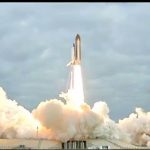
    Space Shuttle “Endeavour” was launched to space at 14:56 CEST (12:56 GMT) on 16 May from Kennedy Space Center in Florida.
    The 16-day-long STS-134 mission will deliver AMS-02, a big cosmological instrument to the Space Station and its crew includes ESA’s Italian astronaut Roberto Vittori. This is the last flight of “Endeavour”.