Givemefive.in is a new generation AI and programming learning platform for kids through videos and hands an activities . In this video kids will understand what is intelligence , human intelligence and artificial intelligence.
If you want to learn more about AI , and get access to hands on experiment AI kits write to us at support@givemefive.in
ESA astronaut Luca Parmitano has arrived on the International Space Station following a six-hour flight in the Russian Soyuz MS-13 spacecraft alongside NASA astronaut Drew Morgan and Roscosmos cosmonaut Alexander Skvortsov.
The trio were launched from the Baikonur Cosmodrome in Kazakhstan at 16:28 GMT (18:28 CEST) on Saturday 20 July and orbited Earth four times before docking to the Station’s Zvezda service module at 22:50 GMT (00:50 CEST).
This mission to the International Space Station is the second for Luca, the third for Alexander and the first for Drew. They were warmly welcomed by NASA astronauts Christina Koch and Nick Hague and current International Space Station commander Alexey Ovchinin of Roscosmos, bringing the number of humans in orbit to six.
This clip shows highlights from preparations prior to launch, liftoff, docking and hatch opening as the crew start to settle into their new home and workplace.
Luca will live and work in orbit for the six-month duration of his Beyond mission. There, he will support over 50 European experiments and more than 200 international experiments in microgravity.
During the latter part of his mission, Expedition 61, he will take up the role of Space Station commander. He is the first Italian and third European astronaut ever appointed to this role, after ESA astronauts Alexander Gerst in 2018 and Frank De Winne in 2009.
We are Europe’s gateway to space. Our mission is to shape the development of Europe’s space capability and ensure that investment in space continues to deliver benefits to the citizens of Europe and the world. Check out http://www.esa.int/ESA to get up to speed on everything space related.
Climate change is high on the global agenda.
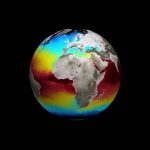
To tackle climate change, a global perspective is needed and this can be provided by satellites. Their data is key if we want to prepare ourselves for the consequences of climate change. While our Earth Explorers gather data to understand how our planet works and understand the impact that climate change and human activity are having on the planet, the European Union’s Copernicus Sentinels provide systematic data for environmental services that help adapt to and mitigate change.
The video offers an overview of how European satellites keep watch over our world. It includes interviews with Josef Aschbacher, our Director of Earth Observation Programmes, and Michael Rast, our Earth Observation Senior Advisor.
★ Subscribe: http://bit.ly/ESAsubscribe and click twice on the bell button to receive our notifications.
ESA is Europe’s gateway to space. Our mission is to shape the development of Europe’s space capability and ensure that investment in space continues to deliver benefits to the citizens of Europe and the world. Check out http://www.esa.int/ESA to get up to speed on everything space related.
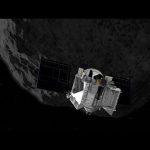
On Dec. 3, 2018, the OSIRIS-REx spacecraft arrives at its target, near-Earth asteroid Bennu. Here, the team explains mission goals and the process of approach and rendezvous. OSIRIS-REx will study Bennu for two years before collecting a sample to return to Earth.
After a 24-hour journey from Bremen, Germany with stops in Hamburg and Portsmouth, USA, the European Service Module landed on 6 November 2018 at Kennedy Space Center in Florida.
The shipment from Bremen to Florida is just the beginning – the first leg of an exciting journey that will boost the spacecraft to lunar orbit and back.
The first service module is a key component that will see #Orion around the Moon for Exploration Mission-1. It will make the powerful burns required to enter and exit lunar orbit as well as softer burns to allow for space manoeuvring and course correction.
After years of designing, building, and testing in Europe, the powerhouse that will propel NASA’s Orion spacecraft to the Moon will be mated with the rest of the spacecraft to undergo final testing before flight.
ESA’s partnership with NASA takes the European effort to the global stage. For the first time, NASA will use a European-built system as a critical element to power an American spacecraft, extending the international cooperation of the International Space Station into deep space.
ESA is Europe’s gateway to space. Our mission is to shape the development of Europe’s space capability and ensure that investment in space continues to deliver benefits to the citizens of Europe and the world. Check out http://www.esa.int/ESA to get up to speed on everything space related.
The European Space Agency demonstrates its commitment to the United Nations Sustainable Development Goals through the activities promoted by its ten directorates. Satellite data and space applications, as well as space technologies, play a major role in addressing issues ranging from health care and education through to climate change and human migration. ESA’s multifaceted technical expertise can provide policy makers, aid organisations and private companies with the necessary tools to support economic growth, social development and environmental protection.
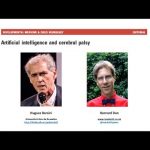
In this podcast, Bernard Dan speaks to Professor Hugues Bersini of Université Libre de Bruxelles. They discuss Bernard’s editorial in the September 2018 issue of Developmental Medicine & Child Neurology: ‘Artificial intelligence and cerebral palsy’.
DMCN Journal:
Developmental Medicine & Child Neurology (DMCN) has defined the field of paediatric neurology and childhood-onset neurodisability for over 60 years. DMCN disseminates the latest clinical research results globally to enhance the care and improve the lives of disabled children and their families.
Mac Keith Press:
We exist to improve the care of disabled children by extending the knowledge and understanding of developmental medicine and paediatric neurology. We publish the journal DMCN and books in related subject areas. These are of interest to researchers, health professionals, clinicians, therapists, parents and all involved in the care of children and young people with neurodevelopmental conditions.
ESA is Europe’s gateway to space. Our mission is to shape the development of Europe’s space capability and ensure that investment in space continues to deliver benefits to the citizens of Europe and the world. Check out http://www.esa.int/ESA to get up to speed on everything space related.
In the not-too-distant future, leukemia patients may get their treatment recommendations from a computer. A team of researchers in Seattle is testing a program that could take the trial and error out of cancer treatment.
Diego Fernandez and Chris Stewart welcome Earth observation attendants and provide their opening remarks.
Every two years, ESA’s Earth observation summer schools draws young scientists from all over the world to learn more about remote sensing, Earth system science, modelling and monitoring, and how data can be used to better understand the world we live in. In 2018, the two-week summer school is held on 30 July to 10 August. While the students engage in practical sessions in the afternoons, the morning lectures were streamed live.
A new resupply mission arrives at the Space Station, a closer look at dwarf planet, Ceres, and the Parker Solar Probe is ready for the heat … a few of the stories to tell you about – This Week at NASA!
This video is available for download from NASA’s Image and Video Library: https://images.nasa.gov/details-NHQ_2018_0706_New%20Supplies%20and%20Research%20for%20the%20Space%20Station%20on%20This%20Week%20@NASA%20%E2%80%93%20July%206,%202018.html
Prof. Shoucheng Zhang discusses three pillars of information technology: quantum computing, AI and blockchain. He presents the fundamentals of crypto-economic science, and answers questions such as: What is the intrinsic value of a medium of exchange? What is the value of consensus and how does it emerge? How can math be used to create distributed self-organizing consensus networks to create a data-marketplace for AI and machine learning?
Prof. Zhang is the JG Jackson and CJ Wood professor of physics at Stanford University. He is a member of the US National Academy of Science, the American Academy of Arts and Sciences and a foreign member of the Chinese Academy of Sciences. He discovered a new state of matter called topological insulator in which electrons can conduct along the edge without dissipation, enabling a new generation of electronic devices with much lower power consumption. For this ground breaking work he received numerous international awards, including the Buckley Prize, the Dirac Medal and Prize, the Europhysics Prize, the Physics Frontiers Prize and the Benjamin Franklin Medal.
He is also the founding chairman of DHVC venture capital fund, which invests in AI, blockchain, mobile internet, big data, AR/VR, genomics and precision medicine, sharing economy and robotics.
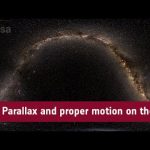
A 360° animated view of the entire sky on 25 April 2018.
After a few seconds, the stars start moving in the sky according to parallax, an apparent shift caused by Earth’s yearly motion around the Sun. Then, constellation outlines appear as visual aids. Finally, stars start moving according to their true motion through space, which is visible on the sky as proper motion. Parallaxes have been exaggerated by 100 000 and proper motions have been speeded up by one trillion (10^12) to make them visible in this animation. This animation is based on data from the second data release of ESA’s Gaia satellite, which has measured the positions, parallaxes and motions of more than one billion stars across the sky to unprecedented accuracy.
ESA/Gaia/DPAC, CC BY SA 3.0 IGO
Acknowledgement: Gaia Data Processing and Analysis Consortium (DPAC); Gaia Sky; S. Jordan / T. Sagristà, Astronomisches Rechen-Institut, Zentrum für Astronomie der Universität Heidelberg, Germany
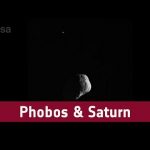
These observations of Phobos and Saturn were taken by the Super Resolution Channel of the High Resolution Stereo Camera on Mars Express. The video comprises 30 separate images acquired during Mars Express orbit 16 346 on 26 November 2016. The slight up and down movement of Saturn and Phobos in these images is caused by the oscillation of the spacecraft’s orientation after completing the turn towards the moon. Phobos can be seen in the foreground, partially illuminated, with Saturn visible as a small ringed dot in the distance. For more information go tohttp://www.esa.int/Our_Activities/Space_Science/Mars_Express/Mars_Express_views_moons_set_against_Saturn_s_rings
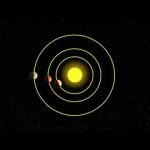
The newly-discovered Kepler-90i — a sizzling hot, rocky planet that orbits its star once every 14.4 days — was found by researchers from Google and The University of Texas at Austin using machine learning. Machine learning is an approach to artificial intelligence in which computers “learn.” In this case, computers learned to identify planets by finding in Kepler data instances where the telescope recorded signals from planets beyond our solar system, known as exoplanets.
Video credit: NASA/Ames Research Center
NASA’s Ames Research Center is located in California’s Silicon Valley. Follow us on social media to hear about the latest developments in space, science and technology.
Breathable air is necessary to sustain humans both on Earth as well as in space.
NASA is working with the Robert Wood Johnson Foundation (RWJF) to sponsor the Earth and Space Air Prize competition for a solution that could improve air quality and health in space and on Earth. This project is a technology innovation challenge to promote development of robust, durable, inexpensive, efficient, lightweight, and easy-to-use aerosol sensors for space and Earth environments. The competition asks teams or individuals to design and develop specialized sensor technology that has the potential to be useful in spaceflight as well as on Earth anywhere outdoors in a community where people may be exposed to airborne particles.
To learn more about the rules and to register for the competition please visit www.earthspaceairprize.org
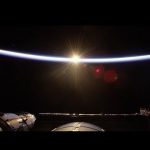
A series of day-time photos were taken by ESA astronaut Paolo Nespoli to create this time-lapse of Africa as seen from the Space Station.
ESA astronaut Paolo Nespoli in currently working and living aboard the International Space Station as part of the Italian Space Agency long duration VITA mission.
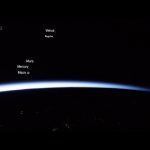
On 18 September 2017, ESA astronaut Paolo Nespoli shot this beautiful time-lapse showing the Moon rising above the Earth’s horizon together with Mercury, Mars, the star Regulus, and Venus.
ESA astronaut Paolo Nespoli is currently working and living on board the International Space Station as part of his long duration Vita mission.
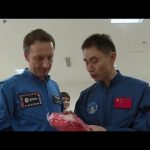
ESA astronauts Samantha Cristoforetti and Matthias Maurer joined Chinese astronauts last month for nine days of sea survival training off China’s coastal city of Yantai.
This is the first time ESA astronauts have trained in China and stems from the 2015 agreement to boost collaboration between ESA and China Manned Space Agency, with the goal of flying European astronauts on the Chinese space station from 2022.
This video, filmed by the Astronaut Center of China, shows the first joint training, with interviews of ESA participants in English, French, German, Italian and Spanish.
According to a recent PricewaterhouseCoopers (PwC) report, Artificial Intelligence (AI) is expected to contribute an additional $ 15.7 trillion to the global GDP by 2030. Notably, the number of AI startup companies in India has increased from 21 in 2013 to 128 in 2016. In this episode of Heads Up, we discuss the scope and potential of this much talked about space with the winners of Global Hackweek 2017, which was recently organised by NITI Aayog.
NDTV is one of the leaders in the production and broadcasting of un-biased and comprehensive news and entertainment programmes in India and abroad. NDTV delivers reliable information across all platforms: TV, Internet and Mobile.
ESA’s vision for human spaceflight and robotic exploration is part of humanity’s road to the stars. Exploring is about visiting new places and coming back with new experiences and knowledge to help us on Earth.
Our strategy includes three destinations where humans will work with robots to gather new knowledge: low-Earth orbit on the International Space Station, the Moon – our closest neighbour, and our third destination Mars.
The exploration programme includes Europe’s service module for NASA’s Orion spacecraft around the Moon, a landing on the Moon with Roscomos’ Luna lander and ESA’s Exomars rover on Mars.
A deep-space gateway farther afield than the International Space Station is considered as a springboard for exploration beyond the Moon.
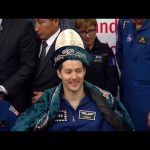
Highlights from ESA astronaut Thomas Pesquet’s return to Earth at the end of his six-month Proxima mission to the International Space Station on 2 June 2017.
After farewells and hatch closure, Thomas and his Expedition 50/51 crewmate and Soyuz commander Oleg Novitsky undocked from the International Space Station at 12:47 CEST (10:47 GMT). Just a few hours later their spacecraft reentered Earth’s atmosphere, landing in the Kazakh Steppe at 16:10 CEST (14:10 GMT). Thomas and Oleg were helped out of the Soyuz by a recovery crew and, after medical checks, they were flown to Karaganda airport where they received the traditional welcoming ceremony. Thomas then flew directly from Karaganda to Cologne, in Germany, home to the European Astronaut Centre, to start post-flight testing.
Thomas and Oleg spent 196 days in space. Thomas took part in more than 60 experiments during his Proxima mission. His experiments are helping to understand the human brain, ocean currents and radiation in space, how atoms behave and tested new spacecraft materials. Other highlights included his two spacewalks to improve and maintain the Space Station.
NASA’s Orion spacecraft will take astronauts to destinations at or beyond low Earth orbit. In January 2013, it was announced that ESA would provide the European Service Module (ESM) for Orion’s first uncrewed mission. Derived from ESA’s Automated Transfer Vehicle cargo spacecraft, the ESM will provide life support, propulsion and structural functions for Orion. In February 2017, a contract was signed for a second ESM to be used on Orion’s first crewed flight, which will carry astronauts beyond the Moon and back.
Disney+ is the only place to stream your favorites from Disney, Pixar, Marvel, Star Wars, National Geographic and more. Access it all at https://disneymusic.co/JoinDisneyPlus?IQid=dmvevo. Coming to UK, France, Germany, Spain and Italy March 2020.
Watch us test and play with the Anki Overdrive car track toy. At the end of the video we present the Family Playlab Play Rating where we give ratings (1-5 and 5 is better) in the following categories:
-Assembly
-Durability
-Price
-Fun score
Overall we think that the Anki Overdrive is a very fun toy to play with.
Anki Overdrive is like a smart robot version of a classic slot car race track, where each car is a robot with smart artificial intelligence.
Disclaimer: Anki did not pay us to make this video. This is a test and review of the Anki Overdrive product, and Anki has had no control of the content of the video.
ESA astronaut Thomas Pesquet shares his Christmas plans and wishes on the International Space Station with Expedition 50 crewmates Shane Kimbrough and Peggy Whitson.
Flying 400 km above Earth, astronauts on the International Space Station have a unique experience and vision of our planet that they share in this video. Thomas recounts his memories growing up in Normany, France, and explains what Christmas means to him.
His end-of-year meal was prepared by French chefs – canned of course, there is no way to cook food on the Space Station and includes ox-tongue from his home-region prepared by Thierry Marx, chicken-supreme and for desert, apple gingerbread.
In 1958 NASA’s top management T. Keith Glennan and Hugh L. Dryden used a film presentation to introduce the new agency to former employees of NACA (National Advisory Committee for Aeronautics). Since that day visual communication has been a key element in telling the NASA story to the world.
Currently around 63% of students are disengaged at school, meaning that they withdrawal either physically or mentally before they have mastered the skills that are required to flourish in later life. In this talk Scott Bolland explores the science of learning, the mismatch between how we teach and how the brain natural learns, and the important role that artificial intelligence could take in addressing the limitations in our current education system.
Dr Scott Bolland is the founder of New Dawn Technologies, a high-tech software company aiming to revolutionise education through the use of artificial intelligence. He has spent the last 20 years actively researching and teaching in the field of cognitive science – the scientific study of how the mind works – which spans disciplines such as psychology, philosophy, neuroscience, artificial intelligence and computer science. He holds a PhD in this field, as well as a university medal for outstanding academic scholarship.
This talk was given at a TEDx event using the TED conference format but independently organized by a local community. Learn more at http://ted.com/tedx
Dozens of Euro 2016 matches are being beamed via satellite to television sets and phones all over the world this summer. But did you know that there is a technology, based on internet and satellite, that allows even a small football club to live stream their games and target a new audience?
Claudio Rosmino and the Space team travelled to Italy to see this innovation in action – and also to France to explore the science behind the technology.
While there are no ironclad rules for producing children who perform well in school, pursue healthy behavior, and work towards wise goals, there are proven strategies that can help. Lucky are those with natural talent, but some work suggests grit, perseverance, and pure stick-to-it-ness may matter even more. Research also highlights the value of finding meaningful life purpose. Artificial intelligence has emerged as an effective tool for predicting long-term outcomes, but can it also help maximize a child’s potential? How do we cultivate characteristics in our youth that will lead to a fulfilling adulthood? What can early coaching accomplish?
Featuring:
Robin Koval
Vivienne Ming
Vic Strecher
Kevin Vigilante, Moderator
ESA’s new Earth observation satellite Sentinel-3A will soon be launched into orbit. Once more the European Space Agency proves it is on the forefront of monitoring our environment and the climate.
Using state of the art and proven technology the Sentinel-3 satellite is a fabulous piece of engineering set to play a key role in the European Commission’s Copernicus programme. However this technological piece of craftsmanship is only possible as the result of earlier scientific missions such as ERS, Envisat and Cryosat, with Sentinel-3 building on their heritage.
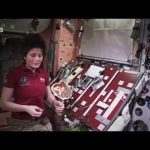
ESA astronaut Samantha Cristoforetti is currently living on board the International Space Station for her long duration mission Futura. Food is an important item in space, also on the psychological side; that’s why astronauts are allowed a certain quantity of the so-called “bonus food” of their choice that reminds them of their home cooking tastes. We asked Samantha to show us how she manages to cook one of her bonus food recipes in microgravity: a quinoa salad with dried tomatoes, mackerel and leek cream, all wrapped in a warm tortilla.
We could call them the good, the bad and the ugly! No, we are not talking of spaghetti westerns… Instead, we are talking about a type of fat called lipids. Often we speak badly about them, but some are essential to our health as they reduce chronic inflammation, help lower ‘bad’ cholesterol – LDL – and are a valuable aid in the prevention of cardiovascular disease.
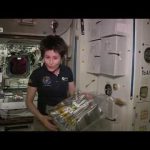
We asked Samantha Cristoforetti, ESA astronaut on board of the International Space Station for the Futura mission, to tell us about which king of healthy fats she and the other astronauts can enjoy while on orbit.
In the afterglow of the Rosetta mission’s success in landing on a comet, the member states of ESA met in Luxembourg in early December to look forward to future challenges. Among the priorities is the development and construction of the new rocket, Ariane 6, which is seen as essential to maintaining Europe’s lead in the launcher market. Then there’s the ExoMars mission to further explore the ‘Red Planet’ and look for signs of life. But it’s not just about probes – ESA’s manned spaceflight programme also has momentum, with new astronauts currently in training and due to fly in 2015 and 2016. So, as the agency marks a half century of Europe’s space sector, it’s onwards and upwards for the next 50 years.
This second video in the ‘Journey to the International Space Station’ series follows the Soyuz capsule from Earth orbit to docking with the Space Station. Featuring interviews with ESA astronauts Luca Parmitano, Frank De Winne and Paolo Nespoli, and an introduction by Alexander Gerst, it includes unique footage taken from inside the Soyuz spacecraft.
Produced by the ESA Human Spaceflight and Operations Astronaut Training Division in Cologne, Germany, in collaboration with the Human Spaceflight and Operations Strategic Planning and Outreach Office in Noordwijk, The Netherlands.
Narration: Bernard Oattes
Technical experts: Stephane Ghiste, Dmitriy Churkin
Content design: Stephane Ghiste, Dmitriy Churkin, Matthew Day, Celena Dopart
Animation: Nelson Steinmetz, Yannis Nourrisson
Video editing: Celena Dopart, Andrea Conigli
Project coordination: Matthew Day
Special thanks to:
NASA
Roscosmos
Frank De Winne
Paolo Nespoli
Luca Parmitano
Alexander Gerst
Smithsonian National Air and Space Museum
Captions available in English, Spanish, German, French, Russian and Italian. We’re working on more languages and they will be added as they become available. Click on the CC button to switch between languages.
Follow Paxi to the edge of the Solar System to discover the world of comets, and learn about the amazing Rosetta mission to comet 67P/Churyumov-Gerasimenko.
In this video, targeted at children aged between 6 and 12, Paxi takes kids with him to discovery comets and Rosetta, the amazing ESA spacecraft flying alongside comet 67P/Churyumov-Gerasimenko that will attempt, on 12 November 2014, to release a lander onto it.
This video is the third of a series of animations in which Paxi, ESA’s Education mascot, touches on different aspects of the Solar System, the Universe, the secrets of planet Earth, and much more.
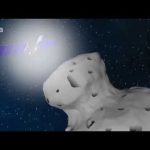
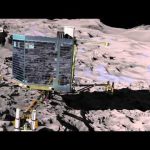
Rosetta’s deployment of Philae to land on Comet 67P/Churyumov–Gerasimenko.
The animation begins with Philae still on Rosetta, which will come to within about 22.5 km of the centre of the nucleus to release the lander on 12 November 2014.
The animation then shows Philae being ejected by Rosetta and deploying its own three legs, and follows the lander’s descent until it reaches the target site on the comet about seven hours later.
The animation is speeded up, but the comet rotation is true: in the time it takes for Philae to descend, the nucleus has rotated by more than 180º (the comet’s rotation period is 12.4 hours).
The final steps of Philae’s descent towards the comet are shown as seen by a hypothetical observer close to the landing site on the comet.
Finally, the animation shows Philae landing on the comet.
Because of the comet’s extremely low gravity, landing gear will absorb the small forces of landing while ice screws in the probe’s feet and a harpoon system will lock the probe to the surface. At the same time a thruster on top of the lander will push it down to counteract the impulse of the harpoon imparted in the opposite direction. Once it is anchored to the comet, the lander will begin its primary science mission, based on its 64-hour initial battery lifetime. The animation shows a number of the science instruments in action on the surface.
Acknowledgement: The background image of the sequence showing Philae closing in on the landing site was taken by Rosetta’s OSIRIS narrow-angle camera (ESA/Rosetta/MPS for OSIRIS Team MPS/UPD/LAM/IAA/SSO/INTA/UPM/DASP/IDA) on 14 September 2014 from a distance of about 30 km.
Philae was provided by a consortium led by DLR, MPS, CNES and ASI.