
At approximately 7:49 a.m. on July 14, NASA’s New Horizons spacecraft is scheduled to be as close as it will get to Pluto, approximately 7,800 miles (12,500 kilometers) above the surface. This historic moment is part of NASA’s coverage of New Horizons’ nine year, three billion mile journey to the Pluto system to gather data about Pluto and its moons.
Tag: APL
-
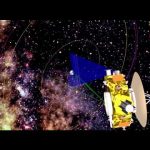
NASA’s New Horizons Mission Update from the Johns Hopkins University Applied Physics Lab (APL)
Weekly pre-flyby updates aired June 23 on NASA TV provides an overview of the New Horizons mission, the spacecraft and its suite of instruments being prepared for a July 14 flyby, and a summary of Pluto science to date.
-
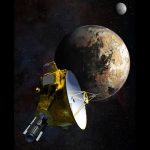
The Year of Pluto – New Horizons Documentary Brings Humanity Closer to the Edge of the Solar System
New Horizons is the first mission to the Kuiper Belt, a gigantic zone of icy bodies and mysterious small objects orbiting beyond Neptune. This region also is known as the “third” zone of our solar system, beyond the inner rocky planets and outer gas giants. Johns Hopkins University Applied Physics Laboratory (APL) in Maryland, designed, built and operates the New Horizons spacecraft, and manages the mission for NASA’s Science Mission Directorate in Washington. The Year of Pluto – NASA New Horizons is a one hour documentary which takes on the hard science and gives us answers to how the mission came about and why it matters. Interviews with Dr. James Green, John Spencer, Fran Bagenal, Mark Showalter and others share how New Horizons will answer many questions. New Horizons is part of the New Frontiers Program, managed by NASA’s Marshall Space Flight Center in Huntsville, Alabama.
-
NASA Social Media Conducts Web Chat on New Horizons Pluto Mission at the Applied Physics Laboratory
On Saturday, at the Applied Physics Laboratory in Laurel, MD, NASA connected with social media followers in-person and online for a Web Social on the New Horizons mission exploring Pluto using #NASASocial and #PlutoFlyby and @NASANewHorizons.
NASA Social is a program to provide opportunities for NASA’s social media followers to learn and share information about NASA’s missions, people, and programs. NASA Social is the next evolution in the agency’s social media efforts. Formerly called NASA Tweetup, NASA Social program includes both special in-person events and social media credentials for individuals who share the news in a significant way. This program has brought thousands of people together for unique social media experiences of exploration and discovery.