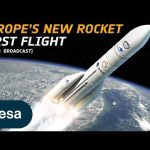
The first half of 2024 saw hundreds of people across Europe building, cajoling, shipping, lowering, integrating, securing and protecting the precious pieces and parts that came together to create Ariane 6 – Europe’s new heavy-lift rocket.
Huge engines, boosters and outer shells met tiny screws, electrical boards and masses of supercooled fuel. All this came together at Europe’s Spaceport in French Guiana, for the spectacular first launch of Ariane 6 on 9 July 2024, restoring Europe’s access to space.
Get a glimpse at the teamwork, skill and care that went into this moment over many months, in this montage of Ariane 6 images, videos and timelapse photography spanning 30 January to 9 July 2024.
★ Subscribe: http://bit.ly/ESAsubscribe and click twice on the bell button to receive our notifications.
We are Europe’s gateway to space. Our mission is to shape the development of Europe’s space capability and ensure that investment in space continues to deliver benefits to the citizens of Europe and the world. Check out https://www.esa.int/ to get up to speed on everything space related.
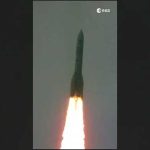
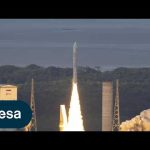
Europe’s new rocket Ariane 6 powered into space on 9 July 2024 from a newly built dedicated launch pad in French Guiana. Liftoff occurred at 16:00 local time (20:00 BST, 21:00 CEST).
Europe’s new rocket Ariane 6 powered Europe into space taking with it a varied selection of experiments, satellites, payload deployers and reentry demonstrations that represent thousands across Europe, from students to industry and experienced space actors.
This inaugural flight, designated VA262, is a demonstration flight to show the capabilities and prowess of Ariane 6 in escaping Earth’s gravity and operating in space. Nevertheless, it had several passengers on board.
Ariane 6 was built by prime contractor and design authority ArianeGroup. In addition to the rocket, the liftoff demonstrated the functioning of the launch pad and operations on ground at Europe’s Spaceport. The new custom-built dedicated launch zone was built by France’s space agency CNES and allows for a faster turnover of Ariane launches.
Ariane 6 is Europe’s newest heavy-lift rocket, designed to provide great power and flexibility at a lower cost than its predecessors. The launcher’s configuration – with an upgraded main stage, a choice of either two or four powerful boosters and a new restartable upper stage – will provide Europe with greater efficiency and possibility as it can launch multiple missions into different orbits on a single flight, while its upper stage will deorbit itself at the end of mission.
ESA’s main roles in the Ariane 6 programme is as contracting authority – managing the budget from Member States participating in the Ariane 6 development programme; and as launch system architect – ensuring that the rocket and launch pad infrastructure work together.
Ariane 6 is the latest in Europe’s Ariane rocket series, taking over from Ariane 5 featuring a modular and versatile design that can launch missions from low-Earth orbit and farther out to deep space.
Credits: ESA – European Space Agency
★ Subscribe: http://bit.ly/ESAsubscribe and click twice on the bell button to receive our notifications.
We are Europe’s gateway to space. Our mission is to shape the development of Europe’s space capability and ensure that investment in space continues to deliver benefits to the citizens of Europe and the world. Check out https://www.esa.int/ to get up to speed on everything space related.
Liftoff is now scheduled no earlier than 16:00 local time (21:00 CEST), with the live stream starting at 15:30 local time (20:30 CEST).
This is a big moment for Europe, as the rocket will ensure our guaranteed, autonomous access to space – and all of the science, Earth observation, technology development and commercial possibilities that it entails. With many features brand new to Ariane 6, we’ll be able to carry more and take it further, while sustainably disposing of the launcher’s upper stage to prevent it becoming space debris.
Phase 1: From ground to orbit
The first phase of Ariane 6’s flight will launch the rocket off Earth and into space with the thrust from the main stage powered by the Vulcain engine together with the force from the two powerful P120C boosters. Phase 1 includes the separation of the main stage from the upper stage and the first boost of the upper stage’s Vinci engine, which inserts it and its passengers into an elliptical orbit 300 by 700 km above Earth. The first flight of Ariane 6 will have three phases, each of which will demonstrate various abilities for Europe’s newest heavy-lift rocket.
Phase 2: Upper stage reignition and satellite deployment
The next phase is when Ariane 6’s newest feature is put to the test: reignition of the upper stage. In phase 2, the Vinci engine will re-fire, changing Ariane 6’s orbit from elliptical to circular. This will be followed by the deployment of the rocket’s eight satellites and the activation of its five onboard experiments.
Phase 3 : Tech demos, deorbiting and capsule separation
The final phase in Ariane 6’s inaugural flight will be to push the cryogenic upper stage to its limits and validate its ability to perform under microgravity conditions. The final phase will initiate the controlled deorbit of the upper stage back through Earth’s atmosphere over the South Pacific ‘NEMO point’, to prevent it from becoming space debris. Moments later, the two reentry capsules onboard will separate from the upper stage, and all three will make their safe descent back home.
We are Europe’s gateway to space. Our mission is to shape the development of Europe’s space capability and ensure that investment in space continues to deliver benefits to the citizens of Europe and the world. Check out https://www.esa.int/ to get up to speed on everything space related.
Liftoff is now scheduled no earlier than 16:00 local time (21:00 CEST), with the live stream starting at 15:30 local time (20:30 CEST).
This is a big moment for Europe, as the rocket will ensure our guaranteed, autonomous access to space – and all of the science, Earth observation, technology development and commercial possibilities that it entails. With many features brand new to Ariane 6, we’ll be able to carry more and take it further, while sustainably disposing of the launcher’s upper stage to prevent it becoming space debris.
Phase 1: From ground to orbit
The first phase of Ariane 6’s flight will launch the rocket off Earth and into space with the thrust from the main stage powered by the Vulcain engine together with the force from the two powerful P120C boosters. Phase 1 includes the separation of the main stage from the upper stage and the first boost of the upper stage’s Vinci engine, which inserts it and its passengers into an elliptical orbit 300 by 700 km above Earth. The first flight of Ariane 6 will have three phases, each of which will demonstrate various abilities for Europe’s newest heavy-lift rocket.
Phase 2: Upper stage reignition and satellite deployment
The next phase is when Ariane 6’s newest feature is put to the test: reignition of the upper stage. In phase 2, the Vinci engine will re-fire, changing Ariane 6’s orbit from elliptical to circular. This will be followed by the deployment of the rocket’s eight satellites and the activation of its five onboard experiments.
Phase 3 : Tech demos, deorbiting and capsule separation
The final phase in Ariane 6’s inaugural flight will be to push the cryogenic upper stage to its limits and validate its ability to perform under microgravity conditions. The final phase will initiate the controlled deorbit of the upper stage back through Earth’s atmosphere over the South Pacific ‘NEMO point’, to prevent it from becoming space debris. Moments later, the two reentry capsules onboard will separate from the upper stage, and all three will make their safe descent back home.
We are Europe’s gateway to space. Our mission is to shape the development of Europe’s space capability and ensure that investment in space continues to deliver benefits to the citizens of Europe and the world. Check out https://www.esa.int/ to get up to speed on everything space related.
Liftoff is now scheduled no earlier than 16:00 local time (21:00 CEST), with the live stream starting at 15:30 local time (20:30 CEST).
This is a big moment for Europe, as the rocket will ensure our guaranteed, autonomous access to space – and all of the science, Earth observation, technology development and commercial possibilities that it entails. With many features brand new to Ariane 6, we’ll be able to carry more and take it further, while sustainably disposing of the launcher’s upper stage to prevent it becoming space debris.
Phase 1: From ground to orbit
The first phase of Ariane 6’s flight will launch the rocket off Earth and into space with the thrust from the main stage powered by the Vulcain engine together with the force from the two powerful P120C boosters. Phase 1 includes the separation of the main stage from the upper stage and the first boost of the upper stage’s Vinci engine, which inserts it and its passengers into an elliptical orbit 300 by 700 km above Earth. The first flight of Ariane 6 will have three phases, each of which will demonstrate various abilities for Europe’s newest heavy-lift rocket.
Phase 2: Upper stage reignition and satellite deployment
The next phase is when Ariane 6’s newest feature is put to the test: reignition of the upper stage. In phase 2, the Vinci engine will re-fire, changing Ariane 6’s orbit from elliptical to circular. This will be followed by the deployment of the rocket’s eight satellites and the activation of its five onboard experiments.
Phase 3 : Tech demos, deorbiting and capsule separation
The final phase in Ariane 6’s inaugural flight will be to push the cryogenic upper stage to its limits and validate its ability to perform under microgravity conditions. The final phase will initiate the controlled deorbit of the upper stage back through Earth’s atmosphere over the South Pacific ‘NEMO point’, to prevent it from becoming space debris. Moments later, the two reentry capsules onboard will separate from the upper stage, and all three will make their safe descent back home.
We are Europe’s gateway to space. Our mission is to shape the development of Europe’s space capability and ensure that investment in space continues to deliver benefits to the citizens of Europe and the world. Check out https://www.esa.int/ to get up to speed on everything space related.
Europe’s new rocket Ariane 6 powered Europe into space taking with it a varied selection of experiments, satellites, payload deployers and reentry demonstrations that represent thousands across Europe, from students to industry and experienced space actors.
This inaugural flight, designated VA262, is a demonstration flight to show the capabilities and prowess of Ariane 6 in escaping Earth’s gravity and operating in space. Nevertheless, it had several passengers on board.
Ariane 6 was built by prime contractor and design authority ArianeGroup. In addition to the rocket, the liftoff demonstrated the functioning of the launch pad and operations on ground at Europe’s Spaceport. The new custom-built dedicated launch zone was built by France’s space agency CNES and allows for a faster turnover of Ariane launches.
Ariane 6 is Europe’s newest heavy-lift rocket, designed to provide great power and flexibility at a lower cost than its predecessors. The launcher’s configuration – with an upgraded main stage, a choice of either two or four powerful boosters and a new restartable upper stage – will provide Europe with greater efficiency and possibility as it can launch multiple missions into different orbits on a single flight, while its upper stage will deorbit itself at the end of mission.
ESA’s main roles in the Ariane 6 programme is as contracting authority – managing the budget from Member States participating in the Ariane 6 development programme; and as launch system architect – ensuring that the rocket and launch pad infrastructure work together.
Ariane 6 is the latest in Europe’s Ariane rocket series, taking over from Ariane 5 featuring a modular and versatile design that can launch missions from low-Earth orbit and farther out to deep space.
★ Subscribe: http://bit.ly/ESAsubscribe and click twice on the bell button to receive our notifications.
We are Europe’s gateway to space. Our mission is to shape the development of Europe’s space capability and ensure that investment in space continues to deliver benefits to the citizens of Europe and the world. Check out https://www.esa.int/ to get up to speed on everything space related.
Europe’s new rocket Ariane 6 powered Europe into space taking with it a varied selection of experiments, satellites, payload deployers and reentry demonstrations that represent thousands across Europe, from students to industry and experienced space actors.
This inaugural flight, designated VA262, is a demonstration flight to show the capabilities and prowess of Ariane 6 in escaping Earth’s gravity and operating in space. Nevertheless, it had several passengers on board.
Ariane 6 was built by prime contractor and design authority ArianeGroup. In addition to the rocket, the liftoff demonstrated the functioning of the launch pad and operations on ground at Europe’s Spaceport. The new custom-built dedicated launch zone was built by France’s space agency CNES and allows for a faster turnover of Ariane launches.
Ariane 6 is Europe’s newest heavy-lift rocket, designed to provide great power and flexibility at a lower cost than its predecessors. The launcher’s configuration – with an upgraded main stage, a choice of either two or four powerful boosters and a new restartable upper stage – will provide Europe with greater efficiency and possibility as it can launch multiple missions into different orbits on a single flight, while its upper stage will deorbit itself at the end of mission.
ESA’s main roles in the Ariane 6 programme is as contracting authority – managing the budget from Member States participating in the Ariane 6 development programme; and as launch system architect – ensuring that the rocket and launch pad infrastructure work together.
Ariane 6 is the latest in Europe’s Ariane rocket series, taking over from Ariane 5 featuring a modular and versatile design that can launch missions from low-Earth orbit and farther out to deep space.
★ Subscribe: http://bit.ly/ESAsubscribe and click twice on the bell button to receive our notifications.
We are Europe’s gateway to space. Our mission is to shape the development of Europe’s space capability and ensure that investment in space continues to deliver benefits to the citizens of Europe and the world. Check out https://www.esa.int/ to get up to speed on everything space related.
Ariane 6 is scheduled to launch on 9 July 2024, with a launch window from 15:00-19:00 local time at Europe’s Spaceport in French Guiana (19:00–23:00 BST, 9 July 20:00–10 July 00:00 CEST).
This is a big moment for Europe, as the rocket will ensure our guaranteed, autonomous access to space – and all of the science, Earth observation, technology development and commercial possibilities that it entails. With many features brand new to Ariane 6, we’ll be able to carry more and take it further, while sustainably disposing of the launcher’s upper stage to prevent it becoming space debris.
The launch will be covered in several languages which can be followed at the links below:
We are Europe’s gateway to space. Our mission is to shape the development of Europe’s space capability and ensure that investment in space continues to deliver benefits to the citizens of Europe and the world. Check out https://www.esa.int/ to get up to speed on everything space related.