
Tag: ASMR

  • NASA Rocket Engine Fireplace – 8 Hours in 4K

    NASA Rocket Engine Fireplace – 8 Hours in 4K

    Just what you need for the holidays… the coziness of a crackling and roaring rocket engine!

    Technically, this fireplace packs the heat of the SLS rocket’s four RS-25 engines and a pair of solid rocket boosters – just enough to get you to the Moon! (And get through the holidays with your in-laws.)

    This glowing mood-setter is brought to you by the SLS (Space Launch System) rocket that launched Artemis I on its mission around the Moon and back on Nov. 16, 2022. 8.8 million pounds of total thrust – and a couple glasses of eggnog – might just be enough to make your holidays merry.

    Video description: A stock fireplace illustration frames looping archival video of the blasting RS-25 engines that launched the Artemis I rocket to the Moon on Nov. 16, 2022 (source: https://go.nasa.gov/4g6LnWc ). The illustration includes stone tiling, a pillow, a basket of firewood, and contains elements generated with AI. NASA added two framed pictures to the illustration. One shows an archival image of the Orion capsule flying through space. The other shows the Artemis logo. The audio features the roar of the rockets at a low level, with the addition of the sounds of a crackling wood fire.

    Credit: NASA
    Producers: Sami Aziz, John Sackman
    Designer: Chris Chamberland

    https://www.nasa.gov/humans-in-space/artemis/

    Download: https://go.nasa.gov/4g6vKhi

    #Fireplace #YuleLog #NASA
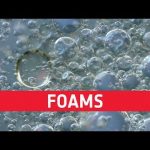
  • Foams. We research. You benefit.

    Foams. We research. You benefit.

    Foams are ubiquitous in our daily lives: they are used to produce food, detergents and plastics. Foams are inherently unstable in gravity, because the liquid between the bubbles is pulled downwards bursting the bubbles in the process. Experiments on the International Space Station have shown that foams are more stable in microgravity because they remain wet. It has even been possible to make foams from pure water.

    Foam research in microgravity allows researchers to better understand the processes and calculate models in the most optimal conditions. This is leading to better production and assembly of products containing foams as well as more effective foam-suppression agents.

    Many industrial applications benefit from foam research and development in space: cleaning products, cosmetics, fire-fighting and medicines are just some examples. The quality, texture, taste and shelf-life of food and beverages can be enhanced – from the supermarket to the consumers’ fridge.

    “It is a game change for our business” says Cécile Gehin-Delval, from Nestlé Research Laboratories in Orbe, Switzerland.

    The step to space research is closer than you might think. Get involved with spaceflight research via www.esa.int/spaceflightAO. Find out about our commercial partnerships and opportunities in human and robotic exploration via www.esa.int/explorationpartners to run your research in microgravity as well.

    ★ Subscribe: http://bit.ly/ESAsubscribe and click twice on the bell button to receive our notifications.

    Check out our full video catalog: http://bit.ly/SpaceInVideos
    Follow us on Twitter: http://bit.ly/ESAonTwitter
    On Facebook: http://bit.ly/ESAonFacebook
    On Instagram: http://bit.ly/ESAonInstagram
    On Flickr: http://bit.ly/ESAonFlickr

    We are Europe’s gateway to space. Our mission is to shape the development of Europe’s space capability and ensure that investment in space continues to deliver benefits to the citizens of Europe and the world. Check out http://www.esa.int/ESA to get up to speed on everything space related.

    Copyright information about our videos is available here: http://www.esa.int/spaceinvideos/Terms_and_Conditions