Tag: assist

  • Gravity Assist: Is Artificial Intelligence the Future of Life?

    Gravity Assist: Is Artificial Intelligence the Future of Life?

    If astrobiologists find life beyond Earth in the solar system, it will most likely be in the form of tiny organisms called microbes – nothing that would talk to us. But the galaxy is a big place; the universe even bigger. Somewhere out there, life may have evolved to become as smart, or even much smarter, than us. And the next step in that ladder may be “post-biological,” argues Susan Schneider, the Baruch S. Blumberg NASA/Library of Congress Chair in Astrobiology, Exploration, and Scientific Innovation. Advanced life may be entirely based on microchips and silicon, using the tools of artificial intelligence instead of brains. Listen to the full episode of “Gravity Assist” at nasa.gov/gravityassist.

    Producer Credit: Sonnet Apple & Elizabeth Landau
    Music Credit: Universal Production Music
  • Gravity Assist Podcast: Looking For Life in Ancient Lakes

    Gravity Assist Podcast: Looking For Life in Ancient Lakes

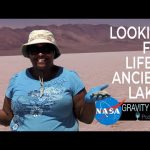
    Astrobiologists study ancient lakes on Earth in order to help us search for life in our solar system and beyond. Subscribe to our “Gravity Assist” podcast for this episode and more: www.nasa.gov/gravityassist

    As the Perseverance Rover flies toward Jezero Crater on Mars, which once hosted water, astrobiologists are interested in places on Earth that are similar to the rover landing site. Kennda Lynch, scientist at the Lunar and Planetary Institute in Houston, Texas, has been doing fieldwork in an ancient lake location in Utah called the Pilot Valley Playa. In this episode of Gravity Assist, she describes her recent discoveries and why she’s excited about Perseverance. She also explains how all life forms create waste products, even bacteria, that could leave tracers or “biosignatures” for scientists to detect. By looking at how microbes survive in extreme environments on Earth, scientists can explore the bigger question of how life could sustain itself on other planetary bodies like Mars and Jupiter’s moon Europa.

    Image Credits:

    NASA
    Vox/ YouTube Original -“Glad You Asked”
    Brocken Inaglory/Wikimedia Commons
    Alexander Gerst/Wikimedia Commons
    Paul Hermans/Wikimedia Commons

    Producer: Sonnet Apple

    This video is available for download from NASA’s Image and Video Library: https://images.nasa.gov/details-NHQ_2020_0814_Gravity%20Assist_Kennda%20Lynch

  • NASA’s Gravity Assist Podcast Season 4: Searching for Life

    NASA’s Gravity Assist Podcast Season 4: Searching for Life

    Is there life beyond Earth? How did life get started on Earth anyway? This season of NASA’s Gravity Assist podcast is about the origins of life on Earth and the search for life elsewhere. Subscribe at https://www.nasa.gov/gravityassist. See all NASA podcasts: www.nasa.gov/podcasts

    Hosted by NASA’s Chief Scientist Jim Green, each episode features a conversation with a scientist who has researched some aspect of these questions. We’ll talk about the search for life on Mars, what kind of life might survive on Saturn’s moon Titan, and much more.

    New episodes Fridays starting April 17.

  • NASA’s Gravity Assist Podcast Goes to the Moon

    NASA’s Gravity Assist Podcast Goes to the Moon

    NASA’s Chief Scientist, Jim Green, talks with some of the world’s top lunar experts.
    Listen: https://www.nasa.gov/gravity-assist Subscribe: https://go.nasa.gov/30Hfpd1
    What’s so special about our Moon? This season of Gravity Assist dives into the Moon’s history and mysteries, as well as NASA’s plans to send astronauts there by 2024. New episodes on Thursdays.

  • Honda Walking Assist Devices

    Honda Walking Assist Devices

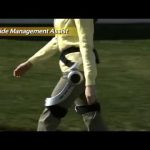
    ASIMO—Advanced Step in Innovative Mobility—is a humanoid robot designed and developed by Honda as a multifunctional robotic assistant. Honda also developed the Bodyweight Support Assist device to help support bodyweight to reduce the load on the user’s legs while walking, going up and down stairs and in a semi-crouching position. A third Honda device, Stride Management Assist, is designed for the elderly or people with weakened leg muscles, but who can still walk on their own.

  • NASA Experts Assist in Chilean Miners’ Survival and Rescue

    NASA Experts Assist in Chilean Miners’ Survival and Rescue

    On Aug. 31, a NASA team of experts arrived in Santiago for about a week as part of NASA’s commitment to provide U.S. assistance. NASA’s assistance was only a small contribution to the Chilean government’s overall rescue effort. The NASA team included two medical doctors, a psychologist and an engineer. Dr. Michael Duncan, deputy chief medical officer in NASA’s Space Life Sciences Directorate at NASA’s Johnson Space Center in Houston,
    led the team. The other team members are physician J.D. Polk, psychologist Al Holland and engineer Clint Cragg.