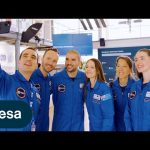
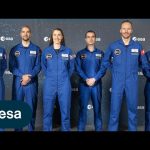
Live from NASA’s Johnson Space Center, we’re introducing our 2025 class of astronaut candidates to the public for the first time. Chosen from over 8,000 applicants, these candidates will undergo nearly two years of training before they graduate as astronauts, eligible for missions to the Moon and beyond.
Our astronaut corps is pushing the boundaries of exploration—from conducting scientific research on the International Space Station, to preparing for our Artemis missions to the Moon, to inspiring the next generation of explorers and innovators. Learn more about our active astronauts: https://www.nasa.gov/astronauts/
Dincolo de atmosferă începe vidul cosmic, rece până la câțiva Kelvin, în timp ce în adâncurile planetei temperaturile ating mii de grade. Locul nostru de existență rămâne doar o fâșie fragilă, câteva zeci de kilometri de aer și lumină.
Privirea se ridică apoi spre instrumentele care ne-au deschis universul. Telescopul Hubble, reparat în 2009 de astronauții navetei Atlantis, a devenit ochiul nostru veșnic spre stele. Saturn V, colosul creat de Wernher von Braun, a purtat omenirea până pe Lună, unde astronauții au făcut primii pași și au adunat probe cu bucuria copilăriei.
În spațiu strălucesc stele reci și fierbinți: roșiaticele giganti ca Betelgeuse abia ating 3000 °C, în timp ce albastrele ca Rigel depășesc 20.000 °C. În nebuloasele colorate – Clepsidra, Stâlpii Creației, Carina sau Laguna – gazul și praful cosmic nasc noi sori. Supernove precum Nebuloasa Crab lasă în urmă pulsați neutronici și filamente strălucitoare.
Telescopul James Webb, urmașul lui Hubble, ne arată în infraroșu detalii ascunse: norii lui Neptun, aurorele lui Jupiter, inelele lui Uranus, roiuri de galaxii și primele structuri formate la câteva sute de milioane de ani după Big Bang. Lentilele gravitaționale măresc galaxii îndepărtate, dezvăluind coliziuni, stele tinere și găuri negre supermasive.
Aceasta este povestea Pământului și a cerului: o fâșie subțire de viață, înconjurată de infinit, explorată cu ochii noștri mecanici, dar înțeleasă prin uimirea omului care privește în sus.”
John McFall is part of our astronaut reserve. Following a motorcycle accident that resulted in the amputation of his right leg at the age of 19, John learnt to run again. He became a professional track and field athlete in 2005, going on to represent Great Britain and Northern Ireland as a @paralympics sprinter.
In November 2022, John was selected as a member of the ESA astronaut reserve and to take part in ESA’s feasibility study “Fly!” to improve our understanding of, and overcome, the barriers space flight presents for astronauts with a physical disability.
📹 European Space Agency (ESA) 📸 Novespace/N. Courtioux
After seven months, 93 million miles, and 670,000 photos, astronaut Don Pettit has returned to Earth. Pettit is taking part in a news conference on Monday, April 28, to discuss his 220-day mission to the International Space Station.
Pettit returned to Earth on April 19 (April 20, Kazakhstan time), along with Roscosmos cosmonauts Alexey Ovchinin and Ivan Vagner. Pettit celebrated his 70th birthday on April 20. During his time in orbit, Pettit conducted hundreds of hours of scientific investigations, including research into 3D printing, water sanitization, and growing plants in space.
Have questions for Don? Join us on NASA’s Instagram account after the news conference for a live Q&A: https://www.instagram.com/nasa/
After 220 days and 93.3 million miles in space, astronaut Don Pettit is returning to Earth on Saturday, April 19.
After undocking from the International Space Station alongside cosmonauts Alexey Ovchinin and Ivan Vagner, Pettit’s Soyuz MS-26 spacecraft will begin its deorbit burn at 8:26 p.m. EDT (0026 UTC April 20) and touch down on the steppes of Kazakhstan around 9:20 p.m. EDT (0120 UTC April 20).
This was Pettit’s fourth spaceflight; while on the station, Pettit contributed to research that benefits humanity and delighted photography enthusiasts around the world with his unique point of view.
Watch as NASA astronaut Don Pettit, along with Roscosmos cosmonauts Alexey Ovchinin and Ivan Vagner, undock from the International Space Station and begin their voyage back to Earth.
The Soyuz MS-26 spacecraft is set to undock from the space station at 5:57 p.m. EDT (2157 UTC), heading for a parachute-assisted landing at 9:20 p.m. EDT (0120 UTC or 6:20 a.m. Kazakhstan time, Sunday, April 20) on the steppes of Kazakhstan, southeast of the town of Dzhezkazgan. Landing will occur on Pettit’s 70th birthday.
Watch as three International Space Station crew members—NASA astronaut Don Pettit, along with Roscosmos cosmonauts Alexey Ovchinin and Ivan Vagner—begin final preparations for their return to Earth aboard Soyuz MS-26, currently targeted for Saturday, April 19.
(In local time, MS-26 will touch down on Sunday, April 20: Pettit’s 70th birthday!)
After entering the Soyuz MS-26 spacecraft, the spacecraft’s hatch will close at approximately 2:25 p.m. EDT (1825 UTC); the spacecraft is scheduled to undock at 5:57 p.m. EDT (2157 UTC).
NASA astronaut Don Pettit is scheduled to return home in mid-April 2025 after a seven-month mission aboard the International Space Station as part of Expedition 72. Throughout his stay, Pettit contributed to research that benefits humanity and future space missions, and delighted photography enthusiasts around the world with his unique point of view.
Pettit also shared what he calls his “science of opportunity” to demonstrate how experimenting with our surroundings can help gain a better understanding of how things work. This understanding is enhanced when art, science, and microgravity come together.
After lifting off from the Baikonur Cosmodrome in Kazakhstan and docking with the International Space Station, the Soyuz MS-27 mission to the station is scheduled to open its hatches at approximately 7:20 a.m. EDT (1120 UTC) on Tuesday, April 8.
NASA astronaut Jonny Kim, accompanied by cosmonauts Sergey Ryzhikov and Alexey Zubritsky, will spend approximately eight months on the International Space Station before returning to Earth in December.
Kim was selected to become a NASA astronaut in 2017; before joining NASA’s astronaut corps, Kim completed more than 100 combat operations as a Navy SEAL. A dual-designated naval aviator and flight surgeon, Kim received his doctorate in medicine from Harvard Medical School. This is Kim’s first mission to the station.
After lifting off from the Baikonur Cosmodrome in Kazakhstan, NASA astronaut Jonny Kim is scheduled to dock with the International Space Station at 5:03 a.m. EST (0903 UTC) on Tuesday, April 8.
Kim was selected to become a NASA astronaut in 2017; before joining NASA’s astronaut corps, Kim completed more than 100 combat operations as a Navy SEAL. A dual-designated naval aviator and flight surgeon, Kim received his doctorate in medicine from Harvard Medical School.
Accompanied by cosmonauts Sergey Ryzhikov and Alexey Zubritsky, Kim will spend approximately eight months on the International Space Station before returning to Earth in December. This is Kim’s first mission to the station.
NASA astronaut Jonny Kim is set to lift off on his first mission to the International Space Station on Tuesday, April 8. Launch is scheduled for 1:47 a.m. EDT (0547 UTC) from the Baikonur Cosmodrome in Kazakhstan.
Kim was selected to become a NASA astronaut in 2017; before joining NASA’s astronaut corps, Kim completed more than 100 combat operations as a Navy SEAL. A dual-designated naval aviator and flight surgeon, Kim received his doctorate in medicine from Harvard Medical School.
Kim will launch aboard the Roscosmos Soyuz MS-27 spacecraft, accompanied by cosmonauts Sergey Ryzhikov and Alexey Zubritsky, where they will spend approximately eight months on the International Space Station before returning to Earth in December. Kim will serve as a flight engineer and member of the Expedition 72/73 crew, supporting scientific research to help us learn how to live in space while making life better back on Earth.
After liftoff, MS-27 is scheduled to dock with the station at 5:03 a.m. EDT (0903 UTC), with hatch opening at approximately 7:20 a.m. EDT (1120 UTC).
Take a look at Sophie Adenot’s journey over the past year and a half as she prepares for her mission to the International Space Station, currently planned for spring 2026.
Meet Sara García Alonso — biotechnologist, cancer researcher, passionate science communicator and member of ESA’s Astronaut Reserve. She’s our first guest in this miniseries, where we dive into the journey of the ESA Astronaut Reserve and explore the first part of their Astronaut Reserve Training (ART) at the European Astronaut Centre (EAC). Here, our “ARTists” are learning all about ESA and the International Space Station programme, the European space industry and institutions, and gaining hands-on experience in technical skills like spacecraft systems and robotics, as well as human behaviour, scientific lessons, scuba diving, and survival skills.
We are Europe’s gateway to space. Our mission is to shape the development of Europe’s space capability and ensure that investment in space continues to deliver benefits to the citizens of Europe and the world. Check out https://www.esa.int/ to get up to speed on everything space related.
The AI-powered innovation transforming space medicine. Astronauts can now perform expert-level ultrasounds without Earth-based guidance—keeping them healthy on deep-space missions while paving the way for smarter, more accessible healthcare on Earth.
The future of exploration starts here!
📸 ESA/NASA – Alexander Gerst 📹 ESA – European Space Agency
We know how microgravity impacts the brain thanks to astronauts on the ISS, but what about life on the Moon or Mars? Future explorers will also face hypoxia—low oxygen levels—which could affect their brain function and decision-making.
A team of students is tackling this challenge by conducting zero-gravity flight experiments to study how the brain responds to both microgravity and hypoxia. Their research could help improve astronaut safety for future lunar and Martian missions, ensuring they can explore safely beyond their spacecraft.
Could this be a key step in preparing humans for deep space exploration? Let us know your thoughts in the comments!
📹 ESA – European Space Agency 📸 ESA – European Space Agency
NASA astronaut Don Pettit is set to lift off on his fourth mission to the International Space Station on Wednesday, Sept. 11. Live NASA coverage begins at 11:15 a.m. EDT (1555 UTC) for a 12:23 p.m. (1623 UTC) launch from the Baikonur Cosmodrome in Kazakhstan.
Pettit’s first trip to the orbiting laboratory was in 2002, where he served as the NASA Science Officer aboard the station as part of Expedition 6. Pettit later traveled to the station aboard space shuttle Endeavour on STS-126, and most recently went to space in 2011. Pettit has a Ph.D. in chemical engineering from the University of Arizona.
Pettit will launch aboard the Roscosmos Soyuz MS-26 spacecraft, accompanied by cosmonauts Alexey Ovchinin and Ivan Vagner, where they will spend six months on the International Space Station before returning to Earth in the spring of 2025.
A group of 12 volunteers are sticking to a strict bed routine for 60 days, lying with their feet up and one shoulder always touching the mattress. This reclined lifestyle includes meals, showers and toilet breaks, as well as intensive cycling and centrifuge rides for some.
The BRACE study follows a two-month bedtime schedule to investigate how cycling and artificial gravity could counteract changes the human body experiences in space.
Astronauts face similar physiological problems as elderly and bedridden patients on Earth. During space missions, astronauts’ bodies go through a wide array of changes – everything from their eyes to their heart might be affected, and their muscles and bones start to deteriorate. To battle this degradation, crew members exercise two hours per day on the International Space Station.
The BRACE study involves male participants between the ages of 20 and 45 years with good physical and mental health. They are placed in beds tilted 6° below the horizontal position. As blood flows to the head and muscle wears out from lack of use, researchers chart how their bodies react.
Researchers split the volunteers in three groups. One group cycles in bed, a second one cycles while being spun on a centrifuge, and a third control group stays in bed for the full two months with no bike exercise or centrifuge rides. The centrifuge mimics artificial gravity, acting on all organs at once. Volunteers are spun to drive blood towards their feet, where the force of gravity doubles during the ride. Scientists hope artificial gravity could be used to keep astronauts fit and healthy in space.
Now halfway through its second edition, the experiment will finish on 4 May 2024, after 95 days of intense clinical testing and monitoring. This campaign takes place at MEDES, the Institute for Space Medicine and Physiology in Toulouse, France, and is supported by the French Space Agency CNES.
The study involves 14 European and international science teams that are working to release the results from the first BRACE campaign in 2023. Researchers are assessing a wide range of changes in the cardiovascular, metabolic, musculoskeletal, neuro-sensorial, haematological, and immunological systems.
The tests will provide a better understanding of the effects of prolonged bedrest to the benefit of those in space and on Earth. Results could help design countermeasures and improve health for patients suffering from accelerated ageing due to a sedentary lifestyle.
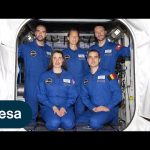
ESA’s newly graduated astronauts reach the end of one year of rigorous basic astronaut training. Discover the journey of Sophie Adenot, Rosemary Coogan, Pablo Álvarez Fernández, Raphaël Liégeois, Marco Sieber, and Australian Space Agency astronaut candidate Katherine Bennell-Pegg. Selected in November 2022, the group began their training in April 2023.
Basic astronaut training provides the candidates with an overall familiarisation and training in various areas, such as spacecraft systems, spacewalks, flight engineering, robotics and life support systems as well as survival and medical training. They received astronaut certification at ESA’s European Astronaut Centre on 22 April 2024.
Following certification, the new astronauts will move on to the next phases of pre-assignment and mission-specific training – paving the way for future missions to the International Space Station and beyond.
Credits: Video: ESA – European Space Agency ISS and EVA footage: ESA/NASA
Music: Scorekeepers
★ Subscribe: http://bit.ly/ESAsubscribe and click twice on the bell button to receive our notifications.
We are Europe’s gateway to space. Our mission is to shape the development of Europe’s space capability and ensure that investment in space continues to deliver benefits to the citizens of Europe and the world. Check out https://www.esa.int/ to get up to speed on everything space related.
ESA’s newly graduated astronauts reach the end of one year of rigorous basic astronaut training. Watch the key moments during the journey of Sophie Adenot, Rosemary Coogan, Pablo Álvarez Fernández, Raphaël Liégeois, Marco Sieber, and Australian Space Agency astronaut candidate Katherine Bennell-Pegg. Selected in November 2022, the group began their training in April 2023.
Basic astronaut training provides the candidates with an overall familiarisation and training in various areas, such as spacecraft systems, spacewalks, flight engineering, robotics and life support systems as well as survival and medical training. They received astronaut certification at ESA’s European Astronaut Centre on 22 April 2024.
Following certification, the new astronauts will move on to the next phases of pre-assignment and mission-specific training – paving the way for future missions to the International Space Station and beyond.
Credits: ESA – European Space Agency ESA/NASA NASA ESA/Royal Netherlands Air Force
★ Subscribe: http://bit.ly/ESAsubscribe and click twice on the bell button to receive our notifications.
We are Europe’s gateway to space. Our mission is to shape the development of Europe’s space capability and ensure that investment in space continues to deliver benefits to the citizens of Europe and the world. Check out https://www.esa.int/ to get up to speed on everything space related.
Watch the replay as ESA astronaut candidates Sophie Adenot, Rosemary Coogan, Pablo Álvarez Fernández, Raphaël Liégeois, Marco Sieber and Australian Space Agency astronaut candidate Katherine Bennell-Pegg receive astronaut certification at ESA’s European Astronaut Centre. This officially marks their transition into fully-fledged astronauts, ready and eligible for spaceflight.
The group was selected in November 2022 and began their year-long basic astronaut training in April 2023.
Basic astronaut training provides the candidates with an overall familiarisation and training in various areas, such as spacecraft systems, spacewalking, flight engineering, robotics and life support systems, as well as survival and medical training.
Following certification, the new astronauts will move on to the next phases of pre-assignment and mission-specific training, paving the way for future missions to the International Space Station and beyond.
Chapters: 00:00 – 05:14 – Stay tuned 05:15 – 07:05 – Event 07:06 – 16:46 – Statement from Josef Aschbacher, ESA Director General 16:47 – 21:35 – Statement from Daniel Neuenschwander, Director of Human and Robotic Exploration 21:36 – 24:40 – Statement from Frank De Winne, Head of ESA’s European Astronaut Centre 24:41 – 31:35 – Event 31:36 – 36:35 – ESA astronaut class of 2022 graduation ceremony 36:36 – 40:10 – Statement from Enrico Palermo, Head of the Australian Space Agency 40:11 – 41:03 – Katherine Bennell-Pegg graduation ceremony 41:04 – 44:40 – Statement from Thomas Dermine, State Secretary for Economic Recovery and Strategic Investments 44:41 – 56:20 – Live Q&A 56:21 – 57:15 End of event
Credits: ESA – European Space Agency
★ Subscribe: http://bit.ly/ESAsubscribe and click twice on the bell button to receive our notifications.
We are Europe’s gateway to space. Our mission is to shape the development of Europe’s space capability and ensure that investment in space continues to deliver benefits to the citizens of Europe and the world. Check out https://www.esa.int/ to get up to speed on everything space related.
Watch live as NASA astronaut Loral O’Hara, Roscosmos cosmonaut Oleg Novitskiy, and spaceflight participant Marina Vasilevskaya of Belarus return home from the International Space Station. Their Soyuz MS-24 spacecraft will head for a parachute-assisted landing on the steppe of Kazakhstan at 3:17 a.m. EDT Saturday, April 6 (0717 UTC).
O’Hara is completing a mission spanning 204 days in space that covered 3,264 orbits of the Earth and 86.5 million miles.
Astronaut Tracy C. Dyson, a spaceflight veteran who has logged over 188 days in orbit, is set to launch on her next mission to the International Space Station.
Dyson, cosmonaut Oleg Novitskiy, and spaceflight participant Marina Vasilevskaya of Belarus is set to lift off at 8:36 a.m. EDT (1236 UTC) from the Baikonur Cosmodrome in Kazakhstan aboard their Soyuz MS-25 spacecraft. This will be Dyson’s third spaceflight.
After two days in orbit, the Soyuz will arrive at the International Space Station’s Prichal module for a scheduled docking at 11:09 a.m. EDT (1509 UTC) Monday, March 25. Dyson is scheduled to spend six months aboard the station, conducting research to help us learn how to live in space while making life better back on Earth.
The March 21 launch of the crewed Soyuz-25 spacecraft to the International Space Station with NASA astronaut Tracy C. Dyson, Roscosmos cosmonaut Oleg Novitskiy, and spaceflight participant Marina Vasilevskaya of Belarus was scrubbed, and rescheduled for Saturday, March 23. Learn more: https://go.nasa.gov/3IMDTZy
Astronaut Tracy C. Dyson, a spaceflight veteran who has logged over 188 days in orbit, is set to launch on her next mission to the International Space Station.
Dyson, cosmonaut Oleg Novitskiy, and spaceflight participant Marina Vasilevskaya of Belarus is set to lift off at 9:21 a.m. EDT (1321 UTC) from the Baikonur Cosmodrome in Kazakhstan aboard their Soyuz MS-25 spacecraft. This will be Dyson’s third spaceflight.
After a two-orbit, three-hour journey, the Soyuz will arrive at the International Space Station’s Prichal module for a scheduled docking at 12:39 p.m. EDT (1639 UTC). Dyson is scheduled to spend six months aboard the station, conducting research to help us learn how to live in space while making life better back on Earth.
The 2024 astronaut graduating class gives you an insider’s look at not only the who’s who of their graduating class, but it allows you to get a glimpse of the accomplished astronauts’ personalities.
To see them together as a group, connecting through laughter helps to illustrate how much they value team care. These classic superlatives give the scoop on which astronaut is the best dancer, the funniest, and more. Enjoy seeing a lighter side of “The Flies” in this fun and upbeat montage of the 2024 astronaut graduating class.
Join us on Tuesday, March 5, as we honor our latest astronaut candidates on the completion of their training. Ten NASA candidates and two candidates from the United Arab Emirates (UAE) will earn their wings in a ceremony at NASA’s Johnson Space Center, becoming eligible for future assignments to the International Space Station, the Moon—and, eventually, missions to Mars.
After the graduation ceremony, the astronauts will take questions from media and the public starting at 11:45 a.m. EST (1645 UTC).
NASA will honor the next generation of Artemis astronaut candidates to graduate at 10:30 a.m. EST (1530 UTC) Tuesday, March 5, at the agency’s Johnson Space Center in Houston.
After completing more than two years of basic training, these candidates will earn their wings and become eligible for spaceflight, including assignments to the International Space Station, future commercial destinations, missions to the Moon, and eventually, missions to Mars.
Credit: NASA Producer/Editor: Dexter Herbert Producer: Gary Jordan Audio Post Production: Greg Wiseman Videographers: Charles Clendaniel and Chase Gibson Executive Producer: Sami Aziz
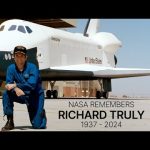
We’re saddened by the passing of Astronaut Richard Truly at the age of 86.
In 1965, Truly became one of the first military astronauts selected to the Air Force’s Manned Orbiting Laboratory program and transferred to NASA as an astronaut in August 1969. He served as capsule communicator for all three Skylab missions in 1973 and the Apollo-Soyuz mission in 1975. He was pilot for one of the two-astronaut crews that flew the 747/Space Shuttle Enterprise approach and landing test flights during 1977. He then was backup pilot for STS-1, the first orbital test of the Shuttle. His first space flight was as pilot of Space Shuttle Columbia (STS-2), significant as the first piloted spacecraft to be reflown in space. His second flight (STS-8) was as commander of Space Shuttle Challenger, the first night launch and landing in the Shuttle program.
The former Shuttle astronaut served as the first commander of the Naval Space Command in Dahlgren, Virginia, established Oct. 1, 1983.
Vice Admiral Richard H. Truly returned to NASA to become NASA’s Associate Administrator for Space Flight on February 20, 1986. In this position, he led the painstaking rebuilding of the Space Shuttle program. This was highlighted by NASA’s celebrated “return to flight” on September 29, 1988, when Discovery lifted off from Kennedy Space Center, Florida, on the first Shuttle mission in almost 3 years. He served as NASA’s eighth Administrator from February 1989 to 1992.
Credit: NASA Music: Universal Production Music Video Producer: Sonnet Apple
There is no point in sending human explorers on long voyages around the solar system if they arrive at their destination in poor physical shape. Long stays in zero gravity are not good for the human body.
We already know that astronauts lose bone mass at around 1% for every month they are in space; muscles – including heart muscles – atrophy despite hours of exercise; and there are a host of other problems.
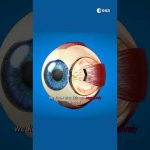
Humans are adaptable beings. Wear glasses that turn your view of the world upside-down and within two weeks your brain will have adapted to the topsy-turvy world.
Researchers suspect that astronauts’ brains adapt to living in weightlessness by using previously untapped links between neurons. As the astronauts learn to float around in their spacecraft, left–right and up–down become second nature as these neuronal connections are activated.
To confirm this theory, up to 16 astronauts will be put through advanced Magnetic Resonance Imaging (MRI) scanners before and after their flights to study any changes in their brain structure. A control group on ground will undergo the same scans for further comparison.
The research is providing scientists on Earth clues where to look in the brains of people who suffer from disorders based on previous traumatic experiences such as vertigo.
Like every other living creature we know of, humans evolved at the bottom of a gravity well. We take the Earth’s tug for granted, and so do our bodies. So it’s not surprising that our bodies behave oddly in orbit. What is surprising is that humans turn out to adapt remarkably well to zero-g (more precisely, microgravity).
Watch live as NASA astronaut Frank Rubio, the new record holder for the longest single U.S. spaceflight, returns home from the International Space Station. The Soyuz MS-23 spacecraft with Rubio and Roscosmos cosmonauts Sergey Prokopyev and Dmitri Petelin aboard is scheduled to land on the steppe of Kazakhstan on Wednesday, Sept. 27 at 7:17 a.m. EDT (1117 UTC).
The trio will return after 371 days in space and a mission spanning 157.4 million miles (253.3 million km) and 5,963 orbits of the Earth. Rubio became the new record holder for the longest single United States spaceflight on Sept. 11, after he surpassed the former record of 355 days held by NASA astronaut Mark Vande Hei.
NASA astronaut Frank Rubio is set to return to Earth this fall after setting the record for the longest single spaceflight by a U.S. astronaut. He arrived at the International Space Station on Sept. 21, 2022, and will return home after 371 days in space.
While on the orbiting lab, Rubio and his fellow crew members conducted dozens of scientific investigations and technology demonstrations.
Learn more about Frank Rubio’s year-long scientific journey aboard the space station: https://go.nasa.gov/3LrwS29
Record-breaking astronaut Frank Rubio talks with NASA Administrator Bill Nelson and Deputy Administrator Pam Melroy about his historic mission during a space-to-ground call. On Sept. 11, 2023, Rubio surpassed the U.S. record for single longest duration spaceflight, a record previously set by astronaut Mark Vande Hei in 2022.
Rubio is set to return to Earth on Sept. 27, 2023, when he will have spent 371 days in space. His extended stay aboard the orbiting laboratory helps us see how the human body reacts to microgravity and informs future missions to deep space.
30 June marks Asteroid Day, which aims to emphasise the importance of asteroids –their role in the formation of our Solar System, their impact in space resources and the importance of defending our planet from future impacts.
This year we are celebrating along with @universalpictures and @focusfeatures for the release of Wes Anderson’s new movie @AsteroidCity to bring you all the information you need to know about asteroids and how we protect our planet from them.
Credits: ESA – European Space Agency
★ Subscribe: http://bit.ly/ESAsubscribe and click twice on the bell button to receive our notifications.
We are Europe’s gateway to space. Our mission is to shape the development of Europe’s space capability and ensure that investment in space continues to deliver benefits to the citizens of Europe and the world. Check out https://www.esa.int/ to get up to speed on everything space related.
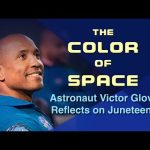
Join NASA astronaut Victor Glover as he imparts an inspiring message about Juneteenth, a day that honors the sacrifices and struggles of past generations by continuing to fight for justice, equality, and freedom for all. The message reminds us of our shared past while pushing us towards an inclusive future.
The second all-private astronaut mission to the space station, completing the set of tiny severe weather trackers, and a robotic explorer – with a twist … a few of the stories to tell you about – This Week at NASA!
ESA astronaut candidates Sophie Adenot, Pablo Álvarez Fernández, Rosemary Coogan, Raphaël Liégeois and Marco Sieber took up duty at the European Astronaut Centre (EAC) on 3 April 2023 to be trained to the highest level of standards as specified by the International Space Station partners.
★ Subscribe: http://bit.ly/ESAsubscribe and click twice on the bell button to receive our notifications.
We are Europe’s gateway to space. Our mission is to shape the development of Europe’s space capability and ensure that investment in space continues to deliver benefits to the citizens of Europe and the world. Check out https://www.esa.int/ to get up to speed on everything space related.
Impressions from the new ESA astronaut candidates after their first month of training at the European Astronaut Training in Cologne, Germany.
TheESA astronaut candidates of the class of 2022 Sophie Adenot, Pablo Álvarez Fernández, Rosemary Coogan, Raphaël Liégeois and Marco Sieber started basic astronaut training on 3 April 2023 in preparation for future space missions. The five trainees were selectedfrom 22 500 applicants from across ESA Member States.
The candidates are trainedto the highest level of standards as specified by the International Space Station partners.Basic training includes learning about space exploration, technical and scientific disciplines, space systems and operations, as well as spacewalks and survival training. Once they receive theESA astronaut certification, they will move on to the next phases of pre-assignment and mission-specific training.
We are Europe’s gateway to space. Our mission is to shape the development of Europe’s space capability and ensure that investment in space continues to deliver benefits to the citizens of Europe and the world. Check out https://www.esa.int/ to get up to speed on everything space related.
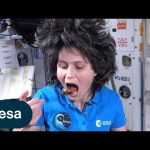
ESA astronaut Samantha Cristoforetti shares how she maintains a healthy and balanced diet during her Minerva mission aboard the International Space Station. She introduces her “piatto unico” meal allowance, featuring freeze-dried meals that are self-balanced according to the Harvard Healthy Eating Plate guidance and Mediterranean diet principles. As she showcases two of her favourite meals, a wholegrain wheat couscous with vegetables and legumes, and a spelt salad with Mediterranean little tunny, dried tomatoes, pine nuts, and asparagus, she emphasizes the importance of selecting local, seasonal, and natural ingredients for optimal nutrition and taste. Join Samantha on her culinary journey in space!
Credits: ESA/NASA
★ Subscribe: http://bit.ly/ESAsubscribe and click twice on the bell button to receive our notifications.
We are Europe’s gateway to space. Our mission is to shape the development of Europe’s space capability and ensure that investment in space continues to deliver benefits to the citizens of Europe and the world. Check out https://www.esa.int/ to get up to speed on everything space related.
NASA astronaut Steve Bowen and United Arab Emirates astronaut Sultan Alneyadi are conducting a spacewalk on Friday, April 28, 2023, to continue upgrading the International Space Station’s power generation system. The spacewalk is scheduled to begin at about 9:15 a.m. EDT (1315 UTC), and last about 6 hours and 30 minutes; it is part of a series to augment the station’s power channels with new International Space Station Roll-Out Solar Arrays (iROSAs). Four of the new iROSAs have been installed so far.