Tag: Astronauts on board

  • Muscle stimulation to enhance astronaut health

    Muscle stimulation to enhance astronaut health

    Space exploration presents unique health challenges for astronauts due to lack of gravity, isolation, and radiation exposure. ESA’s SciSpacE activities aim to comprehend these effects and their implications for human well-being during extended missions.

    ESA collaborates with researchers to conduct experiments in microgravity and analogue environments, shedding light on the consequences of space stressors. One critical concern is muscle and bone atrophy. Despite daily exercise routines, astronauts face deterioration. ESA is investigating electrical stimulation as a potential countermeasure, with tests planned on board the International Space Station.

    The “Muscle Stimulation” experiment is a centrepiece of this research. By applying controlled electric currents to leg muscles, the study aims to enhance muscle mass, strength, and recovery. Complementary assessments, including MRI scans, microcirculation analysis, and blood samples, will provide a comprehensive understanding of the efficacy.

    Addressing these challenges could yield benefits on Earth too. The insights gained could translate to better healthcare for diverse populations, from the elderly to clinical patients and athletes.

    ESA’s dedication to advancing space exploration while safeguarding astronauts’ physical health underscores its commitment to a sustainable and thriving space programme. Through research and innovative solutions, humanity edges closer to conquering the challenges of extended spaceflight and improving life on our home planet.

    Credits: ESA – European Space Agency

    ★ Subscribe: http://bit.ly/ESAsubscribe and click twice on the bell button to receive our notifications.

    Check out our full video catalog: http://bit.ly/SpaceInVideos
    Follow us on Twitter: http://bit.ly/ESAonTwitter
    On Facebook: http://bit.ly/ESAonFacebook
    On Instagram: http://bit.ly/ESAonInstagram
    On LinkedIn: https://bit.ly/ESAonLinkedIn
    On Pinterest: https://bit.ly/ESAonPinterest
    On Flickr: http://bit.ly/ESAonFlickr

    We are Europe’s gateway to space. Our mission is to shape the development of Europe’s space capability and ensure that investment in space continues to deliver benefits to the citizens of Europe and the world. Check out https://www.esa.int/ to get up to speed on everything space related.

    Copyright information about our videos is available here: https://www.esa.int/ESA_Multimedia/Terms_and_Conditions

    #ESA
    #Astronauts
    #MuscleStimulation
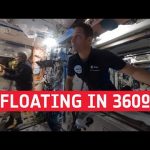
  • Floating through the Space Station in 360

    Floating through the Space Station in 360

    ESA astronaut Thomas Pesquet takes you on a brief tour of the International Space Station like no other. Filmed with a 360 camera, he floats from Node-3 to Europe’s Columbus laboratory.
    Immerse yourself in this brief but unique fly through humankind’s orbital outpost.

    Follow Thomas: http://bit.ly/ThomasPesquetBlog

    ★ Subscribe: http://bit.ly/ESAsubscribe and click twice on the bell button to receive our notifications.

    Check out our full video catalog: http://bit.ly/SpaceInVideos
    Follow us on Twitter: http://bit.ly/ESAonTwitter
    On Facebook: http://bit.ly/ESAonFacebook
    On Instagram: http://bit.ly/ESAonInstagram
    On Pinterest: https://bit.ly/ESAonPinterest
    On Flickr: http://bit.ly/ESAonFlickr

    We are Europe’s gateway to space. Our mission is to shape the development of Europe’s space capability and ensure that investment in space continues to deliver benefits to the citizens of Europe and the world. Check out https://www.esa.int/ to get up to speed on everything space related.

    Copyright information about our videos is available here: https://www.esa.int/ESA_Multimedia/Terms_and_Conditions

    #ESA
    #ISSTour
    #MissionAlpha

  • Node 3 | Space Station 360 [in French with English subtitles available]

    Node 3 | Space Station 360 [in French with English subtitles available]

    ESA astronaut Thomas Pesquet takes you on a tour of the International Space Station like no other. Filmed with a 360 camera, the Space Station 360 series lets you explore for yourself alongside Thomas’s explanation – episode six is NASA’s Node-3, also known as Tranquility.

    Node 3 has cylindrical hull 4.5 m in diameter with a shallow conical section enclosing each end. It is almost 7 m long and, together with the Space Station’s observatory Cupola, weighed over 13.5 tonnes at launch. Built in Europe, Node 3 houses the life-support equipment, the toilet and equipment racks.

    Follow Thomas: http://bit.ly/ThomasPesquetBlog

    ★ Subscribe: http://bit.ly/ESAsubscribe and click twice on the bell button to receive our notifications.

    Check out our full video catalog: http://bit.ly/SpaceInVideos
    Follow us on Twitter: http://bit.ly/ESAonTwitter
    On Facebook: http://bit.ly/ESAonFacebook
    On Instagram: http://bit.ly/ESAonInstagram
    On Pinterest: https://bit.ly/ESAonPinterest
    On Flickr: http://bit.ly/ESAonFlickr

    We are Europe’s gateway to space. Our mission is to shape the development of Europe’s space capability and ensure that investment in space continues to deliver benefits to the citizens of Europe and the world. Check out https://www.esa.int/ to get up to speed on everything space related.

    Copyright information about our videos is available here: https://www.esa.int/ESA_Multimedia/Terms_and_Conditions

    #ESA
    #ISSTour
    #MissionAlpha

  • Destiny laboratory – a day in the life of Thomas Pesquet

    Destiny laboratory – a day in the life of Thomas Pesquet

    ESA astronaut Thomas Pesquet is sharing scenes from life on board the International Space Station during his second mission “Alpha”. He shared this video moving through NASA’s Destiny laboratory, detailing the elements of a normal day in the research module.

    From the exercise bike to the robotics workstation and all the research facilities, Thomas shows how astronauts work in the US space laboratory.

    Over 200 experiments are planned during Thomas’ time in space, with 40 European ones and 12 new experiments led by the French space agency @CnesFrance.

    Follow Thomas: http://bit.ly/ThomasPesquetBlog

    ★ Subscribe: http://bit.ly/ESAsubscribe and click twice on the bell button to receive our notifications.

    Check out our full video catalog: http://bit.ly/SpaceInVideos
    Follow us on Twitter: http://bit.ly/ESAonTwitter
    On Facebook: http://bit.ly/ESAonFacebook
    On Instagram: http://bit.ly/ESAonInstagram
    On Pinterest: https://bit.ly/ESAonPinterest
    On Flickr: http://bit.ly/ESAonFlickr

    We are Europe’s gateway to space. Our mission is to shape the development of Europe’s space capability and ensure that investment in space continues to deliver benefits to the citizens of Europe and the world. Check out https://www.esa.int/ to get up to speed on everything space related.

    Copyright information about our videos is available here: https://www.esa.int/ESA_Multimedia/Terms_and_Conditions

    #ESA
    #ISSTour
    #ThomasPesquet

  • International Space Station: 20 years in 60 seconds

    International Space Station: 20 years in 60 seconds

    Monday 2 November 2020 marks 20 years of continuous human presence on the International Space Station. Relive a few memorable moments from the unique orbital outpost in this clip covering 20 years of the International Space Station in 60 seconds.Since Crew One took up residence on 2 November, 240 people including 18 ESA astronauts have lived and worked on the orbital outpost, carrying out essential research to benefit life on Earth.The next ESA mission to the International Space Station is set for 2021, when Thomas Pesquet will become the first European to fly on a SpaceX Crew Dragon spacecraft for his Alpha mission.

  • Space medicine: staying fit in space

    Space medicine: staying fit in space

    Astronauts work out for around 90 minutes a day onboard the International Space Station to combat the muscle and bone weakening effects of microgravity. But exercise is just as important for mental and physical health on Earth.

    Our exercise team lead Nora Petersen explains how exercise specialists work with our astronauts to prepare them for a mission, some of the most important exercises on board and what happens upon an astronaut’s return to get them back in pre-flight shape.

    The United Nations World Health Organization marks World Health Day on 7 April every year. The third Sustainable Development Goal underlines the right to health:Ensure healthy lives and promote well-being for all at all ages. On-orbit research, space technology and space applications can help improve health on Earth by monitoring our environment, helping track disease, improving diagnostics, and working on new medicines among other things. The UN is also focusing particularly this year on universal health coverage.

    ★ Subscribe: http://bit.ly/ESAsubscribe and click twice on the bell button to receive our notifications.

    Check out our full video catalog: http://bit.ly/SpaceInVideos
    Follow us on Twitter: http://bit.ly/ESAonTwitter
    On Facebook: http://bit.ly/ESAonFacebook
    On Instagram: http://bit.ly/ESAonInstagram
    On Flickr: http://bit.ly/ESAonFlickr

    We are Europe’s gateway to space. Our mission is to shape the development of Europe’s space capability and ensure that investment in space continues to deliver benefits to the citizens of Europe and the world. Check out http://www.esa.int/ESA to get up to speed on everything space related.

    Copyright information about our videos is available here: http://www.esa.int/spaceinvideos/Terms_and_Conditions

    #ESA
    #HealthForAll
    #space19plus

  • Space medicine: staying healthy in space

    Space medicine: staying healthy in space

    Managing the health of astronauts orbiting Earth at 28 000 km/h is a challenge, but how will we equip astronauts to stay healthy and deal with any medical emergencies during missions to the Moon or Mars?

    Our flight surgeon Sergi Vaquer Araujo discusses how space medicine experts instill astronauts with the skills and knowledge needed to stay healthy on the International Space Station today, as we investigate new technologies that could benefit people on Earth.

    The United Nations World Health Organization marks World Health Day on 7 April every year. The third Sustainable Development Goal underlines the right to health:Ensure healthy lives and promote well-being for all at all ages. On-orbit research, space technology and space applications can help improve health on Earth by monitoring our environment, helping track disease, improving diagnostics, and working on new medicines among other things. The UN is also focusing particularly this year on universal health coverage.

    ★ Subscribe: http://bit.ly/ESAsubscribe and click twice on the bell button to receive our notifications.

    Check out our full video catalog: http://bit.ly/SpaceInVideos
    Follow us on Twitter: http://bit.ly/ESAonTwitter
    On Facebook: http://bit.ly/ESAonFacebook
    On Instagram: http://bit.ly/ESAonInstagram
    On Flickr: http://bit.ly/ESAonFlickr

    We are Europe’s gateway to space. Our mission is to shape the development of Europe’s space capability and ensure that investment in space continues to deliver benefits to the citizens of Europe and the world. Check out http://www.esa.int/ESA to get up to speed on everything space related.

    Copyright information about our videos is available here: http://www.esa.int/spaceinvideos/Terms_and_Conditions

    #ESA
    #HealthForAll
    #space19plus

  • Tour the Space Station with Thomas Pesquet (French)

    Tour the Space Station with Thomas Pesquet (French)

    ESA astronaut Thomas Pesquet takes us on a six-minute tour of the International Space Station, recorded 23 March 2017 during his Proxima mission.

    During his Proxima mission, Thomas will perform around 50 scientific experiments for ESA and France’s space agency CNES as well as take part in many research activities for the other Station partners.

    The mission is part of ESA’s vision to use Earth-orbiting spacecraft as a place to live and work for the benefit of European society while using the experience to prepare for future voyages of exploration further into the Solar System.

    More about the Proxima mission: http://www.esa.int/proxima
    Connect with Thomas Pesquet: http://thomaspesquet.esa.int

  • (French) Thomas Pesquet’s space Christmas message

    (French) Thomas Pesquet’s space Christmas message

    ESA astronaut Thomas Pesquet shares his Christmas plans and wishes on the International Space Station.

    Flying 400 km above Earth, astronauts on the International Space Station have a unique experience and vision of our planet that they share in this video. Thomas recounts his memories growing up in Normany, France, and explains what Christmas means to him.

    His end-of-year meal was prepared by French chefs – canned of course, there is no way to cook food on the Space Station and includes ox-tongue from his home-region prepared by Thierry Marx, chicken-supreme and for desert, apple gingerbread.

    Connect with Thomas Pesquet on social media:
    http://thomaspesquet.esa.int

    This message is also available in English:
    https://www.youtube.com/watch?v=jncXk___ryE