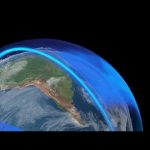
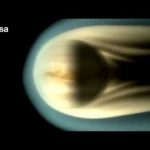
In the 1980s, scientists discovered a gaping hole in Earth’s ozone layer, caused by humanmade chemicals. But what is the ozone hole? Join us to find out!
We are Europe’s gateway to space. Our mission is to shape the development of Europe’s space capability and ensure that investment in space continues to deliver benefits to the citizens of Europe and the world. Check out https://www.esa.int/ to get up to speed on everything space related.
A collection of the best timelapse videos made during ESA astronaut Thomas Pesquet’s second mission to the International Space Station, “Alpha” in 2021. The camera is setup to take pictures at intervals of two a second, and the pictures are then edited into this video that plays at 25 pictures a second. Most videos around 12 times faster than real speed.
Thomas shared this video on social media with the caption:
“Probably the last the timelapse from space, and fittingly here is a special edition “best of” montage: aurora, lightning, spacewalks, day views and spacecraft reentry in less than five minutes. Get comfy, cast it to your largest screen in the house and enjoy!”
Over 200 experiments are planned during Thomas’ time in space, with 40 European ones and 12 new experiments led by the French space agency @CNES.
We are Europe’s gateway to space. Our mission is to shape the development of Europe’s space capability and ensure that investment in space continues to deliver benefits to the citizens of Europe and the world. Check out https://www.esa.int/ to get up to speed on everything space related.
The science team for our Juno spacecraft at Jupiter will reveal new findings that provide the first 3D look at how the planet’s roiling atmosphere operates underneath the top layers of clouds, and how these revelations offer insight into the atmospheres of giant planets elsewhere in the universe.
The event will take place at NASA’s Jet Propulsion Laboratory in Southern California, which manages the Juno mission.
Briefing participants include:
– Lucas Paganini, Juno program scientist, NASA Headquarters, Washington – Scott Bolton, Juno principal investigator, Southwest Research Institute, San Antonio – Marzia Parisi, Juno scientist, JPL – Keren Duer, Juno scientist, Weizmann Institute of Science, Rehovot, Israel – Leigh Fletcher, Juno participating scientist, University of Leicester, England – Alessandro Mura, Juno co-investigator, Institute for Space Astrophysics and Planetology, Rome
For more about the Juno mission, visit nasa.gov/juno and missionjuno.swri.edu
Credit: NASA/JPL-Caltech/SWRI Video thumbnail JunoCam image processing by David Marriott
Timelapse video made during ESA astronaut Thomas Pesquet’s second mission to the International Space Station, “Alpha”. On 17 October 2021 at 01:14 GMT the Soyuz MS-18 undocked from the Space Station to return to Earth, inside were @Roscosmos Media cosmonaut Oleg Novitskiy (who had spent 191 days in space) and actress Yulia Peresild and Russian producer-director Klim Shipenko (who both spent 11 days in space). The trio landed on Earth just over three hours later. The camera for this timelapse was setup to take pictures at intervals of two a second, and the pictures are then edited into this video that plays at 25 pictures a second. The video is around 12 times faster than real speed.
Thomas shared this video on social media with the caption:
“Soyuz MS-18 departing two weekends ago already. Oleg left with Yulia and Klim and I see pictures of them back looking happy and healthy back on Earth. they were only in space for a few days though, a business trip, more than an expedition, for us and Oleg it will be a bit different: the physical and social readapting to Earth will require some work. This is a timelapse so it moves 12 times faster than in reality. I wasn’t the only one to film in the Cupola, and where the image shakes a bit is when one of my crewmates bumped the tripod! ”
Over 200 experiments are planned during Thomas’ time in space, with 40 European ones and 12 new experiments led by the French space agency @CNES.
We are Europe’s gateway to space. Our mission is to shape the development of Europe’s space capability and ensure that investment in space continues to deliver benefits to the citizens of Europe and the world. Check out https://www.esa.int/ to get up to speed on everything space related.
Watch over one hour of our planet, seen from the International Space Station, in 4K resolution. This compilation was made from video taken by ESA astronauts, mostly by Thomas Pesquet during his first mission, Proxima, and ESA astronaut Alexander Gerst on his second mission, Horizons, as well as footage from Samantha Cristoforetti’s Futura mission and Paolo Nespoli’s Vita mission.
Flying 400 km above our amazing planet Earth, the Space Station travels at 28 800 km/h to stay in orbit. The videos are in real time and not sped up or edited. Most of the scenes were filmed in the European-built Cupola module, the Space Station’s observatory.
On 21 April 2001, the first ESA astronaut Umberto Guidoni arrived at the Space Station. Since then, the Space Station has grown immensely, as have the number of Europeans to have worked in it, together with the science experiments performed in orbit.
Europe contributes around 8% of the running costs of the International Space Station, but has built a large part of the structure, including ESA’s Columbus laboratory, the Cupola observatory, the Tranquillity and Harmony modules, as well as the computers that collect data and provide navigation, communications and operations for the Russian segment.
ESA also provided the Space Station with supplies and boosted its orbit through five Automated Transfer Vehicles, the heaviest and most versatile Space Station supply ferry. This programme evolved into the European Service Modules that ESA is supplying for @NASA’s Artemis programme, taking humans forward to the Moon and thus continuing the exemplary international collaboration beyond Earth’s orbit.
Since Umberto’s mission, there have been 26 further ESA astronaut missions to the International Space Station, with astronauts flying to Station on either the Russian Soyuz or US Space Shuttle spacecraft.
Thomas Pesquet’s second mission, Alpha, is the 28th mission for ESA, with ESA astronaut Matthias Maurer already lined up for his first flight later this year, and ESA astronaut Samantha Cristoforetti scheduled for the 30th ESA International Space Station mission in 2022.
★ Subscribe: http://bit.ly/ESAsubscribe and click twice on the bell button to receive our notifications.
We are Europe’s gateway to space. Our mission is to shape the development of Europe’s space capability and ensure that investment in space continues to deliver benefits to the citizens of Europe and the world. Check out https://www.esa.int/ to get up to speed on everything space related.
The ozone layer protects life on Earth from ultraviolet radiation but it is also a powerful greenhouse gas. Satellites can provide measurements of atmospheric ozone and monitor distribution changes with the seasons.
Credit: ESA/CCI Ozone and Aerosol teams/Planetary Visions
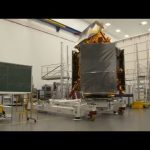
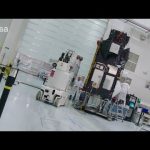
The preparations of ESA’s latest Earth observation satellite Sentinel-5P, also known as Sentinel-5 Precursor, are finished, and the satellite has been shipped to the Plesetsk Cosmodrome in Russia for launch in October 2017.
Sentinel-5P will ensure continued data is gathering on Earth’s atmosphere and is the intermediary satellite to fill the gap between the past generation of atmospheric monitoring satellites and the future generation of Sentinel-4 and 5, which will be launched early in the next decade. Sentinel-5P is part of Copernicus,the world’s largest environmental monitoring programme which is operated bythe European Commission.
This video contains interviews with: Josef Aschbacher, ESA Director of Earth observation programmes, Kevin McMullan, ESA Sentinel-5P Project Manager and Claus Zehner, ESA Sentinel-5P Mission Manager
Certamente já usou uma aplicação no telemóvel para consultar a previsão meteorológica. Hoje, graças a uma rede de satélites e estações terrestres, é possível obter informações sobre poluição em várias cidades no seu telemóvel.
O jornalista Claudio Rosmino reporta-nos como a Universidade de Bremen, está a recolher esta variedade de dados para chegar a uma visão global da poluição atmosférica.
A atmosfera terrestre é um sistema complicado que depende de vários factores. Os satélites de observação que orbitam à volta do planeta monitorizam constantemente o estado do ar que inalamos e o modo como é afectado pela poluição natural e pela de origem humana.
Uma missão essencial uma vez que, segundo dados recentes da Organização Mundial de Saúde, uma em cada oito mortes a nível mundial se deve à poluição do ar.
Os investigadores da Universidade de Bremen são pioneiros na medição da poluição atmosférica cruzando os dados obtidos no espaço e os valores colhidos em estações terrestres.
Experience what it’s like to leave Earth, traveling to over 90,000 feet into the stratosphere. Never before has a 360 video been recorded at these heights – so buckle up and enjoy the view as Seeker takes you on a journey to the Edge of Space.
On 16 February 2016 at 18:57 CET (17:57 GMT), Sentinel-3A will be launched on top of a Rockot from the Russian Plesetsk Cosmodrome.
This satellite will be the third Sentinel for the Copernicus Programme. Copernicus is the most ambitious Earth Observation programme to date. It will provide accurate, timely and easily accessible information to improve the management of the environment, understand and mitigate the effects of climate change and ensure civil security. This initiative is headed by the European Commission (EC) in partnership with the European Space Agency.
ESA coordinates the delivery of data and is developing a new family of satellites, the Sentinels, specifically for the operational needs of Copernicus. The EC, acting on behalf of the European Union, is responsible for the overall initiative, setting requirements and managing the services. These services fall into six main categories: land management, the marine environment, atmosphere, emergency response, security and climate change.
This video explains what the Sentinels represent within Copernicus.
Sentinel-3A’s preparation is finished and the satellite will soon be shipped to the Russian Cosmodrome of Plesetsk, in Northern Russia for its launch on top of a Rockot planned end of this year. Carrying a suite of state-of-the-art instruments, Sentinel-3 is set to play a key role in Copernicus, the world’s largest environmental monitoring programme operated by the European Commission. It will provide highly accurate measurements on Earth’s oceans, land, ice and atmosphere.
After eight years in orbit, ESA’s Venus Express has completed routine science observations and is preparing for a daring plunge into the planet’s hostile atmosphere.
Venus Express was launched on 9 November 2005, and arrived at Venus on 11 April 2006.
It has been orbiting Venus in an elliptical 24-hour loop that takes it from a distant 66 000 km over the south pole — affording incredible global views — to an altitude of around 250 km above the surface at the north pole, close to the top of the planet’s atmosphere.
With a suite of seven instruments, the spacecraft has provided a comprehensive study of the ionosphere, atmosphere and surface of Venus.
This video includes interviews in English with Håkan Svedhem, ESA mission scientist and Patrick Martin, ESA Venus Express mission manager
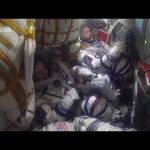
How does an astronaut return to Earth from the International Space Station? What does it feel like to re-enter the atmosphere? How does the Soyuz capsule function? Watch and find out. This video is based on an actual lesson delivered to the ESA astronaut class of 2009 (also known as the #Shenanigans09) during their ESA Basic Training. It features interviews with astronauts who have flown on the Soyuz and dramatic footage of actual landings.
Produced by the ESA Human Spaceflight and Operations (HSO) Astronaut Training Division, Cologne, Germany, in collaboration with the HSO Strategic Planning and Outreach Office, Noordwijk, The Netherlands, with special support from Roskosmos.
Content Design: Stephane Ghiste, Dmitriy Churkin, Raffaele Castellano, Matthew Day (HSO-UT)
Animation & Video Editing: Raffaele Castellano (HSO-UT), HSO-K
Project Coordination: Matthew Day, Stephane Ghiste, Dmitriy Churkin (HSO-UT)
Special thanks to:
Martin Schweiger (Orbiter software: http://orbit/medphys.ucl.ac.uk/)
Nikita Vtyurin, Andrew Thielmann (Orbiter Soyuz model)
Lionel Ferra (HSO-UT)
Oleg Polovnikov (HSO-UT)
Frank De Winne (HSO-A)
Paolo Nespoli (HSO-A)
Antonio Rodenas Bosque (HSO-UT)
NASA
ROSCOSMOS
S.P. Korolev Rocket and Space Corporation Energia
Aerospace Search and Rescue Service of the Russian Federation
Parachute footage: Cambridge University Spaceflight
Surfer footage: copyright Red Bull Media House
Footage from inside Soyuz capsule courtesy of RSC Energia has limited rights:
a) These data are submitted with Limited Rights under Agreement among the Government of Canada, Governments of Member States of the European Space Agency, the Government of Japan, the Government of the Russian Federation and the Government of the United States of America concerning co-operation on the civil International Space Station.
These data may be used by the receiving co-operating agency and its contractors and subcontractors, provided that such data shall be used, duplicated or disclosed only for the following purposes, which are related to the Cooperating Agency Space Station Program for ISS:
1) Use for ESA astronaut training
2) Use for educational purposes
These data shall not be used by persons or entities other than the receiving Cooperating Agency, its contractors or subcontractors, or for any other purposes, without the prior written permission of the furnishing partner state, acting through its cooperating agency.
b) This notice shall be marked on any reproduction of these data in whole or part.
Captions available in English, French, German, Italian, Russian, Romanian (with thanks to Alexa Mirel) and Spanish. Click on the CC button to switch between languages.
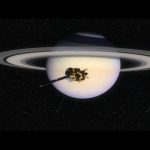
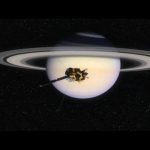
Há algumas décadas, para observar Saturno, os cientistas recorriam a telescópios. Hoje em dia, os segredos de Saturno e da sua misteriosa lua Titã são revelados graças aos dados e imagens enviados pela missão Cassini-Huygens. Saturno nunca antes visto, é o tema de Space esta semana.
Hasta hace algunas décadas para ver Saturno la ciencia tenía que mirar a través de telescópios. Hoy Saturno y su misteriosa luna Titán son nuevos conocidos gracias a la misión Cassini-Huygens que desde 2004 envía imágenes y datos. Una aventura que está cambiando la percepción que hasta ahora teníamos de nuestro Sistema Solar.
Noch vor einigen Jahrzehnten konnte man den Saturn nur mit dem Teleskop beobachten. Heute lüftet die Cassini-Huygens-Mission mit ihren Bildern die Geheimnisse des Saturnsystems und liefert Antworten auf entscheidende wissenschaftliche Fragen.