Tag: Atmospheric Entry

  • ATV-1 reentry

    ATV-1 reentry

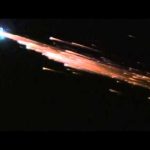
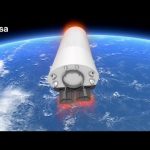
    Europe’s space freighter ATV Jules Verne burning up over an uninhabited area of the Pacific Ocean at the end of its mission.

    ATV Jules Verne was the first of ESA’s Automated Transfer Vehicles to bring supplies to the International Space Station and help keep its orbit 400 km above our planet.

    A final deorbit burn at 14:58 CEST on 29 September 2008 slowed Jules Verne’s velocity by 70 m/s and spacecraft entered the upper atmosphere at an altitude of 120 km at 15:31 CEST. It broke up at an altitude of 75 km with the remaining fragments falling into the Pacific some 12 minutes later.

    The planned reentry into the atmosphere was filmed from a DC-8 aircraft as part of an observation campaign including recording from the Station itself, as well as from two specially-equipped observation planes located in the vicinity of the ATV’s flight path in the skies above the South Pacific. The campaign served to determine whether the vehicle’s breakup matched computer modelling.

    Credit: ESA/NASA
  • IXV: mastering atmospheric reentry

    IXV: mastering atmospheric reentry

    Soon, IXV, Europe’s Intermediate Experimental Vehicle, will be launched into space on a Vega launcher from Europe’s spaceport in Kourou, French Guiana. A short but crucial mission to advance Europe’s ambition to return autonomously from space.

    More about IXV:
    http://www.esa.int/Our_Activities/Launchers/IXV

  • ESA Euronews: The challenge of reentry

    ESA Euronews: The challenge of reentry

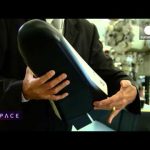
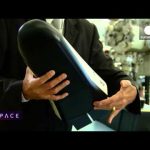
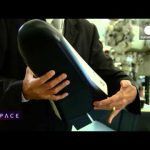
    Re-entry is the make or break moment for spacecraft. It’s the time when satellites burn up and astronauts hold on for the ride of their lives. A new ESA spacecraft, called IXV Intermediate eXperimental Vehicle, will be launched into space in November 2014 in a bid to feed precious new data to engineers as they try to master the difficult transition between space and planet Earth. In this episode of Space, IXV programme manager Giorgio Tumino shows us around the spacecraft, while rarely-seen archive footage brings the heat, drama and danger of re-entry to life.

    This video is also available in the following languages:
    French: http://youtu.be/s7x6p9prDfY
    German: http://youtu.be/mYECBYWPE8A
    Italian: http://youtu.be/QEEFS8E3VLU
    Portuguese: http://youtu.be/2uYmr113h3A
    Spanish: http://youtu.be/RG8OZt44Ya8
    Hungarian: http://youtu.be/2I0uXM8PTdU
    Greek: http://youtu.be/EIaW4xeMhlU:

    More about IXV on the ESA website:
    http://www.esa.int/Our_Activities/Launchers/IXV

    Connect with the IXV project on Twitter:
    https://twitter.com/esa_ixv

  • ESA Euronews: IXV: O Desafio da Reentrada na Atmosfera

    ESA Euronews: IXV: O Desafio da Reentrada na Atmosfera

    Subir até ao espaço é considerado normalmente o cerne da questão. Mas e o regresso à Terra? A reentrada na atmosfera é, na verdade, um dos maiores desafios da aventura espacial. Por isso, os europeus criaram uma nave chamada IXV que irá testar novas possibilidades precisamente no reencontro com o nosso planeta. É uma viagem única, até porque é impossível de recriar artificialmente a experiência. As aprendizagens têm sido feitas através de descidas efetivas. E é precisamente isso que a mais recente nave da Agência Espacial Europeia (ESA) vai fazer em novembro, como explica o coordenador de projeto, Giorgio Tumino: “O objetivo da missão do IXV é o de passar a controlar aquelas zonas cinzentas que desconhecemos acerca da reentrada atmosférica.”

  • ESA Euronews: La navicella IXV sfida il rientro

    ESA Euronews: La navicella IXV sfida il rientro

    Il rientro dallo spazio è pericoloso per le navicelle spaziali e i loro passeggeri. Una nuovo veicolo dell’ESA, la European Space Agency, chiamato “IXV”, sarà lanciato nello spazio a novembre per affrontare in modo diretto la sfida del rientro. Gli ingegneri vogliono dominare la difficile transizione tra lo spazio e il pianeta terra.

  • ESA Euronews: IXV : le défi de la rentrée dans l’atmosphère

    ESA Euronews: IXV : le défi de la rentrée dans l’atmosphère

    Pour les véhicules spatiaux, la rentrée dans l’atmosphère, c’est le moment où – pourrait-on dire – ça passe ou ça casse. C’est la phase où les satellites s’enflamment et où les astronautes retiennent leur souffle.

    Un nouveau vaisseau de l’ESA baptisé IXV sera lancé dans l’espace en novembre 2014 dans l’objectif de fournir de nouvelles données aux ingénieurs alors qu’ils tentent de maîtriser cette délicate transition entre l’espace et la planète Terre.

    Dans cette édition de Space sur euronews, le manager du programme IXV Giorgio Tumino nous présente le véhicule. Nous abordons aussi, images rares à l’appui, les conditions et les risques de cette rentrée atmosphérique.