Tag: Aurora Australis

  • Southern lights season is over 🐸 #shorts

    Southern lights season is over 🐸 #shorts

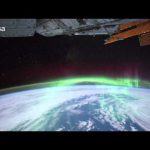
    Before the season came to an end, @thom_astro captured this timelapse of the aurora australis from the @iss and shared it on his social media channels saying: “We’ve been looking, but there’s nothing to see anymore in our aurora sweet spot (southwest of Australia, midway to Antarctica). Don’t worry, I still have a few to share. Don’t you just 💚 the way the light skips across Earth in this one as the solar arrays comes into view.”

    Follow Thomas: http://bit.ly/ThomasPesquetBlog

    ★ Subscribe: http://bit.ly/ESAsubscribe and click twice on the bell button to receive our notifications.

    Check out our full video catalog: http://bit.ly/SpaceInVideos
    Follow us on Twitter: http://bit.ly/ESAonTwitter
    On Facebook: http://bit.ly/ESAonFacebook
    On Instagram: http://bit.ly/ESAonInstagram
    On Flickr: http://bit.ly/ESAonFlickr

    We are Europe’s gateway to space. Our mission is to shape the development of Europe’s space capability and ensure that investment in space continues to deliver benefits to the citizens of Europe and the world. Check out https://www.esa.int/ to get up to speed on everything space related.

    Copyright information about our videos is available here: https://www.esa.int/ESA_Multimedia/Terms_and_Conditions

    #ESA
    #SouthernLights
    #ThomasPesquet

  • ISS Expedition 52/53 Aurora Australis

    ISS Expedition 52/53 Aurora Australis

    On 20 August 2017, 919 photos were taken by ESA astronaut Paolo Nespoli to create this timelapse of the Aurora Australis at 25 frames per second.

    Follow the VITA mission: http://blogs.esa.int/VITAmission/
    Connect with Paolo via http://paolonespoli.esa.int

    Camera info:
    Follow the VITA mission: http://blogs.esa.int/VITAmission/ Connect with Paolo during his six-month Vita mission via http://paolonespoli.esa.int

    More info:
    Aperture Value: 2,971
    Color Space: sRGB
    Contrast: Normal
    Custom Rendered: Normal process
    Date Time Digitized: 20 Aug 2017 19:55:00
    Digital Zoom Ratio: 1
    Exif Version: 2.2.1
    Exposure Bias Value: 0
    Exposure Mode: Manual exposure
    Exposure Program: Manual
    Exposure Time: 1/0
    File Source: DSC
    Flash: No Flash
    FNumber: 2,8
    Focal Length: 16
    Focal Length In 35mm Film: 16
    Focal Plane Resolution Unit: centimeters
    Focal Plane X Resolution: 1.368,889
    Focal Plane Y Resolution: 1.368,889
    Gain Control: High gain up
    ISO Speed Ratings: 5.000
    Lens Model: 16.0 mm f/2.8
    Lens Specification: 16, 16, 2,8, 2,8
    Light Source: unknown
    Max Aperture Value: 3
    Metering Mode: Pattern
    Pixel X Dimension: 4.928
    Pixel Y Dimension: 3.280
    Saturation: Normal
    Scene Capture Type: Standard
    Scene Type: A directly photographed image
    Sensing Method: One-chip color area sensor
    SensitivityType: Recommended exposure index (REI)
    Sharpness: Normal
    Shutter Speed Value: 1/0
    Subject Distance Range: unknown
    Sub-second Time: 00
    Sub-second Time Digitized: 00
    Sub-second Time Original: 00
    User Comment: NASA 2071135 77.8F
    White Balance: Auto white balance
    Image Number: 96.021
    Lens ID: 52
    Lens Info: 16, 16, 2,8, 2,8
    Lens Model: 16.0 mm f/2.8

  • Aurora Australis from Space Station

    Aurora Australis from Space Station

    André took this video of Aurora Australis from the European Cupola module in the Space Station. The beautiful phenomenon is caused by bursts of particles from the Sun pouring down Earth’s magnetic field into the atmosphere.