Tag: Byzantine Empire documentaries

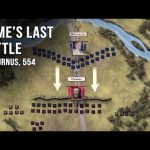
  • Rome’s Last Battle: Volturnus 554

    Rome’s Last Battle: Volturnus 554

    🚩 You can go to my sponsor https://aura.com/historymarche to try 14 days for free. That’s enough time for Aura to start scrubbing your personal info off these data broker sites, without you lifting a finger.
    🚩 Related videos:
    Episode 1 – Taginae, 552: https://youtu.be/XEPfs5WhKys
    Episode 2 – Mons Lactarius, 553: https://youtu.be/JlTzP0mKJyI
    Episode 3 – Volturnus, 554: https://youtu.be/AxpJPcQWyyA
    Battle of Tolbiac, 496: https://youtu.be/_mIb1TOgmD0

    🔔 Subscribe for more history
    🚩 If you like what you see, consider supporting my work on Patreon and you get ad-free early access to my videos for as little as $1 https://www.patreon.com/historymarche

    🚩 In the aftermath of Mons Lactarius 553, the Italian peninsula remained a land scarred by war, its cities battered and its people weary from decades of conflict. The Byzantine Empire, under the command of Justinian’s generals, had already struck decisive blows against the Ostrogothic Kingdom, yet the struggle for mastery over Italy was far from settled. The defeat of the Gothic king did not instantly erase the deep-rooted resistance of his people, nor did it ensure that Byzantine control would be secure. Instead, new threats emerged on the horizon, testing the fragile balance of power that had been achieved.

    For the Byzantines, Italy represented far more than a battlefield—it was the symbolic heart of the old Roman world, a prize that could validate Justinian’s vision of renovatio imperii, the restoration of imperial greatness. For the Ostrogoths and their allies, the land was both home and legacy, a realm they would not surrender without further struggle. In the months following Mons Lactarius, shifting allegiances, military maneuvering, and the question of who truly commanded Italy’s destiny created a tense and uncertain climate. At stake was not only the future of a kingdom but also the direction of an empire, with the next great clash looming ever closer.

    📢 Narrated by David McCallion

    🎼 Music:
    Kevin MacLeod
    EpidemicSound
    Filmstro

    📖 Sources and Citations:
    History of the Wars (Gothic War) – Procopius (545)
    Rome Resurgent – Peter Heather (2018)
    Military History of Late Rome 518–565 – John D. Burtt (1955)
    History of the Later Roman Empire – J. B. Bury (1923)
    The Byzantine Wars – John Haldon (2008)
    Narses and the Battle of Taginae (Busta Gallorum) 552: Procopius and sixth century warfare – Philip Rance (2005)
    50 Battles That Changed the World: The Conflicts That Most Influenced the Course of History – William Weir (2004)
    Justinian’s Wars: Belisarius, Narses, and the reconquest of the West – Roy Boss (1993)

    Correction:
    00:05 There is no proof that Narses did not have facial hair. In the original mosaic from ~550 AD, standing next to Justinian, Narses is portrayed with a mustache and a thin beard. Eunuchs who were castrated after puberty did have facial hair and a male voice. Although it is unknown when Narses was castrated, the fact that he is portrayed as having a mustache in the 550’s suggests he did have facial hair.

    #history #medieval #rome
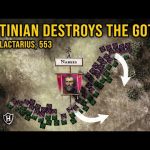
  • Justinian’s army destroys the Gothic Kingdom – Battle of Mons Lactarius 553 –  (Part 2/3)

    Justinian’s army destroys the Gothic Kingdom – Battle of Mons Lactarius 553 – (Part 2/3)

    🔔 Subscribe for more history
    🚩 If you like what you see, consider supporting my work on Patreon and you get ad-free early access to my videos for as little as $1 https://www.patreon.com/historymarche

    In the summer of 552, the Gothic War reached a new and desperate phase. The fields near Taginae had just witnessed a brutal clash between East Roman arms and the Ostrogothic host. The Roman general Narses, commanding a diverse force of imperial troops, barbarian auxiliaries, and mounted archers, had secured a decisive moment in Justinian’s long and costly effort to reclaim Italy.

    But the Goths, despite their king falling in battle, were not prepared to surrender. Leaders among them rallied survivors and gathered reinforcements, and the Goths began to stir once more, bound together by the sheer will to resist Justinian.

    Justinian’s dream of restoring imperial unity appeared tantalizingly close, yet the road ahead was strewn with peril. Italy was exhausted—its cities scarred by sieges, its farmlands stripped bare by years of war. The loyalties of local populations remained uncertain, wavering between fear of Gothic reprisals and mistrust of Byzantine rule.

    The stage was set for a confrontation in the shadow of Mount Vesuvius.

    📢 Narrated by David McCallion

    🎼 Music:
    EpidemicSound
    Filmstro

    📖 Sources and Citations:
    History of the Wars (Gothic War) – Procopius (545)
    Rome Resurgent – Peter Heather (2018)
    Military History of Late Rome 518–565 – John D. Burtt (1955)
    History of the Later Roman Empire – J. B. Bury (1923)
    The Byzantine Wars – John Haldon (2008)
    Narses and the Battle of Taginae (Busta Gallorum) 552: Procopius and sixth century warfare – Philip Rance (2005)
    50 Battles That Changed the World: The Conflicts That Most Influenced the Course of History – William Weir (2004)
    Justinian’s Wars: Belisarius, Narses, and the reconquest of the West – Roy Boss (1993)

    Correction:
    00:05 There is no proof that Narses did not have facial hair. In the original mosaic from ~550 AD, standing next to Justinian, Narses is portrayed with a mustache and a thin beard. Eunuchs who were castrated after puberty did have facial hair and a male voice. Although it is unknown when Narses was castrated, the fact that he is portrayed as having a mustache in the 550’s suggests he did have facial hair.

    #history #medieval #byzantinehistory #rome

  • Justinian’s final attempt to retake Italy – Battle of Taginae 552 AD – “Narses (Part 1)”

    Justinian’s final attempt to retake Italy – Battle of Taginae 552 AD – “Narses (Part 1)”

    🔔 Subscribe for more history

    🚩 If you like what you see, consider supporting my work on Patreon and you get ad-free early access to my videos for as little as $1 https://www.patreon.com/historymarche — You can also show your support by subscribing to the channel and liking the video. Thank you for watching.

    🚩 In the mid-6th century, the Eastern Roman Empire under Emperor Justinian I launched the Gothic War with the aim of reclaiming Italy from Ostrogothic control. After early successes under General Belisarius, including the capture of Ravenna, the Byzantine campaign stalled due to political complications and renewed Gothic resistance. By the late 540s, the Ostrogoths had regrouped under a dynamic and capable new king: Totila.

    Totila revitalized Gothic fortunes, recapturing much of Italy and even threatening Byzantine positions in the south. His combination of military prowess and efforts to win over the Italian population posed a serious challenge to Justinian’s ambitions. In response, Justinian appointed a new commander—Narses, a trusted eunuch general known more for his strategic acumen than battlefield experience. With imperial backing and a diverse army of Byzantine regulars and barbarian auxiliaries, Narses marched towards Italy…

    📢 Narrated by David McCallion

    🎼 Music:
    EpidemicSound
    Filmstro

    📚 Sources:
    The Byzantine Wars – John Haldon (2008)
    Narses and the Battle of Taginae (Busta Gallorum) 552: Procopius and sixth century warfare – Philip Rance (2005)
    50 Battles That Changed the World: The Conflicts That Most Influenced the Course of History – William Weir (2004)
    Justinian’s Wars: Belisarius, Narses, and the reconquest of the West – Roy Boss (1993)

    #ByzantineHistory #documentary #history