Tag: camera

  • NASA’s Juno Spacecraft Flies Past Io and Jupiter, With Music by Vangelis

    NASA’s Juno Spacecraft Flies Past Io and Jupiter, With Music by Vangelis

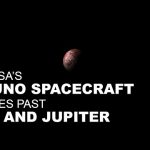
    On May 16, 2023, NASA’s Juno spacecraft flew past Jupiter’s volcanic moon Io, and then the gas giant soon after. Io is the most volcanically active body in the solar system. Slightly larger than Earth’s moon, Io is a world in constant torment. Not only is the biggest planet in the solar system forever pulling at it gravitationally, but so are its Galilean siblings – Europa and the biggest moon in the solar system, Ganymede. The result is that Io is continuously stretched and squeezed, actions linked to the creation of the lava seen erupting from its many volcanoes.

    This rendering provides a “starship captain” point of view of the flyby, using images from JunoCam. For both targets, Io and Jupiter, raw JunoCam images were reprojected into views similar to the perspective of a consumer camera. The Io flyby and the Jupiter approach movie were rendered separately and composed into a synchronous split-screen video.

    Launched on Aug. 5, 2011, Juno embarked on a 5-year journey to Jupiter. Its mission: to probe beneath the planet’s dense clouds and answer questions about the origin and evolution of Jupiter, our solar system, and giant planets in general across the cosmos. Juno arrived at the gas giant on July 4, 2016, after a 1.7-billion-mile journey, and settled into a 53-day polar orbit stretching from just above Jupiter’s cloud tops to the outer reaches of the Jovian magnetosphere. Now in its extended mission, NASA’s most distant planetary orbiter continues doing flybys of Jupiter and its moons.

    Visit http://www.nasa.gov/juno & http://missionjuno.swri.edu to learn more.

    Animation: Koji Kuramura and Gerald Eichstädt
    Music: Vangelis
    Producer: Scott J. Bolton
    Credit: NASA/JPL-Caltech/SwRI/MSSS

  • Rocket Camera Footage from the World’s Most Powerful Rocket

    Rocket Camera Footage from the World’s Most Powerful Rocket

    Experience the Artemis I launch from the engine ignition to Orion’s separation on it’s journey to the Moon.

  • Perseverance Rover’s Descent and Touchdown on Mars (Official NASA Video)

    Perseverance Rover’s Descent and Touchdown on Mars (Official NASA Video)

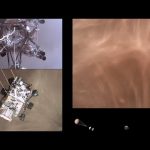
    NASA’s Mars 2020 Perseverance mission captured thrilling footage of its rover landing in Mars’ Jezero Crater on Feb. 18, 2021. The real footage in this video was captured by several cameras that are part of the rover’s entry, descent, and landing suite. The views include a camera looking down from the spacecraft’s descent stage (a kind of rocket-powered jet pack that helps fly the rover to its landing site), a camera on the rover looking up at the descent stage, a camera on the top of the aeroshell (a capsule protecting the rover) looking up at that parachute, and a camera on the bottom of the rover looking down at the Martian surface.

    The audio embedded in the video comes from the mission control call-outs during entry, descent, and landing.

    For more information about Perseverance, visit https://mars.nasa.gov/perseverance

    Credit: NASA/JPL-Caltech

  • The Moon camera

    The Moon camera

    Which camera to send to the Moon? The iconic images taken with the Hasselblad 500 series captivated the world. Today, Hasselblad cameras are synonymous with the Apollo missions. We visited Gothenburg to find out how a Swedish camera made it to the Moon.

    Learn more: http://bit.ly/BuzzAldrinAndTheEagle

    ★ Subscribe: http://bit.ly/ESAsubscribe and click twice on the bell button to receive our notifications.

    Check out our full video catalog: http://bit.ly/SpaceInVideos
    Follow us on Twitter: http://bit.ly/ESAonTwitter
    On Facebook: http://bit.ly/ESAonFacebook
    On Instagram: http://bit.ly/ESAonInstagram
    On Flickr: http://bit.ly/ESAonFlickr

    We are Europe’s gateway to space. Our mission is to shape the development of Europe’s space capability and ensure that investment in space continues to deliver benefits to the citizens of Europe and the world. Check out http://www.esa.int/ESA to get up to speed on everything space related.

    Copyright information about our videos is available here: http://www.esa.int/spaceinvideos/Terms_and_Conditions

    #ESA
    #Apollo
    #Hasselblad

  • Space Station Camera Captures New Views of Hurricane Harvey

    Space Station Camera Captures New Views of Hurricane Harvey

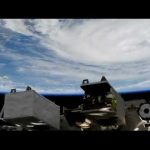
    The National Hurricane Center (NHC) upgraded the remnants of tropical storm Harvey to a tropical depression on August 23, 2017 at 11 a.m. EDT (1500 UTC). Harvey became better organized and was revived after moving from Mexico’s Yucatan Peninsula into the Bay of Campeche. The warm waters of the Gulf of Mexico and favorable vertical wind shear promoted the regeneration of the tropical cyclone. This video includes views from The International Space Station recorded on August 24, 2017 at 6:15 p.m. Eastern Time.

    This video is available for download from NASA’s Image and Video Library: https://images.nasa.gov/#/details-NHQ_2017_0824_Space%20Station%20Camera%20Captures%20New%20Views%20of%20Hurricane%20Harvey.html

  • Comet 67P/C-G in Rosetta’s navigation camera

    Comet 67P/C-G in Rosetta’s navigation camera

    Animation using a sequence of raw NAVCAM frames from 8 May to 22 June. The NAVCAM has a 5-degree field of view and takes 1024 x 1024 12-bit per pixel images.

    Read more in the Rosetta blog:
    http://blogs.esa.int/rosetta/2014/06/25/comet-67pc-g-in-rosettas-navigation-camera/

    Credit: ESA/Rosetta/NAVCAM

  • Onboard camera view: launch and separation of Sentinel-1A

    Onboard camera view: launch and separation of Sentinel-1A

    Cameras mounted on the Soyuz Fregat upper stage that sent Sentinel-1A into space on 3 April 2014 captured this superb footage. It shows liftoff, the various stages in the rocket’s ascent and the Sentinel-1A satellite being released from the Fregat upper stage to start its life in orbit around Earth.

    The 2.3 tonne satellite lifted off on a Soyuz rocket from Europe’s Spaceport in Kourou, French Guiana at 21:02 GMT (23:02 CEST). The first stage separated 118 sec later, followed by the fairing (209 sec), stage 2 (287 sec) and the upper assembly (526 sec). After a 617 sec burn, the Fregat upper stage delivered Sentinel into a Sun-synchronous orbit at 693 km altitude. The satellite separated from the upper stage 23 min 24 sec after liftoff.

    Sentinel-1 is the first in the family of satellites for Europe’s Copernicus programme. It carries an advanced radar to scan Earth’s surface in all weather conditions and regardless of whether it is day or night. This new mission will be used to care for many aspects of our environment, from detecting and tracking oil spills and mapping sea ice to monitoring movement in land surfaces and mapping changes in the way land is used.

  • Inside Gaia’s billion-pixel camera

    Inside Gaia’s billion-pixel camera

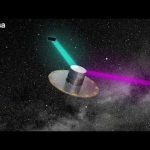
    ESA’s Gaia mission will produce an unprecedented 3D map of our Galaxy by mapping, with exquisite precision, the position and motion of a billion stars. The key to this is the billion-pixel camera at the heart of its dual telescope. This animation illustrates how the camera works.

    See http://sci.esa.int/gaia/53281-inside-gaias-billion-pixel-camera/ for a more detailed description.

    Credits: ESA

  • Rosetta’s view of Lutetia, July 2010

    Rosetta’s view of Lutetia, July 2010

    This movie shows a sequence of images taken as ESA’s Rosetta spacecraft flew past the main-belt asteroid (21) Lutetia, during the spacecraft’s 10-year journey towards comet 67P/Churyumov-Gerasimenko.

    The flyby took place on 10 July 2010, when Rosetta flew past the asteroid at a distance of 3168.2 km and at a relative speed of 15 km/s. The first image shown in the sequence was taken nine and a half hours before closest approach, from a distance of 500 000 km to Lutetia; the last image was taken six minutes after closest approach, at 6300 km from the asteroid.

    The OSIRIS camera on board Rosetta has surveyed the part of Lutetia that was visible during the flyby – about half of its entire surface, mostly coinciding with the asteroid’s northern hemisphere. These unique, close-up images have allowed scientists to study the asteroid’s surface morphology, composition and other properties in unprecedented detail.