Tag: Cape Canaveral

  • Artemis I Launches to the Moon (Official NASA Recap)

    Artemis I Launches to the Moon (Official NASA Recap)

    NASA’s Artemis I mission lifted off on Nov. 16, 2022, from Kennedy Space Center’s Launch Complex 39B. This video includes highlights from the event.

    With 8.8 million pounds of thrust, the Space Launch System (SLS), is NASA’s most powerful rocket. It will send the uncrewed Orion spacecraft beyond the Moon, 280,000 miles from Earth, farther than any human-rated spacecraft has ever flown.

    After 26 days and a total distance of over a million miles, Orion will return home faster and hotter than any spacecraft has before.

    The primary goals for Artemis I are to demonstrate Orion’s systems in a spaceflight environment and ensure a safe re-entry, descent, splashdown, and recovery prior to the first flight with crew on Artemis II.

    The first in a series of increasingly complex missions, Artemis I will demonstrate our commitment and capability to build a long-term human presence at the Moon for decades to come.

    Learn more at: https://www.nasa.gov/specials/artemis-i/

    Download Link:
    https://images.nasa.gov/details-Artemis%20I%20Launches%20to%20the%20Moon%20(Official%20NASA%20Recap)

    Video Producer: Sonnet Apple
    Music: Universal Production Music
    Credit: NASA
  • Earth from Space: Space Coast, Florida, USA

    Earth from Space: Space Coast, Florida, USA

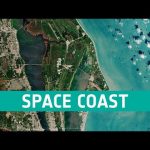
    The Copernicus Sentinel-2 mission takes us over Cape Canaveral, USA, in a region known as the Space Coast, in this edition of the Earth from Space programme. From here, on 22 April 2021, ESA astronaut Thomas Pesquet is planned to return to the International Space Station for his second mission, Alpha.

    Download the image: https://www.esa.int/ESA_Multimedia/Images/2021/04/Space_Coast_Florida

    ★ Subscribe: http://bit.ly/ESAsubscribe and click twice on the bell button to receive our notifications.

    Check out our full video catalog: http://bit.ly/SpaceInVideos
    Follow us on Twitter: http://bit.ly/ESAonTwitter
    On Facebook: http://bit.ly/ESAonFacebook
    On Instagram: http://bit.ly/ESAonInstagram
    On Flickr: http://bit.ly/ESAonFlickr

    We are Europe’s gateway to space. Our mission is to shape the development of Europe’s space capability and ensure that investment in space continues to deliver benefits to the citizens of Europe and the world. Check out https://www.esa.int/ to get up to speed on everything space related.

    Copyright information about our videos is available here: https://www.esa.int/ESA_Multimedia/Terms_and_Conditions

    #ESA
    #EarthFromSpace
    #SpaceCoast

  • Solar Orbiter launch highlights

    Solar Orbiter launch highlights

    Highlights from the preparation and liftoff of ESA’s Sun-exploring mission Solar Orbiter.

    Solar Orbiter lofted to space aboard the US Atlas V 411 rocket from NASA’s spaceport in Cape Canaveral, Florida at 04:03 GMT (05:03 CET) on 10 February 2020.

    An ESA-led mission with strong NASA participation, Solar Orbiter carries a set of ten instruments for imaging the surface of the Sun and studying the environment in its vicinity. The spacecraft will travel around the Sun on an elliptical orbit that will take it as close as 42 million km away from the Sun’s surface, about a quarter of the distance between the Sun and Earth. The orbit will allow Solar Orbiter to see some of the never-before-imaged regions of the Sun, including the poles, and shed new light on what gives rise to solar wind, which can affect infrastructure on Earth.

    More about Solar Orbiter: https://www.esa.int/solarorbiter

    ★ Subscribe: http://bit.ly/ESAsubscribe and click twice on the bell button to receive our notifications.

    Check out our full video catalog: http://bit.ly/SpaceInVideos
    Follow us on Twitter: http://bit.ly/ESAonTwitter
    On Facebook: http://bit.ly/ESAonFacebook
    On Instagram: http://bit.ly/ESAonInstagram
    On Flickr: http://bit.ly/ESAonFlickr

    We are Europe’s gateway to space. Our mission is to shape the development of Europe’s space capability and ensure that investment in space continues to deliver benefits to the citizens of Europe and the world. Check out http://www.esa.int/ESA to get up to speed on everything space related.

    Copyright information about our videos is available here: http://www.esa.int/spaceinvideos/Terms_and_Conditions

    #ESA
    #SolarOrbiter
    #WeAreAllSolarOrbiters

  • Solar Orbiter liftoff

    Solar Orbiter liftoff

    ESA’s new Sun-exploring mission Solar Orbiter lofted to space aboard the US Atlas V 411 rocket from NASA’s spaceport in Cape Canaveral, Florida at 04:03 GMT (05:03 CET) on 10 February 2020.

    Solar Orbiter, an ESA-led mission with strong NASA participation, carries a set of ten instruments for imaging the surface of the Sun and studying the environment in its vicinity. The spacecraft will travel around the Sun on an elliptical orbit that will take it as close as 42 million km away from the Sun’s surface, about a quarter of the distance between the Sun and Earth. The orbit will allow Solar Orbiter to see some of the never-before-imaged regions of the Sun, including the poles, and shed new light on what gives rise to solar wind, which can affect infrastructure on Earth.

    More about Solar Orbiter: https://www.esa.int/solarorbiter

    ★ Subscribe: http://bit.ly/ESAsubscribe and click twice on the bell button to receive our notifications.

    Check out our full video catalog: http://bit.ly/SpaceInVideos
    Follow us on Twitter: http://bit.ly/ESAonTwitter
    On Facebook: http://bit.ly/ESAonFacebook
    On Instagram: http://bit.ly/ESAonInstagram
    On Flickr: http://bit.ly/ESAonFlickr

    We are Europe’s gateway to space. Our mission is to shape the development of Europe’s space capability and ensure that investment in space continues to deliver benefits to the citizens of Europe and the world. Check out http://www.esa.int/ESA to get up to speed on everything space related.

    Copyright information about our videos is available here: http://www.esa.int/spaceinvideos/Terms_and_Conditions

    #ESA
    #SolarOrbiter
    #WeAreAllSolarOrbiters

  • Testing Solar Orbiter

    Testing Solar Orbiter

    The Solar Orbiter spacecraft is undergoing important pre-launch tests at the IABG National Space Centre in Ottobrunn, Germany, ahead of its launch, scheduled for February 2020.

    The mission will study the Sun, but first the spacecraft must pass vibration, acoustic and shock tests. This will ensure the spacecraft can withstand the stresses of lift off and the extreme environments it will encounter while in orbit around the Sun – from the coldness of space, 150 million km away, to temperatures up to 500 ºC reached when it will be a mere 46 million km away, closer than Mercury.

    Solar Orbiter is an ESA-led mission with strong NASA participation. The spacecraft was built and is being tested by Airbus.

    This film contains interviews with César García, ESA Solar Orbiter Project Manager, and Ian Walters, Solar Orbiter Project Manager at Airbus Defence and Space.

    More information: http://bit.ly/GoodVibesForSolarOrbiter

    ★ Subscribe: http://bit.ly/ESAsubscribe and click twice on the bell button to receive our notifications.

    Check out our full video catalogue: http://bit.ly/SpaceInVideos
    Follow ESA on Twitter: http://bit.ly/ESAonTwitter
    On Facebook: http://bit.ly/ESAonFacebook
    On Instagram: http://bit.ly/ESAonInstagram
    On Flickr: http://bit.ly/ESAonFlickr

    ESA is Europe’s gateway to space. Our mission is to shape the development of Europe’s space capability and ensure that investment in space continues to deliver benefits to the citizens of Europe and the world. Check out http://www.esa.int/ESA to get up to speed on everything space related.

    Copyright information about our videos is available here: http://www.esa.int/spaceinvideos/Terms_and_Conditions

    #ESA
    #SpaceScience
    #SolarOrbiter

  • New NASA Cargo Launches to Space Station Aboard SpaceX-3 Mission

    New NASA Cargo Launches to Space Station Aboard SpaceX-3 Mission

    Approximately 2.4 tons of NASA science investigations and cargo were launched to the International Space Station aboard SpaceX’s Dragon spacecraft. The launch aboard the company’s Falcon 9 rocket took place from Space Launch Complex 40 at Cape Canaveral Air Force Station in Florida on Monday, April 18 at 3:25 p.m. EDT. Dragon’s cargo will support more than 150 experiments that will be conducted during space station Expeditions 39 and 40. The spacecraft will be grappled at 7:11 a.m. on Wednesday, April 16 by Expedition 39 Commander Koichi Wakata of the Japan Aerospace Exploration Agency. Dragon is scheduled to depart the space station May 18 for a splashdown in the Pacific Ocean west of Baja California, bringing with it about 3,500 pounds of science and research, hardware, crew supplies and spacewalk tools from the space station.