Tag: Cape Canaveral Air Force Station

  • Earth from Space: Space Coast, Florida, USA

    Earth from Space: Space Coast, Florida, USA

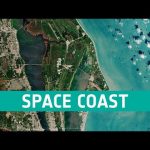
    The Copernicus Sentinel-2 mission takes us over Cape Canaveral, USA, in a region known as the Space Coast, in this edition of the Earth from Space programme. From here, on 22 April 2021, ESA astronaut Thomas Pesquet is planned to return to the International Space Station for his second mission, Alpha.

    Download the image: https://www.esa.int/ESA_Multimedia/Images/2021/04/Space_Coast_Florida

    ★ Subscribe: http://bit.ly/ESAsubscribe and click twice on the bell button to receive our notifications.

    Check out our full video catalog: http://bit.ly/SpaceInVideos
    Follow us on Twitter: http://bit.ly/ESAonTwitter
    On Facebook: http://bit.ly/ESAonFacebook
    On Instagram: http://bit.ly/ESAonInstagram
    On Flickr: http://bit.ly/ESAonFlickr

    We are Europe’s gateway to space. Our mission is to shape the development of Europe’s space capability and ensure that investment in space continues to deliver benefits to the citizens of Europe and the world. Check out https://www.esa.int/ to get up to speed on everything space related.

    Copyright information about our videos is available here: https://www.esa.int/ESA_Multimedia/Terms_and_Conditions

    #ESA
    #EarthFromSpace
    #SpaceCoast
  • NASA | 360 Video of Parker Solar Probe Mission to “Touch” the Sun

    NASA | 360 Video of Parker Solar Probe Mission to “Touch” the Sun

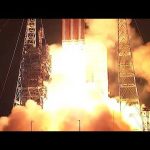
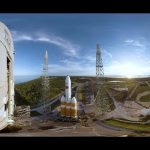
    Watch in 360 degrees as an United Launch Alliance Delta IV Heavy rocket lifts off from Space Launch Complex-37 at Cape Canaveral Air Force Station in Florida carrying NASA’s Parker Solar Probe spacecraft. Roughly the size of a small car, the spacecraft lifted off at 3:31 a.m. EDT on Aug. 12, 2018, starting its historic mission to “touch” the Sun.

    Learn more about the mission at https://www.nasa.gov/parkersolarprobe.

  • NASA’s Parker Solar Probe Mission Launches to Touch the Sun

    NASA’s Parker Solar Probe Mission Launches to Touch the Sun

    NASA’s Parker Solar Probe mission launched Aug. 11 from Cape Canaveral Air Force Station in Florida. The mission will be the first to fly directly through the Sun’s corona – the hazardous region of intense heat and solar radiation in the Sun’s atmosphere that is visible during an eclipse. It will gather data that could help answer questions about solar physics that have puzzled scientists for decades. Gathering information about fundamental processes near the Sun can help improve our understanding of how our solar system’s star changes the space environment, where space weather can affect astronauts, interfere with satellite orbits, or damage spacecraft electronics.

    This video is available for download from NASA’s Image and Video Library: https://images.nasa.gov/details-NHQ_2018_0812_Parker%20Solar%20Probe%20Mission%20Launches%20to%20Touch%20the%20Sun%20-.html

  • Third Generation Satellite Joins NASA’s Communication Network

    Third Generation Satellite Joins NASA’s Communication Network

    On Friday, August 18, NASA launched the third in a series of three advanced, Tracking and Data Relay Satellites, known as TDRS-M, from Cape Canaveral Air Force Station, in Florida. This latest addition to the fleet will augment a space communications network that provides the critical path for high data-rate communication to a host of spacecraft including the International Space Station and its resupply vehicles, the Hubble Space Telescope and many of NASA’s Earth-observing fleet spacecraft.

  • Orbital ATK’s Cygnus Cargo Spacecraft Launches to the ISS

    Orbital ATK’s Cygnus Cargo Spacecraft Launches to the ISS

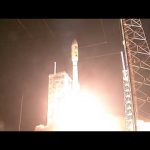
    On April 18, Orbital ATK’s Cygnus cargo space craft launched from Cape Canaveral Air Force Station in Florida aboard a United Launch Alliance rocket, on Orbital ATK’s seventh resupply mission to the International Space Station. Cygnus is packed with 7,600 pounds of supplies and research for the crew aboard the orbiting laboratory.

  • NASA Launches Satellite Constellation for Hurricane Tracking Mission

    NASA Launches Satellite Constellation for Hurricane Tracking Mission

    NASA successfully launched eight small satellites that will provide scientists with advanced technology to see inside tropical storms and hurricanes like never before. Called the Cyclone Global Navigation Satellite System (CYGNSS), the constellation of eight microsatellite observatories launched Dec. 12 aboard an Orbital ATK air-launched Pegasus XL launch vehicle from Cape Canaveral Air Force Station in Florida. The rocket was dropped and launched from Orbital’s Stargazer L-1011 aircraft over the Atlantic Ocean off the coast of central Florida.

  • Advanced Weather Satellite Launched into Orbit

    Advanced Weather Satellite Launched into Orbit

    The first spacecraft in a new series of NASA-built advanced geostationary weather satellites launched into orbit aboard a United Launch Alliance Atlas V rocket Nov. 19 from Cape Canaveral Air Force Station in Florida. Once in geostationary orbit, GOES-R will be known as GOES-16 and will provide images of weather patterns and severe storms as regularly as every five minutes or as frequently as every 30 seconds. These images can be used to aid in weather forecasts, severe weather outlooks, watches and warnings, lightning conditions, maritime forecasts and aviation forecasts.

  • NASA Launches Go Ultra-High Definition

    NASA Launches Go Ultra-High Definition

    NASA Television’s newest offering, NASA TV UHD, brings ultra-high definition video to a new level with the kind of imagery only the world’s leader in space exploration could provide.

    Using an array of six 4K+ cameras, Harmonic documented the Dec. 6 launch of Orbital ATK’s commercial resupply mission to the International Space Station from Cape Canaveral Air Force Station in Florida. Capturing footage at Ultra High Definition with high frame rate and in high dynamic range (HDR) options.

    The company then post-produced the footage into a program showcasing the entire launch process for airing on NASA TV UHD.

    For more info: http://go.nasa.gov/1lyUGlY

  • Orion Soars on First Flight Test

    Orion Soars on First Flight Test

    NASA’s Orion spacecraft launched successfully atop a United Launch Alliance Delta IV Heavy rocket Dec. 5 at 7:05 a.m. EST from Space Launch Complex 37 at Cape Canaveral Air Force Station in Florida. Orion’s Exploration Flight Test-1 (EFT-1), is the first flight test for NASA’s new deep space capsule and is a critical step on NASA’s journey to Mars. The 4.5 hour flight is scheduled to conclude with the splashdown of Orion in the Pacific Ocean.